
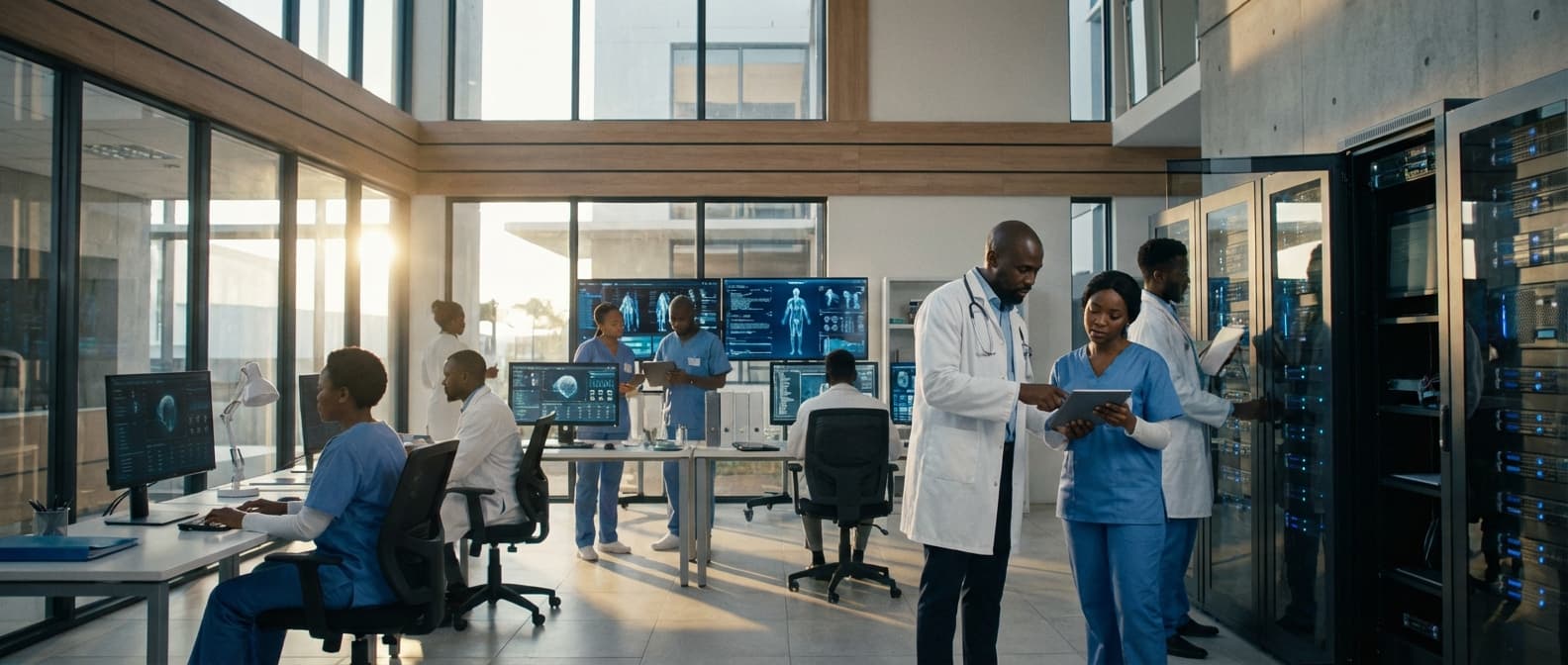
Medical IT Consultation in Mozambique
Engineering Excellence & Technical Support
Strategic technology consulting to optimize healthcare operations, streamline workflows, and integrate cutting-edge medical information systems. High-standard technical execution following OEM protocols and local regulatory frameworks.
EHR System Implementation & Optimization
Successfully deployed and configured Electronic Health Record (EHR) systems across multiple healthcare facilities in Mozambique, streamlining patient data management, improving diagnostic accuracy, and enhancing operational efficiency. Leveraged interoperability standards to integrate with existing lab and pharmacy systems.
Cybersecurity & Data Privacy Enhancement
Designed and implemented robust cybersecurity frameworks tailored to the Mozambican healthcare landscape, safeguarding sensitive patient information against evolving threats. Conducted comprehensive risk assessments, deployed advanced threat detection solutions, and trained staff on best practices for data privacy compliance.
Telemedicine & Remote Healthcare Solutions
Established and scaled telemedicine platforms, enabling remote consultations and specialist access for underserved populations in remote regions of Mozambique. Developed strategies for secure video conferencing, digital diagnostic tool integration, and remote patient monitoring, significantly expanding healthcare reach.
What Is Medical It Consultation In Mozambique?
Medical IT Consultation in Mozambique refers to the provision of expert advisory services focused on the strategic planning, implementation, optimization, and management of Information Technology (IT) infrastructure and systems within healthcare organizations in the Mozambican context. This encompasses a broad spectrum of IT-related needs, from foundational hardware and software to advanced digital health solutions, all tailored to the unique operational, financial, and regulatory environment of Mozambique. The service aims to enhance the efficiency, effectiveness, security, and scalability of healthcare service delivery through appropriate and sustainable technological adoption. It addresses the critical intersection of healthcare delivery and digital transformation, acknowledging the specific challenges and opportunities present in a developing nation's health sector.
| Who Needs Medical IT Consultation? | Typical Use Cases |
|---|---|
| Public Hospitals and Health Centers: Institutions facing challenges with outdated infrastructure, manual record-keeping, and limited access to advanced health technologies. | Implementing a national EHR system, establishing telemedicine services for remote clinics, upgrading network infrastructure for better data flow. |
| Private Healthcare Providers (Clinics, Hospitals, Diagnostic Centers): Businesses seeking to enhance patient experience, improve operational efficiency, and gain a competitive edge through technology. | Adopting a cloud-based practice management system, implementing PACS for radiology departments, enhancing cybersecurity measures. |
| Non-Governmental Organizations (NGOs) and International Health Organizations: Entities involved in public health initiatives, research, and service delivery in specific regions, often requiring scalable and adaptable IT solutions. | Developing a data collection and reporting system for disease surveillance, setting up mobile health (mHealth) applications for community health workers, establishing data analytics platforms for program evaluation. |
| Ministry of Health and Regional Health Directorates: Government bodies responsible for national health policy, standards, and IT governance, requiring strategic planning and oversight. | Developing national health IT strategies and policies, overseeing the implementation of large-scale health information systems, ensuring data interoperability standards. |
| Medical Training and Research Institutions: Academic and research facilities that require robust IT infrastructure for data management, simulation, and educational platforms. | Implementing secure research data repositories, setting up virtual learning environments, integrating simulation software. |
Key Components of Medical IT Consultation in Mozambique
- IT Infrastructure Assessment and Strategy: Evaluating existing hardware, software, network connectivity, and data storage, and developing a roadmap for modernization and expansion.
- Electronic Health Records (EHR) Implementation and Optimization: Advising on the selection, deployment, customization, and ongoing use of EHR systems to improve patient data management, clinical decision support, and interoperability.
- Health Information Exchange (HIE) Solutions: Facilitating the secure and efficient sharing of patient health information between different healthcare providers and systems.
- Telemedicine and Remote Care Platforms: Designing and implementing solutions for remote patient monitoring, virtual consultations, and specialized healthcare delivery in underserved areas.
- Cybersecurity and Data Privacy: Developing and enforcing robust security protocols, access controls, and compliance strategies to protect sensitive patient data (PHI) and meet local data protection regulations.
- Network Design and Management: Ensuring reliable and secure network connectivity for internal operations and external data exchange.
- Software Selection and Integration: Advising on the procurement and integration of specialized healthcare software (e.g., Picture Archiving and Communication Systems (PACS), Laboratory Information Systems (LIS)).
- IT Project Management: Overseeing the planning, execution, and closure of IT projects within healthcare facilities.
- Digital Health Strategy Development: Creating comprehensive strategies for leveraging technology to achieve specific health outcomes and organizational goals.
- Training and Capacity Building: Providing technical training to healthcare staff on new IT systems and digital health tools.
- Disaster Recovery and Business Continuity Planning: Developing strategies to ensure continued IT operations in the event of disruptions.
Who Needs Medical It Consultation In Mozambique?
Medical IT consultation is crucial for various healthcare stakeholders in Mozambique, particularly those looking to modernize their infrastructure, improve data management, enhance patient care through technology, and ensure compliance with evolving digital health regulations. This service addresses the unique challenges faced by the Mozambican healthcare sector, including limited resources, geographical dispersion, and the need for robust, scalable, and cost-effective IT solutions.
| Customer Type | Relevant Departments/Functions | Key IT Needs/Challenges Addressed |
|---|---|---|
| Public Hospitals and Clinics | IT Department, Administration, Clinical Departments (e.g., Radiology, Pathology, Pharmacy), Records Management | Implementing Electronic Health Records (EHRs), improving network infrastructure, cybersecurity, data backup and recovery, telemedicine integration, IT support and maintenance, staff training. |
| Private Hospitals and Diagnostic Centers | IT Department, Operations Management, Billing and Finance, Clinical Services | Upgrading existing systems, implementing Picture Archiving and Communication Systems (PACS), optimizing HIS/LIS, data analytics for performance improvement, patient portal development, cloud migration, compliance with data privacy. |
| Non-Governmental Organizations (NGOs) | Program Management, Data Management, IT Support | Setting up data collection and reporting systems, mobile health (mHealth) solutions for field workers, secure data storage and sharing, capacity building for local IT staff, remote support. |
| Government Ministry of Health | Health Information Systems Unit, National Health Planning, Public Health Surveillance, Procurement | Developing national health information strategy, implementing HMIS (Health Management Information System), interoperability between different health facilities, digitalizing public health programs, cybersecurity policies, e-health policy development. |
| Medical Training and Research Institutions | IT Department, Research Departments, Academic Administration | Establishing secure research data repositories, providing robust IT infrastructure for simulations and virtual learning, network security for sensitive research data, access to specialized medical software, data analysis tools. |
| Pharmaceutical Companies | Supply Chain Management, Data Analytics, IT Department | Optimizing IT for pharmaceutical supply chain tracking and management, secure data management for clinical trials and post-market surveillance, ERP system integration, compliance with regulatory data requirements. |
| Telemedicine Providers | IT Infrastructure, Operations, Technical Support | Ensuring secure and reliable video conferencing platforms, network optimization for real-time data transmission, integration with EHRs, patient onboarding systems, cybersecurity for remote consultations. |
Target Customers for Medical IT Consultation in Mozambique:
- Public Hospitals and Clinics
- Private Hospitals and Diagnostic Centers
- Non-Governmental Organizations (NGOs) focused on healthcare delivery
- Government Ministry of Health
- Medical Training and Research Institutions
- Pharmaceutical Companies (for supply chain and data management)
- Telemedicine Providers
Medical It Consultation Process In Mozambique
The Medical IT Consultation Process in Mozambique outlines a structured approach to providing IT solutions and support to healthcare facilities. This workflow ensures that client needs are clearly understood, appropriate solutions are designed and implemented, and ongoing support is provided. The process is designed to be adaptable to various healthcare settings, from small clinics to larger hospitals, and aims to improve efficiency, data management, and patient care through technology.
| Stage | Key Activities | Key Deliverables/Outcomes | Responsible Parties |
|---|---|---|---|
| Receive inquiry, initial fact-finding, understand broad requirements. | Inquiry logged, initial understanding of client's general IT need. | Healthcare Facility, IT Consultant |
| Detailed discussions, site visits (if needed), data gathering on current systems, workflows, challenges, and goals. | Detailed needs assessment report, documented requirements, identified pain points. | IT Consultant, Healthcare Facility Stakeholders |
| Analyzing needs, identifying suitable technologies, designing technical solutions, costing. | Comprehensive solution proposal, including technical specifications, project plan outline, and budget. | IT Consultant |
| Presenting proposal, addressing questions, negotiating terms, finalizing contract. | Signed contract/SLA, clear understanding of scope and deliverables. | IT Consultant, Healthcare Facility Management |
| Detailed project planning, resource allocation, procurement of hardware/software, scheduling. | Detailed project plan, procurement orders, finalized schedule. | IT Consultant, Project Team, Vendor(s) |
| Installation, configuration, integration of hardware and software, data migration. | Installed and configured IT systems, functional infrastructure. | IT Consultant, Implementation Team, Healthcare Facility IT Staff |
| Conducting training sessions, developing user guides, addressing initial user questions. | Trained staff, user documentation, improved user proficiency. | IT Consultant, Trainers, Healthcare Facility Staff |
| System testing, user acceptance testing (UAT), final checks, official launch. | Validated systems, successful go-live, operational IT services. | IT Consultant, Quality Assurance, Healthcare Facility End-Users |
| Providing technical support, troubleshooting issues, system performance monitoring, proactive maintenance. | Resolved issues, stable systems, ongoing system performance reports. | IT Consultant, Support Team, Healthcare Facility IT Staff |
| Project performance review, feedback collection, identifying future IT needs and opportunities. | Project success report, recommendations for future improvements, potential new project initiation. | IT Consultant, Healthcare Facility Management |
Medical IT Consultation Process Stages
- {"title":"1. Initial Inquiry & Needs Assessment","description":"The process begins with a healthcare facility or individual reaching out with an IT-related need or challenge. This could be for new system implementation, troubleshooting existing issues, network upgrades, cybersecurity concerns, or digital health strategy development."}
- {"title":"2. Consultation & Discovery Meeting","description":"A dedicated meeting is scheduled where the IT consultant engages with stakeholders from the healthcare facility. The primary goal is to deeply understand the current IT infrastructure, existing challenges, specific requirements, operational workflows, budget constraints, and desired outcomes. This stage involves active listening, asking probing questions, and documenting all relevant information."}
- {"title":"3. Solution Design & Proposal Development","description":"Based on the information gathered during the discovery phase, the IT consultant develops tailored solution proposals. This includes outlining recommended hardware, software, network configurations, cybersecurity measures, and implementation strategies. The proposal details the scope of work, timelines, deliverables, and associated costs."}
- {"title":"4. Proposal Review & Agreement","description":"The developed proposal is presented to the healthcare facility for review. This stage allows for discussion, clarification of any ambiguities, and potential adjustments to the proposed solution. Once both parties are in agreement, a formal contract or service level agreement (SLA) is signed."}
- {"title":"5. Planning & Preparation","description":"Before execution, detailed project planning takes place. This involves creating a comprehensive project plan, including task breakdowns, resource allocation, risk management strategies, and communication protocols. Procurement of necessary hardware and software also occurs during this phase."}
- {"title":"6. Implementation & Deployment","description":"This is the execution phase where the designed IT solutions are installed, configured, and deployed within the healthcare facility. This can include setting up new networks, installing EMR/EHR systems, configuring medical devices, implementing cybersecurity tools, and migrating data. Rigorous testing is conducted to ensure functionality and compatibility."}
- {"title":"7. Training & User Adoption","description":"Comprehensive training is provided to the healthcare staff on how to effectively use the newly implemented IT systems and solutions. This is crucial for successful user adoption and maximizing the benefits of the technology. Training materials and ongoing support resources are also made available."}
- {"title":"8. Testing, Validation & Go-Live","description":"Following implementation and initial training, thorough testing is performed to validate that the systems meet the agreed-upon requirements and function as expected in real-world scenarios. Once validated, the systems are officially 'go-live,' making them available for operational use."}
- {"title":"9. Post-Implementation Support & Monitoring","description":"After go-live, ongoing technical support is provided to address any immediate issues or user queries. This phase also includes monitoring the performance of the implemented systems, ensuring stability, and identifying any potential areas for optimization. Regular check-ins may be scheduled."}
- {"title":"10. Review & Future Planning","description":"Periodically, or upon project completion, a review is conducted to assess the success of the implemented IT solutions against the initial objectives. This stage also involves discussing any emerging needs, potential upgrades, or further IT advancements that could benefit the healthcare facility. This can lead to a new cycle of consultation."}
Medical It Consultation Cost In Mozambique
The cost of Medical IT consultation in Mozambique can vary significantly based on several factors. These include the complexity of the project, the experience and reputation of the IT consultant or firm, the duration of the consultation, and the specific services required. Smaller, less complex projects or those requiring basic advice will naturally be at the lower end of the spectrum, while comprehensive system design, implementation planning, or complex troubleshooting will command higher fees. Geographic location within Mozambique can also play a minor role, with consultants in major urban centers like Maputo potentially having slightly different pricing structures compared to those in more remote areas.
| Service Type | Estimated Cost Range (MZN) | Description |
|---|---|---|
| Basic IT Advice/Troubleshooting | 2,500 - 7,500 | Short consultations for simple IT issues, advice on hardware/software choices. |
| Needs Assessment & Strategy Development | 7,500 - 20,000 | Evaluating current IT infrastructure and developing a roadmap for improvements, including initial EHR considerations. |
| System Selection & Planning (e.g., EHR, PACS) | 15,000 - 50,000+ | Assisting in choosing appropriate medical software, vendor evaluation, and initial planning for implementation. Can be higher for very complex systems. |
| Security Audits & Compliance | 10,000 - 30,000 | Assessing data security, privacy measures, and compliance with healthcare regulations. |
| Project Management (IT Implementation) | 25,000 - 75,000+ (per month or project phase) | Overseeing the implementation of new IT systems, ensuring timely and within-budget completion. Hourly rates can also apply. |
| Specialized Consultation (e.g., Telemedicine Setup) | 12,000 - 40,000+ | Expert advice on specific technologies like setting up telemedicine platforms or advanced data analytics. |
Factors Influencing Medical IT Consultation Costs in Mozambique
- Complexity of IT needs (e.g., EHR implementation, network security, data management)
- Consultant's experience and specialization (e.g., medical software expertise, cybersecurity for healthcare)
- Duration and scope of the consultation (e.g., short-term advice vs. long-term project management)
- Reputation and track record of the IT firm or individual consultant
- Travel and accommodation expenses (if applicable for on-site consultations)
- Specific technologies or software involved
- Reporting and documentation requirements
- Urgency of the consultation
Affordable Medical It Consultation Options
Navigating the complex landscape of medical IT can be a significant challenge for healthcare providers, especially smaller practices and those with budget constraints. Fortunately, there are increasingly affordable options available for expert medical IT consultation. These often come in the form of 'value bundles' and are supported by various cost-saving strategies that can make professional guidance accessible. Understanding these options can empower healthcare organizations to improve their IT infrastructure, enhance patient care, and ensure regulatory compliance without breaking the bank.
| Value Bundle Component | Typical Service Included | Cost-Saving Rationale |
|---|---|---|
| Network Assessment & Optimization | Analysis of existing network infrastructure, identification of bottlenecks, and recommendations for improvement to ensure reliable connectivity and data flow. | Prevents costly downtime due to network issues, improves telehealth capabilities, and enhances overall system performance. |
| Cybersecurity Assessment & Strategy | Evaluation of current security measures, identification of vulnerabilities, and development of a robust cybersecurity plan to protect patient data and comply with HIPAA. | Mitigates the risk of costly data breaches, ransomware attacks, and regulatory fines, safeguarding patient trust and financial stability. |
| EHR/EMR System Support & Optimization | Assistance with EHR/EMR implementation, troubleshooting, user training, and workflow optimization to maximize system efficiency and user adoption. | Improves clinical efficiency, reduces administrative burden, enhances patient record accuracy, and maximizes ROI on EHR investment. |
| HIPAA Compliance Audit & Guidance | Review of IT policies and procedures to ensure adherence to HIPAA regulations, including data privacy and security standards. | Avoids significant fines and legal penalties associated with HIPAA non-compliance. |
| IT Strategy & Planning | Development of a long-term IT roadmap aligned with organizational goals, including recommendations for technology adoption and infrastructure upgrades. | Ensures IT investments are strategic and deliver maximum value, preventing wasteful spending on unnecessary or outdated technologies. |
Affordable Medical IT Consultation Options
- Value Bundles: These are pre-packaged service offerings designed to provide comprehensive IT support for a fixed price. They often combine multiple essential services, offering a more cost-effective solution than purchasing individual services separately.
- Subscription-Based Models: Similar to value bundles, these offer ongoing IT support and access to expertise for a recurring fee, providing predictable budgeting and continuous access to assistance.
- Project-Based Consultation: For specific IT needs, such as EHR implementation, cybersecurity upgrades, or network optimization, opting for project-based consultation can be more cost-effective than long-term retainers if your needs are finite.
- On-Demand & Hourly Services: Many IT consultants offer flexible on-demand or hourly rates. This is ideal for addressing urgent issues or for organizations with minimal ongoing IT needs.
- Remote Consultation: Leveraging remote access tools significantly reduces travel costs for consultants, leading to lower overall consultation fees.
- Managed Service Providers (MSPs) with Healthcare Specialization: MSPs can offer bundled IT management and support services at a more predictable and often lower cost than hiring an in-house IT department or engaging multiple independent consultants.
- Partnerships & Referrals: Referrals from industry associations, other healthcare providers, or even EHR vendors can sometimes lead to discounted rates with reputable IT consultants.
Verified Providers In Mozambique
In Mozambique, navigating the healthcare landscape can be challenging. Ensuring you're receiving care from verified and credible providers is paramount to your well-being. Franance Health stands out as a leading organization dedicated to connecting individuals with high-quality, vetted healthcare professionals across the nation. Their rigorous credentialing process and commitment to excellence make them the optimal choice for anyone seeking reliable medical services in Mozambique.
| Provider Type | Franance Health Verification Criteria | Benefits for Patients |
|---|---|---|
| Doctors (Specialists & General Practitioners) | Medical Degree, valid national/international licenses, board certifications (where applicable), proof of residency/internship, criminal background checks, peer reviews. | Access to qualified and experienced medical professionals, accurate diagnoses, effective treatment plans, reduced risk of misdiagnosis or malpractice. |
| Nurses (Registered & Practical) | Nursing diploma/degree, active nursing license, verified experience, relevant certifications (e.g., CPR, specialized nursing areas). | Skilled and compassionate nursing care, reliable post-operative support, effective patient education, assistance with daily living activities. |
| Dentists | Dental degree, valid dental license, specialization certifications (if applicable), proof of practice, adherence to sterilization protocols. | Comprehensive oral health care, preventive services, treatment for dental issues, cosmetic dentistry options. |
| Pharmacists | Pharmacy degree, active pharmacist license, knowledge of drug interactions and safe dispensing practices, adherence to regulatory guidelines. | Accurate and safe medication dispensing, professional advice on drug usage and side effects, inventory management of essential medicines. |
| Therapists (Physio, Occupational, etc.) | Relevant degree/diploma, professional licensing/registration, verified experience in specific therapeutic modalities, ongoing professional development. | Personalized rehabilitation plans, improved mobility and function, pain management strategies, support for recovery from injuries or illnesses. |
Why Franance Health Credentials Matter:
- Rigorous Verification Process: Franance Health employs a multi-stage vetting system that scrutinizes the educational background, licensing, and professional experience of every healthcare provider on their platform.
- Commitment to Quality: Beyond basic credentials, Franance Health assesses providers on their patient care philosophy, ethical conduct, and commitment to continuous professional development.
- Access to Expertise: By partnering with Franance Health, you gain access to a curated network of specialists and general practitioners, ensuring you can find the right care for your specific needs.
- Patient-Centric Approach: Franance Health prioritizes patient safety and satisfaction, meaning their verified providers are not only skilled but also dedicated to providing compassionate and effective care.
- Peace of Mind: Knowing that your healthcare provider has been thoroughly vetted by a reputable organization like Franance Health offers invaluable peace of mind during your health journey.
Scope Of Work For Medical It Consultation
This document outlines the Scope of Work (SOW) for a Medical IT Consultation project. The primary objective is to assess, recommend, and implement improvements to the existing medical IT infrastructure and systems to enhance efficiency, security, and patient care delivery. The project will focus on identifying current challenges, proposing solutions, and ensuring their successful integration. Technical deliverables will include detailed system documentation, implementation plans, and security audit reports. Standard specifications will adhere to relevant healthcare IT regulations and best practices.
| Deliverable | Description | Standard Specifications/Compliance | Timeline (Indicative) |
|---|---|---|---|
| Current State Assessment Report | Comprehensive analysis of existing IT infrastructure, software applications, hardware, network performance, and security posture. | HIPAA, HITECH Act, NIST Cybersecurity Framework (CSF), HITRUST. | 2 Weeks |
| Gap Analysis Report | Identification of discrepancies between current capabilities and desired future state, including operational, security, and compliance gaps. | Industry best practices for healthcare IT, regulatory compliance requirements. | 1 Week |
| IT Strategy and Roadmap | Strategic plan outlining recommended solutions, technology upgrades, system integrations, and a phased implementation approach. | Alignment with organizational goals, patient care objectives, scalability requirements. | 2 Weeks |
| Solution Design Document (SDD) | Detailed technical specifications for recommended solutions, including architecture diagrams, data flows, and integration points. | HL7 standards, DICOM standards, FHIR (Fast Healthcare Interoperability Resources), OWASP guidelines. | 3 Weeks |
| Implementation Plan | Step-by-step plan for deploying new technologies or modifying existing systems, including resource allocation, timelines, and risk mitigation strategies. | Change management protocols, rollback procedures, vendor-specific deployment guides. | 2 Weeks |
| Security Audit and Compliance Report | Assessment of implemented security measures against established standards and regulatory requirements, with recommendations for improvement. | HIPAA Security Rule, relevant state privacy laws, penetration testing reports, vulnerability assessments. | 1 Week |
| System Integration Plan | Detailed plan for integrating new systems with existing EHR/EMR, PACS, RIS, LIS, and other clinical systems. | HL7 v2.x, HL7 FHIR, DICOM conformance statements, API documentation. | 2 Weeks |
| User Training Materials and Sessions | Development of comprehensive training documentation and delivery of training sessions for end-users. | User-centric design principles, role-based training modules, accessible formats. | Ongoing during Implementation Phase |
| Post-Implementation Review Report | Evaluation of the implemented solutions' performance, user satisfaction, and achievement of project objectives. | Key Performance Indicators (KPIs) for system uptime, response times, user adoption rates. | 1 Week |
| Final Project Report and Documentation | Consolidated report summarizing project activities, outcomes, lessons learned, and all final technical documentation. | Complete system architecture, configuration guides, user manuals, maintenance procedures. | 1 Week |
Key Project Phases
- Phase 1: Discovery and Assessment
- Phase 2: Strategy and Recommendation
- Phase 3: Implementation and Integration
- Phase 4: Testing and Validation
- Phase 5: Training and Handover
- Phase 6: Post-Implementation Support and Optimization
Service Level Agreement For Medical It Consultation
This Service Level Agreement (SLA) outlines the guaranteed response times and uptime for Medical IT Consultation services provided by [Your Company Name] to [Client Company Name].
| Issue Priority | Response Time Guarantee (within Business Hours) | Resolution Time Target (Best Effort) | Uptime Guarantee (for designated systems) |
|---|---|---|---|
| Critical Issue | 15 minutes | 4 hours (target for initial resolution/workaround) | 99.9% |
| High Priority Issue | 1 hour | 8 business hours (target for resolution) | 99.5% |
| Medium Priority Issue | 4 business hours | 2 business days (target for resolution) | 99.0% |
| Low Priority Issue | 8 business hours | 5 business days (target for resolution) | N/A (standard support) |
Definitions
- Business Hours: Monday to Friday, 9:00 AM to 5:00 PM [Client's Time Zone], excluding national holidays.
- Critical Issue: A problem that renders a core medical system unusable, significantly impacting patient care or regulatory compliance (e.g., EHR downtime, PACS failure).
- High Priority Issue: A problem that significantly impacts the productivity of a department or a critical function, but does not halt all operations (e.g., slow network performance, printer outages impacting a large group).
- Medium Priority Issue: A problem that affects a single user or a small group of users, causing inconvenience but not halting essential functions (e.g., software bug, minor configuration issue).
- Low Priority Issue: A general inquiry, request for information, or a minor issue that does not impact system functionality or user productivity.
- Uptime: The percentage of time that a specified IT system or service is available and operational during the contract period. Excludes scheduled maintenance windows.
- Scheduled Maintenance: Pre-announced periods when IT systems may be unavailable for upgrades, patches, or other essential maintenance activities. Advance notice will be provided [Number] days prior.
Frequently Asked Questions

Ready when you are
Let's scope your Medical IT Consultation in Mozambique project in Mozambique.

Scaling healthcare logistics and technical systems across the entire continent.