
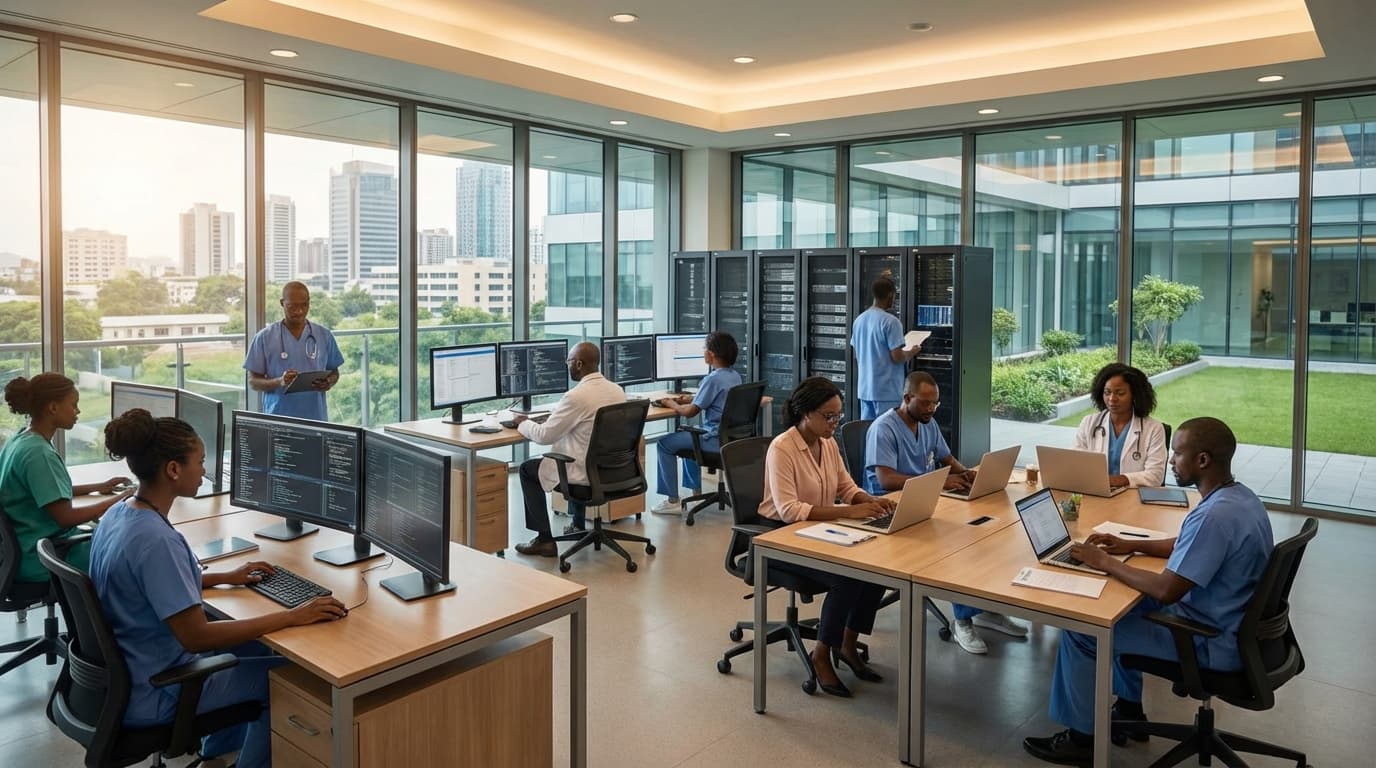
Radiology Reader & Reporting Support in Mozambique
Engineering Excellence & Technical Support
Remote radiology reading and reporting services High-standard technical execution following OEM protocols and local regulatory frameworks.
Remote Diagnostic Support & Training
Provides radiologists and technicians in remote Mozambican clinics with real-time access to specialist expertise for image interpretation, second opinions, and remote training modules, bridging geographical barriers and improving diagnostic accuracy.
Centralized Image Archiving & PACS Integration
Facilitates secure, cloud-based archiving of radiological images, enabling seamless integration with existing Picture Archiving and Communication Systems (PACS) and allowing for efficient retrieval and analysis of patient data across different healthcare facilities.
AI-Powered Anomaly Detection & Workflow Prioritization
Leverages artificial intelligence to flag potential abnormalities in medical images, assisting radiologists in identifying critical findings faster and prioritizing urgent cases, thereby optimizing reporting turnaround times and enhancing patient care pathways.
What Is Radiology Reader & Reporting Support In Mozambique?
Radiology Reader & Reporting Support in Mozambique refers to a specialized service designed to enhance the capacity and efficiency of radiological diagnostic interpretation and subsequent report generation within the Mozambican healthcare system. This support leverages remote expertise, advanced software platforms, and structured workflows to address challenges such as a shortage of qualified radiologists, geographical barriers, and varying levels of technological infrastructure. The service aims to improve diagnostic accuracy, reduce turnaround times for reports, and facilitate access to expert opinions, thereby improving patient care outcomes. It is crucial for healthcare facilities, public health initiatives, and research institutions operating in or supporting Mozambique.
| Service Aspect | Description | Beneficiaries | Typical Use Cases |
|---|---|---|---|
| Remote Image Interpretation | Expert radiologists review images from remote locations, providing diagnostic reports. | Hospitals, clinics, diagnostic centers in Mozambique with limited or no on-site radiologist presence. | Emergency room consultations, routine diagnostic imaging, subspecialty interpretations (e.g., neuroimaging, musculoskeletal, pediatric radiology) where local expertise is scarce. |
| Structured Reporting | Ensures reports follow standardized formats, improving clarity and consistency. | All healthcare providers generating or receiving radiology reports. | Ensuring all critical findings are documented, facilitating easier comparison of sequential studies, and supporting research data collection. |
| Quality Assurance | Mechanisms to ensure diagnostic accuracy and adherence to best practices. | Radiology departments, regulatory bodies, patient safety initiatives. | Reducing diagnostic errors, identifying areas for improvement in local practice, and meeting accreditation standards. |
| Capacity Building | Transferring knowledge and skills to local healthcare professionals. | Radiographers, technicians, junior radiologists, medical students. | Training on new imaging modalities, interpretation techniques, quality control, and use of reporting software. |
| PACS/RIS Support | Technical assistance for digital imaging and information systems. | IT departments of healthcare facilities, PACS/RIS vendors. | Troubleshooting system errors, optimizing workflow, ensuring data security, and facilitating image sharing. |
| AI-Powered Decision Support | Leveraging artificial intelligence to assist in detection or characterization of pathologies. | Radiologists, diagnostic centers. | Early detection of subtle findings (e.g., pulmonary nodules, fractures), prioritization of urgent cases, reducing radiologist fatigue. |
Key Components of Radiology Reader & Reporting Support:
- Remote Image Interpretation (Teleradiology): Transmission of medical images (X-rays, CT scans, MRIs, ultrasounds) to off-site, subspecialized radiologists for interpretation.
- Structured Reporting Systems: Utilization of standardized templates and software for generating consistent, comprehensive, and actionable radiology reports.
- Quality Assurance and Peer Review: Implementation of processes for verifying the accuracy and completeness of interpretations and reports through secondary reads or case reviews.
- Training and Capacity Building: Providing educational resources and mentorship to local medical professionals (radiographers, technicians, junior radiologists) to enhance their skills.
- PACS/RIS Integration and Support: Assistance with the implementation, maintenance, and optimization of Picture Archiving and Communication Systems (PACS) and Radiology Information Systems (RIS) for efficient image and data management.
- Clinical Decision Support Tools: Integration of AI-powered algorithms or expert systems to aid in the detection and characterization of abnormalities.
- Teleconsultation and Multidisciplinary Team (MDT) Meetings: Facilitating remote consultations between reporting radiologists and referring clinicians, or participation in virtual MDT discussions.
Who Needs Radiology Reader & Reporting Support In Mozambique?
Radiology reader and reporting support is a critical service for improving diagnostic accuracy, reducing radiologist workload, and enhancing patient care in healthcare settings. In Mozambique, where access to specialized medical expertise and advanced imaging infrastructure can be limited, such support is particularly valuable. This service can benefit a range of healthcare providers and government initiatives aiming to bolster the country's public health system.
| Customer Type | Primary Need | Impact Area | Key Departments Benefiting |
|---|---|---|---|
| Public Hospitals | High patient volume, specialist shortages | Improved diagnosis, reduced workload | Radiology, Emergency, Surgery, Internal Medicine |
| Regional Hospitals | Limited or no local specialists | Access to expert interpretation | Radiology, Outpatient, Maternity |
| District Health Centers | Basic imaging, complex case referral | Enhanced diagnostic capability | Diagnostic Imaging, Primary Healthcare |
| Private Providers | Service enhancement, efficiency | Competitive advantage, quality assurance | Imaging Centers, Specialty Clinics |
| Ministry of Health | National health strategy, quality control | Strengthened public health system | Public Health Surveillance, National Programs |
| NGOs/Humanitarian Orgs | Underserved populations, remote areas | Essential diagnostic access | Mobile Clinics, Field Hospitals |
| Training Institutions | Educational support, case exposure | Enhanced medical learning | Medical Schools, Residency Programs |
Target Customers and Departments in Mozambique for Radiology Reader & Reporting Support
- {"title":"Public Hospitals and Central Referral Centers","departments":["Radiology Department","Emergency Department","Oncology Department","Surgical Departments (General, Orthopedic, Neurosurgery, etc.)","Pediatric Department","Internal Medicine"],"description":"These facilities often manage a high volume of diverse cases and may experience shortages of specialized radiologists. Support can significantly improve turnaround times for critical diagnoses and reduce the burden on existing staff."}
- {"title":"Regional and Provincial Hospitals","departments":["Radiology Department","Outpatient Clinics","Maternity Units","General Practice Units"],"description":"These hospitals serve larger populations and may have limited or no in-house radiology specialists. Outsourced reading and reporting can bridge this gap, ensuring patients receive timely and accurate interpretations of their scans."}
- {"title":"District Health Centers with Imaging Capabilities","departments":["Diagnostic Imaging Units","Primary Healthcare Services"],"description":"Even smaller facilities equipped with basic imaging (e.g., X-ray) can benefit from remote reading and reporting services, especially for complex cases or when local expertise is unavailable."}
- {"title":"Private Healthcare Providers and Clinics","departments":["Radiology/Imaging Centers","Specialty Clinics (e.g., Cardiology, Neurology)","Diagnostic Laboratories with Imaging"],"description":"As the private healthcare sector grows in Mozambique, private hospitals and clinics offering advanced imaging services can leverage reader and reporting support to enhance their service offerings, improve efficiency, and maintain high diagnostic standards."}
- {"title":"Government Health Initiatives and Ministry of Health Programs","departments":["Public Health Surveillance Units","National Health Strategy Implementation Teams","Medical Education and Training Departments"],"description":"The Ministry of Health can utilize these services to strengthen national health programs, improve disease surveillance (e.g., for tuberculosis, cancer screening), and ensure consistent quality of radiological diagnostics across the country."}
- {"title":"Non-Governmental Organizations (NGOs) and Humanitarian Organizations","departments":["Mobile Health Clinics","Field Hospitals","Maternal and Child Health Programs","Infectious Disease Control Programs"],"description":"NGOs involved in healthcare delivery, particularly in remote or underserved areas, can benefit from reliable radiology reading and reporting support to provide essential diagnostic services to vulnerable populations."}
- {"title":"Medical Training Institutions and Universities","departments":["Medical Schools","Radiology Residency Programs","Continuing Medical Education Departments"],"description":"These institutions can use reporting support for educational purposes, allowing students and junior doctors to learn from detailed reports and gain exposure to a wider range of cases."}
Radiology Reader & Reporting Support Process In Mozambique
This document outlines the workflow for the Radiology Reader & Reporting Support Process in Mozambique. This process ensures efficient and accurate interpretation of radiological images and timely generation of reports to support patient care.
| Stage | Description | Responsible Party/Department | Key Activities | Output/Outcome | Potential Challenges |
|---|---|---|---|---|---|
| Inquiry & Request Initiation | The process begins when a clinician requests a radiological examination for a patient. | Requesting Clinician, Radiology Department Reception/Triage | Patient registration, clinical information gathering, ordering of the examination. | Completed radiology request form with all necessary details. | Incomplete or inaccurate clinical information, patient identification errors. |
| Image Acquisition & Data Transfer | Radiological images are acquired using appropriate modalities and transferred to the Picture Archiving and Communication System (PACS). | Radiology Technologist, IT Department | Performing the examination according to protocol, ensuring image quality, transferring images to PACS. | Digital radiological images stored in PACS. | Technical equipment malfunction, poor image quality, network connectivity issues. |
| Image Pre-processing & Quality Check | Images are prepared for interpretation, and their quality is assessed to ensure diagnostic suitability. | Radiology Technologist, Radiology Department Administrator | Basic image adjustments (e.g., windowing, leveling), anonymization, initial quality assessment. | Images ready for reader interpretation, flagged for potential quality issues. | Inadequate image quality requiring re-examination, technical gremlins in PACS. |
| Reader Assignment & Review | A qualified radiologist is assigned to interpret the images and produce a diagnostic report. | Radiology Department Manager, PACS Administrator | Assigning cases based on subspecialty, workload, and availability; radiologist performs image interpretation. | Preliminary findings, identification of abnormalities, initial diagnostic impression. | Radiologist workload, lack of subspecialist availability, complex cases requiring consultation. |
| Report Generation | The radiologist dictates or drafts the diagnostic report based on their interpretation. | Radiologist, Medical Transcriptionist (if applicable) | Dictating findings, impressions, and recommendations; or typing the report directly. | Draft diagnostic report. | Transcription errors, inconsistencies in reporting style, time constraints for reporting. |
| Report Review & Validation | The generated report is reviewed by another radiologist or a senior expert to ensure accuracy, completeness, and clarity. | Senior Radiologist, Department Head | Reviewing the draft report against images, verifying findings and impressions, making necessary edits. | Finalized and validated diagnostic report. | Disagreements between reviewers, delays in review process, overlooking critical findings. |
| Report Dissemination & Archiving | The final report is communicated to the requesting clinician and securely archived. | Radiology Department Administrator, IT Department | Printing or electronically sending the report to the clinician, storing the report and images in PACS/electronic health record (EHR). | Report delivered to the clinician, long-term archival of images and reports. | Delayed report delivery, issues with EHR integration, data security breaches. |
| Feedback & Quality Improvement | A mechanism is in place to gather feedback on report quality and identify areas for process improvement. | Radiology Department Management, Clinical Staff | Soliciting feedback from clinicians on report utility, conducting regular audits of reports and processes, implementing corrective actions. | Improved reporting quality, optimized workflow, enhanced patient care. | Lack of systematic feedback collection, resistance to change, insufficient resources for improvement initiatives. |
Key Stages in the Radiology Reader & Reporting Support Process
- Inquiry & Request Initiation
- Image Acquisition & Data Transfer
- Image Pre-processing & Quality Check
- Reader Assignment & Review
- Report Generation
- Report Review & Validation
- Report Dissemination & Archiving
- Feedback & Quality Improvement
Radiology Reader & Reporting Support Cost In Mozambique
Providing radiology reader and reporting support services in Mozambique involves a complex interplay of factors influencing cost. These factors include the volume and complexity of imaging studies, the required turnaround time for reports, the qualifications and specialization of the radiologists, and the logistical challenges of remote access and communication within Mozambique. The local currency, the Mozambican Metical (MZN), is subject to exchange rate fluctuations, which can impact the cost of imported equipment and software, indirectly affecting service pricing. Furthermore, the availability of qualified local radiologists and the demand for their services play a significant role in determining pricing.
| Service Component | Estimated Price Range (MZN per study) | Notes |
|---|---|---|
| Basic X-ray Interpretation & Reporting | 1,000 - 3,000 MZN | Assumes standard projections and common findings. |
| CT Scan Interpretation & Reporting (e.g., Head, Chest, Abdomen) | 2,500 - 7,500 MZN | Varies by scan type and complexity of findings. Contrast-enhanced studies may be higher. |
| MRI Scan Interpretation & Reporting (e.g., Brain, Spine, Joints) | 3,500 - 10,000 MZN | Significantly influenced by the anatomical region and the sequences performed. |
| Ultrasound Interpretation & Reporting (e.g., Abdominal, Obstetric) | 1,500 - 5,000 MZN | Includes basic and more specialized ultrasounds (e.g., fetal anomaly scans). |
| STAT Reporting Surcharge | +50% to +100% of base fee | For urgent reports required within a few hours. |
| Dedicated Radiologist Subscription (Monthly) | Negotiable (high volume) | Typically for larger institutions requiring continuous support, often on a per-case or block-hour basis. |
| Teleradiology Platform Access/Subscription | Varies widely (per study or monthly) | May include PACS integration, reporting software, and secure communication channels. |
Key Pricing Factors for Radiology Reader & Reporting Support in Mozambique:
- Volume and complexity of imaging studies (e.g., X-ray, CT, MRI, ultrasound).
- Required turnaround time for final reports (e.g., STAT, routine, follow-up).
- Radiologist specialization and experience (e.g., general radiology, neuroradiology, musculoskeletal).
- Technological infrastructure (e.g., PACS availability, internet connectivity).
- Geographic location within Mozambique and associated logistical challenges.
- Licensing and regulatory compliance.
- Demand for specialized radiology services in specific regions.
- Contractual terms and service level agreements (SLAs).
Affordable Radiology Reader & Reporting Support Options
Radiology departments are constantly seeking ways to optimize their reading workflow and reporting efficiency while managing costs. Affordable solutions exist, ranging from leveraging technology for remote reading to strategically outsourcing specific types of studies. Understanding the benefits of value bundles and implementing smart cost-saving strategies are key to achieving these goals. Value bundles often combine services like remote reading, preliminary report generation, and even preliminary findings dictation, providing a comprehensive support package at a potentially lower per-study cost than individual services. Cost-saving strategies focus on maximizing existing resources, reducing turnaround times, and ensuring the right level of expertise is applied where it's most needed.
| Service Type | Cost-Saving Mechanism | Potential Benefit |
|---|---|---|
| Subspecialty Reading Bundles | Volume discounts, focused expertise | Reduced per-study cost, improved diagnostic accuracy for specialized cases |
| Preliminary Report Generation | Reduced radiologist dictation/editing time | Faster turnaround times, increased radiologist throughput |
| 24/7 Remote Reading | Avoids high overhead of in-house night/weekend staff | Ensured coverage, improved patient care without increased fixed costs |
| AI-Assisted Reporting | Automated data entry, pre-populated text | Significant reduction in reporting time, improved report consistency |
| On-Demand Reading | Pay-per-use flexibility | Cost control for variable workloads, avoids underutilization of resources |
Key Value Bundles and Cost-Saving Strategies
- Subspecialty Reading Bundles: Contracts for reading specific modalities (e.g., MRI, CT) or subspecialties (e.g., neuroradiology, musculoskeletal radiology) can offer discounted rates due to volume and focused expertise.
- Preliminary Report Generation Services: Outsourcing the initial generation of preliminary reports, which can then be finalized by the in-house radiologist, significantly reduces their immediate workload and turnaround time.
- 24/7 Remote Reading Services: Accessing off-site radiologists for round-the-clock coverage can be more cost-effective than maintaining a full in-house night or weekend team, especially for lower volumes.
- Teleradiology Partnerships: Establishing long-term relationships with teleradiology providers can unlock volume-based discounts and dedicated reader pools for specific needs.
- AI-Assisted Reporting Tools: Integrating AI solutions that pre-populate report sections, identify incidental findings, or suggest standard phrasing can dramatically cut down on radiologist dictation and editing time.
- On-Demand Reading Services: For fluctuating workloads or unexpected surges, on-demand reading services provide flexibility without the overhead of permanent staff.
- Task-Based Pricing Models: Negotiating pricing based on the number of studies read or specific report types rather than a fixed salary can lead to better cost control.
- Workflow Automation: Implementing software that automates study assignment, report tracking, and quality assurance processes reduces administrative burden and potential errors.
- Prioritization of High-Volume/Low-Complexity Studies: Strategically outsourcing routine or less complex studies can free up in-house radiologists for more challenging cases, optimizing their expertise and time.
- Training and Skill Development: Investing in training for existing staff to handle a wider range of studies or to become proficient with new reporting tools can reduce reliance on external services.
Verified Providers In Mozambique
In Mozambique's evolving healthcare landscape, identifying reliable and high-quality healthcare providers is paramount for individuals and organizations alike. Franance Health stands out as a leading entity, distinguished by its rigorous vetting process and commitment to excellence. This document outlines Franance Health's credentials and explains why they represent the best choice for healthcare services in Mozambique.
| Attribute | Franance Health's Approach | Why it Matters for You |
|---|---|---|
| Quality Assurance | Strict accreditation, regular audits, and performance monitoring of all affiliated providers. | Ensures you receive care from consistently high-performing and safe medical professionals and facilities. |
| Provider Expertise | Thorough verification of medical licenses, specializations, and experience. | Guarantees access to qualified doctors and specialists in their respective fields. |
| Patient Safety | Adherence to international safety protocols and continuous training on best practices. | Minimizes risks and ensures your health and well-being are the top priority during any medical intervention. |
| Accessibility and Convenience | A network of providers across Mozambique, often with integrated appointment systems. | Saves you time and effort in finding and scheduling care, with options potentially closer to your location. |
| Trust and Reliability | A reputation built on integrity, ethical practices, and positive patient outcomes. | Provides peace of mind knowing you are engaging with a reputable and dependable healthcare partner. |
Franance Health's Key Credentials and Commitments
- Accreditation and Certifications: Franance Health actively seeks and maintains accreditations from recognized national and international health organizations. These certifications demonstrate adherence to stringent quality standards in patient care, safety protocols, and operational efficiency.
- Rigorous Provider Vetting: Beyond standard licensing, Franance Health employs a multi-stage vetting process for all affiliated providers. This includes in-depth background checks, verification of professional qualifications, peer reviews, and ongoing performance monitoring.
- Commitment to Continuous Improvement: Franance Health invests in continuous professional development for its network of healthcare professionals, ensuring they are up-to-date with the latest medical advancements, technologies, and best practices.
- Patient-Centric Approach: The organization prioritizes patient satisfaction and well-being. This commitment is reflected in their focus on accessible care, clear communication, and a responsive feedback mechanism to address patient concerns.
- Ethical Practice Standards: Franance Health upholds the highest ethical standards in healthcare delivery, ensuring transparency, confidentiality, and equitable treatment for all patients.
- Technological Integration: Franance Health embraces technology to enhance service delivery, from streamlined appointment booking and electronic health records to potentially telemedicine services where applicable and compliant with local regulations.
- Compliance with Mozambican Healthcare Regulations: All Franance Health operations and affiliated providers strictly adhere to the laws and regulations set forth by the Mozambican Ministry of Health and other relevant governmental bodies.
Scope Of Work For Radiology Reader & Reporting Support
This Scope of Work (SOW) outlines the requirements for providing Radiology Reader & Reporting Support services. The objective is to enhance the efficiency and accuracy of radiological image interpretation and report generation, leveraging qualified radiologists or specialized reading services. This includes ensuring timely delivery of high-quality diagnostic reports, adherence to established medical standards, and integration with existing Picture Archiving and Communication Systems (PACS) and Electronic Health Records (EHR).
| Technical Deliverable | Standard Specifications | Description | Acceptance Criteria |
|---|---|---|---|
| Radiology Reports (Diagnostic) | HL7 v2.x OR FHIR (for structured reporting) | Finalized, signed diagnostic reports for all interpreted studies, delivered in a secure, HIPAA-compliant format. | Reports are delivered within agreed-upon TAT, accurately reflect imaging findings, and are compliant with established reporting templates and style guides. |
| Image Interpretation Services | DICOM standard for image transfer and viewing | Remote interpretation of medical imaging studies (X-ray, CT, MRI, Ultrasound, Nuclear Medicine, etc.) by qualified radiologists. | Studies are accessed and interpreted securely via a PACS viewer, with a defined accuracy rate (e.g., >98%). |
| Quality Assurance (QA) Reports | PDF or integrated dashboard view | Regular reports detailing reading accuracy, TAT performance, and any identified trends or issues. | QA reports are provided monthly, demonstrating adherence to quality metrics and identifying areas for improvement. |
| Subspecialty Reporting | Specialized reporting templates | Provision of expert interpretation and reporting in specific subspecialties (e.g., Neuroradiology, Musculoskeletal, Breast Imaging, Interventional Radiology). | Reports are generated by radiologists with verified subspecialty credentials and experience. |
| IT Integration & Connectivity | Secure VPN, SFTP, or API integration | Secure and reliable connection between the vendor's platform and the client's PACS/RIS/EHR for image and data exchange. | Successful, secure data transmission established and maintained with minimal downtime (e.g., 99.9% uptime). |
| Reporting Turnaround Time (TAT) | Configurable within PACS/RIS or agreed SLA | Adherence to defined TAT for routine, STAT, and critical findings reports. | Achieve and maintain agreed-upon TAT metrics (e.g., Routine: 24-48 hours, STAT: < 1 hour, Critical: < 15 minutes). |
| Data Security & Privacy | HIPAA, GDPR, or relevant regional compliance | All data transmission, storage, and processing must adhere to strict data security and privacy regulations. | Successful completion of security audits and evidence of compliance with all relevant data protection laws. |
| Reader Training & Credentialing | Internal verification and external board certification records | Provision of qualified, licensed, and credentialed radiologists with appropriate board certifications and relevant experience. | Verification of all reader credentials and submission of documentation upon request. |
Key Objectives of Radiology Reader & Reporting Support
- Improve turnaround times (TAT) for radiological report generation.
- Enhance diagnostic accuracy and consistency.
- Provide specialized subspecialty expertise where needed.
- Ensure compliance with all relevant regulatory and quality standards.
- Facilitate seamless integration with existing healthcare IT infrastructure.
- Offer flexible and scalable reading capacity to meet fluctuating demands.
Service Level Agreement For Radiology Reader & Reporting Support
This Service Level Agreement (SLA) outlines the agreed-upon response times and uptime guarantees for Radiology Reader & Reporting Support services. This document is intended to ensure the consistent and reliable provision of these critical services, minimizing disruption to clinical workflows and patient care.
| Service Component | SLA Metric | Target | Measurement Period | Escalation Protocol |
|---|---|---|---|---|
| Radiology Reader Availability | Uptime Guarantee | 99.9% | Monthly | Tier 1 (Initial Triage) -> Tier 2 (Specialist Support) -> Tier 3 (Vendor/Development) |
| Reporting System Availability | Uptime Guarantee | 99.9% | Monthly | Tier 1 (Initial Triage) -> Tier 2 (Specialist Support) -> Tier 3 (Vendor/Development) |
| Reader/Reporting Support Ticket (Severity 1 - Critical Incident) | Response Time | 15 minutes | Per incident | Immediate escalation to Tier 2 upon initial acknowledgement |
| Reader/Reporting Support Ticket (Severity 2 - Major Incident) | Response Time | 30 minutes | Per incident | Escalation to Tier 2 within 1 hour |
| Reader/Reporting Support Ticket (Severity 3 - Minor Incident) | Response Time | 2 business hours | Per incident | Escalation to Tier 2 within 4 business hours |
| Reader/Reporting Support Ticket (Severity 1 - Critical Incident) | Target Resolution Time | 4 hours (within scheduled service hours) | Per incident | Continuous monitoring and updates every 2 hours |
| Reader/Reporting Support Ticket (Severity 2 - Major Incident) | Target Resolution Time | 8 business hours (within scheduled service hours) | Per incident | Regular status updates provided |
| Reader/Reporting Support Ticket (Severity 3 - Minor Incident) | Target Resolution Time | 2 business days (within scheduled service hours) | Per incident | Resolution within agreed timeframe or documented workaround |
| Routine Inquiries/Requests | Response Time | 4 business hours | Per request | N/A (handled through standard ticketing process) |
Key Service Definitions
- Uptime: The percentage of time the Radiology Reader & Reporting Support services are available and operational during scheduled service hours.
- Response Time: The maximum time allowed for the support team to acknowledge and begin addressing a reported incident or request.
- Resolution Time: The maximum time allowed to fully resolve a reported incident or fulfill a request, categorized by severity.
- Scheduled Service Hours: The period during which the Radiology Reader & Reporting Support services are expected to be fully operational and supported. This typically excludes weekends and public holidays unless otherwise specified.
Frequently Asked Questions

Ready when you are
Let's scope your Radiology Reader & Reporting Support in Mozambique project in Mozambique.

Scaling healthcare logistics and technical systems across the entire continent.