
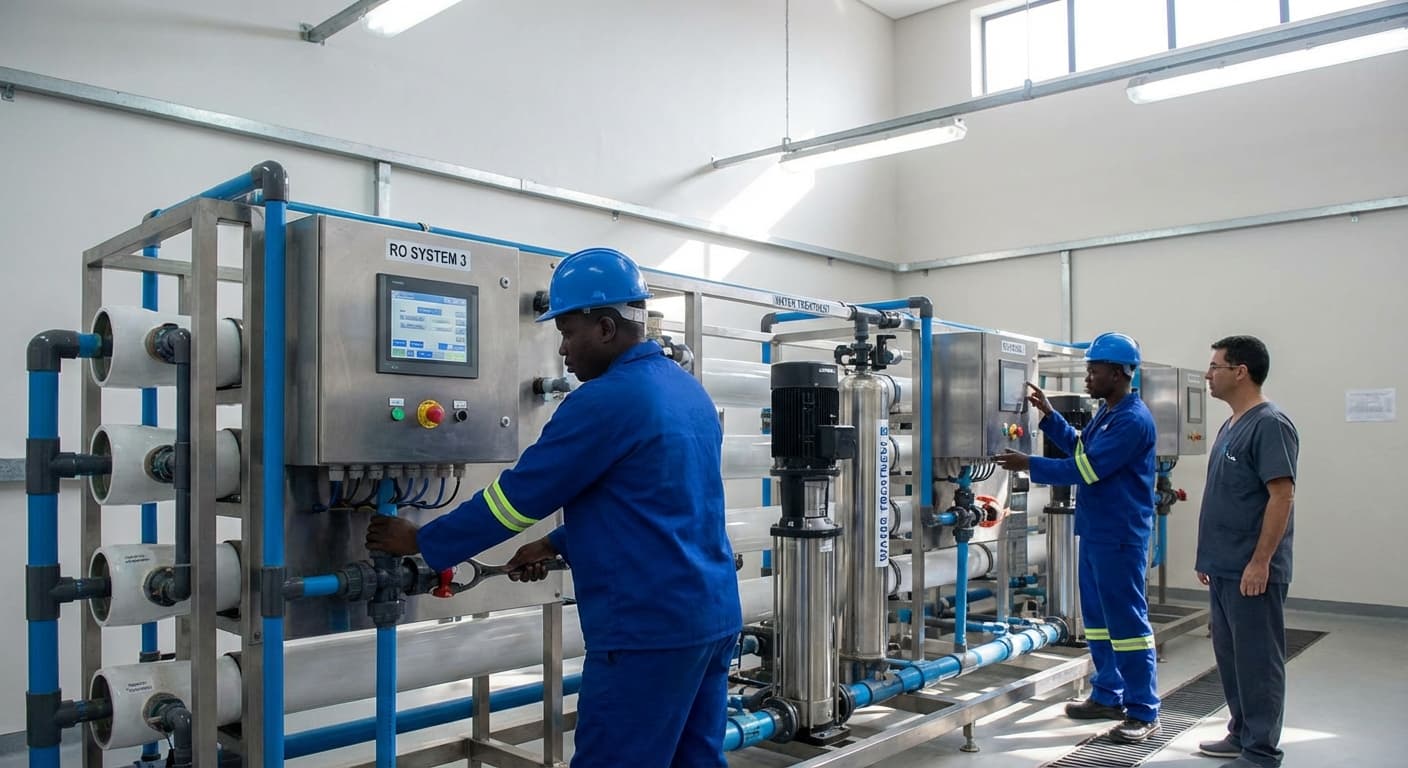
Dialysis RO/Water Treatment Plant Installation Service in Mozambique
Engineering Excellence & Technical Support
Dialysis RO/Water Treatment Plant Installation Service High-standard technical execution following OEM protocols and local regulatory frameworks.
Advanced RO Membrane Technology
We deploy state-of-the-art Reverse Osmosis (RO) membrane systems, specifically engineered for Mozambique's unique water profiles. Our installations ensure the highest purity water for dialysis, minimizing scaling and maximizing membrane lifespan even with challenging feedwater sources. This translates to consistent, reliable performance and reduced operational costs for your facility.
Robust & Climate-Resilient Infrastructure
Our installations are built to withstand Mozambique's diverse climatic conditions. We utilize corrosion-resistant materials and robust engineering practices to ensure long-term operational integrity, minimizing downtime due to environmental factors. This includes considerations for high humidity, elevated temperatures, and potential dust ingress, guaranteeing a stable and reliable water supply.
Energy-Efficient & Sustainable Solutions
We prioritize energy-efficient designs in our dialysis water treatment plants. Our systems incorporate smart controls and optimized component selection to reduce power consumption, lowering operational expenses and contributing to environmental sustainability. This focus ensures your facility benefits from a cost-effective and eco-conscious water treatment solution.
What Is Dialysis Ro/water Treatment Plant Installation Service In Mozambique?
Dialysis RO/Water Treatment Plant Installation Service in Mozambique refers to the comprehensive process of designing, procuring, assembling, commissioning, and providing ongoing support for specialized water purification systems tailored for dialysis units. These plants are critical for ensuring the consistent supply of highly purified water, meeting stringent international medical standards (e.g., AAMI, ISO 13959), essential for hemodialysis procedures. The service encompasses initial site assessment, water quality analysis, system design based on local water parameters and dialysis machine requirements, equipment sourcing, installation, rigorous testing, operator training, and often, maintenance contracts.
| Who Needs It? | Typical Use Cases | |||
|---|---|---|---|---|
| Dialysis Centers (Public & Private): Facilities providing hemodialysis treatment to patients with end-stage renal disease. | Hospitals: Departments within hospitals that operate standalone or integrated dialysis units. | Nephrology Clinics: Specialized clinics offering outpatient dialysis services. | Remote Healthcare Facilities: Healthcare providers in underserved areas requiring reliable access to purified water for critical medical procedures. | Emergency & Disaster Relief Operations: Temporary installations of dialysis capabilities in response to humanitarian crises or natural disasters. |
| Routine Hemodialysis Treatment: Providing ultra-pure water for regular dialysis sessions for patients with chronic kidney disease. | Acute Dialysis: Supplying water for emergent dialysis needs in hospital intensive care units or critical care settings. | Peritoneal Dialysis Fluid Preparation: While less common for RO plant installation, some advanced systems might contribute to the initial purification stages for compounding dialysis solutions. | Research & Development: Laboratories or institutions requiring highly purified water for experimental dialysis setups or related medical research. | Mobile Dialysis Units: Integration of water treatment systems into mobile or transportable dialysis facilities for outreach programs or temporary service provision. |
Key Components and Stages of Dialysis RO/Water Treatment Plant Installation:
- Site Assessment & Water Quality Analysis: Evaluating the existing water source (municipal, well, etc.) and conducting comprehensive chemical and microbiological testing to identify contaminants and determine the optimal treatment strategy.
- System Design & Engineering: Developing a custom-engineered solution incorporating Reverse Osmosis (RO), Ultrafiltration (UF), and potentially other technologies (e.g., EDI, activated carbon filtration, UV sterilization) to achieve medical-grade water purity.
- Equipment Procurement & Supply: Sourcing high-quality RO membranes, pumps, filters, control systems, storage tanks, piping, and other essential components from reputable manufacturers.
- Installation & Assembly: Physically installing and connecting all system components according to engineering specifications and international safety standards, often involving civil works and electrical integration.
- Commissioning & Validation: Thoroughly testing the installed plant under operational conditions, verifying that it consistently produces water meeting all specified purity standards and demonstrating its performance through documented validation protocols.
- Operator Training: Providing comprehensive training to the facility's technical staff on the operation, routine maintenance, and troubleshooting of the water treatment system.
- Documentation & Handover: Supplying detailed engineering drawings, operation manuals, maintenance logs, and validation reports.
- After-Sales Support & Maintenance: Offering ongoing technical support, spare parts supply, and scheduled maintenance services to ensure long-term operational efficiency and reliability.
Who Needs Dialysis Ro/water Treatment Plant Installation Service In Mozambique?
This document outlines the target customers and departments that would benefit from Dialysis RO/Water Treatment Plant Installation Services in Mozambique. Ensuring a consistent supply of highly purified water is critical for the safe and effective operation of dialysis facilities. Therefore, the demand for these services is primarily driven by healthcare providers and related governmental or non-governmental organizations responsible for kidney care.
| Customer Type | Primary Department/User | Key Needs/Concerns | Decision Makers/Influencers |
|---|---|---|---|
| Public Hospitals | Nephrology/Dialysis Unit, Biomedical Engineering | Reliable water supply, cost-effectiveness, regulatory compliance, maintenance support | Hospital Administrator, Head of Nephrology, Chief Biomedical Engineer, Ministry of Health Representatives |
| Private Hospitals | Nephrology/Dialysis Unit, Facility Management | High-quality water, advanced technology, minimal downtime, patient satisfaction, competitive pricing | Hospital CEO, Medical Director, Head of Operations, Procurement Manager |
| Dedicated Dialysis Clinics | Clinic Director, Head Nurse, Biomedical Technician | Specialized RO systems, efficient workflow, consistent water quality, regulatory adherence, emergency support | Clinic Owner, Operations Manager, Lead Nephrologist |
| NGOs / International Aid Organizations | Project Manager (Health Sector), Procurement Officer, Technical Advisor | Sustainable solutions, community impact, cost-efficiency, long-term maintenance plans, training for local staff | Country Director (NGO), Program Manager, Funding Agency Representatives, Ministry of Health Liaisons |
| Governmental Health Agencies (Ministry of Health) | Directorate of Curative Services, Directorate of Infrastructure, Procurement Department | National healthcare standards, public health impact, nationwide rollout, budget allocation, long-term planning | Minister of Health, Permanent Secretary, Directors of relevant Directorates, Procurement Committee |
Target Customers for Dialysis RO/Water Treatment Plant Installation Service in Mozambique
- Public Hospitals with Nephrology Departments
- Private Hospitals with Nephrology Departments
- Dedicated Dialysis Clinics
- Non-Governmental Organizations (NGOs) providing Healthcare Services
- Governmental Health Agencies (Ministry of Health)
- International Aid Organizations funding Healthcare Infrastructure
- Research Institutions with Clinical Trial Facilities (if applicable)
- Military Hospitals (if applicable)
Dialysis Ro/water Treatment Plant Installation Service Process In Mozambique
This document outlines the comprehensive workflow for the installation of Dialysis Reverse Osmosis (RO)/Water Treatment Plants in Mozambique, covering the entire process from initial client inquiry to successful project execution. We detail each stage, highlighting key activities, deliverables, and considerations for a smooth and efficient installation.
| Phase | Key Activities | Deliverables/Outcomes | Key Considerations/Notes |
|---|---|---|---|
| 1. Inquiry and Consultation | Client contacts company with interest in a Dialysis RO/Water Treatment Plant. Initial discussion of client's needs, facility size, existing water source quality, and budget. Preliminary understanding of regulatory requirements in Mozambique. | Understanding of client's requirements. Initial scope definition. Establishment of communication channels. | Prompt response to inquiries. Clear communication of capabilities and service offerings. Gathering essential preliminary information from the client. |
| 2. Site Assessment and System Design | On-site visit by technical team to assess water source (potability, flow rate, pressure). Analysis of existing electrical supply and drainage infrastructure. Identification of installation space and accessibility. Detailed system design based on client needs, local water quality, and relevant standards (e.g., AAMI, ISO). Selection of appropriate RO membranes, pre-treatment filters, post-treatment systems, and disinfection methods. | Detailed site assessment report. Customized RO/Water Treatment Plant design and specifications. Bill of materials (BOM). Technical drawings (layout, electrical, plumbing). | Thorough understanding of local water conditions is crucial. Compliance with Mozambican health and environmental regulations. Optimization for efficiency and long-term operational cost. |
| 3. Quotation and Contract Negotiation | Preparation of a comprehensive quotation including equipment costs, installation fees, testing, training, and any applicable taxes or duties. Presentation of the quotation to the client. Negotiation of terms, payment schedule, and contractual agreements. Finalization of the contract. | Formal quotation. Signed service contract. Agreed-upon payment milestones. | Transparency in pricing. Clear scope of work in the contract. Inclusion of warranty and after-sales service details. |
| 4. Procurement and Logistics | Ordering of all necessary equipment and components from manufacturers. Coordination of international shipping, customs clearance, and local transportation to the client's site in Mozambique. Ensuring timely delivery of all materials. | Procured equipment and components. Customs clearance documentation. Delivery of materials to site. | Understanding of Mozambican import regulations and potential delays. Proper packaging and handling of sensitive equipment. Contingency planning for logistical challenges. |
| 5. Pre-Installation Site Preparation | Coordination with the client for necessary civil works (e.g., concrete pads, plumbing connections, electrical outlets, drainage points). Ensuring availability of power, water, and access for the installation team. Verification of prepared site against design specifications. | Site readiness for installation. Completed civil works and utilities access. | Close collaboration with the client's facility management. Clear communication of site preparation requirements. Ensuring safety protocols are in place. |
| 6. Installation and Commissioning | Assembly and installation of the RO/Water Treatment Plant components according to design drawings. Connecting electrical, plumbing, and drainage systems. System flushing and initial testing. Commissioning of the plant to ensure optimal performance and water quality. Conducting rigorous testing to meet specified standards (e.g., conductivity, TOC, bacterial counts). | Fully installed and operational RO/Water Treatment Plant. Commissioning report with test results. Validation of water quality parameters. | Experienced and certified installation technicians. Strict adherence to safety procedures. System calibration and fine-tuning for peak performance. Validation against medical standards. |
| 7. Training and Handover | Comprehensive training for client's technical and operational staff on plant operation, routine maintenance, troubleshooting, and basic repairs. Provision of operation and maintenance manuals. Official handover of the installed system to the client. | Trained client staff. Operation and maintenance manuals. Certificate of handover. | Tailored training programs based on client's technical capacity. Emphasis on preventative maintenance. Ensuring client's confidence in operating the system. |
| 8. Post-Installation Support and Maintenance | Ongoing technical support and troubleshooting. Scheduled preventative maintenance visits. Provision of spare parts and consumables. Remote monitoring capabilities (if applicable). Follow-up assessments to ensure continued optimal performance. | Ongoing system reliability. Minimized downtime. Customer satisfaction. Long-term operational efficiency. | Clear service level agreements (SLAs). Responsive customer support. Proactive maintenance to prevent issues. Building a long-term partnership with the client. |
Dialysis RO/Water Treatment Plant Installation Service Process in Mozambique
- Phase 1: Inquiry and Consultation
- Phase 2: Site Assessment and System Design
- Phase 3: Quotation and Contract Negotiation
- Phase 4: Procurement and Logistics
- Phase 5: Pre-Installation Site Preparation
- Phase 6: Installation and Commissioning
- Phase 7: Training and Handover
- Phase 8: Post-Installation Support and Maintenance
Dialysis Ro/water Treatment Plant Installation Service Cost In Mozambique
Installing a Reverse Osmosis (RO) and water treatment plant for dialysis in Mozambique involves a range of costs influenced by several critical factors. These plants are essential for providing safe and purified water for hemodialysis, removing impurities and contaminants that could be harmful to patients. The pricing in local currency, the Mozambican Metical (MZN), will vary significantly based on the scale of the operation, the specific technologies employed, the brand of equipment, and the logistical challenges of the installation site.
| Service Component | Estimated Cost Range (MZN) | Notes |
|---|---|---|
| Small to Medium-Sized Dialysis RO Plant (e.g., for 5-10 dialysis stations) | 150,000 - 400,000 MZN | Covers basic RO system, pre-treatment, basic monitoring. Price varies significantly based on quality and brand. |
| Larger Dialysis RO Plant (e.g., for 15-30+ dialysis stations) | 400,000 - 1,500,000+ MZN | Includes more advanced pre-treatment, higher capacity, enhanced safety features, and potentially redundant systems. |
| Full Water Treatment System (including advanced purification and redundancy) | 800,000 - 3,000,000+ MZN | For large hospital facilities requiring the highest standards, multi-stage purification, and robust backup systems. |
| Ancillary Equipment (e.g., storage tanks, distribution loops, softeners) | 50,000 - 300,000 MZN (per component/system) | Dependent on size, material, and complexity. |
| Installation Labor & Site Preparation | 30,000 - 150,000 MZN | Varies based on site complexity, duration, and skill level required. |
| Commissioning, Testing, and Training | 20,000 - 100,000 MZN | Essential for ensuring operational readiness and staff competency. |
| Transportation and Logistics | 10,000 - 200,000+ MZN | Highly dependent on origin of goods and destination within Mozambique. |
Key Pricing Factors for Dialysis RO/Water Treatment Plant Installation in Mozambique:
- Plant Capacity (Liters per Hour/Day): The volume of purified water required directly impacts the size and complexity of the RO system, thus affecting its cost. Larger capacities necessitate bigger membranes, pumps, and storage tanks.
- Water Source Quality: If the incoming water source (e.g., municipal supply, borehole) has high levels of dissolved solids, hardness, or specific contaminants, more advanced pre-treatment stages (e.g., multimedia filters, water softeners, chemical dosing) will be required, increasing the overall cost.
- Technology and Components: The choice of RO membranes, pump types, filtration stages, sterilization methods (e.g., UV disinfection, ozonation), and monitoring systems will influence the price. High-efficiency, durable, and advanced components generally command higher prices.
- Brand and Manufacturer Reputation: Reputable international brands known for quality and reliability often come with a premium price tag compared to lesser-known or local manufacturers.
- Installation Complexity and Site Preparation: This includes the cost of civil works, plumbing, electrical connections, space requirements, accessibility of the installation site, and any necessary modifications to the existing infrastructure. Remote or difficult-to-access locations will incur higher logistical costs.
- Ancillary Equipment: This can include storage tanks, distribution loops, water softeners, deionization units, post-treatment filters, and water quality monitoring systems.
- Commissioning and Training: The cost of expert engineers to install, calibrate, test, and commission the plant, as well as provide training to local staff on operation and maintenance, is a significant factor.
- Permits and Regulatory Approvals: Obtaining necessary permits and ensuring compliance with local health and environmental regulations can incur administrative and consultation fees.
- After-Sales Service and Warranty: The scope and duration of the warranty, as well as the availability and cost of ongoing maintenance and spare parts, will influence the initial investment.
- Logistics and Transportation: Shipping costs for equipment to Mozambique, especially to inland or remote areas, can be substantial.
Affordable Dialysis Ro/water Treatment Plant Installation Service Options
Seeking affordable dialysis RO/water treatment plant installation services? This guide explores value bundles and cost-saving strategies to help you make informed decisions. Investing in a reliable water treatment system is crucial for dialysis centers to ensure patient safety and operational efficiency. We break down common offerings and provide practical tips to optimize your budget without compromising quality.
| Value Bundle/Cost-Saving Strategy | Description | Benefits | Potential Savings |
|---|---|---|---|
| Basic Package: | Includes essential RO unit, basic pre-treatment, and standard installation. | Meets fundamental water quality requirements. | Lower upfront cost. |
| Standard Package: | Builds on the basic package with enhanced pre-treatment, UV sterilization, and basic monitoring. | Improved water purity, reduced microbial contamination risk. | Good balance between cost and performance. |
| Premium Package: | Comprehensive system with advanced pre-treatment, dual RO membranes, advanced monitoring, automated features, and extended warranty. | Highest water purity, enhanced reliability, reduced operational oversight. | Higher upfront cost, but potentially lower long-term operational and maintenance expenses due to increased efficiency and longevity. |
| Lease-to-Own Options: | Allows acquisition of equipment through monthly payments, often including maintenance. | Preserves capital, predictable expenses, access to up-to-date technology. | Spreads cost over time, potentially lower total cost of ownership with maintenance included. |
| Bundled Services: | Combine installation with initial maintenance, operator training, and water quality testing in one package. | Streamlined procurement, potential discounts for bundled services. | Reduced administrative overhead, possible package pricing discounts. |
| Refurbished/Certified Used Equipment: | Professionally refurbished and certified RO systems from reputable suppliers. | Significant cost reduction compared to new equipment. | Up to 30-50% savings on initial equipment purchase. |
| Energy-Efficient Components: | Specifying pumps, motors, and membranes known for their energy efficiency. | Lower electricity bills over the lifespan of the plant. | Ongoing operational savings, reducing the total cost of ownership. |
| DIY Pre-Treatment (with expert guidance): | In some cases, certain pre-treatment components might be sourced and installed by in-house technicians under the guidance of the RO system provider. | Reduces installation labor costs. | Potential savings on installation fees, but requires technical expertise and strict adherence to specifications. |
Key Considerations for Affordable Dialysis RO/Water Treatment Plant Installation:
- System Capacity: Determine the daily water volume required for your dialysis treatments.
- Technology Choice: Explore different RO membrane types, pre-treatment options (e.g., media filters, carbon filters), and post-treatment systems (e.g., UV sterilization).
- Automation & Monitoring: Features like automated flushing, conductivity monitoring, and alarms can improve efficiency and reduce manual intervention.
- Energy Efficiency: Opt for systems with lower power consumption to reduce long-term operating costs.
- Maintenance & Service Contracts: Understand the ongoing costs associated with maintenance and consider service level agreements.
- Compliance & Certifications: Ensure the system meets all local and international standards for dialysis water quality (e.g., AAMI, ISO).
- Installation & Commissioning: Factor in the cost of professional installation, testing, and operator training.
- Scalability: Consider if the system can be expanded to accommodate future growth.
Verified Providers In Mozambique
In Mozambique, ensuring access to reliable and high-quality healthcare services is paramount. The emergence of verified healthcare providers offers a crucial layer of trust and confidence for individuals seeking medical attention. Franance Health stands out as a premier example of such a verified provider, distinguished by its rigorous credentialing processes and unwavering commitment to patient well-being. This section will delve into the specific credentials that underpin Franance Health's reputation and explain why they represent the best choice for healthcare in Mozambique.
| Credential Category | Franance Health's Compliance | Significance for Patients |
|---|---|---|
| Professional Licensing | All physicians, nurses, and specialists hold valid licenses issued by the Mozambican Ministry of Health. | Guarantees that practitioners are legally qualified and competent to provide medical care. |
| Specialized Training & Certifications | Medical staff possess specialized certifications in their respective fields (e.g., cardiology, pediatrics, emergency medicine). | Ensures access to expert care for specific medical needs, leading to better diagnostic accuracy and treatment outcomes. |
| Adherence to Ethical Guidelines | Strict adherence to the Mozambican Medical Association's code of ethics and international patient rights charters. | Upholds patient dignity, privacy, and informed consent, fostering trust and a positive patient experience. |
| Quality Management Systems | Implementation of internationally recognized quality management systems (e.g., ISO standards relevant to healthcare). | Demonstrates a commitment to consistent service delivery, error reduction, and patient safety protocols. |
| Facility Standards | Facilities meet or exceed national health infrastructure requirements, including hygiene, safety, and equipment maintenance. | Provides a safe, clean, and well-equipped environment conducive to effective medical treatment and recovery. |
Key Credentials of Franance Health:
- Accreditation by reputable national and international health organizations, signifying adherence to stringent quality and safety standards.
- Certification of all medical professionals by relevant Mozambican health authorities, ensuring their qualifications and licenses are up-to-date.
- Partnerships with internationally recognized medical institutions for knowledge sharing and advanced training.
- Demonstrated commitment to continuous professional development for all staff, keeping them abreast of the latest medical advancements.
- Robust patient feedback mechanisms and transparent complaint resolution processes.
Scope Of Work For Dialysis Ro/water Treatment Plant Installation Service
This Scope of Work (SOW) outlines the requirements for the installation of a Dialysis Reverse Osmosis (RO) / Water Treatment Plant. It details the technical deliverables expected from the service provider and establishes the standard specifications to ensure the successful and compliant operation of the system. This document serves as a guide for both the client and the vendor to define roles, responsibilities, and the expected quality of the installation.
| Category | Technical Deliverable | Standard Specification / Requirement | Verification Method |
|---|---|---|---|
| Site Preparation | Pre-installation Site Survey Report | Detailed assessment of the installation location, including space, power, water supply, drainage, and access. Identification of potential challenges and recommended solutions. | Client review and approval of the survey report. |
| Site Preparation | Foundation/Mounting Requirements | Specifications for any necessary concrete pads, mounting brackets, or structural supports to ensure stable and secure installation of the RO unit and associated equipment. | Visual inspection during installation, confirmation against specified drawings. |
| Equipment Delivery | Delivery of RO/Water Treatment Plant Components | All components of the RO plant, including pre-filters, RO membranes, post-filters, UV sterilizer, storage tanks, pumps, control panels, piping, and fittings, delivered to the site in good condition and as per the approved Bill of Materials (BOM). | Visual inspection upon arrival, inventory check against BOM. |
| Installation | Piping and Plumbing | Installation of all required water inlet, outlet, drain, and bypass piping using approved materials (e.g., NSF-certified PVC, PEX, stainless steel). All connections to be leak-free and properly supported. Adherence to local plumbing codes. | Hydrostatic testing for leaks, visual inspection of all connections and supports. |
| Installation | Electrical Wiring and Connections | Installation of power supply, control wiring, and connections to the RO plant's control panel. All wiring to comply with local electrical codes and safety standards. Proper grounding of all electrical components. | Electrical continuity testing, insulation resistance testing, visual inspection of wiring and connections, verification of grounding. |
| Installation | Integration with Existing Systems | Seamless integration of the RO plant with the facility's water supply and wastewater drainage systems. Provisions for bypass operation and emergency shutdown. | Functional testing of bypass mode, demonstration of emergency shutdown. |
| Installation | Equipment Mounting and Securing | Secure mounting of all plant components (RO unit, tanks, pumps, filters) to prevent vibration and movement during operation. | Visual inspection for stability and secure fastening. |
| Commissioning | System Flushing and Sanitization | Thorough flushing of the entire system to remove debris and manufacturing residues, followed by chemical or UV sanitization as per industry best practices and manufacturer recommendations. | Water quality testing post-flushing (turbidity, particulates), visual inspection of drain water. |
| Commissioning | Initial Start-up and Testing | Controlled start-up of the RO plant, monitoring of all operational parameters (pressure, flow rate, temperature, conductivity, pH). Adjustment of settings for optimal performance. | Live operational data logging, comparison against design parameters. |
| Commissioning | Water Quality Testing | Comprehensive testing of treated water for key parameters including, but not limited to, total dissolved solids (TDS), conductivity, chlorine, pH, turbidity, heterotrophic plate count (HPC), endotoxins, and specific ions relevant to dialysis. Testing to be performed by an accredited laboratory. | Submission of accredited laboratory test reports for all parameters. |
| Commissioning | Performance Verification | Demonstration of the RO plant's ability to consistently produce water meeting the specified quality standards under normal operating conditions and simulated load scenarios. | Data logging over a defined period, witness testing by client representatives. |
| Documentation | As-Built Drawings | Updated drawings reflecting the final installed configuration, including piping, electrical, and component layout. These should be detailed and accurate. | Client review and approval of as-built drawings. |
| Documentation | Operations and Maintenance (O&M) Manual | Comprehensive manual covering system operation, routine maintenance procedures, troubleshooting guides, recommended spare parts list, and contact information for support. Manual should be tailored to the specific installed system. | Client review and acceptance of the O&M manual. |
| Documentation | Training Manuals and Records | Materials used during training sessions and documentation of attendance and completion by client personnel. | Submission of training materials and sign-in sheets/completion certificates. |
| Training | Operator Training | Hands-on training for client's designated personnel on the daily operation, monitoring, and basic troubleshooting of the RO/Water Treatment Plant. Training should cover system start-up, shutdown, alarm management, and manual adjustments. | Observation of trainee competency during practical sessions, post-training assessment (optional). |
| Training | Maintenance Training | Training on routine preventive maintenance tasks, including filter changes, membrane cleaning schedules, calibration of sensors, and basic system checks. Emphasis on safety procedures. | Observation of trainee competency in performing maintenance tasks. |
| Warranty and Support | Warranty Certificate | Formal warranty document outlining the coverage period and terms for all installed equipment and workmanship. Standard warranty period for RO components and labor. | Receipt and acceptance of the warranty certificate. |
| Warranty and Support | Post-Installation Support Plan | Details of the support services available after the warranty period, including emergency service response times, availability of spare parts, and ongoing maintenance contract options. | Receipt and acceptance of the support plan. |
Key Objectives of the RO/Water Treatment Plant Installation
- To deliver a fully functional and compliant RO/Water Treatment Plant for dialysis use.
- To ensure the treated water meets all relevant regulatory standards (e.g., AAMI, ISO, local health regulations).
- To integrate the RO plant seamlessly with existing or new plumbing and electrical infrastructure.
- To provide comprehensive training to client personnel on operation, maintenance, and troubleshooting.
- To minimize disruption to ongoing dialysis operations during the installation process.
Service Level Agreement For Dialysis Ro/water Treatment Plant Installation Service
This Service Level Agreement (SLA) outlines the response times and uptime guarantees for the installation service of Dialysis Reverse Osmosis (RO)/Water Treatment Plants. It ensures the reliable and timely deployment of critical water purification systems for healthcare facilities.
| Service Element | Description | Target Response Time (Business Hours) | Uptime Guarantee (Post-Installation) |
|---|---|---|---|
| Initial Consultation & Site Assessment | On-site visit to evaluate facility requirements, existing infrastructure, and determine optimal RO/Water Treatment plant placement and configuration. | Within 2-3 business days of request. | N/A |
| Project Planning & Design | Development of detailed installation plans, including schematics, material lists, and a project timeline. | Within 5 business days of completed site assessment. | N/A |
| Equipment Delivery & Pre-installation Checks | Coordination of equipment delivery and verification of all components upon arrival. | As per agreed project timeline, with advance notification. | N/A |
| On-site Installation & Commissioning | Physical installation of the RO/Water Treatment plant, including plumbing, electrical connections, and initial system startup and testing. | As per agreed project timeline, typically completed within X-Y business days (depending on system complexity). | N/A |
| System Validation & Handover | Comprehensive testing and validation of the installed system to meet specified water quality standards, followed by formal handover and training. | Within 1 business day of completing installation. | N/A |
| Emergency Installation Support (Post-Commissioning) | Urgent technical assistance for critical installation-related issues that prevent system operation immediately after handover. | Within 4 business hours. | N/A |
| RO/Water Treatment Plant Operational Uptime | The guarantee that the installed RO/Water Treatment plant will function within its specified operational parameters, producing water of the required quality, after successful commissioning. | N/A | 98.5% (excluding scheduled maintenance and planned downtime) |
Key Service Components:
- Installation Service Scope
- Response Time Metrics
- Uptime Guarantees (Post-Installation)
- Exclusions and Limitations
Frequently Asked Questions

Ready when you are
Let's scope your Dialysis RO/Water Treatment Plant Installation Service in Mozambique project in Mozambique.

Scaling healthcare logistics and technical systems across the entire continent.