
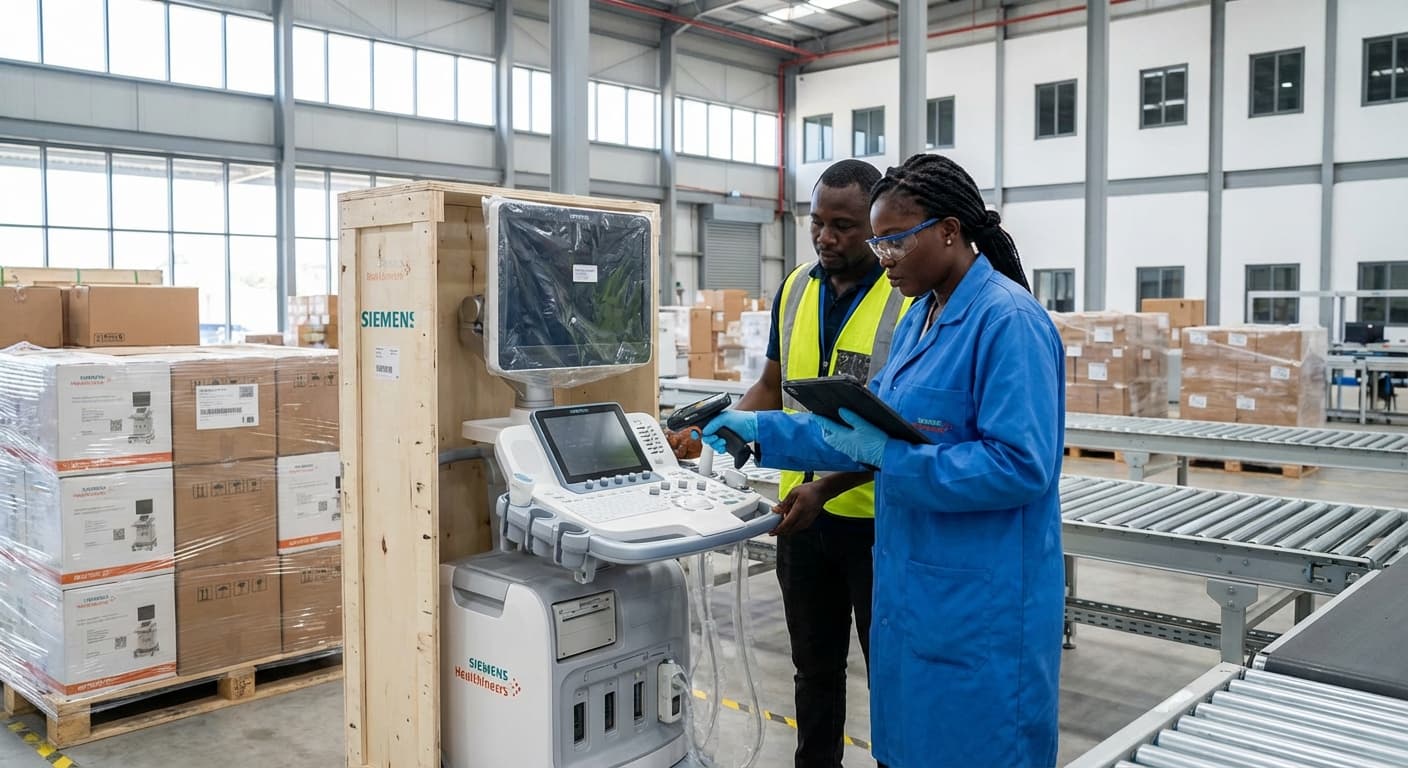
Warehouse Receiving Inspection Service (Medical Equipment) in Mozambique
Engineering Excellence & Technical Support
Warehouse Receiving Inspection Service (Medical Equipment) High-standard technical execution following OEM protocols and local regulatory frameworks.
Specialized Medical Equipment Expertise
Our Mozambique-based team possesses deep technical knowledge of a wide range of medical equipment, ensuring accurate identification, verification of specifications, and adherence to manufacturer guidelines during receiving inspections.
Compliance & Certification Verification
We meticulously audit all necessary certifications, import permits, and regulatory documentation required for medical equipment in Mozambique, preventing costly delays and ensuring full legal compliance at the point of receipt.
Damage & Defect Detection with Advanced Tools
Utilizing calibrated inspection tools and established protocols, our Mozambique inspectors identify any transit damage, manufacturing defects, or missing components, providing photographic evidence and detailed reports for swift claims processing.
What Is Warehouse Receiving Inspection Service (Medical Equipment) In Mozambique?
Warehouse Receiving Inspection Service for Medical Equipment in Mozambique is a specialized quality assurance process conducted upon the arrival of medical devices and supplies at a designated warehouse facility within the country. This service aims to verify that the received items conform to specified quality, safety, regulatory, and contractual requirements before they are accepted into inventory and subsequently distributed. It is a critical step in ensuring the integrity of the medical supply chain and preventing the introduction of substandard, damaged, or counterfeit products into the healthcare system. The service encompasses a systematic examination of documentation, physical attributes, and functional aspects of the medical equipment.
| Who Needs This Service | Typical Use Cases |
|---|---|
| Government Ministries and Agencies (e.g., Ministry of Health, Central Medical Stores): Responsible for public health procurement and ensuring the quality of medical supplies for national healthcare facilities. | Procurement and delivery of essential medicines, diagnostic equipment, surgical instruments, and other medical supplies to public hospitals and clinics across Mozambique. |
| International Aid Organizations and NGOs: Involved in providing medical assistance and humanitarian aid, requiring verification of donated or procured medical equipment. | Importation of medical supplies for emergency response, disease control programs, or long-term healthcare development projects. |
| Private Hospitals, Clinics, and Diagnostic Laboratories: Entities that import or purchase medical equipment for their own operations. | Receiving specialized diagnostic imaging equipment, laboratory analyzers, surgical devices, and patient monitoring systems. |
| Medical Equipment Distributors and Importers: Companies responsible for bringing medical devices into Mozambique and distributing them to end-users. | Ensuring that imported medical equipment meets local regulatory requirements and customer specifications before onward sale. |
| Manufacturers' Representatives and Local Agents: Entities representing foreign medical equipment manufacturers within Mozambique. | Verifying the condition and conformity of demonstration units, spare parts, or equipment supplied under warranty or service agreements. |
Key Components of Warehouse Receiving Inspection Service (Medical Equipment) in Mozambique:
- Document Verification: Review of import permits, certificates of origin, quality certificates (e.g., ISO, CE), manufacturer's invoices, packing lists, bills of lading, and any country-specific regulatory approvals from relevant Mozambican authorities (e.g., Ministry of Health, DINADECO).
- Physical Inspection: Assessment of packaging integrity (seals, damage, moisture), labeling accuracy (product name, model, serial number, expiry date, manufacturer details, compliance marks), and absence of visible defects (scratches, dents, corrosion).
- Quantity Verification: Reconciliation of the number of units received against the quantities specified in the accompanying documentation (packing list, invoice).
- Product Identification and Verification: Confirmation that the received equipment matches the ordered specifications, including model numbers, serial numbers, configurations, and accessories.
- Integrity and Condition Assessment: Examination of the physical condition of the equipment, ensuring it is free from damage incurred during transit. This may include checks for internal component integrity where feasible without compromising the product.
- Initial Functional Check (where applicable and feasible): Basic operational checks to ensure the equipment powers on and performs fundamental functions, especially for high-value or critical medical devices. This is often a preliminary step to more in-depth commissioning and validation.
- Temperature and Humidity Monitoring (for sensitive items): Verification of cold chain integrity for pharmaceuticals and other temperature-sensitive medical supplies, including review of data loggers if provided.
- Sampling and Testing (as per protocol): For certain product categories, a representative sample may be selected for further laboratory testing or performance evaluation against predefined standards.
- Defect Reporting and Quarantine: Documentation of any discrepancies, damages, or non-conformities identified during the inspection. Suspect items are typically quarantined to prevent their entry into circulation pending further investigation or return to the sender.
Who Needs Warehouse Receiving Inspection Service (Medical Equipment) In Mozambique?
Warehouse Receiving Inspection Service for Medical Equipment in Mozambique is crucial for ensuring the quality, safety, and efficacy of medical devices and supplies before they enter circulation. This service plays a vital role in safeguarding patient health, optimizing resource management, and maintaining compliance with regulatory standards. Without proper inspection, there's a significant risk of accepting substandard, damaged, or counterfeit medical equipment, leading to potential patient harm, increased healthcare costs due to faulty devices, and reputational damage for organizations.
| Customer Type | Key Departments/Roles Involved | Specific Needs/Concerns Addressed by Inspection Service |
|---|---|---|
| Hospitals (Public and Private) | Procurement Department, Biomedical Engineering Department, Central Sterile Supply Department (CSSD), Pharmacy, Quality Assurance Department | Verification of product specifications against purchase orders, identification of damage during transit, confirmation of sterility (if applicable), ensuring regulatory compliance (e.g., certifications, expiry dates), preventing introduction of faulty or counterfeit equipment, optimizing inventory management. |
| Clinics and Health Centers | Clinic Administrator, Lead Nurse/Doctor, Procurement Officer | Similar to hospitals but often with fewer resources; ensuring essential equipment is functional and safe for patient care, cost-effectiveness, reliability of supply chain. |
| Medical Equipment Suppliers and Distributors | Warehouse Manager, Quality Control Department, Sales Department, Logistics Department | Ensuring returned goods or incoming stock meet quality standards, verifying supplier adherence to contractual agreements, minimizing returns due to pre-existing defects, maintaining brand reputation, efficient inventory management. |
| Non-Governmental Organizations (NGOs) involved in healthcare | Program Manager, Logistics Officer, Procurement Officer, Medical Officer | Ensuring donated or procured equipment is suitable for intended use in challenging environments, verifying functionality and safety for beneficiaries, efficient use of limited budgets, compliance with donor requirements. |
| Government Ministry of Health and its agencies | Procurement Unit, Quality Assurance Directorate, Regulatory Affairs Department, National Medical Stores | Ensuring public health facilities receive safe and effective equipment, adherence to national procurement guidelines and standards, combating counterfeit and substandard medical devices, national stock management, public safety. |
| Pharmaceutical Companies (for their medical devices) | Quality Assurance Department, Supply Chain Management, Regulatory Affairs | Ensuring their own medical devices (e.g., drug delivery systems) meet internal quality standards and regulatory requirements before distribution, protecting brand integrity, product safety. |
| Research Institutions and Laboratories | Laboratory Manager, Procurement Officer, Research Scientist | Verifying the accuracy and functionality of scientific and diagnostic equipment for research purposes, ensuring reliable experimental results, preventing contamination or damage to sensitive equipment. |
Target Customers and Departments for Medical Equipment Warehouse Receiving Inspection Service in Mozambique
- Hospitals (Public and Private)
- Clinics and Health Centers
- Medical Equipment Suppliers and Distributors
- Non-Governmental Organizations (NGOs) involved in healthcare
- Government Ministry of Health and its agencies
- Pharmaceutical Companies (for their medical devices)
- Research Institutions and Laboratories
Warehouse Receiving Inspection Service (Medical Equipment) Process In Mozambique
This document outlines the standard workflow for a Warehouse Receiving Inspection Service for medical equipment in Mozambique, covering the process from initial inquiry to the final execution and reporting. The service aims to ensure that medical equipment received at a warehouse meets specified quality, safety, and contractual requirements before it is accepted into inventory.
| Phase | Step | Description | Key Activities | Responsible Party | Deliverables/Outcomes |
|---|---|---|---|---|---|
| Inquiry & Pre-Qualification |
| The client (e.g., Ministry of Health, NGO, hospital) expresses interest in the inspection service. | Receive and acknowledge inquiry, understand client's needs and scope. | Client, Service Provider | Understanding of client requirements. |
| Inquiry & Pre-Qualification |
| Gather detailed information about the medical equipment, shipment, and specific inspection requirements. | Request product specifications, purchase orders, packing lists, supplier details, quality standards (WHO, national standards), previous inspection reports (if any). | Client, Service Provider | Comprehensive project brief. |
| Inquiry & Pre-Qualification |
| Assess the client's suitability and the feasibility of the service, especially for large or complex projects. | Review client's capacity, track record, and alignment with the service provider's capabilities. | Service Provider | Confirmation of project feasibility. |
| Proposal & Quotation |
| Prepare a detailed proposal outlining the scope of services, methodology, timeline, and team expertise. | Tailor the proposal to the client's specific needs, including inspection checklists and reporting formats. | Service Provider | Formal proposal document. |
| Proposal & Quotation |
| Provide a cost estimate for the inspection services. | Itemize costs for personnel, travel, equipment, reporting, and any other associated expenses. Consider Mozambique's specific logistical challenges. | Service Provider | Detailed quotation. |
| Proposal & Quotation |
| Discuss and refine the proposal and quotation with the client. | Address any questions, concerns, and negotiate terms and conditions. | Client, Service Provider | Agreed-upon scope and pricing. |
| Contract Agreement |
| Formalize the agreement between the client and the service provider. | Draft and sign a service contract that clearly defines responsibilities, deliverables, payment terms, and dispute resolution mechanisms. | Client, Service Provider | Signed service contract. |
| Inspection Planning & Scheduling |
| Create a detailed plan for conducting the receiving inspection. | Define inspection criteria, sampling plans, specific tests to be performed, necessary equipment, and risk assessment. | Service Provider | Approved inspection plan. |
| Inspection Planning & Scheduling |
| Assign qualified inspectors and allocate necessary resources. | Ensure inspectors have relevant expertise in medical equipment and understanding of Mozambican regulations. | Service Provider | Inspection team assigned. |
| Inspection Planning & Scheduling |
| Coordinate the inspection schedule with the client and warehouse facility. | Notify all relevant parties of the inspection date and time, ensuring equipment is ready for inspection. | Service Provider, Client, Warehouse | Confirmed inspection schedule. |
| On-site Inspection Execution |
| Gather all necessary documentation and equipment for the inspection. | Ensure inspectors have the inspection plan, checklists, relevant standards, measuring tools, and safety gear. | Inspection Team | Prepared inspection team. |
| On-site Inspection Execution |
| Verify incoming shipments against purchase orders, packing lists, and invoices. | Check for any visible damage to packaging or equipment during transit. | Inspection Team | Initial receiving record. |
| On-site Inspection Execution |
| Conduct a thorough visual examination of the medical equipment. | Assess for physical defects, cosmetic damage, correct model numbers, serial numbers, and completeness of accessories. | Inspection Team | Visual inspection findings. |
| On-site Inspection Execution |
| Perform tests to verify the operational status and performance of the equipment. | Includes powering on, basic functionality checks, and where applicable, calibration checks against manufacturer specifications. | Inspection Team | Functional test results. |
| On-site Inspection Execution |
| Review essential documentation accompanying the equipment. | Verify the presence and validity of user manuals, warranty certificates, maintenance records, certificates of conformity, and relevant regulatory approvals for Mozambique. | Inspection Team | Documentation compliance status. |
| On-site Inspection Execution |
| Collect samples for further laboratory testing or verification based on the inspection plan. | This may apply to consumables or specific components. | Inspection Team | Sample collection record. |
| Reporting & Documentation |
| Document all inspection findings systematically. | Record observations, test results, measurements, and any deviations from specifications. | Inspection Team | Detailed inspection records. |
| Reporting & Documentation |
| Compile a comprehensive inspection report. | Include executive summary, detailed findings, photographs, test results, compliance status, and recommendations. | Service Provider | Draft inspection report. |
| Reporting & Documentation |
| Internal review of the draft report for accuracy and completeness. | Ensure the report adheres to agreed-upon standards and client requirements. | Service Provider | Finalized inspection report. |
| Reporting & Documentation |
| Submit the final inspection report to the client. | Provide the report in the agreed-upon format (e.g., PDF, electronic submission). | Service Provider | Official inspection report delivered. |
| Follow-up Actions & Closure |
| Client reviews the inspection report and provides feedback. | Address any queries or requests for clarification from the client. | Client, Service Provider | Client feedback received. |
| Follow-up Actions & Closure |
| Coordinate and oversee any agreed-upon corrective actions for non-conforming equipment. | This may involve arranging for repairs, replacements, or re-inspection. | Service Provider, Client, Supplier | Corrective action plan implemented. |
| Follow-up Actions & Closure |
| Address and resolve any issues arising from the inspection. | Facilitate communication between parties to achieve a satisfactory outcome. | Service Provider, Client | Issues resolved. |
| Follow-up Actions & Closure |
| Formal closure of the inspection service engagement. | Finalize invoicing, obtain client sign-off, and archive project documentation. | Service Provider, Client | Project closed and archived. |
Warehouse Receiving Inspection Service (Medical Equipment) Workflow in Mozambique
- Inquiry & Pre-Qualification
- Proposal & Quotation
- Contract Agreement
- Inspection Planning & Scheduling
- On-site Inspection Execution
- Reporting & Documentation
- Follow-up Actions & Closure
Warehouse Receiving Inspection Service (Medical Equipment) Cost In Mozambique
The cost of warehouse receiving inspection services for medical equipment in Mozambique is influenced by several key factors, leading to a range of pricing. These services are crucial for ensuring the quality, safety, and compliance of medical devices upon arrival, preventing potential harm to patients and avoiding costly recalls or rework. The pricing structure is typically determined by a combination of the scope of work, the complexity of the equipment, the volume of goods, and the service provider's expertise and overhead.
Key Pricing Factors:
- Type and Complexity of Medical Equipment: Highly specialized or complex equipment (e.g., imaging machines, surgical robots) requiring detailed technical checks, calibration, and functional testing will command higher inspection fees than simpler devices (e.g., basic diagnostic kits, non-powered consumables). The need for specialized tools, knowledge, and longer inspection times directly impacts cost.
- Scope of Inspection: The depth of the inspection is a primary driver. This can range from basic visual checks and documentation verification to comprehensive functional testing, performance validation, and conformity assessments against specific standards (e.g., WHO, national regulatory requirements). More thorough inspections equate to higher costs.
- Volume of Equipment: Inspection fees can be structured on a per-unit basis, per-pallet, or a project basis. For large volumes, there's often a tiered pricing structure where the cost per unit decreases as the volume increases. Conversely, inspecting a single high-value, complex item will likely have a higher per-item cost.
- Location and Logistics: The geographical location of the receiving warehouse within Mozambique can affect costs due to travel time, transportation expenses for inspectors and equipment, and potential remoteness. Access to the inspection site and the need for specialized transport arrangements will be factored in.
- Service Provider's Expertise and Accreditation: Reputable inspection companies with highly qualified inspectors, advanced testing equipment, and relevant accreditations (e.g., ISO 17020) will typically charge more for their services due to the assurance of quality and reliability they provide.
- Downtime and Urgency: If the inspection needs to be expedited or conducted outside of normal business hours (e.g., to minimize disruption to warehouse operations or meet critical delivery deadlines), surcharges may apply.
- Reporting Requirements: The level of detail and format of the inspection report can influence cost. Comprehensive reports with detailed findings, photographic evidence, and recommendations will be more resource-intensive.
- Regulatory Compliance Checks: If the inspection includes verification of compliance with specific Mozambican healthcare regulations or import permits, this adds to the complexity and cost.
Estimated Cost Ranges (in Mozambican Metical - MZN):
It's important to note that these are estimated ranges and actual quotes can vary significantly. It's always recommended to obtain detailed quotations from multiple service providers.
- Basic Visual & Documentation Inspection (per shipment/pallet): MZN 1,500 - MZN 5,000
* This typically covers checking for external damage, verifying quantities against shipping documents, and ensuring basic labeling is correct.
- Standard Functional & Quality Inspection (per unit/pallet for moderately complex equipment): MZN 4,000 - MZN 15,000
* Includes basic functional tests, checking for accessories, and confirming overall quality against specifications.
- Comprehensive Technical & Performance Inspection (per unit for complex equipment): MZN 10,000 - MZN 50,000+ (can be significantly higher for very specialized items)
* Involves in-depth testing, calibration, validation of performance parameters, and detailed reporting.
- Project-Based or Large Volume Contracts: Negotiated rates, often with a per-unit or per-pallet price that decreases with volume. The overall cost could range from a few tens of thousands to hundreds of thousands of MZN depending on the project scale.
Note on Currency: All figures are in Mozambican Metical (MZN). Exchange rates with major international currencies can fluctuate, so it's essential to consider the current market rate if comparing with international pricing.
| Service Type | Estimated Cost Range (MZN) | Description |
|---|---|---|
| Basic Visual & Documentation Inspection | MZN 1,500 - MZN 5,000 (per shipment/pallet) | Checks for external damage, verifies quantities against shipping documents, and basic labeling. |
| Standard Functional & Quality Inspection | MZN 4,000 - MZN 15,000 (per unit/pallet for moderately complex equipment) | Includes basic functional tests, checks for accessories, and confirms overall quality against specifications. |
| Comprehensive Technical & Performance Inspection | MZN 10,000 - MZN 50,000+ (per unit for complex equipment) | Involves in-depth testing, calibration, validation of performance parameters, and detailed reporting. |
| Project-Based / Large Volume Contracts | Negotiated rates (dependent on scale) | Customized pricing for extensive inspection projects or high volumes, often with volume discounts. |
Factors Influencing Warehouse Receiving Inspection Costs for Medical Equipment in Mozambique
- Type and complexity of medical equipment
- Scope of the inspection (visual, functional, technical, compliance)
- Volume of equipment to be inspected
- Geographical location and logistical challenges
- Service provider's reputation, expertise, and accreditation
- Urgency or required turnaround time
- Detailed reporting requirements
- Inclusion of specific regulatory compliance checks
Affordable Warehouse Receiving Inspection Service (Medical Equipment) Options
Securing reliable and cost-effective warehouse receiving inspection services for medical equipment is crucial for maintaining product integrity, patient safety, and regulatory compliance. This guide explores affordable options, focusing on value bundles and strategic cost-saving measures.
| Service Option | Description | Value Proposition | Cost-Saving Strategies |
|---|---|---|---|
Understanding Medical Equipment Receiving Inspections
- {"title":"Purpose","description":"To verify that received medical equipment matches purchase orders, is free from damage, and meets quality and regulatory standards before being accepted into inventory."}
- {"title":"Key Inspection Points","description":"Includes visual inspection for physical damage, verification of part numbers and quantities, check for proper packaging and labeling, documentation review (e.g., certificates of analysis, user manuals), and initial functional checks (if applicable)."}
- {"title":"Regulatory Compliance","description":"Ensures adherence to FDA regulations (e.g., UDI), ISO standards, and internal quality management systems."}
Verified Providers In Mozambique
Ensuring access to quality healthcare in Mozambique relies heavily on the trustworthiness and competence of healthcare providers. Verified providers, especially those with credentials from reputable organizations like Franance Health, offer a significant advantage. These credentials signify a rigorous vetting process, adherence to high standards of practice, and a commitment to patient well-being. Choosing a verified provider means opting for reliability, ethical conduct, and improved health outcomes. Franance Health's accreditation, for instance, often involves comprehensive assessments of clinical expertise, facility standards, and patient safety protocols. This makes Franance Health-credentialed providers a standout choice for individuals seeking dependable and superior healthcare services in Mozambique.
| Credential Aspect | Franance Health Verification | Benefit to Patients |
|---|---|---|
| Clinical Expertise | Evaluated through peer review and competency assessments. | Access to highly skilled and knowledgeable medical professionals. |
| Facility Standards | Inspection of infrastructure, equipment, and hygiene protocols. | Safe and well-equipped healthcare environment. |
| Patient Safety | Review of infection control, risk management, and emergency preparedness. | Reduced risk of medical errors and enhanced patient well-being. |
| Ethical Conduct | Assessment of adherence to professional codes of conduct and patient rights. | Trustworthy and respectful patient care. |
| Continuing Education | Requirement for ongoing professional development and skill enhancement. | Providers stay updated with the latest medical advancements. |
Why Franance Health Credentials Matter
- Rigorous vetting and assessment processes.
- Adherence to high standards of clinical practice.
- Demonstrated commitment to patient safety and ethical conduct.
- Ensured competence and expertise of healthcare professionals.
- Increased trust and reliability in healthcare services.
Scope Of Work For Warehouse Receiving Inspection Service (Medical Equipment)
This Scope of Work (SOW) outlines the requirements for the Warehouse Receiving Inspection Service of Medical Equipment. The service encompasses pre-shipment verification, inbound inspection, documentation review, and initial functional checks to ensure received medical equipment meets agreed-upon technical specifications, quality standards, and regulatory compliance before being accepted into the warehouse inventory.
| Task ID | Task Description | Deliverables | Standard Specifications / Acceptance Criteria |
|---|---|---|---|
| 1.0 | Pre-Shipment Verification (If applicable) | Pre-Shipment Inspection Report, photographs of packed goods. | Verification of correct item, quantity, and packaging against PO/order confirmation. Confirmation of shipping labels and markings. Documentation of any pre-shipping damage. Compliance with agreed-upon packaging standards for medical equipment. |
| 2.0 | Inbound Receipt and Unpacking | Receiving Log Entry, photographs of received goods (unpacked). | Accurate recording of incoming shipment details. Careful unpacking to avoid damage. Segregation of damaged or suspect items. Confirmation of seals and packaging integrity upon arrival. |
| 3.0 | Visual Inspection and Damage Assessment | Damage/Defect Report, photographs of any identified issues. | Thorough visual examination of all equipment for physical damage (scratches, dents, cracks, missing components). Verification of serial numbers and model numbers against documentation. Inspection of accessories, cables, and consumables. |
| 4.0 | Documentation Review | Documentation Verification Checklist, scanned copies of key documents. | Verification of all accompanying documentation: Purchase Order, packing list, Certificate of Conformance (CoC), User Manuals, Service Manuals (if applicable), Calibration Certificates (if applicable), Warranty Information, FDA/CE/other relevant certifications. Check for completeness, accuracy, and validity. |
| 5.0 | Technical Specification Verification | Technical Specification Compliance Report. | Confirmation that the equipment's physical and technical specifications (e.g., power requirements, dimensions, capacity, performance parameters as stated in the PO and manufacturer's datasheet) match the ordered specifications. Verification of software versions if applicable. |
| 6.0 | Basic Functional Check (As specified) | Basic Functional Test Report. | Performing pre-defined basic operational checks (e.g., power on, self-test, display functionality, basic user interface interaction) as per the agreed test script. This is not a comprehensive performance validation but a check for obvious operational failures. Specific tests to be detailed in Annex A. |
| 7.0 | Non-Conformance Reporting and Resolution | Non-Conformance Report (NCR), recommendations for disposition. | Formal documentation of any identified discrepancies or defects. Clear description of the issue and its impact. Recommendations for corrective actions, return, repair, or acceptance with concessions. |
| 8.0 | Reporting and Record Keeping | Summary Receiving Inspection Report, digital archive of all inspection records. | Consolidated report summarizing all inspection activities, findings, and disposition. Maintenance of a comprehensive audit trail of all inspection data, including photos, reports, and checklists. |
Key Objectives
- To verify that all received medical equipment matches purchase orders (POs) and associated documentation.
- To confirm that the equipment's technical specifications, including model number, serial number, configuration, and accessories, meet the agreed-upon requirements.
- To identify and document any damage, defects, or non-conformities during the receiving process.
- To ensure that all necessary regulatory documentation (e.g., certificates of conformance, calibration certificates, user manuals) is present and accurate.
- To perform initial basic functional checks where specified to confirm readiness for further processing or storage.
Service Level Agreement For Warehouse Receiving Inspection Service (Medical Equipment)
This Service Level Agreement (SLA) outlines the agreed-upon response times and uptime guarantees for the Warehouse Receiving Inspection Service for Medical Equipment. This SLA is designed to ensure timely and accurate inspection of incoming medical equipment to maintain operational efficiency and compliance.
| Service Type | Service Level Objective | Target Metric | Measurement Period |
|---|---|---|---|
| Warehouse Receiving Inspection Service (Medical Equipment) | Uptime Guarantee | 99.9% | Per Calendar Month |
| Warehouse Receiving Inspection Service (Medical Equipment) | Response Time (Critical Equipment - Initiation) | Within 2 Business Hours | Per Inspection Request |
| Warehouse Receiving Inspection Service (Medical Equipment) | Response Time (Critical Equipment - Preliminary Report) | Within 4 Business Hours | After Inspection Initiation |
| Warehouse Receiving Inspection Service (Medical Equipment) | Response Time (Standard Equipment - Initiation) | Within 8 Business Hours | Per Inspection Request |
| Warehouse Receiving Inspection Service (Medical Equipment) | Response Time (Standard Equipment - Preliminary Report) | Within 16 Business Hours | After Inspection Initiation |
Service Level Objectives
- 1. Scope of Service: This SLA covers the inspection of all incoming medical equipment delivered to the designated warehouse facility. The inspection process includes verifying quantities, checking for visible damage, confirming part numbers against purchase orders, and assessing general condition.
- 2. Definitions:
- 'Inspection Request': A formal notification received from the client indicating the arrival of medical equipment requiring inspection.
- 'Critical Equipment': Medical equipment identified as high-priority or time-sensitive by the client, requiring expedited inspection.
- 'Standard Equipment': All other medical equipment not classified as critical.
- 'Downtime': Any period during which the Receiving Inspection Service is unavailable or unable to perform its functions.
- 'Response Time': The time taken from the receipt of an Inspection Request to the initiation of the inspection process by the service provider.
- 'Resolution Time': The time taken to complete the inspection and provide a preliminary report upon initiation of the inspection.
- 'Uptime': The percentage of time the Receiving Inspection Service is operational and available to perform inspections.
- 3. Service Availability and Uptime Guarantees:
- The Receiving Inspection Service will be available 24 hours a day, 7 days a week, excluding scheduled maintenance periods.
- Uptime Guarantee: The service provider guarantees an uptime of 99.9% per calendar month.
- Scheduled Maintenance: Any scheduled maintenance will be communicated to the client at least 48 hours in advance and will be performed during off-peak hours whenever possible to minimize disruption.
- 4. Response Times:
- Response times are measured from the moment a confirmed Inspection Request is received by the service provider's designated system or personnel.
- Critical Equipment:
* Initiation of Inspection: Within 2 business hours of receiving an Inspection Request.* Preliminary Report: Within 4 business hours of initiating the inspection.- Standard Equipment:
* Initiation of Inspection: Within 8 business hours of receiving an Inspection Request.* Preliminary Report: Within 16 business hours of initiating the inspection.- Business Hours: Defined as Monday to Friday, 8:00 AM to 5:00 PM in the local time zone of the warehouse, excluding public holidays.
- 5. Reporting and Communication:
- The service provider will provide a detailed inspection report for each batch of equipment inspected, including any discrepancies or damages identified.
- In case of significant findings (e.g., major damage, incorrect items), the service provider will immediately notify the designated client contact person.
- 6. Service Credits (In case of SLA breaches):
- If the uptime guarantee is not met, the client will be eligible for service credits as outlined in the contract.
- If response times are consistently missed for critical equipment (defined as missing the response time more than 3 times in a calendar month), further discussions and potential remedies will be initiated.
- 7. Escalation Procedure:
- Any issues or concerns regarding the timeliness or quality of the Receiving Inspection Service should be reported to the designated account manager. An escalation path will be defined in the main contract.
- 8. Review and Amendments:
- This SLA will be reviewed annually, or as needed, to ensure it remains relevant and effective. Any amendments must be mutually agreed upon in writing by both parties.
- 9. Force Majeure:
- Neither party shall be liable for any failure or delay in performance under this SLA to the extent caused by events beyond their reasonable control, including but not limited to acts of God, war, terrorism, riots, embargoes, acts of civil or military authorities, fire, floods, accidents, strikes, or other labor disputes (whether or not involving the party's employees).
- 10. Governing Law:
- This SLA shall be governed by and construed in accordance with the laws of [Jurisdiction].
Frequently Asked Questions

Ready when you are
Let's scope your Warehouse Receiving Inspection Service (Medical Equipment) in Mozambique project in Mozambique.

Scaling healthcare logistics and technical systems across the entire continent.