
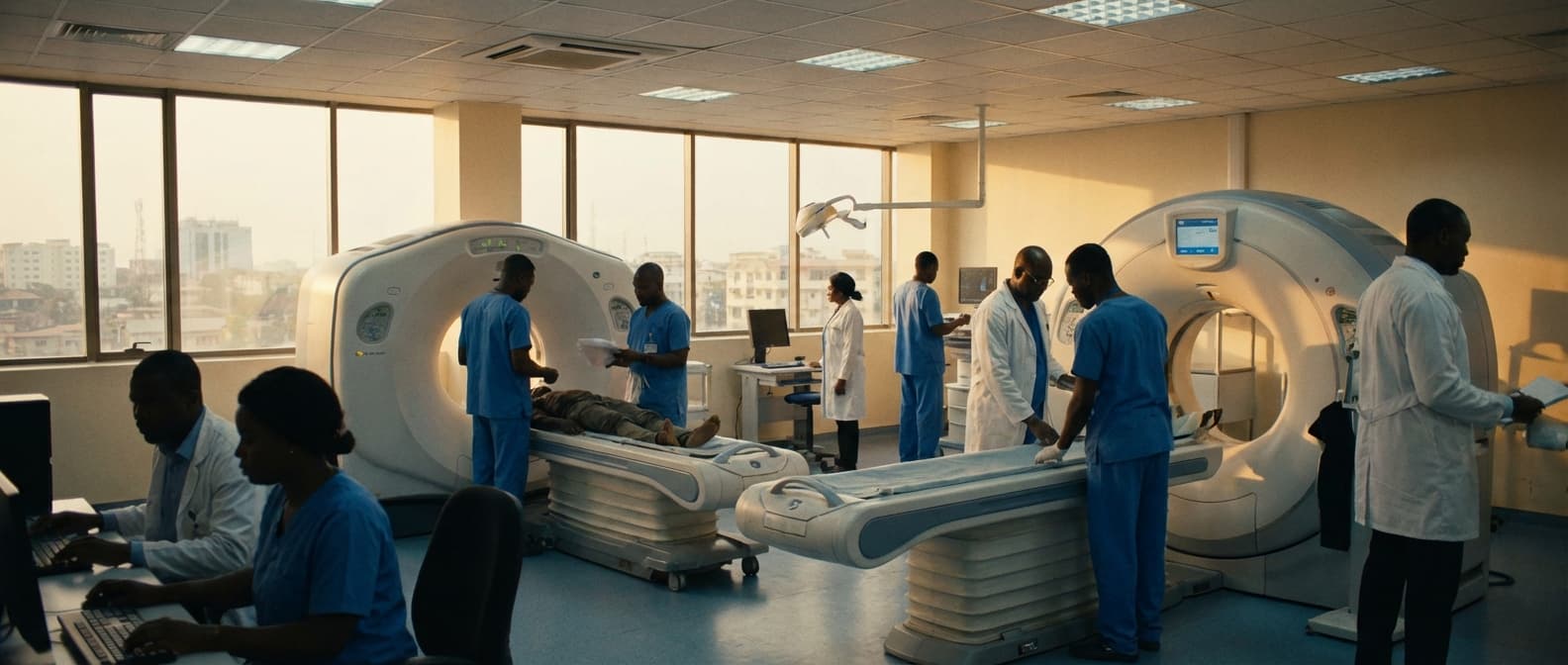
Imaging Acceptance Testing & QA in Mozambique
Engineering Excellence & Technical Support
Commissioning and periodic QA for CT/MRI/X‑ray/US/Mammo. High-standard technical execution following OEM protocols and local regulatory frameworks.
Ensuring Diagnostic Accuracy: Rigorous Imaging Acceptance Testing
Implementing comprehensive acceptance testing protocols for new imaging equipment (X-ray, CT, MRI) in Mozambican healthcare facilities. This includes verifying image quality, radiation safety compliance, and adherence to international diagnostic standards to guarantee accurate diagnoses and effective patient care.
Quality Assurance for Image Processing & Archiving
Establishing robust Quality Assurance (QA) processes for imaging data handling. This focuses on validating image processing algorithms, PACS (Picture Archiving and Communication System) functionality, and DICOM (Digital Imaging and Communications in Medicine) standard compliance to ensure secure, efficient, and reliable storage and retrieval of patient images.
Localizing Standards: Tailored QA for Mozambican Healthcare Context
Developing and adapting imaging QA frameworks to the specific needs and resource availability in Mozambique. This involves training local technicians on standardized testing procedures, establishing local reference phantoms, and ensuring equipment performance meets critical diagnostic needs within the Mozambican healthcare infrastructure.
What Is Imaging Acceptance Testing & Qa In Mozambique?
Imaging Acceptance Testing & QA in Mozambique refers to a rigorous, systematic process of verifying and validating that medical imaging systems and equipment meet predefined quality standards, functional requirements, and regulatory compliance within the Mozambican healthcare context. This service ensures that newly installed or upgraded imaging modalities (e.g., X-ray, CT, MRI, Ultrasound, PACS) and their associated software perform as intended, produce diagnostically accurate images, and integrate seamlessly into the clinical workflow. It encompasses a suite of tests, inspections, and performance evaluations designed to identify and rectify any deviations or deficiencies before the system is deployed for patient care. The "Acceptance" phase specifically denotes the final stage of verification before formal handover and operationalization, confirming that the system meets all contractual and technical specifications.
| Who Needs Imaging Acceptance Testing & QA? | Typical Use Cases | ||||||||||
|---|---|---|---|---|---|---|---|---|---|---|---|
| Public Healthcare Facilities: Hospitals and clinics operated by the Mozambican Ministry of Health, requiring reliable and cost-effective imaging services. | Private Healthcare Providers: Hospitals, diagnostic centers, and specialized clinics operating under private ownership, aiming for high-quality patient care and service differentiation. | Non-Governmental Organizations (NGOs) & International Aid Organizations: Entities involved in healthcare delivery and infrastructure development in Mozambique, often procuring and deploying medical equipment. | Medical Equipment Vendors & Suppliers: Companies that sell, install, and maintain imaging systems in Mozambique, requiring pre-commissioning and post-installation validation. | Research Institutions & Universities: Facilities utilizing imaging for research purposes, needing assurance of data integrity and equipment performance. | Regulatory Bodies (Indirectly): While not direct consumers, regulatory bodies benefit from assured quality and safety of medical imaging equipment operating within the country. | New Hospital Construction/Renovation Projects: Ensuring that all newly installed imaging systems meet the required standards before the facility becomes operational. | Upgrade or Replacement of Existing Imaging Modalities: Validating the performance and integration of new or refurbished equipment. | Introduction of New Imaging Technologies: Verifying the successful implementation and quality of advanced imaging techniques or equipment. | Post-Maintenance or Repair Verification: Confirming that repairs have restored the system to its optimal functional and quality parameters. | Routine Quality Assurance Audits: Periodically assessing the ongoing performance and compliance of imaging systems in active use. | Procurement Processes: As a mandatory step to ensure that acquired equipment meets technical specifications and quality benchmarks before full payment and operationalization. |
Key Components of Imaging Acceptance Testing & QA in Mozambique:
- Functional Testing: Verifying all operational features and capabilities of the imaging equipment and software, including image acquisition, processing, display, and archival.
- Performance Testing: Evaluating the system's speed, efficiency, and throughput under various load conditions, such as image acquisition times, reconstruction speeds, and data transfer rates.
- Image Quality Assessment: Subjective and objective evaluation of image fidelity, resolution, contrast, signal-to-noise ratio, and artifact reduction, often using standardized phantoms and clinical images.
- Integration Testing: Ensuring interoperability and seamless data flow between the imaging modality, Picture Archiving and Communication System (PACS), Electronic Health Record (EHR), and other relevant IT infrastructure.
- Calibration and Configuration Verification: Confirming that the system is accurately calibrated according to manufacturer specifications and regional standards, and that all settings are correctly configured for optimal performance.
- Safety and Radiation Dose Assessment (for modalities using ionizing radiation): Verifying that radiation output is within acceptable limits, complying with national safety regulations and minimizing patient and operator exposure.
- Usability and Workflow Analysis: Assessing the ease of use for clinical staff and the efficiency of the system within the specific clinical workflow of the healthcare facility.
- Documentation Review: Validating the completeness and accuracy of user manuals, technical documentation, and service records.
- Compliance Verification: Ensuring adherence to relevant national (e.g., Ministry of Health regulations) and international standards (e.g., IEC, ACR) for medical devices and imaging quality.
Who Needs Imaging Acceptance Testing & Qa In Mozambique?
In Mozambique, robust Imaging Acceptance Testing & Quality Assurance (QA) are crucial for ensuring the reliability, accuracy, and safety of medical imaging equipment. This process validates that new or maintained equipment functions as intended and meets diagnostic standards before it is used on patients. Without proper QA, there's a risk of misdiagnosis, delayed treatment, increased radiation exposure, and significant financial losses due to equipment malfunction. The demand for these services spans across various healthcare providers and governmental bodies dedicated to improving patient care.
| Customer Type | Key Departments Involved | Specific Needs/Benefits |
|---|---|---|
| Public Hospitals | Radiology Department, Biomedical Engineering Department, Procurement Department | Ensuring accessibility and quality of care for a large patient population; compliance with national health standards; efficient use of limited resources. |
| Private Hospitals | Radiology Department, Biomedical Engineering, Quality Management Department, Administration | Maintaining reputation for high-quality diagnostics; patient satisfaction; maximizing return on investment for advanced equipment; competitive advantage. |
| Radiology Clinics & Diagnostic Centers | Chief Radiologist, Technical Manager, Quality Assurance Officer | Accurate and timely diagnoses; patient trust; regulatory compliance; optimal equipment performance for revenue generation. |
| Government Health Ministries/Agencies | Department of Health Services, Biomedical Engineering Unit, Procurement & Standards Division | Setting and enforcing national imaging standards; ensuring public safety; effective allocation of healthcare resources; quality control for government-funded equipment. |
| NGOs in Healthcare | Program Managers, Technical Advisors, Procurement Officers | Ensuring the effectiveness of donated or purchased imaging equipment in their projects; providing essential diagnostic services in underserved areas; accountability to donors. |
| Medical Equipment Suppliers/Distributors | Technical Support, Sales Department, After-Sales Service Team | Verifying that delivered equipment meets manufacturer specifications; smooth installation and commissioning; customer satisfaction; reducing warranty claims and service calls. |
Target Customers and Departments for Imaging Acceptance Testing & QA in Mozambique
- Public Hospitals
- Private Hospitals
- Radiology Clinics
- Diagnostic Centers
- Government Health Ministries/Agencies
- Non-Governmental Organizations (NGOs) involved in healthcare
- Medical Equipment Suppliers and Distributors
- Research Institutions with imaging facilities
- Tertiary Care Facilities
- Rural Health Centers (for centralized QA services)
Imaging Acceptance Testing & Qa Process In Mozambique
This document outlines the Imaging Acceptance Testing and Quality Assurance (QA) process in Mozambique, detailing the workflow from initial inquiry to the final execution of tests. The objective is to ensure all imaging solutions and equipment meet defined specifications, performance standards, and regulatory requirements before deployment or acceptance.
| Stage | Key Activities | Responsible Parties | Deliverables |
|---|---|---|---|
| Inquiry & Requirements Gathering | Receive inquiry, define scope, document requirements, establish acceptance criteria | Client/Stakeholder, Project Manager, Business Analyst, Technical Lead | Requirement Specification Document, Acceptance Criteria Document |
| Planning & Test Case Development | Formulate test strategy, allocate resources, set up test environment, design test cases, prepare test data | QA Lead, QA Engineers, Technical Experts | Test Strategy, Test Plan, Test Cases, Test Data |
| Pre-Testing & Verification | Qualify vendor, review documentation, check initial setup & configuration, perform basic functionality checks | QA Team, Technical Support, Vendor Representatives | Pre-Testing Report, Initial Setup Checklist |
| Test Execution | Perform functional, performance, interoperability, usability, security, compatibility, safety, and error handling tests | QA Engineers, End Users, Subject Matter Experts | Executed Test Cases with Results, Defect Logs |
| Defect Management & Retesting | Log, triage, resolve, and retest defects | QA Team, Development Team, Vendor Support | Updated Defect Logs, Verified Fixes |
| Reporting & Documentation | Provide progress reports, generate test summary report, issue acceptance certificate | QA Lead, Project Manager | Test Progress Reports, Test Summary Report, Acceptance Certificate |
| Deployment & Post-Acceptance Monitoring | Deploy to production, perform post-deployment verification, conduct ongoing monitoring | IT Operations, Technical Support, Clinical Staff | Live System, Post-Deployment Verification Report, Monitoring Logs |
Imaging Acceptance Testing & QA Workflow
- 1. Inquiry & Requirements Gathering:
- Initiation: A request or inquiry is received from a client, partner, or internal stakeholder regarding a new imaging solution or equipment. This could be for a hospital, clinic, research facility, or any organization requiring imaging capabilities.
- Scope Definition: The specific type of imaging technology (e.g., X-ray, CT, MRI, Ultrasound, PACS, RIS), its intended use, and the environment of deployment are clarified.
- Requirement Documentation: Detailed technical specifications, performance benchmarks, user needs, interoperability requirements (e.g., with existing HIS/EMR), regulatory compliance standards (e.g., local health regulations, international standards), and safety protocols are gathered and documented.
- Acceptance Criteria Definition: Clear, measurable, achievable, relevant, and time-bound (SMART) acceptance criteria are established. These will form the basis of the testing and validation process.
- 2. Planning & Test Case Development:
- Test Strategy Formulation: A comprehensive test strategy is developed, outlining the approach to testing, types of tests to be performed (functional, performance, security, usability, compatibility, etc.), and the overall methodology.
- Resource Allocation: Necessary resources are identified and allocated, including testing personnel (QA engineers, subject matter experts), equipment, software, and testing environments.
- Test Environment Setup: The testing environment is configured to simulate the actual deployment environment as closely as possible, ensuring realistic testing conditions.
- Test Case Design: Detailed test cases are designed based on the gathered requirements and acceptance criteria. Each test case includes steps, expected results, and pass/fail conditions.
- Test Data Preparation: Relevant test data is prepared to cover various scenarios, including normal operations, edge cases, and error conditions.
- 3. Pre-Testing & Verification:
- Vendor/Supplier Qualification: If applicable, initial verification of vendor credentials, certifications, and past performance is conducted.
- Documentation Review: All accompanying documentation (user manuals, installation guides, technical specifications, maintenance procedures) is reviewed for accuracy and completeness.
- Initial Setup & Configuration Check: The imaging equipment or software is physically installed and configured according to vendor instructions and project requirements.
- Basic Functionality Check: Preliminary checks are performed to ensure the core components and basic functions of the imaging system are operational before in-depth testing begins.
- 4. Test Execution:
- Functional Testing: Verifies that the imaging system performs all its intended functions as per specifications. This includes image acquisition, processing, display, storage, and retrieval.
- Performance Testing: Evaluates the speed, responsiveness, and throughput of the imaging system under various load conditions.
- Interoperability Testing: Ensures seamless integration and data exchange with other systems, such as PACS, RIS, HIS, and EMRs.
- Usability Testing: Assesses the ease of use for intended operators and technicians, including interface navigation, workflow efficiency, and error handling.
- Security Testing: Verifies the system's resilience against unauthorized access, data breaches, and ensures compliance with data privacy regulations.
- Compatibility Testing: Confirms the system's compatibility with different operating systems, hardware configurations, and network environments.
- Safety & Regulatory Compliance Testing: Ensures adherence to all relevant local and international safety standards and healthcare regulations.
- Error Handling & Recovery Testing: Simulates error conditions to assess the system's ability to detect, report, and recover from failures gracefully.
- 5. Defect Management & Retesting:
- Defect Logging: Any deviations from the expected results or non-compliance with acceptance criteria are meticulously logged as defects, including detailed descriptions, steps to reproduce, severity, and impact.
- Defect Triage: Logged defects are reviewed, prioritized, and assigned to the appropriate development or support team for resolution.
- Defect Resolution: Developers or vendors fix the identified defects.
- Retesting/Regression Testing: Once a defect is reported as fixed, the corresponding test cases are re-executed to verify the fix. Regression tests are also performed to ensure that the fix has not introduced new issues.
- 6. Reporting & Documentation:
- Test Progress Reporting: Regular updates on test execution progress, including number of tests executed, passed, failed, and outstanding defects, are provided to stakeholders.
- Test Summary Report: A comprehensive report is generated at the end of the testing phase, summarizing the testing activities, results, identified defects, and the overall system quality.
- Acceptance Certificate/Sign-off: Upon successful completion of all tests and satisfaction of acceptance criteria, an acceptance certificate or sign-off document is issued, formally accepting the imaging solution or equipment.
- 7. Deployment & Post-Acceptance Monitoring:
- Production Deployment: Once accepted, the imaging system is deployed into the live production environment.
- Post-Deployment Verification: A final verification is conducted in the production environment to ensure everything is functioning as expected.
- Ongoing Monitoring & Maintenance: Continuous monitoring of system performance and regular maintenance activities are carried out to ensure sustained quality and reliability.
Imaging Acceptance Testing & Qa Cost In Mozambique
Imaging Acceptance Testing (IAT) and Quality Assurance (QA) costs in Mozambique are influenced by several factors, making precise pricing a moving target. These factors include the complexity and volume of imaging data, the type of imaging technology used (e.g., X-ray, CT, MRI, ultrasound), the specific QA protocols required, the expertise and experience of the QA personnel, and the geographic location within Mozambique. Larger projects or those requiring specialized diagnostic imaging will naturally incur higher costs than smaller, simpler ones. Furthermore, the need for regulatory compliance and adherence to international standards can also drive up expenses. The availability of skilled imaging technicians and QA specialists locally plays a significant role, as does the potential need for importing specialized equipment or software. Travel and accommodation costs for QA teams, especially if they need to be deployed to remote locations, are also a considerable factor.
| Service Component | Estimated Cost Range (MZN - Mozambique Metical) | Notes |
|---|---|---|
| Basic Imaging Device Acceptance Testing (e.g., routine X-ray) | 5,000 - 15,000 MZN per device | Covers fundamental functional checks, basic calibration, and documentation review. Applicable for simpler devices. |
| Advanced Imaging System Acceptance Testing (e.g., CT, MRI) | 20,000 - 75,000 MZN per system | Involves comprehensive performance testing, image quality assessment, protocol validation, and advanced calibration. Cost varies significantly with system capabilities. |
| Specialized Imaging Modality QA (e.g., Angiography, PET-CT) | 40,000 - 150,000+ MZN per system | Requires highly specialized knowledge, advanced phantom testing, and complex data analysis. Costs can escalate for cutting-edge technologies. |
| Routine QA Checks (e.g., monthly/quarterly for existing equipment) | 3,000 - 10,000 MZN per session/device | Regular verification of image quality and performance parameters. Costs depend on frequency and complexity of checks. |
| Software QA for Imaging Systems (PACS, RIS, etc.) | 10,000 - 50,000 MZN per module/system | Testing of imaging data management, storage, and retrieval systems. Complexity of integration and features impacts cost. |
| Consultancy & Protocol Development | 5,000 - 20,000 MZN per day | Fees for experienced imaging physicists or QA specialists to design and oversee testing protocols. |
| Travel & Accommodation (per diem) | 3,000 - 8,000 MZN per person per day | Applicable when QA teams need to travel to sites outside major urban centers like Maputo or Beira. |
| Report Generation & Documentation | Included in testing fees, but complex or extensive documentation may incur an additional fee (e.g., 2,000 - 10,000 MZN) |
Key Pricing Factors for Imaging Acceptance Testing & QA in Mozambique
- Complexity and volume of imaging data
- Type of imaging technology (X-ray, CT, MRI, ultrasound, etc.)
- Specific Quality Assurance (QA) protocols and standards
- Expertise and experience of QA personnel
- Geographic location within Mozambique (urban vs. rural)
- Regulatory compliance requirements (local and international)
- Availability of local skilled imaging technicians and QA specialists
- Need for imported specialized equipment or software
- Travel and accommodation expenses for QA teams
- Project timeline and urgency
Affordable Imaging Acceptance Testing & Qa Options
For healthcare organizations and imaging providers, ensuring the accuracy and reliability of imaging equipment through rigorous Acceptance Testing (AT) and Quality Assurance (QA) is paramount. However, these processes can often represent a significant investment. This document outlines affordable imaging AT & QA options, emphasizing the value of 'value bundles' and detailing cost-saving strategies to achieve comprehensive testing without breaking the budget.
| Strategy | Description | Cost-Saving Benefit |
|---|---|---|
| Value Bundles | Consolidated AT & QA packages covering multiple equipment types or a full service period, offered at a reduced per-unit cost compared to individual service agreements. | Leverages economies of scale, predictable budgeting, and potential discounts for bulk services. |
| Tiered Service Levels | Offering different levels of AT/QA services (e.g., basic, standard, comprehensive) based on criticality and budget, allowing clients to select the most appropriate coverage. | Avoids overspending on non-critical equipment, matches service intensity to need. |
| Remote Monitoring & Testing | Utilizing remote access tools for certain QA checks and performance monitoring, reducing the need for on-site technician visits for routine tasks. | Minimizes travel costs, reduces equipment downtime, and enables faster issue identification. |
| In-House Training & Support | Empowering internal technical staff with the knowledge and tools to perform certain standardized QA checks, under the guidance of external experts. | Reduces reliance on external vendors for routine tasks, builds internal capacity, and fosters a culture of quality. |
| Strategic Vendor Partnerships | Negotiating long-term contracts or partnerships with AT/QA providers for guaranteed rates, priority scheduling, and bundled discounts across multiple sites or modalities. | Secures favorable pricing, ensures consistent service quality, and simplifies vendor management. |
| Proactive Predictive Maintenance | Integrating predictive maintenance strategies with AT/QA to anticipate potential failures before they occur, reducing emergency service calls. | Prevents costly unexpected breakdowns and extends equipment lifespan. |
| Shared Service Models | Collaborating with other healthcare facilities to share the costs of specialized AT/QA services or equipment, particularly for less frequently used modalities. | Distributes high fixed costs, providing access to advanced testing capabilities at a lower individual price. |
Why Affordable Imaging AT & QA Matters
- Patient Safety: Inaccurate imaging can lead to misdiagnosis and inappropriate treatment.
- Regulatory Compliance: Adherence to standards (e.g., ACR, TJC) is mandatory and avoids penalties.
- Equipment Longevity: Proactive testing identifies issues early, preventing costly repairs and downtime.
- Operational Efficiency: Well-functioning equipment ensures smooth patient throughput and staff productivity.
- Reimbursement Integrity: Accurate imaging data is crucial for proper billing and reimbursement.
Verified Providers In Mozambique
In Mozambique, ensuring access to reliable and high-quality healthcare is paramount. When seeking medical services, it is crucial to identify verified providers who adhere to stringent standards of care. Franance Health stands out as a leading entity in this regard, offering a network of credentialed healthcare professionals and facilities that are rigorously vetted. This commitment to verification not only guarantees a higher standard of medical practice but also provides patients with peace of mind, knowing they are receiving care from qualified and trustworthy sources. Choosing Franance Health means opting for a healthcare experience that prioritizes safety, efficacy, and patient well-being through a robust credentialing process.
| Verification Criterion | Franance Health Standard | Patient Benefit |
|---|---|---|
| Professional Licensure & Certifications | Mandatory validation of all current and valid medical licenses and board certifications. | Ensures providers meet regulatory requirements and possess recognized expertise. |
| Clinical Experience & Competency | Thorough review of practice history, peer references, and demonstrated clinical skills. | Guarantees providers have practical, hands-on experience and are proficient in their fields. |
| Background & Ethics Check | Comprehensive checks for any history of malpractice, disciplinary actions, or criminal records. | Protects patients from unqualified or unethical practitioners, ensuring a safe care environment. |
| Continuing Medical Education (CME) | Verification of ongoing participation in accredited CME programs to stay updated with medical advancements. | Confirms providers are current with the latest medical knowledge, treatments, and technologies. |
| Adherence to Protocols & Guidelines | Assessment of providers' commitment to following established medical protocols and best practices. | Promotes consistent, evidence-based care, reducing the risk of errors and improving treatment effectiveness. |
Why Franance Health Represents the Best Choice:
- Rigorous Credentialing Process: Franance Health meticulously verifies the qualifications, licenses, and experience of all its healthcare providers.
- Commitment to Quality Care: Our network comprises professionals dedicated to upholding the highest standards of medical practice and patient safety.
- Patient Trust and Confidence: By choosing Franance Health, you are assured of accessing healthcare providers who have undergone thorough vetting, building trust and confidence in the services received.
- Access to Specialized Expertise: We connect you with a diverse range of specialists, ensuring you receive appropriate care for your specific health needs.
- Improved Health Outcomes: Our focus on verified providers directly contributes to better diagnostic accuracy, effective treatment plans, and ultimately, improved patient health outcomes.
Scope Of Work For Imaging Acceptance Testing & Qa
This document outlines the Scope of Work (SoW) for Imaging Acceptance Testing and Quality Assurance (QA). It details the technical deliverables and standard specifications required to ensure the successful implementation and functionality of the imaging system. The objective is to verify that the imaging solution meets all functional, performance, security, and usability requirements as defined in the project specifications.
| Deliverable | Description | Standard Specifications / Acceptance Criteria | Format / Reporting |
|---|---|---|---|
| Test Plan | A comprehensive document outlining the scope, approach, resources, and schedule for testing activities. | Includes test objectives, scope, entry/exit criteria, testing phases, test environment, roles and responsibilities, risk assessment, and reporting procedures. Approved by stakeholders. | Microsoft Word or PDF document. |
| Test Cases | Detailed step-by-step instructions for executing specific tests to verify functionality and performance. | Each test case includes test ID, objective, pre-conditions, test steps, expected results, actual results, pass/fail status, and severity. Covers functional, performance, security, integration, and usability testing. | Spreadsheet (Excel, Google Sheets) or dedicated Test Management Tool (e.g., Jira, ALM). |
| Test Data | Representative sample data used for executing test cases, mimicking real-world scenarios. | Includes a variety of image types, resolutions, formats (e.g., DICOM, JPEG, TIFF), and metadata. Data should be anonymized and conform to privacy regulations. | Secure file storage, database excerpts, or generated synthetic data. |
| Defect/Bug Reports | Documentation of identified issues, bugs, or deviations from expected behavior. | Each report includes unique ID, title, description, severity, priority, steps to reproduce, environment, affected module, and status. Reports are tracked through resolution. | Defect Tracking System (e.g., Jira, Bugzilla) or integrated within Test Management Tool. |
| Performance Test Results | Metrics and analysis of system performance under various load conditions. | Includes image acquisition time, processing time, retrieval latency, throughput, response times, and resource utilization. Measured against pre-defined benchmarks. | Performance testing tool reports, summarized analysis in Microsoft Word or PDF. |
| Security Test Report | Findings from security testing, including vulnerability assessments and penetration testing results. | Identifies security weaknesses, compliance with security policies, and recommended remediation steps. Adheres to industry security standards. | Security testing tool reports, summarized analysis in Microsoft Word or PDF. |
| Usability Test Report | Evaluation of the system's user interface and overall user experience. | Includes feedback from end-users, ease of navigation, clarity of instructions, and efficiency of workflows. Measured against usability heuristics and user satisfaction scores. | User survey results, session recordings, and summarized analysis in Microsoft Word or PDF. |
| Integration Test Report | Verification of seamless data flow and communication between the imaging system and integrated applications. | Confirms successful exchange of data, API compatibility, and workflow continuity. Validated against integration specifications. | Test logs, screenshots, and summarized analysis in Microsoft Word or PDF. |
| User Acceptance Testing (UAT) Sign-off | Formal acceptance of the imaging system by end-users and stakeholders after successful UAT. | Demonstrates that the system meets business requirements and is ready for deployment. Signed document by authorized representatives. | Signed PDF or electronic signature document. |
| Final Test Summary Report | A comprehensive overview of all testing activities, findings, and recommendations. | Includes summary of test execution, defect status, risk assessment, and final recommendation on system readiness. Provides an executive summary of the QA process. | Microsoft Word or PDF document. |
Key Objectives of Imaging Acceptance Testing & QA
- Validate that the imaging system accurately captures, processes, and stores images according to defined standards.
- Ensure seamless integration with existing systems and workflows.
- Verify performance metrics, including image acquisition speed, processing time, and retrieval latency.
- Confirm adherence to data security and privacy regulations (e.g., HIPAA, GDPR).
- Assess user interface (UI) and user experience (UX) for ease of use and efficiency.
- Identify and document defects, providing clear steps for reproduction and proposed resolutions.
- Confirm that all functional requirements are met and the system operates as expected.
Service Level Agreement For Imaging Acceptance Testing & Qa
This Service Level Agreement (SLA) outlines the performance expectations for Imaging Acceptance Testing and Quality Assurance (QA) services. It defines response times for critical issues and guarantees uptime for the testing environment.
| Service Component | SLA Guarantee | Definition/Scope |
|---|---|---|
| Testing Environment Uptime | 99.5% | The percentage of time the imaging testing environment (including hardware, software, and network connectivity required for testing) is available and operational, excluding scheduled maintenance. |
| Critical Issue Response Time | 2 Business Hours | Time taken to acknowledge and initiate troubleshooting for critical issues impacting the ability to perform core testing functions. Critical issues include complete system outages or core functionality failures. |
| High Priority Issue Response Time | 4 Business Hours | Time taken to acknowledge and initiate troubleshooting for high-priority issues that significantly impede testing progress but do not completely halt operations. Examples include major performance degradations or critical bug reporting failures. |
| Medium Priority Issue Response Time | 8 Business Hours | Time taken to acknowledge and initiate troubleshooting for medium-priority issues that cause inconvenience or minor delays in testing. Examples include minor UI glitches or non-critical feature malfunctions. |
| Low Priority Issue Response Time | 24 Business Hours | Time taken to acknowledge and assign for troubleshooting of low-priority issues that have minimal impact on testing. Examples include documentation errors or cosmetic issues. |
| Scheduled Maintenance Window | TBD (Notified 7 Days in Advance) | Pre-scheduled periods for system updates, patches, or hardware maintenance. Notifications will be provided at least 7 business days in advance, and maintenance will be scheduled during off-peak hours where possible. |
Key Service Components
- Imaging Acceptance Testing
- Quality Assurance (QA)
- Testing Environment Uptime
- Issue Response Times
Frequently Asked Questions

Ready when you are
Let's scope your Imaging Acceptance Testing & QA in Mozambique project in Mozambique.

Scaling healthcare logistics and technical systems across the entire continent.