
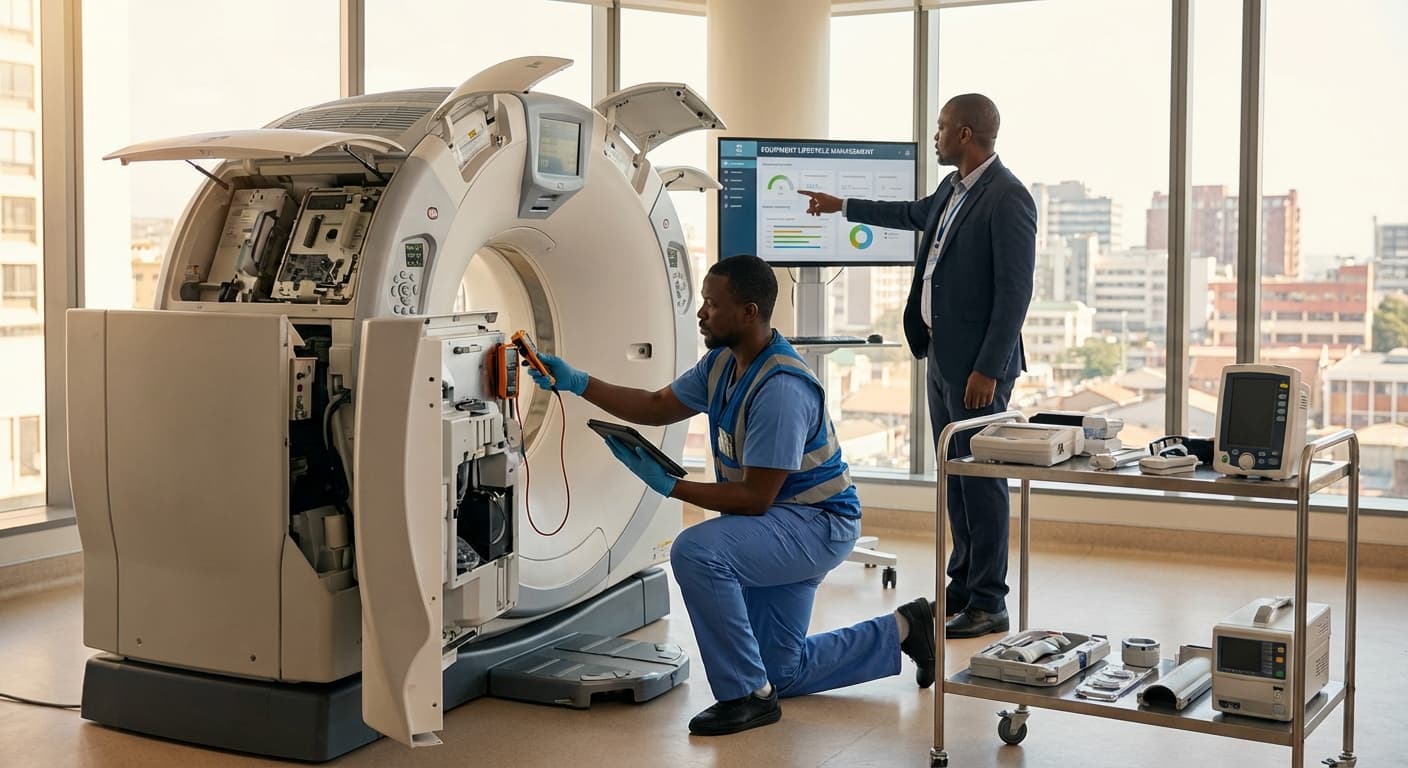
Equipment Replacement Planning & Obsolescence Strategy Service in Mozambique
Engineering Excellence & Technical Support
Equipment Replacement Planning & Obsolescence Strategy Service High-standard technical execution following OEM protocols and local regulatory frameworks.
Predictive Lifecycle Costing for Mozambique
Leverage advanced analytical models and regional data to forecast the total cost of ownership for critical equipment, factoring in Mozambique's specific maintenance, energy, and import/export costs. This empowers proactive replacement decisions, minimizing unexpected capital expenditure and operational disruptions.
Mitigating Obsolescence Risks in Southern Africa
Develop tailored obsolescence management strategies for vital industrial assets operating in Mozambique. Our service proactively identifies end-of-life components and technologies, offering strategic sourcing, alternative solutions, and upgrade pathways to ensure sustained operational readiness and avoid critical supply chain vulnerabilities.
Optimized Asset Renewal & ROI in Mozambique
Implement data-driven asset renewal programs that align equipment replacement cycles with evolving operational demands and economic conditions specific to Mozambique. We focus on maximizing Return on Investment (ROI) by identifying optimal replacement timings and ensuring new equipment integrates seamlessly, enhancing efficiency and productivity.
What Is Equipment Replacement Planning & Obsolescence Strategy Service In Mozambique?
Equipment Replacement Planning & Obsolescence Strategy Service in Mozambique is a specialized offering focused on proactively managing the lifecycle of industrial and critical assets. It encompasses a systematic approach to determining optimal timelines for asset replacement, mitigating the risks associated with technological obsolescence, and ensuring continued operational efficiency and safety. This service is crucial for organizations in Mozambique operating with significant capital investments in physical infrastructure and machinery, particularly in sectors like mining, manufacturing, energy, and telecommunications, where equipment failure or outdated technology can lead to substantial financial losses, production downtime, and safety hazards. The service involves a comprehensive assessment of existing equipment, including its condition, performance metrics, maintenance history, remaining useful life (RUL) estimations, and alignment with current and future operational requirements. Furthermore, it integrates market intelligence on emerging technologies, supplier availability, and evolving regulatory landscapes to develop a forward-looking strategy that minimizes the impact of obsolescence.
| Who Needs This Service? | Typical Use Cases in Mozambique |
|---|---|
| Mining companies with aging extraction and processing equipment. | Developing a strategy for replacing legacy crushing, grinding, and conveying systems in response to increased operational demands and environmental regulations. |
| Manufacturing facilities reliant on specialized machinery. | Planning the phased replacement of outdated production lines to improve efficiency, incorporate automation, and meet evolving product quality standards. |
| Energy and utility providers (power generation, transmission, distribution). | Managing the lifecycle of turbines, transformers, and control systems to prevent service disruptions and ensure grid stability, considering advancements in renewable energy integration. |
| Telecommunications infrastructure operators. | Strategizing the upgrade and replacement of network equipment (e.g., cellular towers, fiber optic cabling) to accommodate 5G technology and increased data traffic, while managing end-of-life components. |
| Large-scale agricultural operations with significant machinery investments. | Optimizing the replacement schedule for tractors, harvesters, and irrigation systems to maximize yield, reduce operational costs, and integrate precision agriculture technologies. |
| Infrastructure development and construction companies. | Forecasting the replacement needs of heavy construction equipment (e.g., excavators, cranes) to maintain project timelines and adapt to new construction methodologies. |
Key Components of the Service
- Asset Condition Assessment & Performance Monitoring
- Remaining Useful Life (RUL) Estimation & Predictive Analytics
- Obsolescence Risk Identification & Mitigation
- Technology Roadmapping & Future-State Alignment
- Replacement Cost-Benefit Analysis & Financial Modeling
- Procurement Strategy Development
- Disposal & Decommissioning Planning
- Inventory Management & Spare Parts Optimization
- Regulatory Compliance & Safety Assurance
Who Needs Equipment Replacement Planning & Obsolescence Strategy Service In Mozambique?
Equipment replacement planning and obsolescence strategy services are critical for organizations in Mozambique that rely on specialized or long-life assets to maintain operational efficiency, minimize downtime, and avoid costly unexpected failures. These services help businesses proactively manage their asset lifecycle, ensuring they have the right equipment at the right time and are prepared for the inevitable end-of-life of existing machinery and technology. This foresight is crucial for sustainable growth and competitive advantage.
| Industry Sector | Target Customers | Key Departments Involved |
|---|---|---|
| Mining & Minerals | Large-scale mining operations, processing plants, exploration companies | Operations, Maintenance, Engineering, Procurement, Finance |
| Oil & Gas | Upstream exploration and production, midstream transportation, downstream refining | Operations, Maintenance, Engineering, HSE (Health, Safety, Environment), Procurement, Finance |
| Manufacturing & Industrial | Automotive, food & beverage, textiles, chemicals, cement production | Production, Plant Management, Maintenance, Engineering, Quality Control, Procurement |
| Energy & Utilities | Power generation (hydro, thermal, renewable), transmission & distribution networks | Operations, Maintenance, Engineering, Asset Management, Planning, Finance |
| Agriculture & Agribusiness | Large-scale commercial farms, food processing facilities, irrigation systems | Farm Management, Operations, Maintenance, Engineering, Procurement |
| Transportation & Logistics | Ports, airports, railway infrastructure, large fleet operators | Operations, Maintenance, Engineering, Infrastructure Management, Procurement |
| Telecommunications | Mobile network operators, internet service providers, infrastructure providers | Network Operations, Engineering, Technical Support, Procurement, IT |
| Construction & Infrastructure | Major construction companies, road and bridge builders, public works departments | Project Management, Operations, Fleet Management, Maintenance, Procurement |
| Public Sector & Government Agencies | Municipalities, national government departments responsible for infrastructure, defense | Public Works, Utilities Management, Defense Procurement, Asset Management |
| Healthcare (Large Institutions) | Hospitals with advanced medical equipment (e.g., MRI, CT scanners) | Biomedical Engineering, Facilities Management, Procurement, IT |
Target Customers & Departments in Mozambique
- Industries with significant capital investments in machinery and infrastructure.
- Organizations operating in sectors with rapid technological advancements.
- Companies facing regulatory compliance related to equipment safety and performance.
- Businesses aiming to optimize operational costs and improve return on investment (ROI) for their assets.
- Entities seeking to mitigate risks associated with equipment failure and unplanned downtime.
Equipment Replacement Planning & Obsolescence Strategy Service Process In Mozambique
This document outlines the service process for Equipment Replacement Planning & Obsolescence Strategy in Mozambique, detailing the workflow from initial inquiry to final execution. This structured approach ensures clarity, efficiency, and client satisfaction throughout the engagement.
| Phase | Key Activities | Deliverables | Client Involvement | Mozambique Specific Considerations |
|---|---|---|---|---|
| Receive client inquiry. Understand initial needs and challenges related to equipment lifecycle management. Discuss potential solutions and our service offering. | Meeting minutes, Initial needs assessment summary. | Provide initial information, attend consultation. | Language barriers (Portuguese/local dialects), understanding of local business culture, availability of communication channels. |
| Conduct detailed needs analysis. Define project objectives, scope of work, timelines, and key performance indicators (KPIs). Develop a tailored proposal with pricing and terms. | Detailed Scope of Work (SOW), Project Proposal, Pricing Structure. | Provide detailed information on current assets, operational context, and strategic goals. Review and approve proposal. | Understanding of local regulatory requirements impacting asset management, availability of skilled local personnel for data gathering. |
| Finalize contract terms and sign agreement. Schedule and conduct project kick-off meeting. Introduce project team and establish communication protocols. | Signed Contract, Project Charter, Kick-off Meeting Minutes. | Review and sign contract. Participate in kick-off meeting. | Understanding of Mozambican contract law, establishing reliable communication lines for remote teams. |
| Gather data on all relevant equipment (age, condition, maintenance history, performance, acquisition cost). Conduct site visits and interviews. Document existing asset register. | Asset Register, Condition Assessment Reports, Performance Data. | Grant access to facilities, personnel, and documentation. Provide access to existing asset management systems. | Logistical challenges for site visits (infrastructure, travel), obtaining necessary permits or access approvals, ensuring data privacy and security in accordance with local laws. |
| Analyze collected data to identify equipment nearing end-of-life, obsolescence risks (technical, support, safety), and potential impacts on operations. Quantify risks. | Obsolescence Risk Register, Impact Analysis Reports. | Review findings, provide context for operational impacts. | Understanding of specific industry standards and regulations in Mozambique that may influence obsolescence timelines, availability of local repair and maintenance expertise for older equipment. |
| Develop strategic recommendations for equipment replacement, considering factors like cost, performance, technology advancements, and business continuity. Outline phased approaches. | Equipment Replacement Strategy, Recommended Replacement Options. | Provide strategic input, prioritize replacement needs, review strategy recommendations. | Understanding of local import/export regulations for new equipment, availability of local suppliers and service providers, impact of exchange rates on capital expenditure. |
| Develop detailed budgets for proposed replacements, including capital expenditure, installation, training, and potential savings. Conduct financial modeling and ROI analysis. | Replacement Budget, Financial Models, ROI Analysis. | Approve budget allocations, provide financial constraints and targets. | Understanding of local financing options and interest rates, tax implications for capital investment, inflation rates. |
| Create a phased implementation plan and roadmap for equipment replacement. Define timelines, resource allocation, training requirements, and change management strategies. | Implementation Plan, Project Roadmap, Training Plan, Change Management Strategy. | Approve implementation plan, allocate internal resources, communicate plan to stakeholders. | Coordination with local workforce for training and implementation, ensuring compliance with local labor laws during project execution. |
| Oversee and manage the execution of the replacement plan. Coordinate with vendors, manage installation, conduct testing, and ensure smooth transition. Regular progress reporting. | Project Status Reports, Installation & Testing Records, Transition Documentation. | Monitor progress, provide necessary approvals, facilitate on-site coordination. | On-the-ground project management presence, coordination with local authorities for site access and approvals, managing communication across different time zones and languages. |
| Conduct a post-implementation review to assess project success against KPIs. Identify lessons learned and opportunities for optimization. Ensure effective handover of new equipment. | Post-Implementation Review Report, Lessons Learned Document, Handover Documentation. | Participate in review, provide feedback on performance of new equipment. | Ensuring local maintenance teams are fully trained and capable of supporting new equipment, assessing long-term supplier performance in Mozambique. |
| Offer ongoing support, including monitoring of new equipment performance, continuous improvement recommendations, and future obsolescence planning updates. | Performance Monitoring Reports, Optimization Recommendations, Updated Obsolescence Plans. | Engage for ongoing support as needed. | Establishing long-term relationships with local service partners, adapting strategies to evolving Mozambican economic and regulatory landscape. |
Equipment Replacement Planning & Obsolescence Strategy Service Process
- Inquiry & Initial Consultation
- Scope Definition & Proposal Development
- Contracting & Project Kick-off
- Data Collection & Asset Assessment
- Obsolescence Analysis & Risk Assessment
- Replacement Strategy Development
- Budgeting & Financial Modeling
- Implementation Planning & Roadmapping
- Execution & Project Management
- Post-Execution Review & Optimization
- Ongoing Support & Monitoring
Equipment Replacement Planning & Obsolescence Strategy Service Cost In Mozambique
Planning for equipment replacement and developing obsolescence strategies are crucial for businesses operating in Mozambique to ensure operational continuity, cost efficiency, and technological relevance. The cost of such a service is influenced by several factors, reflecting the unique economic landscape and business environment of the country. These factors can range from the complexity of the organization's assets to the specific expertise and reputation of the service provider. Understanding these elements is key to budgeting effectively for this essential business function. The local currency, the Mozambican Metical (MZN), will be the primary unit of transaction, and costs will fluctuate based on market dynamics and the specifics of each project.
| Service Component | Estimated Range (MZN) | Notes |
|---|---|---|
| Initial Asset Assessment & Inventory (per asset/category) | 10,000 - 50,000 MZN | Varies significantly based on equipment complexity and data availability. |
| Lifecycle Cost Analysis (per asset/category) | 15,000 - 75,000 MZN | Includes forecasting maintenance, operating, and eventual replacement costs. |
| Obsolescence Risk Assessment (per asset/category) | 12,000 - 60,000 MZN | Focuses on technology, vendor support, and regulatory risks. |
| Development of Replacement Strategy (per asset/category) | 20,000 - 100,000 MZN | Outlines short, medium, and long-term replacement plans. |
| Comprehensive Equipment Replacement & Obsolescence Strategy (Small to Medium Enterprise) | 150,000 - 500,000 MZN | Covers a moderate asset base with standard equipment. |
| Comprehensive Equipment Replacement & Obsolescence Strategy (Large Enterprise) | 500,000 - 2,000,000+ MZN | For organizations with extensive and complex asset portfolios, requiring extensive analysis. |
| Consultant Day Rate | 5,000 - 25,000 MZN | For ad-hoc advice, specific problem-solving, or project management tasks. |
| Project Management & Reporting | Included in overall project cost or charged at a % of total project value | Ensures efficient project execution and clear communication. |
Key Pricing Factors for Equipment Replacement Planning & Obsolescence Strategy Services in Mozambique:
- Scope and Scale of the Project: This is the most significant driver of cost. A larger organization with a diverse and extensive asset base will naturally incur higher costs than a smaller one with a limited set of equipment.
- Complexity of Equipment and Technology: Specialized or highly technical equipment may require more in-depth analysis and expertise, increasing service fees. Conversely, standard, off-the-shelf equipment is typically less expensive to assess.
- Number of Assets to be Assessed: A detailed inventory and assessment of each individual piece of equipment will directly impact the time and resources required from the service provider.
- Data Availability and Quality: If the client has well-organized and readily accessible data on equipment history, maintenance records, and performance, it can reduce the data gathering and analysis time for the consultant, potentially lowering costs.
- Depth of Analysis Required: The level of detail in the assessment (e.g., simple replacement vs. in-depth lifecycle cost analysis, risk assessment, technology forecasting) will influence the pricing.
- Service Provider's Expertise and Reputation: Highly experienced and reputable consulting firms or individual specialists in asset management and obsolescence strategies will command higher fees due to their proven track record and specialized knowledge.
- Market Conditions and Competition: The availability of qualified service providers in Mozambique can influence pricing. A more competitive market might lead to more varied pricing, while a less competitive one might see higher rates.
- Geographic Location within Mozambique: While less of a direct cost driver for the service itself, travel and logistical costs for on-site assessments in remote areas of Mozambique might be factored into the overall project cost.
- Reporting and Deliverable Requirements: The format, complexity, and detail of the final reports and strategic documents required by the client can affect the service provider's effort and thus the cost.
- Urgency of the Project: Projects with tight deadlines may incur premium charges for expedited services.
- Inclusion of Training and Implementation Support: If the service includes training client staff or providing support during the implementation of the strategy, this will add to the overall cost.
- Economic Inflation and Exchange Rates: Fluctuations in the Mozambican Metical (MZN) against major currencies, as well as local inflation rates, will impact the cost of services, especially if the service provider uses imported expertise or software.
Affordable Equipment Replacement Planning & Obsolescence Strategy Service Options
Our Affordable Equipment Replacement Planning & Obsolescence Strategy Service helps businesses proactively manage their asset lifecycle, minimizing disruptions and maximizing return on investment. We offer tailored solutions that identify end-of-life equipment, forecast replacement needs, and develop strategies to mitigate the risks associated with obsolete technology. By integrating this service, you gain foresight into capital expenditures, reduce emergency repair costs, and ensure operational continuity.
| Cost-Saving Strategy | Description | Typical Impact |
|---|---|---|
| Proactive Replacement Scheduling: | Replacing equipment before it fails completely or becomes obsolete. | Reduces emergency repair costs, minimizes downtime, and allows for better bulk purchasing or negotiated discounts. |
| Negotiated Bulk Purchases: | Identifying multiple equipment replacement needs in advance to negotiate better pricing with vendors. | Significant discounts on hardware and software licenses compared to ad-hoc purchases. |
| Strategic Vendor Partnerships: | Developing long-term relationships with key equipment suppliers for better support, pricing, and early access to new technologies. | Improved service levels, potential for preferential pricing, and reduced integration challenges. |
| Extended Equipment Lifecycles (where feasible): | Implementing robust maintenance and upgrade strategies to safely extend the useful life of certain assets. | Deferring capital expenditure for new equipment, optimizing TCO (Total Cost of Ownership). |
| Consolidated Procurement: | Centralizing equipment procurement to leverage economies of scale and streamline the purchasing process. | Reduced administrative overhead, better contract management, and more predictable budgeting. |
| Avoiding Costly Emergency Fixes: | Predicting and addressing potential failures before they occur, thus avoiding expensive rush orders and overtime labor. | Direct savings on repair parts, labor, and the indirect costs of lost productivity. |
Value Bundles
- Essential Planning Bundle: Ideal for small to medium-sized businesses, this bundle includes basic asset inventory, a 3-year replacement forecast for critical equipment, and an introduction to obsolescence risk assessment.
- Strategic Growth Bundle: Geared towards growing enterprises, this bundle expands on the Essential Planning Bundle with a 5-year rolling replacement forecast, detailed obsolescence risk analysis for key asset classes, and preliminary cost-benefit analysis for upgrade options.
- Enterprise Optimization Bundle: Designed for large organizations with complex asset portfolios, this comprehensive bundle offers a 7-10 year detailed replacement plan, advanced obsolescence management, proactive technology scouting, vendor negotiation support, and custom risk mitigation strategies.
- Customizable Options: We also offer modular services that can be added to any bundle, such as specific equipment category deep-dives, predictive maintenance integration, or specialized software asset management.
Verified Providers In Mozambique
In Mozambique's evolving healthcare landscape, identifying trustworthy and competent medical service providers is paramount for individuals and organizations seeking quality care. Verified providers, particularly those with strong credentials like Franance Health, offer a significant advantage. This document outlines what makes a provider 'verified' and why Franance Health stands out as an excellent choice.
| Franance Health Credential | Significance for Patients | Why it Represents the Best Choice |
|---|---|---|
| Ministry of Health (MISAU) Licensed and Regulated | Ensures adherence to national healthcare laws and standards, guaranteeing a baseline of safety and quality. | Franance Health operates under the direct oversight of the national health authority, offering immediate reassurance of compliance and legitimacy. |
| Accreditation from International Healthcare Standards Bodies (e.g., JCI, ISO - if applicable or pursued) | Indicates a commitment to globally recognized best practices in patient care, safety, and facility management. | While specific international accreditations are being pursued, Franance Health's operational framework is designed with these benchmarks in mind, aiming for superior service delivery. |
| Highly Qualified and Continuously Trained Medical Staff | Guarantees that patients are treated by skilled professionals with up-to-date knowledge and expertise in their respective fields. | Franance Health invests heavily in its personnel, ensuring a team of experienced doctors, nurses, and specialists dedicated to providing expert care. |
| Established Reputation for Patient-Centered Care and Ethical Practices | Builds trust and confidence, assuring patients that their well-being and privacy are prioritized. | Franance Health is recognized for its compassionate approach, ethical conduct, and a strong track record of positive patient experiences and outcomes. |
| Comprehensive Service Offerings and Advanced Medical Technology | Provides access to a wide range of medical services and state-of-the-art diagnostic and treatment capabilities, minimizing the need for external referrals. | By offering a broad spectrum of services and investing in modern technology, Franance Health positions itself as a one-stop solution for comprehensive healthcare needs, enhancing convenience and efficiency. |
| Robust Patient Safety Protocols and Infection Control Measures | Minimizes the risk of medical errors and healthcare-associated infections, ensuring a safe healing environment. | Franance Health prioritizes patient safety above all else, implementing stringent protocols and employing the latest infection control techniques to protect its patients. |
What Constitutes a Verified Provider in Mozambique?
- Official Registration and Licensing: All verified providers must possess current and valid registration and licensing from relevant Mozambican government bodies, such as the Ministry of Health (MISAU).
- Adherence to Quality Standards: Compliance with national and international healthcare quality standards is a hallmark of verified providers. This often includes accreditation from recognized bodies.
- Qualified and Certified Personnel: Verified entities employ healthcare professionals who hold recognized degrees, certifications, and licenses, and who engage in continuous professional development.
- Reputation and Track Record: A history of reliable service delivery, positive patient outcomes, and ethical practice contributes to a provider's verified status.
- Transparency and Accountability: Verified providers operate with transparency in their services, pricing, and operational practices, and are accountable for their actions.
- Insurance and Malpractice Coverage: Holding appropriate insurance, including malpractice coverage, demonstrates a commitment to patient safety and financial recourse.
Scope Of Work For Equipment Replacement Planning & Obsolescence Strategy Service
This Scope of Work (SOW) outlines the services to be provided for Equipment Replacement Planning & Obsolescence Strategy. The objective is to develop a comprehensive and actionable strategy to proactively manage equipment lifecycle, mitigate obsolescence risks, and ensure continued operational efficiency and cost-effectiveness. The service includes a thorough assessment of existing equipment, identification of obsolescence threats, development of replacement criteria, and the creation of a prioritized roadmap for equipment renewal and lifecycle management.
| Deliverable | Description | Format | Standard Specification |
|---|---|---|---|
| Equipment Inventory & Condition Report | Detailed list of all assessed equipment, including make, model, serial number, installation date, condition rating, and immediate risks. | Digital (PDF, Excel) | Industry-standard asset tagging and classification, condition rating scale (e.g., 1-5). |
| Obsolescence Risk Assessment Report | Identification and quantification of obsolescence risks for individual equipment and categories, including projected timelines for critical component unavailability. | Digital (PDF) | Risk matrix based on likelihood and impact, common obsolescence indicators (e.g., manufacturer discontinuance notices, lack of support). |
| Total Cost of Ownership (TCO) Analysis | Comprehensive breakdown of direct and indirect costs associated with each major equipment asset over its lifecycle. | Digital (Excel) | Includes capital costs, installation, energy consumption, maintenance, repairs, spares, downtime, and disposal. |
| Equipment Replacement Criteria & Prioritization Framework | Document defining the objective and quantifiable criteria for equipment replacement decisions and a clear methodology for prioritizing replacements. | Digital (PDF, Word) | Criteria may include age, performance degradation, cost of maintenance, safety concerns, regulatory compliance, strategic alignment. |
| Equipment Replacement Roadmap (3-5 Year & 5-10 Year) | Phased plan outlining recommended equipment replacements, upgrades, and lifecycle management actions over defined periods, with estimated budgets and timelines. | Digital (PDF, PowerPoint) | Gantt charts, milestone tracking, budget allocations per phase and per asset. |
| Financial Model & Cost-Benefit Analysis | Detailed financial projections for proposed replacement scenarios, including ROI, payback periods, and comparison of alternatives. | Digital (Excel) | Standard financial metrics, sensitivity analysis. |
| Equipment Lifecycle Management Governance Framework | Document outlining roles, responsibilities, processes, and decision-making authorities for ongoing equipment management and obsolescence mitigation. | Digital (PDF, Word) | Alignment with organizational structure, defined KPIs for performance monitoring. |
| Executive Summary and Presentation | High-level overview of findings, recommendations, and strategic roadmap, tailored for executive decision-makers. | Digital (PDF, PowerPoint) | Concise, data-driven, and action-oriented. |
Key Service Components
- Phase 1: Assessment and Analysis
- Inventory and condition assessment of all critical equipment.
- Identification of equipment nearing end-of-life or facing obsolescence.
- Analysis of operational performance, maintenance history, and total cost of ownership (TCO).
- Evaluation of regulatory and compliance requirements impacting equipment.
- Phase 2: Obsolescence Risk Identification and Mitigation
- Forecasting of component and technology obsolescence trends.
- Assessment of supply chain risks for critical spare parts and consumables.
- Development of strategies for managing obsolescence, including alternatives and upgrades.
- Phase 3: Replacement Planning and Strategy Development
- Definition of equipment replacement criteria and prioritization framework.
- Development of a long-term equipment replacement roadmap (3-5 years, 5-10 years).
- Analysis of various replacement options (e.g., like-for-like, technology upgrade, outsourcing).
- Financial modeling and cost-benefit analysis for replacement scenarios.
- Phase 4: Implementation and Governance
- Development of a governance framework for equipment lifecycle management.
- Recommendations for ongoing monitoring and review processes.
- Training and knowledge transfer to client personnel.
Service Level Agreement For Equipment Replacement Planning & Obsolescence Strategy Service
This Service Level Agreement (SLA) outlines the performance commitments for the Equipment Replacement Planning & Obsolescence Strategy Service, focusing on response times for critical issues and uptime guarantees for the supporting platform. This SLA ensures timely support and reliable access to the services necessary for effective lifecycle management of your equipment assets.
| Service Component | Response Time Guarantee (Business Hours) | Resolution Target (Business Hours) | Uptime Guarantee |
|---|---|---|---|
| Platform Access (for reporting, dashboards, and core planning tools) | N/A (Continuous access expected) | N/A (Continuous access expected) | 99.5% |
| Critical Support Request (e.g., system outage preventing planning activities) | 1 Business Hour | 4 Business Hours | N/A (Service specific) |
| High Priority Support Request (e.g., urgent data anomaly impacting forecasts) | 2 Business Hours | 8 Business Hours | N/A (Service specific) |
| Medium Priority Support Request (e.g., question about a specific report or feature) | 4 Business Hours | 24 Business Hours | N/A (Service specific) |
| Low Priority Support Request (e.g., general inquiry, feature suggestion) | 8 Business Hours | 48 Business Hours | N/A (Service specific) |
| Proactive Obsolescence Alerts (System-generated) | N/A (Automated, delivered within the platform) | N/A (Automated, delivered within the platform) | N/A (Service specific) |
| Scheduled Strategy Review Meetings (if applicable) | As per agreed meeting schedule | N/A (Meeting specific) | N/A (Service specific) |
Key Service Components Covered:
- Equipment lifecycle assessment and forecasting
- Obsolescence risk identification and mitigation strategies
- Replacement cost analysis and budgeting
- Technology roadmap integration
- Reporting and dashboard access for replacement planning insights
Frequently Asked Questions

Ready when you are
Let's scope your Equipment Replacement Planning & Obsolescence Strategy Service in Mozambique project in Mozambique.

Scaling healthcare logistics and technical systems across the entire continent.