
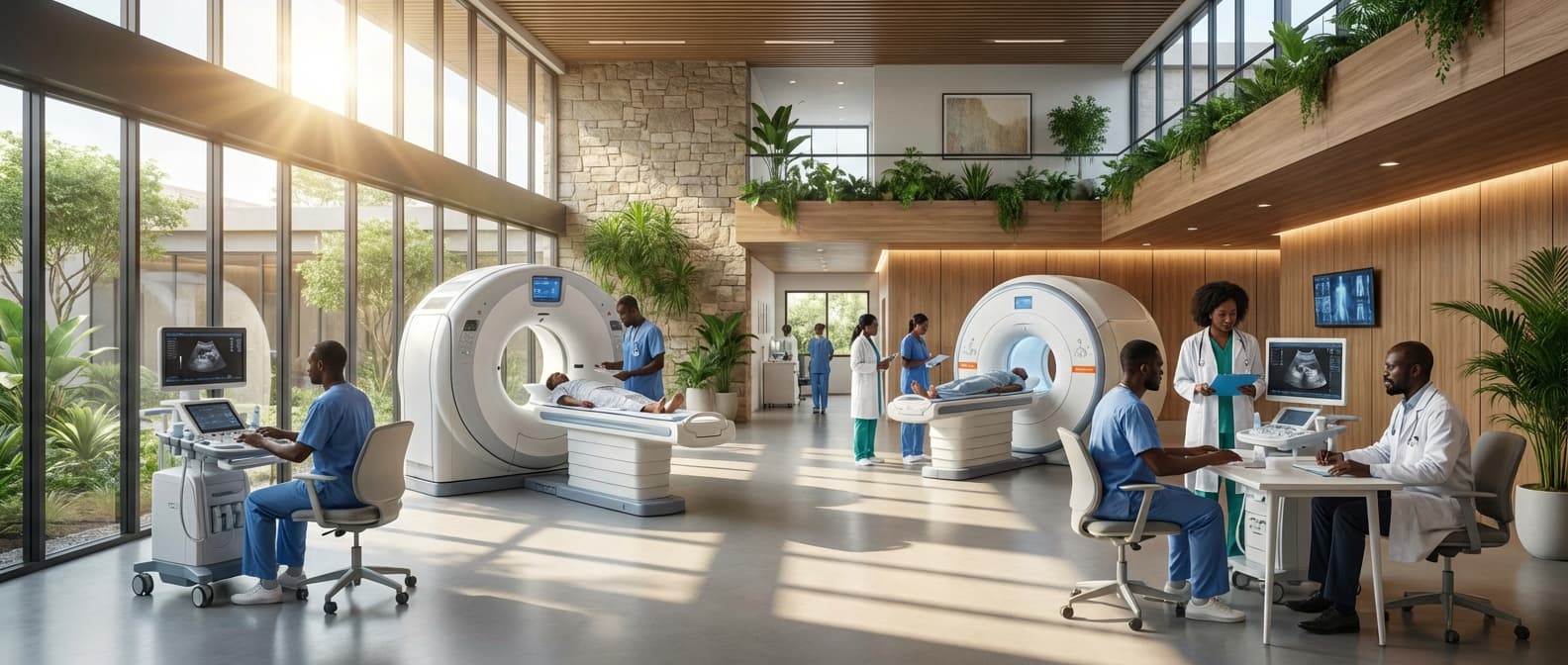
Diagnostic Imaging in Mozambique
Engineering Excellence & Technical Support
High-resolution imaging systems including CT scanners, MRI, X-ray, and ultrasound technology for accurate clinical diagnosis. High-standard technical execution following OEM protocols and local regulatory frameworks.
Mobile Diagnostic Units for Remote Access
Deployment of fully equipped mobile diagnostic imaging units, reaching underserved rural communities in Mozambique. These units offer X-ray and ultrasound capabilities, significantly reducing travel burdens and enabling earlier detection of critical conditions, improving patient outcomes and healthcare accessibility beyond urban centers.
AI-Powered Image Analysis for Early Disease Detection
Implementation of Artificial Intelligence algorithms integrated with PACS (Picture Archiving and Communication System) for automated analysis of medical images (X-rays, CT scans, MRIs). This technology assists radiologists in Mozambique by flagging potential anomalies for conditions like tuberculosis and certain cancers, improving diagnostic accuracy and speed, especially in areas with limited specialist availability.
Tele-Radiology Network for Expert Consultation
Establishment of a robust tele-radiology network connecting local healthcare facilities in Mozambique with experienced radiologists located internationally and regionally. This system facilitates remote interpretation of complex imaging studies, providing crucial second opinions and specialist support, thereby enhancing diagnostic capabilities and patient care in areas facing radiologist shortages.
What Is Diagnostic Imaging In Mozambique?
Diagnostic imaging in Mozambique refers to the utilization of medical imaging technologies to visualize the internal structures of the human body for the purpose of diagnosis, disease monitoring, and treatment planning. This service is critical in modern healthcare systems, enabling clinicians to identify abnormalities, assess the extent of disease, and guide therapeutic interventions. The technologies employed include but are not limited to X-ray radiography, ultrasound, computed tomography (CT), magnetic resonance imaging (MRI), and nuclear medicine. The provision of these services in Mozambique, like in many low- and middle-income countries, faces challenges related to infrastructure, equipment availability, trained personnel, and cost-effectiveness. However, their role in improving diagnostic accuracy and patient outcomes is increasingly recognized and sought after.
| Who Needs Diagnostic Imaging? | Typical Use Cases | |||||||
|---|---|---|---|---|---|---|---|---|
| Patients with suspected or confirmed pathologies: Individuals presenting with symptoms requiring internal visualization. | Trauma patients: Assessing for fractures, internal bleeding, organ damage (e.g., head CT for suspected concussion, X-ray for limb fractures). | Patients with suspected infectious diseases: Identifying lung infiltrates in pneumonia (chest X-ray), assessing abscesses (ultrasound, CT). | Patients with suspected neoplastic diseases: Detecting and staging tumors (CT, MRI), assessing spread (PET-CT, though less common). | Pregnant women: Monitoring fetal development and detecting potential complications (obstetric ultrasound). | Patients with cardiovascular concerns: Assessing cardiac function and structure (echocardiography, cardiac CT). | Patients with neurological conditions: Diagnosing stroke, tumors, or degenerative diseases (head CT, MRI brain). | Patients undergoing pre-operative assessment: Planning surgical interventions and identifying anatomical variations. | Patients requiring follow-up for chronic conditions: Monitoring disease progression or treatment response (e.g., serial imaging for chronic kidney disease, cancer follow-up). |
| Musculoskeletal Imaging: Diagnosis of fractures, dislocations, arthritis, soft tissue injuries. | Thoracic Imaging: Evaluation of lungs, pleura, and mediastinum for pneumonia, tuberculosis, lung cancer, pleural effusions. | Abdominal and Pelvic Imaging: Assessment of organs such as liver, kidneys, spleen, pancreas, gastrointestinal tract, bladder, and reproductive organs for tumors, infections, stones, and inflammatory conditions. | Neurological Imaging: Detection of stroke, brain tumors, hemorrhages, and inflammatory lesions. | Cardiovascular Imaging: Assessment of the heart and major blood vessels for structural abnormalities, blockages, and aneurysms. | Obstetric and Gynecological Imaging: Monitoring pregnancy, assessing uterine and ovarian pathologies. | Interventional Radiology Guidance: Real-time imaging (fluoroscopy, ultrasound, CT) to guide minimally invasive procedures like biopsies, drainages, and angioplasties. |
Key Aspects of Diagnostic Imaging in Mozambique
- Purpose: To non-invasively visualize anatomical structures and physiological processes for disease detection, characterization, and management.
- Technologies Employed: X-ray (radiography, fluoroscopy), Ultrasound (B-mode, Doppler), CT, MRI, and potentially emerging modalities.
- Provider Landscape: A mix of public sector hospitals (central, provincial, district), private clinics, and specialized imaging centers, though availability varies geographically.
- Challenges: Limited access to advanced equipment, maintenance issues, shortage of skilled radiologists and radiographers, high operational costs, and variable quality assurance.
- Importance: Essential for accurate diagnosis, staging of diseases, guiding surgical and interventional procedures, and monitoring treatment efficacy, thereby improving healthcare quality.
Who Needs Diagnostic Imaging In Mozambique?
Diagnostic imaging plays a crucial role in healthcare delivery, especially in resource-limited settings like Mozambique. Identifying the specific target customers and departments for diagnostic imaging services is essential for effective resource allocation, training, and service provision. This analysis outlines key beneficiaries and the departments that would benefit most from enhanced access to and utilization of diagnostic imaging.
| Department/Unit | Primary Imaging Needs | Key Patient Populations |
|---|---|---|
| Emergency Department | X-ray (trauma, chest), CT scans (head, abdomen, chest), Ultrasound (FAST scans) | Trauma patients, acute medical emergencies, suspected stroke, internal bleeding |
| Internal Medicine | X-ray (chest, abdomen), Ultrasound (abdominal, cardiac), CT scans (abdominal, thoracic) | Patients with respiratory infections (pneumonia, TB), gastrointestinal issues, cardiac conditions, general medical complaints |
| Surgery Department | X-ray (pre- and post-operative, fracture assessment), CT scans (trauma, abdominal pathology), Ultrasound (surgical guidance, vascular) | Patients requiring surgical intervention, trauma victims, post-surgical complications |
| Pediatrics Department | X-ray (chest, skeletal), Ultrasound (abdominal, cranial) | Children with respiratory illnesses, skeletal injuries, congenital anomalies, abdominal pain |
| Obstetrics and Gynecology | Ultrasound (obstetric, gynecological) | Pregnant women (antenatal care, fetal assessment), women with gynecological complaints (fibroids, cysts) |
| Outpatient Clinics | X-ray (specific referrals), Ultrasound (targeted referrals) | Patients with chronic conditions, musculoskeletal pain, suspected infections, or other conditions requiring imaging for diagnosis |
| Tuberculosis (TB) Control Programs | X-ray (chest) | Patients suspected of having TB, active TB patients for monitoring treatment response |
| Oncology Services (if available or developing) | CT scans, MRI (if available), Ultrasound | Patients with suspected or confirmed cancers for diagnosis, staging, and treatment monitoring |
Target Customers for Diagnostic Imaging in Mozambique
- Patients requiring diagnosis and monitoring of diseases
- Healthcare professionals (doctors, nurses, specialists) seeking to confirm diagnoses, assess disease progression, and plan treatment
- Public health officials and researchers for disease surveillance and epidemiology
- Medical training institutions for educational purposes
Diagnostic Imaging Process In Mozambique
The diagnostic imaging process in Mozambique, like in many healthcare systems, follows a structured workflow designed to accurately diagnose patient conditions. This process begins with a clinical inquiry and culminates in the execution and interpretation of imaging studies. The efficiency and accessibility of this workflow can be influenced by factors such as resource availability, infrastructure, and the training of medical professionals within the country.
| Stage | Description | Key Actors | Potential Challenges in Mozambique |
|---|---|---|---|
| Patient Referral and Inquiry | A clinician (doctor, nurse practitioner) suspects a medical condition that may benefit from imaging and initiates an order. This involves a clinical question to be answered by the imaging study. | Referring Clinician, Patient | Limited availability of specialists to assess the need for imaging; potential for inappropriate referrals due to lack of advanced diagnostic tools. |
| Appointment Scheduling | The patient or healthcare facility contacts the radiology department to schedule the imaging examination. The type of exam, urgency, and available equipment dictate the appointment time. | Patient, Reception Staff, Radiology Department | Long waiting times due to high demand and limited equipment; logistical challenges in remote areas. |
| Patient Preparation | Depending on the imaging modality, the patient may need specific preparation, such as fasting, drinking contrast agents, or wearing specific clothing. Informed consent is obtained. | Patient, Radiology Technologist, Nurse | Lack of readily available contrast agents; insufficient patient education on preparation protocols. |
| Image Acquisition (Scanning) | The imaging technologist operates the diagnostic imaging equipment (X-ray, CT, Ultrasound, MRI) to capture images of the relevant body part. | Radiology Technologist | Equipment malfunction and maintenance issues; shortage of trained technologists; inconsistent power supply affecting equipment operation. |
| Image Processing and Storage | Acquired images are processed, enhanced, and stored in a Picture Archiving and Communication System (PACS) or other digital/analog formats. | Radiology Technologist, IT Support | Limited PACS infrastructure; reliance on analog film in some facilities leading to degradation and storage issues; insufficient IT expertise. |
| Radiologist Interpretation | A qualified radiologist reviews the images, analyzes findings in conjunction with the clinical information, and forms a diagnosis. | Radiologist | Severe shortage of radiologists; heavy workload for existing radiologists leading to delays; limited access to subspecialist radiologists. |
| Report Generation and Distribution | The radiologist dictates or writes a diagnostic report, which is then transcribed and sent back to the referring clinician. | Radiologist, Medical Transcriptionist, Referring Clinician | Delays in transcription; challenges in secure and timely report delivery, especially to remote clinics; poor inter-departmental communication. |
| Follow-up and Treatment Planning | The referring clinician uses the imaging report to confirm or refine the diagnosis, guide further investigations, and plan the patient's treatment. | Referring Clinician, Patient | Lack of integrated healthcare systems for seamless follow-up; challenges in accessing treatment based on imaging findings due to resource limitations. |
Diagnostic Imaging Workflow in Mozambique
- Patient Referral and Inquiry
- Appointment Scheduling
- Patient Preparation
- Image Acquisition (Scanning)
- Image Processing and Storage
- Radiologist Interpretation
- Report Generation and Distribution
- Follow-up and Treatment Planning
Diagnostic Imaging Cost In Mozambique
Diagnostic imaging plays a crucial role in healthcare by providing non-invasive ways to visualize the internal structures of the body, aiding in the diagnosis, monitoring, and treatment of diseases. In Mozambique, the cost of these essential services can vary significantly due to a multitude of factors, impacting accessibility for patients and the operational sustainability of healthcare providers. Understanding these pricing dynamics is vital for policymakers, healthcare professionals, and the public alike. The cost of diagnostic imaging in Mozambique is influenced by a complex interplay of both direct and indirect factors, ranging from the type of imaging modality used and the specific facility to the broader economic and logistical landscape of the country. These elements collectively shape the price ranges observed for common diagnostic procedures.
| Imaging Procedure | Estimated Price Range (MZN) | Notes |
|---|---|---|
| X-ray (e.g., Chest X-ray) | 500 - 2,500 | Basic imaging, widely available. |
| Ultrasound (e.g., Abdominal Ultrasound) | 1,000 - 4,000 | Common for soft tissue imaging, obstetrics. |
| CT Scan (e.g., Head CT) | 5,000 - 15,000 | More detailed cross-sectional imaging. Price can increase with contrast. |
| MRI Scan (e.g., Knee MRI) | 15,000 - 40,000+ | Highest resolution for soft tissues. Often limited availability and highest cost. |
| Mammography | 2,000 - 7,000 | Screening and diagnostic imaging for breast tissue. |
Key Pricing Factors for Diagnostic Imaging in Mozambique
- Imaging Modality: Different imaging technologies have vastly different acquisition, maintenance, and operational costs. For instance, MRI machines are significantly more expensive than X-ray machines.
- Facility Type and Location: Public hospitals, private clinics, and specialized diagnostic centers will have differing pricing structures. Facilities in major urban centers like Maputo might offer a wider range of services but could also have higher overheads leading to varied pricing compared to rural or less developed areas.
- Equipment Age and Technology: Newer, more advanced equipment generally comes with higher costs, but may also offer better image quality and a wider range of diagnostic capabilities.
- Staffing and Expertise: The cost of highly trained radiologists, radiographers, and support staff contributes to the overall service cost.
- Consumables and Supplies: Contrast agents, films, and other necessary consumables add to the per-procedure cost.
- Maintenance and Service Contracts: Regular maintenance and repair of sophisticated imaging equipment are essential and involve significant ongoing expenses.
- Electricity and Utilities: Reliable access to electricity is crucial for operating imaging equipment, and the cost of these utilities can impact pricing, especially in regions with less stable power grids.
- Importation Costs and Taxes: Many advanced medical imaging devices and their components are imported, incurring import duties, taxes, and transportation costs.
- Demand and Competition: In areas with high demand and limited competition, prices may be higher. Conversely, increased competition can sometimes lead to more competitive pricing.
- Patient Demographics and Insurance Coverage: The ability of the patient population to pay, alongside the presence and comprehensiveness of health insurance schemes, influences pricing strategies.
- Accreditation and Quality Standards: Facilities adhering to international quality standards and accreditation may incur additional costs for compliance, which can be reflected in their pricing.
Affordable Diagnostic Imaging Options
Diagnostic imaging plays a crucial role in medical diagnosis, but costs can be a significant barrier for many. Fortunately, various affordable options and cost-saving strategies are available to help individuals and healthcare providers manage these expenses without compromising on quality. Understanding value bundles and exploring different avenues for imaging services are key to accessing necessary care at a more manageable price.
| Strategy | Explanation | How it Saves Money |
|---|---|---|
| Compare Prices | Shop around at different imaging centers, hospitals, and outpatient facilities. Prices can vary significantly for the same procedure in the same geographic area. | Directly reduces the out-of-pocket expense for the imaging service. |
| Ask About Self-Pay/Cash Discounts | Many facilities offer discounted rates for patients paying out-of-pocket, bypassing insurance. This is especially beneficial if you have a high deductible or no insurance. | Often provides a lower overall cost than using insurance, which may have co-pays, deductibles, or coinsurance. |
| Utilize Outpatient Imaging Centers | Outpatient imaging centers are typically less expensive than hospital-based imaging departments for the same services. | Lower overhead costs for standalone centers are passed on as savings to patients. |
| Leverage Your Insurance Plan | Understand your insurance policy's benefits, deductibles, co-pays, and coinsurance for diagnostic imaging. Inquire about in-network vs. out-of-network providers, as in-network providers are usually more affordable. | Maximizes the financial benefits provided by your insurance, reducing your personal financial burden. |
| Explore Imaging Networks or Alliances | Some healthcare systems or independent groups form networks that negotiate collective pricing, potentially offering lower rates. | Negotiated bulk pricing can lead to reduced costs for members or patients within these networks. |
| Consider Advanced Imaging Techniques Wisely | Discuss with your doctor if a less expensive imaging modality (e.g., ultrasound or X-ray) could provide the necessary diagnostic information before opting for more expensive ones like MRI or CT scans. | Avoids unnecessary spending on more complex and costly imaging when a simpler option suffices. |
| Inquire About Pre-Authorization | While primarily for insurance approval, understanding the pre-authorization process can also reveal if the prescribed imaging is deemed medically necessary by your insurer, potentially avoiding denied claims and unexpected bills. | Ensures insurance coverage and avoids surprise out-of-pocket costs due to denied claims. |
| Talk to Your Doctor About Imaging Choices | Your doctor can guide you towards the most appropriate and potentially cost-effective imaging options based on your specific medical needs. They may also be aware of imaging centers with better pricing. | Ensures you receive the right test for your condition, potentially at a lower cost, and can advocate for more affordable options. |
Understanding Value Bundles and Cost-Saving Strategies for Diagnostic Imaging
- {"title":"What are Value Bundles in Diagnostic Imaging?","description":"Value bundles, also known as bundled payments or package pricing, are a healthcare pricing model where a single price is set for a defined set of services delivered to a patient for a specific condition or episode of care. In diagnostic imaging, this can mean a bundled price for a specific imaging exam (e.g., an MRI of the knee) that includes the radiologist's interpretation, the technical fee for operating the equipment, and sometimes even associated follow-up consultations or reports."}
- {"title":"Benefits of Value Bundles","description":"These bundles can offer greater price transparency, making it easier to budget for procedures. They can also encourage providers to deliver care more efficiently, as they are incentivized to coordinate services and avoid unnecessary tests or complications, ultimately leading to cost savings for both patients and payers."}
- {"title":"Cost-Saving Strategies","description":"Beyond value bundles, several other strategies can help reduce the cost of diagnostic imaging."}
Verified Providers In Mozambique
In Mozambique's evolving healthcare landscape, ensuring access to verified and reputable healthcare providers is paramount. This is where Franance Health distinguishes itself, offering a rigorous credentialing process that guarantees the highest standards of care. Franance Health's commitment to verification means patients can trust that the providers listed on their platform are qualified, licensed, and adhere to ethical practices. Choosing a Franance Health-verified provider offers peace of mind, knowing you are entrusting your well-being to professionals who have met stringent criteria.
| Benefit | Description | Why it Matters for Patients |
|---|---|---|
| Trust and Reliability | Franance Health's rigorous vetting process builds trust in the listed providers. | Reduces the risk of encountering unqualified or fraudulent practitioners, ensuring you receive appropriate medical attention. |
| Quality of Care | Verified providers meet established standards for competence and ethical practice. | Increases the likelihood of receiving effective and safe medical treatment from skilled professionals. |
| Patient Safety | Thorough background checks and license verification prioritize patient well-being. | Minimizes potential risks associated with unqualified or unethical medical personnel. |
| Access to Expertise | Franance Health connects patients with a network of vetted specialists and general practitioners. | Facilitates access to the right medical expertise for specific health needs, saving time and reducing uncertainty. |
| Peace of Mind | Knowing your chosen provider is Franance Health-verified offers reassurance. | Allows you to focus on your health and recovery without the added stress of questioning the provider's credentials. |
Key Aspects of Franance Health's Verification Process
- Licensing and Certification Checks: Franance Health meticulously verifies that all healthcare professionals hold current and valid licenses and certifications from relevant Mozambican authorities.
- Educational Background Verification: The authenticity of academic qualifications and specialized training is thoroughly confirmed.
- Professional Experience Review: Franance Health assesses the professional history and experience of providers to ensure a solid track record.
- Background Checks: Comprehensive background checks are conducted to ensure patient safety and professional integrity.
- Ongoing Compliance Monitoring: Providers are subject to continuous monitoring to ensure they maintain their credentials and adhere to evolving healthcare standards.
Scope Of Work For Diagnostic Imaging
This Scope of Work (SOW) outlines the requirements for the provision of diagnostic imaging services. It details the technical deliverables, standard specifications, and reporting expectations to ensure high-quality patient care and efficient workflow. The objective is to procure comprehensive and reliable diagnostic imaging services that meet the clinical needs of the organization.
| Imaging Modality | Standard Specifications (Image Quality, Resolution, etc.) | Protocol Requirements | Reporting Standards | Deliverable Format |
|---|---|---|---|---|
| X-ray (Radiography) | Minimum resolution of X lp/mm, pixel size not exceeding Y µm, DICOM compliant. | Standard AP, PA, Lateral, Oblique views as per clinical indication. Specialized protocols for pediatric, geriatric, and trauma patients. | Radiologist interpretation within Z hours of study completion. Reports to include findings, impression, and recommendations. Use of standardized templates. | DICOM (Digital Imaging and Communications in Medicine) for images. HL7 for reporting. |
| Computed Tomography (CT) | Slice thickness and reconstruction kernel specified per protocol. Contrast administration protocols. Dose reduction techniques utilized. | Body-region specific protocols (e.g., Head CT, Chest CT, Abdominal CT, MSK CT). Contrast timing and volume as per protocol. | Radiologist interpretation within A hours. Advanced visualization (e.g., MPR, 3D reconstructions) when clinically indicated. | DICOM (images and secondary capture). HL7 (reports). |
| Magnetic Resonance Imaging (MRI) | Field strength (e.g., 1.5T, 3T). Sequence parameters (TR, TE, flip angle, matrix size) to be optimized for image quality and diagnostic accuracy. Fat suppression techniques. Contrast administration protocols. | Body-region specific protocols (e.g., Brain MRI, Spine MRI, MSK MRI, Cardiac MRI). Gadolinium-based contrast agent administration guidelines. | Radiologist interpretation within B hours. Advanced techniques (e.g., diffusion-weighted imaging, perfusion imaging) when indicated. | DICOM (images). HL7 (reports). |
| Ultrasound (US) | Frequency range, transducer types, Doppler capabilities. Image optimization for clarity and artifact reduction. | Body-region specific protocols (e.g., Abdominal US, Pelvic US, Vascular US, Echocardiography). Real-time imaging and Doppler assessment. | Radiologist/Sonographer interpretation within C hours. Reports to include measurements, descriptive findings, and diagnostic conclusions. | DICOM (images and cine loops). HL7 (reports). |
| Mammography | High-resolution digital detectors. Specific compression force parameters. CAD (Computer-Aided Detection) system integration. | Screening and diagnostic mammography protocols, including spot compression and magnification views. | Radiologist interpretation within D hours. Dedicated breast imaging radiologists. MQSA (Mammography Quality Standards Act) compliance. | DICOM (images). HL7 (reports). |
| Nuclear Medicine (PET/CT, SPECT/CT) | Radionuclide specific acquisition parameters. Appropriate scan times and protocols. SUV measurements for PET. | Body-region specific protocols for various radiotracers (e.g., FDG PET/CT for oncology, Myocardial Perfusion SPECT). | Radiologist interpretation within E hours. Quantitative analysis where applicable. Reports to include distribution, uptake, and metabolic activity. | DICOM (images). HL7 (reports). |
Key Technical Deliverables
- Provision of diagnostic imaging modalities as specified in the requirements.
- Acquisition and processing of high-quality diagnostic images.
- Secure and timely transmission of imaging studies and reports to authorized personnel.
- Integration with the existing Picture Archiving and Communication System (PACS) and Electronic Health Record (EHR) systems.
- Maintenance and calibration of all imaging equipment.
- Adherence to all relevant regulatory and accreditation standards (e.g., ACR, FDA, HIPAA).
- Provision of on-call services for emergency imaging needs.
- Development and implementation of quality assurance programs.
- Training and education for referring physicians and relevant staff on imaging protocols and interpretation.
- Regular reporting on service utilization, turnaround times, and quality metrics.
Service Level Agreement For Diagnostic Imaging
This Service Level Agreement (SLA) outlines the performance standards and commitments for diagnostic imaging services provided by [Your Company Name] to [Client Name]. It defines the expected response times for critical incidents and the guaranteed uptime for diagnostic imaging systems. This SLA aims to ensure the reliability, availability, and timely delivery of diagnostic imaging services to support patient care and clinical workflows.
| Incident Severity | Response Time Target | Resolution Time Target (Critical/Major) | Uptime Guarantee |
|---|---|---|---|
| Critical Incident | 15 minutes | 4 hours | 99.9% (excluding scheduled downtime) |
| Major Incident | 30 minutes | 8 business hours | 99.9% (excluding scheduled downtime) |
| Minor Incident | 2 business hours | Next business day | N/A (Focus on restoring full functionality) |
Key Definitions
- Diagnostic Imaging Services: Encompasses all services related to the acquisition, processing, interpretation, and reporting of medical images (e.g., X-ray, CT, MRI, Ultrasound, Nuclear Medicine).
- Critical Incident: An event that significantly impacts the availability or functionality of diagnostic imaging systems, preventing or severely hindering the ability to perform essential imaging procedures or access images. Examples include complete system outage, inability to acquire images, or critical PACS/RIS failure.
- Major Incident: An event that degrades the performance of diagnostic imaging systems, impacting a significant number of users or a critical workflow, but does not completely prevent essential operations. Examples include slow system performance, intermittent access issues, or partial functionality loss.
- Minor Incident: An event that has a limited impact on users or specific functionalities, with workarounds available. Examples include a single user unable to log in, a minor display issue on a workstation, or a non-critical system alert.
- Response Time: The maximum time allowed from the reporting of an incident by the Client to the initiation of investigation and remediation efforts by [Your Company Name].
- Resolution Time: The maximum time allowed from the reporting of an incident to its full resolution and restoration of normal service operation. This may be an objective for Critical and Major incidents.
- Uptime Guarantee: The percentage of time that diagnostic imaging systems are available and operational for use by the Client.
- Scheduled Downtime: Pre-announced periods when systems may be unavailable for planned maintenance, upgrades, or testing. This downtime is typically communicated in advance.
Frequently Asked Questions

Ready when you are
Let's scope your Diagnostic Imaging in Mozambique project in Mozambique.

Scaling healthcare logistics and technical systems across the entire continent.