
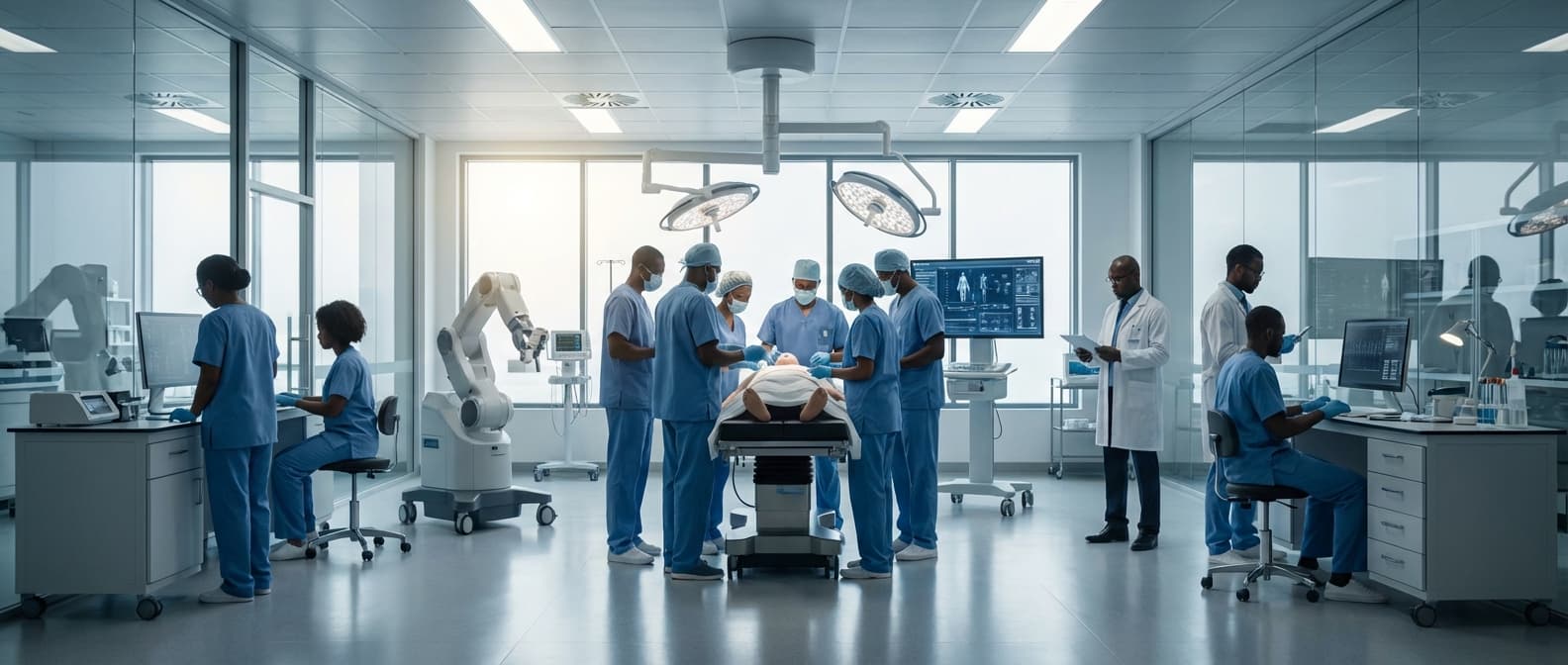
Biomedical Staffing Augmentation in Mozambique
Engineering Excellence & Technical Support
Onsite biomedical engineers and PACS administrators High-standard technical execution following OEM protocols and local regulatory frameworks.
Bridging Healthcare Gaps
Augmenting Mozambique's healthcare workforce with highly skilled biomedical engineers and technicians, ensuring consistent access to essential medical equipment maintenance and repair services, even in remote areas. This directly improves patient care outcomes and reduces equipment downtime.
Specialized Technical Expertise
Providing on-demand access to specialized biomedical talent for complex equipment installations, calibration, and advanced troubleshooting. Our augmented staff possess up-to-date knowledge of diverse medical technologies, ensuring optimal performance and compliance with international standards.
Capacity Building & Knowledge Transfer
Implementing structured training programs and mentorship for local biomedical staff, fostering sustainable in-country technical capacity. This initiative empowers Mozambican professionals, reducing reliance on external support and building a resilient healthcare infrastructure for the long term.
What Is Biomedical Staffing Augmentation In Mozambique?
Biomedical Staffing Augmentation in Mozambique refers to the strategic engagement of external, specialized personnel to enhance the capacity and efficiency of existing healthcare and biomedical infrastructure. This service involves deploying qualified professionals, including biomedical engineers, technicians, IT specialists with healthcare informatics expertise, and project managers, to supplement the local workforce. The primary objective is to address critical skill gaps, manage fluctuating workloads, and ensure the optimal functioning and maintenance of medical equipment and technology within healthcare facilities.
| Who Needs It? | Typical Use Cases |
|---|---|
| Public Healthcare Facilities | Supporting the maintenance and repair of essential medical equipment in rural and urban clinics and hospitals, especially where local technical expertise is scarce. |
| Private Healthcare Providers | Augmenting IT support for hospital information systems (HIS) and electronic health records (EHR), or providing specialized biomedical engineering services. |
| Non-Governmental Organizations (NGOs) & International Aid Agencies | Deploying technical staff for the setup, maintenance, and training related to medical equipment in donor-funded health projects or emergency response initiatives. |
| Research Institutions & Laboratories | Providing specialized technical support for advanced laboratory equipment and ensuring data integrity for research studies. |
| Medical Device Manufacturers & Distributors | Supplementing field service engineering teams for installations, warranty repairs, and post-sales support of their products in the Mozambican market. |
| Government Ministries of Health | Supporting national health system strengthening initiatives by providing technical oversight, training, and capacity building for biomedical departments. |
Key Components and Benefits of Biomedical Staffing Augmentation:
- Expertise Deployment: Access to specialized skills and knowledge not readily available within the permanent staff.
- Capacity Enhancement: Scaling technical and operational capabilities to meet increased demand or project requirements.
- Equipment Lifecycle Management: Ensuring proper installation, calibration, maintenance, and repair of medical devices, thereby maximizing uptime and patient safety.
- Technology Integration: Facilitating the implementation and support of new medical technologies and digital health solutions.
- Training and Knowledge Transfer: Opportunities for upskilling local staff through on-the-job training and mentorship from augmented personnel.
- Operational Efficiency: Streamlining workflows and reducing downtime of critical medical equipment.
- Cost-Effectiveness: Providing flexible staffing solutions that can be more economical than permanent hires for project-based or specialized needs.
Who Needs Biomedical Staffing Augmentation In Mozambique?
Biomedical staffing augmentation in Mozambique is a critical service for organizations facing a shortage of skilled biomedical professionals. This can arise due to rapid expansion, unexpected staff departures, specialized project needs, or a general deficit in the local talent pool. Augmentation provides a flexible and efficient solution to bridge these gaps, ensuring that healthcare facilities and research institutions can maintain operational continuity and achieve their objectives. The demand for such services is particularly high in areas where the healthcare infrastructure is developing or undergoing significant upgrades, requiring specialized technical expertise to manage and maintain complex medical equipment and systems.
| Customer Type | Typical Need | Department Impacted |
|---|---|---|
| Public Hospitals | High volume of equipment, limited in-house expertise, budget constraints | Biomedical Engineering, Radiology, ICU, O.R. |
| Private Healthcare Providers | Rapid growth, demand for advanced technology, specialized maintenance needs | Biomedical Engineering, Diagnostic Imaging, Specialized Clinics |
| NGOs & Aid Organizations | Project-based needs, remote locations, urgent deployment of services | Clinical Engineering, Equipment Management, Project Implementation |
| Medical Device Companies | New installations, complex servicing, manufacturer-specific training | Field Service Engineering, Technical Support, Training Departments |
| Research Institutions | Cutting-edge equipment, research-specific calibration and maintenance | Biomedical Engineering, Research Labs, IT Infrastructure |
Target Customers and Departments for Biomedical Staffing Augmentation in Mozambique
- {"items":["Public Hospitals (National, Provincial, District)","Private Healthcare Providers (Hospitals, Clinics, Diagnostic Centers)","Non-Governmental Organizations (NGOs) involved in healthcare delivery","International Aid Organizations with healthcare projects","Medical Device Manufacturers and Distributors (for installation, maintenance, and training)","Research Institutions and Universities with medical departments","Government Ministries of Health and other regulatory bodies"],"title":"Target Customers"}
- {"items":["Biomedical Engineering Departments","Clinical Engineering Departments","Information Technology (IT) Departments (for medical IT infrastructure)","Radiology and Imaging Departments (for specialized equipment maintenance)","Operating Theatres and Surgical Departments","Intensive Care Units (ICUs)","Laboratory and Pathology Departments","Central Sterilization Supply Departments (CSSDs)","Procurement and Logistics Departments (for technical input on equipment acquisition)"],"title":"Key Departments Requiring Augmentation"}
Biomedical Staffing Augmentation Process In Mozambique
This document outlines the typical workflow for Biomedical Staffing Augmentation in Mozambique. It details the process from the initial inquiry by a healthcare facility or organization to the successful execution of the staffing solution. The goal is to ensure a streamlined and effective process for identifying, recruiting, and deploying qualified biomedical professionals to address specific needs within the Mozambican healthcare system.
| Phase | Step | Description | Key Stakeholders |
|---|---|---|---|
| Phase 1: Inquiry and Needs Assessment | 1.1 Initial Inquiry | A healthcare facility, government agency, or NGO expresses a need for temporary or specialized biomedical staff. | Requesting Organization, Staffing Agency |
| 1.2 Needs Definition | Detailed discussion to understand the specific roles, required skills, experience, duration of engagement, location, and any unique technical or cultural requirements. | Requesting Organization, Staffing Agency | |
| 1.3 Scope of Work (SOW) Development | Formalization of the staffing requirements, including job descriptions, qualifications, responsibilities, performance metrics, and contractual terms. | Staffing Agency, Requesting Organization | |
| Phase 2: Candidate Sourcing and Vetting | 2.1 Candidate Identification | Leveraging databases, professional networks, job boards, and recruitment agencies (local and international) to identify potential candidates. | Staffing Agency |
| 2.2 Initial Screening | Review of resumes and applications to match against the defined qualifications and experience. | Staffing Agency | |
| 2.3 Technical Interviews | Conducting interviews to assess technical knowledge, practical skills, and understanding of biomedical equipment and systems relevant to Mozambique's context. | Staffing Agency, Subject Matter Experts (if applicable) | |
| 2.4 Behavioral and Cultural Fit Assessment | Evaluating soft skills, adaptability, problem-solving abilities, and suitability for working in the Mozambican healthcare environment. | Staffing Agency | |
| 2.5 Reference Checks | Verifying past employment and performance with previous employers. | Staffing Agency | |
| 2.6 Background Checks | Conducting necessary background checks as per legal and organizational requirements. | Staffing Agency | |
| Phase 3: Candidate Selection and Offer | 3.1 Candidate Shortlisting | Presenting a curated list of the most qualified candidates to the requesting organization. | Staffing Agency |
| 3.2 Final Interview/Selection | The requesting organization interviews the shortlisted candidates and makes the final selection. | Requesting Organization, Staffing Agency | |
| 3.3 Offer Extension | Extending a formal employment offer to the selected candidate, outlining terms, compensation, and benefits. | Staffing Agency | |
| 3.4 Offer Acceptance | The candidate accepts the offer, initiating the onboarding process. | Candidate, Staffing Agency | |
| Phase 4: Onboarding and Deployment | 4.1 Pre-Deployment Preparation | Assisting with visa/work permit applications, medical clearances, travel arrangements, and pre-departure briefings. | Staffing Agency, Candidate |
| 4.2 Local Orientation | Providing an overview of Mozambique's healthcare system, cultural norms, safety protocols, and the specific facility's environment. | Staffing Agency, Requesting Organization | |
| 4.3 Facility Integration | Introducing the new staff member to the team, familiarizing them with equipment, protocols, and immediate responsibilities. | Requesting Organization | |
| 4.4 Commencement of Duties | The augmented staff member begins their assigned role. | Augmented Staff, Requesting Organization | |
| Phase 5: Post-Deployment Support and Evaluation | 5.1 Ongoing Support | Providing continuous support to the augmented staff and the requesting organization to address any challenges or questions. | Staffing Agency |
| 5.2 Performance Monitoring | Regular check-ins and feedback sessions to evaluate the staff member's performance against the SOW. | Requesting Organization, Staffing Agency | |
| 5.3 Contract Review and Extension (if applicable) | Assessing the need for and facilitating contract extensions or renewals based on ongoing requirements and performance. | Staffing Agency, Requesting Organization | |
| 5.4 Final Evaluation and Offboarding | Conducting a final performance review, facilitating the departure of the staff member, and completing administrative tasks. | Staffing Agency, Requesting Organization |
Biomedical Staffing Augmentation Workflow
- Phase 1: Inquiry and Needs Assessment
- Phase 2: Candidate Sourcing and Vetting
- Phase 3: Candidate Selection and Offer
- Phase 4: Onboarding and Deployment
- Phase 5: Post-Deployment Support and Evaluation
Biomedical Staffing Augmentation Cost In Mozambique
The cost of biomedical staffing augmentation in Mozambique is influenced by a variety of factors, primarily revolving around the specialized skills required, the duration of the contract, and the geographic location within the country. Mozambique's developing healthcare infrastructure and the global demand for skilled biomedical professionals contribute to the overall pricing. Local currency (Mozambican Metical, MZN) pricing will fluctuate based on these determinants, as well as administrative overheads, benefits packages, and the specific recruitment agency or consultancy engaged. Understanding these elements is crucial for accurate budgeting.
| Staffing Category (Examples) | Estimated Monthly Range (MZN) | Notes |
|---|---|---|
| Biomedical Technician (General Maintenance) | 60,000 - 120,000 | Covers routine maintenance, calibration, and basic repairs of common medical equipment. |
| Specialized Biomedical Technician (e.g., Imaging, Anesthesia) | 100,000 - 200,000 | Requires specific expertise for advanced equipment like MRI, CT scanners, or complex anesthesia machines. |
| Biomedical Engineer (Design/Project Management) | 150,000 - 300,000+ | Involves design, implementation, and management of biomedical equipment systems and projects. Rates can be significantly higher for senior roles or specific project demands. |
| Clinical Engineer (Advanced Support/Training) | 180,000 - 350,000+ | Focuses on clinical application, user training, and ensuring optimal integration of technology into patient care. Often requires higher qualifications and experience. |
| Short-term/Consultant (Daily Rate) | 3,000 - 10,000+ | Daily rates for specialized consultants or emergency placements. Highly variable based on expertise and urgency. |
Key Pricing Factors for Biomedical Staffing Augmentation in Mozambique
- Skill Specialization & Demand: Highly specialized roles (e.g., advanced diagnostic imaging technicians, complex surgical equipment specialists) command higher rates due to limited availability and extensive training.
- Experience Level: Senior and highly experienced professionals will naturally have higher salary expectations than junior or entry-level staff.
- Contract Duration: Short-term or emergency placements often incur higher per-diem or hourly rates compared to longer-term commitments, reflecting administrative costs and potentially higher risk.
- Geographic Location: Staffing needs in major urban centers like Maputo may have slightly different cost structures compared to more remote or rural areas, which might require additional logistical support and hardship allowances.
- Agency/Consultancy Fees: The markup charged by recruitment agencies or staffing firms to cover their operational costs, recruitment efforts, and profit margins significantly impacts the final price.
- Benefits & Allowances: Costs associated with health insurance, accommodation, transportation, per diems, and potential hazard pay for less accessible regions are factored into the overall package.
- Regulatory & Compliance Costs: Ensuring staff meet local licensing, certification, and visa requirements can incur administrative expenses.
- Economic Conditions & Inflation: Fluctuations in the Mozambican economy and inflation rates will influence the MZN value of services.
Affordable Biomedical Staffing Augmentation Options
Hospitals and healthcare organizations often face challenges in maintaining adequate staffing levels for their biomedical departments, especially during peak periods, staff shortages, or for specialized projects. Affordable biomedical staffing augmentation offers a strategic solution by providing access to skilled professionals without the long-term commitment and overhead associated with permanent hires. This can include temporary staff, contract-to-hire options, and project-based support. Value bundles are crucial for maximizing the benefits of augmentation, offering a package of services designed to address specific organizational needs cost-effectively. Cost-saving strategies involve careful planning, leveraging technology, and exploring flexible staffing models.
| Value Bundle Component | Description | Cost-Saving Benefit |
|---|---|---|
| Core Staff Augmentation + Training Package | Includes a pool of pre-vetted technicians with core competencies, coupled with on-demand access to specialized training modules for emerging technologies. | Reduces recruitment costs and time-to-competency for new technologies. Ensures a baseline of skilled staff is readily available. |
| On-Demand Specialized Expertise + Predictive Maintenance Support | Provides access to highly specialized engineers for complex repairs or installations, integrated with proactive, data-driven maintenance insights to minimize downtime. | Minimizes costly emergency repairs and extends equipment lifespan. Reduces the need for organizations to maintain in-house specialists for rare equipment. |
| Project Management + Temporary Skilled Workforce | Combines dedicated project management for biomedical initiatives (e.g., equipment lifecycle management) with a flexible team of technicians to execute the project. | Ensures projects are completed on time and within budget. Avoids the expense of maintaining a large project-specific team permanently. |
| Remote Support Integration + On-Site Troubleshooting Tier | Offers a first-tier of remote support for basic issues and a readily available second tier of on-site technicians for more complex problems. | Reduces the number of on-site visits required, saving travel and labor costs. Faster resolution times lead to less equipment downtime. |
| Compliance Audit Preparedness + Documentation Support | Provides temporary staff with expertise in regulatory compliance and asset management, assisting with audit preparation and documentation. | Reduces the risk of non-compliance fines. Frees up internal staff from time-consuming audit preparation. |
Affordable Biomedical Staffing Augmentation Options
- Temporary Staffing: Filling immediate gaps for short-term needs, such as covering leaves of absence, managing increased workloads, or assisting with specific projects.
- Contract-to-Hire: A trial period where a temporary staff member works for the organization, allowing both parties to assess suitability before a permanent offer.
- Project-Based Augmentation: Engaging specialists for defined projects, such as new equipment implementation, system upgrades, or specialized repair initiatives.
- On-Demand Services: Accessing skilled technicians or engineers as needed, providing flexibility for fluctuating demands.
- Remote Support & Telehealth Technicians: Utilizing professionals who can provide remote diagnostics, troubleshooting, and even guide on-site staff, reducing the need for immediate physical presence.
- Vendor-Managed Services: Outsourcing specific biomedical functions to a third-party vendor that provides both the staff and management for those services.
Verified Providers In Mozambique
In the pursuit of reliable healthcare services in Mozambique, identifying verified providers is paramount. Franance Health stands out as a leading entity, offering a comprehensive network of accredited and rigorously vetted healthcare professionals and facilities. This verification process is not merely a formality; it's a deep dive into qualifications, ethical practices, and patient care standards. Franance Health's commitment to transparency and quality assurance ensures that their listed providers meet stringent criteria, offering patients peace of mind and access to trustworthy medical expertise.
| Benefit | Description | Franance Health Assurance |
|---|---|---|
| Quality of Care | Access to highly skilled and experienced medical professionals. | Verified credentials and proven clinical competence. |
| Patient Safety | Reduced risk of substandard medical practices. | Adherence to strict safety protocols and ethical guidelines. |
| Reliability | Dependable access to necessary medical services. | A curated network of trusted and accountable providers. |
| Transparency | Clear understanding of provider qualifications and services offered. | Detailed provider profiles and accessible information. |
| Peace of Mind | Confidence in receiving appropriate and effective treatment. | The assurance that comes with choosing a Franance Health verified provider. |
Why Franance Health Providers are the Best Choice:
- Rigorous Verification Process: Each provider undergoes a thorough background check, credential review, and assessment of clinical expertise.
- Commitment to Ethical Standards: Franance Health ensures all affiliated professionals adhere to the highest ethical codes and patient rights.
- Focus on Patient Outcomes: Providers are selected based on their track record of delivering effective and compassionate care.
- Access to a Wide Network: A diverse range of specialists and facilities are available, catering to various healthcare needs.
- Continuous Quality Monitoring: Franance Health actively monitors provider performance and patient feedback to maintain excellence.
Scope Of Work For Biomedical Staffing Augmentation
This Scope of Work outlines the requirements for augmenting existing biomedical engineering staff to address project demands and specialized needs. The augmentation aims to provide skilled professionals on a temporary or project-specific basis, ensuring timely delivery of critical services while maintaining high standards of quality and compliance. The scope includes the provision of qualified biomedical personnel, adherence to established technical specifications, and the successful completion of defined deliverables.
| Deliverable | Description | Standard Specifications / Requirements | Acceptance Criteria |
|---|---|---|---|
| Equipment Preventive Maintenance (PM) | Execution of scheduled preventive maintenance on assigned medical equipment. | Adherence to manufacturer's PM protocols, hospital policies, and regulatory guidelines (e.g., Joint Commission, FDA). Use of calibrated test equipment. Completion within agreed-upon timelines. | Completed PM reports documented in the hospital's CMMS, signed by the augmenting staff and reviewed by the hospital biomedical department lead. No overdue PMs on assigned equipment. |
| Corrective Maintenance (CM) and Repair | Diagnosis and repair of malfunctioning medical equipment. | Application of systematic troubleshooting methodologies. Use of genuine or approved replacement parts. Minimization of downtime. Documentation of repair actions and parts used. | Successful restoration of equipment functionality to manufacturer specifications. Completion of repair logs and associated documentation. Average repair turnaround time meeting defined targets. |
| Equipment Installation and Decommissioning | Installation of new medical equipment and safe decommissioning of retired equipment. | Adherence to installation checklists, electrical safety standards, and infection control protocols. Proper documentation for asset management and disposal. | Successful installation and functional testing of new equipment. Completion of decommissioning forms and transfer of asset information. Zero safety incidents during the process. |
| Calibration Services | Calibration of medical devices requiring periodic verification of accuracy. | Use of traceable and calibrated standards. Adherence to established calibration procedures. Documentation of calibration results and issuance of calibration certificates. | Calibration certificates issued for all calibrated devices, meeting specified tolerances. Successful pass rate for all calibrated equipment. |
| Technical Support and Consultation | Provision of expert technical advice and support to clinical staff and other departments. | Clear and concise communication. Responsive to requests. Problem-solving and recommendations for process improvements. | Positive feedback from clinical staff regarding technical support. Resolution of escalated technical issues. |
| Documentation and Reporting | Maintenance of accurate and comprehensive records of all activities. | Completion of work orders, PM reports, repair logs, and incident reports in the hospital's CMMS. Timely submission of all required documentation. | 100% compliance with documentation requirements. Accuracy and completeness of all submitted reports. |
| Training and Knowledge Transfer | Onboarding and training of hospital biomedical staff on new equipment or processes, as required. | Development of training materials (if applicable). Effective delivery of training sessions. Assessment of knowledge transfer. | Demonstrated understanding and ability to perform tasks by hospital biomedical staff post-training. Positive feedback on training effectiveness. |
Key Personnel Requirements
- Certified Biomedical Equipment Technicians (BMETs) with experience in repair, maintenance, and calibration of diverse medical devices.
- Biomedical Engineers with expertise in medical device integration, project management, and regulatory affairs.
- Clinical Engineers to provide advanced technical support, risk assessment, and training.
- Specialized technicians for areas such as imaging equipment, laboratory instrumentation, or surgical robotics (as per project needs).
Service Level Agreement For Biomedical Staffing Augmentation
This Service Level Agreement (SLA) outlines the response times and uptime guarantees for biomedical staffing augmentation services provided by [Your Company Name] (hereinafter referred to as "Provider") to [Client Company Name] (hereinafter referred to as "Client"). This SLA is an integral part of the Master Service Agreement (MSA) between the parties.
| Service Component | Priority Level | Response Time Target | Resolution Target (Best Effort) | Uptime Guarantee |
|---|---|---|---|---|
| Staffing Augmentation Request Acknowledgement | Critical | 2 Business Hours | N/A (Focus is on acknowledgment and initiation) | N/A |
| Staffing Augmentation Request Acknowledgement | Major | 4 Business Hours | N/A (Focus is on acknowledgment and initiation) | N/A |
| Staffing Augmentation Request Acknowledgement | Minor | 8 Business Hours | N/A (Focus is on acknowledgment and initiation) | N/A |
| Platform Availability (for submission/tracking) | N/A | N/A | N/A | 99.5% per calendar month |
| Essential Communication Channels (e.g., dedicated email, portal) | N/A | N/A | N/A | 99.0% per calendar month |
Definitions
- Service Request: A formal request submitted by the Client for biomedical staffing augmentation, including but not limited to, requesting qualified personnel for specific roles, projects, or on-demand support.
- Response Time: The maximum allowable time for the Provider to acknowledge a Service Request and initiate the staffing process.
- Uptime Guarantee: The percentage of time the Provider's staffing augmentation platform and/or essential communication channels are available and operational for the Client.
- Downtime: The period during which the Provider's platform or essential communication channels are unavailable or significantly degraded, preventing the Client from submitting Service Requests or receiving critical updates.
- Critical Issue: A problem that renders the core functionality of the staffing augmentation service unusable or significantly impacts the Client's ability to obtain necessary personnel.
- Major Issue: A problem that impairs a significant aspect of the staffing augmentation service but does not render it completely unusable.
- Minor Issue: A problem that has a minimal impact on the usability of the staffing augmentation service.
Frequently Asked Questions

Ready when you are
Let's scope your Biomedical Staffing Augmentation in Mozambique project in Mozambique.

Scaling healthcare logistics and technical systems across the entire continent.