
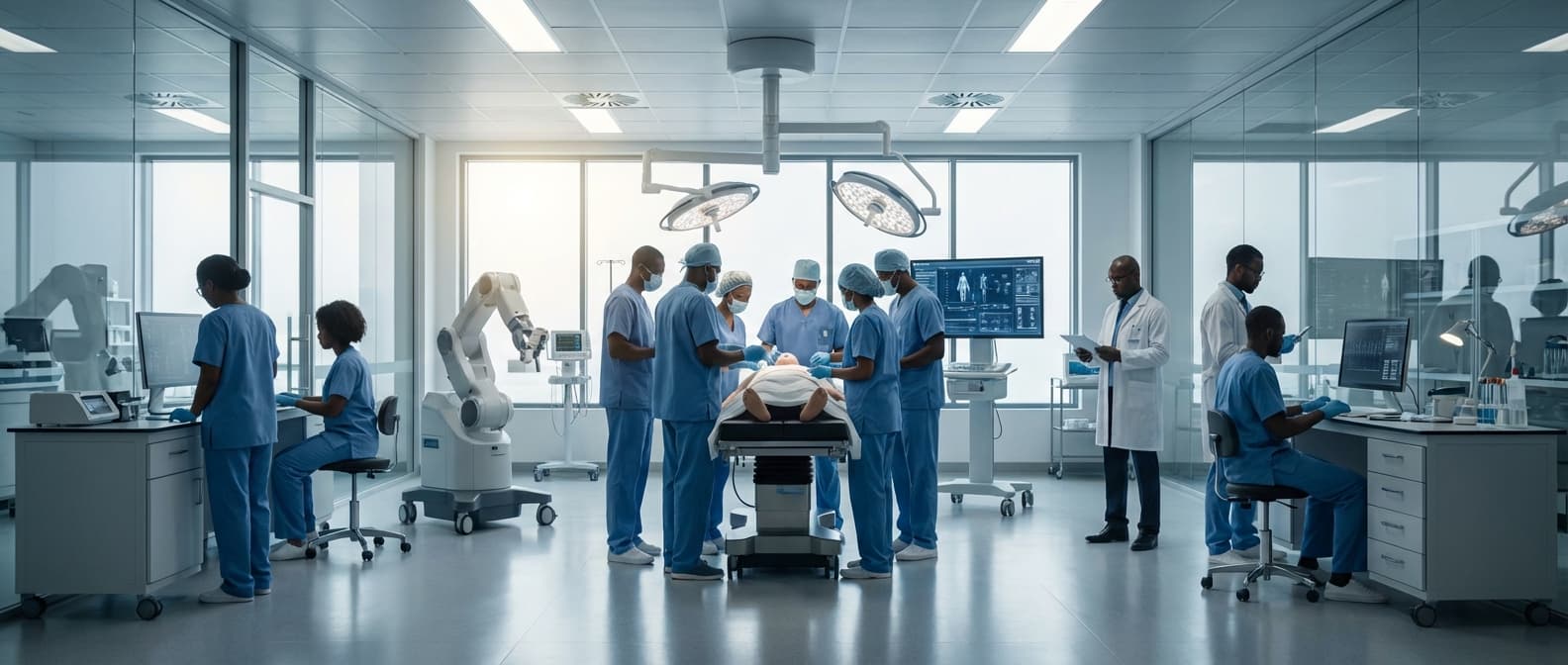
Biomedical Engineering Consulting in Mozambique
Engineering Excellence & Technical Support
Equipment selection, procurement and implementation consulting High-standard technical execution following OEM protocols and local regulatory frameworks.
Advanced Diagnostic Technology Integration
Implementing state-of-the-art diagnostic imaging and laboratory equipment, ensuring seamless integration with existing healthcare infrastructure in Mozambique. This includes training local technicians and developing maintenance protocols to enhance diagnostic capabilities and patient care.
Modular Healthcare Facility Design & Deployment
Designing and deploying cost-effective, adaptable modular healthcare facilities for remote or underserved regions. Focus on sustainable energy solutions, robust sanitation systems, and flexible layouts to address specific public health needs in Mozambique's diverse geographical landscape.
Biomedical Equipment Maintenance & Calibration Strategy
Developing and implementing comprehensive biomedical equipment maintenance (BMEM) and calibration programs. This empowers local biomedical technicians with the skills and resources to ensure the reliability and safety of critical medical devices, reducing downtime and improving healthcare service delivery across Mozambique.
What Is Biomedical Engineering Consulting In Mozambique?
Biomedical Engineering Consulting in Mozambique represents the provision of specialized technical expertise in the intersection of engineering principles and healthcare technologies to organizations operating within the Mozambican context. This service encompasses a broad spectrum of activities aimed at optimizing the acquisition, implementation, maintenance, and strategic utilization of medical devices and healthcare infrastructure. Consultants leverage their in-depth knowledge of biomedical principles, regulatory frameworks, and local market dynamics to address complex challenges faced by healthcare providers, manufacturers, and governmental bodies. The objective is to enhance the quality, accessibility, and cost-effectiveness of healthcare delivery through informed decision-making and efficient resource management. This involves rigorous analysis of technical specifications, assessment of clinical needs, evaluation of existing infrastructure, and development of tailored solutions that align with the unique socioeconomic and environmental conditions prevalent in Mozambique.
| Who Needs Biomedical Engineering Consulting in Mozambique | Typical Use Cases |
|---|---|
| Public and Private Hospitals (e.g., Central Hospitals, Provincial Hospitals, District Hospitals, Private Clinics) | Developing strategic procurement plans for essential medical equipment; establishing robust preventative maintenance programs for critical care units; conducting safety audits of existing medical device inventory; advising on the upgrade or replacement of aging medical infrastructure. |
| Ministry of Health and other Governmental Health Agencies | Developing national medical equipment procurement policies and guidelines; conducting needs assessments for national health initiatives; advising on the establishment of centralized medical device management systems; supporting regulatory framework development for medical technology. |
| Non-Governmental Organizations (NGOs) and International Aid Organizations | Assisting in the selection and deployment of appropriate medical technologies for specific health programs and projects; ensuring the sustainability of medical equipment in resource-limited settings; providing technical oversight for equipment donations and installations. |
| Medical Device Manufacturers and Distributors | Providing market intelligence and regulatory insights; assisting with product registration and compliance; developing after-sales service and support strategies; offering technical training to local partners and end-users. |
| Academic and Research Institutions | Advising on the selection and integration of research-grade medical equipment; developing laboratory infrastructure; ensuring compliance with biosafety and radiation safety regulations. |
| Healthcare Facility Developers and Construction Companies | Providing technical specifications for medical gas systems, electrical power infrastructure, and environmental controls; ensuring optimal layout and integration of medical equipment within new or renovated facilities. |
Key Aspects of Biomedical Engineering Consulting in Mozambique
- Needs Assessment and Technology Planning: Identifying essential medical equipment and infrastructure requirements based on epidemiological data, patient demographics, and service delivery models.
- Procurement Support and Due Diligence: Assisting in the selection, specification, and acquisition of medical devices, including vendor evaluation, contract negotiation, and quality assurance.
- Installation, Commissioning, and Validation: Overseeing the proper setup, testing, and verification of medical equipment to ensure compliance with international standards and safe operation.
- Maintenance, Calibration, and Repair Strategies: Developing and implementing robust preventative maintenance programs, calibration schedules, and efficient repair protocols to maximize equipment lifespan and reliability.
- Regulatory Compliance and Standards Adherence: Guiding clients through national and international regulations pertaining to medical devices, safety, and quality management systems.
- Infrastructure Development and Facility Design: Advising on the design and development of healthcare facilities, including specialized technical areas and utility requirements for medical equipment.
- Training and Capacity Building: Educating healthcare professionals and technical staff on the operation, maintenance, and troubleshooting of medical devices.
- Risk Management and Safety Audits: Identifying potential hazards associated with medical technology and implementing strategies to mitigate risks and ensure patient and staff safety.
- Technology Lifecycle Management: Providing strategic guidance on the entire lifecycle of medical equipment, from acquisition to decommissioning.
- Impact Assessment and Performance Evaluation: Analyzing the effectiveness and impact of medical technology investments on healthcare outcomes and operational efficiency.
Who Needs Biomedical Engineering Consulting In Mozambique?
Biomedical Engineering consulting services are crucial for a range of organizations and individuals in Mozambique striving to improve healthcare delivery, optimize medical device management, and ensure patient safety. These services cater to institutions that may lack in-house expertise or require specialized knowledge to navigate the complexities of medical technology and its integration into the healthcare system.
| Target Customer Group | Key Departments/Functions Benefiting from Consulting |
|---|---|
| Public Healthcare Providers | Procurement Department, Engineering/Maintenance Department, Clinical Departments (for equipment needs assessment), IT Department (for health information systems), Hospital Administration |
| Private Healthcare Facilities | Medical Director's Office, Operations Management, Biomedical Engineering Department (if existing), Finance Department, Clinical Service Managers |
| NGOs and International Aid Agencies | Program Management, Procurement and Logistics, Technical Support Teams, Training Departments |
| Medical Device Manufacturers and Distributors | Sales and Marketing, Technical Service, Regulatory Affairs, Training and Development |
| Research and Academic Institutions | Research Laboratories, Facilities Management, Academic Departments (Biomedical, Medicine, Pharmacy), IT Services |
| Government Ministries and Regulatory Bodies | Policy Planning Units, Regulatory Affairs Departments, Standards and Quality Assurance, Health Infrastructure Planning |
| Insurance Companies and Healthcare Payers | Claims Processing, Medical Review, Policy Development, Provider Network Management |
Target Customers for Biomedical Engineering Consulting in Mozambique
- {"title":"Public Healthcare Providers","description":"Government-owned hospitals, clinics, and health centers at national, provincial, and district levels. They often face challenges with aging equipment, limited budgets for maintenance, and the need for strategic procurement and infrastructure development."}
- {"title":"Private Healthcare Facilities","description":"Private hospitals, specialized clinics, and diagnostic centers. While often better resourced, they still require expert guidance on technology selection, regulatory compliance, and efficient operational management to maintain a competitive edge and high-quality patient care."}
- {"title":"Non-Governmental Organizations (NGOs) and International Aid Agencies","description":"Organizations involved in health sector development, humanitarian aid, and medical projects in Mozambique. They frequently need support in assessing needs, procuring and installing medical equipment, and training local personnel in resource-constrained settings."}
- {"title":"Medical Device Manufacturers and Distributors","description":"Companies that import, sell, and service medical equipment in Mozambique. Consultants can assist with market entry strategies, understanding local regulations, technical support development, and training their local sales and service teams."}
- {"title":"Research and Academic Institutions","description":"Universities, medical schools, and research centers with biomedical science programs or clinical research facilities. They may need assistance with setting up laboratories, selecting research equipment, and ensuring compliance with safety standards."}
- {"title":"Government Ministries and Regulatory Bodies","description":"Ministries of Health, national drug and medical device regulatory authorities, and standards organizations. Consultants can aid in policy development, regulatory framework establishment, and capacity building for oversight and enforcement."}
- {"title":"Insurance Companies and Healthcare Payers","description":"Entities involved in health insurance and reimbursement. They might seek expertise on the efficacy, cost-effectiveness, and proper utilization of medical technologies."}
Biomedical Engineering Consulting Process In Mozambique
The biomedical engineering consulting process in Mozambique, like in many regions, follows a structured workflow designed to address client needs effectively. This process typically begins with an initial inquiry, progresses through assessment and proposal stages, and culminates in the execution and completion of the project. Each phase is crucial for ensuring successful outcomes, adherence to local regulations, and client satisfaction. The workflow can be broadly categorized into the following stages: Inquiry, Needs Assessment & Scoping, Proposal Development, Contract & Agreement, Project Execution, Monitoring & Evaluation, and Project Closure & Handover.
| Phase | Description | Key Activities | Deliverables/Outcomes | Considerations (Mozambique Specific) |
|---|---|---|---|---|
| Inquiry & Initial Contact | The client initiates contact with the consulting firm to discuss their needs. | Initial discussion, clarification of basic requirements, scheduling of follow-up meetings. | Understanding of client's general challenge, initial rapport established. | Language proficiency (Portuguese is official, English is common in business, local dialects may be relevant in remote areas). Understanding of cultural nuances in business communication. |
| Needs Assessment & Scoping | Detailed understanding of the client's problem, environment, and specific objectives. | On-site visits (if applicable), interviews with stakeholders, data collection (equipment inventories, existing infrastructure, regulatory requirements), defining project scope, objectives, and deliverables. | Detailed needs assessment report, defined project scope document, preliminary risk assessment. | Understanding of Mozambican healthcare infrastructure (public vs. private, resource availability). Awareness of national health policies and priorities. Familiarity with local regulatory bodies for medical devices and healthcare facilities. |
| Proposal Development | Formal presentation of the proposed solution, methodology, timeline, and budget. | Developing a technical solution, defining project methodology and phases, creating a detailed work plan, estimating resources (personnel, equipment), cost estimation, risk mitigation strategies, quality assurance plan. | Comprehensive project proposal, including technical approach, timeline, budget, and team qualifications. | Pricing competitiveness within the Mozambican market. Inclusion of local content and capacity building where possible. Understanding of procurement processes in public and private sectors. |
| Contract & Agreement | Formalizing the engagement with a legally binding contract. | Negotiating terms and conditions, drafting and signing the contract, securing necessary permits or approvals (if any). | Signed contract/agreement, defined payment schedule, service level agreements (SLAs). | Understanding of Mozambican contract law. Compliance with foreign investment regulations if applicable. Clear payment terms considering local banking systems. |
| Project Execution | Implementing the agreed-upon plan to achieve project objectives. | Design, procurement, installation, testing, training, maintenance planning, regulatory compliance activities, change management. | Implemented solutions, installed equipment, trained personnel, completed documentation. | Sourcing of equipment and spare parts (logistics, import duties, customs clearance). Local sourcing and supply chain considerations. Adherence to specific Mozambican standards and certifications for medical devices. Local workforce availability and training needs. |
| Monitoring & Evaluation | Tracking progress, identifying deviations, and ensuring quality throughout the project. | Regular progress reporting, performance monitoring against KPIs, quality control checks, stakeholder feedback, risk management updates, conducting mid-term reviews. | Progress reports, updated risk logs, quality assurance documentation, stakeholder satisfaction surveys. | Regular communication channels with clients and relevant government agencies. Understanding of reporting requirements for health sector projects. |
| Project Closure & Handover | Formal completion of the project and transfer of responsibility to the client. | Final project review, handover of deliverables, final documentation, training completion verification, post-project support planning, final invoicing and payment. | Project completion report, final handover documentation, lessons learned report, client sign-off. | Ensuring sustainability of the implemented solutions. Post-project support mechanisms tailored to local context and resource availability. Knowledge transfer to local personnel for long-term operation and maintenance. |
Biomedical Engineering Consulting Workflow in Mozambique
- Inquiry & Initial Contact
- Needs Assessment & Scoping
- Proposal Development
- Contract & Agreement
- Project Execution
- Monitoring & Evaluation
- Project Closure & Handover
Biomedical Engineering Consulting Cost In Mozambique
Biomedical Engineering consulting costs in Mozambique can vary significantly depending on several factors. These include the complexity and scope of the project, the experience and reputation of the consultant or firm, the duration of the engagement, and the specific services required. Common services might encompass medical equipment evaluation and procurement, installation and commissioning, maintenance program development, regulatory compliance advice, and training. Costs are typically quoted in Mozambican Metical (MZN). While specific pricing is highly project-dependent, a general understanding of influencing factors can help in budgeting.
| Service Category | Estimated Daily Rate (MZN) | Estimated Project-Based Fee Range (MZN) |
|---|---|---|
| Initial Consultation/Needs Assessment | 5,000 - 15,000 | 20,000 - 75,000 |
| Medical Equipment Evaluation/Procurement Advisory | 7,000 - 20,000 | 50,000 - 250,000 |
| Installation/Commissioning Oversight | 8,000 - 25,000 | 70,000 - 400,000 (depending on equipment complexity and number) |
| Maintenance Program Development | 7,000 - 22,000 | 60,000 - 300,000 |
| Regulatory Compliance Advisory | 8,000 - 25,000 | 50,000 - 350,000 |
| Training and Capacity Building | 6,000 - 18,000 | 40,000 - 200,000 (per session/module) |
| Specialized Project Management (e.g., hospital setup) | 10,000 - 30,000+ | 300,000 - 1,500,000+ (highly variable) |
Key Pricing Factors for Biomedical Engineering Consulting in Mozambique
- Scope and Complexity: The more intricate the project (e.g., setting up a new hospital wing with advanced imaging equipment vs. advising on a single device repair strategy), the higher the cost.
- Consultant Experience and Expertise: Senior consultants or specialized firms with a proven track record and deep knowledge of Mozambican healthcare regulations and infrastructure will command higher fees.
- Duration of Engagement: Short-term, project-based work will have different pricing structures than long-term advisory roles.
- Specific Services Required: Services like in-depth equipment performance validation or comprehensive training programs are more resource-intensive and thus more expensive than initial consultations or basic equipment assessments.
- Travel and Accommodation: If the consultant needs to travel to remote areas within Mozambique or from international locations, these expenses will be factored into the total cost.
- Regulatory and Compliance Requirements: Projects involving adherence to national medical device regulations, quality management systems, or international standards will require specialized knowledge and more time, influencing costs.
- Urgency of the Project: Expedited services may incur premium charges.
- Report Generation and Deliverables: The level of detail, formality, and number of reports or documentation required will impact the overall price.
Affordable Biomedical Engineering Consulting Options
Biomedical engineering consulting is crucial for innovation and regulatory compliance in the medical device and healthcare industries. While often perceived as expensive, there are numerous ways to access affordable expertise. This involves understanding flexible service models like value bundles and implementing strategic cost-saving measures throughout a project. By carefully selecting service packages and being mindful of resource allocation, companies can leverage high-quality consulting without breaking their budget.
| Cost-Saving Strategy | Description | Benefits |
|---|---|---|
| Clear Scope Definition | Precisely outline project objectives, deliverables, timelines, and exclusions upfront. | Minimizes scope creep, reduces rework, and ensures accurate cost estimation. |
| Leverage Existing Data/Research | Thoroughly review internal documentation, prior studies, and publicly available information before engaging external consultants. | Avoids redundant efforts and allows consultants to focus on novel aspects of the project. |
| Phased Project Management | Divide the project into distinct stages with defined milestones and approvals. | Allows for cost control at each phase and provides opportunities to reassess needs and budget. |
| Strategic Consultant Selection | Identify consultants with proven expertise directly relevant to your project needs. Consider smaller, specialized firms or independent consultants. | Ensures efficiency and reduces the learning curve, leading to faster and more cost-effective outcomes. |
| Effective Communication & Collaboration Tools | Utilize project management software, video conferencing, and shared document platforms. | Enhances efficiency, reduces misunderstandings, and minimizes the need for in-person meetings. |
| Define Specific Deliverables | Clearly articulate what the consultant is expected to produce (e.g., report, design file, test plan). | Provides accountability and allows for objective assessment of completion and value. |
| Negotiate Terms and Payment Schedules | Discuss pricing models, payment terms, and potential discounts for early payment or long-term engagement. | Can lead to more favorable financial arrangements and manage cash flow effectively. |
| Internal Resource Augmentation | Identify tasks where internal staff can contribute, freeing up consultants for highly specialized work. | Maximizes internal investment and reduces the overall reliance on external services. |
Affordable Biomedical Engineering Consulting Options
- Value Bundles: These are pre-packaged service offerings designed to address common project phases or needs at a more predictable and often discounted rate compared to ad-hoc hourly billing. Bundles can cover areas like early-stage feasibility studies, regulatory pathway assessment, design verification testing planning, or specific documentation preparation.
- Project-Based Pricing: Instead of an hourly rate, a fixed price is agreed upon for a defined scope of work. This provides budget certainty and incentivizes the consultant to work efficiently.
- Retainer Agreements: For ongoing or long-term needs, a retainer allows for a set number of hours or specific services per month at a potentially reduced rate. This ensures access to expertise when needed and can be more cost-effective than emergency consultations.
- Phased Consulting: Breaking down larger projects into smaller, manageable phases with distinct deliverables. This allows for budget allocation and decision-making at each stage, preventing overspending on unproven concepts.
- Hybrid Consulting Models: Combining different approaches. For example, a fixed fee for initial strategy and planning, followed by hourly billing for execution, or a retainer for oversight with project-based work for specific tasks.
- Leveraging Junior Consultants (with Senior Oversight): Utilizing less experienced consultants for tasks that don't require highly specialized expertise, under the close supervision of senior engineers. This can significantly reduce hourly rates.
- Remote Consulting: Utilizing virtual communication and collaboration tools to reduce travel expenses and time, making consultants from different geographic locations accessible.
- On-Demand Expert Networks: Platforms connecting companies with a diverse pool of specialized biomedical engineers for short-term, project-specific needs.
- Partnerships with Academic Institutions: Collaborating with university research departments or faculty for specific technical challenges or early-stage research, often at a lower cost.
- Focus on Deliverables, Not Just Time: Emphasize clear, measurable outcomes rather than solely the hours spent. This encourages efficiency and value delivery.
Verified Providers In Mozambique
Finding reliable healthcare in a foreign country can be a significant concern. In Mozambique, ensuring you're connected with verified healthcare providers is paramount for your well-being and peace of mind. This is where Franance Health emerges as a crucial partner, offering a rigorously vetted network of medical professionals and facilities. Their commitment to quality assurance and stringent credentialing processes distinguishes them, providing a clear advantage for individuals seeking the best possible healthcare services.
| Credential Type | Franance Health Verification | Importance for Patients |
|---|---|---|
| Medical Licenses | Confirmed current and valid in Mozambique | Ensures provider is legally authorized to practice medicine. |
| Professional Qualifications & Certifications | Verified against recognized medical institutions and standards | Confirms the provider has the necessary expertise and training for their specialty. |
| Clinical Experience | Reviewed through past employment and references | Indicates a track record of practical application of medical knowledge. |
| Reputation & Ethics | Assessed through peer reviews and background checks | Guarantees a commitment to ethical practice and patient welfare. |
| Facility Accreditation (where applicable) | Confirmed adherence to safety and quality standards | Ensures the healthcare facility is well-equipped and maintains a safe environment. |
Why Franance Health Credentials Matter
- Rigorous Vetting Process: Franance Health goes beyond basic checks, employing a comprehensive evaluation system to verify the qualifications, experience, and ethical standing of every provider in their network. This includes thorough background checks, license verification, and professional reference reviews.
- Commitment to Quality: The credentialing process is designed to ensure that all Franance Health providers meet high standards of medical competence and patient care. This focus on quality translates directly to a safer and more effective healthcare experience for you.
- Reduced Risk and Uncertainty: By partnering with Franance Health, you eliminate the guesswork and risk associated with finding healthcare on your own. Their verified network provides a trusted starting point for all your medical needs.
- Access to Specialized Care: Franance Health's network often includes specialists across various medical disciplines, ensuring you can find the right expertise for your specific health requirements, from routine check-ups to complex procedures.
- Peace of Mind: Knowing that your healthcare providers have been thoroughly vetted by a reputable organization like Franance Health offers invaluable peace of mind, allowing you to focus on your recovery and well-being.
Scope Of Work For Biomedical Engineering Consulting
This document outlines the scope of work and technical deliverables for Biomedical Engineering consulting services. It specifies the expected outcomes and standard specifications for various engineering activities within the biomedical field. The aim is to provide a clear framework for collaboration and ensure the successful completion of projects. Key areas covered include design and development, regulatory compliance, and validation.
| Task Area | Description | Standard Specifications / Key Considerations | Example Deliverables |
|---|---|---|---|
| Product Design & Development | Conceptualization, design, prototyping, and refinement of medical devices and systems. | ISO 13485:2016 (Quality Management Systems), IEC 62366 (Usability Engineering), relevant ASTM standards. Consideration of material compatibility, biocompatibility (ISO 10993), electrical safety (IEC 60601). | Conceptual Design Report, CAD Models, Prototypes, Design History File (DHF) entries. |
| Regulatory Compliance | Ensuring products meet regulatory requirements for target markets. | FDA 21 CFR Part 820 (Quality System Regulation), MDR (EU) 2017/745, ISO 14971 (Risk Management), cybersecurity guidelines (e.g., FDA, IMDRF). | Risk Management File, Regulatory Strategy Document, Submission Documentation. |
| Verification & Validation (V&V) | Testing to confirm the design meets specifications and intended use. | IEC 60601 series (Medical electrical equipment), ISO 10012 (Measurement management systems), protocol-driven testing. | V&V Plans, Test Protocols, Test Reports, Validation Summary Report. |
| Manufacturing & Process Engineering | Developing and optimizing manufacturing processes for medical devices. | Good Manufacturing Practices (GMP), Lean Manufacturing principles, Statistical Process Control (SPC). | Process Flow Diagrams, Manufacturing Work Instructions, Process Validation Reports. |
| Software & System Integration | Development and validation of software for medical devices and integration of complex systems. | IEC 62304 (Medical device software – Software lifecycle processes), SDO standards for interoperability (e.g., HL7). | Software Requirements Specification, Software Architecture Document, Software Validation Report, ICDs. |
| Clinical Evaluation & Post-Market Surveillance | Gathering and analyzing clinical data, and monitoring product performance post-launch. | MDR (EU) 2017/745 (Clinical Evaluation), post-market surveillance plans, complaint handling procedures. | Clinical Evaluation Plan, Clinical Evaluation Report, Post-Market Surveillance Report. |
Key Technical Deliverables
- Conceptual Design Documents
- Detailed Engineering Drawings (CAD)
- Bill of Materials (BOM)
- Risk Management File (RMF)
- Verification and Validation (V&V) Plans and Reports
- Usability Engineering Reports
- Manufacturing Process Instructions
- Technical Documentation Packages (TDP)
- Regulatory Submission Dossiers (e.g., FDA 510(k), CE Mark Technical File)
- Performance Test Reports
- Software Validation Documentation
- Interface Control Documents (ICD)
Service Level Agreement For Biomedical Engineering Consulting
This Service Level Agreement (SLA) outlines the commitment of [Consulting Company Name] (hereinafter referred to as "Consultant") to its clients (hereinafter referred to as "Client") regarding the provision of biomedical engineering consulting services. This SLA specifically addresses response times and uptime guarantees for critical support functions and communication channels.
| Service Category | Response Time Target | Uptime Guarantee | Definition of Uptime |
|---|---|---|---|
| Emergency Technical Support (Critical System Failure) | Within 1 hour | 99.9% | The percentage of time during a calendar month that critical consulting systems, communication channels (e.g., email, dedicated support portal), and designated support personnel are available and functional for Client access and interaction. Uptime excludes scheduled maintenance and events outside of the Consultant's reasonable control (Force Majeure). |
| Non-Emergency Technical Support (Inquiries, Troubleshooting) | Within 4 business hours | 99.5% | The percentage of time during a calendar month that non-critical consulting systems, communication channels, and designated support personnel are available and functional for Client access and interaction. Uptime excludes scheduled maintenance and events outside of the Consultant's reasonable control (Force Majeure). |
| Project Management & Communication Platforms | Within 2 business hours (for critical notifications) | 99.8% | The percentage of time during a calendar month that the agreed-upon project management software and primary communication channels (e.g., shared project folders, designated communication platform) are accessible and operational. |
| Availability of Key Personnel (Scheduled Meetings) | 100% (for scheduled appointments) | N/A | Key personnel will be available for all pre-scheduled meetings and consultations unless otherwise communicated with reasonable advance notice to the Client due to unforeseen circumstances. |
Scope of Services Covered by this SLA
- Emergency technical support for critical system failures.
- Non-emergency technical support for system inquiries and troubleshooting.
- Availability of project management and communication platforms.
- Availability of key personnel for scheduled meetings and consultations.
Frequently Asked Questions

Ready when you are
Let's scope your Biomedical Engineering Consulting in Mozambique project in Mozambique.

Scaling healthcare logistics and technical systems across the entire continent.