
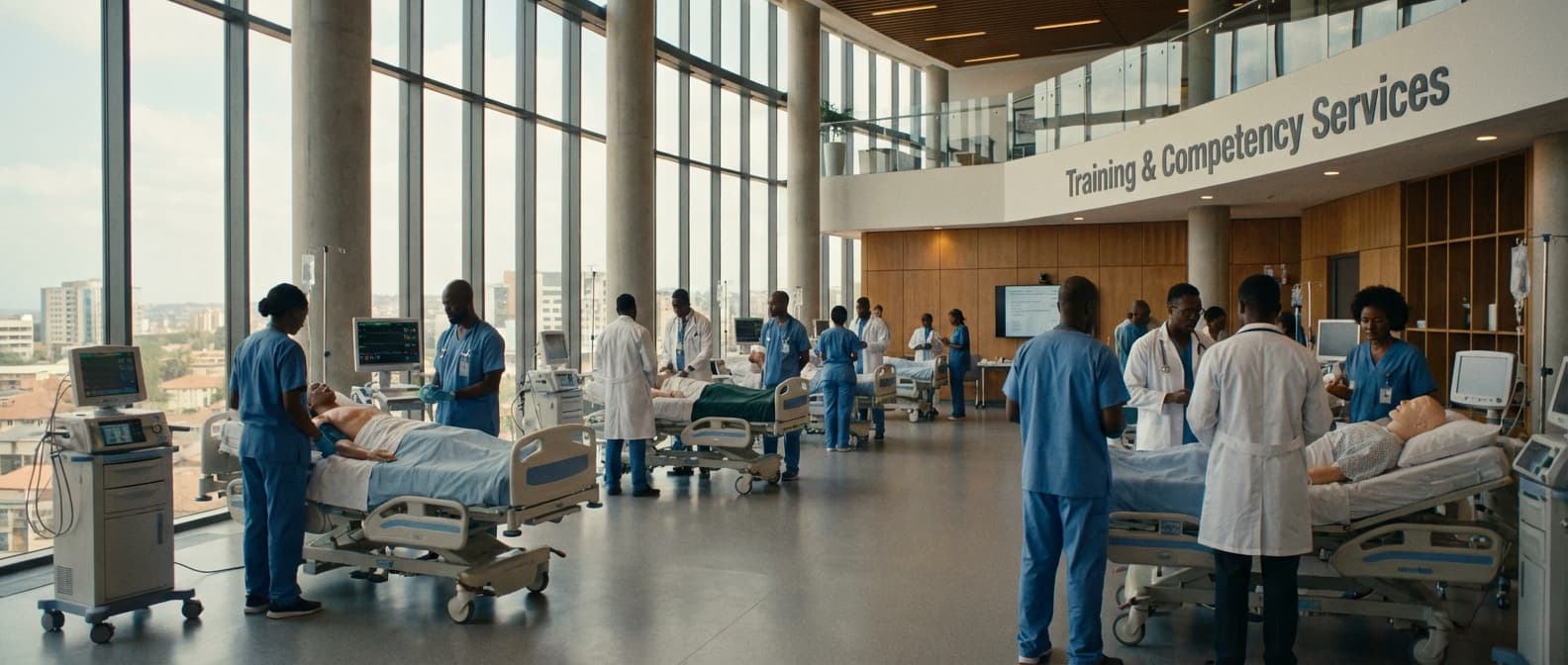
Ventilator User Training Service (Nurses) in Morocco
Engineering Excellence & Technical Support
Ventilator User Training Service (Nurses) High-standard technical execution following OEM protocols and local regulatory frameworks.
Mastering Ventilation Modes
Gain expert proficiency in setting and managing various ventilation modes (e.g., AC, SIMV, PSV) to optimize patient respiratory support. This module covers mode selection criteria, parameter adjustments, and troubleshooting for diverse clinical scenarios encountered in Moroccan healthcare settings.
Advanced Patient Monitoring & Alarms
Enhance your skills in interpreting real-time ventilator waveform data and alarm parameters. Learn to proactively identify and respond to critical changes in patient status, ensuring timely intervention and improved patient safety, tailored to the resource considerations of Moroccan hospitals.
Essential Maintenance & Troubleshooting
Develop practical skills in routine ventilator maintenance and effective troubleshooting of common equipment malfunctions. This training empowers you to ensure reliable ventilator function, minimize downtime, and contribute to efficient patient care delivery within the Moroccan healthcare infrastructure.
What Is Ventilator User Training Service (Nurses) In Morocco?
Ventilator User Training Service (Nurses) in Morocco refers to a specialized educational program designed to equip registered nurses with the theoretical knowledge and practical skills necessary for the safe and effective operation, monitoring, and management of mechanical ventilators in various clinical settings within Morocco. This service aims to enhance patient care outcomes by ensuring proficient ventilator utilization, minimizing complications associated with mechanical ventilation, and optimizing the use of these critical medical devices. The training is typically delivered through a combination of didactic lectures, simulation-based learning, and supervised clinical practice.
| Who Needs This Service? | Typical Use Cases | ||||
|---|---|---|---|---|---|
| Registered nurses working in intensive care units (ICUs), critical care units (CCUs), emergency departments (EDs), operating rooms (ORs), and post-anesthesia care units (PACUs) in Moroccan hospitals and healthcare facilities. | Management of patients with acute respiratory failure (e.g., ARDS, pneumonia, COPD exacerbations, sepsis). | Support for patients undergoing major surgery requiring mechanical ventilation. | Facilitation of the weaning process from mechanical ventilation. | Emergency response situations requiring immediate ventilatory support. | Providing long-term ventilatory support for patients with chronic respiratory conditions. |
Key Components of Ventilator User Training for Nurses in Morocco
- Principles of Mechanical Ventilation: Understanding the physiological basis of gas exchange, lung mechanics, and the effects of positive-pressure ventilation.
- Ventilator Modes and Settings: In-depth knowledge of various ventilation modes (e.g., Volume Control, Pressure Control, Synchronized Intermittent Mandatory Ventilation (SIMV), Pressure Support Ventilation (PSV)), and the rationale for selecting and adjusting specific parameters (tidal volume, respiratory rate, PEEP, FiO2, flow rates, trigger sensitivity).
- Ventilator Hardware and Functionality: Familiarization with different ventilator models commonly used in Moroccan healthcare facilities, including their operational components, alarm systems, and maintenance requirements.
- Patient Assessment and Monitoring: Techniques for assessing respiratory status in ventilated patients, interpreting ventilator waveforms and parameters, and recognizing signs of ventilator-associated complications.
- Troubleshooting and Problem-Solving: Strategies for identifying and resolving common ventilator-related issues, including circuit disconnections, leaks, and patient-ventilator asynchrony.
- Weaning from Mechanical Ventilation: Principles and protocols for initiating and managing the weaning process, including appropriate assessment criteria and methods.
- Ventilator-Associated Pneumonia (VAP) Prevention: Implementation of evidence-based strategies to reduce the incidence of VAP.
- Ethical and Legal Considerations: Awareness of patient rights, consent, and legal responsibilities related to mechanical ventilation.
- Simulation and Hands-on Practice: Utilization of high-fidelity simulators and actual ventilators under supervision to develop practical skills.
Who Needs Ventilator User Training Service (Nurses) In Morocco?
This document outlines the critical need for Ventilator User Training Services specifically tailored for nurses in Morocco. Effective and safe operation of ventilators is paramount for patient care, especially in critical settings. Nurses are the frontline healthcare professionals responsible for managing patients on mechanical ventilation. This training aims to equip them with the knowledge and skills necessary to operate various ventilator models, monitor patient response, troubleshoot common issues, and ensure patient safety and optimal outcomes.
| Customer Group | Role/Responsibility | Key Training Needs | Relevant Departments |
|---|---|---|---|
| Registered Nurses (RNs) | Direct patient care, ventilator management, monitoring, adjustments, troubleshooting. | Ventilator modes, settings, patient interface management, alarm management, weaning protocols, documentation, infection control. | ICU (all specialties), ED, OR, PACU, Respiratory Care |
| Licensed Practical Nurses (LPNs) | Assisting RNs, basic ventilator checks, patient comfort, basic monitoring under supervision. | Understanding basic ventilator functions, recognizing critical alarms, reporting patient status accurately. | ICU, ED, OR, PACU |
| Nurse Anesthetists | Ventilator management during anesthesia and immediate post-operative care. | Anesthesia-specific ventilator settings, airway management, rapid sequence intubation protocols, hemodynamic monitoring integration. | OR, PACU |
| Respiratory Therapists (Collaborating) | Often work alongside nurses in ventilator management, providing advanced expertise. | In-depth understanding of ventilator mechanics, advanced modes, troubleshooting complex scenarios, collaboration with nursing staff. | ICU, Respiratory Care |
Target Customers and Departments for Ventilator User Training in Morocco
- Primary Target Customer: Registered Nurses (RNs) and Licensed Practical Nurses (LPNs) working in critical care settings.
- Secondary Target Customer: Nurse Anesthetists and other nursing specialists who may operate ventilators.
- Key Departments Requiring Training:
- Intensive Care Units (ICUs) - Medical, Surgical, Cardiac, Pediatric, Neonatal
- Emergency Departments (EDs)
- Operating Rooms (ORs)
- Post-Anesthesia Care Units (PACUs)
- Respiratory Care Departments
- Pulmonary Rehabilitation Centers (for specific ventilator use)
- Emergency Medical Services (EMS) - for transport ventilators (potential future expansion)
Ventilator User Training Service (Nurses) Process In Morocco
This document outlines the typical workflow for a Ventilator User Training Service targeting nurses in Morocco. The process encompasses the entire journey from initial inquiry to the successful execution of the training program.
| Phase | Key Activities | Description | Responsible Parties |
|---|---|---|---|
| Inquiry | Initial Contact, Information Gathering | Client expresses interest, provider gathers basic information. | Potential Client, Training Service Provider |
| Needs Assessment | On-site/Virtual Visit, Interviewing Stakeholders, Identifying Gaps | Detailed understanding of client's requirements, existing skills, and specific ventilator models. | Training Service Provider (Needs Assessment Team), Client Representatives (Nursing Managers, IT) |
| Proposal Development | Curriculum Outline, Methodology, Duration, Costing | Creation of a comprehensive training proposal detailing all aspects of the service. | Training Service Provider (Sales/Training Department) |
| Agreement & Contract Signing | Negotiation, Finalizing Terms, Legal Documentation | Formal agreement on scope, pricing, and contractual obligations. | Training Service Provider (Management), Client (Procurement/Management) |
| Curriculum Customization | Content Adaptation, Module Development, Material Creation | Tailoring the training content to specific ventilator models and client protocols. | Training Service Provider (Curriculum Developers/Subject Matter Experts) |
| Logistics & Scheduling | Venue Booking, Equipment Arrangement, Trainer Assignment, Date Confirmation | Planning and coordinating all practical aspects of the training delivery. | Training Service Provider (Operations/Logistics Team), Client (Facilities Management) |
| Trainer Selection & Preparation | Trainer Briefing, Material Review, Competency Check | Ensuring trainers are well-prepared and possess the necessary expertise. | Training Service Provider (Training Manager) |
| Training Execution | Delivery of Lectures, Practical Demonstrations, Hands-on Practice | The actual delivery of the training program to the nurses. | Training Service Provider (Trainers), Nurses (Participants) |
| Assessment & Evaluation | Quizzes, Practical Assessments, Case Studies, Skills Checks | Measuring the learning outcomes and competency of the nurses. | Training Service Provider (Trainers/Assessors) |
| Feedback Collection | Surveys, Interviews, Debriefing Sessions | Gathering input from participants and clients on the training effectiveness and areas for improvement. | Training Service Provider (Training Facilitators), Nurses (Participants), Client Representatives |
| Certification & Reporting | Issuance of Certificates, Training Report Generation, Outcome Summary | Formalizing successful completion and providing a summary of the training's impact. | Training Service Provider (Administration/Management) |
Ventilator User Training Service (Nurses) Workflow in Morocco
- The workflow begins with an 'Inquiry' phase where potential clients (hospitals, clinics, training institutions) express interest in the ventilator user training service for their nursing staff.
- This leads to a 'Needs Assessment' where the service provider understands the specific requirements, existing knowledge base of the nurses, types of ventilators in use, and desired learning outcomes.
- A 'Proposal Development' stage follows, where a tailored training plan, curriculum, duration, methodology, and cost are presented to the client.
- Upon 'Agreement and Contract Signing', the terms of the training are finalized and legally documented.
- The 'Curriculum Customization' phase ensures the training content aligns precisely with the client's needs and the ventilators they utilize.
- 'Logistics and Scheduling' involve coordinating dates, times, venue (on-site or virtual), and necessary equipment for the training.
- The 'Trainer Selection and Preparation' ensures qualified and experienced trainers are assigned and briefed on the specific training objectives.
- The 'Training Execution' is the core phase where the actual training sessions are delivered to the nurses.
- This is followed by 'Assessment and Evaluation' to gauge the nurses' understanding and competency.
- A 'Feedback Collection' mechanism is implemented to gather input from participants and clients for continuous improvement.
- Finally, 'Certification and Reporting' involves issuing certificates of completion to successful participants and providing a comprehensive report on the training outcomes to the client.
Ventilator User Training Service (Nurses) Cost In Morocco
The cost of Ventilator User Training services for nurses in Morocco can vary significantly based on several key factors. These include the depth and breadth of the training program, the experience and qualifications of the trainers, the location of the training (e.g., major city vs. remote area), the duration of the course, and whether the training is provided by an external specialized company or an in-house hospital department. The specific type of ventilator being trained on also plays a role, as more complex or specialized devices might require more extensive and costly training. Furthermore, the inclusion of practical hands-on sessions, simulation exercises, and post-training support can influence the overall price.
| Training Type/Duration | Estimated Price Range (MAD) |
|---|---|
| Basic Introduction (e.g., 4-8 hours) | 800 - 2,500 |
| Intermediate (e.g., 1-2 days, including practicals) | 2,000 - 6,000 |
| Advanced/Specialized (e.g., 3+ days, complex ventilators, simulations) | 5,000 - 15,000+ |
| On-site group training (per participant, estimate) | 400 - 1,500 |
Key Pricing Factors for Ventilator User Training (Nurses) in Morocco
- Training Program Scope: Basic vs. Advanced, theoretical vs. practical, specific ventilator models.
- Trainer Expertise: Certified instructors, experienced intensivists, or respiratory therapists.
- Training Provider: Specialized training companies, hospital in-house programs, or medical device manufacturers.
- Training Duration: Number of hours or days of instruction.
- Location: On-site training at a facility vs. off-site at a training center.
- Group Size: Per-participant cost for larger groups or a fixed fee for smaller cohorts.
- Materials and Resources: Manuals, simulations, online modules, and assessments.
- Certification/Accreditation: Fees for official certifications or continuing education credits.
- Post-Training Support: Follow-up sessions, troubleshooting assistance, or refresher courses.
Affordable Ventilator User Training Service (Nurses) Options
This document outlines affordable ventilator user training service options specifically designed for nurses. We focus on providing essential skills and knowledge to ensure safe and effective ventilator management, while also offering strategies for cost savings and value-driven service delivery. Our approach emphasizes flexibility and accessibility to meet the diverse needs of healthcare facilities.
| Value Bundle Option | Description | Key Features | Cost-Saving Strategies | Estimated Price Range (per nurse, per session) |
|---|---|---|---|---|
| Core Competency Module | Focuses on essential knowledge and skills for basic ventilator operation and patient management. | Online modules, interactive simulations, downloadable quick reference guides. | Reduced instructor travel, scalable training, self-paced learning. | $50 - $150 |
| Advanced Skills Workshop | Builds upon core competencies with more complex scenarios, troubleshooting, and specific patient populations. | Blended learning (online pre-work + in-person hands-on session), case study analysis, debriefing. | Group discounts, on-site training to reduce travel for trainers, train-the-trainer options. | $150 - $300 |
| Comprehensive Certification Program | Covers all aspects of ventilator management, including advanced concepts and competency validation. | Full online curriculum, simulation lab access, supervised practical experience, formal assessment. | Bulk licensing for facility-wide training, integration with existing EHR for documentation practice, potential for grant funding. | $300 - $600 |
| On-Demand Support & Refresher | Provides access to expert support for specific questions and regular refreshers on ventilator protocols. | Live Q&A sessions with respiratory therapists/physicians, curated refresher modules, access to a knowledge base. | Reduced need for extensive initial training, proactive problem-solving, improved staff confidence. | $25 - $75 (monthly subscription) |
Key Training Components
- Basic ventilator modes and principles (e.g., Volume Control, Pressure Control)
- Patient assessment and monitoring during mechanical ventilation
- Troubleshooting common ventilator alarms and issues
- Initiating and discontinuing mechanical ventilation
- Understanding ventilator graphics and waveforms
- Principles of weaning and liberation from mechanical ventilation
- Infection control measures related to mechanical ventilation
- Documentation of ventilator management
Verified Providers In Morocco
Navigating healthcare in a foreign country can be daunting. For those seeking reliable and high-quality medical services in Morocco, understanding the credentials of healthcare providers is paramount. Franance Health stands out as a beacon of trust, offering a network of verified professionals and facilities that prioritize patient well-being and adhere to rigorous international standards. Their commitment to excellence, coupled with a deep understanding of both Moroccan and European healthcare systems, makes them the preferred choice for expatriates, tourists, and locals alike.
| Provider Type | Franance Health Verification Criteria | Benefits for Patients |
|---|---|---|
| Doctors | Valid medical license, specialization accreditation, proof of ongoing professional development, patient reviews. | Access to highly qualified specialists, clear communication through multilingual staff, personalized treatment plans. |
| Hospitals & Clinics | Accreditation by national/international bodies, adherence to hygiene and safety protocols, availability of advanced medical equipment, patient feedback analysis. | Safe and modern medical facilities, access to a wide range of medical services, efficient emergency care. |
| Specialty Centers (e.g., Dental, Ophthalmology) | Specific certifications for the specialty, experienced practitioners, advanced technology in their field. | Expert care for specific medical needs, cutting-edge treatments and diagnostics. |
Why Franance Health is Your Best Choice:
- Rigorous Verification Process: Franance Health meticulously vets all its partner providers, ensuring they meet stringent quality, safety, and ethical benchmarks. This includes verifying licenses, certifications, specializations, and patient satisfaction records.
- Multilingual Accessibility: Communication is key in healthcare. Franance Health's network includes professionals fluent in multiple languages, including French, English, and Arabic, ensuring clear understanding and effective patient care.
- Access to Specialized Care: Whether you require routine check-ups, complex surgeries, or specialized treatments, Franance Health connects you with the right specialists and state-of-the-art facilities across Morocco.
- Streamlined Appointment Booking: Their user-friendly platform simplifies the process of finding and booking appointments with verified doctors and clinics, saving you time and reducing stress.
- Transparent Pricing and Support: Franance Health promotes transparency in healthcare costs and offers dedicated support throughout your medical journey in Morocco, from initial consultation to post-treatment follow-up.
- Integration with International Standards: Franance Health bridges the gap between Moroccan and international healthcare expectations, offering peace of mind to those accustomed to global standards of care.
Scope Of Work For Ventilator User Training Service (Nurses)
This document outlines the Scope of Work for providing user training services for ventilators, specifically targeting registered nurses. The training will cover the safe and effective operation, monitoring, and basic troubleshooting of specified ventilator models. The objective is to ensure nurses are proficient in utilizing the ventilators to provide optimal patient care. The training will include theoretical components, practical demonstrations, hands-on exercises, and competency assessments. Upon successful completion, participants will receive a certificate of completion.
| Module | Description | Duration (Approx.) | Learning Activities | Assessment Method |
|---|---|---|---|---|
| Introduction to Mechanical Ventilation | Basic principles, indications, contraindications, and patient selection. | 2 hours | Lecture, group discussion, case studies. | Quiz |
| Ventilator System Overview (Specific Model) | Components, controls, user interface, safety features, and pre-use checks. | 3 hours | Lecture, guided demonstration, hands-on exploration. | Practical demonstration |
| Ventilator Settings and Modes | Explanation and practical application of common ventilation modes (e.g., AC, SIMV, PSV, BiPAP). | 4 hours | Lecture, simulation exercises, interactive scenarios. | Case study analysis, practical scenario assessment |
| Monitoring and Assessment | Waveform interpretation, physiological monitoring, and patient assessment during ventilation. | 3 hours | Lecture, real-time data analysis, simulation. | Interpretation exercises |
| Alarms and Troubleshooting | Common alarms, causes, and basic troubleshooting steps for the specified ventilator models. | 3 hours | Lecture, troubleshooting scenarios, hands-on practice. | Scenario-based troubleshooting |
| Infection Control and Maintenance | Cleaning, disinfection, and maintenance procedures for the ventilator circuit and components. | 1 hour | Lecture, demonstration. | Knowledge check |
| Competency Assessment | Comprehensive evaluation of theoretical knowledge and practical skills. | 2 hours | Written examination, practical skills demonstration. | Pass/Fail based on predefined criteria |
Key Training Objectives
- Understand fundamental principles of mechanical ventilation.
- Identify and explain the key features and functionalities of the specified ventilator models.
- Perform correct setup and connection of the ventilator to the patient.
- Initiate and manage various ventilation modes appropriate for different patient populations.
- Interpret ventilator waveforms and parameters to assess patient response.
- Recognize and respond to common ventilator alarms and troubleshoot basic issues.
- Understand infection control procedures related to ventilator use.
- Document ventilator settings and patient status accurately.
Service Level Agreement For Ventilator User Training Service (Nurses)
This Service Level Agreement (SLA) outlines the response times and uptime guarantees for the Ventilator User Training Service specifically tailored for nurses. This SLA aims to ensure timely and effective training support, minimizing disruption to patient care and fostering confidence in ventilator operation.
| Service Component | Response Time Guarantee | Uptime Guarantee |
|---|---|---|
| Live Virtual Training Session Scheduling (Request) | Requests for training sessions will be acknowledged within 4 business hours. | N/A (Service is provided as scheduled) |
| Technical Support (Training Platform Access) | Critical issues impacting immediate training access will receive a response within 1 business hour. | 99.5% uptime for the training platform during scheduled training hours. |
| Q&A Session Support (During Live Session) | Questions submitted during live Q&A sessions will be addressed during the session. | N/A (Service is provided live) |
| Access to On-Demand Training Modules & Materials | Access issues to on-demand content will be addressed within 2 business hours. | 99.8% uptime for the on-demand content repository. |
| Post-Training Assessment Access | Access issues to post-training assessments will be addressed within 2 business hours. | 99.8% uptime for the assessment platform. |
Scope of Services
- Live instructor-led virtual training sessions for nurses on ventilator operation, patient connection, and basic troubleshooting.
- On-demand access to pre-recorded training modules and supplementary materials.
- Technical support for accessing training platforms and materials.
- Q&A sessions with certified trainers.
- Post-training competency assessment tools.
Frequently Asked Questions

Ready when you are
Let's scope your Ventilator User Training Service (Nurses) in Morocco project in Morocco.

Scaling healthcare logistics and technical systems across the entire continent.