
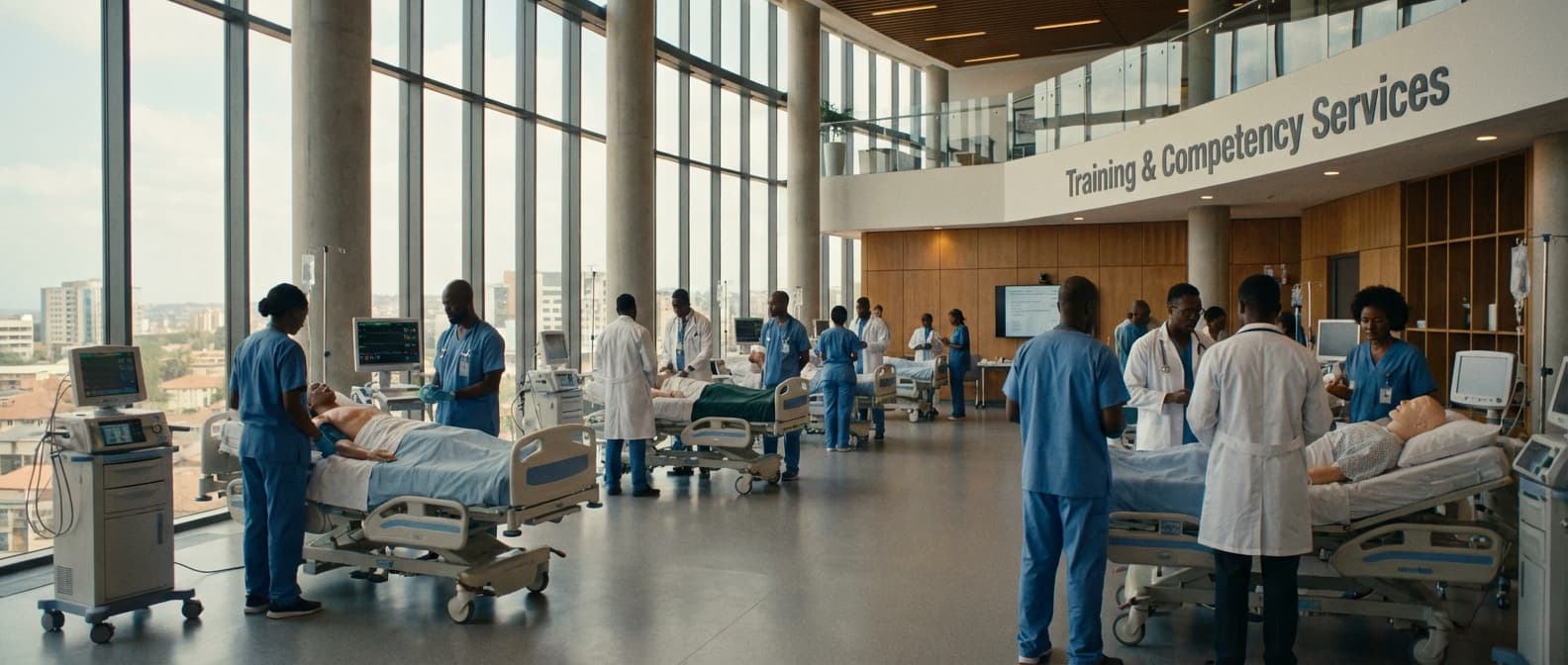
Ultrasound Application Training Service (Protocol-Based) in Morocco
Engineering Excellence & Technical Support
Ultrasound Application Training Service (Protocol-Based) High-standard technical execution following OEM protocols and local regulatory frameworks.
Expert-Led Protocol Training
Master essential ultrasound protocols with hands-on training delivered by experienced Moroccan medical imaging specialists. Our curriculum is tailored to the specific diagnostic needs and common pathologies encountered in Morocco.
Localized Curriculum & Cultural Nuances
Benefit from a training program designed with Morocco in mind. We incorporate local medical terminology, regional healthcare challenges, and cultural considerations to ensure maximum relevance and practical application for practitioners.
Advanced Skill Enhancement & Certification
Elevate your ultrasound expertise and gain verifiable certification in specific application protocols. Our intensive training empowers you to enhance diagnostic accuracy, improve patient care, and advance your professional standing within Morocco's healthcare landscape.
What Is Ultrasound Application Training Service (Protocol-based) In Morocco?
Ultrasound Application Training Service (Protocol-Based) in Morocco refers to a specialized educational offering focused on enhancing the proficiency of healthcare professionals in the utilization of diagnostic ultrasound imaging, strictly adhering to established, evidence-based imaging protocols. This service is designed to standardize and optimize ultrasound examinations, ensuring accurate diagnosis, consistent image acquisition, and efficient workflow. The training emphasizes a systematic approach, guiding participants through the precise sequence of transducer manipulation, patient positioning, acoustic window identification, and parameter optimization required for specific anatomical regions and clinical indications, as defined by international and national guidelines.
| Target Audience | Needs Addressed | Typical Use Cases |
|---|---|---|
| Radiologists and Radiology Residents | Enhancing diagnostic accuracy, standardizing reporting, introducing new protocols, improving efficiency in complex examinations. | Standardized abdominal scans for liver, kidney, and spleen assessment; fetal biometric measurements and anomaly screening; Doppler assessment of carotid arteries; thyroid and breast lesion characterization. |
| Sonographers (Diagnostic Medical Sonographers) | Developing comprehensive scanning skills, mastering protocol adherence, improving image quality, expanding skill sets to new applications. | Routine obstetric scans (e.g., dating, anatomy scan); gynecological evaluations for pelvic masses; echocardiography for cardiac function assessment; musculoskeletal imaging for joint pathology; superficial structure imaging. |
| Physicians in Specialized Fields (e.g., Obstetrics & Gynecology, Cardiology, Internal Medicine, Emergency Medicine) | Acquiring point-of-care ultrasound (POCUS) skills, performing focused examinations for specific clinical questions, integrating ultrasound into clinical decision-making. | Emergency department POCUS for trauma assessment (FAST scan); obstetricians performing basic fetal monitoring; cardiologists using echocardiography for initial cardiac assessment; internists evaluating for ascites or pleural effusions. |
| Medical Technologists and Technicians | Developing foundational ultrasound skills for diagnostic imaging procedures. | Assisting radiologists and sonographers; performing basic preparatory scans under supervision. |
| Healthcare Institutions (Hospitals, Clinics, Diagnostic Centers) | Ensuring consistent quality of ultrasound services, meeting accreditation standards, improving patient safety, optimizing resource utilization, providing continuing medical education (CME) for staff. | Establishing standardized protocols across departments; implementing new advanced ultrasound techniques; training newly recruited staff; preparing for international accreditations. |
Key Components of Ultrasound Application Training Service (Protocol-Based):
- Protocol Standardization: Instruction on universally recognized and evidence-based ultrasound protocols for various examinations (e.g., abdominal, obstetric, gynecological, vascular, musculoskeletal, cardiac).
- Image Acquisition Optimization: Training on achieving optimal image quality through appropriate probe selection, frequency adjustments, depth settings, gain control, and focal zone placement.
- Anatomical Correlation: Deep understanding of relevant anatomy and its sonographic representation to accurately identify structures and pathologies.
- Pathology Recognition: Development of skills to identify and characterize common and complex ultrasound findings.
- Systematic Examination Technique: Step-by-step guidance on performing a comprehensive and reproducible ultrasound scan, minimizing inter-observer variability.
- Documentation and Reporting: Training on accurate annotation, measurement techniques, and generating comprehensive reports.
- Quality Assurance and Artifact Management: Understanding potential artifacts and implementing strategies for their reduction and interpretation.
- Hands-on Practice and Simulation: Practical sessions utilizing ultrasound phantoms and, where appropriate, supervised patient scanning under the guidance of experienced sonographers or radiologists.
Who Needs Ultrasound Application Training Service (Protocol-based) In Morocco?
In Morocco, a specialized Ultrasound Application Training Service (Protocol-Based) is crucial for enhancing diagnostic accuracy, improving patient care, and ensuring standardized practices across various healthcare settings. This service targets professionals who regularly utilize ultrasound technology in their practice and require advanced, protocol-driven training to optimize their skills and understanding. The focus is on ensuring that ultrasound examinations are performed consistently according to established best practices and international guidelines, leading to more reliable and reproducible results.
| Department/Specialty | Specific Roles Requiring Training | Key Training Needs |
|---|---|---|
| Radiology | Radiologists, Radiology Technicians/Sonographers | Advanced protocols for abdominal, pelvic, musculoskeletal, vascular, and interventional ultrasound; protocol optimization; image optimization; artifact identification and management. |
| Obstetrics and Gynecology (OB/GYN) | Obstetricians, Gynecologists, Midwives, OB/GYN Sonographers | Fetal anomaly screening protocols, 3D/4D ultrasound applications, obstetric Doppler, gynecological ultrasound protocols, transvaginal ultrasound techniques. |
| Cardiology | Cardiologists, Cardiac Sonographers (Echocardiographers) | Standard transthoracic echocardiography (TTE) protocols, transesophageal echocardiography (TEE) protocols, stress echocardiography, pediatric echocardiography, advanced echocardiographic measurements and interpretation. |
| Internal Medicine | Internal Medicine Physicians, Gastroenterologists | Abdominal ultrasound protocols, thyroid ultrasound, superficial organ ultrasound, point-of-care ultrasound (POCUS) protocols for internal medicine. |
| Emergency Medicine | Emergency Physicians, Emergency Medicine Residents | Trauma ultrasound (FAST/eFAST) protocols, cardiac arrest ultrasound (RUSH), lung ultrasound, abdominal ultrasound for acute conditions, POCUS protocols. |
| Anesthesiology | Anesthesiologists | Nerve block ultrasound protocols, vascular access ultrasound protocols, POCUS for critical care management. |
| Urology | Urologists | Prostate ultrasound (TRUS) protocols, scrotal ultrasound protocols, renal ultrasound protocols, bladder ultrasound. |
| Pediatrics | Pediatricians, Pediatric Radiologists, Pediatric Sonographers | Pediatric abdominal ultrasound protocols, cranial ultrasound protocols for neonates, musculoskeletal ultrasound for pediatric conditions, echocardiography for neonates and children. |
| Oncology | Oncologists, Radiologists | Ultrasound for tumor characterization, interventional biopsy guidance, monitoring treatment response. |
| Vascular Surgery | Vascular Surgeons, Vascular Technologists | Carotid ultrasound protocols, peripheral arterial and venous Doppler protocols, abdominal aorta and iliac artery ultrasound protocols. |
Target Customers and Departments in Morocco Requiring Ultrasound Application Training Service (Protocol-Based)
- Hospitals (Public and Private)
- University Hospitals and Medical Schools
- Specialized Clinics (e.g., Cardiology, Obstetrics & Gynecology, Radiology)
- Diagnostic Imaging Centers
- Mobile Ultrasound Services
- Research Institutions involved in medical imaging
Ultrasound Application Training Service (Protocol-based) Process In Morocco
This document outlines the workflow for Ultrasound Application Training Services, specifically focusing on a protocol-based approach, as offered in Morocco. The process begins with an initial inquiry from a client and culminates in the successful execution of the training program and subsequent follow-up.
| Phase | Key Steps | Description | Responsible Party | Key Deliverables/Outcomes | Estimated Timeline (Days) |
|---|---|---|---|---|---|
| Initial Contact | Client expresses interest in ultrasound application training and provides basic requirements (e.g., specific modality, target audience). | Client, Training Provider | Initial understanding of client needs. | 1-3 |
| Detailed Needs Analysis | In-depth discussion to identify specific ultrasound applications, current skill levels, desired learning outcomes, preferred training dates, and logistical considerations (location, equipment availability). | Training Provider, Client | Comprehensive training needs profile, identified learning objectives. | 3-7 | |
| Proposal Generation | Training provider develops a detailed proposal outlining the training program, curriculum (protocol-based), duration, trainers, venue, equipment, methodology, and cost. | Training Provider | Formal training proposal. | 5-10 |
| Proposal Review & Negotiation | Client reviews the proposal, provides feedback, and negotiates terms, pricing, and any specific customization requests. | Client, Training Provider | Agreed-upon training scope and commercial terms. | 3-7 | |
| Contract Drafting | A formal training agreement or contract is drafted, incorporating all agreed-upon terms, deliverables, payment schedules, and confidentiality clauses. | Training Provider (legal review may be involved) | Draft training contract. | 2-5 |
| Contract Signing | Both parties review and sign the final training agreement. | Client, Training Provider | Signed training contract. | 1-3 | |
| Curriculum Finalization | The protocol-based curriculum is finalized, ensuring it aligns with the specific ultrasound applications and learning objectives. This may involve developing or adapting existing protocols. | Training Provider | Finalized protocol-based training curriculum. | 5-15 |
| Trainer Assignment & Preparation | Experienced trainers are assigned, and they prepare materials, case studies, and practical exercises. | Training Provider | Briefed and prepared trainers. | 3-7 | |
| Logistics & Scheduling | Training venue is booked, equipment is arranged (or client's equipment is confirmed), and the training schedule is communicated to participants. | Training Provider | Confirmed training venue, equipment, and schedule. | 7-14 | |
| Participant Pre-Registration | Participants are registered, and any pre-training materials or required prerequisites are communicated. | Client, Training Provider | Registered participants, pre-training information disseminated. | 5-10 | |
| Theoretical Sessions | Delivery of lectures, presentations, and discussions on ultrasound principles, equipment operation, and the specific application protocols. | Training Provider (Trainers) | Knowledge transfer regarding ultrasound applications and protocols. | Variable (based on program length) |
| Practical Sessions & Hands-on Training | Participants engage in hands-on practice using ultrasound equipment, following established protocols for image acquisition, interpretation, and troubleshooting. | Training Provider (Trainers), Participants | Development of practical skills in ultrasound imaging. | Variable (based on program length) | |
| Case Study Analysis | Discussion and analysis of real-world ultrasound cases to reinforce learning and application of protocols. | Training Provider (Trainers), Participants | Enhanced understanding of diagnostic reasoning using ultrasound. | Variable (integrated throughout) | |
| Q&A and Feedback | Dedicated time for participants to ask questions and receive immediate feedback from trainers. | Training Provider (Trainers), Participants | Clarification of doubts, performance feedback. | Continuous | |
| Participant Assessment | Evaluation of participant learning through written tests, practical demonstrations, or case-based assessments to gauge proficiency in applying the protocols. | Training Provider | Assessment of participant competency. | 2-5 |
| Training Feedback & Reporting | Collection of feedback from participants and trainers regarding the training program. A comprehensive report is generated summarizing the training, outcomes, and any recommendations. | Training Provider, Participants | Participant satisfaction data, training effectiveness report. | 3-7 | |
| Post-Training Support | Provision of ongoing support, such as answering follow-up questions, offering refresher sessions, or providing access to additional resources. | Training Provider | Continued learning and problem-solving. | Ongoing (as per contract) | |
| Invoicing | Issuance of the final invoice to the client based on the agreed-upon payment terms in the contract. | Training Provider | Final invoice. | 1-3 |
| Payment Processing | Receipt of payment from the client. | Client, Training Provider | Financial reconciliation. | Variable (based on payment terms) | |
| Service Closure | Formal closure of the training service, including archiving of records and confirmation of mutual satisfaction. | Training Provider | Completed training project. | 1-2 |
Ultrasound Application Training Service (Protocol-Based) Workflow in Morocco
- Client Inquiry & Needs Assessment
- Proposal Development & Negotiation
- Contracting & Agreement
- Pre-Training Preparation
- Training Execution
- Post-Training Evaluation & Support
- Payment & Service Closure
Ultrasound Application Training Service (Protocol-based) Cost In Morocco
The cost of Ultrasound Application Training Services (Protocol-Based) in Morocco can vary significantly based on several factors. These services are crucial for medical professionals seeking to enhance their diagnostic skills and adhere to standardized imaging protocols. The pricing is generally influenced by the specialization of the ultrasound application, the duration and intensity of the training, the reputation and accreditation of the training provider, and the location within Morocco. For instance, advanced applications like obstetric or cardiac ultrasound will typically command higher fees than basic general ultrasound training. Similarly, hands-on, intensive workshops with a low instructor-to-participant ratio will be priced higher than theoretical online courses. Training delivered by internationally recognized institutions or experienced sonographers often comes with a premium. The economic landscape and cost of living in major cities like Casablanca or Rabat may also be reflected in the training fees compared to smaller towns.
| Training Type/Application | Typical Duration | Estimated Cost Range (MAD) |
|---|---|---|
| Basic General Ultrasound (Introductory) | 1-2 days | 1,500 - 3,000 |
| Obstetrics & Gynecology Ultrasound (Intermediate) | 2-3 days | 2,500 - 5,000 |
| Abdominal Ultrasound (Intermediate) | 2-3 days | 2,500 - 4,500 |
| Cardiac Ultrasound (Echocardiography - Introductory) | 3-4 days | 4,000 - 7,000 |
| Vascular Ultrasound (Peripheral - Intermediate) | 2-3 days | 3,000 - 5,500 |
| Musculoskeletal Ultrasound (Intermediate) | 2-3 days | 3,000 - 5,000 |
| Advanced Specialized Modules (e.g., Fetal Echocardiography, Interventional Ultrasound) | Varies (1-5 days) | 5,000 - 15,000+ |
| Comprehensive Certificate Programs (multi-module) | Weeks to Months | 10,000 - 30,000+ |
Key Pricing Factors for Ultrasound Application Training (Protocol-Based) in Morocco:
- Specialization of Ultrasound Application (e.g., Obstetrics, Cardiology, Abdomen, Musculoskeletal, Vascular)
- Duration and Intensity of Training (e.g., single-day workshop, multi-day course, certificate program)
- Level of Training (e.g., introductory, intermediate, advanced, specialized modules)
- Training Provider's Reputation and Accreditation (e.g., university-affiliated, professional society, private training center)
- Instructor Expertise and Experience (e.g., board-certified sonographers, experienced clinicians)
- Training Methodology (e.g., theoretical lectures, hands-on practical sessions, simulation-based training, online modules)
- Inclusion of Equipment and Materials (e.g., access to ultrasound machines, phantoms, training manuals)
- Location of Training (e.g., major cities vs. smaller towns, on-site vs. off-site)
- Group Size and Individual vs. Group Rates
- Certification and Assessment (if applicable)
Affordable Ultrasound Application Training Service (Protocol-based) Options
Our Affordable Ultrasound Application Training Service offers a flexible and cost-effective approach to professional development. We specialize in protocol-based training, ensuring that learners acquire skills aligned with industry standards and best practices. Our goal is to make high-quality ultrasound education accessible to individuals and institutions by providing clear value bundles and implementing strategic cost-saving measures.
| Value Bundle | Description | Included Features | Cost-Saving Strategy | Target Audience |
|---|---|---|---|---|
| Foundation Pack | Introduces core ultrasound principles and one specialized application protocol. | Online modules, 1 live simulation session, protocol guide, basic image review. | Online-first delivery, bulk enrollment discounts for institutions. | Students, entry-level sonographers, those seeking a foundational understanding. |
| Skill Accelerator | Expands on foundational knowledge with in-depth training in two specialized application protocols. | Foundation Pack features + 2 live simulation sessions, advanced protocol modules, peer-to-peer learning forum access. | Bundled protocol discount, early bird registration incentives. | Sonographers looking to specialize or broaden their skill set. |
| Comprehensive Mastery | Covers multiple specialized application protocols with advanced techniques and critical analysis. | Skill Accelerator features + unlimited simulation access, dedicated instructor Q&A, case study analysis, personalized feedback. | Multi-module discount, institutional site license options, train-the-trainer programs. | Experienced sonographers, aspiring lead sonographers, advanced practitioners. |
| Custom Solution | Tailored training program designed to meet unique organizational or individual needs. | Customized modules, dedicated instructor support, on-site training options, specific equipment integration. | Flexible pricing based on scope, project-based engagement. | Hospitals, imaging centers, specialized clinics, research institutions. |
Key Features and Benefits
- Protocol-Based Curriculum: Focused training on established ultrasound protocols for specific applications (e.g., Abdominal, OB/GYN, Vascular, Echocardiography).
- Hands-on Skills Development: Emphasis on practical application and image acquisition techniques under expert guidance.
- Flexible Learning Formats: Options for in-person, online, or hybrid training to suit diverse needs.
- Certified Instructors: Experienced and credentialed sonographers and medical professionals leading the training.
- Customizable Modules: Ability to tailor training content to specific institutional requirements or individual learning goals.
- Post-Training Support: Access to resources and Q&A sessions to reinforce learning and address ongoing challenges.
- Cost-Effective Pricing: Transparent pricing structures designed to maximize value for your investment.
Verified Providers In Morocco
When seeking reliable healthcare services in Morocco, especially for specialized treatments or medical tourism, identifying verified providers is paramount. Franance Health stands out as a premier choice due to its rigorous credentialing process and unwavering commitment to patient care. Their network comprises highly qualified medical professionals and state-of-the-art facilities, all meticulously vetted to ensure the highest standards of safety, expertise, and ethical practice. Choosing a Franance Health verified provider means entrusting your well-being to individuals and institutions that have demonstrated exceptional competence and a patient-centric approach.
| Credential Type | Verification Standard | Patient Benefit |
|---|---|---|
| Medical Board Certification | Confirmation of passing rigorous specialty exams, signifying expert-level knowledge and skills. | Ensures treatment is delivered by specialists with proven proficiency in their field. |
| Hospital/Clinic Accreditation | Adherence to international standards for patient safety, quality of care, and operational efficiency (e.g., JCI, ISO). | Guarantees a safe and high-quality care environment with robust protocols. |
| Years of Experience | Verified track record in relevant medical procedures and patient management. | Access to seasoned professionals with extensive practical knowledge. |
| Professional Affiliations | Membership in respected national and international medical societies. | Indicates engagement with the medical community and commitment to best practices. |
| Patient Testimonials/Feedback | Collected and verified positive feedback on patient experience and outcomes. | Provides real-world insight into the provider's dedication to patient satisfaction and effective care. |
Why Franance Health Credentials Represent the Best Choice:
- Rigorous Selection Process: Franance Health employs a multi-stage vetting system that goes beyond basic licensing. This includes peer reviews, verification of specialized training, and assessment of clinical experience.
- Commitment to Excellence: Verified providers adhere to strict quality control measures and continuous professional development, ensuring they are at the forefront of medical advancements.
- Patient-Centric Approach: Franance Health prioritizes providers who demonstrate empathy, clear communication, and a deep understanding of patient needs and preferences.
- Transparency and Trust: The credentialing process fosters transparency, allowing patients to make informed decisions with confidence, knowing they are choosing accredited and reputable professionals.
- Access to Advanced Facilities: Verified providers are typically associated with modern medical centers equipped with advanced diagnostic and treatment technologies.
Scope Of Work For Ultrasound Application Training Service (Protocol-based)
This Scope of Work (SOW) outlines the requirements for a Protocol-Based Ultrasound Application Training Service. The service aims to equip participants with the necessary knowledge and practical skills to perform and interpret ultrasound examinations according to established protocols. The training will cover theoretical concepts, hands-on scanning techniques, image optimization, and reporting procedures.
| Phase | Description | Technical Deliverables | Standard Specifications |
|---|---|---|---|
| Phase 1: Pre-Training & Needs Assessment | Understanding client's existing ultrasound capabilities, target audience's experience level, and specific training needs. Customization of training content based on identified requirements. | Needs Assessment Report, Training Plan Outline | Training Plan aligned with industry best practices and client objectives. Assessment tools for participant baseline knowledge. |
| Phase 2: Theoretical Training | Delivery of lectures, presentations, and interactive sessions covering ultrasound physics, instrumentation, safety, and specific examination protocols. | Training Modules (Presentation Slides, Handouts), Quizzes/Assessments | Content based on current scientific literature and guidelines. Clear, concise, and visually engaging materials. Standardized assessment questions. |
| Phase 3: Practical/Hands-on Training | Supervised practical sessions utilizing ultrasound phantoms and/or simulated patients. Focus on protocol adherence, probe manipulation, image acquisition, and optimization. | Demonstration Sessions, Supervised Scanning Practice, Skill Assessment Checklist | Minimum number of scanning hours per protocol. Trainer-to-participant ratio not exceeding 1:X. Standardized checklist for evaluating scanning proficiency. |
| Phase 4: Clinical Application & Case Studies | Review of real-world case studies, interpretation of findings, and discussion of differential diagnoses. Emphasis on integrating theoretical knowledge with practical application. | Case Study Library, Interactive Case Review Sessions | Diverse range of clinical scenarios. Structured format for case discussion and reporting. Feedback on interpretation accuracy. |
| Phase 5: Reporting & Documentation Training | Training on generating comprehensive and accurate ultrasound reports, including proper terminology, measurements, and conclusions. | Report Templates, Sample Reports, Reporting Exercises | Standardized report structure. Compliance with relevant reporting guidelines. Peer review of drafted reports (optional). |
| Phase 6: Post-Training Evaluation & Support | Assessment of participant competency, provision of feedback, and ongoing support. Post-training evaluation of training effectiveness. | Competency Assessment Report, Certificate of Completion, Post-Training Support Plan | Objective competency assessment metrics. Defined criteria for certificate issuance. Clear channels for post-training queries. |
Key Objectives of the Training Service
- To provide comprehensive understanding of ultrasound physics and principles.
- To train participants on specific ultrasound protocols for various anatomical regions and clinical applications.
- To develop proficient hands-on scanning skills, ensuring proper transducer manipulation and patient positioning.
- To enable effective image optimization for diagnostic quality.
- To train participants in the interpretation of ultrasound findings and generation of accurate reports.
- To ensure adherence to safety standards and infection control procedures during ultrasound examinations.
Service Level Agreement For Ultrasound Application Training Service (Protocol-based)
This Service Level Agreement (SLA) outlines the performance commitments for the Ultrasound Application Training Service (Protocol-Based). It defines the response times for support requests and the guaranteed uptime for the training platform.
| Service Component | Severity Level | Response Time Target | Resolution Target | Uptime Guarantee |
|---|---|---|---|---|
| Ultrasound Application Training Platform | Critical (e.g., Platform unavailable, core functionality broken) | 1 Hour | 4 Business Hours | 99.5% |
| Ultrasound Application Training Platform | High (e.g., Major feature unusable, significant performance degradation) | 2 Business Hours | 8 Business Hours | 99.5% |
| Ultrasound Application Training Platform | Medium (e.g., Minor feature issue, usability problem) | 4 Business Hours | 2 Business Days | 99.5% |
| Ultrasound Application Training Platform | Low (e.g., Question regarding functionality, feature request) | 1 Business Day | 3 Business Days | 99.5% |
| Training Content Access Issues | Critical (e.g., Unable to access any training materials) | 1 Business Hour | 4 Business Hours | N/A (covered by platform uptime) |
| Technical Support for Training Modules | High (e.g., Specific training module not loading/functioning) | 2 Business Hours | 8 Business Hours | N/A (covered by platform uptime) |
Key Service Level Objectives
- Response Times: Timeliness of acknowledging and initiating action on support requests.
- Uptime Guarantees: Availability of the training platform for access and utilization.
Frequently Asked Questions

Ready when you are
Let's scope your Ultrasound Application Training Service (Protocol-Based) in Morocco project in Morocco.

Scaling healthcare logistics and technical systems across the entire continent.