
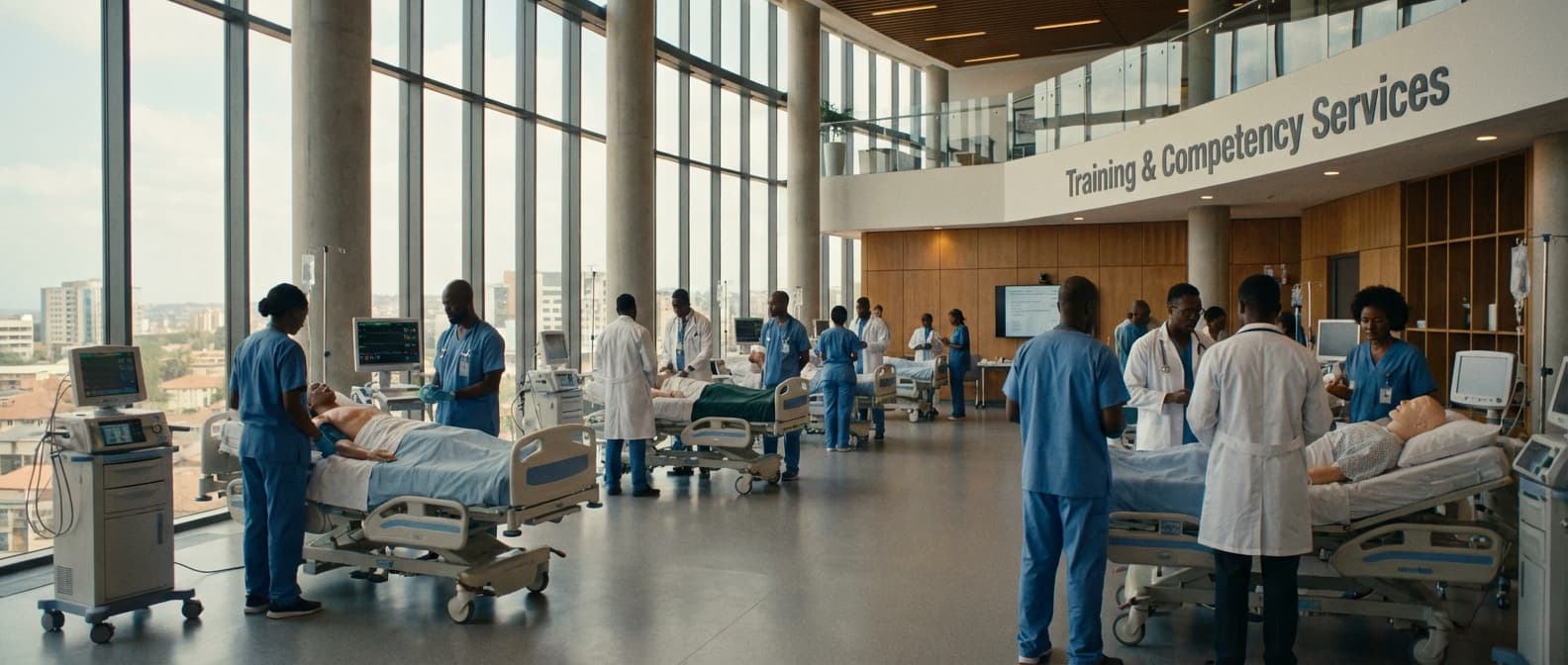
MRI Operator Training Service (Radiographers) in Morocco
Engineering Excellence & Technical Support
MRI Operator Training Service (Radiographers) High-standard technical execution following OEM protocols and local regulatory frameworks.
Advanced MRI Physics & Safety Protocols
Master the intricate principles of MRI physics, including pulse sequences, signal generation, and artifact reduction. Our training emphasizes stringent safety protocols and patient screening to ensure optimal image quality and a secure scanning environment, specifically tailored to the Moroccan healthcare context.
Comprehensive Neuroimaging & Anatomy
Gain in-depth knowledge of advanced neuroimaging techniques for the brain and spine. Our curriculum covers detailed anatomical correlation, common pathologies, and the application of specialized MRI sequences for accurate diagnosis and effective patient management within Moroccan medical practice.
Workflow Optimization & Image Interpretation
Learn to streamline MRI workflows from patient positioning to post-processing. Develop critical skills in preliminary image interpretation and quality assurance, enabling radiographers in Morocco to efficiently contribute to diagnostic reporting and enhance patient care pathways.
What Is Mri Operator Training Service (Radiographers) In Morocco?
MRI Operator Training Service (Radiographers) in Morocco refers to specialized educational programs and professional development initiatives designed to equip radiographers with the knowledge, skills, and practical experience necessary to safely and effectively operate Magnetic Resonance Imaging (MRI) scanners. This training is crucial for ensuring high-quality diagnostic imaging, patient safety, and adherence to evolving technological and regulatory standards within the Moroccan healthcare sector. The service encompasses theoretical instruction on MRI physics, safety protocols, image acquisition techniques, and post-processing, alongside hands-on training with MRI equipment.
| Who Needs MRI Operator Training? | Typical Use Cases for Trained Radiographers |
|---|---|
| Radiographers seeking to specialize in MRI imaging. | Performing routine and advanced MRI examinations across various medical specialties. |
| Newly graduated radiographers entering the Moroccan healthcare workforce. | Acquiring specialized skills for positions in diagnostic imaging centers and hospitals. |
| Existing radiographers transitioning from other modalities (e.g., X-ray, CT) to MRI. | Adapting existing imaging knowledge to the unique principles of MRI. |
| Healthcare facilities acquiring new MRI equipment or upgrading existing systems. | Ensuring their technical staff is proficient in operating and maintaining the new technology. |
| Radiographers seeking continuing professional development (CPD) to maintain certification. | Staying current with technological advancements and best practices in MRI. |
| Radiographers working in research settings requiring specific MRI sequences or experimental protocols. | Executing complex imaging protocols for research purposes. |
Key Components of MRI Operator Training Service:
- MRI Physics and Principles: Comprehensive understanding of magnetic fields, radiofrequency pulses, gradient coils, signal generation, and image formation.
- Patient Safety Protocols: Detailed training on contraindications, screening procedures, management of ferromagnetic materials, and monitoring of patients during scanning.
- Scanner Operation and Optimization: Proficiency in console operation, parameter selection, pulse sequence selection, and image parameter optimization for various anatomical regions and pathologies.
- Image Acquisition Techniques: Mastery of standard and advanced imaging protocols, including multi-planar imaging, contrast-enhanced imaging, and functional MRI (fMRI) principles.
- Artifact Recognition and Mitigation: Identification and correction of common MRI artifacts to ensure diagnostic image quality.
- Image Post-Processing and Analysis: Basic understanding of image manipulation, windowing, and rudimentary analysis of acquired images.
- Quality Assurance and Maintenance: Familiarity with routine quality control checks and basic troubleshooting of MRI equipment.
- Radiation Safety (for CT/X-ray trained radiographers transitioning to MRI): Emphasis on the non-ionizing nature of MRI and specific safety considerations.
- Ethical and Legal Considerations: Awareness of patient confidentiality, informed consent, and professional responsibilities.
Who Needs Mri Operator Training Service (Radiographers) In Morocco?
In Morocco, specialized MRI operator training services are crucial for radiographers seeking to enhance their skills and knowledge in this advanced imaging modality. This training is vital for ensuring accurate diagnoses, patient safety, and optimal utilization of MRI technology.
| Target Customer Type | Key Departments Involved | Training Needs |
|---|---|---|
| Public Hospitals | Radiology, Neurology, Orthopedics, Oncology | Basic and advanced MRI operation, protocol optimization, patient safety, quality assurance. |
| Private Hospitals | Radiology, Neurology, Orthopedics, Oncology, Cardiology | Advanced MRI techniques, specialized sequences, patient comfort, workflow efficiency, competitive service delivery. |
| Diagnostic Imaging Centers | Radiology, General Imaging | Versatile MRI operation, efficiency, patient throughput, client satisfaction, compliance with standards. |
| Individual Radiographers | Radiology (all sub-specialties) | Skill enhancement, specialization in MRI, career advancement, adaptation to new technologies, certification preparation. |
| Research & Academic Institutions | Radiology, Medical Research | Advanced MRI physics, specialized research protocols, data acquisition techniques, teaching and supervision skills. |
Target Customers & Departments for MRI Operator Training in Morocco
- {"title":"Hospitals and Healthcare Institutions","description":"Both public and private hospitals are primary beneficiaries of such training. This includes university hospitals, general hospitals, and specialized medical centers. Their radiology departments are the core areas where MRI operators are employed."}
- {"title":"Diagnostic Imaging Centers (Private Clinics)","description":"Independent diagnostic centers that offer a range of imaging services, including MRI, require well-trained operators to remain competitive and provide high-quality patient care."}
- {"title":"Radiographers (Technologists)","description":"Individual radiographers at all career stages, from newly qualified professionals to experienced technicians looking to specialize in MRI or update their skills with new protocols and technologies."}
- {"title":"Medical Imaging Departments","description":"Within these institutions, the specific departments that directly benefit are: \n\n* Radiology Department: This is the central hub for all medical imaging, and thus the primary location for MRI operations.\n* Neurology Department: MRI is indispensable for diagnosing and monitoring neurological conditions.\n* Orthopedics Department: Essential for imaging musculoskeletal injuries and conditions.\n* Oncology Department: Crucial for staging, treatment planning, and monitoring cancer.\n* Cardiology Department: Increasingly utilizes cardiac MRI for assessing heart function and disease.\n* Gastroenterology Department: Useful for imaging abdominal organs and conditions.\n* Urology Department: Employs MRI for assessing various urological conditions.\n* Emergency Departments: Rapid MRI scans can be vital in certain emergency situations."}
- {"title":"Research Institutions and Universities","description":"Academic institutions involved in medical research or offering medical imaging programs may require specialized training for their staff and students to conduct advanced research or provide comprehensive education."}
Mri Operator Training Service (Radiographers) Process In Morocco
This document outlines the typical workflow for an MRI Operator Training Service catering to radiographers in Morocco, from the initial inquiry to the successful execution of the training program. The process is designed to be comprehensive, ensuring clear communication, effective training delivery, and adherence to Moroccan regulatory and professional standards.
| Phase | Step | Description | Key Stakeholders | Deliverables/Outcomes |
|---|---|---|---|---|
| Phase 1: Inquiry and Needs Assessment |
| Prospective clients (hospitals, clinics, radiographers) express interest in MRI operator training. | Client (Radiographer/Institution), Training Provider | Initial expression of interest, contact details exchanged. |
| Understanding specific training requirements: current skill levels, desired outcomes, number of participants, preferred dates, budget, specific MRI modalities/applications to be covered, any existing challenges. | Client (Radiographer/Institution), Training Provider (Sales/Technical Team) | Documented training needs, participant profile, preliminary scope of work. | |
| Phase 2: Proposal Development and Agreement |
| Developing a detailed proposal outlining the training curriculum, methodology, duration, trainers' qualifications, location, pricing, and payment terms, tailored to the identified needs. Compliance with Moroccan Ministry of Health or relevant professional body guidelines is considered. | Training Provider (Technical Team, Sales) | Comprehensive training proposal. |
| Client reviews the proposal, and discussions are held to clarify any aspects and negotiate terms. This may involve adjustments to the curriculum or budget. | Client (Radiographer/Institution), Training Provider (Sales) | Clarified proposal, agreement on terms. | |
| Formal agreement outlining the scope of services, responsibilities, timelines, payment schedule, and confidentiality clauses is signed by both parties. | Client (Radiographer/Institution), Training Provider | Signed contract/Memorandum of Understanding (MOU). | |
| Phase 3: Pre-Training Preparation |
| The training curriculum is finalized based on the agreed-upon scope, ensuring it covers theoretical knowledge, practical applications, safety protocols, and adherence to Moroccan imaging standards. | Training Provider (Technical Team), Client (for confirmation) | Finalized and approved training curriculum. |
| Qualified MRI trainers with relevant experience and knowledge of Moroccan healthcare practices are assigned. They are briefed on the specific training objectives and client needs. | Training Provider (Management, Technical Team) | Assigned and briefed trainers. | |
| Confirming training dates, venue (on-site or off-site), equipment availability (MRI scanner access, simulation tools), and any necessary travel arrangements for trainers and/or participants. | Training Provider (Operations Team), Client (for venue access/participant availability) | Confirmed training schedule, booked venue/resources. | |
| Collecting participant details. If an initial assessment is planned, participants might complete a pre-training questionnaire to gauge their starting knowledge. | Client (HR/Department Head), Training Provider (Administration) | List of enrolled participants, pre-assessment data (if applicable). | |
| Phase 4: Training Execution |
| Lectures, presentations, and discussions covering MRI physics, anatomy, physiology, image acquisition techniques, contrast agents, safety procedures, and quality control, with specific relevance to Moroccan medical practices. | Trainer, Participants | Knowledge acquisition, Q&A sessions. |
| Supervised practical sessions on MRI scanners (if available), phantom scanning, image review, protocol optimization, and troubleshooting. Emphasis on real-world scenarios encountered in Moroccan healthcare settings. | Trainer, Participants, Site Personnel (if applicable) | Development of practical skills, procedural competence. | |
| Analyzing common and complex MRI cases relevant to the Moroccan population and healthcare system. Using simulations to practice critical decision-making. | Trainer, Participants | Enhanced diagnostic reasoning and problem-solving abilities. | |
| Ongoing assessment through quizzes, practical demonstrations, and observation. Trainers provide immediate feedback to participants. | Trainer, Participants | Identification of learning gaps, continuous improvement. | |
| Phase 5: Post-Training Follow-up and Evaluation |
| Formal assessment (written or practical) to evaluate the effectiveness of the training and participants' mastery of the learned skills. | Trainer, Participants | Measure of training effectiveness, certification eligibility. |
| Providing certificates of completion to participants who successfully complete the training, often adhering to standards recognized by Moroccan professional bodies. | Training Provider | Training certificates. | |
| Gathering feedback from participants and their supervisors on the training's relevance, delivery, and impact on job performance through surveys or interviews. This also includes evaluating the trainer's performance. | Participants, Supervisors, Training Provider | Training evaluation report, insights for future improvements. | |
| Offering limited post-training support, such as follow-up Q&A sessions or access to online resources, to reinforce learning. | Training Provider | Continued learning support. | |
| Submitting a final report summarizing the training conducted, participant outcomes, and any recommendations. Issuing the final invoice for services rendered. | Training Provider | Final training report, final invoice. |
MRI Operator Training Service (Radiographers) Process in Morocco
- Phase 1: Inquiry and Needs Assessment
- Phase 2: Proposal Development and Agreement
- Phase 3: Pre-Training Preparation
- Phase 4: Training Execution
- Phase 5: Post-Training Follow-up and Evaluation
Mri Operator Training Service (Radiographers) Cost In Morocco
The cost of MRI operator training services for radiographers in Morocco can vary significantly based on several factors. These include the duration and intensity of the training program, the reputation and accreditation of the training institution, the level of specialization (e.g., basic MRI operation vs. advanced techniques and specific body part imaging), and whether the training is conducted in a city with a higher cost of living (like Casablanca or Rabat) or a more rural area. Furthermore, the inclusion of hands-on practical sessions with real MRI equipment, the provision of training materials, and post-training certification all contribute to the overall price. The demand for such specialized training also plays a role, with higher demand potentially leading to premium pricing.
| Training Intensity/Duration | Estimated Cost Range (MAD) |
|---|---|
| Basic Introduction (e.g., 2-3 days) | 2,000 - 5,000 |
| Comprehensive Course (e.g., 1-2 weeks, theoretical & practical) | 6,000 - 15,000 |
| Specialized Modules (e.g., specific MRI applications, 3-5 days per module) | 4,000 - 10,000 per module |
| Extended Training Programs/Apprenticeships (e.g., 1-3 months) | 15,000 - 40,000+ |
Key Pricing Factors for MRI Operator Training in Morocco:
- Duration of the Training Program (e.g., 1 week, 1 month, ongoing modules)
- Depth and Specialization of Content (e.g., general MRI, neuro-MRI, musculoskeletal MRI)
- Accreditation and Reputation of the Training Provider (e.g., university-affiliated, private training center)
- Inclusion of Hands-on Practical Sessions with MRI Equipment
- Quality and Availability of Training Materials (manuals, online resources)
- Certification and Assessment Processes
- Location of Training (major cities vs. smaller towns)
- Trainer's Expertise and Experience
- Group Size (individual training vs. group discounts)
Affordable Mri Operator Training Service (Radiographers) Options
This guide outlines affordable MRI operator training services specifically tailored for radiographers, focusing on value bundles and cost-saving strategies to maximize your investment in professional development.
| Training Service Type | Description | Value Bundle Components | Estimated Cost Range (USD) | Cost-Saving Strategies | |
|---|---|---|---|---|---|
| Online Foundational MRI Physics & Safety | Covers core principles of MRI physics, image formation, and essential safety protocols. | Self-paced modules, quizzes, access to online resources. | $300 - $800 per user | Group discounts, early bird registration, leverage existing institutional subscriptions. | Leverage existing institutional subscriptions. |
| Blended Learning (Online + Virtual Hands-on) | Combines online theory with simulated or remote practical sessions. | Online modules, live virtual instructor-led sessions, interactive simulations. | $800 - $1,500 per user | Bundle with other training needs, inquire about package deals for multiple staff. | Inquire about package deals for multiple staff. |
| On-site Comprehensive Training | Intensive, in-person training delivered at your facility, customized to your equipment. | On-site lectures, practical demonstrations, equipment-specific protocols, case studies. | $3,000 - $10,000+ per session (depending on duration & number of participants) | Schedule during off-peak hours, negotiate longer-term contracts, train a 'super-user' to train others. | Negotiate longer-term contracts. |
| Specialized MRI Modality Training (e.g., Neuro, MSK, Cardiac) | Focuses on specific anatomical regions or advanced techniques. | Advanced physics, protocol optimization, advanced artifact reduction, specialized case reviews. | $500 - $1,200 per user (per modality) | Prioritize essential modalities first, explore online-only options for niche areas. | Explore online-only options for niche areas. |
| Continuing Education Units (CEUs) Packages | Provides accredited CEUs for maintaining professional certifications. | Online courses, webinars, self-study materials. | $50 - $200 per CEU credit | Purchase bulk CEU packages, utilize free or low-cost webinars from professional organizations. | Utilize free or low-cost webinars from professional organizations. |
Why Invest in MRI Operator Training for Radiographers?
- Enhance diagnostic capabilities and patient care.
- Increase job satisfaction and career advancement opportunities.
- Meet growing demand for skilled MRI professionals.
- Improve workflow efficiency and reduce error rates.
- Ensure compliance with regulatory standards.
Verified Providers In Morocco
In the burgeoning healthcare landscape of Morocco, identifying trusted and competent medical providers is paramount for individuals seeking quality care. Franance Health has emerged as a leading credentialing body, meticulously verifying healthcare professionals and institutions to ensure they meet stringent standards of excellence. This verification process goes beyond basic licensing, encompassing a comprehensive evaluation of qualifications, experience, ethical conduct, and patient safety protocols. By choosing providers accredited by Franance Health, patients gain the assurance that they are engaging with a healthcare entity committed to the highest levels of service and integrity, making them the best choice for their health and well-being.
| Category | Franance Health Verification Criteria | Patient Benefit |
|---|---|---|
| Medical Qualifications | Verification of degrees, diplomas, and board certifications. | Ensures practitioners possess the necessary theoretical knowledge and specialized training. |
| Clinical Experience | Confirmation of years in practice and specific areas of expertise. | Provides confidence in the provider's practical skills and problem-solving abilities. |
| Professional Ethics | Review of professional conduct, disciplinary records, and adherence to ethical guidelines. | Guarantees a commitment to patient well-being and respectful treatment. |
| Patient Safety | Assessment of facility safety, infection control measures, and emergency preparedness. | Minimizes risks and ensures a secure healthcare environment. |
| Continuous Education | Monitoring of ongoing training and participation in professional development programs. | Confirms that providers are up-to-date with the latest medical advancements and techniques. |
| Specialized Services | Verification of certifications and accreditations for specific medical procedures or treatments. | Allows patients to confidently select specialists for complex or niche healthcare needs. |
Why Franance Health Credentials Matter
- Rigorous Qualification Assessment: Franance Health meticulously reviews the educational background, specializations, and continuous professional development of healthcare providers.
- Experience Validation: The organization verifies the practical experience and track record of practitioners, ensuring they have a proven history of successful patient care.
- Ethical Conduct and Compliance: A key aspect of verification involves assessing a provider's adherence to medical ethics, professional conduct, and regulatory compliance.
- Patient Safety Standards: Franance Health evaluates the safety protocols and infrastructure of healthcare facilities and individual practitioners to ensure a secure environment for patients.
- Commitment to Quality: Accreditation signifies a dedication to delivering high-quality healthcare services, fostering trust and confidence in patients.
- Access to Reliable Information: Franance Health provides a reliable directory of verified providers, simplifying the process for patients to find competent healthcare professionals.
Scope Of Work For Mri Operator Training Service (Radiographers)
This Scope of Work (SOW) outlines the requirements for providing comprehensive MRI Operator Training services to qualified radiographers. The objective is to equip radiographers with the necessary theoretical knowledge and practical skills to safely and effectively operate MRI scanners, acquire high-quality diagnostic images, and manage patient care within the MRI environment. The training will cover fundamental principles of MRI physics, advanced imaging techniques, safety protocols, and post-processing of images. Successful completion of the training will ensure that operators are competent in all aspects of MRI operation as per industry best practices and regulatory requirements. The technical deliverables are designed to be measurable and verifiable, ensuring the quality and efficacy of the training provided.
| Deliverable | Description | Standard Specification/Acceptance Criteria | Format |
|---|---|---|---|
| Training Curriculum Document | A comprehensive document detailing all modules, learning objectives, content outline, duration, and assessment methods for the MRI Operator Training. | Curriculum must align with ACR, ARRT, and relevant national/international guidelines. Learning objectives must be measurable and specific. | |
| Training Manuals/Handouts | Detailed written materials for each training module, covering theoretical concepts and practical procedures. | Content must be accurate, up-to-date, and presented in a clear, concise manner with relevant diagrams and illustrations. Minimum reading level equivalent to undergraduate science. | Digital (PDF) and Print |
| Practical Training Sessions (On-site or Simulated) | Hands-on experience operating an MRI scanner (or a high-fidelity simulator) under the supervision of certified trainers. | Minimum of X hours of supervised scanning per trainee. Trainees must demonstrate proficiency in patient positioning, protocol selection, image acquisition, and basic system operation. Successful completion of at least Y distinct imaging protocols. | On-site/Simulated Environment |
| Case Studies and Practical Exercises | Realistic scenarios and exercises designed to reinforce learning and develop problem-solving skills in MRI operation. | At least Z case studies covering common pathologies and imaging challenges. Trainees must be able to identify appropriate sequences, troubleshoot common issues, and interpret preliminary findings. | Digital (PDF) and Interactive Platform |
| Assessment Tools (Quizzes, Exams, Practical Assessments) | Methods to evaluate trainee comprehension and skill acquisition. | Written quizzes and a comprehensive final exam with a passing score of 80% or higher. Practical assessment demonstrating competency in performing a standard MRI examination. | Digital and Paper-based |
| Competency Certificates | Formal certificates issued to trainees who successfully complete all training modules and assessments. | Certificates must include trainee name, course title, completion date, and the issuing organization's accreditation (if applicable). | Printed and Digital (PDF) |
| Trainer Qualification Report | Documentation verifying the qualifications and experience of all trainers involved in the program. | Trainers must possess current ARRT certification (or equivalent), a minimum of 5 years of experience in MRI operation, and documented teaching experience. | |
| Training Feedback Forms | Forms to gather feedback from trainees on the effectiveness of the training program, trainers, and materials. | Forms must include sections on content relevance, trainer effectiveness, clarity of materials, and overall satisfaction. Data analysis and summary report to be provided. | Digital and Paper-based |
| Post-Training Support Plan | A plan outlining available support mechanisms for trained operators after the formal training period. | Includes access to online resources, refresher course options, and contact information for technical support. Duration of support to be specified (e.g., 6 months). |
Key Training Modules
- Introduction to MRI Physics and Principles
- MRI Hardware and System Components
- Pulse Sequences and Image Weighting
- Image Acquisition Techniques and Optimization
- MRI Safety (Static Magnetic Fields, RF, Gradient Fields, Acoustic Noise)
- Contrast Agents and Administration
- Patient Preparation, Screening, and Monitoring
- Common MRI Protocols and Applications
- Artifact Recognition and Correction
- Image Post-processing and PACS Integration
- Quality Assurance and Quality Control in MRI
- Troubleshooting and Basic System Maintenance
Service Level Agreement For Mri Operator Training Service (Radiographers)
This Service Level Agreement (SLA) outlines the terms and conditions governing the provision of MRI Operator Training Services for Radiographers by [Training Provider Name] (hereinafter referred to as "Provider") to [Client Organization Name] (hereinafter referred to as "Client"). This SLA focuses on response times for support requests and uptime guarantees for the training platform and materials.
| Service Component | KPI | Target | Measurement Method |
|---|---|---|---|
| Online Training Platform Access | Uptime Guarantee | 99.5% (excluding scheduled maintenance) | Monthly monitoring of platform availability via automated tools. Scheduled maintenance will be communicated at least 7 days in advance. |
| Training Material Accessibility | Uptime Guarantee | 99.8% (excluding scheduled maintenance) | Monthly monitoring of access to all provided digital training materials. |
| Technical Support (Platform/Access Issues) | Response Time (Critical Issue - e.g., platform inaccessible) | 2 Business Hours | Timestamp of support ticket submission to Provider acknowledgment. |
| Technical Support (Platform/Access Issues) | Response Time (Standard Issue - e.g., content query, minor bug) | 4 Business Hours | Timestamp of support ticket submission to Provider acknowledgment. |
| Technical Support (Platform/Access Issues) | Resolution Time (Critical Issue) | 8 Business Hours | Timestamp of support ticket submission to confirmed resolution or provision of a viable workaround. |
| Technical Support (Platform/Access Issues) | Resolution Time (Standard Issue) | 2 Business Days | Timestamp of support ticket submission to confirmed resolution or provision of a viable workaround. |
| Content Inquiries (Specific to MRI Procedures/Physics) | Response Time | 1 Business Day | Timestamp of inquiry submission to Provider acknowledgment. |
| Content Inquiries (Specific to MRI Procedures/Physics) | Resolution Time | 3 Business Days | Timestamp of inquiry submission to provision of a comprehensive answer or clarification. |
Key Performance Indicators (KPIs)
- Response Time: The time taken by the Provider to acknowledge and begin addressing a support request from the Client.
- Resolution Time: The time taken by the Provider to resolve a support request to the Client's satisfaction.
- Uptime Guarantee: The percentage of time the designated MRI Operator Training platform and associated materials are available and accessible to the Client's designated trainees.
Frequently Asked Questions

Ready when you are
Let's scope your MRI Operator Training Service (Radiographers) in Morocco project in Morocco.

Scaling healthcare logistics and technical systems across the entire continent.