
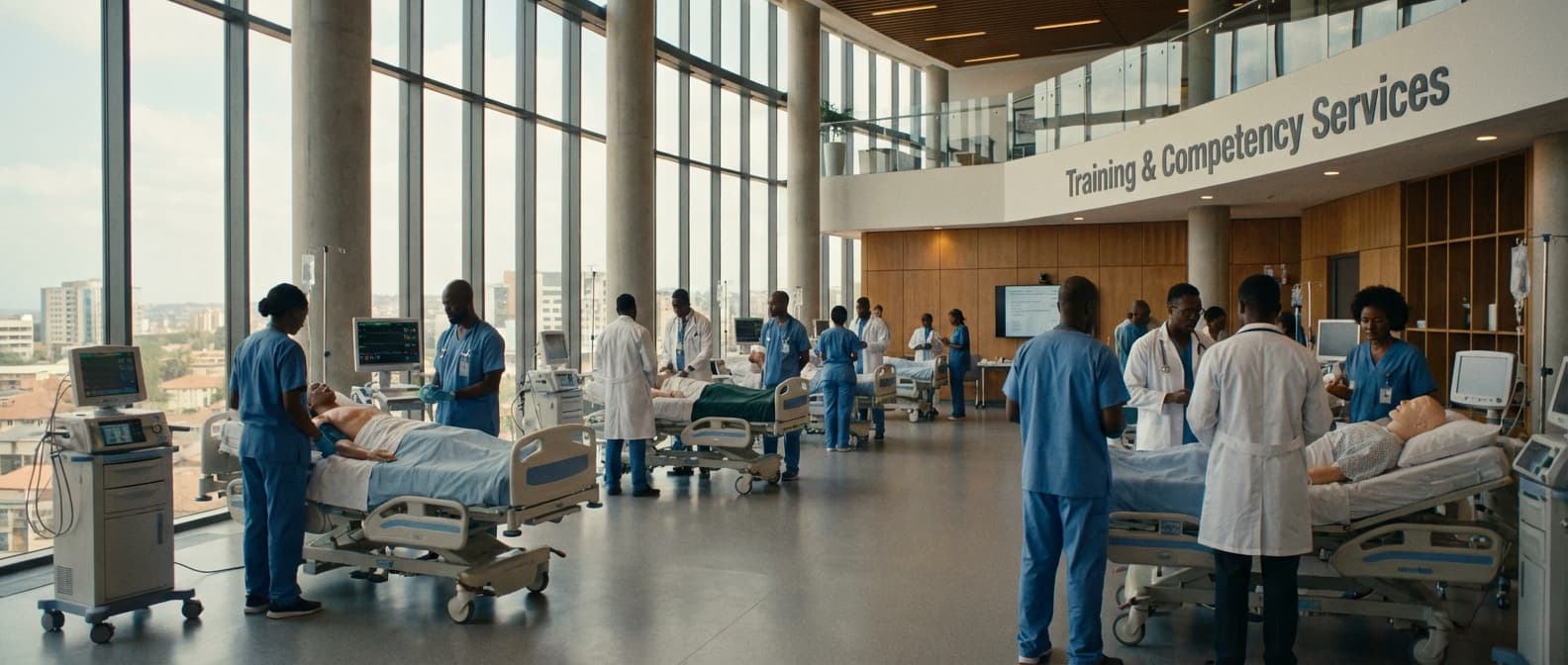
CT Operator Training Service (Radiographers) in Morocco
Engineering Excellence & Technical Support
CT Operator Training Service (Radiographers) High-standard technical execution following OEM protocols and local regulatory frameworks.
Advanced CT Image Acquisition Techniques
Master the latest CT scan protocols and parameters specific to Moroccan healthcare needs, optimizing image quality and reducing radiation exposure for enhanced diagnostic accuracy.
Patient Safety & Radiation Protection Protocols
Implement stringent safety measures and adhere to international radiation protection guidelines, ensuring patient and staff well-being during CT procedures in the Moroccan context.
CT Image Quality Assurance & Artifact Management
Develop expertise in performing regular quality assurance checks and effectively troubleshooting common artifacts, guaranteeing reliable and interpretable CT scans for diverse patient populations in Morocco.
What Is Ct Operator Training Service (Radiographers) In Morocco?
CT Operator Training Service (Radiographers) in Morocco refers to specialized educational programs designed to equip radiographers with the necessary theoretical knowledge and practical skills to proficiently operate Computed Tomography (CT) scanners. This service aims to ensure safe, effective, and high-quality diagnostic imaging acquisition and patient care within the Moroccan healthcare system. The training encompasses understanding CT principles, equipment operation, image acquisition protocols, radiation safety, quality assurance, and image post-processing. It is crucial for upholding diagnostic accuracy, minimizing patient radiation exposure, and ensuring compliance with national healthcare regulations and international best practices.
| Target Audience | Necessity | Typical Use Cases |
|---|---|---|
| Newly qualified radiographers in Morocco. | Essential for obtaining and maintaining professional licensure and employment in CT imaging facilities. | Acquiring proficiency in operating new CT scanner models, implementing updated imaging protocols, and ensuring adherence to evolving radiation safety standards. |
| Experienced radiographers seeking specialization in CT. | Required for career advancement, transitioning to CT-specific roles, and enhancing diagnostic imaging capabilities. | Performing advanced CT examinations such as CT angiography, CT perfusion studies, and interventional CT procedures. |
| Radiographers in healthcare institutions implementing new CT technology. | Mandatory for safe and effective utilization of advanced CT equipment and software functionalities. | Ensuring compliance with national regulatory requirements and accreditation standards for diagnostic imaging services. |
| Radiographers working in private diagnostic centers and hospitals. | Crucial for maintaining a competitive edge and providing high-quality diagnostic services. | Contributing to the diagnosis and management of a wide range of medical conditions, including oncological, cardiovascular, neurological, and trauma cases. |
Key Components of CT Operator Training Service (Radiographers) in Morocco
- Fundamental Principles of CT Imaging: In-depth explanation of X-ray attenuation, slice acquisition, reconstruction algorithms (e.g., filtered back projection, iterative reconstruction), and image artifact identification/mitigation.
- CT Scanner Operation and Maintenance: Hands-on training on various CT scanner models (e.g., helical, multi-detector row), including console operation, patient positioning, parameter selection (kVp, mAs, pitch, slice thickness), and basic troubleshooting.
- Imaging Protocols and Optimization: Development and application of standardized imaging protocols for different anatomical regions and clinical indications, focusing on dose optimization and diagnostic image quality.
- Radiation Safety and Protection: Comprehensive education on radiation physics, biological effects, ALARA (As Low As Reasonably Achievable) principles, patient shielding, and regulatory compliance for radiation protection.
- Image Quality Assurance (QA) and Quality Control (QC): Training on performing routine QA/QC tests to ensure scanner performance, image consistency, and compliance with accreditation standards.
- Contrast Media Administration and Management: Understanding the properties of iodinated and non-iodinated contrast agents, administration techniques, patient assessment for contraindications, and management of adverse reactions.
- Image Post-Processing and Archiving: Familiarization with PACS (Picture Archiving and Communication System) and RIS (Radiology Information System), basic image manipulation techniques (windowing, leveling), and data management.
- Patient Care and Communication: Emphasis on patient preparation, informed consent, management of patient anxiety, and ethical considerations during CT examinations.
- Emergency Procedures: Training on recognizing and responding to medical emergencies that may arise during a CT scan.
Who Needs Ct Operator Training Service (Radiographers) In Morocco?
CT Operator Training Services are crucial for Radiographers in Morocco to ensure they possess the necessary skills and knowledge to operate CT scanners safely and effectively. This training is essential for maintaining high standards of diagnostic imaging, patient care, and adherence to evolving technological advancements in the field of medical imaging. It directly impacts the quality of healthcare services provided across various medical institutions.
| Target Customer Group | Specific Departments/Roles | Needs Addressed | Key Benefits |
|---|---|---|---|
| Radiographers/Radiologic Technologists | CT Scan Technicians, Senior Radiographers, Radiographers seeking advanced skills | Comprehensive CT operation, advanced protocols, image optimization, radiation safety, quality assurance, troubleshooting. | Enhanced diagnostic accuracy, improved patient safety, increased efficiency, career advancement, compliance with international standards. |
| Hospitals (Public and Private) | Radiology Departments, Imaging Units | Onboarding new staff, upskilling existing personnel, introducing new CT technologies, ensuring consistent service quality across multiple sites. | Standardized high-quality imaging, reduced errors, improved patient throughput, enhanced reputation, cost-effectiveness through efficient operation. |
| Diagnostic Imaging Centers | CT Scan Operators, Lead Radiographers | Specialized CT techniques (e.g., cardiac CT, interventional CT), advanced post-processing, protocol development and implementation, quality control. | Broader service offerings, competitive advantage, improved diagnostic capabilities, customer satisfaction. |
| Medical Universities and Training Institutions | Faculty, Students in Radiology Programs | Curriculum enhancement, practical training for future radiographers, research support, exposure to modern CT technologies. | Producing highly competent and well-trained radiographers, advancing academic research in medical imaging. |
| Healthcare Management/Administration | Department Heads, Hospital Administrators, Procurement Officers | Ensuring compliance, managing operational efficiency, justifying equipment investments, staff competency assurance, patient safety protocols. | Optimized resource allocation, improved patient outcomes, reduced operational risks, compliance with regulatory requirements. |
Target Customers and Departments for CT Operator Training in Morocco:
- Hospitals (Public and Private)
- Diagnostic Imaging Centers
- Polyclinics and Specialized Clinics
- Radiology Departments
- Medical Universities and Training Institutions
Ct Operator Training Service (Radiographers) Process In Morocco
This document outlines the comprehensive workflow for CT Operator Training Services tailored for Radiographers in Morocco, from the initial inquiry stage to the successful execution of the training program. The process is designed to be efficient, transparent, and aligned with industry best practices and local regulatory requirements.
| Stage | Key Activities | Responsible Parties | Deliverables | Key Considerations |
|---|---|---|---|---|
| 1. Inquiry and Needs Assessment | Initial contact from potential client (e.g., hospital, clinic). Discussion of training needs, target audience (radiographers), specific CT modalities, desired skill levels, and existing knowledge base. Site visit or virtual assessment may be conducted. Review of Moroccan regulatory requirements for CT operators. | Client (HR, Radiology Department Manager, Radiographers), Training Provider (Sales/Business Development Team) | Needs Assessment Report, Initial Training Requirements Document | Understanding specific client challenges, existing equipment, and desired outcomes. Early identification of any regulatory hurdles. |
| 2. Proposal Development and Submission | Based on the needs assessment, the training provider develops a detailed proposal outlining the training objectives, curriculum, duration, methodology (theory, practical, simulation), trainers' qualifications, equipment requirements, assessment strategy, and pricing. Proposal submitted to the client for review. | Training Provider (Technical Team, Curriculum Developers, Sales Team) | Comprehensive Training Proposal | Clarity of objectives, realistic curriculum, experienced trainers, competitive pricing, alignment with Moroccan standards. |
| 3. Contract Negotiation and Agreement | Review and discussion of the proposal. Negotiation of terms, including scope of work, payment schedules, intellectual property, confidentiality, and liability. Finalization and signing of a formal training agreement. | Client (Legal Department, Procurement), Training Provider (Legal Department, Management) | Signed Training Agreement/Contract | Clear contractual obligations, dispute resolution mechanisms, adherence to Moroccan contract law. |
| 4. Training Planning and Customization | Detailed planning of the training program. Customization of curriculum to address specific client needs and CT scanner models. Development of training materials (presentations, manuals, case studies). Scheduling of training dates and times. Identification of required equipment and facilities. | Training Provider (Curriculum Developers, Subject Matter Experts, Project Manager) | Customized Training Curriculum, Training Materials, Detailed Schedule | Relevance of content to Moroccan healthcare context, hands-on practice opportunities, alignment with latest CT technology. |
| 5. Logistics and Resource Management | Arrangement of training venue (on-site or off-site). Booking of necessary CT scanner time (if applicable). Procurement or confirmation of training equipment (phantoms, simulation software). Coordination of trainer travel and accommodation. Communication of schedule and requirements to trainees. | Training Provider (Project Manager, Logistics Coordinator), Client (Facility Manager, IT Support) | Confirmed Training Venue, Allocated Equipment, Trainee Communication | Accessibility of venue, availability of functional training equipment, clear communication channels. |
| 6. Training Delivery and Execution | Conduct of theoretical sessions (lectures, discussions) and practical sessions (hands-on with CT scanner, simulation). Emphasis on patient positioning, image acquisition protocols, radiation safety, artifact reduction, and image quality assessment. Q&A sessions and troubleshooting. | Training Provider (Certified Trainers) | Delivered Training Sessions, Practical Demonstrations | Experienced and certified trainers, engaging teaching methods, real-world scenarios, focus on practical application. |
| 7. Assessment and Evaluation | Assessment of trainees' knowledge and skills through written exams, practical assessments, and case study analysis. Evaluation of training effectiveness through participant feedback forms and trainer observations. Measurement against predefined learning objectives. | Training Provider (Trainers, Assessment Team) | Assessment Results, Training Evaluation Report | Objective assessment criteria, constructive feedback to trainees, identification of areas for improvement. |
| 8. Certification and Follow-up | Issuance of certificates of completion to successful trainees, acknowledging their acquired skills and knowledge. Post-training support and follow-up consultations. Addressing any emergent queries or challenges. Potential for refresher courses or advanced training. | Training Provider (Administration, Training Manager) | Certificates of Completion, Post-Training Support Plan | Recognized certification, ongoing support to ensure knowledge retention, opportunities for professional development. |
| 9. Feedback and Continuous Improvement | Collection of comprehensive feedback from both trainees and client representatives. Analysis of feedback and assessment results to identify strengths and areas for improvement in the training program. Implementation of revisions for future training deliveries. | Training Provider (Quality Assurance Team, Management) | Feedback Analysis Report, Updated Training Program | Commitment to quality, incorporating client and trainee insights, staying abreast of technological advancements and regulatory changes in Morocco. |
CT Operator Training Service (Radiographers) Process in Morocco
- Inquiry and Needs Assessment:
- Proposal Development and Submission:
- Contract Negotiation and Agreement:
- Training Planning and Customization:
- Logistics and Resource Management:
- Training Delivery and Execution:
- Assessment and Evaluation:
- Certification and Follow-up:
- Feedback and Continuous Improvement:
Ct Operator Training Service (Radiographers) Cost In Morocco
The cost of CT operator training for radiographers in Morocco can vary significantly based on several factors. These include the reputation and accreditation of the training institution, the duration and intensity of the course, the specific curriculum (e.g., general CT, advanced CT techniques, specific modalities), and the inclusion of practical, hands-on experience with CT scanners. Furthermore, the location within Morocco (major cities like Casablanca or Rabat may have higher costs than smaller towns) and whether the training is provided in a group setting or as a personalized/private session also influence pricing. The Moroccan Dirham (MAD) is the local currency used for these transactions.
| Training Type/Duration | Estimated Cost Range (MAD) | Notes |
|---|---|---|
| Basic/Introductory CT Operator Training (e.g., 1-2 weeks) | 2,000 - 5,000 MAD | Focuses on fundamental principles, safety, and basic operation. |
| Comprehensive CT Operator Training (e.g., 3-4 weeks) | 5,000 - 10,000 MAD | Includes more in-depth theory, a wider range of protocols, and potentially more hands-on time. |
| Advanced CT Techniques/Specialization (e.g., Cardiac CT, Interventional CT) | 8,000 - 15,000+ MAD | Shorter duration but highly specialized, often requiring prior basic CT knowledge. |
| Refresher/Continuing Education Courses | 1,000 - 3,000 MAD | Shorter, focused courses on specific updates or techniques. |
| On-site Training (for institutions) | Variable (negotiable) | Cost depends on the number of participants, duration, and customization required. |
Key Pricing Factors for CT Operator Training in Morocco
- Institution Reputation and Accreditation
- Course Duration and Intensity
- Curriculum Specialization (General, Advanced, Modality-Specific)
- Inclusion of Hands-on Practical Training
- Geographic Location within Morocco
- Group vs. Individual Training
- Materials and Resources Provided (e.g., textbooks, online modules)
Affordable Ct Operator Training Service (Radiographers) Options
Finding affordable CT operator training is crucial for radiographers seeking to advance their careers or for healthcare facilities looking to expand their imaging services. Several training service providers offer comprehensive programs designed to equip individuals with the necessary skills and knowledge to operate CT scanners safely and effectively. These services can range from online courses and simulation-based training to hands-on clinical rotations. To make these training options more accessible, providers often offer value bundles and implement cost-saving strategies.
| Value Bundle Component | Description | Cost-Saving Strategy |
|---|---|---|
| Basic CT Course + Simulation Access | Core theoretical knowledge of CT and virtual hands-on practice without requiring physical scanner time. | Reduces need for expensive simulator rentals or on-site scanner usage fees during initial learning. |
| Comprehensive Program (Online Theory + Clinical Rotations) | Combines self-paced online learning with supervised practical experience at affiliated clinical sites. | Leverages existing clinical infrastructure and potentially reduces travel costs for participants if local affiliations are strong. |
| Group Training Packages | Discounted rates for multiple individuals from the same facility enrolling in a training program. | Economies of scale for the training provider, leading to lower per-person costs. |
| Early Bird Registration Discounts | Reduced tuition fees for individuals or facilities who register and pay well in advance of the course start date. | Helps training providers with cash flow and course planning, enabling them to offer lower prices. |
| Bundled CE Credits | Training programs that include a set number of CE credits at a discounted package price. | Avoids separate purchase of CE credits, offering a more integrated and cost-effective solution for maintaining credentials. |
| Refresher Courses/Advanced Modules | Targeted training for experienced radiographers looking to specialize or refresh specific CT skills. | More focused and shorter than full initial training, thus generally lower in cost. |
| Partnerships with Professional Organizations | Discounts for members of relevant professional bodies (e.g., AHRA, ASRT). | Leverages existing member bases for recruitment and offers a direct benefit to association members. |
Key Components of Affordable CT Operator Training Services
- Comprehensive Curriculum: Covers essential CT physics, patient positioning, protocol selection, image acquisition, artifacts, safety protocols, and quality assurance.
- Flexible Learning Formats: Includes online modules, in-person workshops, and blended learning approaches to accommodate different schedules and learning preferences.
- Hands-on Experience: Often includes simulation software or access to clinical sites for practical application of learned skills.
- Certification Preparation: Training materials and practice exams designed to help candidates pass professional certification exams (e.g., ARRT).
- Continuing Education Credits: Many programs offer CE credits required for maintaining professional licensure and certification.
- Post-Training Support: Access to instructors or technical support for ongoing questions and guidance.
Verified Providers In Morocco
In the realm of healthcare, finding verified providers is paramount for ensuring quality, safety, and trustworthiness. In Morocco, the landscape of healthcare services is rich, but discerning the best requires an understanding of what truly constitutes a 'verified provider.' This is where Franance Health emerges as a leading name, offering a curated selection of credentials that represent the pinnacle of healthcare excellence. Their commitment to rigorous vetting and adherence to international standards makes them the definitive choice for individuals seeking reliable and high-quality medical services.
| Credential Type | What it Signifies | Franance Health's Verification Process |
|---|---|---|
| International Accreditation (e.g., JCI, ISO) | Adherence to global standards for quality, safety, and patient care. | Rigorous review of accreditation certificates and ongoing compliance audits. |
| Medical Board Certifications | Demonstrated expertise and advanced training in specific medical specialties. | Verification of credentials with relevant medical councils and licensing bodies. |
| Facility Audits | Presence of modern medical equipment, infection control measures, and well-maintained infrastructure. | On-site inspections and assessments of medical technology and operational efficiency. |
| Patient Feedback and Outcomes | High patient satisfaction rates and positive treatment results. | Regular collection and analysis of patient surveys and clinical outcome data. |
| Licensing and Regulatory Compliance | Operates in accordance with Moroccan and international healthcare regulations. | Confirmation of all necessary licenses and adherence to legal frameworks. |
Why Franance Health Credentials Matter
- Accreditation by Reputable International Bodies: Franance Health prioritizes providers who have achieved accreditations from globally recognized organizations. These accreditations signify adherence to stringent quality management systems, patient safety protocols, and clinical governance.
- Board Certification of Medical Professionals: All healthcare professionals affiliated with Franance Health undergo a thorough verification of their board certifications. This ensures they possess specialized knowledge, extensive training, and proven competency in their respective fields.
- State-of-the-Art Facilities and Technology: Franance Health partners with healthcare institutions that are equipped with advanced medical technology and maintain state-of-the-art facilities. This commitment to innovation directly translates to more accurate diagnoses and effective treatments.
- Stringent Quality Control and Patient Satisfaction: Beyond formal credentials, Franance Health actively monitors patient feedback and employs robust quality control mechanisms. This ensures a consistent high level of patient care and a positive healthcare experience.
- Ethical Practices and Transparency: Franance Health champions ethical medical practices and a transparent approach to healthcare. Patients can expect clear communication, informed consent, and fair treatment throughout their medical journey.
Scope Of Work For Ct Operator Training Service (Radiographers)
This document outlines the Scope of Work for CT Operator Training Services targeted at Radiographers. It details the technical deliverables expected and the standard specifications to be adhered to, ensuring a comprehensive and high-quality training program for effective CT operation and patient care.
| Deliverable | Description | Standard Specification |
|---|---|---|
| Training Curriculum | A detailed syllabus covering all required modules, learning objectives, and assessment methods. | Must be aligned with current professional standards (e.g., ARRT, local regulatory bodies) and include theoretical and practical components. |
| Training Materials | Comprehensive training manuals, presentations, case studies, and practical exercise guides. | Materials should be clear, concise, up-to-date, and accessible in a digital or print format. Include high-quality imaging examples. |
| Hands-on Practical Training Sessions | Supervised practical sessions on a CT scanner, covering all aspects of image acquisition and basic operation. | Minimum of X hours of supervised practical time per trainee. Training should be conducted on a functional CT scanner representative of modern clinical systems. |
| Assessment and Evaluation Tools | Written examinations, practical skills assessments, and participant feedback forms. | Assessments must objectively measure the achievement of learning objectives. Practical assessments should simulate real-world scenarios. |
| Certificate of Completion | A formal certificate issued to trainees who successfully complete the program. | Certificates should be personalized, include the training provider's accreditation (if applicable), and detail the scope of training received. |
| Training Report | A comprehensive report detailing the training conducted, attendee performance, and any recommendations. | The report should be delivered within X days of training completion and include aggregate performance data and individual feedback summaries. |
| Instructor Qualifications | Documentation of the qualifications and experience of the trainers. | Instructors must be certified radiographers with extensive experience in CT operation, protocol development, and adult education. |
| Training Schedule | A clear and agreed-upon schedule for all training activities. | Schedule should accommodate operational needs of the facility and allow for adequate learning time. |
Key Training Modules
- CT Physics and Principles
- CT Scanner Hardware and Software Operation
- Image Acquisition Protocols (Head, Chest, Abdomen, Pelvis, etc.)
- Image Reconstruction and Post-Processing Techniques
- Contrast Media Administration and Safety
- Radiation Safety and Dose Optimization in CT
- Artifact Identification and Reduction
- CT Patient Care and Immobilization
- Common CT Pathology and Interpretation Basics
- Quality Assurance and Quality Control (QA/QC) in CT
Service Level Agreement For Ct Operator Training Service (Radiographers)
This Service Level Agreement (SLA) outlines the response times and uptime guarantees for the CT Operator Training Service provided to Radiographers. This SLA is an addendum to the Master Service Agreement (MSA) between [Your Company Name] and [Client Company Name].
| Service Component | Response Time Target (Business Hours) | Uptime Guarantee (Monthly) |
|---|---|---|
| Platform Access & Login | 1 Hour (Severity 1: Critical - Complete outage, Severity 2: Major - Significant functionality loss) | 99.9% |
| Training Module Access & Functionality | 2 Business Hours (Severity 2: Major - Specific module or functionality broken) | 99.5% |
| Reporting & Analytics Access | 4 Business Hours (Severity 3: Minor - Cosmetic issue, limited functionality impact) | 99.0% |
| General Inquiries & Technical Support | 8 Business Hours (Severity 4: Cosmetic/Informational) | N/A (Focus on response time for inquiries) |
Key Performance Indicators (KPIs)
- Response Times: Measures the time taken by the support team to acknowledge and begin addressing reported issues.
- Uptime Guarantee: Ensures the availability of the CT Operator Training Service platform and its core functionalities.
Frequently Asked Questions

Ready when you are
Let's scope your CT Operator Training Service (Radiographers) in Morocco project in Morocco.

Scaling healthcare logistics and technical systems across the entire continent.