
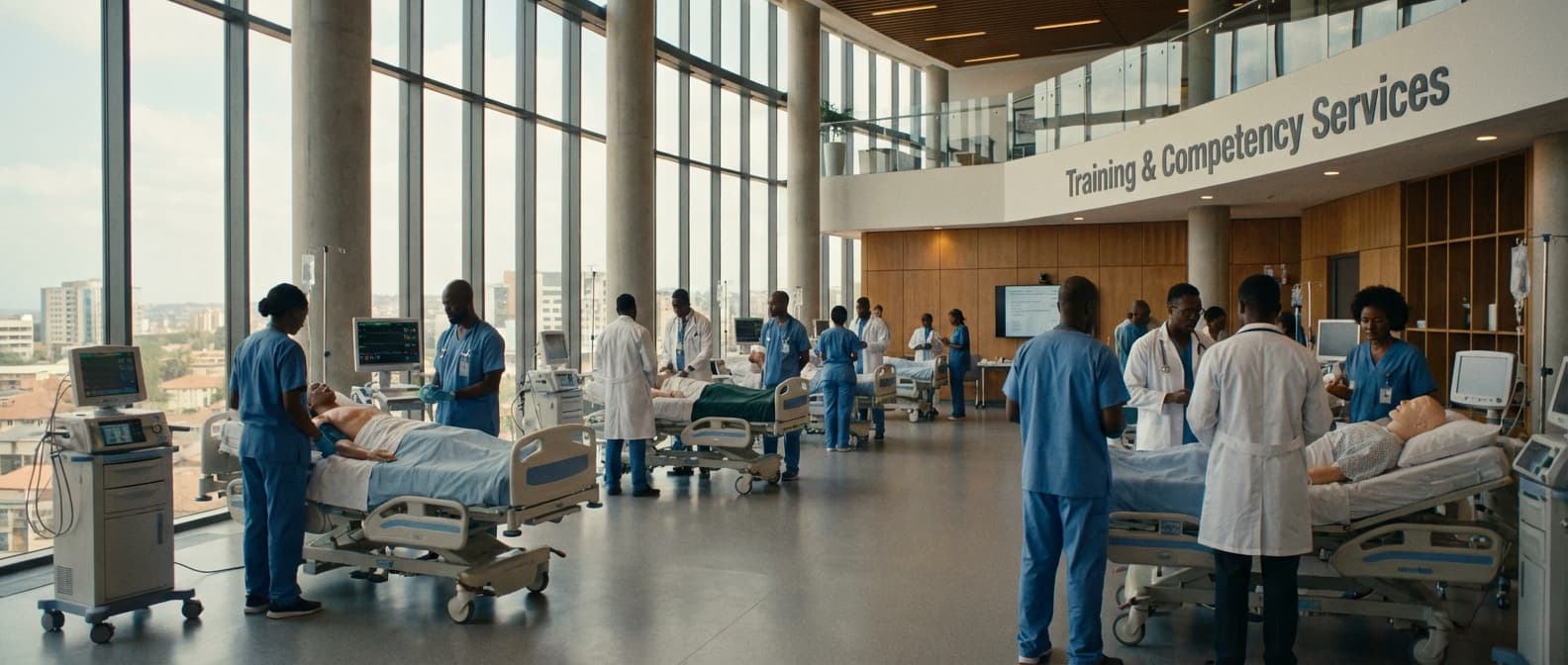
Biomedical Engineering First-Line Support Training Service in Morocco
Engineering Excellence & Technical Support
Biomedical Engineering First-Line Support Training Service High-standard technical execution following OEM protocols and local regulatory frameworks.
Rapid Diagnostic Device Troubleshooting
Empowering Moroccan biomedical technicians with hands-on expertise in diagnosing and resolving common issues with point-of-care diagnostic equipment, ensuring timely and accurate patient assessments in remote and urban settings.
Medical Imaging System Calibration & Basic Maintenance
Training frontline support staff in Morocco on fundamental calibration procedures and preventative maintenance for X-ray, ultrasound, and basic MRI systems, maximizing equipment uptime and reducing reliance on specialized external services.
Critical Patient Monitoring Device Field Service
Developing proficiency in Moroccan biomedical engineers for the setup, troubleshooting, and basic repair of vital sign monitors, ECG machines, and defibrillators, crucial for immediate patient care in emergency departments and ICUs across the nation.
What Is Biomedical Engineering First-line Support Training Service In Morocco?
Biomedical Engineering First-Line Support Training Service in Morocco refers to a specialized educational program designed to equip individuals with the foundational knowledge and practical skills necessary to provide initial technical assistance and maintenance for medical equipment. This service is crucial for ensuring the operational readiness, safety, and efficient utilization of healthcare technology within Moroccan healthcare facilities. It bridges the gap between complex medical devices and the immediate need for qualified personnel to address common technical issues, perform routine checks, and escalate complex problems to higher-tier support.
| Target Audience | Needs Addressed | Typical Use Cases |
|---|---|---|
| Biomedical Technicians (Entry-Level): Individuals seeking to enter the biomedical engineering field or those newly employed in a support role within a healthcare facility. | Lack of standardized initial troubleshooting capabilities, leading to delays in equipment repair and potential patient care disruptions. Insufficient understanding of device-specific maintenance requirements. High reliance on specialized third-party service providers for minor issues. | Performing daily equipment checks before clinical use. Responding to basic equipment error messages. Replacing consumable parts (e.g., sensors, filters). Documenting minor equipment issues for escalation. Assisting clinical staff with basic equipment operation. Conducting routine cleaning and disinfection of medical devices. |
| Clinical Staff (Nurses, Doctors): Healthcare professionals who directly interact with medical equipment on a daily basis and may encounter minor technical glitches. | Limited ability to address immediate equipment failures, leading to workflow interruptions and potential impact on patient management. Inability to perform simple troubleshooting steps, necessitating the call-out of support personnel for minor issues. | Identifying and reporting obvious equipment malfunctions. Performing basic user-level checks. Understanding when to escalate a problem to the biomedical department. Basic equipment restart procedures. |
| IT Personnel in Healthcare: Technical staff responsible for hospital IT infrastructure who may also be involved with networked medical devices. | Need for understanding the unique requirements and potential network interfaces of medical equipment. Lack of awareness of the specific safety and regulatory considerations for biomedical devices. | Assisting with network connectivity issues for networked medical devices. Implementing basic security protocols for connected medical equipment. Liaising with biomedical engineering for equipment that interfaces with IT systems. |
| Healthcare Facility Administrators: Management responsible for the operational efficiency and resource allocation of healthcare facilities. | Ensuring cost-effectiveness of equipment maintenance. Minimizing equipment downtime. Maximizing the lifespan of medical assets. Improving the overall patient care environment through reliable technology. | Developing internal support capabilities to reduce reliance on external service contracts. Optimizing the allocation of maintenance resources. Ensuring compliance with equipment maintenance schedules. Improving the return on investment for medical technology. |
Key Components of Biomedical Engineering First-Line Support Training:
- Introduction to Medical Equipment Fundamentals: Basic principles of operation, common types of medical devices (e.g., patient monitoring systems, diagnostic imaging equipment, therapeutic devices), and their essential subsystems.
- Safety Standards and Regulations: Understanding of national and international safety standards for medical devices (e.g., IEC 60601 series) and compliance requirements within Morocco.
- Basic Troubleshooting and Diagnostics: Methodologies for identifying common malfunctions, error codes, and initial diagnostic procedures for various medical equipment categories.
- Preventive Maintenance and Calibration: Training on scheduled maintenance tasks, cleaning protocols, battery management, and basic calibration procedures to ensure optimal performance and longevity of devices.
- Documentation and Reporting: Techniques for accurately recording maintenance activities, incident reports, and spare parts usage, adhering to established protocols.
- User Interface and Operation: Familiarization with the operational interfaces of common medical devices and ability to assist clinical staff with basic operational queries.
- Introduction to Service Manuals and Technical Documentation: Skills in interpreting and utilizing technical manuals, schematics, and other documentation for support purposes.
- Tooling and Test Equipment: Proficiency in the use of basic hand tools, diagnostic software, and essential test equipment relevant to first-line support.
Who Needs Biomedical Engineering First-line Support Training Service In Morocco?
Biomedical engineering first-line support training services in Morocco are crucial for ensuring the effective and safe operation of medical equipment across various healthcare facilities and research institutions. This training equips individuals with the fundamental skills to diagnose, troubleshoot, and perform basic maintenance on a wide range of medical devices, thereby improving patient care, reducing downtime, and optimizing resource utilization. The demand for such services is driven by the continuous need to maintain a highly skilled workforce capable of handling the complexities of modern medical technology.
| Customer Type | Target Departments | Key Needs Addressed by Training |
|---|---|---|
| Hospitals (Public and Private) | Biomedical Engineering Department, Clinical Engineering Department, IT Department (for connected devices), Radiology Department, Intensive Care Units (ICUs), Operating Rooms (ORs), Emergency Departments (EDs) | Basic troubleshooting and repair of medical equipment, preventative maintenance, immediate response to equipment failures, ensuring patient safety, optimizing equipment uptime, compliance with safety standards. |
| Clinics and Polyclinics | Biomedical Engineering Technicians (if employed), Nursing Staff (for basic equipment checks), Administration (for equipment management) | Operator-level maintenance, basic troubleshooting for common devices (e.g., ECG machines, vital signs monitors), understanding equipment functionality, reporting issues effectively. |
| Diagnostic Laboratories | Laboratory Technicians, Biomedical Technicians | Maintenance and calibration of laboratory equipment (e.g., centrifuges, spectrophotometers, analyzers), troubleshooting common lab equipment issues, ensuring accuracy of diagnostic results. |
| Research Institutions and Universities | Research Assistants, Lab Technicians, Biomedical Engineering Students/Researchers | Operation and basic maintenance of research-specific equipment, understanding principles of scientific instrumentation, troubleshooting experimental setups. |
| Medical Equipment Suppliers and Distributors | Field Service Technicians (entry-level), Technical Support Staff, Sales Engineers (for basic understanding) | Onboarding new technicians, product-specific basic troubleshooting, initial customer support, understanding warranty claims and service processes. |
| Government Health Agencies | Biomedical Engineering Divisions, Public Health Laboratories, Procurement Departments | Ensuring a standardized level of technical competence across public health facilities, training for national health initiatives, capacity building for rural healthcare. |
Target Customers and Departments
- Hospitals (Public and Private)
- Clinics and Polyclinics
- Diagnostic Laboratories
- Research Institutions and Universities
- Medical Equipment Suppliers and Distributors
- Government Health Agencies
Biomedical Engineering First-line Support Training Service Process In Morocco
This document outlines the typical workflow for a Biomedical Engineering First-Line Support Training Service in Morocco, detailing the process from an initial inquiry to the successful execution of the training. The service aims to equip frontline biomedical personnel with essential skills for the initial diagnosis, troubleshooting, and basic maintenance of medical equipment, thereby improving equipment uptime and patient safety.
| Stage | Description | Key Activities | Responsible Parties | Key Deliverables |
|---|---|---|---|---|
| Inquiry & Needs Assessment | The process begins when a healthcare facility or organization expresses interest in first-line biomedical support training. | Initial contact (email, phone, website form), understanding training needs (specific equipment, skill gaps, number of participants), identifying budget, and desired outcomes. | Client (e.g., Hospital Administration, Biomedical Department Head), Training Service Provider (TSP) Sales/Business Development Team. | Clarified training objectives, estimated participant numbers, preliminary scope of work. |
| Proposal Development & Quotation | Based on the assessed needs, the TSP prepares a formal proposal and quotation. | Developing a detailed training curriculum outline, specifying modules, duration, methodologies, trainer qualifications, required resources, and a comprehensive cost breakdown. | TSP Training Department, TSP Technical Experts, TSP Sales Team. | Formal Training Proposal, Detailed Quotation, Indicative Training Schedule. |
| Agreement & Contract Finalization | The client reviews the proposal and quotation, leading to a contractual agreement. | Negotiation of terms, clarification of any ambiguities, formalization of service level agreements (SLAs), signing of contracts, and initial payment/deposit arrangements. | Client Legal/Procurement Department, TSP Legal/Finance Department. | Signed Training Contract, Purchase Order (PO), Initial Payment Confirmation. |
| Training Program Customization | Tailoring the training content to the specific equipment and operational context of the client. | Reviewing client's equipment inventory, existing maintenance procedures, and specific operational challenges. Adapting training modules, case studies, and practical exercises accordingly. | TSP Training Development Team, TSP Subject Matter Experts (SMEs), Client Biomedical Engineers/Technicians. | Customized Training Syllabus, Tailored Training Materials (presentations, manuals, handouts). |
| Logistics & Scheduling | Arranging all practical aspects for the training delivery. | Confirming training dates and times, booking training venues (if on-site), arranging travel and accommodation for trainers (if required), ensuring availability of necessary equipment for hands-on sessions, and confirming participant registration. | TSP Operations/Logistics Team, Client Facility Management/HR Department. | Finalized Training Schedule, Confirmed Venue/Logistics, Participant List. |
| Trainer Assignment & Preparation | Selecting and preparing the most suitable trainers for the specific training program. | Identifying trainers with relevant expertise and experience, briefing trainers on the customized curriculum and client-specific context, and ensuring they have all necessary training materials and equipment. | TSP Training Manager, Assigned Trainers. | Assigned Trainer(s), Trainer Briefing Notes, Prepared Training Kits. |
| Training Delivery (On-site/Remote) | The actual execution of the training program. | Conducting theoretical sessions (lectures, discussions), practical demonstrations, hands-on exercises, troubleshooting simulations, and interactive Q&A sessions. This can be done at the client's facility or remotely via virtual platforms. | Assigned Trainer(s), Participants. | Delivered Training Sessions, Participant Engagement Records, Real-time Feedback. |
| Post-Training Support & Evaluation | Providing ongoing support and assessing the effectiveness of the training. | Answering follow-up questions, providing access to online resources, conducting post-training assessments (quizzes, practical tests), collecting feedback from participants and their supervisors, and preparing a training evaluation report. | TSP Trainers, TSP Technical Support, Client Participants & Supervisors. | Post-Training Assessment Results, Participant Feedback Forms, Training Evaluation Report. |
| Certification & Documentation | Formally recognizing the successful completion of the training and providing necessary documentation. | Issuing certificates of completion to participants who meet the required standards, providing a comprehensive training report to the client (including attendance, assessment results, and recommendations), and archiving all training records. | TSP Administration/Certification Department, Client Representatives. | Certificates of Completion, Final Training Report, Archived Training Records. |
Workflow Stages for Biomedical Engineering First-Line Support Training in Morocco
- Inquiry & Needs Assessment
- Proposal Development & Quotation
- Agreement & Contract Finalization
- Training Program Customization
- Logistics & Scheduling
- Trainer Assignment & Preparation
- Training Delivery (On-site/Remote)
- Post-Training Support & Evaluation
- Certification & Documentation
Biomedical Engineering First-line Support Training Service Cost In Morocco
The cost of first-line support training services for Biomedical Engineering in Morocco is influenced by several key factors. These include the duration and intensity of the training, the expertise and reputation of the training provider, the specific curriculum covered (e.g., general equipment maintenance vs. specialized device training), the inclusion of hands-on practical sessions, the number of participants, and whether the training is conducted on-site at a hospital or facility or at the provider's premises. The Moroccan Dirham (MAD) is the local currency, and pricing can vary significantly based on these variables.
| Training Type | Estimated Price Range (MAD) | Notes |
|---|---|---|
| Basic Equipment Maintenance & Troubleshooting (2-3 days) | 2,500 - 6,000 | Covers general principles and common issues. |
| Intermediate Biomedical Equipment Support (4-5 days) | 5,000 - 10,000 | Includes more detailed diagnostics and common device types. |
| Specialized Device Training (e.g., Imaging, Anesthesia - 3-5 days) | 7,000 - 15,000+ | Highly dependent on the complexity of the specific equipment. Prices can escalate for very niche technologies. |
| On-Site Training (per day, for a group of 5-10) | 3,000 - 8,000 | This is a daily rate for the trainer; the total cost depends on the number of days and participant numbers. May exclude participant fees. |
| Certification Exam Fee (if separate) | 500 - 1,500 | Varies by the certifying body and the level of certification. |
Key Pricing Factors for Biomedical Engineering First-Line Support Training in Morocco
- Training Duration and Intensity: Shorter, introductory courses will be less expensive than comprehensive, multi-day programs.
- Provider Reputation and Expertise: Established training centers with experienced biomedical engineers often command higher fees.
- Curriculum Scope: General equipment troubleshooting courses are typically cheaper than specialized training on advanced medical devices.
- Practical vs. Theoretical Focus: Training with substantial hands-on lab sessions will generally be priced higher.
- Number of Participants: Group discounts are common, making per-participant costs decrease with larger groups.
- Location of Training: On-site training at a client's facility might incur additional travel and accommodation costs for the trainers.
- Certification and Materials: Inclusion of official certifications, training manuals, and assessment tools can influence the overall cost.
Affordable Biomedical Engineering First-line Support Training Service Options
Securing effective and affordable first-line biomedical engineering support training is crucial for healthcare facilities to ensure patient safety, equipment uptime, and efficient operations. This document outlines various service options and strategies to achieve this without breaking the bank. We focus on value bundles that offer comprehensive training at a reduced overall cost and explore cost-saving strategies that can be implemented alongside or independently of bundled services.
| Value Bundle Option | Description | Key Benefits | Estimated Cost-Saving Potential (compared to standalone) | Ideal For |
|---|---|---|---|---|
| Core Skills + Common Equipment Package | Combines foundational biomedical engineering principles (safety, basic troubleshooting, documentation) with hands-on training on 3-5 of your most common medical device categories (e.g., vital signs monitors, infusion pumps). | Comprehensive foundation, reduced risk of common issues, improved first-time fix rates. | 15-25% | Smaller hospitals, clinics, or departments with a stable, predictable equipment base. |
| On-Demand Digital Library Access + Basic Maintenance Workshop | Provides 12 months of access to a comprehensive online library of training modules and recorded webinars covering a wide range of general biomedical equipment, supplemented by a single in-person workshop on fundamental preventive maintenance procedures. | Flexibility, self-paced learning, cost-effective access to a broad knowledge base, practical skill development. | 20-30% | Facilities with diverse equipment but limited budget for specialized training, or for continuous learning and refreshers. |
| Manufacturer-Specific Essentials Bundle | Focuses on the critical first-line maintenance and troubleshooting procedures for 2-3 key pieces of equipment from a single, high-impact manufacturer that represents a significant portion of your asset inventory. | Expert knowledge on specific critical devices, reduced downtime for high-value equipment, improved safety and performance. | 10-20% (on top of direct manufacturer training costs, as it often includes bundled support or discounts) | Facilities heavily reliant on a particular manufacturer's equipment for critical care or specific specialties. |
| Train-the-Trainer Program (for Internal Champions) | Equips a select group of experienced biomedical engineers or technicians with the skills and materials to train and mentor new or less experienced staff members on core procedures and common equipment. | Sustainable internal training capacity, cost reduction over time, knowledge retention within the organization. | 30-50% (over a 2-3 year period) | Larger healthcare systems or facilities looking to build robust internal training programs and reduce long-term reliance on external vendors. |
Key Considerations for Affordable First-Line Biomedical Engineering Support Training
- Defining Specific Training Needs: Clearly identify the essential skills and equipment knowledge required for your first-line support team. Avoid unnecessary modules.
- Assessing Existing Internal Resources: Leverage in-house expertise for certain training aspects, reducing reliance on external providers.
- Prioritizing Essential Equipment: Focus training on the most critical and frequently used medical devices within your facility.
- Considering Vendor-Specific vs. General Training: Determine if training needs to be specific to certain manufacturers or if general principles of biomedical device maintenance are sufficient.
- Evaluating Training Delivery Methods: Explore online, hybrid, and in-person options to find the most cost-effective and efficient approach for your team.
- Long-Term vs. Short-Term Needs: Plan for ongoing training and skill development rather than just one-off sessions.
- Scalability of Training: Ensure the chosen training service can adapt to the growth of your biomedical engineering department or changes in equipment inventory.
Verified Providers In Morocco
In Morocco's burgeoning healthcare landscape, identifying truly reliable and high-quality medical providers is paramount. Franance Health stands out as a leading entity, rigorously vetting and certifying healthcare facilities and professionals to ensure patients receive exceptional care. Their stringent credentialing process is designed to guarantee adherence to international standards of safety, efficacy, and patient satisfaction. Choosing a Franance Health-verified provider means opting for transparency, accountability, and the peace of mind that comes with knowing you are in expert hands. This commitment to excellence makes Franance Health credentials a definitive marker of the best healthcare choices available in Morocco.
| Criteria Evaluated | Franance Health Assurance |
|---|---|
| Medical Staff Qualifications | Verification of all medical professionals' licenses, certifications, and relevant experience. |
| Facility Safety & Infrastructure | Assessment of equipment, hygiene standards, emergency preparedness, and overall patient environment. |
| Treatment Protocols & Outcomes | Review of established clinical guidelines, adherence to best practices, and focus on positive patient outcomes. |
| Patient Rights & Experience | Ensuring patient privacy, informed consent, and a commitment to compassionate and respectful care. |
| Ethical Practices & Transparency | Upholding the highest ethical standards in all medical and business operations. |
Why Franance Health Credentials Represent the Best Choice:
- Rigorous Vetting Process: Franance Health employs a multi-faceted evaluation that scrutinizes clinical expertise, facility infrastructure, and operational protocols.
- Adherence to International Standards: Certified providers meet or exceed global benchmarks for healthcare quality and patient safety.
- Enhanced Patient Trust: The Franance Health seal provides a clear indicator of a provider's commitment to excellence, fostering greater patient confidence.
- Improved Healthcare Outcomes: By partnering with top-tier professionals and facilities, patients are more likely to experience successful treatments and positive health results.
- Access to Specialized Care: Franance Health helps identify centers of excellence for a wide range of medical specialties, ensuring patients find the right expertise.
- Commitment to Continuous Improvement: Verified providers are committed to ongoing training, technological advancement, and patient feedback, ensuring services remain cutting-edge.
Scope Of Work For Biomedical Engineering First-line Support Training Service
This Scope of Work (SOW) outlines the requirements for a Biomedical Engineering First-Line Support Training Service. The objective is to equip newly hired or existing personnel with the essential technical skills and knowledge to effectively perform first-line support for a range of biomedical equipment. This includes troubleshooting, basic maintenance, calibration, and safe operation of devices, ensuring minimal downtime and optimal performance.
| Deliverable | Description | Standard Specification / Acceptance Criteria | Format | Timeline |
|---|---|---|---|---|
| Training Curriculum Document | A comprehensive document detailing all training modules, learning objectives, session outlines, and assessment methods. | Must align with the Key Training Modules and Topics listed above. Learning objectives should be measurable (e.g., 'Upon completion, participants will be able to...'). Includes a detailed schedule. | PDF Document | Week 1 of contract |
| Training Materials (Presentations, Handouts) | Slide decks, participant handouts, and supplementary reading materials for each module. | Content must be accurate, up-to-date, and easy to understand. Visual aids should be clear and relevant. Minimum of 80% participant satisfaction with material clarity based on post-training surveys. | PowerPoint (.pptx), PDF | Delivered prior to each training session |
| Hands-on Training Kits/Simulators | Functional equipment or highly realistic simulators for practical troubleshooting and maintenance exercises. | Each participant must have access to necessary equipment. Equipment must be in good working order and representative of commonly encountered devices. All safety protocols must be demonstrated and followed. | Actual equipment or advanced simulators | Available throughout the practical training sessions |
| Trainee Assessment Tools | Quizzes, practical exams, and case study evaluations to measure knowledge and skill acquisition. | Minimum passing score of 80% for written assessments. Successful completion of practical demonstrations for all core competencies. Performance metrics clearly defined for case studies. | Online quiz platform, practical checklists, case study templates | Administered at the end of each relevant module and at the conclusion of the training program |
| Training Completion Certificates | Certificates awarded to participants who successfully complete the training program. | Issued for each participant meeting the assessment criteria. Certificates should include participant name, training title, date of completion, and issuing organization's logo. | Printable PDF | Within 5 business days of training completion |
| Post-Training Report | A summary report of the training program, including participant performance data, feedback analysis, and recommendations for future training. | Includes aggregate scores, pass/fail rates, common areas of difficulty, and participant feedback summaries. Recommendations for improvement should be actionable. Report should be concise and well-organized. | PDF Document | Within 10 business days of training completion |
| On-site Support/Mentorship (Optional Module) | For a defined period, the trainer provides on-site guidance and mentorship to trainees as they begin applying their skills in a live environment. | A minimum of 2 hours of on-site mentorship per week for the agreed duration. Trainees demonstrate increased confidence and reduced error rates as observed by the mentor. Mentor provides weekly feedback to management. | On-site presence and direct observation | As per contract agreement |
Key Training Modules and Topics
- Introduction to Biomedical Engineering and Healthcare Technology Management
- Principles of Electrical Safety and Biomedical Equipment Safety Standards (e.g., IEC 60601 series)
- Fundamentals of Medical Device Operation and Anatomy/Physiology Relevance
- Common Biomedical Equipment Categories and Functionality (e.g., patient monitoring, infusion pumps, ventilators, diagnostic imaging peripherals)
- Basic Troubleshooting Methodologies and Diagnostic Tools
- Preventive Maintenance Procedures and Schedules
- Calibration Techniques and Verification Processes
- Documentation and Record-Keeping Best Practices
- Regulatory Compliance and Quality Management Systems (e.g., FDA, ISO 13485)
- Introduction to Service Management Software and Ticketing Systems
- Customer Service and Communication Skills for Technical Support
- Hands-on Practical Sessions and Case Studies
Service Level Agreement For Biomedical Engineering First-line Support Training Service
This Service Level Agreement (SLA) outlines the agreed-upon response times and uptime guarantees for the Biomedical Engineering First-Line Support Training Service. This SLA aims to ensure timely and effective training delivery to support personnel, ultimately contributing to the reliable operation of biomedical equipment.
| Service Component | Response Time Guarantee | Uptime Guarantee | Notes |
|---|---|---|---|
| Training Session Scheduling Request Acknowledgement | Within 2 business days | N/A | Acknowledgement of receipt and initial assessment of training needs. |
| Training Material Delivery (Digital) | Within 5 business days of approved request | N/A | Includes presentations, manuals, and practical exercises. Delivery method: secure digital platform. |
| Live Training Session Availability | As per scheduled agreement | 98% of scheduled hours | Covers instructor availability and platform functionality. Scheduled maintenance excluded. |
| Post-Training Support (Q&A) | Within 1 business day for email inquiries | N/A | Dedicated email alias for follow-up questions after training completion. |
| Training Platform Accessibility | N/A | 99.5% uptime (excluding scheduled maintenance) | Ensures learners can access training materials and resources consistently. Scheduled maintenance windows will be communicated at least 48 hours in advance. |
Key Service Metrics
- This SLA applies to all officially scheduled and requested First-Line Support Training sessions for Biomedical Engineering personnel.
- The service aims to provide high-quality, accessible, and timely training to equip support staff with the necessary skills for initial troubleshooting and basic maintenance of biomedical equipment.
- Any deviations from the agreed-upon response times or uptime guarantees will be logged, investigated, and addressed according to the 'Escalation and Resolution' section (not detailed in this excerpt).
Frequently Asked Questions

Ready when you are
Let's scope your Biomedical Engineering First-Line Support Training Service in Morocco project in Morocco.

Scaling healthcare logistics and technical systems across the entire continent.