
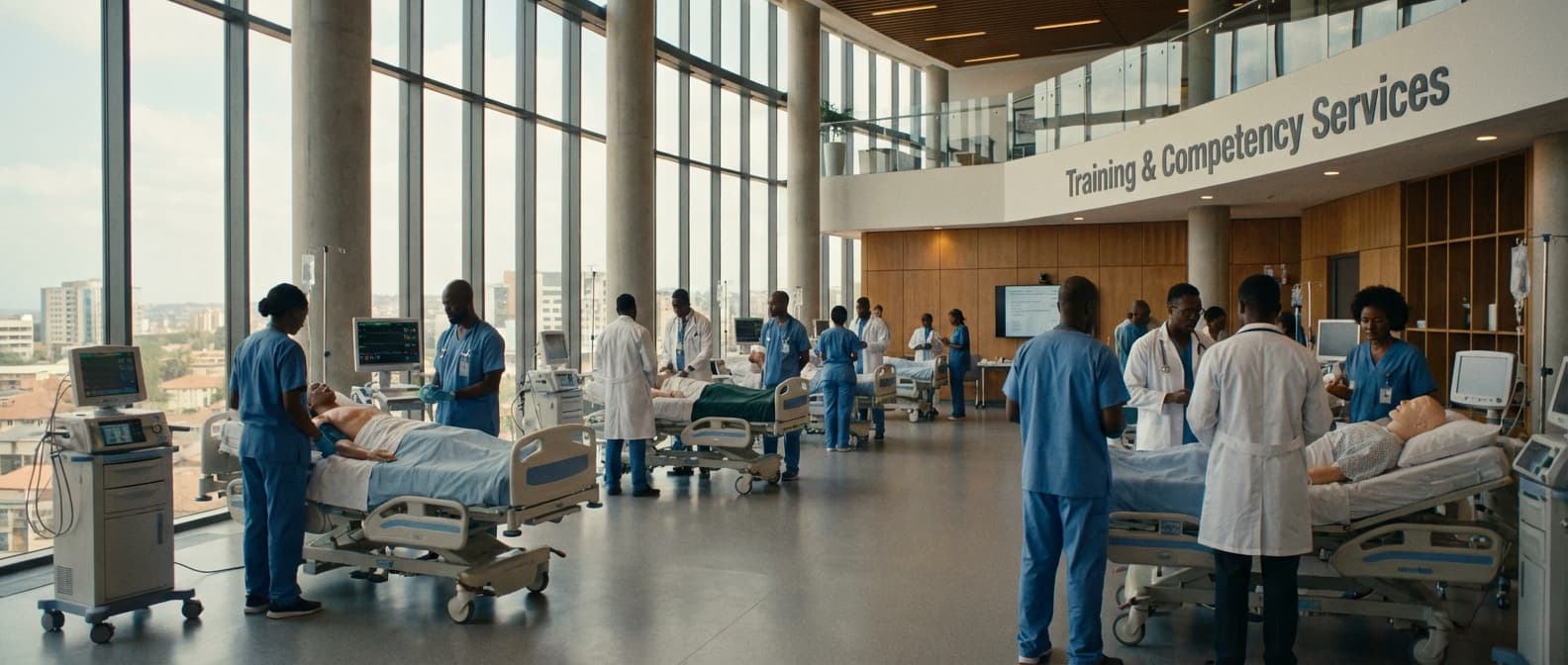
Anesthesia Workstation User Training Service in Morocco
Engineering Excellence & Technical Support
Anesthesia Workstation User Training Service High-standard technical execution following OEM protocols and local regulatory frameworks.
Mastering Anesthesia Workstation Navigation
Gain proficiency in the intuitive interface of leading anesthesia workstations. Our training covers essential functions, advanced features, and customization options for seamless operation in any clinical setting across Morocco.
Advanced Monitoring & Alarms Configuration
Learn to effectively utilize the comprehensive monitoring capabilities of your workstation. We'll guide you through setting up and interpreting vital sign displays, ventilation parameters, and alarm management protocols to ensure patient safety.
Troubleshooting & Maintenance Best Practices
Empower your team with the knowledge to identify and resolve common workstation issues. Our training emphasizes preventative maintenance and efficient troubleshooting techniques to minimize downtime and maintain optimal performance.
What Is Anesthesia Workstation User Training Service In Morocco?
The Anesthesia Workstation User Training Service in Morocco is a specialized educational program designed to equip healthcare professionals with the comprehensive knowledge and practical skills required to safely and effectively operate advanced anesthesia workstations. This service encompasses theoretical instruction, hands-on simulation, and competency validation, ensuring users are proficient in the setup, calibration, monitoring, and troubleshooting of these complex medical devices within the Moroccan healthcare context. The training adheres to international best practices and relevant local regulatory guidelines.
| User Group | Rationale for Training | Typical Use Cases |
|---|---|---|
| Anesthesiologists | Essential for safe and effective perioperative patient management, advanced monitoring, and precise anesthetic delivery. Encompasses novel functionalities and updated protocols. | Routine general anesthesia, regional anesthesia, sedation, critical care unit support, management of complex airways, intraoperative neuromonitoring support. |
| Anesthesia Residents/Trainees | Foundational training for developing core competencies in anesthesia delivery and workstation operation. Crucial for clinical rotations and examinations. | Supervised anesthetic procedures across various surgical specialties, learning basic to intermediate ventilation and drug administration techniques. |
| Certified Registered Nurse Anesthetists (CRNAs) | To ensure proficiency in operating and monitoring anesthesia workstations, adhering to established practice standards and enhancing patient safety. | Administration of anesthesia for a wide range of surgical and non-surgical procedures, including outpatient settings and labor and delivery. |
| Biomedical Engineers/Technicians | To understand the functional aspects of the workstation for accurate installation, preventive maintenance, troubleshooting, and repair. | Installation and commissioning of new workstations, routine performance checks, fault diagnosis and repair, calibration verification. |
| Anesthesia Department Managers/Supervisors | To oversee the safe and efficient utilization of anesthesia equipment, ensure staff competency, and manage resource allocation. | Developing training programs, evaluating equipment performance, ensuring regulatory compliance, managing procurement and maintenance schedules. |
Key Components of Anesthesia Workstation User Training
- Device Familiarization: In-depth understanding of the hardware components, user interface, and control mechanisms of specific anesthesia workstation models.
- Physiological Monitoring Principles: Training on interpreting and utilizing integrated monitoring parameters (e.g., ECG, SpO2, NIBP, EtCO2, anesthetic gas concentrations) to assess patient status during anesthesia.
- Ventilation Modes and Management: Comprehensive instruction on various ventilation modes (e.g., volume control, pressure control, pressure support, SIMV) and their appropriate application in different clinical scenarios.
- Anesthetic Gas Delivery and Control: Understanding of vaporizers, gas blending systems, and agent delivery mechanisms to ensure accurate and safe administration of volatile and gaseous anesthetics.
- Alarm Management and Troubleshooting: Education on recognizing, responding to, and resolving device alarms and common operational issues.
- Patient Safety Protocols: Integration of patient safety best practices, including pre-use checks, leak testing, and infection control measures.
- Data Management and Documentation: Training on accessing, reviewing, and exporting patient data and device logs.
- Emergency Scenarios and Simulation: Practical exercises simulating critical events and emergency procedures using the anesthesia workstation.
- Maintenance and Calibration Overview: Basic understanding of routine maintenance and the importance of regular calibration by qualified biomedical personnel.
Who Needs Anesthesia Workstation User Training Service In Morocco?
Anesthesia workstation user training services are crucial in Morocco for healthcare facilities that have recently acquired or are looking to optimize the use of anesthesia workstations. These specialized training programs ensure that medical professionals, including anesthesiologists, nurse anesthetists, and biomedical engineers, are proficient in operating, troubleshooting, and maintaining these complex machines. This proficiency directly impacts patient safety, anesthetic delivery accuracy, and the overall efficiency of surgical and critical care procedures. The demand is particularly high in institutions striving for international accreditation, implementing advanced medical technologies, or aiming to reduce errors and improve patient outcomes. Investment in such training is a proactive measure against equipment malfunction, staff errors, and suboptimal utilization of valuable medical assets.
| Department/Role | Key Training Needs | Why Training is Essential |
|---|---|---|
| Anesthesiology Department | Operating principles, ventilation modes, gas delivery and scavenging, monitoring integration, alarm management, troubleshooting basic issues. | Ensures safe and effective patient care, accurate anesthetic delivery, and prompt response to critical events. |
| Nursing (Anesthesia Nurses/Operating Room Nurses) | Basic operation, patient setup, monitoring, emergency procedures, cleaning and disinfection protocols. | Provides essential support to anesthesiologists, ensures patient safety during induction and emergence, and maintains equipment readiness. |
| Biomedical Engineering Department | Advanced troubleshooting, preventive maintenance, calibration, repair, software updates, understanding of system architecture. | Guarantees equipment reliability, reduces downtime, ensures adherence to safety standards, and optimizes long-term equipment performance. |
| Intensive Care Unit (ICU) | Mechanical ventilation modes specific to critical care, patient monitoring, emergency ventilation, troubleshooting during critical events. | Supports continuous life support and respiratory management for critically ill patients. |
| Quality Assurance/Patient Safety Department | Understanding of common errors, best practices for equipment use, incident reporting related to anesthesia equipment. | Contributes to a culture of safety and helps minimize adverse events. |
Target Customers and Departments in Morocco for Anesthesia Workstation User Training Service
- Hospitals (Public and Private): All sizes of hospitals, from large university medical centers to smaller community hospitals, that perform surgical procedures or manage critical care patients.
- Surgical Centers: Outpatient surgical facilities and specialized surgical clinics requiring the safe and effective use of anesthesia equipment.
- Teaching and University Hospitals: Institutions involved in training future anesthesiologists and anesthesia-related healthcare professionals, requiring comprehensive and up-to-date curriculum delivery.
- Medical Training Institutes and Academies: Organizations offering specialized medical education and certifications.
- Medical Equipment Suppliers and Distributors: Companies that sell anesthesia workstations and offer after-sales support and training as part of their service package.
- Government Health Ministries and Regional Health Authorities: Entities responsible for setting standards, ensuring quality of care, and potentially mandating training for public healthcare facilities.
Anesthesia Workstation User Training Service Process In Morocco
This document outlines the Anesthesia Workstation User Training Service process in Morocco, detailing the workflow from initial inquiry to the successful execution of the training. The service aims to equip healthcare professionals with the necessary knowledge and skills to safely and effectively operate anesthesia workstations. The process is designed for clarity, efficiency, and to ensure a high standard of training delivery.
| Phase | Step | Description | Key Stakeholders | Duration (Typical) |
|---|---|---|---|---|
| Phase 1: Inquiry and Needs Assessment |
| Healthcare facility or individual professional expresses interest in anesthesia workstation user training. | Prospective Client (Hospital, Clinic, Individual) | 1-3 Business Days |
| Understanding specific workstation models, number of trainees, existing knowledge base, training objectives, and desired outcomes. | Prospective Client, Training Provider Sales/Consultant | 2-5 Business Days | |
| Optional site visit to assess training environment and equipment availability, or detailed remote discussion. | Prospective Client, Training Provider Technical Team | 1-3 Business Days | |
| Phase 2: Proposal and Agreement |
| Creation of a detailed training proposal outlining curriculum, methodology, duration, trainers, equipment requirements, and cost. | Training Provider | 3-7 Business Days |
| Client reviews the proposal, discusses any modifications, and negotiates terms. | Prospective Client, Training Provider Sales/Management | 3-7 Business Days | |
| Formal agreement is signed by both parties, outlining scope of work, payment terms, and responsibilities. | Prospective Client, Training Provider Legal/Management | 2-5 Business Days | |
| Phase 3: Training Preparation |
| Finalize training dates, times, and locations with the client. | Training Provider, Client Administrator | 1-2 Business Days |
| Assign qualified and experienced trainers to the specific workstation model and client needs. | Training Provider Management | 1-3 Business Days | |
| Develop or tailor training manuals, presentations, practical exercises, and assessment tools. | Training Provider Trainers/Curriculum Developers | 5-10 Business Days | |
| Arrange for any necessary demonstration workstations, simulators, and consumables. Confirm venue suitability. | Training Provider Logistics, Client Facility Management | 5-10 Business Days | |
| Client provides trainee list. Training provider confirms participant details and sends pre-training information. | Client Administrator, Training Provider Coordinator | 2-5 Business Days | |
| Phase 4: Training Execution |
| Conduct theoretical sessions, practical demonstrations, hands-on exercises, and simulations according to the approved curriculum. | Training Provider Trainers, Trainees | 1-5 Days per module/session |
| Facilitate open discussion, address trainee queries, and provide clarification. | Training Provider Trainers, Trainees | Ongoing during training | |
| Evaluate trainee proficiency in operating the anesthesia workstation through practical scenarios. | Training Provider Trainers, Trainees | Integrated into training | |
| Conduct written or online quizzes/tests to assess understanding of concepts and procedures. | Training Provider Trainers, Trainees | End of module/training | |
| Phase 5: Post-Training Support and Evaluation |
| Provide certificates of completion to trainees who meet the assessment criteria. | Training Provider Administration | 3-5 Business Days post-assessment |
| Gather feedback from trainees and client representatives on the training quality, content, and delivery. | Training Provider, Trainees, Client Representatives | Immediately post-training | |
| Analyze assessment results and feedback to produce a training report for the client. | Training Provider Management | 5-7 Business Days post-training | |
| Provide limited post-training support, such as answering follow-up questions or offering refresher sessions. | Training Provider Support Team | As per agreement | |
| Utilize feedback and performance data to continuously improve training methodologies and content. | Training Provider Management/Training Department | Ongoing |
Anesthesia Workstation User Training Service Process in Morocco
- Phase 1: Inquiry and Needs Assessment
- Phase 2: Proposal and Agreement
- Phase 3: Training Preparation
- Phase 4: Training Execution
- Phase 5: Post-Training Support and Evaluation
Anesthesia Workstation User Training Service Cost In Morocco
The cost of anesthesia workstation user training services in Morocco can vary significantly based on several factors. These factors influence the overall price, making it crucial for healthcare institutions to carefully consider their specific needs and available resources. Understanding these elements will help in budgeting and selecting the most appropriate training provider. The pricing is typically presented in Moroccan Dirhams (MAD).
| Training Scope | Estimated Price Range (MAD) | Typical Inclusions |
|---|---|---|
| Basic User Training (1-2 days) | 2,000 - 7,000 MAD | Overview of workstation components, basic operation, safety features, patient monitoring setup, initial troubleshooting. |
| Intermediate User Training (2-3 days) | 5,000 - 15,000 MAD | Includes basic training plus advanced ventilation modes, drug delivery systems, data management, common error resolution, basic maintenance checks. |
| Advanced/Specialized Training (3-5 days) | 10,000 - 30,000+ MAD | Covers all intermediate aspects, plus complex ventilation strategies, advanced troubleshooting, preventive maintenance, software updates, integration with other hospital systems, specialized anesthetic techniques. |
| On-site Group Training (per day, custom quote) | 8,000 - 25,000+ MAD | Highly variable based on group size, location, and specific needs. Often includes travel/accommodation for trainers. |
| Refresher/Update Training (per participant, half-day) | 500 - 1,500 MAD | Focuses on new features, software updates, or reinforcing critical procedures. |
Key Pricing Factors for Anesthesia Workstation User Training in Morocco
- Type of Anesthesia Workstation: Different models and brands of anesthesia workstations have varying complexities. Training for more advanced, feature-rich, or specialized units will generally command higher costs due to the in-depth knowledge and expertise required.
- Training Provider: The reputation, experience, and accreditation of the training provider play a significant role. Established companies with certified instructors and comprehensive training methodologies may charge more than smaller, less experienced providers.
- Training Duration and Depth: The total hours of training and the level of detail covered directly impact the cost. A basic overview session will be less expensive than an in-depth, multi-day program covering advanced troubleshooting and maintenance.
- Number of Participants: Training can be priced on a per-participant basis or as a group package. Larger groups might benefit from a lower per-person rate, while smaller, more personalized sessions will likely be more expensive.
- Location of Training: Whether the training is conducted on-site at the hospital or at the provider's facility can affect costs. On-site training may include travel and accommodation expenses for the instructors, which are factored into the price.
- Customization of Training Content: Tailoring the training curriculum to specific institutional protocols, existing equipment, and the experience level of the staff will often incur additional charges.
- Training Materials and Resources: The provision of comprehensive training manuals, online resources, practical simulation equipment, and certification exams can all contribute to the overall cost.
- Post-Training Support: Some training packages may include follow-up support, troubleshooting assistance, or refresher courses, which will be reflected in the pricing.
- Certification: If a formal certification is offered upon completion, this can add to the overall cost of the training program.
Affordable Anesthesia Workstation User Training Service Options
This document outlines service options for user training on affordable anesthesia workstations, emphasizing value bundles and cost-saving strategies to maximize your investment and ensure safe, effective operation. Our goal is to provide comprehensive training that fits your budget and operational needs.
| Cost-Saving Strategy | Description | Benefits |
|---|---|---|
| Group Training Discounts | Registering multiple users from the same institution for a single training session. | Reduced per-person cost, fosters team learning and consistency. |
| Remote Training Options | Utilizing virtual platforms for instructor-led sessions, eliminating travel costs. | Significant savings on travel, accommodation, and time away from the facility. |
| Train-the-Trainer Programs | Empowering key personnel within your organization to train new staff on-site. | Long-term cost reduction, ensures continuous internal knowledge transfer, customizes training to your environment. |
| Bundled Service Packages | Purchasing a combination of training, support, and maintenance services at a discounted rate. | Overall reduced cost, simplified vendor management, ensures comprehensive coverage. |
| Early Bird Registration | Booking training sessions well in advance of the scheduled date. | Exclusive discounted pricing on select training packages. |
| Blended Learning Approaches | Combining online self-paced modules with shorter, focused instructor-led sessions. | Flexible learning schedule, reduced on-site time, cost-effective knowledge acquisition. |
Training Service Tiers & Value Bundles
- {"title":"Basic Essentials Package","features":["On-site or Remote Instructor-Led Training (4-hour session)","User Manual & Quick Start Guide Access","Basic Troubleshooting & Maintenance Overview","Post-Training Q&A Session"],"value_add":"Essential knowledge transfer for immediate use.","description":"Ideal for new users or as a foundational refresher. Covers core functionalities and safety protocols."}
- {"title":"Comprehensive Competency Bundle","features":["Extended On-site or Remote Instructor-Led Training (8-hour session)","Hands-on Simulation Exercises (if applicable)","Advanced Feature Exploration (e.g., specific ventilation modes, monitoring integration)","Common Error Identification & Prevention","Post-Training Follow-up Support (1 month email/phone)"],"value_add":"Builds user confidence and reduces potential errors.","description":"Expands on the basics, offering deeper understanding and hands-on practice for proficient use."}
- {"title":"Advanced Operations & Optimization Bundle","features":["Multi-Day On-site Training (customizable duration)","Workflow Integration & Best Practices","Advanced Troubleshooting & Preventative Maintenance","Customized Scenario Training","Train-the-Trainer Option (empower internal expertise)","Ongoing Support & Refresher Sessions (discounted)"],"value_add":"Maximizes ROI through efficient, advanced utilization and internal capacity building.","description":"For experienced users or those looking to maximize the workstation's capabilities and integrate it into complex workflows."}
- {"title":"Custom Training Solutions","features":["Needs Assessment & Curriculum Development","Flexible Delivery Methods (on-site, remote, blended)","Specialized Module Focus (e.g., pediatric anesthesia, regional anesthesia workflows)"],"value_add":"Perfectly aligned training for unique requirements.","description":"Tailored programs designed to meet specific institutional or departmental needs."}
Verified Providers In Morocco
In the realm of healthcare, particularly when seeking specialized medical attention or advanced treatments, identifying verified providers is paramount. This is especially true in international healthcare contexts, where navigating unfamiliar systems can be daunting. Morocco has a growing healthcare sector, and for those seeking top-tier medical services, understanding the credentials of providers is crucial. Franance Health has emerged as a significant entity in this space, acting as a bridge to connect patients with highly qualified and reputable healthcare professionals and facilities within Morocco. Their rigorous vetting process and commitment to quality ensure that the providers they endorse meet stringent standards, offering a level of assurance that is invaluable to patients.
| Credential Type | Franance Health Verification Criteria | Patient Benefit |
|---|---|---|
| Medical License | Confirmation of active and valid license from Moroccan medical authorities. | Ensures the provider is legally authorized to practice medicine. |
| Board Certifications | Verification of specialty board certifications from recognized Moroccan or international bodies. | Indicates a high level of expertise and specialized training. |
| Professional Experience | Review of years of practice, surgical statistics (where applicable), and previous roles in reputable institutions. | Provides assurance of practical skill and a proven track record. |
| Hospital Affiliations | Confirmation of affiliation with accredited and well-equipped hospitals in Morocco. | Guarantees access to modern facilities and supporting medical infrastructure. |
| Patient Testimonials & Reviews | Collection and assessment of feedback from previous patients, focusing on quality of care and patient satisfaction. | Offers insights into the provider's bedside manner and overall patient experience. |
| Continuing Medical Education (CME) | Verification of ongoing professional development and participation in advanced training. | Demonstrates a commitment to staying current with the latest medical advancements and techniques. |
Why Franance Health Credentials Represent the Best Choice for Verified Providers in Morocco:
- Rigorous Vetting Process: Franance Health doesn't simply list providers; they actively vet them. This includes verifying medical licenses, certifications, professional experience, hospital affiliations, and patient testimonials. This meticulous approach minimizes risk for patients.
- Focus on Specialized Expertise: The Moroccan healthcare landscape offers a wide array of specialists. Franance Health prioritizes identifying and partnering with providers who demonstrate exceptional expertise in their respective fields, ensuring patients are matched with the best possible care for their specific needs.
- Commitment to Quality and Safety: Franance Health adheres to international standards of healthcare quality and patient safety. Their credentialing process ensures that partnered providers operate within these frameworks, offering a secure and reliable healthcare experience.
- Transparency and Information: Franance Health provides clear and accessible information about the credentials and experience of the providers they recommend. This transparency empowers patients to make informed decisions about their healthcare journey.
- Facilitating Access to Excellence: By curating a network of verified providers, Franance Health simplifies the process of accessing high-quality medical care in Morocco. They streamline the search and selection, allowing patients to focus on their recovery.
- Building Trust and Confidence: In any healthcare decision, trust is fundamental. Franance Health's comprehensive credentialing and endorsement of providers build a strong foundation of trust, giving patients the confidence they need when seeking medical treatment abroad.
Scope Of Work For Anesthesia Workstation User Training Service
This Scope of Work (SOW) outlines the requirements for providing comprehensive user training services for Anesthesia Workstations. The training aims to equip clinical personnel with the necessary knowledge and skills to operate the anesthesia workstation safely and effectively, ensuring optimal patient care and system utilization. This SOW details the technical deliverables and standard specifications for the training program.
| Category | Specification | Description | Compliance Requirement |
|---|---|---|---|
| Training Content | Curriculum Design | Covers all core functionalities, safety features, alarm management, ventilation modes, drug delivery systems, troubleshooting, and emergency procedures specific to the Anesthesia Workstation model. | Must be aligned with manufacturer's guidelines and relevant clinical practice standards. |
| Training Content | Customization | Ability to tailor training content to specific hospital protocols, existing workflows, and user roles (e.g., anesthesiologists, nurse anesthetists, residents). | Demonstrable flexibility in adapting training modules. |
| Training Delivery | Instructor Qualifications | Trainers must possess expert knowledge of the anesthesia workstation, clinical anesthesia practice, and adult learning principles. Certifications in anesthesia or relevant medical fields are preferred. | Provide trainer CVs and proof of qualifications. |
| Training Delivery | Training Environment | For hands-on sessions, a functional anesthesia workstation (or a simulation equivalent approved by the client) is required. Adequate space, seating, and audiovisual equipment for presentations. | Client to provide access to workstation/simulation. Vendor to confirm AV requirements. |
| Training Delivery | Remote Training Platform | If remote training is provided, a stable and reliable platform (e.g., Zoom, Microsoft Teams) with screen sharing and interactive capabilities. | Platform must support real-time interaction and Q&A. |
| Training Materials | Manual Format | User manuals to be clear, concise, and easy to navigate. Available in digital PDF and/or high-quality print format. | Content reviewed and approved by client's clinical lead. |
| Training Materials | Visual Aids | Use of high-quality images, diagrams, and videos to illustrate complex procedures and functionalities. | Materials should be updated to reflect current workstation software versions. |
| Assessment | Competency Evaluation | Methods to assess user competency, including theoretical knowledge (quizzes) and practical skills demonstration (observed procedures). | Passing score threshold to be defined collaboratively. |
| Post-Training Support | Support Duration | Defined period of post-training support for answering user queries and providing additional guidance. | Minimum 30-day support period recommended. |
| Post-Training Support | Support Channels | Accessible support channels, including email, phone, or a dedicated online portal. | Response times for inquiries to be clearly defined. |
| Reporting | Training Report | Comprehensive report detailing training attendance, assessment results, and feedback on training effectiveness. | Report to be delivered within 10 business days of training completion. |
Technical Deliverables
- User Training Manuals (Digital and/or Print)
- Instructor-Led Training Sessions (On-site and/or Remote)
- Hands-on Practical Training Modules
- Competency Assessment Tools (e.g., Quizzes, Skill Demonstrations)
- Post-Training Support Resources (e.g., FAQs, Troubleshooting Guides)
- Training Completion Certificates
- Training Effectiveness Report
Service Level Agreement For Anesthesia Workstation User Training Service
This Service Level Agreement (SLA) outlines the performance expectations and guarantees for the Anesthesia Workstation User Training Service. It defines the response times for support requests and the uptime guarantees for the training platform.
| Service Component | KPI | Target | Measurement Method | Remedy for Failure |
|---|---|---|---|---|
| Anesthesia Workstation Training Platform Access | Platform Uptime | 99.5% per calendar month | Measured by monitoring the availability of the training portal and its core functionalities. | Service credits will be issued for each 1% decrement below the guaranteed uptime, calculated as 5% of the monthly training subscription fee. |
| Technical Support for Training Platform | Initial Response Time (Critical Issue) | 1 business hour | Time from initial customer report to acknowledge and begin troubleshooting. | Service credits of 10% of the monthly training subscription fee. |
| Technical Support for Training Platform | Initial Response Time (High Issue) | 4 business hours | Time from initial customer report to acknowledge and begin troubleshooting. | Service credits of 5% of the monthly training subscription fee. |
| Technical Support for Training Platform | Initial Response Time (Medium/Low Issue) | 8 business hours | Time from initial customer report to acknowledge and begin troubleshooting. | No service credit, but issue will be prioritized based on severity. |
| Training Content Access | Content Availability | 99.0% per calendar month | Measured by the ability to access all modules and materials within the training platform. | Service credits will be issued for each 1% decrement below the guaranteed availability, calculated as 3% of the monthly training subscription fee. |
Key Performance Indicators (KPIs)
- Response Times: Guaranteed maximum time to acknowledge and begin addressing support requests.
- Uptime Guarantee: Percentage of time the Anesthesia Workstation User Training platform is available for use.
Frequently Asked Questions

Ready when you are
Let's scope your Anesthesia Workstation User Training Service in Morocco project in Morocco.

Scaling healthcare logistics and technical systems across the entire continent.