
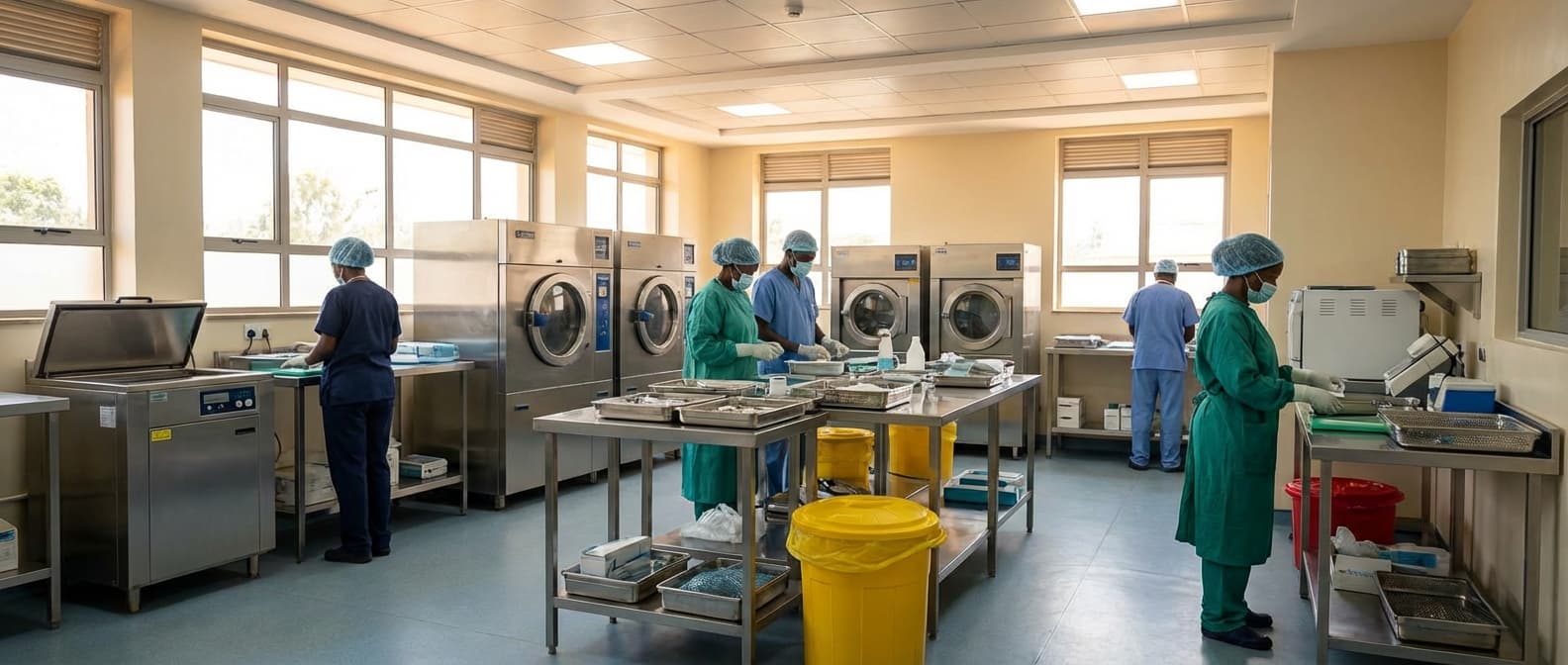
Medical Equipment Decontamination Service (Pre-Repair/Pre-Relocation) in Morocco
Engineering Excellence & Technical Support
Medical Equipment Decontamination Service (Pre-Repair/Pre-Relocation) High-standard technical execution following OEM protocols and local regulatory frameworks.
Advanced Decontamination Protocols
Our specialized pre-repair and pre-relocation decontamination services in Morocco utilize state-of-the-art techniques and EPA-approved disinfectants to eliminate biohazards and pathogens from medical equipment, ensuring a safe environment for technicians and preventing cross-contamination during transport and repair.
Certified & Trained Technicians
Our team of highly trained and certified technicians in Morocco possesses extensive expertise in handling and decontaminating a wide range of medical devices. We adhere to stringent international standards and best practices, guaranteeing comprehensive and effective decontamination prior to any repair or relocation.
Full Traceability & Documentation
We provide complete, auditable documentation for all decontamination processes in Morocco. This includes detailed logs, certificates of decontamination, and material safety data sheets (MSDS) for disinfectants used, ensuring full traceability and compliance for your medical equipment throughout its service lifecycle.
What Is Medical Equipment Decontamination Service (Pre-repair/pre-relocation) In Morocco?
Medical Equipment Decontamination Service (Pre-Repair/Pre-Relocation) in Morocco refers to the systematic process of rendering medical devices safe for subsequent handling, repair, relocation, or disposal. This service is crucial for mitigating the risks associated with biological, chemical, and radioactive contamination that may be present on medical equipment. The decontamination procedure aims to eliminate or inactivate infectious agents, hazardous residues, and other contaminants to protect personnel, the environment, and prevent the spread of healthcare-associated infections (HAIs) during these critical post-use phases.
| Stakeholder Group | Necessity for Decontamination | Typical Use Cases |
|---|---|---|
| Healthcare Facilities (Hospitals, Clinics, Diagnostic Centers) | To ensure the safety of biomedical technicians, maintenance personnel, and relocation teams. To prevent cross-contamination within the facility during transport. To comply with infection control protocols and regulatory requirements. | Equipment undergoing scheduled maintenance or unscheduled repairs. Devices being moved between departments or to storage. Equipment being prepared for sale, donation, or decommissioning. Imaging equipment (MRI, CT scanners) requiring off-site servicing. Surgical instruments and endoscopes requiring specialized reprocessing. |
| Medical Equipment Manufacturers and Distributors | To safely handle equipment returned for warranty service, repair, or refurbishment. To ensure their personnel are not exposed to patient-derived contaminants. To maintain product integrity and prevent potential issues during the repair process. | Returned equipment for factory repair. Equipment undergoing software updates or hardware upgrades. Devices being shipped for demonstration or loaner programs. |
| Biomedical Engineering and Repair Services | To protect their technicians and laboratory environments from biological and chemical hazards. To prevent the spread of pathogens into their repair facilities. To meet occupational health and safety standards. | All incoming medical equipment for repair, regardless of perceived contamination level. Equipment from high-risk patient care areas. Devices that have been in contact with bodily fluids or potentially infectious materials. |
| Medical Equipment Logistics and Relocation Companies | To ensure the safety of their moving crews and the receiving facility. To prevent environmental contamination during transport. To comply with transportation regulations for potentially hazardous materials. | Relocation of entire hospital departments or facilities. Transportation of large or specialized medical equipment (e.g., linear accelerators, anesthesia machines) to new sites. Equipment being moved between different healthcare networks or institutions. |
| Government and Regulatory Bodies | To enforce public health and safety standards. To oversee the proper handling and disposal of medical waste and contaminated equipment. | Audits and inspections of healthcare facilities and repair centers. Enforcement of decontamination protocols and waste management regulations. |
Service Inclusions and Components
- Assessment and Characterization: Initial evaluation of the equipment's potential contaminants based on its intended use and history.
- Cleaning: Removal of gross soil, organic debris, and visible particulate matter using appropriate detergents and mechanical action.
- Disinfection/Sterilization: Application of validated chemical agents (e.g., high-level disinfectants, sporicides) or physical methods (e.g., autoclaving, ethylene oxide sterilization) to achieve a specified level of microbial inactivation.
- Rinsing and Drying: Thorough removal of residual cleaning and disinfecting agents, followed by complete drying to prevent microbial regrowth.
- Packaging and Labeling: Secure containment of the decontaminated equipment in appropriate packaging, with clear labeling indicating its decontaminated status and any residual handling precautions.
- Documentation: Comprehensive record-keeping of the decontamination process, including chemicals used, exposure times, temperatures, and quality control checks.
- Waste Management: Proper segregation, containment, and disposal of contaminated waste generated during the decontamination process in accordance with Moroccan environmental regulations.
Who Needs Medical Equipment Decontamination Service (Pre-repair/pre-relocation) In Morocco?
In Morocco, the need for specialized medical equipment decontamination services before repair or relocation is critical for maintaining patient safety, regulatory compliance, and operational efficiency. These services are essential for preventing the spread of infections and ensuring that equipment is safe to handle by technicians or during transit. This addresses a crucial gap in healthcare facility management, particularly in a region experiencing growth in its healthcare sector.
| Customer Type | Specific Departments/Areas | Reason for Decontamination (Pre-Repair/Pre-Relocation) | ||||||||||
|---|---|---|---|---|---|---|---|---|---|---|---|---|
| Hospitals (Public & Private) | Operating Rooms (ORs) | Prevent cross-contamination for surgical instruments and diagnostic tools before return to circulation or sending for specialized repair. Ensures safety for technicians and subsequent patient use. | Intensive Care Units (ICUs) | Life-support equipment (ventilators, monitors) pose high infection risk. Decontamination is vital before repair or relocation to prevent pathogen transmission. | Emergency Departments (EDs) | Equipment used in high-throughput, critical care settings requires thorough cleaning to prevent the spread of infectious agents. | Sterilization Departments (CSSD) | While focused on sterilization, their equipment (autoclaves, washers) may require decontamination before sent for repair to protect service personnel. | Radiology/Imaging Departments | Imaging devices (MRI, CT scanners) can harbor bioburden. Decontamination is needed before service technicians access internal components or the unit is moved. | Oncology Units | Patients in these units are often immunocompromised. Decontamination of shared equipment is paramount before any maintenance or relocation. |
| Clinics and Medical Centers | General Consultation Rooms | Routine diagnostic equipment (e.g., otoscopes, ophthalmoscopes) needs cleaning before repair to protect technicians. | Specialty Clinics (e.g., Dermatology, Gastroenterology) | Endoscopic equipment, biopsy tools, and other sensitive instruments require rigorous decontamination prior to servicing to prevent cross-contamination. | Dialysis Centers | Blood-borne pathogens are a significant concern. Dialysis machines must be decontaminated before any repair or relocation to ensure technician and patient safety. | ||||||
| Diagnostic Laboratories | Microbiology Labs | Equipment handling potentially infectious samples (e.g., incubators, centrifuges) requires decontamination before repair to protect laboratory staff and service engineers. | Pathology Labs | Microtomes and other tissue processing equipment may have biological residues that need to be removed before servicing. | ||||||||
| Surgical Centers | All surgical equipment and ancillary devices | Similar to hospital ORs, ensuring sterility and safety for technicians is critical before any repair or relocation of surgical equipment. | ||||||||||
| Research Institutions | Laboratories with biological or clinical research | Specialized research equipment, especially that which has come into contact with biological materials, needs decontamination before repair to comply with safety protocols. | ||||||||||
| Government Health Agencies | Public health facilities and equipment management | Ensuring consistent decontamination standards across public health infrastructure, particularly for equipment being sent for centralized repair or redistribution. | ||||||||||
| Medical Equipment Manufacturers & Service Providers | Service departments and repair centers | Their own technicians require decontaminated equipment to prevent exposure to biohazards and ensure their own safe working environment when repairing equipment for clients. |
Target Customers and Departments in Morocco Requiring Medical Equipment Decontamination Services (Pre-Repair/Pre-Relocation)
- Hospitals (Public and Private)
- Clinics and Medical Centers
- Diagnostic Laboratories
- Surgical Centers
- Research Institutions
- Government Health Agencies
- Medical Equipment Manufacturers and Service Providers (for their own maintenance/repair operations)
Medical Equipment Decontamination Service (Pre-repair/pre-relocation) Process In Morocco
This document outlines the standard workflow for a Medical Equipment Decontamination Service in Morocco, specifically for equipment requiring decontamination prior to repair or relocation. The process begins with an initial inquiry and culminates in the successful decontamination and certification of the equipment.
| Stage | Description | Responsible Party | Key Activities | Deliverables | Notes |
|---|---|---|---|---|---|
| The client contacts the decontamination service provider to request services for medical equipment needing pre-repair or pre-relocation decontamination. | Client & Service Provider | Client provides details of equipment (type, model, intended use), current condition, reason for decontamination (repair/relocation), and desired timeline. Service provider conducts initial assessment to understand scope and feasibility. | Understanding of decontamination needs, preliminary scope of work. | Early communication is crucial to manage expectations. |
| Based on the initial assessment, the service provider prepares and submits a detailed quotation. Upon acceptance, a formal service agreement is established. | Service Provider & Client | Service provider calculates costs (labor, materials, transport, disposal). Submits quotation. Client reviews and approves. Service agreement is drafted, outlining terms, conditions, scope, timelines, and responsibilities. | Approved quotation, signed service agreement. | Ensure clear definition of liability. |
| The process of arranging for the safe transport of the equipment to the decontamination facility and scheduling the service. | Service Provider & Client | Coordinate pick-up and delivery of equipment. If on-site decontamination is required, schedule the service visit. Ensure proper packaging and handling procedures are followed for transport. | Scheduled service date/time, confirmed logistics plan. | Adherence to biohazard transport regulations is paramount. |
| The core process of cleaning, disinfecting, and sterilizing the medical equipment using approved methods and agents. | Service Provider | Perform thorough cleaning, disinfection, and/or sterilization according to equipment type, manufacturer guidelines, and relevant Moroccan health regulations. Utilize appropriate validated decontamination agents and equipment (e.g., autoclaving, chemical disinfection, high-level disinfection). | Decontaminated medical equipment. | Strict adherence to established protocols and safety measures. |
| Verification that the decontamination process has been effective and documentation of the successful outcome. | Service Provider | Conduct internal quality checks (e.g., visual inspection, biological/chemical indicator testing if applicable). Issue a decontamination certificate confirming the equipment has undergone the process and is safe for repair or relocation. | Decontamination certificate. | Certification should be traceable and comply with regulatory standards. |
| Providing the client with all necessary documentation and returning the decontaminated equipment. | Service Provider & Client | Present the decontamination certificate and any relevant supporting documentation (e.g., logs, waste disposal records) to the client. Arrange for the safe return of the equipment to the client or the designated repair/relocation facility. | Decontaminated equipment, all relevant documentation. | Ensure clear chain of custody for returned equipment. |
| Issuance of the final invoice and settlement of payment as per the service agreement. | Service Provider & Client | Submit the final invoice to the client. Client processes payment according to the agreed terms. | Paid invoice. | Prompt invoicing and payment facilitate ongoing business relationships. |
Key Stages of the Medical Equipment Decontamination Service Workflow
- Inquiry & Initial Assessment
- Quotation & Service Agreement
- Logistics & Scheduling
- Decontamination Execution
- Quality Control & Certification
- Documentation & Handover
- Billing & Payment
Medical Equipment Decontamination Service (Pre-repair/pre-relocation) Cost In Morocco
The cost of medical equipment decontamination services in Morocco, particularly for pre-repair or pre-relocation purposes, is influenced by several key factors. These factors determine the complexity, time, and resources required for the decontamination process. Understanding these elements is crucial for obtaining accurate quotes and budgeting effectively. The following discusses the primary pricing considerations and provides estimated cost ranges in Moroccan Dirhams (MAD).
| Equipment Category / Complexity | Estimated Cost Range (MAD) |
|---|---|
| Small Diagnostic Devices (e.g., blood pressure monitors, stethoscopes) | 500 - 1,500 |
| Medium-Sized Equipment (e.g., patient monitors, ultrasound machines, dental chairs) | 1,500 - 5,000 |
| Large/Complex Equipment (e.g., X-ray machines, CT scanners, basic lab analyzers) | 5,000 - 15,000 |
| Very Large/Highly Specialized Equipment (e.g., MRI scanners, advanced surgical robots, specialized sterilization units) | 15,000 - 50,000+ |
| Emergency/Expedited Service Surcharge | Additional 20% - 50% |
Key Pricing Factors for Medical Equipment Decontamination in Morocco:
- Type and Size of Equipment: Larger and more complex medical devices (e.g., MRI machines, CT scanners, large surgical robots) inherently require more time, specialized disinfectants, and potentially more personnel to decontaminate thoroughly compared to smaller items like examination tables or basic diagnostic tools.
- Level of Contamination: The degree and type of contamination are paramount. Equipment that has been exposed to hazardous biological materials, high-risk infectious agents, or chemical spills will demand more stringent and specialized decontamination protocols, often involving biocides and longer contact times, thus increasing costs.
- Decontamination Method: Different decontamination methods have varying costs. Thermal disinfection (heat), chemical disinfection (using specific agents), and sterilization (e.g., autoclaving for certain components) all have different reagent, equipment, and labor requirements. The choice of method will be dictated by the equipment's material compatibility and the required level of disinfection/sterilization.
- Turnaround Time (Urgency): Emergency or expedited decontamination services often command a premium. If the equipment needs to be decontaminated on a tight deadline for repair or relocation, the service provider may need to allocate additional resources or work outside standard hours, leading to higher costs.
- Location of Service: While most decontamination will likely occur at the client's facility in Morocco, the travel time and logistics for the decontamination team can add to the overall cost, especially if the equipment is located in remote areas.
- Specialized Equipment/Skills: Decontaminating highly sensitive or specialized medical equipment might necessitate technicians with specific training and certifications, as well as the use of specialized equipment or consumables, which can increase the price.
- Waste Disposal: Proper and compliant disposal of potentially hazardous decontamination waste is an essential part of the service and contributes to the overall cost.
- Certification and Documentation: If the decontamination process requires specific certification or detailed documentation for regulatory compliance or handover, this will be factored into the service price.
Affordable Medical Equipment Decontamination Service (Pre-repair/pre-relocation) Options
Maintaining the integrity of medical equipment is crucial for patient safety and operational efficiency. Our Affordable Medical Equipment Decontamination Service offers pre-repair and pre-relocation decontamination solutions designed to protect your investments and ensure compliance. We understand the budgetary constraints healthcare facilities often face, which is why we've developed flexible value bundles and cost-saving strategies to make essential decontamination accessible and economical.
| Value Bundle Name | Description | Included Services | Ideal For | Cost-Saving Benefit |
|---|---|---|---|---|
| Basic Decontamination Essentials | Our most affordable package for routine decontamination. | Surface cleaning and disinfection of common contact points. | Low-risk equipment, routine maintenance, minor repairs. | Lower upfront cost, ideal for frequent, less complex needs. |
| Comprehensive Pre-Service Package | Thorough decontamination to prepare for in-depth repairs. | Surface and accessible internal component decontamination (where applicable), biosafety assessment. | Equipment undergoing major repairs, complex diagnostics, or high-risk procedures. | Reduces risk of technician exposure and further contamination during repairs. |
| Relocation Readiness Bundle | Ensures equipment is safe and compliant for transport and reinstallation. | Full external decontamination, specialized packaging guidance, post-relocation wipe-down options. | Facilities undergoing relocation, departmental moves, or equipment transfer. | Minimizes risk of cross-contamination between sites and ensures immediate readiness upon reinstallation. |
| Customizable Solution | Tailored decontamination plans to meet unique facility requirements. | Flexible scope based on equipment type, usage, and specific needs. | Unique equipment, specialized environments, or specific contamination concerns. | Pay only for the services truly needed, optimizing budget allocation. |
Key Benefits of Our Decontamination Service
- Enhanced Patient Safety: Eliminates potential biohazards and pathogens before service or relocation.
- Extended Equipment Lifespan: Prevents cross-contamination that can lead to premature equipment failure.
- Regulatory Compliance: Meets hygiene standards and regulatory requirements.
- Reduced Downtime: Streamlined process minimizes the time equipment is out of service.
- Cost Control: Our bundled options and strategies help manage decontamination expenses effectively.
Verified Providers In Morocco
When seeking healthcare services in Morocco, particularly those offered by international providers or requiring stringent quality assurances, the term 'Verified Providers' becomes paramount. Franance Health has established itself as a leading name in this domain, offering a credentialing process that goes beyond basic licensing to ensure the highest standards of care. Understanding what makes Franance Health credentials stand out is key to making the best choice for your health needs.
| Credentialing Aspect | Franance Health Standard | Benefit to Patient |
|---|---|---|
| Professional Licensing & Board Certification | Verifies current and unrestricted licenses, ensuring fundamental qualifications. | Guarantees practitioners meet basic legal and professional requirements. |
| Clinical Experience & Education | Evaluates the depth and breadth of practical experience and academic achievements. | Ensures providers have sufficient hands-on knowledge and training in their specialty. |
| Peer Review & Performance Data | Assesses performance metrics and may involve peer recommendations or reviews. | Provides insight into a provider's track record and effectiveness in patient care. |
| Background & Disciplinary Checks | Conducts thorough checks for any past malpractice, fraud, or disciplinary actions. | Minimizes risk by identifying and excluding providers with a history of misconduct. |
| Facility Accreditation & Safety Protocols | Assesses the standards of care, equipment, and safety measures within healthcare facilities. | Confirms that the environment in which care is delivered is safe and well-equipped. |
Why Franance Health Credentials Represent the Best Choice:
- Rigorous Verification Process: Franance Health employs a comprehensive and multi-faceted verification system that scrutinizes a provider's qualifications, experience, disciplinary history, and adherence to ethical practices. This goes above and beyond standard regulatory requirements.
- Focus on Patient Safety & Quality: The core of Franance Health's credentialing is patient safety and the delivery of high-quality medical services. They assess not only individual practitioner competency but also the operational standards and patient care protocols of healthcare facilities.
- International Standards Alignment: Franance Health often aligns its verification criteria with internationally recognized healthcare standards, making Moroccan providers with their credentials attractive to international patients and those seeking globally accepted levels of care.
- Enhanced Trust and Transparency: For patients, a Franance Health verified provider offers a significant layer of trust. It signifies that the provider has undergone independent and thorough vetting, reducing the risk of choosing subpar or unqualified services.
- Specialized Expertise Recognition: The credentialing process can highlight specialized skills and certifications that might not be immediately apparent, helping patients find providers with the exact expertise they require.
- Commitment to Continuous Improvement: Franance Health's verification often involves ongoing monitoring and re-evaluation, ensuring that providers maintain their high standards over time. This commitment to continuous improvement benefits patients through sustained quality of care.
Scope Of Work For Medical Equipment Decontamination Service (Pre-repair/pre-relocation)
This Scope of Work (SOW) outlines the requirements for medical equipment decontamination services to be performed prior to equipment repair or relocation. The objective is to ensure a safe and bioburden-reduced environment for technicians, transport personnel, and end-users, while also preventing cross-contamination. This SOW details the technical deliverables and standard specifications for the decontamination process.
| Service Component | Description | Technical Deliverables | Standard Specifications |
|---|---|---|---|
| Initial Assessment and Triage | Evaluation of equipment type, intended use, and known or suspected bioburden. | Equipment hazard assessment report, identifying decontamination level required. | Adherence to established risk assessment protocols. Use of checklists for equipment identification and history. |
| Pre-Decontamination Preparation | Securing the equipment, removing loose parts, and preparing the immediate work area. | Documentation of pre-decontamination status (photographic/video evidence optional but recommended). | Use of appropriate personal protective equipment (PPE) for personnel. Containment of the work area if necessary (e.g., plastic sheeting). |
| Surface Decontamination | Cleaning and disinfection of all external surfaces of the medical equipment. | Report detailing cleaning and disinfection agents used and contact times. | Use of EPA-approved, hospital-grade disinfectants effective against a broad spectrum of pathogens (e.g., bacteria, viruses, fungi). Follow manufacturer instructions for dilution, application, and contact time. Wiping, spraying, or fogging methods as appropriate. |
| Internal Component Decontamination (if applicable/accessible) | Decontamination of accessible internal components (e.g., sensor ports, sample pathways) based on equipment design and risk assessment. | Confirmation of decontamination of accessible internal areas. | Use of appropriate cleaning solutions and application methods (e.g., flushing, wiping) to avoid damage to sensitive components. Manufacturer's recommendations for equipment cleaning must be followed. |
| Specialized Decontamination (e.g., for biohazardous materials) | Application of specialized decontamination protocols for equipment known to have been in contact with highly infectious agents or biohazardous materials. | Certification of decontamination for specific biohazards. | Use of validated decontamination agents and processes (e.g., autoclaving, chemical sterilization, high-level disinfection) as determined by the risk assessment and equipment compatibility. Requires specialized training and equipment. |
| Post-Decontamination Verification | Visual inspection to confirm the absence of visible soil and residue. | Verification report confirming successful decontamination, signed by authorized personnel. | Verification against pre-decontamination assessment. Visual inspection for cleanliness. Where applicable, bioburden testing may be specified for high-risk equipment. |
| Waste Disposal | Proper handling and disposal of all contaminated materials and cleaning supplies. | Documentation of waste disposal procedures and compliance with regulations. | Segregation of biohazardous waste according to institutional and regulatory guidelines. Use of approved biohazard waste containers and disposal services. |
| Documentation and Certification | Comprehensive record-keeping of the entire decontamination process. | Issuance of a Decontamination Certificate for each piece of equipment. | Detailed logs including date, time, personnel involved, equipment ID, decontamination methods used, agents, contact times, verification results, and waste disposal information. Certificate to include equipment details and confirmation of decontamination. |
Key Objectives
- To minimize biological hazards associated with medical equipment.
- To ensure the safety of repair technicians and relocation personnel.
- To prevent the spread of infectious agents between different environments or users.
- To comply with relevant health and safety regulations and institutional policies.
Service Level Agreement For Medical Equipment Decontamination Service (Pre-repair/pre-relocation)
This Service Level Agreement (SLA) outlines the response times and uptime guarantees for the decontamination service of medical equipment prior to repair or relocation. This ensures minimal disruption to clinical operations and maintains patient safety standards.
| Service Component | Response Time | Uptime Guarantee |
|---|---|---|
| Request Acknowledgment | Within 2 business hours of submission. | N/A (This is a reactive service) |
| Equipment Pickup Scheduling | Within 4 business hours of request approval. | N/A (This is a reactive service) |
| Decontamination Completion (Standard Equipment) | Within 1 business day of equipment receipt at decontamination facility. | N/A (This is a reactive service) |
| Decontamination Completion (Complex/Specialized Equipment) | Within 2 business days of equipment receipt at decontamination facility. (Defined as equipment requiring multi-stage processes or extended sterilization times). | N/A (This is a reactive service) |
| Return of Decontaminated Equipment | Within 2 business hours of decontamination completion, ready for dispatch to repair facility or relocation. | N/A (This is a reactive service) |
| Data Verification and Certification | Completion certificate provided within 1 business day of decontamination completion. | N/A (This is a reactive service) |
Key Service Level Objectives
- Scope: This SLA covers the decontamination of designated medical equipment that requires cleaning and sterilization before being sent for repair or relocation to another facility.
- Service Hours: Decontamination services are available Monday to Friday, 8:00 AM to 5:00 PM, excluding public holidays.
- Reporting: All decontamination requests must be submitted through the designated online portal or via email to [decontamination@example.com].
- Exclusions: This SLA does not cover emergency decontamination, decontamination of hazardous biological waste, or equipment requiring specialized biohazard containment beyond standard decontamination protocols.
Frequently Asked Questions

Ready when you are
Let's scope your Medical Equipment Decontamination Service (Pre-Repair/Pre-Relocation) in Morocco project in Morocco.

Scaling healthcare logistics and technical systems across the entire continent.