
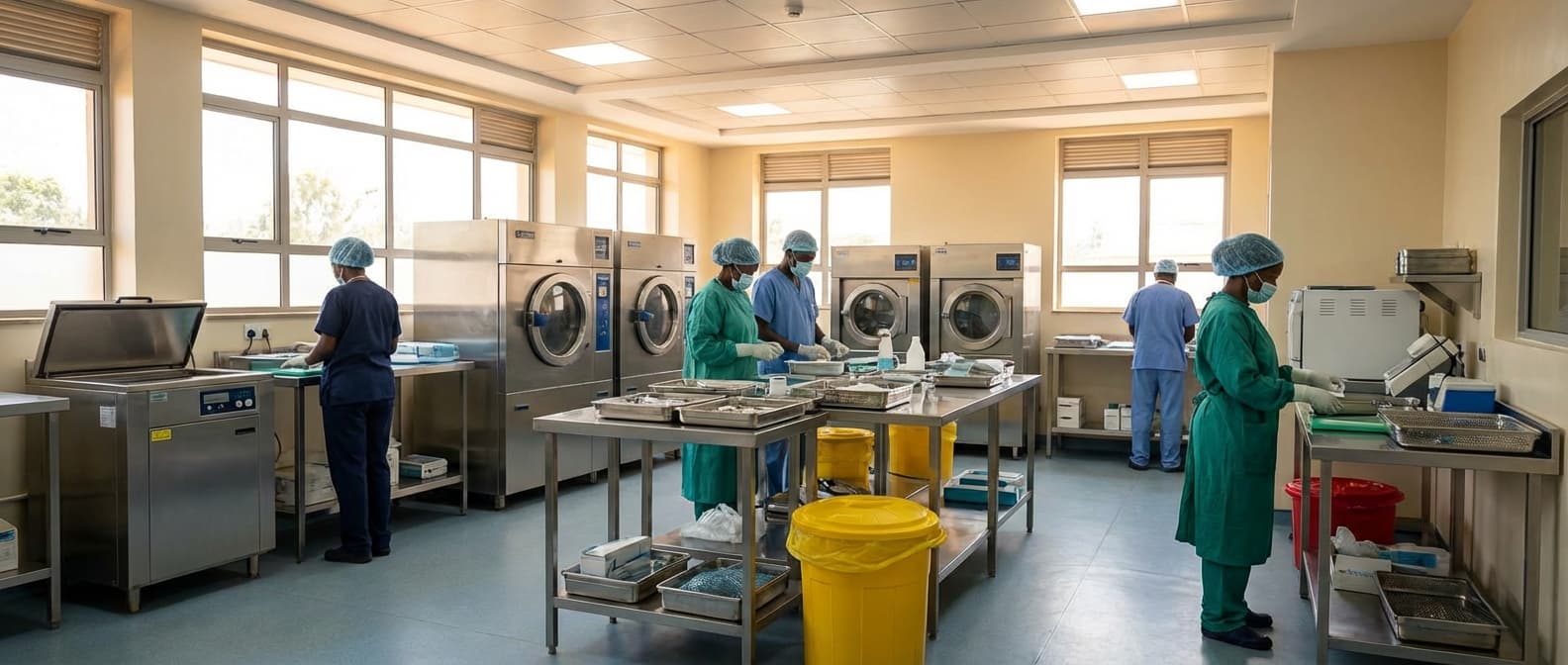
Infection-Control Readiness Support Service for Reusable Equipment in Morocco
Engineering Excellence & Technical Support
Infection-Control Readiness Support Service for Reusable Equipment High-standard technical execution following OEM protocols and local regulatory frameworks.
Standardized Reusable Equipment Disinfection Protocols
Implementation of scientifically validated, country-specific disinfection protocols for all high-level, intermediate-level, and low-level disinfection of reusable medical devices. This ensures consistent, effective decontamination tailored to Morocco's healthcare landscape and common pathogens.
Advanced Biological Monitoring and Validation
Deployment of robust biological and chemical monitoring systems for sterilization and disinfection processes. This includes regular testing of autoclaves, washer-disinfectors, and chemical disinfectants to guarantee validated efficacy and patient safety across all participating Moroccan healthcare facilities.
Integrated Traceability and Inventory Management System
Development and rollout of a digital platform for real-time tracking and management of reusable equipment lifecycle. This system ensures proper sterilization records, maintenance history, and prompt recall capabilities, enhancing accountability and preventing the use of inadequately reprocessed instruments.
What Is Infection-control Readiness Support Service For Reusable Equipment In Morocco?
Infection-Control Readiness Support Service for Reusable Equipment in Morocco refers to a specialized consultancy and operational support framework designed to ensure that healthcare facilities in Morocco adhere to stringent infection prevention and control (IPC) standards for all reusable medical devices and equipment. This service aims to mitigate the risks of healthcare-associated infections (HAIs) through the implementation and maintenance of robust reprocessing protocols, staff training, and facility infrastructure assessments. It encompasses a holistic approach, from the initial procurement and selection of reusable items to their safe disposal or decommissioning, with a particular emphasis on the critical stages of cleaning, disinfection, and sterilization.
| Stakeholder Group | Needs Addressed | Typical Use Cases |
|---|---|---|
| Hospitals (Public and Private) | Ensuring patient safety, reducing HAIs, optimizing resource utilization, regulatory compliance, maintaining accreditation. | Establishing or upgrading a Central Sterile Supply Department (CSSD); implementing new reprocessing protocols for surgical instruments; addressing recurrent HAIs linked to endoscopes; training new sterilization technicians; preparing for external audits. |
| Specialized Clinics (e.g., Dental, Ophthalmology, Endoscopy Units) | Safe reprocessing of specialized instruments, preventing cross-contamination, meeting specific procedural requirements. | Developing SOPs for disinfection of dental handpieces; validating sterilization cycles for ophthalmic surgical tools; implementing protocols for high-level disinfection of flexible endoscopes. |
| Medical Device Manufacturers and Suppliers | Ensuring their products are handled and reprocessed correctly by end-users, providing training materials, supporting product registration with relevant authorities. | Developing user manuals with clear reprocessing instructions; offering training workshops to hospital staff on their specific devices; validating the efficacy of their reprocessing accessories. |
| Healthcare Regulatory Bodies | Facilitating oversight and enforcement of IPC standards, providing technical expertise for policy development, standardizing reprocessing practices across the country. | Developing national guidelines for reusable medical device reprocessing; conducting inspections of healthcare facilities; evaluating training programs for IPC professionals. |
| Healthcare Education and Training Institutions | Developing curricula for IPC professionals, providing practical training sites, ensuring graduates are competent in reusable equipment reprocessing. | Integrating comprehensive modules on sterile processing into nursing and medical technology programs; offering specialized certificate courses in infection control. |
Key Components of the Service
- Risk Assessment and Gap Analysis: Evaluating existing IPC practices, equipment, and infrastructure related to reusable medical devices to identify deficiencies and areas for improvement.
- Policy and Procedure Development/Enhancement: Creating, revising, and implementing evidence-based policies and standard operating procedures (SOPs) for the entire lifecycle of reusable equipment, including decontamination, sterilization, storage, and distribution.
- Staff Training and Competency Assessment: Delivering comprehensive training programs for healthcare personnel involved in the handling and reprocessing of reusable equipment. This includes theoretical knowledge, practical skills development, and regular competency evaluations.
- Equipment Evaluation and Validation: Providing guidance on the selection, procurement, and validation of automated cleaning and sterilization equipment to ensure efficacy and compliance with international standards (e.g., ISO, AAMI).
- Infrastructure Assessment and Recommendations: Evaluating the physical layout, ventilation, water supply, and waste management systems of reprocessing areas (e.g., central sterile supply departments - CSSDs) to ensure they meet IPC requirements.
- Monitoring and Auditing: Establishing and implementing surveillance systems and regular audits to monitor compliance with IPC protocols, identify trends in HAIs related to reusable equipment, and drive continuous improvement.
- Compliance with National and International Guidelines: Ensuring that all practices and procedures align with Moroccan Ministry of Health regulations, as well as relevant international guidelines and standards.
- Troubleshooting and Remediation: Providing expert support to address any challenges or outbreaks related to reusable equipment reprocessing and to implement corrective and preventive actions (CAPA).
Who Needs Infection-control Readiness Support Service For Reusable Equipment In Morocco?
In Morocco, the 'Infection-Control Readiness Support Service for Reusable Equipment' is crucial for a range of healthcare facilities and related organizations. This service aims to ensure that reusable medical devices are properly cleaned, disinfected, and sterilized to prevent healthcare-associated infections (HAIs). The target customers are diverse, encompassing various levels of healthcare providers and entities involved in the lifecycle of reusable medical equipment.
| Customer Type | Key Departments Involved | Specific Needs/Focus Areas |
|---|---|---|
| Hospitals (Public & Private) | CSSD, OR, ICU, ED, Specialty Clinics, Infection Control | Comprehensive reprocessing protocols, equipment validation, staff training, compliance with national/international standards. |
| Clinics & Health Centers | General Practice, Treatment Rooms | Basic cleaning and disinfection procedures, guidance on appropriate disinfectants, minimal reprocessing capabilities. |
| Medical Laboratories | Microbiology, Chemistry, Hematology | Sterilization of glassware, reusable probes, and specialized equipment. |
| Dental Practices | Treatment Rooms, Sterilization Areas | Safe handling and reprocessing of dental instruments (handpieces, mirrors, probes), surface disinfection. |
| Medical Device Companies | Technical Support, Training, Quality Assurance | Ensuring end-user competency with their equipment, product-specific reprocessing guidance, addressing potential issues. |
| Government Health Agencies | Policy & Planning, Quality Assurance | Setting national guidelines, developing training modules, monitoring compliance, promoting best practices. |
Target Customers and Departments
- Hospitals (Public and Private): All departments that utilize reusable medical equipment are primary beneficiaries. This includes, but is not limited to:
- Sterilization and Central Sterile Supply Departments (CSSDs): The core users and beneficiaries, responsible for the reprocessing of instruments.
- Operating Rooms (ORs): Essential for ensuring surgical instruments are safe for reuse.
- Intensive Care Units (ICUs): Frequent use of ventilators, monitors, and other equipment requiring rigorous reprocessing.
- Emergency Departments (EDs): Similar to ICUs, with a high turnover of reusable items.
- Outpatient Clinics and Specialty Clinics (e.g., Gastroenterology, Ophthalmology, Dentistry): Use of endoscopes, surgical tools, and diagnostic equipment.
- Maternity Wards: For reusable instruments used in childbirth and post-natal care.
- Infection Control Departments: Play a vital role in oversight and implementation of protocols.
- Clinics and Health Centers (Primary Care): Smaller facilities that may not have dedicated CSSDs but still handle reusable instruments for basic procedures.
- Medical Laboratories: For reusable diagnostic equipment and glassware requiring proper sterilization.
- Dental Practices: Extensive use of reusable dental instruments.
- Private Surgical Centers and Day Clinics: Facilities focused on specific surgical procedures.
- Medical Device Manufacturers and Suppliers (for training and support): Those who provide reusable equipment can leverage this service to ensure their products are handled correctly by end-users, enhancing product satisfaction and safety.
- Government Health Agencies and Ministries of Health: For policy development, standardization, and potential accreditation processes related to infection control and reusable equipment management.
- Training Institutions for Healthcare Professionals: To integrate best practices in reusable equipment reprocessing into curricula.
Infection-control Readiness Support Service For Reusable Equipment Process In Morocco
This document outlines the workflow for the Infection-Control Readiness Support Service for Reusable Equipment Processes in Morocco. The service aims to assist healthcare facilities in establishing and maintaining robust infection control practices for reusable medical devices, ensuring patient safety and compliance with national guidelines.
| Stage | Description | Key Activities | Responsible Parties | Deliverables/Outcomes | Timeline (Indicative) |
|---|---|---|---|---|---|
| Inquiry & Initial Assessment | Healthcare facilities express interest in the service and a preliminary understanding of their needs is established. | Contact initiation, brief needs discussion, provision of service overview. | Healthcare Facility (Contact Person/Department), Service Provider (Business Development/Sales) | Understanding of facility's interest, initial identification of potential service scope. | 1-3 days |
| Needs Identification & Proposal Development | Detailed understanding of the facility's current reusable equipment processes, challenges, and specific requirements. | In-depth consultations, site visits (optional initial), data collection on existing protocols and infrastructure, custom service proposal development. | Healthcare Facility (Infection Control Committee, Biomedical Engineering, relevant departments), Service Provider (Technical Consultants, Project Managers) | Detailed needs assessment report, customized service proposal outlining scope, objectives, methodology, timelines, and costs. | 5-10 days |
| Agreement & Contractualization | Formalization of the service agreement based on the approved proposal. | Proposal review and negotiation, contract drafting, legal review, signing of the agreement. | Healthcare Facility (Administration/Procurement), Service Provider (Management/Legal Department) | Signed service contract. | 7-14 days |
| On-site Readiness Assessment | Comprehensive evaluation of the facility's current infrastructure, equipment, protocols, and human resources related to reusable equipment processing. | Direct observation of sterilization and disinfection processes, interviews with staff, review of documentation (SOPs, training records, maintenance logs), assessment of facility layout and workflows. | Service Provider (Infection Control Specialists, Technical Auditors), Healthcare Facility (Infection Control Team, relevant staff) | Detailed on-site assessment report, identifying strengths and weaknesses. | 3-7 days (depending on facility size and complexity) |
| Gap Analysis & Action Plan Creation | Analysis of the assessment findings against national and international best practices and regulatory requirements to identify specific gaps. | Comparison of current practices with standards, identification of deviations, development of a tailored action plan with prioritized recommendations. | Service Provider (Technical Consultants, Project Managers), Healthcare Facility (Infection Control Committee) | Gap analysis report, comprehensive action plan outlining specific interventions, responsibilities, timelines, and required resources. | 5-7 days |
| Training & Capacity Building | Empowering facility staff with the knowledge and skills to implement and sustain improved infection control practices. | Development and delivery of customized training modules (theoretical and practical) on sterilization, disinfection, equipment handling, waste management, and infection prevention principles. Train-the-trainer programs. | Service Provider (Trainers, Subject Matter Experts), Healthcare Facility (All relevant staff involved in reusable equipment processing) | Trained personnel, enhanced staff competency, training materials, attendance records. | Variable (depending on training scope and number of staff) |
| Implementation Support | Providing hands-on assistance and guidance to the facility as they implement the action plan. | On-site supervision of new protocols, troubleshooting implementation challenges, advising on equipment selection and maintenance, supporting documentation updates. | Service Provider (Consultants, Project Managers), Healthcare Facility (Infection Control Team, operational staff) | Successful implementation of recommended changes, improved adherence to protocols. | Variable (ongoing support during implementation phase) |
| Monitoring & Evaluation | Tracking the progress of implementation and assessing the effectiveness of the interventions. | Regular site visits, data collection on key performance indicators (KPIs) (e.g., reprocessing error rates, staff compliance), review of incident reports, audits. | Service Provider (Monitoring & Evaluation Specialists), Healthcare Facility (Infection Control Team) | Progress reports, evaluation findings, identification of areas needing further attention. | Monthly/Quarterly (as per contract) |
| Follow-up & Continuous Improvement | Ensuring the sustainability of improved practices and fostering a culture of continuous quality improvement. | Post-implementation review meetings, ongoing advisory support, periodic refresher training, guidance on updating protocols with new guidelines. | Service Provider (Consultants), Healthcare Facility (Infection Control Committee, Management) | Sustained high-quality infection control practices, long-term improvement in patient safety, establishment of a continuous improvement framework. | Ongoing (as per service agreement) |
Workflow Stages
- Inquiry & Initial Assessment
- Needs Identification & Proposal Development
- Agreement & Contractualization
- On-site Readiness Assessment
- Gap Analysis & Action Plan Creation
- Training & Capacity Building
- Implementation Support
- Monitoring & Evaluation
- Follow-up & Continuous Improvement
Infection-control Readiness Support Service For Reusable Equipment Cost In Morocco
The cost of infection-control readiness support services for reusable equipment in Morocco is a multifaceted consideration, influenced by a range of factors. These services are crucial for healthcare facilities to ensure the safe reprocessing and sterilization of medical instruments, thereby preventing healthcare-associated infections (HAIs). The pricing is not standardized across the board and can vary significantly depending on the provider, the scope of services, the size and complexity of the healthcare facility, and the specific types of reusable equipment involved.
| Service Level / Scope | Estimated Price Range (MAD) | Notes |
|---|---|---|
| Basic Readiness Assessment (One-time) | 15,000 - 40,000 MAD | Includes initial audit of current practices, identification of gaps, and basic recommendations. Suitable for small clinics or initial evaluations. |
| Comprehensive Readiness Support (Short-term Contract) | 50,000 - 150,000 MAD | Covers detailed assessment, policy and procedure development, targeted staff training, and initial validation. For medium-sized facilities or specific departmental needs. |
| Ongoing Infection Control Support & Monitoring (Annual Contract) | 80,000 - 300,000+ MAD | Includes regular audits, performance monitoring, continuous training, equipment validation, and compliance reporting. Essential for large hospitals and critical care units. The upper range can be significantly higher depending on the scale. |
| Specialized Endoscope Reprocessing Support | 20,000 - 70,000 MAD (per assessment/initial setup) | Focuses on the specific, intricate requirements for endoscope cleaning and disinfection. Ongoing support would be additional. |
| Staff Training Workshops (per session) | 5,000 - 15,000 MAD | Cost per workshop, can vary based on duration, number of participants, and trainer expertise. |
Key Pricing Factors:
- {"item":"Scope of Services:","details":"This is a primary driver. Services can range from basic consultation and training to comprehensive audit, validation, implementation, and ongoing monitoring. More extensive services naturally command higher prices."}
- {"item":"Type and Volume of Reusable Equipment:","details":"The quantity and complexity of the reusable equipment (e.g., surgical instruments, endoscopes, anesthesia equipment, dialysis machines) a facility uses will impact costs. High-risk or complex items often require more specialized procedures and training."}
- {"item":"Facility Size and Infrastructure:","details":"Larger hospitals or clinics with multiple departments and a higher volume of procedures will generally incur higher costs for comprehensive support compared to smaller practices. The existing infrastructure for sterile processing also plays a role."}
- {"item":"Provider Expertise and Reputation:","details":"Established providers with a strong track record, specialized certifications, and experienced personnel may charge a premium for their services."}
- {"item":"Frequency of Support:","details":"One-time readiness assessments will be less expensive than ongoing, regular monitoring and support contracts. Subscription-based models or annual contracts are common for continuous improvement."}
- {"item":"Customization and Training Needs:","details":"Tailored training programs for specific staff roles or the need to adapt services to unique facility protocols will affect the overall cost."}
- {"item":"Geographic Location within Morocco:","details":"While less impactful than other factors, regional variations in operating costs for service providers might lead to slight price differences between major cities (e.g., Casablanca, Rabat) and more remote areas."}
- {"item":"Technology and Tools Used:","details":"Providers utilizing advanced software for tracking, validation equipment, or other specialized tools may incorporate these costs into their pricing."}
Affordable Infection-control Readiness Support Service For Reusable Equipment Options
Our Affordable Infection-Control Readiness Support Service for Reusable Equipment Options is designed to empower healthcare facilities with robust infection prevention practices without breaking the bank. We understand the critical importance of sterile reusable equipment in patient safety and the financial pressures faced by many organizations. This service provides comprehensive support, encompassing training, policy development, auditing, and access to best practices, all tailored to the specific needs and budget constraints of your facility. Our focus is on delivering tangible value through a combination of flexible service packages and strategic cost-saving initiatives.
| Value Bundle Name | Description | Included Services | Target Facility Size/Needs | Cost-Saving Strategy |
|---|---|---|---|---|
| Essential Readiness Bundle | Provides foundational infection control support for facilities with basic reusable equipment needs. | On-demand consultation (5 hours/month), policy template review, basic staff training module. | Small clinics, outpatient centers, departments with limited reusable device volume. | Leverages standardized templates and scalable online training, reducing bespoke development costs. Focus on core compliance. |
| Comprehensive Readiness Bundle | Offers in-depth support for facilities managing a moderate volume and variety of reusable equipment. | On-demand consultation (15 hours/month), custom policy development, comprehensive staff training program, quarterly audit support. | Medium-sized hospitals, specialized surgical centers, facilities with diverse reusable device inventory. | Bundled service discounts, phased implementation to spread costs, proactive identification of inefficiencies to prevent costly errors/infections. |
| Advanced Readiness Bundle | Delicates comprehensive, proactive, and continuous infection control support for large and complex healthcare systems. | Unlimited on-demand consultation, complete policy and procedure overhaul, customized and ongoing staff training, bi-annual full-scale audits, performance monitoring dashboard, specialized risk assessments. | Large hospitals, integrated health networks, facilities with high-risk procedures and extensive reusable equipment management. | Economies of scale through dedicated resource allocation, predictive analytics to avert future problems, reduced need for expensive external consultants for routine matters. |
Key Components of Our Readiness Support Service
- On-Demand Expert Consultation: Access to infection control specialists for guidance on compliance, troubleshooting, and emerging threats.
- Customized Policy & Procedure Development: Tailored creation or refinement of infection control policies specific to your reusable equipment workflows.
- Staff Training & Education: Comprehensive training modules for all staff involved in the cleaning, disinfection, sterilization, and handling of reusable medical devices.
- Auditing & Compliance Reviews: Regular assessments of your current practices against established guidelines and regulatory requirements.
- Performance Monitoring & Reporting: Tools and dashboards to track key infection control metrics and identify areas for improvement.
- Access to Best Practice Resources: Curated information, case studies, and updates on the latest advancements in infection control for reusable equipment.
Verified Providers In Morocco
Navigating the Moroccan healthcare landscape can be a challenge, but identifying verified providers is crucial for ensuring quality and trustworthy medical services. Franance Health stands out as a beacon of excellence, offering a network of credentialed professionals who are rigorously vetted for their expertise, ethical standards, and commitment to patient care. Choosing Franance Health means opting for a healthcare experience where your well-being is prioritized through verified excellence. This rigorous vetting process ensures that all listed providers meet stringent quality benchmarks, offering peace of mind to patients seeking reliable medical attention.
| Credential Type | Verification Standard | Benefit to Patients |
|---|---|---|
| Medical Licenses | Official government-issued licenses verified for authenticity and validity. | Confirms legal authorization to practice medicine in Morocco. |
| Specialty Board Certifications | Certification from recognized national or international medical boards. | Ensures advanced knowledge and expertise in a specific medical field. |
| Hospital Affiliations | Verification of current and active affiliations with reputable Moroccan hospitals and clinics. | Indicates access to quality healthcare facilities and collaborative care. |
| Peer Reviews and Recommendations | Systematic collection and analysis of feedback from medical peers. | Provides an objective assessment of clinical skills and professional reputation. |
| Continuing Medical Education (CME) | Proof of ongoing participation in accredited CME programs. | Guarantees that providers are up-to-date with the latest medical advancements and practices. |
Why Franance Health Credentials Matter
- Rigorous Vetting Process: Franance Health employs a multi-stage verification process for all its listed providers, going beyond basic licensing.
- Expertise and Specialization: Credentials confirm the specific areas of medical expertise and specializations of each healthcare professional.
- Ethical Standards and Professional Conduct: Verification includes a review of professional conduct and adherence to ethical guidelines within the medical community.
- Commitment to Patient Care: Franance Health partners with providers who demonstrate a strong dedication to patient well-being and satisfaction.
- Up-to-Date Qualifications: Credentials are regularly reviewed to ensure providers maintain current knowledge and skills through continuous professional development.
Scope Of Work For Infection-control Readiness Support Service For Reusable Equipment
This Scope of Work (SOW) outlines the requirements for a consulting service to enhance the infection-control readiness of an organization's reusable medical equipment management program. The service will focus on assessing current practices, identifying gaps, developing improvement strategies, and providing training and documentation to ensure compliance with relevant standards and best practices. The goal is to strengthen the organization's ability to safely and effectively process reusable equipment, thereby reducing the risk of healthcare-associated infections (HAIs).
| Deliverable | Description | Standard Specification / Reference |
|---|---|---|
| Infection Control Readiness Assessment Report | A detailed report evaluating current practices, policies, and infrastructure related to reusable equipment. Includes findings, risk assessment, and identification of compliance gaps. | Based on established infection control guidelines (e.g., CDC, WHO, AAMI, ISO standards), facility-specific policies, and direct observation. |
| Gap Analysis and Prioritized Action Plan | A document outlining specific deficiencies identified during the assessment, along with a prioritized, actionable plan for remediation, including timelines and responsible parties. | Alignment with identified risks and impact on patient safety. Recommendations should be SMART (Specific, Measurable, Achievable, Relevant, Time-bound). |
| Revised or New Standard Operating Procedures (SOPs) for Reusable Equipment Processing | Development or revision of SOPs covering all stages of reusable equipment lifecycle: decontamination, cleaning, disinfection, sterilization, storage, and distribution. Includes clear instructions, responsibilities, and validation procedures. | Adherence to current best practices, regulatory requirements (e.g., FDA, local health authorities), and manufacturer instructions for use (IFUs). Examples: AAMI ST79, ST90; ISO 13485; CDC Guidelines for Disinfection and Sterilization in Healthcare Facilities. |
| Training Materials and Modules | Creation of educational materials (presentations, handouts, e-learning modules) for staff involved in reusable equipment processing. Topics include infection control principles, specific equipment processing techniques, and SOP adherence. | Content validated for accuracy and relevance to staff roles. Based on updated guidelines and facility-specific SOPs. |
| Staff Training Sessions | Delivery of interactive training sessions to targeted staff. Includes knowledge assessment to confirm understanding and competency. | Sessions led by qualified personnel. Post-training assessments to evaluate learning effectiveness. |
| Recommendations for Equipment and Technology | Guidance on selection and acquisition of appropriate cleaning, disinfection, and sterilization equipment, as well as tracking and monitoring systems. | Consideration of workflow efficiency, capacity needs, regulatory compliance, and cost-effectiveness. Referencing relevant industry standards for equipment performance. |
| Compliance Checklist / Audit Tool | A tool for ongoing internal audits and self-assessments of reusable equipment processing practices to ensure sustained compliance. | Based on the developed SOPs and relevant regulatory requirements. |
| Final Project Report and Presentation | A comprehensive report summarizing the project activities, findings, implemented recommendations, and overall impact. Includes a presentation to key stakeholders. | Clear, concise documentation of project outcomes and recommendations for future improvements. |
Key Objectives
- To conduct a comprehensive assessment of existing reusable equipment infection-control processes.
- To identify specific vulnerabilities and non-compliance with national/international standards and guidelines.
- To develop a tailored action plan with prioritized recommendations for improvement.
- To provide expert guidance on best practices for cleaning, disinfection, and sterilization of reusable equipment.
- To assist in the development or refinement of Standard Operating Procedures (SOPs) and policies.
- To deliver training to relevant staff on infection-control protocols and equipment processing.
- To provide recommendations for appropriate equipment, technology, and infrastructure.
- To ensure the organization is prepared for regulatory inspections and audits related to reusable equipment.
Service Level Agreement For Infection-control Readiness Support Service For Reusable Equipment
This Service Level Agreement (SLA) outlines the response times and uptime guarantees for the Infection-Control Readiness Support Service for Reusable Equipment. This service ensures that critical reusable equipment remains readily available and compliant with infection control protocols through proactive monitoring, timely interventions, and robust support.
| Service Component | Response Time (Business Hours) | Uptime Guarantee (Excluding Scheduled Maintenance) | Escalation Procedure |
|---|---|---|---|
| Critical System Alerts (e.g., equipment failure impacting patient care) | 15 minutes | 99.9% | Immediate notification via phone and email to designated support personnel. Escalation to senior management within 1 hour if resolution not initiated. |
| Non-Critical System Alerts (e.g., minor performance degradation) | 1 hour | 99.5% | Email notification to designated support personnel. Resolution within 4 business hours, or scheduled for next available maintenance window. |
| Routine Inquiries & Consultations | 4 business hours | N/A | Email or ticket submission. Response within 24 business hours. |
| Scheduled Maintenance & Updates | As per pre-approved schedule | N/A (will be communicated in advance) | Notification of scheduled maintenance at least 7 days in advance, including expected duration and impact. |
Scope of Service
- Proactive monitoring of reusable equipment for operational readiness and compliance with infection control standards.
- On-demand support for troubleshooting and resolving any issues impacting the readiness of reusable equipment.
- Regular maintenance and calibration recommendations to ensure optimal performance and longevity.
- Access to subject matter experts for guidance on infection control best practices related to reusable equipment.
Frequently Asked Questions

Ready when you are
Let's scope your Infection-Control Readiness Support Service for Reusable Equipment in Morocco project in Morocco.

Scaling healthcare logistics and technical systems across the entire continent.