
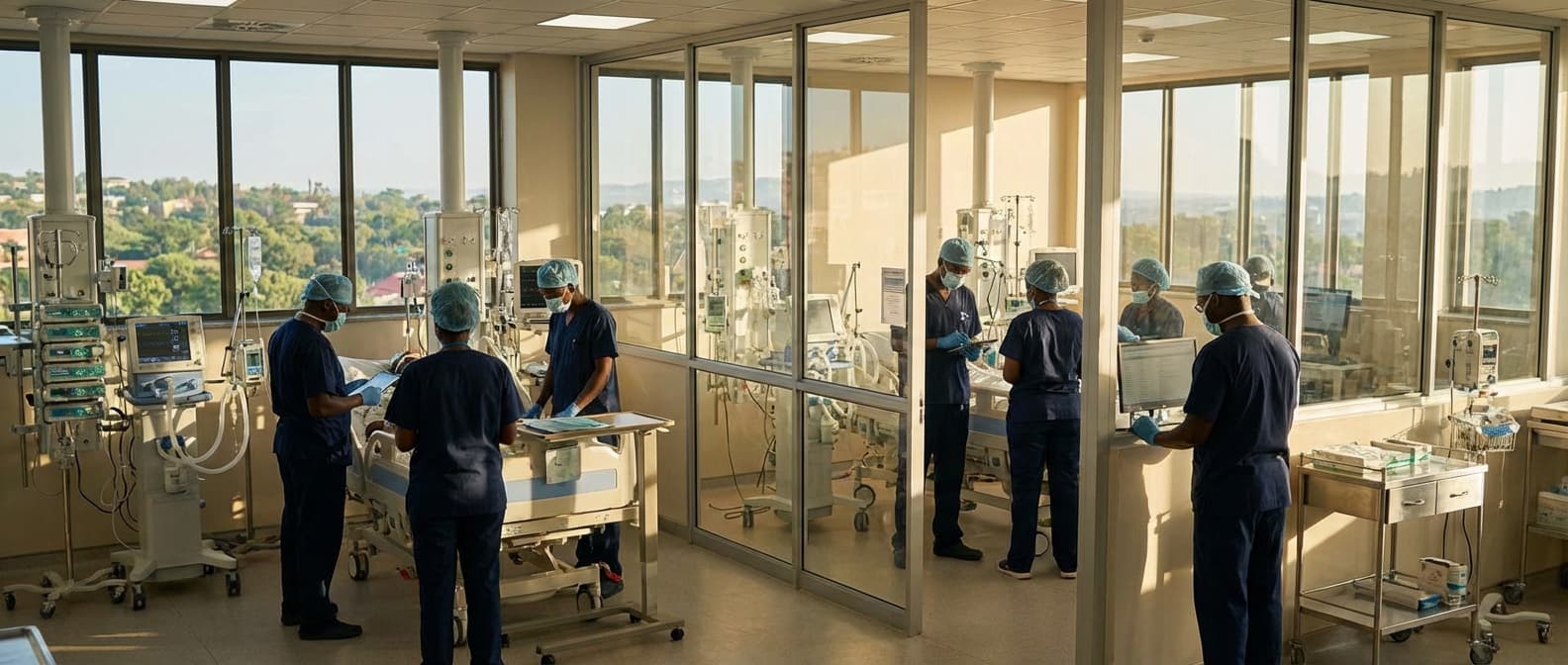
Ventilator Fleet Management & PM in Morocco
Engineering Excellence & Technical Support
Preventive maintenance and fleet management for ICU ventilators High-standard technical execution following OEM protocols and local regulatory frameworks.
Proactive PM Scheduling & Optimization
Leveraging advanced analytics, our system schedules and optimizes preventive maintenance for the entire ventilator fleet across Morocco. This ensures minimal downtime, extends equipment lifespan, and proactively addresses potential failures before they impact patient care, crucial for remote or underserved areas.
Real-time Fleet Performance Monitoring
Gain instant visibility into the operational status and performance of every ventilator in Morocco through our real-time monitoring dashboard. Track key metrics, identify anomalies, and receive immediate alerts for any deviations, enabling rapid response and informed decision-making for optimal resource allocation.
Centralized Asset Tracking & Lifecycle Management
Our platform provides a comprehensive, centralized database for tracking every ventilator's location, maintenance history, and lifecycle. This empowers efficient asset allocation, simplifies inventory management, and supports strategic planning for future fleet upgrades and replacements, ensuring a resilient healthcare infrastructure in Morocco.
What Is Ventilator Fleet Management & Pm In Morocco?
Ventilator Fleet Management & Preventive Maintenance (PM) in Morocco refers to the comprehensive operational oversight and scheduled servicing of mechanical ventilators used in healthcare settings across the Kingdom. This service encompasses the entire lifecycle of the ventilator asset, from initial procurement and deployment to routine maintenance, calibration, repair, and eventual decommissioning. The primary objective is to ensure the continuous availability, optimal performance, and safety of these critical medical devices, thereby supporting patient care and mitigating operational risks within healthcare institutions.
| Who Needs Ventilator Fleet Management & PM | Typical Use Cases | ||
|---|---|---|---|
| Hospitals (Public and Private): Critical care units (ICUs), emergency departments, operating rooms, neonatal intensive care units (NICUs), respiratory therapy departments. | Ensuring uninterrupted mechanical ventilation for patients with respiratory failure due to conditions like ARDS, COPD exacerbations, pneumonia, post-surgical recovery, and neurological disorders. | Maintaining a readiness posture for mass casualty events or public health emergencies requiring surge capacity for mechanical ventilation. | Facilitating the deployment and maintenance of ventilators in remote or underserved areas through mobile clinics or outreach programs. |
| Clinics and Outpatient Facilities with In-House Ventilator Support: Specialized clinics requiring short-term or intermittent mechanical ventilation. | Supporting patients undergoing prolonged weaning from mechanical ventilation in specialized rehabilitation centers. | Facilitating the use of ventilators for diagnostic procedures or non-invasive ventilation support in specific clinical pathways. | |
| Government Health Agencies and Ministries: Overseeing national healthcare infrastructure and ensuring equipment standards. | Procurement and management of national ventilator stockpiles for emergency preparedness. | Establishing and enforcing technical standards for medical equipment, including ventilators, across the country. | |
| Medical Equipment Service Providers and Distributors: Companies offering third-party maintenance and support services. | Providing specialized technical expertise and resources that in-house teams may lack. | Managing fleets for multiple healthcare providers to achieve economies of scale and specialized maintenance capabilities. |
Key Components of Ventilator Fleet Management & PM in Morocco
- Asset Inventory and Tracking: Maintaining a detailed database of all ventilators, including make, model, serial number, acquisition date, location, and service history. Real-time tracking for immediate asset location and status.
- Preventive Maintenance Scheduling and Execution: Developing and adhering to manufacturer-recommended and regulatory-compliant PM schedules. This includes inspections, cleaning, lubrication, functional testing, and replacement of worn parts.
- Calibration and Performance Verification: Ensuring ventilators are calibrated to precise specifications to deliver accurate ventilatory support. Regular performance verification confirms adherence to operational parameters.
- Corrective Maintenance and Repair: Rapid response to equipment malfunctions, including diagnosis, troubleshooting, and repair. This involves managing spare parts inventory and coordinating with certified technicians.
- Regulatory Compliance and Documentation: Ensuring all maintenance activities and device performance meet national (e.g., Ministry of Health regulations) and international standards. Maintaining meticulous records for audit and compliance purposes.
- End-of-Life Management: Planning for the disposal or replacement of ventilators that have reached their service life or become obsolete, in accordance with environmental and safety regulations.
- Training and Competency Assurance: Providing or facilitating training for biomedical engineers and technicians responsible for operating and maintaining the ventilators.
- Risk Management: Proactive identification and mitigation of risks associated with ventilator failure, such as patient harm, increased treatment costs, and reputational damage.
- Cost Optimization: Implementing strategies to manage maintenance costs, optimize spare parts inventory, and extend the useful life of equipment.
Who Needs Ventilator Fleet Management & Pm In Morocco?
Efficiently managing a fleet of medical ventilators is crucial for ensuring patient care continuity, optimizing resource allocation, and minimizing operational costs. In Morocco, where healthcare infrastructure is continuously developing, a robust ventilator fleet management and preventative maintenance (PM) program is not just a luxury but a necessity. This is particularly true for public and private healthcare institutions that rely heavily on these life-sustaining devices.
| Customer Segment | Key Departments Involved | Specific Needs & Benefits |
|---|---|---|
| Public Hospitals & Healthcare Centers | Biomedical Engineering Department, Respiratory Therapy Department, Procurement Department, IT Department, Hospital Administration | Ensuring availability during peak demand (e.g., pandemics), extending equipment lifespan, reducing repair costs, compliance with national healthcare standards, efficient inventory tracking, data-driven decision-making for upgrades and replacements. |
| Private Hospitals & Clinics | Clinical Engineering Department, Respiratory Care Unit, Operations Management, Finance Department | Maintaining high-quality patient care, competitive service offering, maximizing return on investment for expensive equipment, minimizing downtime, proactive identification of potential failures, ensuring regulatory compliance. |
| Emergency Medical Services (EMS) & Ambulance Services | Operations Management, Fleet Management, Biomedical Technicians (if in-house) | Ensuring immediate readiness of ventilators for transport, reliable performance in critical situations, ease of use and rapid deployment, training for field personnel, maintaining operational readiness of mobile units. |
| Field Hospitals & Temporary Medical Facilities | Logistics Department, Medical Operations, Biomedical Support | Rapid setup and deployment of ventilators, ensuring functionality in diverse environments, efficient maintenance and repair capabilities in temporary settings, managing a transient fleet. |
| Medical Equipment Leasing Companies | Asset Management, Maintenance & Repair Department, Sales & Customer Service | Maximizing equipment utilization, proactive maintenance to prevent costly repairs and downtime for lessees, efficient scheduling of PM services, tracking equipment location and status, ensuring compliance with lease agreements. |
| Medical Device Manufacturers & Service Providers | Field Service Department, Technical Support, Sales Department, Product Management | Providing reliable and efficient PM services to their clients, identifying recurring issues for product improvement, offering value-added service contracts, building strong customer relationships, ensuring optimal performance of their manufactured devices. |
Target Customers & Departments for Ventilator Fleet Management & PM in Morocco
- Public Hospitals & Healthcare Centers
- Private Hospitals & Clinics
- Emergency Medical Services (EMS) & Ambulance Services
- Field Hospitals & Temporary Medical Facilities
- Medical Equipment Leasing Companies
- Medical Device Manufacturers & Service Providers
Ventilator Fleet Management & Pm Process In Morocco
Managing a ventilator fleet in Morocco involves a structured workflow from initial inquiry to final execution of maintenance and repairs. This process ensures the availability and optimal functioning of critical medical equipment, ultimately supporting patient care. The workflow is designed to be efficient, transparent, and compliant with relevant regulations.
| Stage | Description | Key Activities | Responsible Party | Key Outputs/Deliverables | Typical Timeframe |
|---|---|---|---|---|---|
| Inquiry & Request Initiation | The process begins when a need for ventilator service (preventive maintenance or repair) is identified. | Hospital/Clinic identifies need, contacts service provider/internal team, provides initial details of the issue. | Hospital/Clinic Staff, Biomedical Technician (initial contact) | Initial service request/ticket | Immediate to 24 hours |
| Assessment & Prioritization | The request is evaluated to determine the urgency and type of service required. | Technician/Supervisor assesses the reported issue, gathers more information, categorizes the request (e.g., critical, routine). | Biomedical Technician, Service Supervisor | Assessed issue, priority level assigned | 1-4 hours |
| Work Order Generation | A formal work order is created to document the service request and authorize work. | Details of the request, patient impact, required parts, estimated time, and technician assigned are entered into the system. | Service Coordinator, Supervisor | Generated work order | 1-2 hours |
| Scheduling & Resource Allocation | The work order is scheduled, and necessary resources (technicians, tools, parts) are allocated. | Scheduling based on priority, technician availability, and location. Parts are checked against inventory. | Service Coordinator, Logistics Manager | Scheduled service date/time, assigned technician | 1-24 hours (depending on urgency) |
| Preventive Maintenance (PM) Execution | Scheduled inspections and maintenance tasks are performed to ensure optimal performance and longevity. | Cleaning, calibration, functional checks, software updates, replacement of wear-and-tear parts as per manufacturer guidelines. | Biomedical Technician | Completed PM checklist, updated equipment log | 1-4 hours per ventilator |
| Corrective Maintenance (CM) Execution | Unscheduled repairs are performed to address malfunctions or breakdowns. | Diagnosis of the fault, repair or replacement of faulty components, functional testing. | Biomedical Technician | Repaired ventilator, service report detailing the repair | 2-8 hours (can vary significantly) |
| Parts Procurement & Inventory Management | If replacement parts are needed, they are procured and managed efficiently. | Checking inventory, raising purchase orders for new parts, receiving and inspecting parts, updating inventory records. | Procurement Officer, Inventory Manager, Technician | Necessary parts acquired, updated inventory levels | 1-5 days (depending on part availability and procurement process) |
| Testing & Validation | After maintenance or repair, the ventilator is thoroughly tested to ensure it meets all performance standards. | Running diagnostics, simulating breathing modes, verifying alarms, ensuring compliance with safety standards. | Biomedical Technician | Successful test results, calibrated equipment | 1-3 hours |
| Documentation & Reporting | All activities, findings, and outcomes are meticulously documented. | Updating service records, generating reports for the hospital, maintaining maintenance history for each ventilator. | Biomedical Technician, Service Administrator | Service reports, updated maintenance logs, historical data | Ongoing throughout the process, finalized at closure |
| Billing & Closure | Once the service is complete and validated, the work order is closed, and billing is processed. | Reviewing work order details, generating invoices, obtaining client approval, closing the work order in the system. | Service Administrator, Finance Department | Closed work order, processed invoice | 1-3 days |
Ventilator Fleet Management & PM Process Workflow in Morocco
- Inquiry & Request Initiation
- Assessment & Prioritization
- Work Order Generation
- Scheduling & Resource Allocation
- Preventive Maintenance (PM) Execution
- Corrective Maintenance (CM) Execution
- Parts Procurement & Inventory Management
- Testing & Validation
- Documentation & Reporting
- Billing & Closure
Ventilator Fleet Management & Pm Cost In Morocco
Managing ventilator fleets in Morocco involves a complex interplay of acquisition costs, maintenance strategies, and operational efficiency. Preventive Maintenance (PM) is crucial for ensuring the reliability and longevity of these vital medical devices. The cost of PM for ventilators in Morocco is influenced by several factors, including the type and age of the ventilator, the complexity of its technology, the availability of spare parts, and the service provider's expertise and location. The local currency, the Moroccan Dirham (MAD), is used for all transactions. Regular PM typically involves calibration, cleaning, functional testing, and replacement of worn-out components. Emergency repairs and unscheduled maintenance will incur higher costs due to the urgency and potential need for specialized technicians and expedited parts. The pricing ranges can vary significantly, but generally, a single PM service for a standard adult ventilator might fall within a certain bracket, while more advanced critical care ventilators or specialized neonatal units could command higher fees. The overall fleet management strategy also impacts PM costs, with bulk service contracts or in-house maintenance teams potentially offering cost efficiencies.
| Service Type | Estimated Price Range (MAD) | Notes |
|---|---|---|
| Preventive Maintenance (Standard Adult Ventilator - Annual) | 1,500 - 4,000 | Includes calibration, cleaning, functional tests, filter replacement. |
| Preventive Maintenance (Advanced ICU Ventilator - Annual) | 3,000 - 7,000 | More complex diagnostics, sensor checks, software updates may be included. |
| Preventive Maintenance (Neonatal/Pediatric Ventilator - Annual) | 2,500 - 6,000 | Requires specialized calibration and handling. |
| Emergency Repair (Hourly Rate - Technician) | 300 - 700 | Excludes cost of parts. May have minimum call-out fees. |
| Cost of Common Spare Parts (per unit) | 200 - 1,500 | e.g., sensors, filters, batteries, tubing sets. Varies greatly by part and model. |
| Full Service Contract (per ventilator per year) | 5,000 - 15,000+ | Can include PM, labor for repairs, and sometimes parts. Highly variable based on coverage and ventilator type. |
| On-site Training for Biomedical Staff | 2,000 - 8,000 | Per session/course, depends on the manufacturer and complexity. |
Key Factors Influencing Ventilator PM Costs in Morocco
- Ventilator Type and Model (e.g., adult, pediatric, neonatal, ICU, transport)
- Age and Condition of the Ventilator
- Technological Complexity (e.g., invasive vs. non-invasive, advanced monitoring features)
- Availability and Cost of Original Manufacturer's Spare Parts
- Service Provider (e.g., hospital's in-house biomedical team, authorized service agent, third-party provider)
- Geographic Location of Service (urban vs. rural, travel costs for technicians)
- Frequency of PM (annual, semi-annual, based on usage hours)
- Scope of PM Services (basic check-up vs. comprehensive overhaul)
- Service Contract Agreements (e.g., extended warranty, full-service contracts)
- Urgency of Repair (emergency vs. scheduled maintenance)
Affordable Ventilator Fleet Management & Pm Options
Managing a ventilator fleet effectively is crucial for patient care and operational efficiency. This involves not only proactive maintenance to ensure device readiness but also strategic procurement and lifecycle management. Affordable ventilator fleet management and Preventative Maintenance (PM) options focus on maximizing the lifespan of equipment, minimizing downtime, and controlling costs. Value bundles are designed to offer comprehensive services at a predictable price point, while cost-saving strategies encompass a range of approaches from vendor negotiation to internal process optimization.
| Value Bundle Component | Description | Cost-Saving Strategy/Benefit |
|---|---|---|
| Comprehensive PM Service Contract | Includes scheduled PM, labor, and travel for all ventilators. | Predictable budgeting, reduced emergency repair costs, extended equipment lifespan, improved device uptime. |
| Extended Warranty/Service Agreements | Covers repairs beyond the standard manufacturer warranty. | Protects against unexpected high repair costs, allows for long-term cost planning. |
| Bundled Parts & Consumables | Includes common replacement parts and critical consumables as part of a service package. | Bulk purchasing discounts, reduced lead times for repairs, minimized inventory holding costs. |
| On-site Biomedical Technician Support (Partial/Full) | Dedicated or shared technician resources for routine maintenance and minor repairs. | Faster response times, reduced travel costs for external technicians, increased device availability. |
| Remote Monitoring & Diagnostics | Leverages technology to monitor ventilator performance and identify potential issues remotely. | Proactive intervention, reduced need for on-site visits, optimized technician deployment. |
| Equipment Refurbishment & Remarketing | Services to extend the life of older ventilators or manage their disposal. | Reduced capital expenditure for new equipment, potential revenue from remarketing used devices. |
| Consolidated Vendor Agreements | Negotiating a single contract with a vendor for PM, parts, and potentially repairs. | Increased negotiation leverage, simplified procurement, potential volume discounts. |
| Internal Training & Skill Development | Investing in training biomedical staff for specific ventilator models. | Reduced reliance on external service providers, faster repair times, lower labor costs for routine tasks. |
| Strategic Procurement & Leasing Options | Exploring options beyond outright purchase, such as leasing or group purchasing organizations (GPOs). | Lower upfront capital investment, flexibility in fleet size, access to better pricing through GPOs. |
Key Components of Affordable Ventilator Fleet Management & PM
- Preventative Maintenance (PM) Programs: Scheduled inspections, calibration, and servicing to identify and address potential issues before they lead to failure.
- Corrective Maintenance: Efficient and cost-effective repair services for unexpected breakdowns.
- Asset Tracking & Inventory Management: Software and processes to monitor equipment location, status, and utilization.
- Lifecycle Management: Strategic planning for acquisition, deployment, maintenance, and eventual replacement of ventilators.
- Staff Training & Competency: Ensuring biomedical staff are adequately trained to perform PM and basic repairs.
- Parts Management & Sourcing: Securing reliable and affordable access to spare parts.
Verified Providers In Morocco
In the realm of healthcare tourism, securing access to reliable and high-quality medical services is paramount. Morocco has emerged as a significant destination, attracting international patients seeking specialized treatments and procedures. When considering healthcare options in Morocco, the term "Verified Providers" signifies a crucial standard. These providers have undergone rigorous vetting processes, ensuring they meet stringent criteria for medical expertise, patient safety, ethical practices, and facility standards. Franance Health stands out as a prominent entity dedicated to connecting patients with such verified healthcare professionals and institutions across Morocco. Their commitment to credentialing and quality assurance makes them an exceptional partner for individuals seeking medical care abroad.
| Key Aspect | Franance Health's Verification Standard | Benefit for Patients |
|---|---|---|
| Medical Qualifications | Verification of board certifications, specialist training, and extensive experience. | Ensures treatment by highly skilled and knowledgeable medical professionals. |
| Facility Standards | Assessment of hospital and clinic infrastructure, equipment, and adherence to international safety guidelines. | Provides access to safe, clean, and technologically advanced healthcare environments. |
| Patient Care Protocols | Review of patient safety measures, infection control procedures, and ethical treatment guidelines. | Guarantees a secure and respectful healthcare experience with a focus on patient well-being. |
| Reputation and Track Record | Gathering feedback and testimonials from past patients, alongside a review of professional history. | Offers confidence in the provider's reliability and proven success in delivering quality care. |
Why Franance Health Credentials Represent the Best Choice:
- Rigorous Vetting Process: Franance Health meticulously evaluates healthcare providers, examining their accreditations, certifications, and professional qualifications. This ensures that only the most competent and experienced medical practitioners are included in their network.
- Commitment to Patient Safety: Patient well-being is at the forefront of Franance Health's mission. They prioritize providers who demonstrate a strong commitment to infection control, safety protocols, and transparent communication regarding treatment risks and benefits.
- Access to Advanced Facilities: Franance Health partners with clinics and hospitals equipped with modern medical technology and state-of-the-art equipment, crucial for delivering effective and advanced treatments.
- Ethical Practices and Transparency: Providers affiliated with Franance Health are expected to adhere to the highest ethical standards, including fair pricing, informed consent, and respectful patient care. Transparency in all aspects of treatment and billing is a key requirement.
- Comprehensive Support Services: Beyond medical care, Franance Health often facilitates a seamless patient journey, offering services such as travel arrangements, accommodation, and post-operative follow-up, ensuring a stress-free experience.
- Specialized Medical Expertise: Franance Health's network encompasses a wide range of medical specialties, allowing them to cater to diverse patient needs, from complex surgeries to specialized diagnostics.
Scope Of Work For Ventilator Fleet Management & Pm
This document outlines the Scope of Work (SOW) for Ventilator Fleet Management and Preventive Maintenance (PM). It details the technical deliverables and standard specifications required to ensure the optimal performance, reliability, and safety of the healthcare facility's ventilator fleet. The scope encompasses comprehensive fleet management strategies and routine preventive maintenance activities, aiming to minimize downtime, extend equipment lifespan, and maintain regulatory compliance.
| Category | Deliverables | Standard Specifications / Requirements | |||
|---|---|---|---|---|---|
| Fleet Inventory Management | Comprehensive Ventilator Inventory Database | Real-time tracking of all ventilators (model, serial number, location, acquisition date, warranty status, service history). Secure, accessible database (e.g., CMMS). | Regular (e.g., quarterly) inventory audits and updates. | ||
| Preventive Maintenance (PM) Program | Scheduled PM Procedures | Adherence to manufacturer's recommended PM schedules and procedures for each ventilator model. Detailed PM checklists for each model. | Timely execution of PM tasks based on usage hours or calendar intervals. | Calibration and functional testing of all critical parameters (e.g., tidal volume, respiratory rate, PEEP, FiO2). | Replacement of worn or expired parts (e.g., filters, batteries, tubing) as per manufacturer guidelines. |
| Corrective Maintenance (CM) | Rapid Response to Malfunctions | Establishment of Service Level Agreements (SLAs) for response times to reported malfunctions (e.g., within 2 hours for critical equipment). | Diagnosis and repair of ventilator faults by certified technicians. | Use of OEM or equivalent approved replacement parts. | Post-repair testing and validation of all ventilator functions. |
| Calibration and Performance Verification | Regular Calibration Services | Annual or bi-annual calibration of all ventilators by accredited third-party calibration services or in-house certified technicians. | Traceable calibration certificates to national/international standards. | Performance verification against documented specifications. | |
| Safety and Regulatory Compliance | Compliance Documentation | Ensuring all maintenance activities comply with relevant safety standards (e.g., IEC 60601 series) and regulatory requirements (e.g., FDA, local health authorities). | Maintenance of all required documentation for audits and inspections. | Regular review and update of PM procedures based on new regulations or manufacturer advisories. | |
| Technical Support and Training | Technician Training Records | Ensuring all technicians performing maintenance are adequately trained and certified on specific ventilator models. | Provision of access to technical manuals and schematics. | Support for clinical staff on basic ventilator operation and troubleshooting. | |
| Reporting and Documentation | Service Reports | Detailed service reports for each PM and CM activity, including date, technician, work performed, parts used, test results, and any recommendations. | Summary reports on fleet status, PM completion rates, downtime, and repair costs (e.g., monthly, quarterly). | Maintenance of comprehensive service history for each device. | |
| Risk Management | Failure Mode and Effects Analysis (FMEA) | Periodic review of potential failure modes and their impact on patient care. | Development and implementation of mitigation strategies. | ||
| Spare Parts Management | Inventory of Critical Spare Parts | Maintaining an adequate stock of critical and frequently used spare parts to minimize repair turnaround times. | Just-in-time (JIT) inventory management for less common parts. |
Key Objectives
- Ensure continuous availability and optimal performance of all ventilators.
- Minimize unexpected equipment failures and associated downtime.
- Extend the operational lifespan of the ventilator fleet.
- Maintain compliance with all relevant regulatory standards and manufacturer recommendations.
- Provide accurate and up-to-date inventory and service records.
- Optimize resource allocation for maintenance and repair activities.
- Enhance patient safety through reliable equipment function.
Service Level Agreement For Ventilator Fleet Management & Pm
This Service Level Agreement (SLA) outlines the performance commitments for Ventilator Fleet Management & Preventive Maintenance (PM) services. It defines the expected response times for critical issues and the uptime guarantees for the managed ventilator fleet.
| Service Component | Service Level Objective (SLO) | Measurement Criteria | Reporting Frequency |
|---|---|---|---|
| Critical Issue Response Time | 1 Hour | Time from client notification to service technician on-site or remote diagnostics initiated. | Monthly |
| Critical Issue Resolution Time | 4 Hours (for on-site intervention) | Time from on-site arrival of technician to functional restoration or agreed temporary solution. For remote issues, time to full remote resolution. | Monthly |
| Non-Critical Issue Response Time | 4 Business Hours | Time from client notification to service technician on-site or remote diagnostics initiated. | Monthly |
| Scheduled PM Completion | 98% of scheduled PMs completed on time | Percentage of scheduled PM tasks completed within the agreed-upon timeframe. | Quarterly |
| Ventilator Fleet Uptime Guarantee | 99.5% | Percentage of total operational time the entire managed ventilator fleet is available and functional. | Monthly |
| Parts Availability for Repairs | 95% of common spare parts in stock | Percentage of common and critical spare parts readily available in inventory for timely repairs. | Quarterly |
Key Definitions
- Ventilator Fleet: All ventilators owned or leased by the client and managed under this agreement.
- Preventive Maintenance (PM): Scheduled maintenance activities performed on ventilators to ensure optimal performance and prevent failures.
- Critical Issue: A situation where a ventilator is malfunctioning, causing a disruption to patient care, or is non-operational and immediately required for patient use.
- Response Time: The maximum allowable time from the notification of an issue by the client to the initiation of action by the service provider.
- Resolution Time: The maximum allowable time from the initiation of action to the restoration of full functionality or a mutually agreed-upon temporary solution.
- Downtime: The period during which a ventilator is non-operational and unavailable for patient use.
- Uptime Guarantee: The minimum percentage of time the ventilator fleet is expected to be operational.
Frequently Asked Questions

Ready when you are
Let's scope your Ventilator Fleet Management & PM in Morocco project in Morocco.

Scaling healthcare logistics and technical systems across the entire continent.