
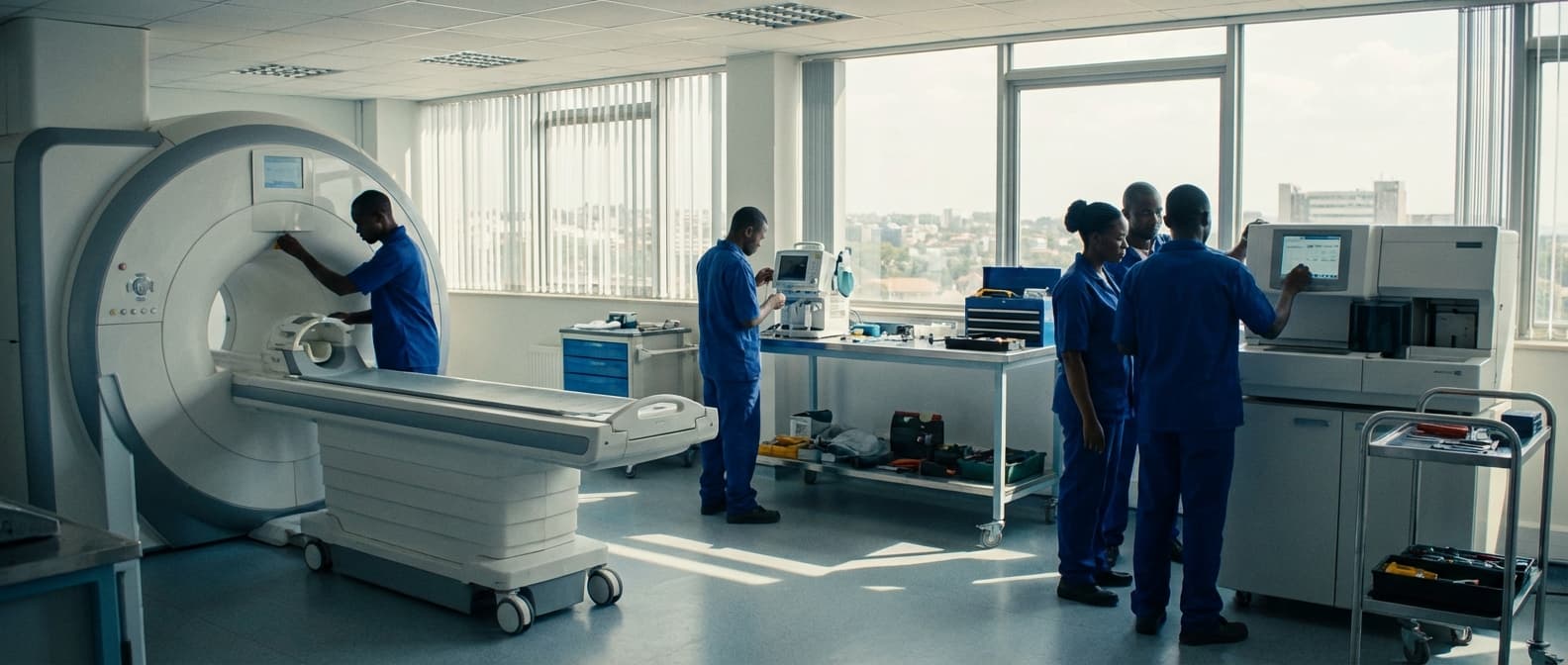
Planned Shutdown Coordination Service for Critical Equipment in Morocco
Engineering Excellence & Technical Support
Planned Shutdown Coordination Service for Critical Equipment High-standard technical execution following OEM protocols and local regulatory frameworks.
Optimized Downtime Minimization
Leveraging advanced predictive analytics and historical data, we identify optimal shutdown windows for critical equipment, minimizing production impact and maximizing uptime across Morocco's industrial landscape.
Seamless Cross-Industry Integration
Our service integrates seamlessly with diverse Moroccan industries, from energy and manufacturing to agriculture, ensuring coordinated shutdown planning that respects each sector's unique operational demands and regulatory frameworks.
Proactive Risk Mitigation & Compliance
Our service proactively identifies and mitigates risks associated with equipment downtime, ensuring adherence to Moroccan safety regulations and environmental standards, providing a secure and compliant operational environment for all stakeholders.
What Is Planned Shutdown Coordination Service For Critical Equipment In Morocco?
Planned Shutdown Coordination Service for Critical Equipment in Morocco refers to a specialized operational and logistical framework designed to manage the scheduled cessation of operations for essential industrial and infrastructure assets. This service encompasses the meticulous planning, execution, and post-shutdown activities associated with scheduled maintenance, upgrades, regulatory compliance checks, or asset decommissioning. The primary objective is to minimize disruption to essential services, optimize resource allocation, and ensure the safe and efficient return of equipment to operational status within predefined timelines. This service is indispensable for entities operating or responsible for critical infrastructure and high-availability industrial processes, where unscheduled downtime carries substantial economic, safety, and societal repercussions.
| Target Sector/Industry | Critical Equipment Examples | Typical Use Cases |
|---|---|---|
| Energy (Oil & Gas, Power Generation) | Refinery units (distillation, cracking), Turbines, Boilers, Substations, High-voltage transmission lines | Routine maintenance and inspection, catalyst replacement, equipment upgrades, regulatory compliance audits, de-bottlenecking projects. |
| Water & Wastewater Treatment | Pumps, filtration systems, treatment reactors, desalination plants, distribution networks | Sludge removal, membrane replacement, equipment refurbishment, capacity expansion, emergency system checks. |
| Telecommunications & Broadcasting | Core network switches, transmission towers, satellite ground stations, broadcasting transmitters | Hardware upgrades, software patching, network infrastructure enhancements, antenna maintenance. |
| Industrial Manufacturing (e.g., Automotive, Chemicals, Cement) | Production lines, robotic systems, kilns, chemical reactors, heavy machinery | Preventive maintenance, process optimization, technology integration, safety system overhauls. |
| Transportation Infrastructure (e.g., Airports, Ports, Railways) | Air traffic control systems, port cranes, railway signaling, tunnel ventilation systems | Component replacement, system modernization, structural integrity checks, security system upgrades. |
Key Components of Planned Shutdown Coordination Service
- Scope Definition & Objective Setting: Establishing clear parameters for the shutdown, including specific equipment, duration, and desired outcomes.
- Integrated Planning & Scheduling: Developing a detailed, multi-disciplinary work breakdown structure (WBS) and Gantt charts, incorporating vendor schedules, labor availability, and material procurement.
- Risk Assessment & Mitigation: Identifying potential hazards, operational risks, and contingency plans for unforeseen issues during the shutdown period.
- Resource Management: Coordinating human resources (internal teams, external contractors, specialists), specialized tools, equipment, and consumables.
- Permit & Regulatory Compliance: Securing all necessary permits, licenses, and ensuring adherence to Moroccan and international safety and environmental regulations.
- Logistics & Supply Chain Management: Overseeing the procurement, delivery, and staging of spare parts, materials, and specialized services.
- Communication & Stakeholder Management: Establishing clear communication channels with all relevant parties, including internal departments, regulatory bodies, and external service providers.
- Execution Oversight: Providing on-site project management and technical supervision to ensure work progresses according to plan and safety protocols are maintained.
- Quality Assurance & Control: Implementing inspection and testing procedures to verify the integrity and functionality of equipment post-maintenance.
- Post-Shutdown Review & Optimization: Conducting a thorough review of the shutdown process, documenting lessons learned, and identifying areas for future efficiency improvements.
Who Needs Planned Shutdown Coordination Service For Critical Equipment In Morocco?
In Morocco's dynamic industrial landscape, ensuring the uninterrupted operation of critical equipment is paramount for maintaining productivity, safety, and profitability. Planned shutdown coordination services are essential for organizations that rely on complex machinery and infrastructure, offering expert management of scheduled maintenance and downtime to minimize disruption. This service is specifically designed for entities in Morocco facing the challenges of aging infrastructure, increasing regulatory compliance demands, and the need for sophisticated operational efficiency.
| Industry Sector | Critical Equipment Examples | Key Departments Involved | Why Planned Shutdown Coordination is Crucial |
|---|---|---|---|
| Oil & Gas (Onshore & Offshore) | Refineries, extraction units, pipelines, processing plants | Operations, Maintenance, Engineering, HSE (Health, Safety, Environment) | Preventing catastrophic failures, ensuring regulatory compliance, optimizing production schedules, minimizing environmental risks. |
| Power Generation & Distribution | Turbines, generators, transformers, transmission lines, substations | Operations, Asset Management, Maintenance, Grid Control | Maintaining grid stability, ensuring reliable energy supply, meeting peak demand, adhering to safety standards. |
| Mining & Metallurgy | Crushers, mills, conveyors, smelting furnaces, processing machinery | Production, Maintenance, Engineering, Safety | Maximizing ore throughput, preventing equipment damage, ensuring worker safety in hazardous environments, optimizing resource extraction. |
| Manufacturing (Automotive, Pharmaceuticals, Food & Beverage) | Production lines, robotic systems, specialized machinery, quality control equipment | Production, Operations, Maintenance, Quality Assurance, Supply Chain | Minimizing production loss, ensuring product quality, maintaining efficient supply chains, adhering to industry-specific regulations. |
| Water & Wastewater Treatment | Pumps, filtration systems, treatment reactors, distribution networks | Operations, Maintenance, Engineering, Environmental Compliance | Ensuring public health and safety, preventing contamination, meeting environmental discharge standards, maintaining service continuity. |
| Telecommunications & Data Centers | Servers, network infrastructure, cooling systems, power backup units | IT Operations, Network Engineering, Facilities Management, Security | Ensuring network uptime, protecting sensitive data, preventing service interruptions, managing energy consumption. |
| Transportation Infrastructure (Ports, Airports) | Cranes, baggage handling systems, control towers, navigation equipment | Operations, Maintenance, Engineering, Safety | Maintaining efficient flow of goods and passengers, ensuring safety of operations, minimizing delays, managing complex logistical operations. |
Target Customers & Departments in Morocco
- Organizations with high-value or continuously operating critical equipment.
- Businesses operating in sectors with significant downtime costs.
- Companies subject to stringent safety and environmental regulations.
- Entities undergoing modernization or expansion projects requiring careful downtime management.
- Government or public sector entities responsible for essential infrastructure.
Planned Shutdown Coordination Service For Critical Equipment Process In Morocco
The Planned Shutdown Coordination Service for Critical Equipment Process in Morocco is a comprehensive workflow designed to ensure the safe, efficient, and timely execution of planned shutdowns for essential industrial machinery. This service is crucial for minimizing operational disruptions, optimizing maintenance activities, and prolonging the lifespan of critical assets within Moroccan industries.
| Stage | Key Activities | Responsible Parties | Deliverables/Outcomes |
|---|---|---|---|
| 1. Inquiry and Initial Consultation | Client expresses need for a planned shutdown. Discussion of equipment, reasons for shutdown, desired timeframe, and initial concerns. Site visit may be conducted for preliminary assessment. | Client (Facility Manager, Maintenance Head), Service Provider (Business Development, Technical Lead) | Understanding of client needs, preliminary feasibility assessment, proposal generation initiated. |
| 2. Scope Definition and Planning | Detailed assessment of equipment requiring shutdown, specific maintenance tasks, safety protocols, regulatory compliance checks (Moroccan standards). Development of detailed work packages, schedules, and risk assessments. Identification of dependencies and critical path. Procurement of long-lead items. Client review and approval of the shutdown plan. | Service Provider (Project Manager, Engineers, Safety Officers), Client (Maintenance, Operations, Safety) | Approved shutdown plan, detailed schedule, risk register, bill of materials, safety procedures, communication plan. |
| 3. Resource Allocation and Mobilization | Identification and securing of skilled labor (technicians, supervisors, specialized personnel). Procurement of necessary tools, equipment, and materials. Logistics planning for personnel and equipment transportation to the site in Morocco. Setting up site facilities (offices, accommodation if needed). | Service Provider (Project Manager, Procurement, Logistics), Client (Site Access Coordination) | Mobilized workforce, all required tools and materials on-site, established site infrastructure. |
| 4. Pre-Shutdown Preparations | Issuance of work permits. Pre-shutdown safety briefings and toolbox talks. Isolation and lockout/tagout procedures for equipment. Final site inspections. Confirmation of emergency response readiness. Pre-shutdown system checks and verification. | Service Provider (Supervisors, Safety Officers), Client (Operations, Safety) | Safe and prepared work environment, confirmed isolation of equipment, readiness for commencement of shutdown tasks. |
| 5. Shutdown Execution | Implementation of planned maintenance tasks (inspections, repairs, replacements, cleaning). Continuous monitoring of progress against the schedule. Strict adherence to safety procedures. Daily progress meetings and issue resolution. Management of unforeseen challenges and changes. | Service Provider (All On-site Personnel), Client (Oversight, Approval of Deviations) | Completion of all scheduled maintenance tasks, minimal safety incidents, timely execution within agreed tolerances. |
| 6. Post-Shutdown Activities | Reassembly and recommissioning of equipment. System testing and performance verification. Final safety checks and sign-offs. Demobilization of personnel and equipment. Site cleanup and restoration. | Service Provider (Engineers, Technicians), Client (Operations, Quality Control) | Fully functional and tested equipment, safe handover to operations, clean and restored site. |
| 7. Reporting and Analysis | Preparation of a comprehensive shutdown report including actual vs. planned schedule, work completed, costs incurred, lessons learned, and recommendations for future shutdowns. Performance analysis and client feedback collection. Documentation archiving. | Service Provider (Project Manager, Administration), Client (Review and Acceptance) | Final shutdown report, historical data for future planning, client satisfaction. |
Workflow Stages
- 1. Inquiry and Initial Consultation:
- 2. Scope Definition and Planning:
- 3. Resource Allocation and Mobilization:
- 4. Pre-Shutdown Preparations:
- 5. Shutdown Execution:
- 6. Post-Shutdown Activities:
- 7. Reporting and Analysis:
Planned Shutdown Coordination Service For Critical Equipment Cost In Morocco
Coordinating planned shutdowns for critical equipment in Morocco requires a specialized service that ensures minimal disruption, safety, and efficient execution. The cost of such a service is influenced by several factors, leading to a range of pricing in Moroccan Dirhams (MAD). Understanding these factors is crucial for businesses budgeting for these essential maintenance operations.
| Service Component | Typical Range (MAD) | Notes |
|---|---|---|
| Project Management & Planning | 5,000 - 25,000+ per week | Varies significantly with project complexity and duration. Includes scheduling, resource allocation, stakeholder communication. |
| On-site Supervision & Coordination | 3,000 - 15,000+ per day | Depends on the number of personnel, expertise level, and shift patterns. |
| Safety Management & Compliance | 2,000 - 10,000+ per week | Includes safety officers, risk assessments, permit management, and safety training. |
| Technical Consultation & Expertise | 8,000 - 30,000+ per engagement | For specialized engineers or consultants brought in for specific critical equipment. |
| Logistics & Site Support | 1,000 - 8,000+ per day | Covers transportation, accommodation, temporary facilities, and equipment rental. |
| Reporting & Documentation | 3,000 - 15,000+ per shutdown | Includes detailed reports, analysis, and recommendations. |
| Emergency Preparedness | Included in overall cost, or an additional retainer of 1,000 - 5,000+ per week | Depends on the level of availability and response time. |
| Integrated Service Packages (Small-Medium Scale) | 20,000 - 100,000+ | For a typical planned shutdown of moderate complexity, covering a few days to a week. |
| Integrated Service Packages (Large-Scale/Complex) | 100,000 - 500,000+ | For extensive shutdowns of critical infrastructure, spanning weeks or months, involving multiple disciplines. |
Key Pricing Factors for Planned Shutdown Coordination Services in Morocco
- Scope of Work: The complexity and breadth of the shutdown activities, including the number and type of critical equipment involved, the extent of maintenance, repairs, or upgrades, and the required integration with other systems.
- Duration of the Shutdown: Longer planned shutdowns naturally incur higher coordination costs due to extended personnel presence, resource allocation, and potential project management overhead.
- Resource Requirements: The number and expertise of personnel needed, including project managers, engineers, safety officers, specialized technicians, and support staff. This also extends to the provision of specialized tools, equipment, and temporary infrastructure.
- Location and Accessibility: The geographical location of the critical equipment within Morocco and the ease of access to the site. Remote or challenging locations may require additional logistical planning and costs for travel, accommodation, and transportation.
- Safety and Regulatory Compliance: The stringency of safety protocols and regulatory requirements specific to the industry and the Moroccan context. Ensuring adherence to all standards adds to the coordination effort and may require specialized training or certifications.
- Risk Assessment and Mitigation: The level of risk associated with the shutdown. More complex or high-risk operations necessitate more extensive planning, contingency measures, and potentially higher insurance premiums, which are factored into the service cost.
- Technology and Software Integration: The use of advanced project management software, digital twins, or other technologies for planning, monitoring, and communication during the shutdown can influence pricing.
- Emergency Preparedness and Response: The level of preparedness for unforeseen issues and the availability of on-call emergency response teams as part of the coordination service.
- Reporting and Documentation: The extent and detail of post-shutdown reports, analysis, and documentation required by the client.
- Contractual Terms and Guarantees: The specific terms of the service agreement, including performance guarantees, penalties, and warranties, can impact the overall cost.
Affordable Planned Shutdown Coordination Service For Critical Equipment Options
Our Affordable Planned Shutdown Coordination Service is designed to minimize downtime and maximize the efficiency of your critical equipment maintenance. We offer flexible value bundles and implement cost-saving strategies to ensure you receive comprehensive support without breaking the budget. This service is crucial for industries relying on uninterrupted operations, helping to prevent costly emergency repairs and production losses.
| Cost-Saving Strategy | Description | Benefit to Client |
|---|---|---|
| Proactive Planning & Scheduling | Meticulous development of shutdown timelines, identifying critical path activities and potential bottlenecks to minimize overall duration. | Reduces lost production time and associated revenue loss. |
| Optimized Resource Allocation | Ensures the right personnel, tools, and materials are available at the right time, avoiding delays and unnecessary overtime costs. | Minimizes labor expenses and rental costs for equipment. |
| Preventive & Predictive Maintenance Integration | Incorporating regular maintenance tasks into the shutdown schedule, addressing potential issues before they lead to failures. | Avoids expensive emergency repairs and unplanned downtime. |
| Streamlined Vendor Management | Coordinating with external service providers efficiently, negotiating favorable rates, and ensuring timely delivery of parts and services. | Reduces procurement costs and potential delays from unmanaged vendors. |
| Pre-Shutdown Inspections & Audits | Identifying potential risks, safety hazards, and missing components before the shutdown begins. | Prevents costly rework and ensures a smoother, safer execution. |
| Post-Shutdown Analysis & Reporting | Detailed review of shutdown execution, lessons learned, and recommendations for future improvements. | Drives continuous operational efficiency and reduces future shutdown costs. |
Value Bundles:
- Basic Shutdown Management: Includes essential planning, scheduling, and on-site coordination for routine maintenance tasks. Ideal for smaller-scale or less complex shutdowns.
- Standard Shutdown Optimization: Builds upon the Basic bundle with enhanced risk assessment, detailed resource allocation, and pre-shutdown inspections to identify potential issues proactively.
- Premium Shutdown Excellence: Our most comprehensive offering, featuring advanced predictive maintenance integration, detailed post-shutdown analysis for continuous improvement, and dedicated project management for complex, multi-system overhauls.
- Customizable Bundles: We can tailor a package to your specific needs, combining elements from different bundles or adding specialized services like vendor management or safety compliance audits.
Verified Providers In Morocco
In the burgeoning healthcare landscape of Morocco, distinguishing between legitimate and fraudulent medical providers is paramount. Franance Health has emerged as a beacon of trust, meticulously vetting and accrediting healthcare facilities and professionals. This commitment to rigorous credentialing ensures that patients receive high-quality, safe, and ethical medical care. Franance Health's verification process goes beyond basic licensing, encompassing stringent evaluations of clinical expertise, patient safety protocols, ethical practices, and adherence to international standards. Choosing a Franance Health-verified provider means opting for transparency, accountability, and a superior healthcare experience.
| Credentialing Aspect | Franance Health's Rigor | Patient Benefit |
|---|---|---|
| Clinical Expertise | In-depth review of qualifications, experience, and ongoing training. | Ensures treatment by competent and up-to-date medical professionals. |
| Patient Safety Protocols | Scrutiny of infection control, emergency preparedness, and medical error prevention measures. | Minimizes risks and ensures a safe environment for treatment. |
| Ethical Practices | Verification of adherence to medical ethics, patient rights, and confidentiality. | Guarantees respectful, fair, and confidential patient interactions. |
| Facility Standards | Assessment of infrastructure, equipment, and hygiene of healthcare facilities. | Provides access to modern, well-maintained, and clean medical environments. |
| Regulatory Compliance | Confirmation of full compliance with Moroccan healthcare regulations and international best practices. | Ensures all legal and quality requirements are met for reliable care. |
Key Benefits of Choosing Franance Health Verified Providers:
- Unwavering commitment to patient safety and well-being.
- Access to highly skilled and experienced medical professionals.
- Adherence to international standards of care and ethical practices.
- Transparent and reliable healthcare services.
- Peace of mind knowing you are receiving care from a reputable institution.
Scope Of Work For Planned Shutdown Coordination Service For Critical Equipment
This Scope of Work (SOW) outlines the requirements for a Planned Shutdown Coordination Service for critical equipment. The service will ensure the safe, efficient, and timely execution of planned maintenance, repair, and upgrade activities during designated shutdown periods. This SOW details the technical deliverables and standard specifications expected from the service provider.
| Section | Deliverable | Description | Standard Specifications / Requirements |
|---|---|---|---|
| 1.0 Planning & Scheduling | Detailed Shutdown Plan | Comprehensive plan outlining all activities, timelines, resources, and dependencies for the planned shutdown. | Includes Gantt charts, critical path analysis, resource leveling, and contingency planning. Adherence to client's project management methodology. |
| 1.0 Planning & Scheduling | Resource Management Plan | Strategy for acquiring, allocating, and managing all necessary personnel (internal and external), equipment, and materials. | Includes skill matrix verification, vendor management, and logistics coordination. Compliance with labor laws and safety regulations. |
| 1.0 Planning & Scheduling | Risk Assessment & Mitigation Plan | Identification of potential risks associated with the shutdown and development of strategies to mitigate them. | Includes HAZID, HAZOP, JSA, and emergency response planning. Documentation of mitigation actions and responsible parties. |
| 2.0 Execution Oversight | On-Site Coordination Team | Provision of a dedicated and experienced coordination team to manage and oversee all shutdown activities on-site. | Team members to possess relevant certifications (e.g., PMP, NEBOSH, IOSH), experience in industrial shutdowns, and strong communication skills. |
| 2.0 Execution Oversight | Progress Monitoring & Reporting | Real-time tracking of shutdown progress against the plan and provision of regular progress reports. | Daily, weekly, and end-of-shutdown reports including KPIs, deviations, and corrective actions. Utilization of client's reporting tools if specified. |
| 2.0 Execution Oversight | Quality Assurance & Control | Implementation of QA/QC procedures to ensure all work is performed to the required standards. | Includes inspection checklists, non-conformance reporting, and sign-off procedures. Adherence to client's quality management system. |
| 2.0 Execution Oversight | Safety Management & Compliance | Ensuring strict adherence to all safety protocols and regulations throughout the shutdown. | Conducting daily safety meetings, site safety inspections, permit-to-work system management, and incident investigation. Compliance with OSHA/local safety regulations. |
| 3.0 Post-Shutdown Activities | Post-Shutdown Review Report | Comprehensive analysis of the shutdown execution, including lessons learned and recommendations for future shutdowns. | Includes analysis of budget vs. actual spend, schedule adherence, safety performance, and technical performance. Formal presentation of findings. |
| 3.0 Post-Shutdown Activities | As-Built Documentation Management | Collection and verification of all as-built documentation generated during the shutdown. | Ensuring accuracy, completeness, and adherence to client's document control procedures. Delivery in specified digital or physical format. |
| 3.0 Post-Shutdown Activities | Handover & Close-out | Formal handover of completed work and all associated documentation to the client's operations team. | Includes formal sign-off on all executed tasks and closure of all open items. Completion of all contractual obligations. |
Key Objectives of the Planned Shutdown Coordination Service
- Minimize unplanned downtime and its associated costs.
- Ensure the safety of all personnel and the environment during shutdown activities.
- Optimize resource allocation for efficient execution of planned tasks.
- Maintain the integrity and reliability of critical equipment.
- Facilitate effective communication and collaboration among all stakeholders.
- Adhere to all relevant safety regulations, industry standards, and client-specific procedures.
Service Level Agreement For Planned Shutdown Coordination Service For Critical Equipment
This Service Level Agreement (SLA) outlines the response times and uptime guarantees for the Planned Shutdown Coordination Service for Critical Equipment. This service is designed to ensure minimal disruption and efficient execution of planned maintenance activities that require the temporary cessation of operation for critical equipment.
| Service Component | Response Time Guarantee | Uptime Guarantee (during coordinated shutdown periods) |
|---|---|---|
| Initial Shutdown Request Acknowledgment | Within 2 business hours | N/A |
| Initial Shutdown Plan Submission (for review) | Within 24 business hours of receiving all required input | N/A |
| Confirmation of Shutdown Schedule | Within 1 business hour of final plan approval | N/A |
| On-site Presence / Remote Monitoring Commencement (as agreed) | Within 30 minutes of scheduled start time | 99.9% |
| Escalation Response (critical issues during shutdown) | Within 15 minutes | 99.9% |
| Post-Shutdown Report Delivery | Within 48 business hours of equipment restart | N/A |
Scope of Service
- Coordination of all activities related to planned equipment shutdowns, including scheduling, resource allocation, and communication.
- Development and dissemination of shutdown schedules and impact assessments.
- On-site presence or remote monitoring during scheduled shutdown periods.
- Post-shutdown reporting and performance analysis.
Frequently Asked Questions

Ready when you are
Let's scope your Planned Shutdown Coordination Service for Critical Equipment in Morocco project in Morocco.

Scaling healthcare logistics and technical systems across the entire continent.