
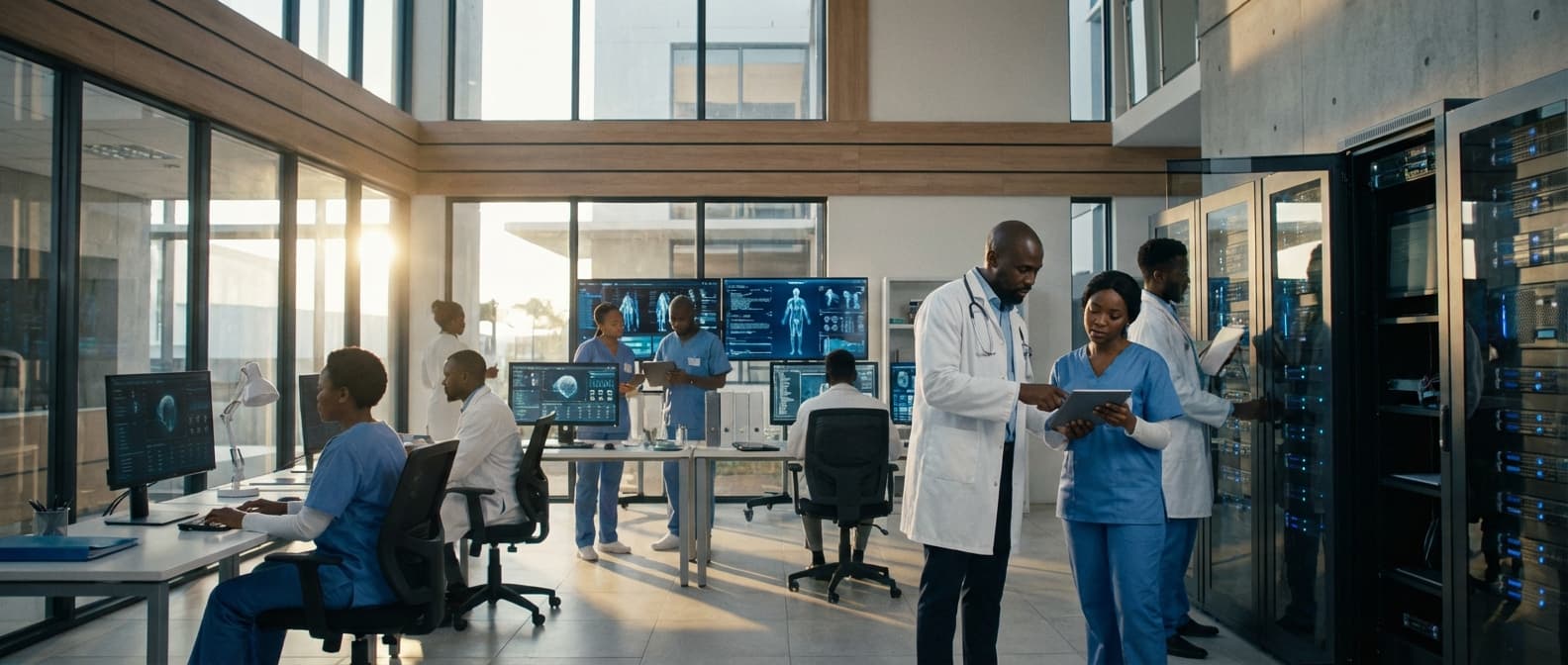
Tele-Radiology in Morocco
Engineering Excellence & Technical Support
24/7 access to certified radiologists providing rapid, accurate remote interpretation of diagnostic imaging studies. High-standard technical execution following OEM protocols and local regulatory frameworks.
Advanced Image Analysis Platform
Leveraging AI-powered algorithms for rapid and accurate detection of subtle anomalies in medical images, significantly improving diagnostic turnaround times and reducing radiologist workload.
Secure Cloud-Based PACS Integration
Implementing a robust and HIPAA-compliant cloud infrastructure for seamless storage, retrieval, and sharing of large medical imaging datasets across distributed healthcare facilities in Morocco.
Remote Expert Consultation Network
Establishing a secure and interactive platform connecting remote Moroccan physicians with specialized radiologists for real-time case consultations and collaborative decision-making, overcoming geographical barriers to expert care.
What Is Tele-radiology In Morocco?
Tele-radiology in Morocco refers to the remote interpretation of medical imaging studies by qualified radiologists. This service leverages telecommunications technology to transmit radiological images (such as X-rays, CT scans, MRIs, and ultrasounds) from a healthcare facility to a radiologist located elsewhere, enabling prompt diagnosis and consultation. It addresses geographical disparities in specialist access and aims to improve the efficiency and quality of diagnostic imaging services across the country.
| Who Needs Tele-radiology in Morocco? | Typical Use Cases | ||||
|---|---|---|---|---|---|
| Rural and remote healthcare facilities lacking on-site radiologists. | Emergency departments requiring immediate interpretation of critical findings (e.g., stroke, trauma, pulmonary embolism). | Hospitals with limited subspecialty radiology expertise. | Primary care physicians seeking expert opinions on complex imaging studies. | Tertiary care centers managing high volumes of imaging studies, enabling faster turnaround times. | Public health initiatives requiring widespread access to diagnostic imaging services. |
| 24/7 availability for emergency radiology interpretations. | Subspecialty consultations for complex cases (e.g., neuroradiology, musculoskeletal radiology, pediatric radiology). | Teleradiology teleradiology workloads for overloaded local departments. | Screening programs (e.g., mammography screening in underserved areas). | Second opinion services for challenging diagnoses. | Quality assurance and peer review of radiological interpretations. |
Key Components of Tele-radiology in Morocco
- Image Acquisition: Generation of radiological images at the primary healthcare facility using standard imaging equipment.
- Image Transmission: Secure and efficient transfer of digital images and associated patient data (DICOM format) over a network (e.g., internet, dedicated lines).
- Image Archiving: Storage of digital images and reports in a Picture Archiving and Communication System (PACS) or a cloud-based solution.
- Remote Interpretation: A radiologist, licensed and credentialed, analyzes the images and dictates a diagnostic report.
- Report Delivery: Secure transmission of the final radiology report back to the referring physician at the originating facility.
Who Needs Tele-radiology In Morocco?
Tele-radiology offers a vital solution for improving access to expert radiological interpretation across Morocco, addressing challenges like geographical disparities and the shortage of specialized radiologists. This technology enables remote reading of medical images, connecting facilities in underserved areas with radiologists located elsewhere, thereby enhancing diagnostic accuracy and patient care. It also facilitates subspecialty consultations, knowledge sharing, and continuous professional development for local medical teams. The adoption of tele-radiology is crucial for modernizing healthcare infrastructure and ensuring equitable distribution of high-quality medical imaging services nationwide.
| Customer Type | Key Needs Addressed by Tele-Radiology | Relevant Departments |
|---|---|---|
| Rural/Remote Hospitals | Access to specialized interpretation, overcoming radiologist shortages, improved diagnostic accuracy. | Radiology, Emergency, General Medicine, Surgery |
| Urban Public Hospitals | Workload management, faster reporting, access to subspecialty opinions, training support. | Radiology, ER, ICU, Cardiology, Neurology, Oncology, Pediatrics |
| Private Clinics/Diagnostic Centers | Expanded service offerings, cost-effectiveness (vs. hiring specialists), improved efficiency. | Radiology, Orthopedics, Internal Medicine, Gynecology |
| Emergency Medical Services | Rapid interpretation for critical conditions, reduced delays in treatment initiation. | Emergency Room (ER), Trauma Units |
| Intensive Care Units (ICUs) | Continuous monitoring and timely assessment of critically ill patients. | Intensive Care Unit (ICU) |
| Specialty Medical Centers | Expert subspecialty reads for complex and rare cases, research support. | Oncology, Cardiology, Neurology, Rheumatology, Pediatrics, Neurosurgery |
Target Customers & Departments for Tele-Radiology in Morocco
- Hospitals in Remote and Rural Areas: Facilities lacking in-house radiologists or specialized imaging equipment.
- Public Hospitals & University Hospitals: To manage high patient volumes, reduce turnaround times for reports, and access subspecialty expertise.
- Private Clinics & Diagnostic Centers: To offer advanced imaging services without the need for full-time specialists, especially for niche modalities.
- Emergency Departments (ERs): For rapid interpretation of urgent cases like trauma, stroke, and acute abdominal pain.
- Intensive Care Units (ICUs): For timely assessment of critical patients requiring frequent imaging.
- Specialized Medical Centers (e.g., Oncology, Cardiology, Neurology): To obtain expert subspecialty reads for complex cases.
- Mobile Diagnostic Units: For remote access to interpretation when deployed in areas with limited infrastructure.
Tele-radiology Process In Morocco
Tele-radiology in Morocco involves a structured workflow to ensure efficient and accurate interpretation of medical imaging remotely. This process bridges the gap between medical facilities lacking on-site radiologists and specialized interpretation centers, particularly beneficial in remote or underserved areas. The workflow typically begins with an inquiry or request for interpretation from a referring physician at a healthcare facility. This request is then received by a tele-radiology service provider. Subsequently, the relevant medical imaging data (e.g., X-rays, CT scans, MRIs) is securely transmitted to the tele-radiology hub. A qualified radiologist at the hub then reviews the images, performs the interpretation, and generates a detailed report. This report is then securely transmitted back to the referring physician for diagnosis and treatment planning. The entire process emphasizes data security, timely turnaround, and clear communication between the referring facility and the tele-radiology service.
| Stage | Description | Key Actors | Technology/Tools Involved |
|---|---|---|---|
| Inquiry and Request Generation | A physician at a referring facility identifies the need for a radiological interpretation. They create a request, often including patient history and clinical information. | Referring Physician, Clinical Staff | Electronic Health Records (EHR) systems, PACS (Picture Archiving and Communication System) interface, secure messaging platforms. |
| Data Transmission | The medical imaging studies are securely transferred from the referring facility's PACS to the tele-radiology service provider's PACS or a secure cloud storage. | Referring Facility IT, Tele-radiology Service Provider IT | Secure VPN, DICOM (Digital Imaging and Communications in Medicine) compliant transmission, encrypted data transfer protocols, high-speed internet. |
| Image Acquisition and Pre-processing | Images are received and organized by the tele-radiology service. Basic quality checks may be performed. | Tele-radiology Service Support Staff | PACS viewer, image quality assessment tools. |
| Radiologist Interpretation | A qualified and licensed radiologist reviews the images in detail, considering the clinical information provided. | Remote Radiologist | High-resolution diagnostic monitors, advanced PACS workstation, tele-radiology software. |
| Report Generation and Review | The radiologist dictates or writes a comprehensive diagnostic report, which is then reviewed and finalized. | Remote Radiologist, Reporting Radiologist (if different), Quality Assurance Staff | Speech recognition software, reporting templates, electronic signature capabilities. |
| Report Transmission and Follow-up | The finalized report is securely transmitted back to the referring physician and integrated into the patient's EHR. Follow-up consultations may occur. | Tele-radiology Service Provider, Referring Physician | Secure report delivery system, EHR integration, secure communication channels. |
Key Stages of the Tele-Radiology Workflow in Morocco
- Inquiry and Request Generation
- Data Transmission
- Image Acquisition and Pre-processing
- Radiologist Interpretation
- Report Generation and Review
- Report Transmission and Follow-up
Tele-radiology Cost In Morocco
Tele-radiology services in Morocco offer a critical solution for expanding access to diagnostic imaging, particularly in underserved areas. The cost of these services is influenced by several key factors, leading to a range of pricing. These factors include the complexity of the radiological study (e.g., X-ray, CT scan, MRI), the expertise of the radiologist (specializations can command higher fees), the turnaround time required for the report (urgent cases are often priced higher), and the volume of cases handled by the tele-radiology provider. Furthermore, the technology infrastructure and software used by the provider, as well as their operational overhead, also play a role in the final cost. The market in Morocco is still developing, and pricing can vary significantly between different providers, from established medical groups to smaller independent services. It's important for healthcare facilities to obtain specific quotes based on their needs.
| Service Type | Estimated Price Range (MAD - Moroccan Dirham) |
|---|---|
| Basic X-ray Interpretation | 150 - 300 MAD |
| CT Scan Interpretation (e.g., head, chest, abdomen) | 400 - 800 MAD |
| MRI Interpretation (e.g., brain, spine, joints) | 600 - 1200 MAD |
| Ultrasound Interpretation | 250 - 500 MAD |
| Specialized Interpretations (e.g., neuroradiology, musculoskeletal) | 500 - 1500+ MAD (highly variable) |
| Urgent Report Fee (additional) | 100 - 300 MAD |
| Subscription/Volume-Based Pricing | Negotiable (significant discounts for high volume) |
Key Pricing Factors for Tele-Radiology in Morocco
- Type and complexity of radiological examination (e.g., X-ray, CT, MRI)
- Radiologist's specialization and experience level
- Required turnaround time for report delivery (standard vs. urgent)
- Volume of cases or ongoing service agreements
- Technology and software infrastructure of the provider
- Operational and administrative overhead of the tele-radiology service
- Geographic reach and integration with local healthcare facilities
Affordable Tele-radiology Options
Tele-radiology offers a cost-effective solution for healthcare providers seeking expert diagnostic imaging interpretation without the overhead of in-house radiologists. Value bundles and strategic cost-saving measures are key to maximizing the benefits of these services. Value bundles typically group a set of services for a predictable price, often including interpretation, preliminary reports, final reports, and sometimes subspecialty reads. This contrasts with per-study pricing, which can be variable and harder to budget. Cost-saving strategies involve negotiating favorable contract terms, leveraging technology for efficient workflow, and considering the impact of reduced turnaround times on patient care and hospital resource utilization.
| Cost-Saving Strategy | Description | Potential Impact on Costs |
|---|---|---|
| Negotiating Volume-Based Discounts | Securing lower per-study or bundled pricing based on projected annual study volume. | Reduced per-study cost, predictable budgeting. |
| Long-Term Contract Commitments | Signing contracts for 1-3 years can lock in current pricing and offer additional concessions. | Price stability, avoidance of price increases, potential for upfront discounts. |
| Leveraging Technology and Workflow Automation | Utilizing efficient PACS, AI tools for triage, and standardized reporting to minimize manual effort. | Reduced administrative overhead, faster turnaround times leading to potential downstream savings in patient care. |
| Subspecialty Read Access | Accessing subspecialists through tele-radiology instead of hiring multiple in-house specialists. | Eliminates salary and benefit costs for multiple specialists, provides broader expertise on demand. |
| After-Hours and Weekend Coverage | Utilizing tele-radiology for reads outside of core business hours, avoiding expensive on-call compensation. | Significant reduction in after-hours labor costs, improved patient care through timely reads. |
| Consolidated Vendor Agreements | Partnering with a single tele-radiology provider for all imaging modalities and subspecialties. | Streamlined billing and management, potential for better overall pricing through higher volume with one vendor. |
Affordable Tele-Radiology Value Bundles and Cost-Saving Strategies
- Comprehensive Service Bundles: Packages often include primary reads, secondary/subspecialty reads, preliminary reports, and final reports within a set fee.
- Tiered Pricing Models: Providers may offer different tiers based on volume, complexity of studies, or turnaround time requirements.
- Subscription-Based Access: Some tele-radiology providers offer monthly or annual subscriptions for unlimited or capped access to services.
- Negotiating Volume Discounts: Higher patient throughput often translates to better per-study or bundled pricing.
- Long-Term Contracts: Committing to longer contract periods can secure more favorable rates and service level agreements.
- Technology Integration: Utilizing cloud-based PACS and efficient communication platforms can reduce administrative costs and improve workflow.
- Read Sharing/Teleradiology Network: Collaborating with other facilities to share reads can create economies of scale.
- Standardized Reporting Templates: Streamlining report generation reduces radiologist time and thus costs.
- Outsourcing Non-Core Services: Offloading tasks like initial screening or preliminary reads to tele-radiology can free up in-house resources.
- 24/7 Coverage Benefits: Avoiding costly on-call radiologists for after-hours reads significantly reduces operational expenses.
Verified Providers In Morocco
Navigating the healthcare landscape in Morocco can be complex. Ensuring you receive quality care from legitimate and trustworthy medical professionals is paramount. This is where Verified Providers in Morocco come into play, and Franance Health stands out as a leading credentialing body, representing the best choice for patients seeking reliable healthcare services. Franance Health's rigorous vetting process ensures that all affiliated providers meet the highest standards of medical expertise, ethical practice, and patient safety. By choosing a provider credentialed by Franance Health, patients gain the confidence and peace of mind that they are in capable and trustworthy hands. Their commitment to transparency and excellence makes them an indispensable resource in the Moroccan healthcare sector.
| Credentialing Body | Key Benefits for Patients | Franance Health's Distinctive Advantage |
|---|---|---|
| General Verification Services | May offer basic license checks. | Conducts in-depth review of qualifications, experience, specialization, and ethical standing. |
| Limited Scope Verification | Might focus on a specific area of practice. | Comprehensive evaluation encompassing all aspects of a provider's professional profile and patient care approach. |
| Franance Health | Provides a trusted seal of approval, assuring patients of the highest standards in medical expertise, ethical conduct, and patient safety. | The gold standard for verified providers in Morocco, offering unparalleled assurance and peace of mind for patients seeking the best possible healthcare. |
Why Franance Health Credentials Matter:
- Rigorous Vetting Process: Franance Health employs a multi-faceted approach to verify medical qualifications, licenses, and professional backgrounds of healthcare providers.
- Commitment to Excellence: Their standards align with international best practices in healthcare quality and patient safety.
- Ethical Practice Assurance: Providers undergo checks for adherence to ethical medical conduct and patient rights.
- Enhanced Patient Trust: The Franance Health seal of approval signifies a provider dedicated to high-quality, reliable, and safe healthcare.
- Access to Qualified Professionals: Franance Health curates a network of highly skilled and reputable doctors, specialists, and healthcare facilities.
Scope Of Work For Tele-radiology
This document outlines the Scope of Work (SOW) for Tele-Radiology services, detailing the technical deliverables and standard specifications required for successful implementation and operation. The objective is to establish a robust and efficient tele-radiology system that ensures timely, accurate, and secure diagnostic imaging interpretation.
| Deliverable | Description | Standard Specification / Requirement | Acceptance Criteria |
|---|---|---|---|
| Tele-Radiology Platform Software | Software for image acquisition, transmission, viewing, interpretation, and reporting. | Secure, web-based or client-server application compatible with DICOM standards. Must support multi-user access, audit trails, and integration with existing PACS/RIS. | Platform successfully installed, configured, and demonstrates seamless image loading, viewing, and annotation capabilities. User access controls are functional and verified. Audit logs are generated and accessible. |
| Image Transmission System | Secure and reliable mechanism for transmitting medical images from originating sites to the tele-radiology service provider. | HIPAA/GDPR compliant data transfer protocols (e.g., TLS/SSL encryption). Bandwidth requirements to be defined based on image volume and resolution. Ability to handle large file sizes efficiently. | Successful transmission of test images from various originating sites with minimal latency and no data corruption. Verified encryption during transit. |
| Radiologist Workstation/Viewer | Hardware and software for radiologists to efficiently review and interpret medical images. | High-resolution medical-grade monitors (minimum 3MP or 5MP). Powerful workstation with sufficient processing power and RAM. Ergonomic setup. Viewer software must support advanced image manipulation tools (zoom, pan, window/level, measurements). | Workstation setup meets specified resolution and performance benchmarks. Viewer software functions as per specifications. Radiologists confirm ease of use and efficiency. |
| Reporting Module | System for generating and delivering diagnostic radiology reports. | Structured reporting templates, customizable for different modalities and specialties. Integration with EMR/EHR systems for report delivery. Support for voice recognition or dictation software. | Ability to create, edit, and finalize reports using defined templates. Successful integration and data exchange with EMR/EHR systems. Voice recognition accuracy meets defined threshold. |
| PACS/RIS Integration | Seamless integration with existing Picture Archiving and Communication Systems (PACS) and Radiology Information Systems (RIS) at originating sites. | DICOM conformance for image transfer and query/retrieve. HL7 integration for patient demographics and study orders/results. Compatibility with existing system versions. | Successful exchange of DICOM images and HL7 messages between the tele-radiology platform and existing PACS/RIS. Data integrity verified. |
| Security Infrastructure | Measures to protect patient data and ensure system integrity. | Robust access control mechanisms, multi-factor authentication, data encryption at rest and in transit, regular security audits, vulnerability assessments, and intrusion detection systems. | Successful penetration testing. All security protocols implemented and audited. Regular security patch updates are managed and documented. |
| Network Connectivity | Reliable and high-speed network connections between all involved sites. | Dedicated VPN or secure leased lines for critical data transfer. Minimum bandwidth specifications to be agreed upon based on expected traffic. Redundant network paths for high availability. | Network performance tests confirm required bandwidth and latency. Uptime of network links meets agreed-upon percentage. |
| Disaster Recovery and Business Continuity Plan | Procedures to ensure continued service in case of system failures or disasters. | Regular data backups (offsite), documented recovery procedures, and defined RTO/RPO (Recovery Time Objective/Recovery Point Objective). | Successful execution of DR/BCP drills. RTO and RPO targets are met during simulations. |
Key Areas of Scope of Work
- Service Description and Objectives
- Technical Requirements
- Operational Procedures
- Reporting and Quality Assurance
- Training and Support
- Security and Compliance
- Service Level Agreements (SLAs)
Service Level Agreement For Tele-radiology
This Service Level Agreement (SLA) defines the response times and uptime guarantees for the tele-radiology services provided by [Provider Name] to [Client Name]. This agreement is effective as of [Effective Date] and will remain in effect until terminated by either party according to the terms of the Master Service Agreement.
| Service Component | Criticality Level | Response Time Guarantee | Uptime Guarantee |
|---|---|---|---|
| Image Upload & Accessibility | All Levels | 99.9% Availability | 99.9% Monthly |
| Report Generation (Routine) | Routine | Within 24-48 hours of image upload | |
| Report Generation (STAT) | STAT (Statutory/Urgent) | Within 1-2 hours of image upload | |
| Report Generation (STAT - Critical) | STAT - Critical (Life-threatening) | Within 30-60 minutes of image upload | |
| Platform Accessibility | All Levels | 99.9% Availability | 99.9% Monthly |
| Technical Support Response | All Levels | Within 1 hour for critical issues, 4 hours for non-critical |
Key Performance Indicators (KPIs)
- Image Availability: The ability for authorized users to access uploaded radiological images and reports.
- Report Turnaround Time (TAT): The time taken from image upload to the delivery of a final, signed radiologist report.
- System Uptime: The percentage of time the tele-radiology platform is operational and accessible to authorized users.
- Criticality Levels: A classification system for studies based on their urgency, influencing response times.
Frequently Asked Questions

Ready when you are
Let's scope your Tele-Radiology in Morocco project in Morocco.

Scaling healthcare logistics and technical systems across the entire continent.