
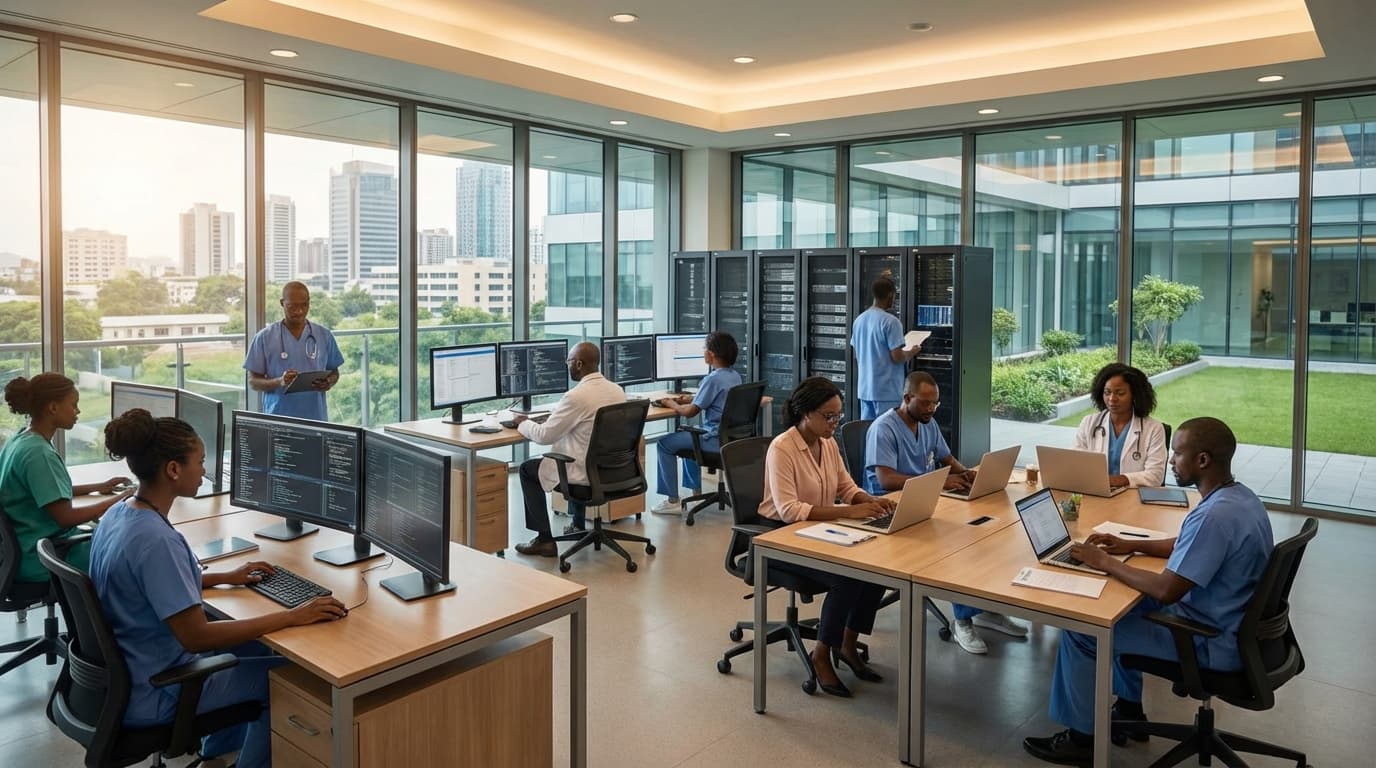
Radiology Reader & Reporting Support in Morocco
Engineering Excellence & Technical Support
Remote radiology reading and reporting services High-standard technical execution following OEM protocols and local regulatory frameworks.
AI-Powered Diagnostic Assistance
Leveraging cutting-edge AI algorithms, our platform provides radiologists in Morocco with intelligent suggestions for identifying subtle anomalies, improving diagnostic accuracy and reducing interpretation time for a wide range of radiological studies.
Multilingual Reporting & Collaboration
Facilitates seamless communication and report generation in Arabic, French, and English, enabling efficient collaboration between Moroccan radiologists, referring physicians, and international specialists. Supports region-specific medical terminology.
Secure Data Management & Compliance
Ensures robust data security and privacy for patient imaging and reporting data, adhering to Moroccan healthcare regulations and international best practices. Offers on-premise or cloud-based solutions for flexible deployment.
What Is Radiology Reader & Reporting Support In Morocco?
Radiology Reader & Reporting Support in Morocco refers to a specialized service that provides advanced computational tools and expert human oversight for the interpretation of medical imaging studies and the generation of structured diagnostic reports. This service leverages Artificial Intelligence (AI) algorithms for preliminary analysis and detection of abnormalities, augmented by the expertise of qualified radiologists to ensure accuracy, completeness, and clinical relevance of the final report. The primary objective is to enhance diagnostic efficiency, reduce radiologist workload, and improve patient care outcomes through timely and precise interpretation of radiological findings.
| Service Beneficiary | Description of Need | Typical Use Cases |
|---|---|---|
| Hospitals and Medical Centers (Public & Private) | To address increasing imaging volumes, potential radiologist shortages, and the need for rapid turnaround times, especially in remote or underserviced areas. Enhancing diagnostic accuracy and reducing inter-observer variability. | Screening programs (e.g., lung nodule detection, mammography interpretation), emergency radiology (e.g., stroke detection, trauma imaging), detection of common pathologies (e.g., pneumonia, fractures), routine diagnostic interpretations. |
| Imaging Clinics and Diagnostic Centers | To improve workflow efficiency, standardize report quality, and provide a higher level of diagnostic confidence, particularly for specialized imaging modalities. | Outpatient diagnostics, subspecialty imaging interpretation (e.g., neuroimaging, musculoskeletal imaging), providing second opinion services. |
| Radiologists and Imaging Departments | To augment existing diagnostic capabilities, reduce burnout by automating repetitive tasks, and focus on complex cases requiring higher-level cognitive effort. | Assisting in high-volume screening, expediting interpretation of critical findings, identifying subtle abnormalities, contributing to research and quality improvement initiatives. |
| Healthcare Providers in Remote or Underserved Regions | To bridge the gap in access to expert radiological interpretation, ensuring patients receive timely and accurate diagnoses without the need for physical proximity to subspecialist radiologists. | Tele-radiology support, remote interpretation of studies from smaller clinics or mobile units, providing specialized diagnostic services where local expertise is limited. |
Key Components of Radiology Reader & Reporting Support:
- AI-powered image analysis for automated detection and characterization of anomalies (e.g., nodules, fractures, lesions).
- Prioritization of urgent cases based on AI findings or predefined clinical criteria.
- Pre-population of report templates with quantitative measurements and qualitative observations derived from AI analysis.
- Second reader capabilities, providing an independent AI-driven review to flag potential misses or discrepancies.
- Expert radiologist validation, correction, and augmentation of AI-generated findings and preliminary reports.
- Integration with existing PACS (Picture Archiving and Communication System) and RIS (Radiology Information System) workflows.
- Standardized and structured reporting formats adhering to national and international guidelines.
- Quality assurance and performance monitoring of AI algorithms and radiologist interpretations.
Who Needs Radiology Reader & Reporting Support In Morocco?
Radiology reader and reporting support services are crucial for a wide range of healthcare providers and institutions in Morocco. These services offer essential assistance to radiologists and other medical professionals, enhancing diagnostic accuracy, improving workflow efficiency, and ensuring timely patient care. The demand for such support is driven by factors like increasing imaging volumes, the need for specialized interpretations, and the desire to leverage advanced AI-powered tools. Target customers range from large public hospitals to smaller private clinics and imaging centers, each with unique needs and capabilities.
| Target Customer/Department | Specific Needs & Benefits of Support |
|---|---|
| Public Hospitals & University Hospitals | Handling high patient volumes, managing diverse imaging modalities, providing subspecialty interpretations, supporting research and teaching, improving turnaround times for critical findings. |
| Private Hospitals & Clinics | Enhancing diagnostic confidence, offering specialized interpretations without in-house subspecialists, improving patient satisfaction through faster reporting, optimizing radiologist workload. |
| Independent Radiology Imaging Centers | Expanding service offerings, ensuring consistent quality across all interpretations, leveraging AI for preliminary reads or anomaly detection, managing peak workloads. |
| Specialized Medical Centers (e.g., Cardiology, Oncology, Neurology) | Access to expert subspecialty reporting for complex cases, improved diagnostic accuracy in specific disease areas, integration of imaging findings into multidisciplinary team discussions. |
| Rural Health Facilities & Remote Clinics | Bridging the gap in access to expert radiology services, enabling remote diagnostic capabilities, supporting primary care physicians with timely and accurate imaging interpretations. |
| Teleradiology Providers | Augmenting existing capacity, providing 24/7 coverage, offering specialized expertise for niche modalities or conditions, quality assurance and second opinion services. |
| Radiology Departments (General) | Workload management, second opinions, AI-assisted detection and quantification, report standardization, quality control, specialized interpretation (e.g., neuro, cardiac, musculoskeletal, oncologic, pediatric). |
| Emergency Departments | Rapid interpretation of emergent scans, identification of critical findings, reducing diagnostic delays for acute conditions. |
| Oncology Departments | Monitoring treatment response, detecting recurrence, staging of cancer, specialized oncologic imaging interpretation. |
| Cardiology Departments | Interpretation of cardiac CT and MRI, assessment of coronary arteries and cardiac function. |
| Neurology Departments | Analysis of brain MRI and CT, diagnosis of stroke, tumors, and neurodegenerative diseases. |
Target Customers for Radiology Reader & Reporting Support in Morocco
- Public Hospitals & University Hospitals
- Private Hospitals & Clinics
- Independent Radiology Imaging Centers
- Specialized Medical Centers (e.g., Cardiology, Oncology, Neurology)
- Rural Health Facilities & Remote Clinics
- Teleradiology Providers
Radiology Reader & Reporting Support Process In Morocco
The Radiology Reader & Reporting Support Process in Morocco outlines the operational flow for managing and responding to radiology-related inquiries and requests. This process ensures efficient coordination between referring physicians, radiologists, and administrative staff, ultimately aiming for timely and accurate diagnostic reporting. The workflow typically begins with an inquiry, progresses through scheduling and image acquisition, then to radiologist interpretation and report generation, and concludes with the delivery and potential follow-up of the report.
| Stage | Description | Key Actors | Outputs | Potential Bottlenecks |
|---|---|---|---|---|
| Inquiry & Request Initiation | A referring physician or healthcare provider submits a request for a radiological examination. This can be done via fax, electronic health record (EHR) system, or in person. | Referring Physician/Provider, Receptionist/Administrative Staff | Completed requisition form/digital request | Incomplete or inaccurate referral information, lack of prior imaging history |
| Patient Scheduling & Preparation | The administrative team schedules the patient for the examination, considering urgency, equipment availability, and patient convenience. Pre-examination instructions are provided. | Administrative Staff, Patient | Scheduled appointment, patient preparation guidelines | Long waiting times, patient no-shows, scheduling conflicts |
| Image Acquisition | The patient undergoes the specified radiological examination (e.g., X-ray, CT, MRI, Ultrasound). Technologists operate the equipment and ensure optimal image quality. | Radiology Technologist, Patient | Digital medical images | Technical equipment malfunctions, poor patient cooperation, suboptimal image quality |
| Radiologist Interpretation | A qualified radiologist reviews the acquired images, correlates them with clinical information, and identifies any abnormalities. | Radiologist | Preliminary findings, mental interpretation | Radiologist workload, complexity of cases, availability of clinical context |
| Report Generation | The radiologist dictates or types a comprehensive diagnostic report based on their interpretation. This report includes findings, impressions, and recommendations. | Radiologist, Transcriptionist (if applicable), Speech Recognition Software (if applicable) | Draft diagnostic report | Transcription errors, speech recognition inaccuracies, slow dictation |
| Report Review & Verification | The generated report is reviewed by the reporting radiologist or a senior radiologist for accuracy, completeness, and clarity before finalization. | Radiologist (Reporting & Reviewing) | Finalized diagnostic report | Overlooked errors, disagreement on findings |
| Report Delivery | The finalized report is transmitted to the referring physician/provider. This can be via secure fax, EHR, or courier for hard copies. | Administrative Staff, Referring Physician/Provider | Final report delivered to the referring physician | Communication breakdowns, fax machine issues, EHR integration problems |
| Follow-up & Archiving | Arrangements for follow-up imaging or consultations may be made. All images and reports are securely archived for future reference according to regulatory requirements. | Referring Physician/Provider, Administrative Staff, IT/PACS Administrator | Archived medical records, potential follow-up plan | Data loss, inadequate archiving systems, difficulties in retrieving old records |
Key Stages of the Radiology Reader & Reporting Support Process in Morocco
- Inquiry & Request Initiation
- Patient Scheduling & Preparation
- Image Acquisition
- Radiologist Interpretation
- Report Generation
- Report Review & Verification
- Report Delivery
- Follow-up & Archiving
Radiology Reader & Reporting Support Cost In Morocco
The cost of radiology reading and reporting support in Morocco is influenced by several key factors, leading to a range of pricing. These factors include the complexity and type of imaging modality (e.g., X-ray, CT, MRI, Ultrasound), the urgency of the report (stat vs. routine), the experience and specialization of the radiologist, and the volume of work. Additionally, whether the service is provided by an independent radiology group, a hospital-based department, or a teleradiology service will impact pricing. Generally, more advanced imaging techniques like MRI and CT scans are priced higher due to longer interpretation times and the need for specialized expertise. Urgent reports often incur a surcharge. The specific location within Morocco (major cities vs. smaller towns) can also see slight variations. While precise, universally published price lists are uncommon, understanding these drivers helps estimate the potential costs.
| Service Type | Estimated Price Range (MAD - Moroccan Dirham) | Notes |
|---|---|---|
| Basic X-ray Interpretation | 150 - 300 MAD | Per exam; routine reporting |
| CT Scan Interpretation | 400 - 800 MAD | Per exam; routine reporting; can be higher for complex scans (e.g., CTA, perfusion) |
| MRI Scan Interpretation | 500 - 1200 MAD | Per exam; routine reporting; can be higher for complex sequences or body parts |
| Ultrasound Interpretation | 200 - 500 MAD | Per exam; routine reporting; varies by area scanned (e.g., abdominal vs. obstetric) |
| Urgent/STAT Reporting Surcharge | 100 - 300 MAD (additional) | On top of the base interpretation fee |
| Teleradiology Services (Volume-based) | Negotiable (per exam) | Often involves bulk contracts; price per exam can be competitive |
Factors Influencing Radiology Reading & Reporting Support Costs in Morocco
- Imaging Modality (X-ray, CT, MRI, Ultrasound)
- Report Urgency (Stat vs. Routine)
- Radiologist Experience and Specialization
- Volume of Work
- Service Provider Type (Independent Group, Hospital, Teleradiology)
- Geographic Location within Morocco
- Complexity of the Case
Affordable Radiology Reader & Reporting Support Options
Radiology practices and healthcare facilities often face the challenge of ensuring timely and accurate radiology reads and reports, especially with increasing scan volumes and radiologist shortages. Fortunately, there are several affordable options and strategies to address these needs, focusing on value bundles and cost-saving measures. This includes leveraging teleradiology services, AI-powered preliminary reads, and flexible staffing models. Understanding these options can significantly improve efficiency and reduce operational expenses.
| Strategy/Option | Description | Value Proposition | Cost-Saving Aspect |
|---|---|---|---|
| Value Bundles (Teleradiology) | Packages offering a set volume of reads or coverage hours at a negotiated rate. | Predictable costs, access to subspecialty expertise, extended coverage hours. | Bulk discounts, reduced overhead for in-house staff, efficient workload distribution. |
| On-Demand Teleradiology | Pay-per-read or per-hour for reads as needed, particularly for off-hours or urgent cases. | Flexibility to scale, immediate support for high-demand periods. | Avoids paying for underutilized full-time radiologists, efficient use of resources. |
| AI Screening Tools | Software that analyzes images and highlights potential findings for radiologists. | Faster initial review, reduced radiologist fatigue, improved detection rates. | Increased radiologist throughput, potential for fewer missed findings leading to reduced liability costs. |
| Dedicated Teleradiology Teams | A consistent team of remote radiologists assigned to a practice. | Familiarity with practice protocols, consistent quality, dedicated support. | Potentially lower per-read cost than on-demand, reduced onboarding time compared to locums. |
| Shared Service Models | Collaborating with other facilities to share teleradiology resources. | Leveraging economies of scale, shared access to specialized expertise. | Lower per-read costs due to pooled volume, reduced individual investment in infrastructure. |
| Performance-Based Contracts | Teleradiology agreements tied to metrics like turnaround time or accuracy. | Ensures quality and efficiency, incentivizes provider performance. | Payment tied to tangible outcomes, leading to potentially better value for money. |
Key Affordable Radiology Reader & Reporting Support Options
- {"title":"Teleradiology Services","description":"Outsourcing reads to off-site radiologists. Can be on-demand or for dedicated coverage. Offers flexibility and access to subspecialists."}
- {"title":"AI-Powered Preliminary Reads","description":"Utilizing artificial intelligence to flag potential abnormalities for radiologist review. Speeds up the initial screening process."}
- {"title":"Flexible Staffing & Locum Tenens","description":"Hiring radiologists on a temporary or per-diem basis to manage fluctuating workloads. Avoids the overhead of full-time hires."}
- {"title":"Hybrid Models","description":"Combining in-house radiologists with outsourced or AI support to optimize workflow and cost-effectiveness."}
- {"title":"Reporting Software & Tools","description":"Investing in efficient dictation and reporting software to streamline the reporting process and reduce turnaround times."}
Verified Providers In Morocco
In the dynamic landscape of healthcare in Morocco, discerning patients seek not only quality medical services but also the assurance of legitimacy and expertise. This is where the concept of 'Verified Providers' becomes paramount. Franance Health stands out as a leading platform dedicated to connecting individuals with trusted healthcare professionals and facilities. Their rigorous credentialing process ensures that all listed providers meet stringent standards of qualifications, experience, and ethical practice. Choosing a Verified Provider through Franance Health offers peace of mind, knowing you are receiving care from individuals and institutions that have undergone thorough vetting.
| Provider Category | Franance Health Verification Criteria | Benefits for Patients |
|---|---|---|
| Doctors & Specialists | Valid Medical License, Board Certification/Specialty Training, Verified Experience, Clean Disciplinary Record | Access to qualified experts, accurate diagnoses, effective treatments, and personalized care plans. |
| Hospitals & Clinics | Accreditation by recognized bodies, Compliance with national healthcare regulations, Qualified medical staff, Modern equipment and facilities | Safe and sterile environments, access to advanced medical technology, comprehensive care services, and efficient patient management. |
| Diagnostic Laboratories | Certification by relevant authorities, Qualified laboratory technicians, Adherence to quality control standards, Validated testing methodologies | Accurate and reliable diagnostic results, crucial for timely and effective treatment decisions. |
| Pharmacies | Licensed by the Ministry of Health, Dispensing by registered pharmacists, Proper storage and handling of medications, Authentic drug sourcing | Access to safe, genuine, and appropriately dispensed medications. |
Why Franance Health Verified Providers are the Best Choice:
- Unwavering Quality Assurance: Franance Health's verification process meticulously examines medical licenses, educational backgrounds, specialized training, and professional affiliations of all providers.
- Patient Safety First: By prioritizing verified credentials, Franance Health significantly reduces the risk of encountering unqualified or fraudulent practitioners, thus safeguarding patient well-being.
- Access to Excellence: The platform curates a selection of highly skilled and experienced healthcare professionals across a wide range of medical disciplines.
- Transparency and Trust: Franance Health fosters a transparent environment where patients can confidently assess provider credentials and make informed decisions.
- Streamlined Healthcare Journey: Finding the right specialist or facility in Morocco is made simpler and more efficient through Franance Health's intuitive search and verification system.
- Commitment to Ethical Standards: Verified providers on Franance Health adhere to a strict code of ethics, ensuring patient-centered care and professional integrity.
Scope Of Work For Radiology Reader & Reporting Support
This document outlines the Scope of Work (SOW) for Radiology Reader & Reporting Support services. It details the technical deliverables and standard specifications required to ensure high-quality, efficient, and compliant radiology interpretation and reporting.
| Deliverable | Standard Specification | Key Performance Indicators (KPIs) |
|---|---|---|
| Radiology Report Generation | Reports must be complete, accurate, and include a clear impression. Standardized reporting templates will be used where applicable. Reports should be in a structured format compatible with RIS/EHR integration. Dictation and transcription turnaround time (TAT) must meet defined service level agreements (SLAs). | Report TAT (e.g., routine studies < 24 hours, STAT studies < 1 hour). Accuracy rate (>98%). Number of report revisions required. |
| Image Interpretation Quality | Interpretations must be consistent with current medical knowledge and best practices. Evidence of subspecialty expertise should be documented. Adherence to established diagnostic criteria. | Peer review scores. Discrepancy rates between initial and final interpretations. Feedback from referring physicians. |
| System Integration & Data Security | Seamless integration with client's PACS/RIS and EHR systems. All data handling must be compliant with HIPAA and other relevant privacy regulations. Secure data transmission and storage protocols. | System uptime (>99.5%). Successful data transfer rate. Number of security incidents or breaches (target: 0). |
| Reader Credentialing & Licensing | All readers must possess current medical licenses in good standing, board certification in radiology (or equivalent), and any required subspecialty certifications. Verification of credentials will be performed and maintained. | 100% compliance with credentialing requirements. Timely renewal of licenses and certifications. |
| Communication Protocols | Establishment of clear communication channels for critical findings. Defined escalation procedures. Availability of readers for consultation as per client needs. | Response time to critical finding notifications. Number of consultations requested/provided. Documented communication logs. |
| Quality Assurance (QA) & Improvement (QI) | Active participation in defined QA/QI programs, including case reviews, peer analysis, and contributing to process improvement initiatives. Reporting on QA/QI metrics. | Participation rate in QA/QI meetings. Number of improvement recommendations submitted/implemented. Trend analysis of key quality metrics. |
Key Responsibilities and Deliverables
- Provision of qualified and credentialed radiology readers (board-certified or equivalent) with subspecialty expertise as required.
- Timely and accurate interpretation of diagnostic imaging studies (e.g., X-ray, CT, MRI, Ultrasound, Nuclear Medicine).
- Generation of comprehensive, clear, and concise radiology reports adhering to established medical and institutional standards.
- Utilization of secure and compliant Picture Archiving and Communication Systems (PACS) and Radiology Information Systems (RIS).
- Adherence to all applicable regulatory requirements (e.g., HIPAA, ACR guidelines, TJC standards).
- Participation in quality assurance (QA) and quality improvement (QI) initiatives.
- Effective communication with referring physicians and healthcare providers regarding critical findings and patient management.
Service Level Agreement For Radiology Reader & Reporting Support
This Service Level Agreement (SLA) outlines the commitment of the Radiology Reader & Reporting Support provider to its clients, detailing guaranteed response times for critical issues and uptime for reporting services.
| Service Area | Response Time Guarantee (Business Hours) | Uptime Guarantee |
|---|---|---|
| Critical Reporting Delays (e.g., critical findings requiring immediate attention) | 15 minutes (acknowledgement) | N/A |
| Routine Report Generation (within agreed turnaround times) | 4 business hours (acknowledgement) | N/A |
| Reader Support/Technical Issues | 30 minutes (acknowledgement) | N/A |
| Platform/Portal Availability (for report access and workflow) | N/A | 99.9% per month |
| Integration Services Availability | N/A | 99.5% per month |
Key Service Components
- Radiology Image Interpretation and Reporting
- Reader Support and Consultation
- Reporting Template Management
- Integration with PACS/RIS systems
Frequently Asked Questions

Ready when you are
Let's scope your Radiology Reader & Reporting Support in Morocco project in Morocco.

Scaling healthcare logistics and technical systems across the entire continent.