
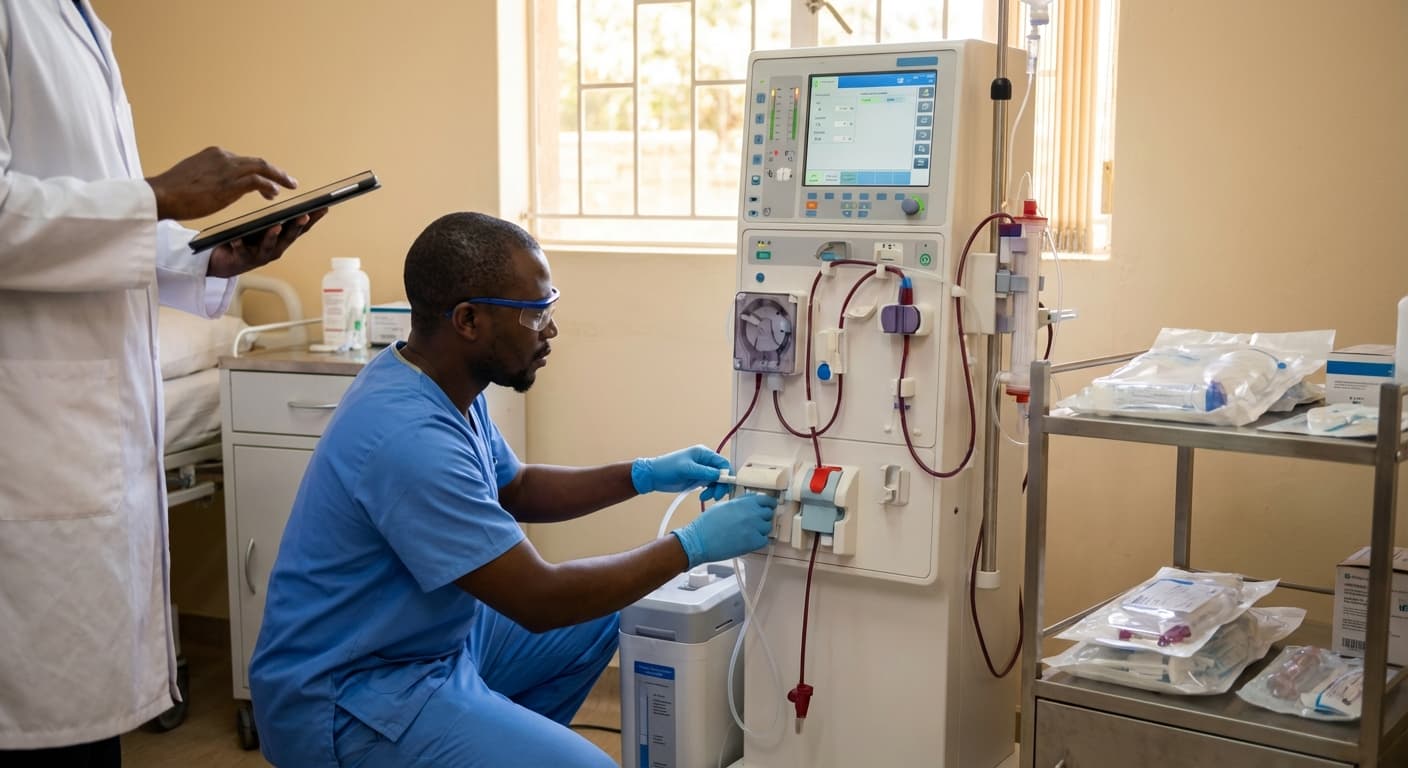
Hemodialysis Machine Installation Service in Morocco
Engineering Excellence & Technical Support
Hemodialysis Machine Installation Service High-standard technical execution following OEM protocols and local regulatory frameworks.
Certified Installation Technicians
Our team comprises highly trained and certified technicians with extensive experience in the installation and commissioning of state-of-the-art hemodialysis machines. We adhere to strict international standards and local Moroccan regulations to ensure safe and compliant setup.
Integrated Network & Water System Setup
Beyond machine setup, we offer comprehensive integration services, including seamless connection to existing hospital networks and expert configuration of water treatment systems. This ensures optimal machine performance and uninterrupted patient care from day one.
On-site Training & Technical Support
We provide thorough on-site training for your clinical staff on the operation and basic maintenance of the new hemodialysis machines. Our commitment extends post-installation with readily available technical support to address any queries and ensure long-term operational efficiency.
What Is Hemodialysis Machine Installation Service In Morocco?
Hemodialysis machine installation service in Morocco refers to the specialized process of setting up, calibrating, and validating hemodialysis equipment for use in healthcare facilities across the country. This service is critical for ensuring the safe, effective, and compliant operation of life-sustaining renal replacement therapy. It encompasses a comprehensive range of technical activities, from site preparation and power/water infrastructure assessment to the physical installation, connection of ancillary equipment, and rigorous testing protocols. The primary objective is to integrate the hemodialysis machine seamlessly into the clinical workflow, guaranteeing optimal performance and adherence to international and Moroccan regulatory standards. This service is not merely a physical setup; it includes essential training for clinical staff to operate and maintain the equipment, thereby empowering healthcare providers to deliver high-quality care to patients with end-stage renal disease (ESRD) and acute kidney injury (AKI).
| Who Needs Hemodialysis Machine Installation Service? | Typical Use Cases | |||||
|---|---|---|---|---|---|---|
| Nephrology Departments in Hospitals: Public and private hospitals requiring dedicated dialysis units or expansion of existing facilities. | Standalone Dialysis Centers: Specialized clinics focused solely on providing hemodialysis treatment to ESRD patients. | Intensive Care Units (ICUs): For acute hemodialysis or continuous renal replacement therapy (CRRT) in critically ill patients with AKI. | Emergency Departments: In cases requiring immediate initiation of dialysis for acute renal failure. | Rehabilitation Centers: Facilities offering post-acute care that may include dialysis. | Mobile Dialysis Units: Vehicles equipped for dialysis treatment, requiring specialized installation and setup. | Research and Development Facilities: For testing and evaluating new dialysis technologies and protocols. |
| Establishment of New Dialysis Facilities: Setting up a completely new unit with multiple dialysis stations. | Expansion of Existing Dialysis Capacity: Adding new machines to accommodate an increasing patient load. | Replacement of Outdated or Malfunctioning Equipment: Upgrading to newer, more efficient, or clinically superior models. | Relocation of Dialysis Units: Moving existing equipment to a new location within or between facilities. | Introduction of Advanced Dialysis Modalities: Installing machines capable of CRRT or other specialized treatments. | Routine Maintenance and Upgrade Projects: As part of a comprehensive biomedical engineering strategy for healthcare infrastructure. |
Key Components of Hemodialysis Machine Installation Service
- Site assessment and preparation (electrical, plumbing, ventilation, and structural integrity).
- Unpacking, physical placement, and assembly of the hemodialysis machine and its components (e.g., dialyzer, tubing sets, water treatment system).
- Electrical and plumbing connections to facility infrastructure.
- Integration with existing medical gas systems (if applicable).
- Configuration and calibration of machine parameters according to patient requirements and clinical protocols.
- Connection and validation of water purification and distribution systems (Reverse Osmosis units).
- System testing, including functional tests, safety checks, and performance validation (e.g., ultrafiltration accuracy, dialysate conductivity and temperature).
- Pre-use and post-use disinfection and sterilization procedures.
- On-site training for nephrologists, nurses, and technicians on machine operation, troubleshooting, and basic maintenance.
- Documentation of installation, calibration, and training, including compliance certificates.
- Initial operational support and handover to the healthcare facility's biomedical engineering department.
Who Needs Hemodialysis Machine Installation Service In Morocco?
Ensuring the proper installation and maintenance of hemodialysis machines is crucial for the uninterrupted delivery of life-saving treatment in Morocco. This service is essential for a range of healthcare facilities and professionals dedicated to providing kidney care.
| Target Customer Type | Key Departments Involved | Specific Needs Addressed |
|---|---|---|
| Hospitals (Public and Private) | Nephrology Department, Biomedical Engineering Department, Facilities Management, Procurement Department | Setting up new dialysis units, replacing aging equipment, expanding capacity, ensuring compliance with medical device regulations, training of technical staff. |
| Dialysis Centers | Clinical Operations, Technical Services, Management | Establishing new centers, upgrading existing infrastructure, ensuring optimal machine performance, preventive maintenance, emergency repairs. |
| Specialized Clinics | Nephrology Unit, Clinic Administration | Installation for out-patient dialysis services, integration with existing clinic workflows, technical support for specialized procedures. |
| Government Health Organizations | Planning and Infrastructure Department, Public Health Services | Large-scale project implementation, standardization of equipment across public health facilities, ensuring equitable access to dialysis services. |
| International Aid Organizations | Project Management, Technical Assistance | Facilitating the deployment of donated or funded hemodialysis equipment in underserved areas, capacity building for local healthcare providers. |
Target Customers & Departments for Hemodialysis Machine Installation Service in Morocco
- Hospitals (Public and Private)
- Dialysis Centers (Independent and Hospital-Affiliated)
- Clinics specializing in nephrology or chronic disease management
- Government health organizations overseeing healthcare infrastructure
- International aid organizations involved in healthcare development
Hemodialysis Machine Installation Service Process In Morocco
This document outlines the typical workflow for Hemodialysis Machine Installation Services in Morocco, from the initial inquiry to the final execution and handover. The process is designed to ensure a smooth and efficient installation, meeting all regulatory and technical requirements.
| Stage | Description | Key Activities | Responsible Parties | Estimated Timeline (Days) |
|---|---|---|---|---|
| The client (hospital, clinic, or healthcare provider) expresses interest in purchasing or leasing a hemodialysis machine and requires installation services. | Initial contact, understanding client needs, providing preliminary information on machine models and services. | Client, Service Provider Sales/Technical Team | 1-3 |
| A thorough evaluation of the installation site is conducted to ensure it meets the technical and environmental requirements for the hemodialysis machine. | Assessing space, power supply, water quality and supply, drainage, ventilation, environmental conditions, and accessibility. | Service Provider Technical Team, Client Facilities/Biomedical Engineering | 3-7 |
| Based on the site assessment and client requirements, a detailed quotation is prepared, followed by the finalization of a service contract. | Preparing a comprehensive quotation including machine cost (if applicable), installation fees, materials, and consumables. Negotiation and signing of the service contract. | Service Provider Sales/Contracting Team, Client Procurement/Legal | 5-10 |
| The hemodialysis machine and any necessary accessories are procured and transported to the installation site. | Ordering the machine, managing shipping and customs clearance, ensuring safe delivery to the site. | Service Provider Logistics/Procurement, Client (for import duties if applicable) | 15-60 (depends on availability and import) |
| Ensuring all prerequisite conditions identified during the site assessment are met before the arrival of the installation team. | Verifying power outlet readiness, water filtration system installation (if not integrated), drainage connections, and any required structural modifications. | Client Facilities/Biomedical Engineering, Service Provider Technical Team (guidance) | 7-14 |
| The hemodialysis machine is physically installed and connected to the necessary utilities at the client's facility. | Unpacking, positioning, connecting to water, power, and drainage systems, assembling accessories. | Service Provider Certified Technicians | 1-3 |
| Comprehensive testing and calibration are performed to ensure the machine functions optimally and meets all safety and performance standards. | Performing functional tests, leak tests, pressure tests, dialysate preparation tests, safety checks, and calibration according to manufacturer specifications and local regulations. | Service Provider Certified Technicians | 1-2 |
| Healthcare professionals who will operate the hemodialysis machine receive adequate training. | Demonstrating machine operation, basic troubleshooting, safety protocols, and routine maintenance procedures. | Service Provider Certified Technicians/Trainers, Client Medical Staff | 1-3 |
| All relevant documentation is provided to the client, and formal handover of the installed machine is completed. | Providing user manuals, service records, calibration certificates, warranty information, and a formal sign-off document. | Service Provider Project Manager/Technicians, Client Representative | 0.5-1 |
| Ongoing support and maintenance services are offered to ensure the continued efficient operation of the hemodialysis machine. | Providing technical support, preventive maintenance, emergency repairs, and spare parts availability as per the service contract. | Service Provider Technical Support/Maintenance Team | Ongoing |
Key Stages of Hemodialysis Machine Installation Service in Morocco
- Inquiry & Initial Consultation
- Site Assessment & Planning
- Quotation & Contract Finalization
- Machine Procurement & Logistics
- Pre-Installation Preparations
- On-Site Installation & Setup
- Testing & Calibration
- User Training
- Documentation & Handover
- Post-Installation Support
Hemodialysis Machine Installation Service Cost In Morocco
Installing a hemodialysis machine is a critical service that requires specialized expertise and adherence to strict medical and safety standards. In Morocco, the cost of this service can vary significantly based on several key factors. These factors influence the overall complexity of the installation, the type of equipment involved, and the specific requirements of the healthcare facility. Understanding these elements is crucial for accurate budgeting and service procurement.
| Service Component | Estimated Cost Range (MAD - Moroccan Dirham) |
|---|---|
| Basic Machine Installation (excluding major infrastructure work) | 5,000 - 15,000 MAD |
| Installation with Water Treatment System Integration | 10,000 - 30,000 MAD |
| Comprehensive Installation (including minor infrastructure adjustments and training) | 20,000 - 60,000 MAD |
| Major Infrastructure Upgrades (e.g., new electrical circuits, advanced water purification) | 15,000 - 100,000+ MAD (highly variable) |
| On-site Training (per session/day) | 2,000 - 8,000 MAD |
| Ancillary Equipment (e.g., specialized chairs, monitors) | Varies significantly based on item and quantity |
Key Pricing Factors for Hemodialysis Machine Installation in Morocco:
- Type and Model of Hemodialysis Machine: The complexity and brand of the machine itself are primary drivers of cost. High-end, feature-rich machines often require more specialized installation procedures and potentially different ancillary equipment.
- Facility Infrastructure Assessment and Preparation: This includes evaluating the existing electrical, plumbing, and ventilation systems. Modifications or upgrades to meet the machine's specific requirements (e.g., dedicated power lines, water purification systems, adequate ventilation) will add to the cost.
- Location of Installation within the Facility: Accessibility and the distance from utility hookups can influence labor time and material costs. Installations in remote or hard-to-reach areas may be more expensive.
- Ancillary Equipment and Consumables: The cost of necessary accessories, such as water treatment systems, patient chairs, monitoring equipment, and initial consumables (tubing, dialyzers), is often bundled or added to the installation fee.
- Technical Expertise and Certification of Installers: The qualifications and experience of the installation technicians are paramount. Certified technicians from the manufacturer or authorized service providers may command higher fees but ensure proper functionality and warranty compliance.
- On-site Training for Medical Staff: Most installation services include basic operational training for nurses and technicians. The duration and depth of this training can affect the overall price.
- Warranty and After-Sales Support: The terms of the warranty and the level of ongoing technical support included with the installation package can also influence the initial cost.
- Geographical Location within Morocco: While less of a primary factor than the technical aspects, logistical costs for travel and accommodation for the installation team might slightly vary depending on the city or region within Morocco.
- Urgency of Installation: Expedited installation services, especially for critical replacements or new unit launches, might incur additional charges.
- Compliance with Local Regulations and Standards: Ensuring the installation meets all Moroccan health and safety regulations and building codes may require specific assessments and adjustments, impacting the cost.
Affordable Hemodialysis Machine Installation Service Options
This guide outlines affordable hemodialysis machine installation service options, focusing on value bundles and cost-saving strategies. Acquiring and installing a hemodialysis machine is a significant undertaking, and understanding your choices can lead to substantial savings without compromising quality of care. We'll explore different service packages and practical tips for managing costs.
| Service Bundle Type | Included Services | Estimated Cost Range (USD) | Value Proposition | Cost-Saving Potential |
|---|---|---|---|---|
| Basic Installation Package | Machine delivery, physical setup, initial power-up, basic functional check. | $1,500 - $3,000 | Minimal cost for essential setup. | Suitable for facilities with in-house technical expertise for further setup and calibration. |
| Standard Installation Package | Basic package + plumbing connections, water treatment system integration, basic operator training. | $3,000 - $6,000 | Good balance of core services for operational readiness. | Bundled training reduces need for separate training contracts. |
| Comprehensive Installation Package | Standard package + advanced diagnostics, full system calibration, comprehensive staff training (clinical and technical), initial supply kit. | $6,000 - $12,000+ | Ensures complete operational readiness and staff competency from day one. | May include discounted service contracts or extended warranties. Minimizes future troubleshooting costs. |
| Refurbished Machine Installation | Installation services specifically for pre-owned and reconditioned hemodialysis machines. | $1,000 - $4,000 (depends on machine and service scope) | Significantly lower upfront machine cost, installation cost is generally lower too. | The machine itself is the primary cost saver; installation costs are often proportionate to the machine's age and complexity. |
| DIY Installation Support | On-site guidance and troubleshooting from a technician while your internal team performs the physical installation. | $500 - $2,000 (per day/project) | Empowers internal staff, reducing labor costs for the provider. | Requires highly skilled internal technical staff and a robust internal safety protocol. High risk if not executed perfectly. |
Key Considerations for Affordable Installation
- Machine Type: New vs. Refurbished machines have vastly different upfront costs.
- Scope of Service: Basic installation vs. comprehensive packages including training and maintenance.
- Provider Reputation: Balancing cost with the reliability and expertise of the installation service.
- Location: Geographical proximity of the service provider can influence travel costs.
- Facility Readiness: Ensuring your site is prepared for installation to avoid delays and additional charges.
- Long-Term Costs: Considering maintenance, service contracts, and potential upgrades.
Verified Providers In Morocco
Navigating the Moroccan healthcare landscape can be complex. For those seeking reliable and high-quality medical services, identifying Verified Providers in Morocco is crucial. Franance Health stands out as a premier choice, meticulously vetting its network of healthcare professionals and institutions. Their rigorous credentialing process ensures that patients receive care from experienced, qualified, and ethical practitioners. This commitment to verification provides peace of mind and a higher standard of medical treatment.
| Provider Type | Franance Health Verification Criteria | Benefit to Patients |
|---|---|---|
| Hospitals & Clinics | Accreditation status, quality of infrastructure, patient satisfaction scores, adherence to hygiene protocols, medical equipment standards. | Access to well-equipped facilities with a proven commitment to high-quality care and patient well-being. |
| Specialist Doctors | Medical license, board certifications, postgraduate training, peer reviews, patient feedback, disciplinary history. | Ensured access to highly qualified specialists with the right expertise for your specific medical needs. |
| General Practitioners | Medical license, continuous professional development, patient communication skills, ethical conduct. | Reliable primary care physicians who can manage your general health and provide timely referrals. |
| Dental Professionals | Dental license, specialized training, equipment modernity, patient reviews. | Confidence in receiving safe and effective dental treatments from skilled professionals. |
| Diagnostic Laboratories | Accreditation, quality control measures, turnaround times, accuracy rates, technological advancements. | Dependable diagnostic services with accurate results crucial for effective treatment planning. |
Why Franance Health Credentials Represent the Best Choice:
- Rigorous Vetting Process: Franance Health employs a multi-stage credentialing process that goes beyond basic qualifications, including verification of licenses, certifications, training, and ethical standing.
- Focus on Expertise and Experience: They prioritize providers with proven track records and specialized expertise in various medical fields, ensuring you receive care from the most competent professionals.
- Commitment to Patient Safety: The verification process is deeply rooted in ensuring patient safety and the highest standards of medical practice.
- Access to Trusted Networks: By choosing Franance Health, you gain access to a curated network of hospitals, clinics, and individual practitioners who have met their stringent quality benchmarks.
- Transparency and Accountability: Franance Health's commitment to verification fosters transparency and accountability within the healthcare system, empowering patients with confidence.
- International Standards: Their credentialing often aligns with or exceeds international healthcare standards, offering a reassuring level of quality.
Scope Of Work For Hemodialysis Machine Installation Service
This Scope of Work (SOW) outlines the requirements for the installation of hemodialysis machines at [Hospital/Clinic Name] located at [Address]. The service includes all necessary activities from site preparation to final system testing and commissioning. The objective is to ensure the hemodialysis machines are installed correctly, safely, and are fully operational according to manufacturer specifications and relevant healthcare standards. This SOW details the technical deliverables, standard specifications, and responsibilities of both the service provider and the client.
| Category | Item/Component | Standard Specification | Verification Method |
|---|---|---|---|
| Electrical | Power Supply | Dedicated, stabilized, and surge-protected power supply (e.g., 220-240V, 50/60Hz, 15A dedicated circuit per machine). Appropriate grounding as per IEC 60601 standards. | Multimeter readings, electrical panel inspection, grounding resistance test. |
| Electrical | Wiring & Connectors | Medical-grade, properly insulated wiring. Secure and labeled connections. Compliance with local electrical codes and manufacturer recommendations. | Visual inspection, continuity testing. |
| Water | Water Quality | Purified water meeting AAMI/ISO standards for hemodialysis (e.g., resistivity > 1 MΩ·cm, total organic carbon < 50 ppb, endotoxin levels < 0.1 EU/mL). | On-site water testing using appropriate meters and kits. |
| Water | Pressure & Flow | Input water pressure within manufacturer's specified range (e.g., 30-60 psi). Adequate flow rate to support machine operation and dialysis fluid preparation. | Pressure gauges, flow meters. |
| Water | Connections | Use of appropriate, non-corrosive, and kink-resistant tubing (e.g., medical-grade PVC). Secure, leak-free connections with quick-disconnect fittings where applicable. | Visual inspection, leak testing (hydrostatic). |
| Drainage | Drainage System | Adequate slope and capacity to handle wastewater discharge. Chemical-resistant piping with anti-siphon traps. Compliance with local plumbing and wastewater regulations. | Visual inspection, flow rate assessment. |
| Drainage | Connections | Secure, leak-free connections to the main drainage system using appropriate adapters. | Visual inspection, leak testing. |
| Air/Vacuum | Connections | Medical grade air and vacuum connections (if required by machine) meeting relevant standards and pressure requirements. | Pressure gauges, visual inspection. |
| Machine | Mounting & Stability | Machines to be placed on a stable, level surface, free from obstructions. Adequate clearance for operation, maintenance, and patient access. | Spirit level, visual inspection. |
| Machine | Calibration | Full calibration of all sensors (e.g., conductivity, pressure, flow) and functional parameters as per manufacturer's protocol. | Manufacturer's diagnostic software, test fluid, calibration sheets. |
| Machine | Testing | All operational modes (e.g., single, double, ultrafiltration, dialysis) tested with appropriate test solutions. Alarm systems tested. | Functional testing, simulation of alarm conditions. |
| General | Safety | Adherence to all local and international safety standards (e.g., IEC 60601 series). Proper signage and warning labels. | Visual inspection, review of installed safety features. |
| Documentation | Installation Report | Detailed report including site assessment, equipment inventory, connection details, test results, calibration records, and user training confirmation. | Review of submitted documentation. |
Key Objectives and Scope Inclusions
- Ensure the safe and correct installation of all specified hemodialysis machines.
- Verify all electrical, water, and drainage connections meet required specifications.
- Perform comprehensive system testing and calibration.
- Provide user training on machine operation and basic maintenance.
- Ensure compliance with all relevant health and safety regulations.
- Complete all installation activities within the agreed-upon timeline.
- Provide detailed documentation of the installation process and test results.
- Pre-installation site assessment and readiness verification.
- Unpacking and physical placement of hemodialysis machines.
- Connection to water treatment systems (RO/DI) and appropriate distribution lines.
- Connection to electrical power outlets and grounding.
- Connection to medical grade air and vacuum lines (if applicable).
- Connection to wastewater drainage systems.
- Post-installation system checks and calibration.
- Functional testing of all machine features and modes.
- Sterilization of accessible internal components as per manufacturer guidelines.
- Basic user training for clinical staff.
- Handover of equipment and documentation.
- Post-installation support (duration to be specified).
Service Level Agreement For Hemodialysis Machine Installation Service
This Service Level Agreement (SLA) outlines the response times and uptime guarantees for Hemodialysis Machine Installation Services provided by [Your Company Name] to [Client Name]. This SLA is an addendum to the Master Service Agreement dated [Date of MSA].
| Service Component | Priority Level | Response Time Target | Resolution Time Target | Uptime Guarantee |
|---|---|---|---|---|
| Hemodialysis Machine Installation Support | Critical Incident | 1 Hour (during Business Hours) | 4 Hours (during Business Hours) | 99.8% |
| Hemodialysis Machine Installation Support | Major Incident | 2 Hours (during Business Hours) | 8 Business Hours | 99.8% |
| Hemodialysis Machine Installation Support | Minor Incident | 4 Business Hours | 2 Business Days | 99.8% |
| Emergency On-site Visit (for Critical Incidents) | Critical Incident | 2 Hours (during Business Hours) | 4 Hours (during Business Hours) | 99.8% |
Definitions
- Business Hours: Monday to Friday, 9:00 AM to 5:00 PM local time of the client, excluding public holidays.
- Critical Incident: A situation where the installed hemodialysis machine is completely non-operational, impacting patient care and requiring immediate attention.
- Major Incident: A situation where the installed hemodialysis machine is experiencing significant functional impairment, affecting a portion of its capabilities but not rendering it completely inoperable.
- Minor Incident: A situation where the installed hemodialysis machine is experiencing minor functional issues or aesthetic concerns that do not impact its primary operation.
- Response Time: The maximum time allowed for [Your Company Name] to acknowledge a reported incident and begin working on a resolution.
- Resolution Time: The maximum time allowed for [Your Company Name] to fully resolve a reported incident and restore the hemodialysis machine to its intended operational status.
- Scheduled Maintenance: Pre-planned periods where the hemodialysis machine may be taken offline for routine checks, software updates, or preventative servicing, communicated to the client in advance.
- Uptime: The percentage of time the hemodialysis machine is operational and available for use, excluding Scheduled Maintenance periods and events caused by client misuse or external factors outside of [Your Company Name]'s control.
Frequently Asked Questions

Ready when you are
Let's scope your Hemodialysis Machine Installation Service in Morocco project in Morocco.

Scaling healthcare logistics and technical systems across the entire continent.