
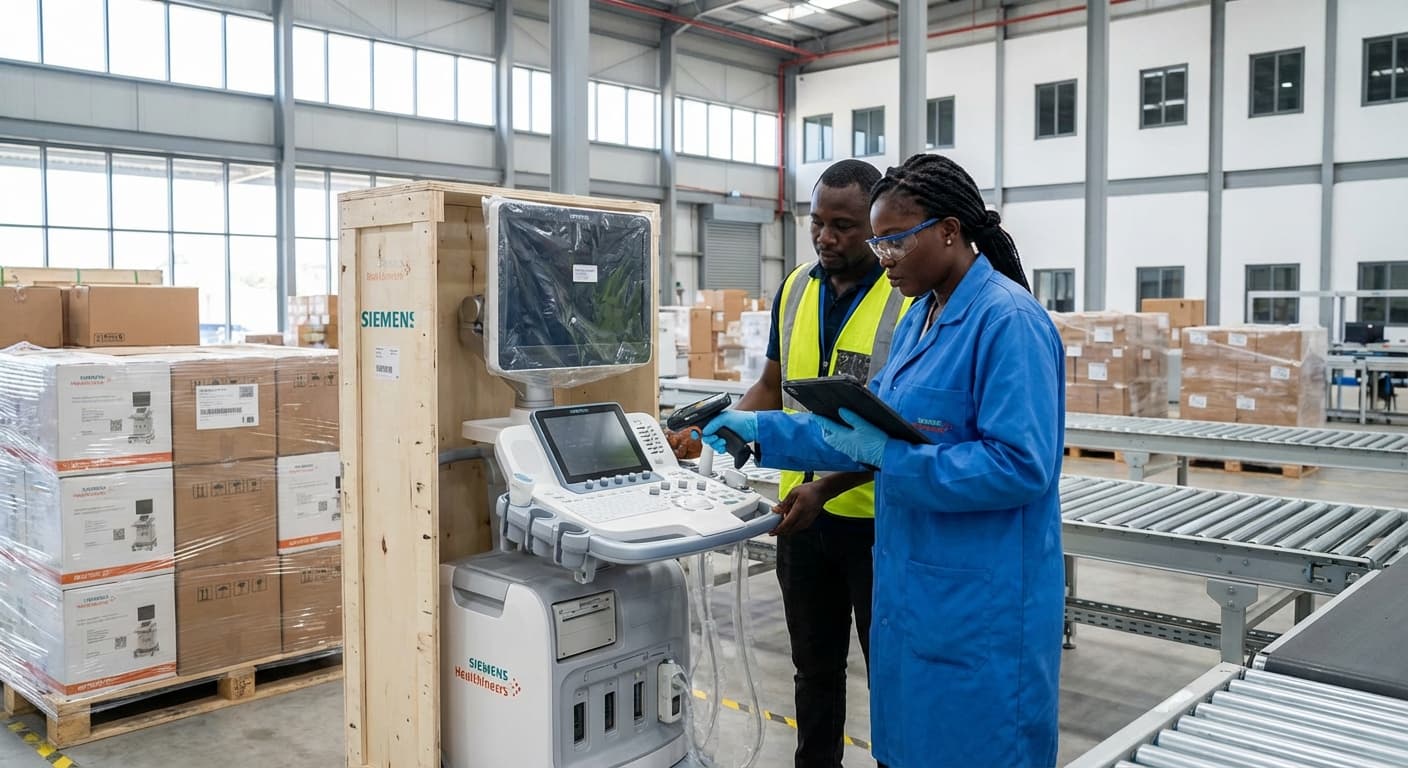
Warehouse Receiving Inspection Service (Medical Equipment) in Morocco
Engineering Excellence & Technical Support
Warehouse Receiving Inspection Service (Medical Equipment) High-standard technical execution following OEM protocols and local regulatory frameworks.
ISO 13485 Certified Quality Assurance
Our rigorous receiving inspection process adheres to ISO 13485 standards, ensuring all medical equipment meets stringent quality and safety regulations specific to the Moroccan healthcare market. We meticulously verify documentation, traceability, and conformity to regulatory requirements for immediate integration into your supply chain.
Real-time Inventory Visibility & Traceability
Leveraging advanced warehouse management systems (WMS) and barcode/RFID technology, we provide instant, real-time visibility of incoming medical equipment. This ensures precise tracking from receipt to put-away, minimizing errors, optimizing stock management, and facilitating swift recall procedures if necessary within Morocco.
Local Regulatory Compliance & Documentation Expertise
Navigate Morocco's specific import and regulatory requirements with confidence. Our team possesses in-depth knowledge of local health authority (e.g., L'Office National de la Santé Publique) regulations, customs procedures, and documentation mandates for medical equipment, ensuring seamless clearance and compliance at every stage.
What Is Warehouse Receiving Inspection Service (Medical Equipment) In Morocco?
Warehouse Receiving Inspection Service (Medical Equipment) in Morocco refers to the systematic process of verifying the identity, quantity, quality, and condition of medical equipment upon its arrival at a designated warehouse or distribution center within Morocco. This service is critical for ensuring that the medical devices comply with regulatory standards, manufacturer specifications, and contractual agreements before they are accepted into inventory and subsequently distributed to healthcare facilities. The inspection typically involves a multi-faceted examination to mitigate risks associated with damaged, counterfeit, non-compliant, or incorrect shipments, thereby safeguarding patient safety and operational efficiency.
| Who Needs This Service? | Typical Use Cases | ||||||||||||
|---|---|---|---|---|---|---|---|---|---|---|---|---|---|
| Medical Equipment Importers and Distributors: Entities responsible for bringing medical devices into Morocco for sale or onward distribution. | Hospitals and Healthcare Providers: Facilities receiving bulk orders or direct shipments of medical equipment, often requiring pre-acceptance checks before integration into their systems. | Government Agencies and Ministries: Procurement arms of government bodies responsible for acquiring medical equipment for public health infrastructure. | Third-Party Logistics (3PL) Providers: Warehousing and logistics companies handling medical equipment on behalf of manufacturers or distributors, requiring quality assurance at the receiving stage. | Manufacturers (Operating within Morocco): Local manufacturers receiving raw materials or components for medical equipment production, requiring verification of incoming goods. | Procurement and Supply Chain Management Departments: Responsible for ensuring the integrity and compliance of medical supplies throughout the supply chain. | Regulatory Compliance Officers: Ensuring that all imported and distributed medical equipment meets the standards set by the Moroccan authorities. | Initial Importation and Customs Clearance: The critical point where goods transition from international transit to the Moroccan supply chain. | Inventory Management and Stocking: Ensuring accurate and quality inventory before it is stored and potentially deployed. | Pre-Distribution Checks: Verifying equipment before it is dispatched to end-users (hospitals, clinics, etc.). | Batch and Lot Control: Confirming the correct batches and lots are received for traceability and recall management. | Product Recall Management: Facilitating efficient identification and segregation of recalled products based on receiving inspection data. | Quality Assurance for New Product Introductions: Ensuring new medical equipment meets all specifications before widespread adoption. | Compliance Audits: Supporting internal and external audits by providing documented evidence of receiving inspection procedures and outcomes. |
Key Components of Warehouse Receiving Inspection Service for Medical Equipment in Morocco:
- Documentation Verification: Cross-referencing incoming shipments against purchase orders, packing lists, invoices, certificates of origin, import permits, and any required regulatory documentation (e.g., conformity assessments, marketing authorizations from the Moroccan Ministry of Health).
- Physical Inspection: Assessing the external condition of packaging for damage, tampering, or signs of mishandling. This includes checking for proper sealing, labeling, and integrity of shipping containers.
- Identity and Quantity Verification: Confirming that the equipment received matches the description and quantity specified in the documentation. This involves visual identification of the product, model numbers, serial numbers, and batch numbers.
- Condition and Quality Assessment: Evaluating the condition of the medical equipment itself. This may include visual inspection for defects, checking for signs of prior use, and, where applicable, conducting basic functional tests or verification of seals and protective coverings.
- Traceability Verification: Ensuring that serial numbers, batch/lot numbers, and expiry dates (if applicable) are clearly marked and recorded for effective inventory management and recall purposes.
- Labeling and Marking Compliance: Verifying that all labeling, including product identification, warnings, instructions for use (IFU), and regulatory marks (e.g., CE marking if applicable for importation), is present, legible, and compliant with Moroccan regulations.
- Temperature and Environmental Monitoring: For temperature-sensitive medical equipment, inspecting and verifying that cold chain requirements have been maintained during transit, often by reviewing data loggers.
- Non-conformance Reporting: Documenting and reporting any discrepancies, damages, or deviations from specifications, initiating the process for returns, replacements, or corrective actions.
Who Needs Warehouse Receiving Inspection Service (Medical Equipment) In Morocco?
In Morocco, the demand for specialized Warehouse Receiving Inspection Services for medical equipment is driven by the critical nature of healthcare and the stringent regulatory environment. These services are essential for ensuring the quality, safety, and compliance of imported and domestically sourced medical devices before they enter the healthcare supply chain. The primary beneficiaries are entities involved in the procurement, storage, and distribution of medical equipment, who require a robust system to mitigate risks associated with faulty, counterfeit, or non-compliant products.
| Customer Type | Key Departments Involved | Specific Needs Addressed |
|---|---|---|
| Hospitals (Public & Private) | Procurement Department, Biomedical Engineering Department, Quality Assurance Department, Central Sterile Supply Department (CSSD) | Verification of product specifications, damage assessment, functional testing, ensuring compliance with national standards (e.g., Ministry of Health regulations), inventory accuracy. |
| Clinics & Specialized Medical Centers | Operations Management, Clinical Staff (requiring equipment), Procurement Officer | Ensuring equipment readiness for patient care, preventing operational delays due to faulty equipment, verifying vendor claims. |
| Pharmaceutical Distributors & Wholesalers | Logistics & Warehouse Management, Quality Control Department, Procurement Department | Maintaining product integrity during transit, preventing loss or damage, ensuring batch traceability, compliance with storage requirements, accurate inventory management for distribution. |
| Medical Device Manufacturers | Quality Assurance Department, Supply Chain Management, Regulatory Affairs Department, Warehouse Operations | Ensuring incoming raw materials or finished goods meet quality standards, verifying compliance with manufacturing specifications, preventing the use of non-conforming components. |
| Government Procurement Agencies (e.g., Ministry of Health Tender Departments) | Tender Management, Technical Evaluation Committee, Logistics & Distribution Unit | Ensuring public funds are used for compliant and quality medical equipment, safeguarding public health, verifying adherence to tender specifications, preventing the import of substandard devices. |
| NGOs (Healthcare Focused) | Program Management, Procurement, Logistics & Supply Chain | Ensuring donated or procured medical equipment is fit for purpose, especially in remote or underserved areas, verifying quality and safety for beneficiaries. |
| Research Institutions & Universities | Research Department, Lab Management, Procurement Office | Verifying the accuracy and functionality of specialized research equipment, ensuring compliance with research protocols, preventing disruptions to critical research activities. |
| Third-Party Logistics (3PL) Providers | Warehouse Operations Management, Quality Control, Client Account Management | Meeting contractual obligations for clients regarding medical equipment handling, ensuring proper storage conditions, providing verifiable inspection reports, maintaining client trust. |
Target Customers and Departments in Morocco Requiring Medical Equipment Warehouse Receiving Inspection Service
- Hospitals (Public and Private)
- Clinics and Specialized Medical Centers
- Pharmaceutical Distributors and Wholesalers
- Medical Device Manufacturers (Local and International with Moroccan Operations)
- Government Procurement Agencies
- Non-Governmental Organizations (NGOs) involved in healthcare
- Research Institutions and Universities with medical departments
- Third-Party Logistics (3PL) providers handling medical equipment
Warehouse Receiving Inspection Service (Medical Equipment) Process In Morocco
The Warehouse Receiving Inspection Service for Medical Equipment in Morocco is a critical process ensuring the quality, safety, and compliance of imported medical devices before they enter the local market. This service is typically provided by specialized inspection agencies authorized by Moroccan regulatory bodies. The workflow begins with an inquiry from the importer and concludes with a final inspection report that dictates the release of the goods.
| Stage | Activity | Description | Responsible Party | Output/Outcome |
|---|---|---|---|---|
| Initial Inquiry and Service Request | Importer contacts an accredited inspection agency, providing details about the medical equipment (type, quantity, origin, intended use, regulatory status). The agency assesses its scope of service and provides a quotation. | Importer, Inspection Agency | Service Quotation, Agreement to Proceed |
| Submission of Required Documents | Importer submits crucial documents: Commercial Invoice, Packing List, Bill of Lading/Air Waybill, Certificate of Origin, Manufacturer's Declaration, product specifications, relevant Moroccan conformity certificates (if applicable), and any other documentation mandated by Moroccan regulations (e.g., Ministry of Health registration). | Importer | Complete Document Package |
| Scope of Inspection Definition | The inspection agency reviews submitted documents, confirms the applicable Moroccan standards and regulations (e.g., specific decrees, ministerial orders related to medical devices), and defines the scope and methodology of the inspection. This includes determining the sampling plan and the specific tests or checks required. | Inspection Agency | Inspection Plan, Inspection Checklist |
| Verification at Origin | If agreed upon, the inspection agency can conduct an inspection at the supplier's premises before shipment to verify product conformity, quantity, and packaging against the order and international standards. This can mitigate risks and costs. | Inspection Agency | Pre-Shipment Inspection Report |
| Arrival at Moroccan Port/Warehouse | Upon arrival of the medical equipment at a Moroccan port or designated warehouse, the importer notifies the inspection agency. | Importer | Notification of Arrival |
| Physical Inspection and Verification | The inspection agency dispatches its qualified inspectors to the designated warehouse. They perform:
| Inspection Agency | On-site Inspection Findings |
| Quality and Safety Verification | If the inspection plan includes laboratory testing (e.g., for electrical safety, performance, sterility), samples are sent to accredited laboratories. Tests are conducted according to specified standards. | Inspection Agency (coordinating), Accredited Laboratory | Laboratory Test Reports |
| Addressing Discrepancies | If any non-conformities are identified during physical inspection or testing, the inspection agency documents them. They will then liaise with the importer and potentially the supplier to propose corrective actions (e.g., rework, return, destruction). | Inspection Agency, Importer | Non-Conformity Report, Corrective Action Plan |
| Issuance of Inspection Certificate | Based on the findings from the physical inspection and laboratory tests, the inspection agency generates a final inspection report. This report will either certify conformity (Certificate of Conformity - CoC) or indicate non-conformity. | Inspection Agency | Certificate of Conformity (CoC) or Non-Conformity Report |
| Regulatory Approval | The CoC, along with other necessary documents, is submitted to Moroccan Customs and the Ministry of Health. This allows for the official release of the medical equipment for distribution and sale within Morocco. | Importer, Customs Authorities, Ministry of Health | Customs Clearance, Market Authorization |
Key Stakeholders and Their Roles:
- Importer/Consignee: The entity bringing the medical equipment into Morocco.
- Supplier/Exporter: The overseas manufacturer or distributor of the medical equipment.
- Inspection Agency: The authorized third-party service provider conducting the inspection.
- Moroccan Ministry of Health and Social Protection (or its designated authority): The regulatory body overseeing medical device imports and quality control.
- Customs Authorities: Responsible for clearance of goods after inspection and compliance verification.
Warehouse Receiving Inspection Service (Medical Equipment) Cost In Morocco
The cost of Warehouse Receiving Inspection Services for medical equipment in Morocco can vary significantly based on several key factors. These services are crucial to ensure that imported medical devices meet regulatory standards, are free from damage, and are properly documented before entering inventory. The pricing is generally influenced by the complexity of the equipment, the volume of inspections, the location of the warehouse, the required turnaround time, and the specific qualifications and reputation of the inspection agency.
| Service Level / Equipment Type | Estimated Cost Range (MAD - Moroccan Dirham) | Typical Scope of Service |
|---|---|---|
| Basic Visual Inspection & Documentation Check (for standard equipment) | 500 - 1,500 MAD per shipment/batch | Visual check for damage, verification of shipping documents, basic quantity check. |
| Standard Inspection (for mid-complexity equipment) | 1,500 - 4,000 MAD per shipment/batch or per complex unit | Includes basic visual, documentation, initial functional check (if applicable), and verification against order details. |
| Comprehensive Inspection (for high-complexity/critical equipment) | 4,000 - 10,000+ MAD per unit | In-depth functional testing, calibration verification, safety checks, compliance assessment against Moroccan regulations, detailed reporting. |
| Volume-Based Pricing (for large quantities of similar items) | Negotiable, potentially 50 - 200 MAD per unit (depending on volume and complexity) | Reduced per-unit cost for large, consistent shipments. |
| Expedited Service Surcharge | Add 50% - 100% to base cost | Priority scheduling and faster turnaround. |
Key Pricing Factors for Warehouse Receiving Inspection Services (Medical Equipment) in Morocco:
- Type and Complexity of Medical Equipment: Highly specialized or complex medical devices (e.g., advanced imaging machines, intricate surgical robots) require more expertise and time to inspect, leading to higher costs compared to simpler equipment (e.g., basic diagnostic tools, consumables).
- Volume of Inspections: A larger number of items or shipments for inspection often allows for volume discounts. Conversely, a single, high-value, or complex item might be priced on a per-item basis.
- Warehouse Location: Inspections conducted in remote or difficult-to-access locations might incur additional travel and logistical costs, which are passed on to the client.
- Turnaround Time (TAT): Standard inspection services will have a base rate. Expedited or same-day inspections will typically command a premium due to the urgency and potential need for reallocating resources.
- Scope of Inspection: The depth of the inspection plays a vital role. This can range from basic visual checks and documentation verification to more in-depth functional testing, calibration verification, and compliance checks against specific Moroccan regulatory requirements (e.g., Ministry of Health regulations).
- Reporting Requirements: The level of detail and format of the inspection report can influence cost. Standard reports are generally included, but detailed technical reports, photographic evidence, or specific data logging might incur extra charges.
- Accreditation and Reputation of Inspection Agency: Established and accredited inspection agencies with a proven track record and specialized expertise in medical equipment are likely to charge higher rates than less experienced or unaccredited providers.
- Additional Services: Services like sample testing, customs clearance assistance related to inspection, or warehousing setup consultation alongside the receiving inspection will add to the overall cost.
- Specific Regulatory Compliance: Ensuring compliance with Moroccan medical device regulations (e.g., ANAM standards) might necessitate specialized knowledge and potentially additional checks, impacting the price.
Affordable Warehouse Receiving Inspection Service (Medical Equipment) Options
This document outlines affordable options for warehouse receiving inspection services specifically for medical equipment. We will explore various value bundles and cost-saving strategies to help your organization manage this critical process efficiently and economically.
| Service Level | Description | Value Bundle Components | Cost-Saving Strategies | Typical Cost Range (per item/shipment, estimate) |
|---|---|---|---|---|
| Basic Receiving Check | Verification of shipment contents against PO, visual inspection for external damage. | Item count verification, PO matching, outward appearance check. | Volume discounts, standardized checklists, trained in-house personnel for basic checks. | $1 - $5 per item |
| Standard Inspection | Includes basic check plus functional testing of basic operations and documentation review. | Basic check, basic functionality test (e.g., power on, display), review of accompanying documents (e.g., COA). | Batch processing, shared inspection resources with other departments, pre-negotiated supplier agreements for quality. | $5 - $15 per item |
| Comprehensive Inspection | In-depth inspection including detailed functional testing, calibration verification, and detailed documentation review. | Standard inspection, detailed operational testing, key parameter calibration check, full documentation audit (e.g., lot traceability, sterilization records). | Outsourcing to specialized third-party providers with tiered pricing, leveraging technology for automated checks, flexible scheduling to match inbound volumes. | $15 - $50+ per item (depending on equipment complexity) |
| Customized/Specialized Inspection | Tailored inspection protocols for highly complex or critical medical equipment, requiring specialized knowledge and equipment. | All comprehensive components plus specific performance validation, risk assessment, and regulatory compliance checks as per manufacturer specifications. | Long-term contracts with inspection providers, partnerships with manufacturers for training, internal expertise development for critical equipment types. | Variable, project-based pricing |
Key Considerations for Medical Equipment Receiving Inspections
- Accuracy and Compliance: Ensuring all received equipment matches purchase orders, meets quality standards, and adheres to relevant medical device regulations (e.g., FDA, MDR).
- Damage Assessment: Identifying any physical damage incurred during transit to prevent the introduction of compromised equipment into inventory.
- Traceability and Documentation: Maintaining accurate records for each inspected item, including serial numbers, lot numbers, expiration dates, and inspection results.
- Timeliness: Prompt inspection to avoid delays in inventory availability for patient care or further processing.
- Specialized Handling: Recognizing the unique requirements for inspecting sensitive and often high-value medical devices.
Verified Providers In Morocco
In the burgeoning healthcare sector of Morocco, discerning patients seek reliable and high-quality medical services. This is where the importance of 'Verified Providers' comes to the forefront. Franance Health, a leading entity in medical tourism facilitation, has established rigorous credentialing processes that ensure their network comprises only the most competent and trustworthy healthcare professionals and facilities. Choosing a Franance Health verified provider means opting for safety, expertise, and a superior patient experience. Their stringent vetting encompasses medical qualifications, professional accreditations, state-of-the-art facilities, and adherence to international patient care standards. This commitment to excellence makes Franance Health credentials synonymous with the best choice for medical services in Morocco.
| Verification Aspect | Franance Health Standard | Patient Benefit |
|---|---|---|
| Medical Qualifications & Experience | Extensive review of degrees, certifications, and professional history. | Ensures treatment by highly skilled and experienced practitioners. |
| Facility Accreditation & Equipment | Verification of hospital/clinic licensing, international accreditations, and availability of advanced medical technology. | Guarantees access to safe and well-equipped medical environments. |
| Patient Care Protocols | Assessment of patient safety measures, hygiene standards, and communication protocols. | Promotes a secure and comfortable healing process. |
| Ethical Practices & Transparency | Commitment to transparent pricing, informed consent, and ethical treatment. | Builds trust and empowers patients with clear understanding of their care. |
| Post-Treatment Support | Availability of follow-up care and support services. | Ensures a complete and satisfactory recovery experience. |
Why Franance Health Verified Providers are the Best Choice in Morocco:
- Rigorous Credentialing Process: Franance Health employs a multi-faceted verification system that goes beyond basic licensing.
- Expert Medical Professionals: Access to highly qualified doctors and specialists with proven track records.
- Advanced Facilities: Partnerships with hospitals and clinics equipped with modern technology and infrastructure.
- International Standards Compliance: Assurance of adherence to global best practices in patient care and safety.
- Patient-Centric Approach: Focus on delivering personalized care and a positive patient journey.
- Comprehensive Service Network: A wide range of specialties and treatments available under one umbrella.
- Trust and Reliability: The Franance Health name signifies a commitment to transparency and ethical medical practices.
Scope Of Work For Warehouse Receiving Inspection Service (Medical Equipment)
This Scope of Work (SOW) outlines the requirements for the Warehouse Receiving Inspection Service for Medical Equipment. The objective is to ensure that all incoming medical equipment meets the defined technical specifications, quality standards, and regulatory requirements prior to being accepted into inventory. This service is critical for maintaining the integrity of medical supplies, ensuring patient safety, and complying with relevant healthcare regulations.
| Technical Deliverable | Description | Standard Specification / Requirement |
|---|---|---|
| Receiving Inspection Report | A comprehensive report detailing the findings of each inspection. | Must include: PO/Order Number, Date of Receipt, Supplier Name, Item Description, Quantity Received, Quantity Inspected, Visual Condition (Packaging and Product), Documentation Status, Serial/Lot Numbers, Functional Test Results (if applicable), Discrepancy Log, Photographs of Issues, Inspector's Name and Signature, Date of Inspection. |
| Non-Conformance Notification | Formal notification of any identified deviations from specifications. | Must be submitted within 24 hours of inspection completion. Include detailed description of non-conformance, affected item(s), quantity, and proposed action (e.g., hold for review, return to supplier). |
| Photographic Evidence | High-resolution images documenting any damages, defects, or incorrect items. | Images should be clear, well-lit, and clearly show the nature of the issue. Must be attached to the Receiving Inspection Report. |
| Disposition Recommendation | Service Provider's recommendation for handling non-conforming items. | Recommendations can include: Accept as-is (with documented deviation), Reject and return to supplier, Quarantine for further evaluation, Rework (if applicable and authorized). |
| Documentation Verification Checklist | Confirmation that all required supporting documents are present and accurate. | Refer to Annex A for a comprehensive list of required documentation per equipment category. Each document must be checked for completeness and validity. |
| Functional Test Log (if applicable) | Record of functional tests performed and their outcomes. | Must include: Equipment identifier (Model/Serial), Test performed, Test parameters, Expected result, Actual result, Pass/Fail status, Date of test, Tester's name. |
Key Activities and Responsibilities
- Upon arrival of medical equipment at the designated warehouse, the Service Provider will conduct a thorough inspection.
- Verify shipment contents against the accompanying Purchase Order (PO) and/or packing list, ensuring all ordered items are present and accounted for.
- Perform visual inspection of packaging for any signs of damage, tampering, or compromise.
- Inspect the medical equipment itself for any visible defects, damage, or discrepancies from the expected condition.
- Verify that all required documentation (e.g., Certificate of Analysis (CoA), Certificate of Origin (CoO), sterilisation certificates, user manuals, warranty information) is present and complete.
- Check serial numbers and lot numbers against documentation and ensure they match.
- Perform functional testing where applicable and feasible without compromising the sterility or integrity of the equipment (as per agreed-upon test protocols).
- Confirm that the equipment meets the technical specifications and standard specifications detailed in this SOW and associated documents.
- Record all inspection findings, including any discrepancies, damages, or non-conformities, in a detailed inspection report.
- Capture photographic evidence of any damages, defects, or discrepancies.
- Segregate and clearly label any non-conforming products awaiting disposition.
- Communicate inspection results to the designated client contact promptly.
- Adhere to all relevant regulatory requirements and client-specific standard operating procedures (SOPs).
Service Level Agreement For Warehouse Receiving Inspection Service (Medical Equipment)
This Service Level Agreement (SLA) outlines the service standards for Warehouse Receiving Inspection Services specifically for medical equipment. It defines the response times and uptime guarantees to ensure efficient and reliable handling of inbound medical equipment.
| Service Component | Uptime Guarantee | Response Time (Standard) | Response Time (Expedited - Optional Add-on) |
|---|---|---|---|
| Warehouse Receiving Inspection Service (Medical Equipment): | 99.5% of scheduled operational hours, Monday-Friday, 8:00 AM - 6:00 PM (excluding public holidays). | Within 4 business hours of notification of arrival. | Within 2 business hours of notification of arrival. |
| System Availability (Tracking & Reporting): | 99.8% of scheduled operational hours, 24/7. | N/A (Continuous availability) | N/A (Continuous availability) |
| Inspection Personnel Availability: | Ensured during scheduled operational hours for standard service. For expedited, availability is guaranteed within the expedited response time. | Availability for scheduled inspections. | Guaranteed within expedited response time. |
Key Performance Indicators (KPIs)
- Response Time: The maximum time allowed from notification of incoming medical equipment to the commencement of the inspection process.
- Uptime Guarantee: The percentage of scheduled operational hours during which the receiving inspection service is available and functional.
Frequently Asked Questions

Ready when you are
Let's scope your Warehouse Receiving Inspection Service (Medical Equipment) in Morocco project in Morocco.

Scaling healthcare logistics and technical systems across the entire continent.