
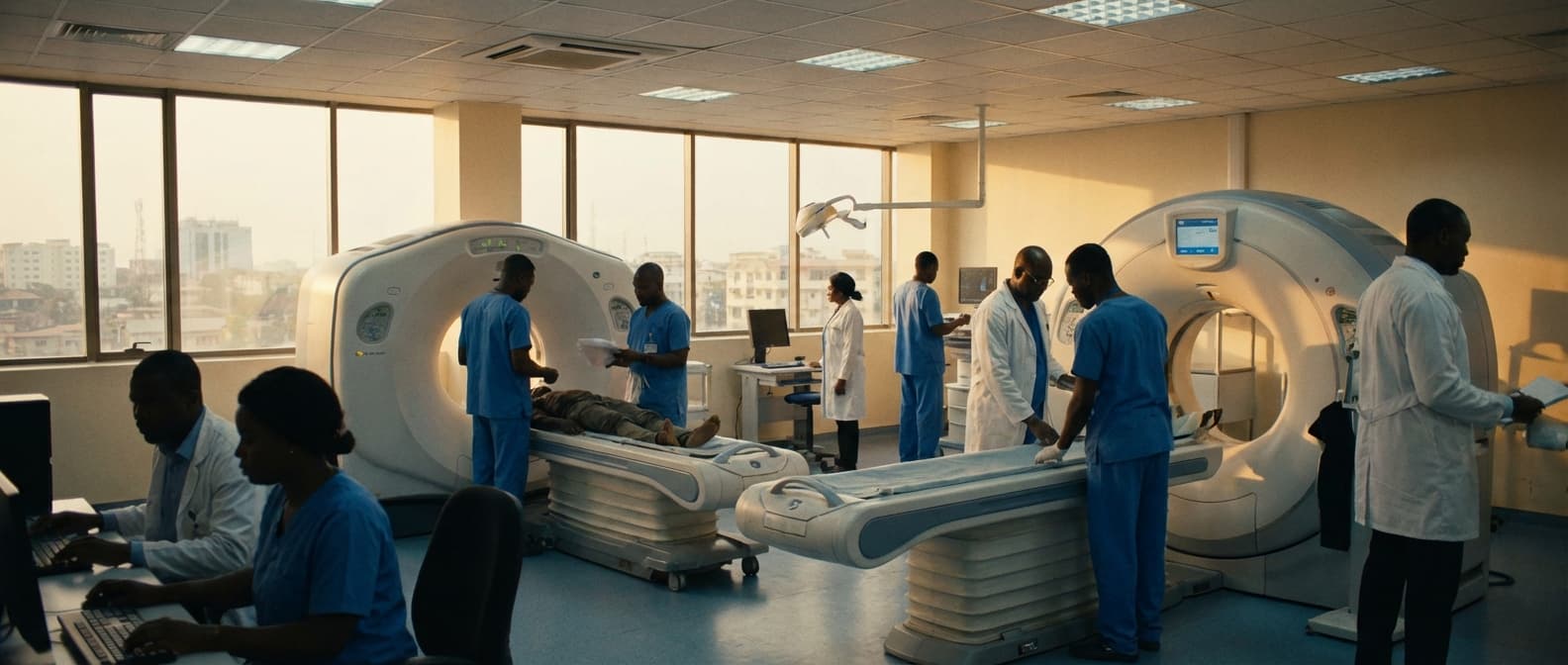
Imaging Acceptance Testing & QA in Morocco
Engineering Excellence & Technical Support
Commissioning and periodic QA for CT/MRI/X‑ray/US/Mammo. High-standard technical execution following OEM protocols and local regulatory frameworks.
Rigorous Imaging Protocol Validation
Ensuring all imaging equipment, from CT scanners to X-ray machines, adheres to Moroccan regulatory standards and manufacturer specifications through comprehensive pre-acquisition and post-acquisition protocol testing. This includes verifying image quality parameters, radiation dose optimization, and artifact reduction.
Advanced Image Quality Assessment & Calibration
Implementing sophisticated image analysis techniques and quantitative metrics to assess diagnostic accuracy and consistency. Our QA processes involve precise calibration of imaging devices using phantom studies and specialized software to guarantee optimal image performance and reproducibility across multiple sites in Morocco.
AI-Powered Anomaly Detection & Performance Monitoring
Leveraging cutting-edge AI algorithms to automatically detect subtle anomalies and deviations in image datasets during acceptance testing. This proactive approach minimizes potential diagnostic errors and allows for continuous performance monitoring of imaging systems deployed throughout Morocco, ensuring high-level patient care.
What Is Imaging Acceptance Testing & Qa In Morocco?
Imaging Acceptance Testing (IAT) and Quality Assurance (QA) in Morocco, in a technical context, refers to a comprehensive suite of verification and validation processes designed to ensure that imaging systems and their associated software applications meet defined performance, functional, and operational requirements prior to deployment or significant updates. This encompasses evaluating the end-to-end imaging workflow, from image acquisition through processing, storage, retrieval, and display, verifying its accuracy, reliability, and adherence to relevant medical, industry, and regulatory standards. The objective is to mitigate risks, optimize system performance, ensure diagnostic integrity, and guarantee user satisfaction within the Moroccan healthcare and related sectors.
| Who Needs Imaging Acceptance Testing & QA in Morocco? | Typical Use Cases | |||||
|---|---|---|---|---|---|---|
| Hospitals and Clinics: Particularly those implementing new PACS/RIS, upgrading existing imaging modalities (MRI, CT, X-ray, Ultrasound), or integrating imaging into their EMR systems. | Radiology Departments: For new modality installations, software updates, or workflow optimization initiatives. | Imaging Centers: To ensure the reliable operation of their imaging equipment and associated software for diagnostic purposes. | Medical Device Manufacturers and Vendors: As part of their product release cycle to validate system performance and compliance before deployment to Moroccan clients. | Government Health Agencies and Regulatory Bodies: For oversight and assurance of the quality and safety of medical imaging services within the national healthcare infrastructure. | Research Institutions: When utilizing imaging systems for clinical trials or research studies requiring validated data integrity. | |
| New PACS/RIS Implementation: Verifying successful installation, configuration, and integration with existing modalities and EMR. | Modality Upgrades or Replacements: Testing new scanners (e.g., CT, MRI, PET) to ensure accurate image acquisition, reconstruction, and seamless workflow integration. | Software Updates and Patches: Validating that new software versions do not introduce regressions or compromise existing functionality or image quality. | Workflow Optimization Projects: Assessing the impact of process changes on imaging efficiency, turnaround times, and data flow. | Interoperability Testing: Ensuring smooth data exchange between imaging systems and other hospital IT infrastructure. | Disaster Recovery and Business Continuity Planning: Testing the resilience and recoverability of imaging archives and access. | Compliance Audits: Providing evidence of system adherence to national and international standards and regulations. |
Key Components of Imaging Acceptance Testing & QA in Morocco
- System Functionality Verification: Ensuring all hardware components (e.g., scanners, detectors, workstations) and software modules (e.g., PACS, RIS, EMR integration, image processing algorithms) operate as specified in the requirements documentation.
- Image Quality Assessment: Evaluating image fidelity based on parameters such as resolution, signal-to-noise ratio (SNR), contrast-to-noise ratio (CNR), spatial linearity, geometric accuracy, and artifact presence, often against established benchmarks or phantom studies.
- Workflow Validation: Testing the entire patient imaging pathway, including patient registration, scheduling, image acquisition protocols, DICOM conformance, archiving, retrieval, and distribution to referring physicians or other systems.
- Data Integrity and Security: Verifying the accuracy, completeness, and non-repudiation of imaging data, along with the implementation and effectiveness of security measures (access controls, encryption) to comply with data privacy regulations.
- Performance Benchmarking: Measuring and validating system response times for critical operations like image loading, searching, and transfer, ensuring it meets predefined service level agreements (SLAs).
- Integration Testing: Confirming seamless interoperability with other healthcare IT systems, such as Electronic Medical Records (EMR), Laboratory Information Systems (LIS), and billing systems, often via HL7 or FHIR interfaces.
- User Acceptance Testing (UAT): Involving end-users (radiologists, technologists, administrators) to validate that the system meets their operational needs and is intuitive to use.
- Compliance and Regulatory Adherence: Ensuring the system complies with Moroccan healthcare regulations, international standards (e.g., DICOM, IHE profiles), and any specific client requirements.
- Documentation Review: Validating the accuracy and completeness of user manuals, technical guides, and training materials.
Who Needs Imaging Acceptance Testing & Qa In Morocco?
Imaging Acceptance Testing & QA are crucial for ensuring that medical imaging equipment and software function correctly, produce accurate diagnostic results, and comply with regulatory standards. In Morocco, like any other nation with a growing healthcare sector, these processes are vital for patient safety, effective treatment, and operational efficiency. The demand for such services extends to various healthcare providers and institutions.
| Target Customer Type | Key Departments Involved | Primary Needs Addressed |
|---|---|---|
| Hospitals (Public & Private) | Radiology, Biomedical Engineering, IT, Quality Assurance | Accurate diagnosis, patient safety, equipment reliability, regulatory compliance, efficient workflow |
| Diagnostic Imaging Centers | Radiology, Operations Management, IT | High-quality imaging, patient throughput, service consistency, competitive edge |
| Clinics & Medical Practices | Clinical Staff (e.g., Radiographers, Physicians), Practice Management, IT | Accurate preliminary diagnoses, cost-effectiveness, patient satisfaction, compliance |
| Healthcare IT Departments | IT Operations, PACS Administrators, Network Engineers | Data integrity, system interoperability (PACS/RIS/EMR), security, system performance, disaster recovery |
| Biomedical Engineering Departments | Biomedical Engineers, Technicians | Equipment calibration, functional verification, preventative maintenance, post-repair validation, compliance with service standards |
| Quality Assurance & Patient Safety Departments | QA Officers, Patient Safety Managers, Risk Managers | Risk mitigation, adherence to standards, patient outcomes, accreditation readiness, incident prevention |
Target Customers and Departments in Morocco Requiring Imaging Acceptance Testing & QA
- {"title":"Hospitals (Public & Private)","description":"Hospitals are the primary consumers of medical imaging technology, from general radiography and CT scanners to advanced MRI and PET/CT systems. They require rigorous testing to ensure the reliability and accuracy of these systems for patient diagnosis and treatment planning."}
- {"title":"Diagnostic Imaging Centers","description":"Specialized centers focusing solely on diagnostic imaging services rely heavily on their equipment. Acceptance testing and ongoing QA are essential for maintaining high diagnostic quality and patient throughput."}
- {"title":"Clinics and Medical Practices","description":"Larger clinics and specialized medical practices that utilize imaging modalities (e.g., orthopedic clinics with X-ray, cardiology practices with ultrasound) also need to ensure their equipment is performing optimally."}
- {"title":"Radiology Departments","description":"This is the core department responsible for the acquisition and interpretation of medical images. They are directly impacted by the performance of imaging equipment and PACS/RIS systems."}
- {"title":"IT Departments (Healthcare IT)","description":"With the increasing digitization of medical imaging (PACS, RIS, EMR integration), IT departments play a significant role. They need QA to ensure seamless integration, data integrity, and system performance."}
- {"title":"Biomedical Engineering Departments","description":"These departments are responsible for the maintenance, repair, and calibration of medical equipment. Acceptance testing and QA are integral to their work to verify equipment functionality after installation or repair."}
- {"title":"Quality Assurance & Patient Safety Departments","description":"These departments are tasked with overseeing all aspects of quality within a healthcare facility, including the safety and effectiveness of medical devices. Imaging QA directly contributes to patient safety and regulatory compliance."}
- {"title":"Regulatory Bodies & Government Health Agencies","description":"While not direct purchasers of testing services, these entities mandate and oversee the compliance of medical equipment with national and international standards. They rely on evidence of proper testing and QA."}
- {"title":"Medical Device Manufacturers & Distributors (Local Operations)","description":"Local branches or distributors of medical imaging equipment manufacturers often require acceptance testing and QA services to ensure their products are installed and functioning correctly in the Moroccan market."}
- {"title":"Research Institutions & Universities with Medical Programs","description":"Institutions involved in medical research or training future healthcare professionals need reliable imaging equipment for their studies and educational purposes, necessitating robust QA."}
Imaging Acceptance Testing & Qa Process In Morocco
This document outlines the typical workflow for Imaging Acceptance Testing and Quality Assurance (QA) processes in Morocco, covering the journey from initial inquiry to final execution and sign-off. The process is designed to ensure that imaging systems and solutions meet specified requirements, perform reliably, and are fit for purpose within the Moroccan healthcare or industrial context. The workflow emphasizes collaboration between vendors, clients, and QA teams to achieve successful implementation and operation.
| Stage | Description | Key Activities | Involved Parties | Deliverables/Outcomes |
|---|---|---|---|---|
| Initial engagement to understand the client's needs for imaging solutions. | Client defines needs, budget, and desired outcomes. Vendor/Solution provider understands scope. Site surveys may be conducted. | Client (Hospital, Clinic, Industrial Facility), Vendor/Solution Provider | Documented initial requirements, understanding of client's imaging needs. |
| The vendor proposes a solution tailored to the gathered requirements. | Vendor designs the imaging system, specifies hardware/software, and outlines integration. Includes a preliminary cost estimate. | Vendor/Solution Provider, Client (for feedback) | Detailed technical proposal, solution architecture, initial cost breakdown. |
| Formalizing the agreement between client and vendor. | Discussions on pricing, timelines, service level agreements (SLAs), warranties, and acceptance criteria. Contract signing. | Client, Vendor/Solution Provider, Legal Departments | Signed contract, mutually agreed acceptance criteria. |
| Installation and initial setup of the imaging system at the client's site or designated testing environment. | Hardware installation, software installation, network configuration, initial parameter setup. | Vendor/Solution Provider, Client (for site access and basic support) | Installed and configured imaging system ready for testing. |
| Internal testing by the vendor to ensure the system functions as expected before client involvement. | Vendor performs functional tests, performance tests, and basic quality checks according to their internal standards. | Vendor/Solution Provider | Internal test reports, identified and resolved initial issues. |
| Creation of a detailed plan for how the system will be tested and verified. | Define test cases, scenarios, test data, expected results, and the criteria for passing/failing each test. Incorporates contractually agreed acceptance criteria. | Client, Vendor/Solution Provider (collaboration) | Formal Acceptance Testing Plan (ATP), Test Cases. |
| Ensuring the client's environment is ready for testing. | Verification of power, network connectivity, environmental conditions, and availability of necessary personnel and data for testing. | Client, Vendor/Solution Provider (support) | Ready and suitable client environment for testing. |
| Training the client's end-users on how to operate and interact with the imaging system. | Hands-on training sessions, user manuals, and Q&A for end-users. Crucial for effective user-acceptance testing. | Vendor/Solution Provider, Client (End-Users) | Trained end-users, basic understanding of system operation. |
| The core testing phase where the system is evaluated against the ATP. | Execution of test cases by client users and QA personnel, with vendor support. Documentation of results, screenshots, and observations. | Client (Users, QA Team), Vendor/Solution Provider (support) | Completed test case results, initial bug/defect log. |
| Identification, documentation, and fixing of any issues found during testing. | Client reports defects. Vendor investigates, prioritizes, and implements fixes. Defects are logged and tracked. | Client (reporting), Vendor/Solution Provider (fixing) | Defect log with status updates, resolved defects. |
| Confirming that resolved defects have been fixed and the system now meets requirements. | Client re-tests affected functionalities and performs regression testing to ensure no new issues were introduced. | Client (Users, QA Team) | Verification of defect resolution, updated test results. |
| Formal acknowledgement by the client that the system meets the agreed-upon requirements. | Review of all test results, outstanding issues (if any, with agreed workarounds or future plans), and formal sign-off document. | Client (authorized personnel), Vendor/Solution Provider | Signed Acceptance Certificate, official handover. |
| Ongoing support and quality monitoring after the system is live. | System monitoring, performance checks, user feedback collection, and continuous improvement initiatives. | Vendor/Solution Provider (support), Client (ongoing usage) | Stable system performance, ongoing user satisfaction, potential for system updates/enhancements. |
Imaging Acceptance Testing & QA Process Workflow
- Inquiry & Requirements Gathering
- Proposal & Solution Design
- Contract Negotiation & Agreement
- System Setup & Configuration
- Pre-Acceptance Testing (Vendor Side)
- Acceptance Testing Plan Development
- Client Site Preparation
- User Training & Familiarization
- Formal Acceptance Testing Execution
- Defect Reporting & Resolution
- Re-testing & Verification
- Final Acceptance & Sign-off
- Post-Implementation Support & QA
Imaging Acceptance Testing & Qa Cost In Morocco
Imaging acceptance testing and Quality Assurance (QA) costs in Morocco are influenced by several factors, leading to a range of pricing. These factors include the complexity and volume of imaging data, the specific QA methodologies employed, the required level of detail in reporting, the expertise of the testing team, and the chosen vendor or service provider. Larger projects with intricate datasets or specialized imaging modalities (e.g., MRI, CT scans) will naturally incur higher costs than simpler projects involving standard X-rays or 2D images. The rigor of the QA process, from basic validation checks to advanced image analysis and clinical correlation, also significantly impacts the price. Geographic location within Morocco can also play a minor role, with services in major cities potentially having slightly different pricing structures compared to more remote areas. Ultimately, obtaining detailed quotes based on specific project requirements is the most effective way to determine accurate costs.
| Service Component | Estimated Cost Range (MAD) | Notes |
|---|---|---|
| Basic Image Validation (e.g., format, resolution check) | 500 - 2,000 | Per batch of images or per project, depending on volume. |
| Comprehensive QA for a small project (e.g., <100 images, standard modality) | 3,000 - 10,000 | Includes data integrity, metadata, and basic visual checks. |
| Advanced QA for a medium project (e.g., 100-500 images, multiple modalities) | 10,000 - 35,000 | May include performance testing, some analysis, and detailed reporting. |
| Full-scale QA for a large project (e.g., >500 images, complex modalities, extensive analysis) | 35,000+ | Can extend significantly based on bespoke requirements and specialized testing. |
| Hourly Rate for Specialized QA Engineer | 250 - 700 | Applicable for custom testing or ongoing support. Rates vary by expertise. |
| Software Licensing/Setup (if applicable) | Variable | Depends on the specific imaging analysis software required. |
Key Pricing Factors for Imaging Acceptance Testing & QA in Morocco
- Data Volume and Complexity: The sheer number of images and their inherent complexity (e.g., resolution, file size, 3D rendering) directly affects testing time and resources.
- Imaging Modality: Different imaging types (X-ray, CT, MRI, Ultrasound, PET) may require specialized software, hardware, and expertise, influencing costs.
- QA Methodology and Scope: The extent of testing, including visual inspection, data integrity checks, metadata validation, signal-to-noise ratio analysis, and clinical correlation, determines the effort involved.
- Reporting Requirements: The level of detail and format of the QA reports (e.g., executive summaries, detailed technical findings, statistical analysis) impact the time spent on documentation.
- Expertise and Experience of the QA Team: Highly skilled and experienced testers, particularly those with domain knowledge in medical imaging, command higher rates.
- Software and Hardware Requirements: The need for specialized imaging viewers, analysis software, or high-performance computing can add to the overall cost.
- Vendor/Service Provider Choice: Different companies will have varying overheads, profit margins, and service packages.
- Project Timeline: Urgent projects may incur premium charges for expedited testing and reporting.
Affordable Imaging Acceptance Testing & Qa Options
Ensuring the quality and accuracy of medical imaging is paramount for patient care and diagnostic confidence. However, the cost of comprehensive imaging acceptance testing (AT) and quality assurance (QA) can be a significant barrier for many healthcare facilities. This document outlines affordable imaging AT & QA options, focusing on value bundles and cost-saving strategies to make these essential services more accessible.
| Strategy | Description | Cost-Saving Benefit |
|---|---|---|
| Value Bundles | Service providers offer packages that combine AT and ongoing QA services for multiple imaging modalities (e.g., X-ray, CT, MRI, Ultrasound) at a reduced combined price compared to purchasing services individually. | Negotiated lower rates for comprehensive service contracts; predictable annual costs. |
| Tiered Service Levels | Offering different levels of service based on a facility's needs and budget. Basic tiers might include essential tests, while premium tiers offer more in-depth analysis and reporting. | Allows facilities to choose services that align with their risk tolerance and budget; avoids paying for unnecessary testing. |
| Remote QA Monitoring & Support | Utilizing secure cloud-based platforms and remote access to perform certain QA tasks, analyze data, and provide troubleshooting without requiring on-site technician visits for every check. | Reduces travel costs for service providers, leading to lower per-test fees; faster resolution of minor issues. |
| Shared Service Contracts | Collaborating with other local healthcare facilities to jointly contract with a service provider. This increases the volume of services purchased, allowing for bulk discounts. | Leverages economies of scale for significant cost reductions for all participating facilities. |
| Internal QA Training & Empowerment | Training qualified in-house personnel (e.g., radiographers, technologists) to perform certain routine QA tasks using approved phantoms and protocols under the guidance of an external physics group. | Reduces reliance on external providers for routine checks; allows external specialists to focus on more complex testing and analysis. |
| Modular & Scalable Testing | Implementing testing strategies that can be expanded or contracted based on budget cycles or equipment lifecycles. This might involve prioritizing certain tests or modalities during leaner periods. | Flexibility to adapt to financial constraints without completely abandoning QA; phased approach to capital expenditure for testing services. |
| Long-Term Service Agreements | Committing to multi-year service contracts often comes with preferential pricing and guaranteed service availability. | Locks in current pricing, potentially mitigating future price increases; ensures continuity of essential services. |
| Consolidated Vendor Relationships | Partnering with a single vendor for all imaging AT/QA needs can sometimes lead to better pricing and streamlined management. | Potential for volume discounts and simplified administrative processes. |
Understanding Imaging Acceptance Testing (AT) & Quality Assurance (QA)
- Acceptance Testing (AT): Performed when new imaging equipment is installed or undergoes major upgrades. It verifies that the system meets manufacturer specifications and regulatory requirements before it's put into clinical use.
- Quality Assurance (QA): Ongoing testing and monitoring conducted regularly (e.g., daily, weekly, monthly) to ensure imaging equipment consistently produces high-quality images and performs reliably over its lifespan.
- Key Components: Both AT and QA involve a range of tests, including image quality assessments, dose measurements, performance checks, and calibration procedures, often utilizing phantoms and specialized test equipment.
Verified Providers In Morocco
Navigating the healthcare landscape in Morocco can be complex, with a growing need for reliable and trustworthy medical services. Franance Health stands out as a leading provider, distinguished by its rigorous credentialing process and unwavering commitment to quality. This meticulous vetting ensures that patients have access to the most competent and ethical healthcare professionals available, making Franance Health a superior choice for your medical needs in Morocco. Their dedication to transparency and patient well-being is at the core of their operations, setting a benchmark for excellence in the region.
| Provider Type | Franance Health Verification Standards | Benefits for Patients |
|---|---|---|
| Physicians | Medical license verification, board certifications, university affiliations, clean disciplinary record, peer recommendations. | Access to highly qualified specialists, accurate diagnoses, evidence-based treatment plans, trustworthy medical advice. |
| Surgeons | Surgical board certification, documented surgical experience, hospital privileges, patient outcome data analysis, adherence to sterile protocols. | Safe surgical procedures, successful outcomes, reduced complication rates, expert post-operative care. |
| Dentists | Dental board registration, specialized training in relevant fields (e.g., orthodontics, periodontics), continuing education compliance, patient satisfaction surveys. | Comprehensive oral healthcare, effective treatments for dental issues, aesthetically pleasing results, pain management. |
| Therapists (Physical, Occupational, Mental Health) | Professional licensure, specific therapeutic modality certifications, supervised practice experience, ongoing professional development. | Effective rehabilitation, improved mobility and function, personalized mental health support, confidential and professional guidance. |
| Diagnostic Centers & Laboratories | Accreditation by national/international bodies (e.g., ISO), up-to-date equipment, qualified technicians and radiologists, robust quality control systems. | Accurate and reliable diagnostic results, timely reporting, advanced imaging and testing capabilities, data integrity. |
Why Franance Health is the Superior Choice for Verified Providers in Morocco:
- Rigorous Credentialing and Verification Process: Franance Health employs an exhaustive vetting system for all affiliated healthcare providers. This includes verifying medical licenses, professional certifications, educational backgrounds, and peer reviews to ensure only the highest caliber professionals are part of their network.
- Commitment to Quality and Patient Safety: Patient well-being is paramount. Franance Health's providers adhere to stringent quality standards and best practices in healthcare delivery, minimizing risks and maximizing positive patient outcomes.
- Ethical Practice and Professionalism: Beyond technical skills, Franance Health vets providers for their ethical conduct, communication abilities, and patient-centered approach. This ensures a compassionate and respectful healthcare experience.
- Access to Specialized Expertise: The network boasts a diverse range of specialists across various medical disciplines, ensuring patients can find the right expert for their specific condition or treatment requirement.
- Seamless Patient Experience: Franance Health streamlines the process of finding and booking appointments with verified providers, offering a user-friendly platform and dedicated support to guide patients through their healthcare journey.
- Continuous Monitoring and Feedback: Provider performance is continuously monitored through patient feedback and internal reviews, allowing for ongoing improvement and maintenance of high standards.
Scope Of Work For Imaging Acceptance Testing & Qa
This document outlines the Scope of Work (SOW) for Imaging Acceptance Testing and Quality Assurance (QA). It details the technical deliverables required and the standard specifications to be adhered to throughout the testing process. The objective is to ensure that all imaging systems and related software meet the defined functional, performance, and quality requirements before final acceptance and deployment.
| Deliverable | Description | Standard Specification/Reference | Acceptance Criteria |
|---|---|---|---|
| Test Plan Document | Comprehensive document outlining the testing strategy, scope, test cases, schedule, resources, and entry/exit criteria. | IEEE 829-1998 (Standard for Software Test Documentation) | Approved by project stakeholders and QA lead. |
| Test Cases (Functional, Performance, Integration) | Detailed step-by-step procedures to execute tests, including input data, expected results, and pass/fail conditions. | System Requirements Specification (SRS), User Stories, Use Cases | Coverage of all critical functionalities and performance metrics outlined in the SRS. |
| Test Data Sets | Representative and diverse datasets (images, patient records, etc.) for testing various scenarios, including edge cases and negative testing. | Real-world imaging data (anonymized), simulated data | Adequate volume and variety to thoroughly test system capabilities. |
| Defect/Bug Reports | Detailed documentation of identified issues, including steps to reproduce, severity, priority, and impact. | Industry best practices for defect tracking, e.g., JIRA, Bugzilla | All critical and high-priority defects resolved or have a documented mitigation plan. |
| Test Execution Reports | Summaries of test execution, including pass/fail rates, executed test cases, and outstanding defects. | Standard QA reporting templates | Regular reporting to stakeholders on testing progress and status. |
| Performance Benchmarking Report | Results of performance testing, including response times, throughput, and resource utilization under various load conditions. | System design specifications, industry benchmarks | System performance meets or exceeds defined targets for key metrics. |
| Usability Testing Report | Findings from user testing, assessing ease of use, user satisfaction, and workflow efficiency. | Nielsen Norman Group usability heuristics, user feedback mechanisms | Positive user feedback and demonstration of efficient workflows. |
| Security Audit Report (if applicable) | Results of security testing, identifying vulnerabilities and ensuring compliance with security policies. | OWASP Top 10, relevant security standards (e.g., HIPAA) | No critical security vulnerabilities identified. |
| Final Acceptance Test Report | Comprehensive summary of all testing activities, defect resolution status, and a recommendation for acceptance. | Internal QA standards, project sign-off procedures | Formal sign-off from the client/project sponsor. |
| User Manuals & Training Materials (Review) | Verification of the accuracy and completeness of user documentation and training materials related to the imaging system. | System documentation standards, clarity and accuracy of instructions | Documentation accurately reflects system functionality and is easy to understand. |
Key Objectives
- Verify and validate that imaging systems function according to design specifications.
- Ensure the accuracy, integrity, and quality of captured, processed, and stored images.
- Confirm adherence to relevant industry standards and regulatory requirements.
- Assess system performance, reliability, and usability.
- Identify and document any defects, deviations, or areas for improvement.
Service Level Agreement For Imaging Acceptance Testing & Qa
This Service Level Agreement (SLA) outlines the guaranteed response times and uptime for Imaging Acceptance Testing and Quality Assurance (QA) services provided by [Your Company Name] (hereinafter referred to as 'Provider') to [Client Company Name] (hereinafter referred to as 'Client'). This SLA is an addendum to the Master Services Agreement (MSA) dated [Date of MSA].
| Service Component | Uptime Guarantee | Response Time (Critical Issues) | Response Time (Standard Issues) |
|---|---|---|---|
| Imaging Acceptance Testing Platform Availability | 99.9% Monthly Uptime | N/A (Testing is initiated by Client submission) | N/A (Testing is initiated by Client submission) |
| Imaging QA Monitoring System Availability | 99.9% Monthly Uptime | 1 hour | 4 business hours |
| Support for Testing & QA Inquiries (Escalated) | N/A | 2 business hours | 8 business hours |
| Initial Review of Submitted Imaging Data for Acceptance Testing | N/A | 4 business hours (after submission and confirmation of readiness) | 8 business hours (after submission and confirmation of readiness) |
| Delivery of Acceptance Testing Report | N/A | 24 business hours (after successful completion of testing) | 48 business hours (after successful completion of testing) |
| Notification of QA Findings (Critical) | N/A | 4 business hours (of identification) | N/A |
| Notification of QA Findings (Standard) | N/A | N/A | 24 business hours (of identification) |
Scope of Services
- Imaging Acceptance Testing: Includes verification of image quality, data integrity, format compliance, and adherence to specified technical requirements for all submitted imaging data.
- Imaging Quality Assurance (QA): Encompasses ongoing monitoring, review, and validation of imaging processes and outputs to ensure consistent quality and compliance with defined standards.
Frequently Asked Questions

Ready when you are
Let's scope your Imaging Acceptance Testing & QA in Morocco project in Morocco.

Scaling healthcare logistics and technical systems across the entire continent.