
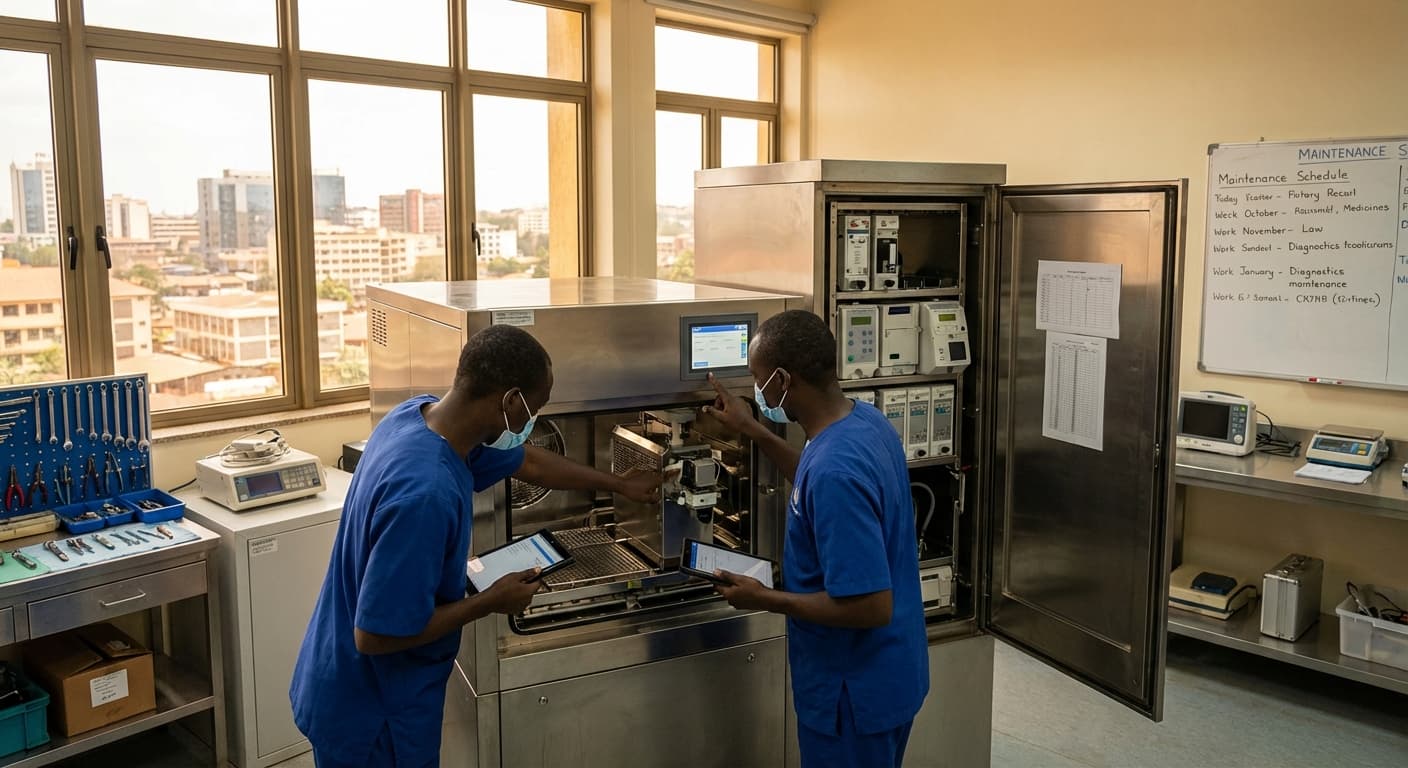
Total Cost of Ownership (TCO) & Lifecycle Budgeting Service in Morocco
Engineering Excellence & Technical Support
Total Cost of Ownership (TCO) & Lifecycle Budgeting Service High-standard technical execution following OEM protocols and local regulatory frameworks.
Optimized Asset Lifecycle Management
Leveraging advanced data analytics and predictive modeling to accurately forecast and manage all costs associated with assets throughout their entire lifecycle, from acquisition to disposal, ensuring optimal resource allocation and minimizing operational expenditure in Moroccan businesses.
Strategic Procurement & Investment Planning
Providing granular TCO analysis for procurement decisions and capital expenditure planning. We empower Moroccan organizations to make informed investment choices by quantifying the long-term financial implications of technology, infrastructure, and operational solutions.
Risk Mitigation & Performance Benchmarking
Implementing robust lifecycle budgeting frameworks to identify and mitigate potential cost overruns and performance degradation. Our services enable Moroccan enterprises to benchmark against industry best practices and achieve predictable, sustainable financial performance.
What Is Total Cost Of Ownership (Tco) & Lifecycle Budgeting Service In Morocco?
Total Cost of Ownership (TCO) and Lifecycle Budgeting (LCB) services in Morocco provide a comprehensive financial framework for evaluating the complete economic impact of an asset, system, or project over its entire lifespan. TCO quantifies all direct and indirect costs associated with acquisition, operation, maintenance, and eventual disposal. LCB extends this by integrating TCO principles into proactive financial planning and budgeting processes, ensuring adequate funding is allocated across all lifecycle stages. These services are crucial for strategic decision-making, risk mitigation, and optimizing resource allocation within the Moroccan economic context.
| Who Needs TCO & LCB Services in Morocco? | Typical Use Cases | |||||
|---|---|---|---|---|---|---|
| Government Agencies and Public Sector Entities: For managing infrastructure projects (roads, utilities, public buildings), IT systems, and vehicle fleets to ensure long-term fiscal responsibility and optimize public spending. | Large Enterprises and Corporations: For evaluating capital investments in machinery, technology infrastructure, real estate, and fleet management to drive profitability and operational efficiency. | Industrial and Manufacturing Companies: To assess the cost-effectiveness of production equipment, automation systems, and supply chain logistics, factoring in maintenance, energy consumption, and potential downtime. | Real Estate Developers and Property Management Firms: For budgeting the total cost of owning and operating commercial or residential properties, including construction, maintenance, utilities, and eventual renovation or demolition. | IT Departments and CIOs: To justify technology investments, compare different solutions (e.g., on-premise vs. cloud), and plan for software licensing, hardware refresh cycles, and support costs. | Fleet Managers: To determine the most cost-effective vehicle acquisition and management strategies, considering purchase price, fuel, maintenance, insurance, and resale value. | Energy and Utilities Companies: For assessing the lifecycle costs of power generation assets, transmission networks, and distribution systems, including decommissioning of aging facilities. |
| Procurement and Outsourcing Decisions: Comparing the TCO of in-house solutions versus outsourced services or different vendor offerings for significant expenditures. | Capital Investment Justification: Building a robust business case for new asset acquisitions by demonstrating long-term value and cost savings beyond the initial purchase price. | Asset Replacement Planning: Determining the optimal time to replace aging assets based on escalating maintenance costs and potential for more efficient alternatives. | Risk Management and Contingency Planning: Identifying and quantifying potential cost overruns and establishing contingency reserves for unexpected events during an asset's life. | Sustainability and Environmental Impact Assessment: Incorporating the costs associated with energy consumption, waste management, and eco-friendly disposal into the overall TCO analysis. | Budget Allocation and Financial Forecasting: Developing realistic and sustainable budgets for long-term projects and operational expenditures. | Mergers and Acquisitions (M&A) Due Diligence: Assessing the true cost of integrating acquired assets and systems into an existing operational framework. |
Key Components of TCO & Lifecycle Budgeting Services
- Cost Identification and Categorization: Systematically identifying and classifying all expenditures across the asset lifecycle (e.g., capital expenditure (CAPEX), operational expenditure (OPEX), maintenance, upgrades, decommissioning).
- Data Collection and Validation: Gathering accurate historical and projected cost data from various sources, ensuring data integrity and relevance.
- Modeling and Analysis: Developing sophisticated financial models to forecast future costs, incorporating factors like inflation, depreciation, technological obsolescence, and service level agreements (SLAs).
- Scenario Planning and Sensitivity Analysis: Evaluating the impact of different assumptions and external factors on the overall cost and identifying potential financial risks.
- Lifecycle Cost Optimization: Recommending strategies and interventions to minimize total costs throughout the asset's life, such as preventative maintenance schedules, energy efficiency upgrades, or phased technology adoption.
- Budget Integration and Forecasting: Translating TCO analysis into actionable lifecycle budgets, enabling proactive financial planning and resource allocation.
- Reporting and Decision Support: Generating detailed reports and visualizations to inform stakeholders and support strategic procurement, investment, and operational decisions.
- Disposal and End-of-Life Cost Planning: Estimating and budgeting for the costs associated with asset retirement, decommissioning, and environmentally responsible disposal.
Who Needs Total Cost Of Ownership (Tco) & Lifecycle Budgeting Service In Morocco?
In Morocco, businesses and organizations across various sectors are increasingly recognizing the strategic importance of Total Cost of Ownership (TCO) and Lifecycle Budgeting (LCB) services. These services are not just for large corporations but are crucial for any entity aiming for long-term financial predictability, optimized resource allocation, and enhanced investment decisions. By understanding the full spectrum of costs associated with an asset or project from acquisition to disposal, stakeholders can make more informed choices, mitigate risks, and maximize returns on investment. This approach is particularly vital in a dynamic economic landscape like Morocco's, where efficiency and sustainability are paramount.
| Target Customer Group | Typical Departments Involved | Key Benefits of TCO/LCB |
|---|---|---|
| Manufacturing Companies | Operations, Finance, Procurement, Engineering, Maintenance | Optimized machinery acquisition, reduced downtime, improved energy efficiency, predictable maintenance costs. |
| IT & Telecommunications Providers | IT Management, Finance, Procurement, Network Operations | Informed hardware/software purchasing decisions, reduced total cost of IT infrastructure, better capacity planning. |
| Energy Sector (Oil & Gas, Renewables) | Asset Management, Finance, Engineering, Project Management, Operations | Long-term cost forecasting for exploration, production, and infrastructure maintenance, risk assessment for capital projects. |
| Infrastructure Developers & Construction Firms | Project Management, Finance, Procurement, Engineering, Asset Management | Accurate project budgeting, lifecycle cost analysis for infrastructure longevity, optimized material and equipment sourcing. |
| Transportation & Logistics Companies | Fleet Management, Finance, Procurement, Operations | Cost-effective vehicle acquisition and maintenance, optimized fuel consumption, lifecycle management of fleet assets. |
| Real Estate Developers & Property Managers | Asset Management, Finance, Facilities Management, Development | Informed property acquisition and development decisions, optimized building operational costs, long-term maintenance planning. |
| Public Sector & Government Agencies | Finance, Procurement, Planning, Public Works, IT Departments | Efficient allocation of taxpayer funds, long-term cost visibility for public services and infrastructure, improved procurement strategies. |
| Financial Institutions | Finance, IT, Operations, Risk Management | Cost-effective technology investments, operational efficiency, predictable spending on branches and systems. |
| Healthcare Providers | Finance, Procurement, Facilities Management, IT, Medical Equipment Management | Optimized medical equipment acquisition and maintenance, efficient facility management, controlled IT infrastructure costs. |
Target Customers for TCO & Lifecycle Budgeting Services in Morocco
- {"items":["Manufacturing & Industry","Information Technology (IT) & Telecommunications","Energy (Oil & Gas, Renewables)","Infrastructure & Construction","Transportation & Logistics","Real Estate & Property Management","Public Sector & Government Agencies","Financial Services","Healthcare"],"title":"Sectors Most Benefiting"}
- {"items":["Large Corporations with significant asset portfolios","Small and Medium-sized Enterprises (SMEs) seeking to optimize their limited budgets","Government ministries and public bodies undertaking large-scale projects","International companies with operations in Morocco","Start-ups investing in foundational infrastructure and technology"],"title":"Types of Organizations"}
Total Cost Of Ownership (Tco) & Lifecycle Budgeting Service Process In Morocco
The Total Cost of Ownership (TCO) & Lifecycle Budgeting service in Morocco is a comprehensive process designed to help organizations understand and manage the full financial implications of an asset or project from its initial acquisition to its eventual disposal. This service involves a structured workflow, from the initial client inquiry to the final execution and reporting.
The workflow typically begins with a detailed inquiry from a Moroccan client seeking to optimize their financial planning and asset management. This leads to an initial consultation where the client's specific needs, project scope, and objectives are identified. Following this, a data collection phase is crucial, gathering all relevant information about the asset or project. This data is then meticulously analyzed to develop a TCO model and a lifecycle budget. The findings are then presented to the client for review and validation. Upon agreement, the service transitions into the execution phase, which might involve implementing cost-saving strategies, monitoring expenses, and conducting periodic reviews. The final stage includes comprehensive reporting and a post-execution analysis, providing actionable insights for future decision-making.
| Stage | Description | Key Activities | Deliverables | Moroccan Context Specifics |
|---|---|---|---|---|
| The client expresses interest in TCO & Lifecycle Budgeting services. | Understanding client needs, objectives, and project scope; initial assessment of asset/project. | Service proposal, initial understanding of client requirements. | Understanding local Moroccan business practices and regulatory landscape. |
| Gathering all relevant financial and operational data. | Identifying all cost components (acquisition, operation, maintenance, disposal); defining the lifecycle timeframe. | Comprehensive data repository, defined lifecycle phases. | Consideration of specific Moroccan taxes, import duties, and local supply chain costs. |
| Constructing the financial model. | Applying TCO methodologies; forecasting costs for each lifecycle phase; incorporating inflation and discount rates. | Detailed TCO model, comprehensive lifecycle budget. | Using current Moroccan economic indicators and projected inflation rates. |
| Reviewing and verifying the developed model and budget. | Presenting findings to the client; identifying key cost drivers and risks; obtaining client feedback and approval. | Validated TCO report, approved lifecycle budget. | Ensuring understanding and buy-in from Moroccan stakeholders. |
| Formulating strategies to manage and optimize costs. | Developing cost-reduction initiatives, risk mitigation plans, and efficiency improvements; planning for implementation. | Cost optimization strategies, risk mitigation plan. | Leveraging local expertise for procurement and maintenance to reduce costs. |
| Putting the strategies into action and tracking progress. | Implementing cost-saving measures; regular monitoring of actual vs. budgeted costs; ongoing data collection. | Implemented strategies, ongoing cost performance data. | Adapting to evolving Moroccan market conditions and regulatory changes. |
| Summarizing results and providing future recommendations. | Generating comprehensive TCO and budget performance reports; analyzing deviations; providing insights for future asset/project decisions. | Final TCO report, lifecycle budget performance review, recommendations for future planning. | Providing insights relevant to future investment decisions within the Moroccan market. |
Workflow Stages of TCO & Lifecycle Budgeting Service in Morocco
- Inquiry & Initial Consultation
- Data Collection & Scoping
- TCO Model & Lifecycle Budget Development
- Analysis & Validation
- Strategy Development & Implementation
- Execution & Monitoring
- Reporting & Post-Execution Analysis
Total Cost Of Ownership (Tco) & Lifecycle Budgeting Service Cost In Morocco
The Total Cost of Ownership (TCO) and Lifecycle Budgeting services are crucial for businesses in Morocco to understand the complete financial impact of acquiring and operating assets or projects over their entire lifespan. These services help in making informed investment decisions, optimizing operational expenditures, and mitigating unforeseen costs. Pricing for these services in Morocco is influenced by several key factors, leading to a range of potential costs.
| Service Level/Scope | Typical Duration | Estimated Range (MAD) | Notes |
|---|---|---|---|
| Basic TCO Assessment (e.g., for a single asset, limited scope) | 1-3 weeks | 3,000 - 10,000 MAD | Focuses on direct acquisition and primary operational costs. Suitable for less complex assets or initial estimations. |
| Comprehensive TCO Analysis (e.g., for multiple assets, moderate complexity) | 3-6 weeks | 10,000 - 30,000 MAD | Includes a wider range of direct and indirect costs, initial risk assessment, and operational efficiency considerations. |
| Full Lifecycle Budgeting & TCO (e.g., for major projects, complex systems) | 6-12+ weeks | 30,000 - 100,000+ MAD | Extensive forecasting, scenario planning, risk mitigation strategies, disposal costs, and ongoing maintenance/upgrade considerations over the asset's entire life. The upper range can be significantly higher for very large or strategic projects. |
| Retainer-Based Lifecycle Budgeting & TCO Monitoring | Per Month/Quarter | 5,000 - 20,000+ MAD per month | For ongoing monitoring, updates, and strategic advice. Pricing is highly variable based on the scope of services and frequency of reporting. |
Key Pricing Factors for TCO & Lifecycle Budgeting Services in Morocco:
- Scope and Complexity of the Project/Asset: The more intricate the asset or project, the more extensive the TCO analysis and lifecycle budgeting will be. This includes factors like the number of components, integration requirements, and potential interdependencies.
- Data Availability and Quality: The ease of accessing reliable historical data (e.g., maintenance records, energy consumption, disposal costs) significantly impacts the time and resources required. Poor data quality necessitates more in-depth research and validation.
- Duration of the Lifecycle: Longer lifecycle assessments require more extensive forecasting and modeling of future costs, including inflation, technological obsolescence, and regulatory changes.
- Level of Detail Required: A high-level TCO estimate will be less expensive than a granular, component-level analysis. The client's specific needs for detail will drive the effort.
- Consulting Firm's Expertise and Reputation: Established firms with specialized expertise in TCO and lifecycle budgeting, particularly within the Moroccan market, will generally command higher fees due to their proven track record and deep understanding of local nuances.
- Geographic Location and Local Market Conditions: While the service is provided within Morocco, the specific location of the client or the asset might influence travel costs or the availability of specialized local resources.
- Service Provider's Methodology and Tools: The use of advanced software, proprietary methodologies, or extensive databases can influence the efficiency and cost of the service.
- Engagement Duration and Retainer vs. Project-Based: Whether the engagement is a one-off project or an ongoing retainer for continuous budget monitoring and updates will affect the overall cost structure.
- Reporting and Presentation Requirements: The complexity and frequency of reports, workshops, and presentations to stakeholders will add to the service cost.
Affordable Total Cost Of Ownership (Tco) & Lifecycle Budgeting Service Options
Navigating the complexities of Total Cost of Ownership (TCO) and lifecycle budgeting requires a strategic approach to ensure long-term financial health and operational efficiency. Our service options are designed to provide clarity, identify hidden costs, and unlock significant savings across the entire lifecycle of your assets and projects. We offer flexible value bundles that cater to varying needs, from initial TCO assessment to comprehensive lifecycle financial planning. These bundles are crafted to integrate seamlessly with your existing processes, providing actionable insights and robust budgeting tools. Key to our service is the implementation of proven cost-saving strategies that go beyond simple procurement savings, focusing on factors like operational efficiency, maintenance optimization, and end-of-life management. By understanding and proactively managing these elements, organizations can achieve substantial reductions in their overall expenditure and maximize the return on their investments.
| Value Bundle | Key Offerings | Target Audience | Cost-Saving Strategies Integrated | Typical Investment Range |
|---|---|---|---|---|
| Foundation TCO Assessment | Initial TCO model development, identification of key cost drivers, baseline reporting. | Organizations seeking to understand initial acquisition and operational costs. | Procurement optimization, initial energy efficiency analysis, basic maintenance planning. | $X,XXX - $XX,XXX |
| Strategic Lifecycle Budgeting | Comprehensive lifecycle cost forecasting, scenario planning, risk identification, preliminary value engineering. | Businesses planning for medium to long-term asset management and capital expenditure. | Preventive maintenance optimization, technology refresh planning, operational efficiency improvements. | $XX,XXX - $XXX,XXX |
| Integrated TCO & Lifecycle Management | End-to-end TCO and lifecycle budgeting, ongoing performance monitoring, advanced risk management, proactive cost reduction strategies, end-of-life planning. | Organizations committed to maximizing asset value and minimizing long-term expenditure across multiple asset classes. | Total process optimization, resource allocation efficiency, strategic sourcing, waste reduction, extended asset lifespan strategies. | $XXX,XXX+ |
Core Service Components
- TCO Model Development & Analysis
- Lifecycle Cost Estimation & Forecasting
- Risk Assessment & Contingency Planning
- Value Engineering Workshops
- Performance Benchmarking
- End-of-Life Cost Optimization
- Customized Reporting & Dashboards
Verified Providers In Morocco
In Morocco's evolving healthcare landscape, identifying truly Verified Providers is paramount for ensuring quality, safety, and effective treatment. Franance Health stands out as a premier choice, distinguishing itself through a rigorous and transparent credentialing process. This commitment to verification goes beyond basic licensing, encompassing a deep dive into the qualifications, experience, and ethical standing of each healthcare professional and facility within their network. Choosing Franance Health means partnering with providers who have met the highest standards, offering peace of mind and confidence in your healthcare decisions.
| Verification Component | Franance Health Standard | Benefit to Patients |
|---|---|---|
| Educational Qualifications | Verification of degrees, diplomas, and certifications from recognized institutions. | Ensures providers have a strong foundational knowledge and specialized training. |
| Licensing and Registration | Confirmation of valid and current medical licenses and registration with Moroccan health authorities. | Guarantees legal and ethical practice within the Moroccan healthcare system. |
| Specialized Certifications | Validation of board certifications and advanced diplomas in specific medical fields. | Confirms expertise and advanced competency in chosen specialties. |
| Clinical Experience | Assessment of years of practice, surgical volumes (where applicable), and patient care history. | Indicates practical application of knowledge and proven ability to manage diverse medical cases. |
| Continuing Medical Education (CME) | Verification of participation in ongoing training and educational programs. | Ensures providers are up-to-date with the latest medical research, techniques, and technologies. |
| Professional References and Peer Review | Gathering feedback from colleagues and, where appropriate, patient testimonials. | Provides insights into a provider's reputation, collaboration skills, and patient satisfaction. |
| Ethical Compliance and Disciplinary History | Thorough background checks for any disciplinary actions or ethical violations. | Safeguards patients from practitioners with a history of misconduct, promoting trust and safety. |
| Facility Standards (for clinics/hospitals) | Assessment of infrastructure, equipment, hygiene protocols, and adherence to regulatory requirements. | Ensures a safe, well-equipped, and properly managed environment for treatment and procedures. |
Why Franance Health Credentials Matter
- Rigorous Vetting Process: Franance Health employs a multi-stage verification process that scrutinizes educational background, medical licenses, certifications, specialized training, and continuing education. This ensures practitioners are up-to-date with the latest medical advancements and best practices.
- Experience and Track Record: Beyond qualifications, Franance Health assesses the practical experience and clinical track record of providers. This includes reviewing patient outcomes, peer reviews, and any disciplinary actions to ensure a history of positive and ethical patient care.
- Commitment to Patient Safety: Patient safety is at the core of Franance Health's verification. This involves checking for adherence to stringent safety protocols, infection control measures, and the use of evidence-based treatment methodologies.
- Ethical Standards and Professionalism: Franance Health evaluates providers on their ethical conduct, patient communication skills, and commitment to a patient-centered approach. This ensures a compassionate and respectful healthcare experience.
- Specialized Expertise Verification: For specialized medical services, Franance Health verifies specific certifications and advanced training, ensuring you are connected with experts in fields like cardiology, oncology, neurology, and more.
- Facility Accreditation and Compliance: Beyond individual providers, Franance Health also verifies the accreditation and compliance of healthcare facilities with national and international standards for infrastructure, equipment, and operational efficiency.
- Transparent and Accessible Information: Franance Health is committed to providing clear and accessible information about their verified providers, empowering patients to make informed choices.
- Continuous Monitoring: The verification process isn't a one-time event. Franance Health maintains ongoing monitoring of its network to ensure continued adherence to their high standards and to address any emerging concerns promptly.
Scope Of Work For Total Cost Of Ownership (Tco) & Lifecycle Budgeting Service
This document outlines the Scope of Work (SOW) for providing Total Cost of Ownership (TCO) and Lifecycle Budgeting services. The objective is to establish a comprehensive understanding of all costs associated with an asset, system, or project throughout its entire lifespan, from acquisition to disposal. This service will enable informed decision-making, optimize resource allocation, and mitigate financial risks.
| Phase | Activity | Key Deliverables | Standard Specifications/Methodology |
|---|---|---|---|
| Define scope, objectives, and key stakeholders. Identify the asset/system/project for TCO analysis. Establish data sources and collection methods. | Project Charter, Stakeholder Register, Data Collection Plan, Initial TCO Framework. | Agile or Waterfall project management methodology. Stakeholder interviews. Document review. Industry best practices for TCO framework definition. |
| Gather all relevant cost data across the lifecycle (e.g., acquisition, installation, operation, maintenance, disposal). Validate data accuracy and completeness. | Comprehensive Cost Database, Data Validation Report. | Standardized data templates. Data quality checks. Peer review of collected data. Use of existing financial systems and ERP data. |
| Develop a detailed TCO model incorporating all identified cost categories. Define assumptions, parameters, and calculations. | Detailed TCO Model (e.g., spreadsheet, specialized software), Model Documentation. | Discounted Cash Flow (DCF) analysis. Standard cost accounting principles. Use of industry-standard TCO calculation methodologies (e.g., ISO 15686). |
| Forecast costs across the defined lifecycle. Develop phased budgets and cash flow projections. Identify potential budget variances and contingency planning. | Lifecycle Budget Plan, Phased Budget Reports, Cash Flow Projections. | Zero-based budgeting principles. Variance analysis. Contingency modeling. Alignment with organizational financial planning cycles. |
| Identify key cost drivers and potential risks. Conduct sensitivity analysis to understand the impact of changes in assumptions on TCO and lifecycle budget. | Risk Register, Sensitivity Analysis Report, Scenario Planning Outputs. | Monte Carlo simulations. What-if analysis. Identification of critical cost factors. Probabilistic forecasting. |
| Present TCO analysis, lifecycle budget, and risk assessment findings. Provide actionable recommendations for cost optimization, resource allocation, and risk mitigation. | Final TCO & Lifecycle Budget Report, Executive Summary, Presentation Slides, Action Plan. | Clear and concise reporting. Visualizations (charts, graphs). Data-driven recommendations. Benchmarking against industry averages. |
| Review deliverables with stakeholders. Provide training on the TCO model and budgeting process. Ensure successful handover of all project artifacts. | Final Deliverable Acceptance, Training Materials, Project Close-out Report. | Post-implementation review. Knowledge transfer sessions. Archiving of project documentation. |
Key Service Components
- TCO Model Development and Refinement
- Lifecycle Cost Estimation and Forecasting
- Risk Assessment and Sensitivity Analysis
- Budget Development and Management Support
- Data Collection and Validation Strategy
- Reporting and Recommendation Generation
Service Level Agreement For Total Cost Of Ownership (Tco) & Lifecycle Budgeting Service
This Service Level Agreement (SLA) outlines the performance expectations and commitments for the Total Cost of Ownership (TCO) and Lifecycle Budgeting Service (the "Service"). It defines the response times for support requests and the guaranteed uptime for the Service's core functionalities. This SLA applies to all users of the Service as defined in the Master Service Agreement.
| Severity Level | Description | Initial Response Time | Target Resolution Time | Escalation Procedure |
|---|---|---|---|---|
| Critical (Severity 1): Service outage, complete data inaccessibility, or significant disruption to core TCO/budgeting functions affecting multiple users. | Immediate (within 30 minutes) | Within 4 business hours | Automatic escalation to Senior Management and Technical Leads. Daily status updates required. Root Cause Analysis (RCA) within 2 business days. | |
| High (Severity 2): Major functionality degradation or significant performance issues affecting a substantial portion of users, but not a complete outage. | Within 2 business hours | Within 1 business day | Escalation to Technical Leads. Regular status updates provided. | |
| Medium (Severity 3): Minor functionality issues, performance degradations, or non-critical errors that impact a limited number of users or specific features. | Within 4 business hours | Within 3 business days | Standard support channel. Resolution prioritized based on backlog. | |
| Low (Severity 4): General inquiries, feature requests, or minor usability issues that do not impede core functionality. | Within 1 business day | As per scheduled releases or ongoing development roadmap | Standard support channel. No specific resolution time guarantee, addressed through regular updates. |
Key Performance Indicators (KPIs)
- Uptime Guarantee: The Service will be available and operational for at least 99.8% of the time during each calendar month, excluding scheduled maintenance windows.
- Response Time: The time it takes for the support team to acknowledge and begin working on a reported issue.
- Resolution Time: The time it takes for the support team to resolve a reported issue, measured from the time of acknowledgment.
- Data Availability: The assurance that TCO and lifecycle budgeting data is accessible and retrievable within the defined Service hours.
Frequently Asked Questions

Ready when you are
Let's scope your Total Cost of Ownership (TCO) & Lifecycle Budgeting Service in Morocco project in Morocco.

Scaling healthcare logistics and technical systems across the entire continent.