
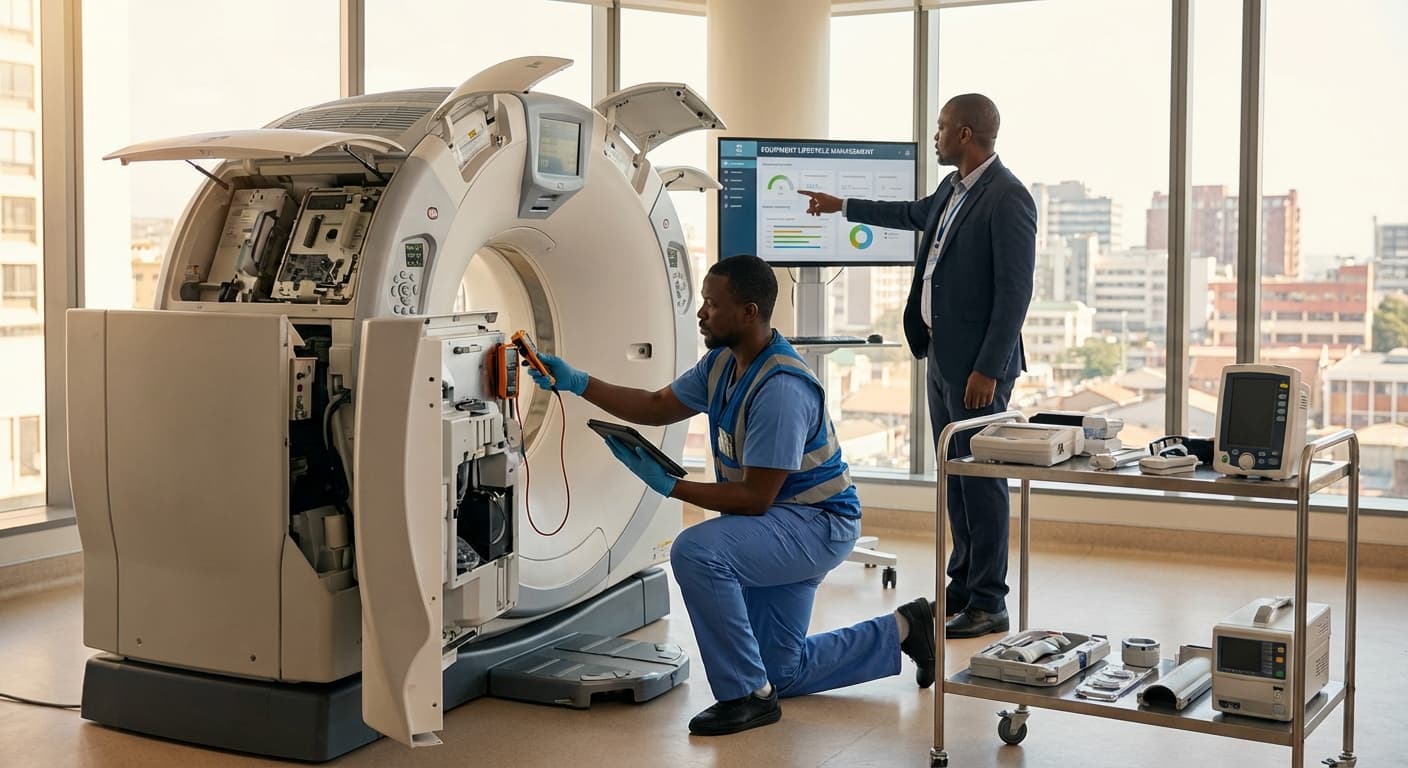
Equipment Replacement Planning & Obsolescence Strategy Service in Morocco
Engineering Excellence & Technical Support
Equipment Replacement Planning & Obsolescence Strategy Service High-standard technical execution following OEM protocols and local regulatory frameworks.
Predictive Analytics for Asset Lifecycle Management
Leverage advanced predictive modeling and historical data analysis to forecast equipment degradation and remaining useful life. This proactive approach optimizes replacement cycles, minimizes unplanned downtime, and reduces total cost of ownership for industrial assets across Morocco's key sectors.
Strategic Obsolescence Mitigation & Vendor Diversification
Develop comprehensive strategies to address component and system obsolescence in critical Moroccan infrastructure. Our service includes identifying at-risk equipment, sourcing alternative suppliers, and designing for future compatibility to ensure long-term operational continuity and technological relevance.
ROI-Driven Replacement Decision Framework
Implement a data-backed decision framework for equipment replacement that rigorously evaluates ROI, Net Present Value (NPV), and payback periods. We empower Moroccan businesses to make informed capital investment decisions, aligning equipment upgrades with strategic growth objectives and financial prudence.
What Is Equipment Replacement Planning & Obsolescence Strategy Service In Morocco?
Equipment Replacement Planning & Obsolescence Strategy Service in Morocco refers to a specialized consulting or operational offering designed to help organizations systematically manage the lifecycle of their physical assets, with a particular focus on proactive identification and mitigation of obsolescence risks. This service aims to optimize capital expenditure, minimize operational disruptions, ensure regulatory compliance, and maintain competitive technological advantage by establishing a structured approach to when and how equipment should be replaced or upgraded. It encompasses a comprehensive analysis of an organization's existing asset base, forecasting future technological trends, assessing the total cost of ownership (TCO) for continued operation versus replacement, and developing actionable roadmaps for strategic divestment, upgrade, or acquisition of equipment. The service also addresses the unique challenges and opportunities within the Moroccan industrial and economic landscape, considering local supply chains, regulatory frameworks, and market dynamics.
| Who Needs This Service? | Typical Use Cases | ||||||||
|---|---|---|---|---|---|---|---|---|---|
| Manufacturing companies (automotive, food & beverage, textiles, etc.) with significant production machinery. | Industrial facilities (oil & gas, mining, power generation) relying on critical infrastructure and heavy equipment. | Telecommunications operators managing network infrastructure and switching equipment. | Pharmaceutical and chemical plants with specialized processing and control systems. | Transportation and logistics companies with aging fleets of vehicles or material handling equipment. | Public sector entities and utilities operating water treatment plants, waste management facilities, or public transport systems. | Research and development institutions with advanced scientific instrumentation. | Organizations undergoing digital transformation initiatives requiring updated operational technology (OT) and IT infrastructure. | Companies seeking to improve energy efficiency and reduce their environmental footprint through equipment upgrades. | Businesses aiming to enhance product quality and production throughput by adopting newer technologies. |
| A Moroccan automotive parts manufacturer experiencing increased downtime due to frequent breakdowns of older stamping presses, leading to production delays and high repair costs. The service would assess the presses' remaining useful life, evaluate the TCO of continued repair versus new automated presses, and develop a replacement schedule aligned with production targets. | A Moroccan energy utility facing the obsolescence of critical control systems in a power generation plant, posing risks to grid stability and safety. The service would identify compatible and future-proof replacement systems, consider cybersecurity implications, and plan the phased rollout to ensure uninterrupted power supply. | A Moroccan telecommunications provider needing to upgrade its legacy mobile network infrastructure to support 5G technology. The service would analyze the existing network's obsolescence profile, forecast the lifecycle of new 5G equipment, and create a strategic roadmap for deployment to maintain service quality and competitive positioning. | A Moroccan food processing company seeking to improve hygiene standards and efficiency. The service would assess current processing equipment for functional and technological obsolescence, recommend modern, compliant machinery, and plan the capital investment for upgrades. | A Moroccan mining operation identifying that their excavation and hauling equipment is becoming increasingly difficult and expensive to maintain due to limited spare parts availability. The service would evaluate the strategic replacement of these assets to ensure operational continuity and safety in remote locations. | A Moroccan pharmaceutical company facing the end-of-life support for a critical batch control system, impacting regulatory compliance and product integrity. The service would identify compliant and validated replacement systems and manage the transition process. |
Key Components of the Service:
- Asset Inventory and Condition Assessment: Detailed cataloging of all relevant equipment, including age, condition, performance metrics, maintenance history, and criticality to operations.
- Obsolescence Risk Assessment: Identification of equipment susceptible to technological, functional, or support obsolescence, considering end-of-life (EOL) dates from manufacturers, availability of spare parts, and emerging alternative technologies.
- Total Cost of Ownership (TCO) Analysis: Evaluation of the full cost associated with retaining existing equipment (maintenance, repair, energy, downtime) versus the cost of replacement or upgrade (acquisition, installation, training, disposal).
- Strategic Replacement/Upgrade Roadmapping: Development of phased plans for equipment replacement and/or upgrade, aligned with business objectives, financial constraints, and technological evolution.
- Technology Forecasting and Trend Analysis: Monitoring of global and regional technological advancements relevant to the organization's sector to inform future investment decisions.
- Risk Mitigation Strategies: Implementation of measures to address immediate obsolescence risks, such as developing alternative supplier relationships for spare parts, conducting reverse engineering, or exploring refurbishment options.
- Capital Expenditure (CapEx) Optimization: Planning for equipment acquisition to align with budget cycles and maximize return on investment (ROI).
- Operational Continuity Planning: Ensuring minimal disruption to business operations during equipment transition periods.
- Regulatory Compliance Assessment: Ensuring that replacement and disposal practices adhere to Moroccan environmental and safety regulations.
- Vendor and Technology Sourcing: Facilitating the identification and selection of appropriate vendors and technologies for replacement or upgrade.
Who Needs Equipment Replacement Planning & Obsolescence Strategy Service In Morocco?
Equipment replacement planning and obsolescence strategy services are crucial for any organization in Morocco that relies on its assets to deliver products, services, or operational continuity. This proactive approach ensures that businesses can mitigate risks, optimize capital expenditure, and maintain a competitive edge by understanding when and how to replace aging or outdated equipment. This service is particularly vital for sectors with high capital intensity, complex operational demands, and those subject to rapid technological advancements or stringent regulatory requirements.
| Target Customer Type | Typical Departments Involved | Reasons for Need |
|---|---|---|
| Manufacturing Companies (e.g., Automotive, Food & Beverage, Pharmaceuticals, Textiles) | Operations Management, Engineering/Maintenance, Finance, Procurement, IT | High machinery utilization, risk of production stoppages, technological upgrades for efficiency and quality, regulatory compliance (e.g., food safety, environmental standards). |
| Energy & Utilities (e.g., Power Generation, Water Treatment, Oil & Gas) | Asset Management, Engineering, Operations, Finance, Risk Management, IT | Critical infrastructure, long asset lifespans, high impact of failure, safety regulations, integration of new energy technologies, cybersecurity of operational technology (OT). |
| Telecommunications Providers | Network Operations, Engineering, IT, Finance, Procurement | Rapid technological advancements (5G, fiber optics), network capacity demands, equipment obsolescence in rapidly evolving tech, customer service impact. |
| Transportation & Logistics (e.g., Airlines, Shipping Companies, large Fleet Operators) | Fleet Management, Maintenance, Operations, Finance, Procurement | High wear and tear, safety regulations, fuel efficiency improvements, integration of new logistics technologies, long-term fleet planning. |
| Mining & Extractive Industries | Operations Management, Maintenance, Engineering, HSE (Health, Safety, Environment), Finance, Procurement | Harsh operating environments, heavy machinery, safety and environmental regulations, efficiency in resource extraction, long-term project planning. |
| Healthcare Institutions (e.g., Hospitals, Clinics) | Biomedical Engineering, Facilities Management, IT, Finance, Procurement | Technological advancements in medical equipment, patient safety, regulatory compliance (medical device standards), cost-effective upgrades. |
| Public Sector & Government Agencies (e.g., Municipalities, Infrastructure projects) | Public Works, IT, Finance, Procurement, Planning Departments | Aging infrastructure (water, sanitation, roads), public safety, budget constraints, long-term service delivery planning, digital transformation initiatives. |
| Large Commercial Property Owners & Managers | Facilities Management, Operations, Finance, Procurement | HVAC systems, elevators, security systems, energy efficiency upgrades, tenant satisfaction, building lifecycle management. |
Who Needs Equipment Replacement Planning & Obsolescence Strategy Service in Morocco?
- Organizations with significant fixed assets and long asset lifecycles.
- Businesses operating in industries with rapid technological evolution.
- Companies facing increasing maintenance costs and operational inefficiencies due to aging equipment.
- Entities needing to comply with evolving environmental, safety, or industry-specific regulations.
- Organizations seeking to optimize their capital investment and budgeting for future asset needs.
- Companies aiming to reduce unplanned downtime and associated productivity losses.
- Businesses looking to leverage new technologies for improved performance, efficiency, or sustainability.
Equipment Replacement Planning & Obsolescence Strategy Service Process In Morocco
This document outlines the Equipment Replacement Planning & Obsolescence Strategy Service Process specifically tailored for clients in Morocco. The service aims to provide a structured and comprehensive approach to managing the lifecycle of industrial equipment, ensuring optimal performance, mitigating risks associated with obsolescence, and facilitating strategic capital investment decisions. The workflow is designed to be transparent and efficient, from initial client inquiry to the final execution of the recommended strategy.
| Stage | Description | Key Activities | Deliverables | Moroccan Context Considerations |
|---|---|---|---|---|
| Inquiry & Initial Consultation | The client expresses interest in the Equipment Replacement Planning & Obsolescence Strategy service. | Initial contact (phone, email, web form). Understanding client's core needs and objectives. Brief introduction to our service capabilities. | Initial meeting, preliminary understanding of client's scope and challenges. | Understanding of local business culture and communication protocols. Potential language considerations (French, Arabic). |
| Assessment & Data Collection | Gathering detailed information about the client's existing equipment and operational environment. | Site visits (if applicable). Inventory of all relevant equipment. Collection of technical specifications, maintenance records, operational history, purchase dates, current condition, and usage patterns. Understanding of production processes and critical infrastructure. | Detailed equipment inventory report. Condition assessment report. Data compilation for analysis. | Navigating local industrial sites and safety regulations. Access to historical data and documentation from local maintenance teams. Understanding of import/export regulations for potential new equipment. |
| Analysis & Strategy Development | Analyzing the collected data to identify obsolescence risks and develop a strategic replacement plan. | Obsolescence assessment (technical, economic, operational). Risk analysis of equipment failure or unavailability. Cost-benefit analysis for replacement vs. refurbishment. Total Cost of Ownership (TCO) modeling. Forecasting future operational needs. Identifying potential supply chain disruptions in Morocco or from international suppliers. | Obsolescence risk assessment report. Identification of critical equipment needing immediate attention. Preliminary replacement options and timelines. | Understanding of local supplier landscape for spare parts and maintenance services. Awareness of Moroccan economic conditions and potential impact on TCO. Expertise in sourcing from local Moroccan manufacturers or integrators where feasible. |
| Recommendation & Proposal | Presenting a comprehensive and tailored strategy to the client. | Developing a phased replacement plan with clear timelines and budget allocations. Recommending specific equipment types and vendors (considering local availability and support). Outlining maintenance and upgrade strategies for remaining equipment. Presenting financial projections and ROI analysis. | Formal proposal document including recommended strategy, budget, timeline, and expected outcomes. Presentation of the proposal to key stakeholders. | Ensuring proposed solutions align with Moroccan import duties and taxes. Identifying local distributors or agents for recommended equipment. Exploring government incentives or grants related to industrial modernization in Morocco. |
| Implementation Planning | Developing a detailed action plan for the execution of the approved strategy. | Defining specific project phases, tasks, responsibilities, and milestones. Developing procurement plans and vendor selection criteria. Creating installation and commissioning schedules. Planning for necessary training and change management for operational staff. | Detailed implementation project plan. Procurement strategy and vendor shortlists. Training plans. Communication plan. | Coordination with Moroccan regulatory bodies for permits and approvals. Engaging local contractors and service providers for installation and commissioning. Planning for potential labor availability and skill sets within Morocco. |
| Execution & Monitoring | Overseeing the implementation of the replacement plan and ongoing monitoring. | Procurement of new equipment. Management of installation and commissioning processes. Decommissioning of old equipment. Regular progress reporting and status updates. Proactive identification and mitigation of any implementation challenges. | Successful installation and commissioning of new equipment. Updated asset registers. Progress reports. Issue logs. | Ensuring compliance with Moroccan health, safety, and environmental regulations during installation and decommissioning. Managing logistics and customs clearance for imported equipment. Ongoing communication with local stakeholders and authorities. |
| Post-Implementation Review & Optimization | Evaluating the effectiveness of the implemented strategy and identifying areas for further optimization. | Performance monitoring of new equipment. Review of achieved ROI against projections. Gathering feedback from operational teams. Identifying opportunities for further efficiency gains or cost reductions. Developing long-term asset management strategies. | Post-implementation review report. Recommendations for future optimization. Updated asset management plan. | Assessing the impact of the new equipment on the Moroccan operational footprint. Identifying local capacity for ongoing support and maintenance of new assets. Sharing best practices with other Moroccan industries. |
Service Workflow Stages
- Inquiry & Initial Consultation
- Assessment & Data Collection
- Analysis & Strategy Development
- Recommendation & Proposal
- Implementation Planning
- Execution & Monitoring
- Post-Implementation Review & Optimization
Equipment Replacement Planning & Obsolescence Strategy Service Cost In Morocco
Planning for equipment replacement and developing obsolescence strategies are crucial for businesses to maintain operational efficiency, mitigate risks, and optimize capital expenditure in Morocco. The cost of such a service is influenced by a variety of factors, making it difficult to provide a single fixed price. However, understanding these drivers can help businesses anticipate and budget for these essential services.
| Service Component | Typical Cost Range (MAD) | Notes |
|---|---|---|
| Initial Assessment & Data Gathering | 2,000 - 8,000 | Covers site visits, interviews, and collection of existing equipment data. |
| Equipment Inventory & Categorization | 3,000 - 12,000 | Detailed listing and classification of all relevant assets. |
| Performance & Maintenance Data Analysis | 4,000 - 15,000 | Analyzing historical records for trends, costs, and failure patterns. |
| Obsolescence Risk Assessment | 5,000 - 20,000 | Identifying equipment nearing end-of-life or at risk of becoming obsolete. |
| Replacement Planning & Prioritization | 6,000 - 25,000 | Developing timelines, budgets, and ranking replacement priorities. |
| Strategy Development (Roadmap/Report) | 7,000 - 30,000 | Comprehensive document outlining recommendations and implementation steps. |
| Vendor Research & Selection Support | 3,000 - 10,000 | Assisting in identifying and evaluating potential suppliers. |
| Contingency Planning | 1,000 - 5,000 | Developing plans for unforeseen equipment failures or obsolescence. |
| Project Management Fee | 10-20% of total project cost | Standard fee for overseeing the engagement. |
| Total Project Cost (Small to Medium Enterprises) | 20,000 - 80,000 | For a moderate scope, covering key aspects of the service. |
| Total Project Cost (Large Enterprises/Complex Systems) | 80,000 - 250,000+ | For extensive equipment portfolios, intricate systems, and comprehensive strategies. |
Key Pricing Factors for Equipment Replacement Planning & Obsolescence Strategy Services in Morocco
- Scope of the project: The breadth and depth of the service required will significantly impact the cost. This includes the number of equipment types, the complexity of their systems, and the extent of the obsolescence analysis.
- Size and complexity of the organization: Larger organizations with diverse and extensive equipment portfolios will generally incur higher costs due to the increased volume of data and analysis required.
- Data availability and quality: The ease with which historical data on equipment performance, maintenance, and failure rates can be accessed and processed will affect the service provider's time and effort, and thus the cost.
- Level of detail in the strategy: The desired output can range from a high-level roadmap to a detailed, phased implementation plan with specific vendor recommendations and budget breakdowns.
- Technology and software used: Some service providers may utilize advanced analytics or specialized software for modeling and forecasting, which can influence their pricing.
- Service provider's expertise and reputation: Highly experienced and reputable consulting firms or specialized service providers may command higher fees.
- Consultant's hourly rates: The hourly billing rates of the consultants involved in the project, varying by experience and specialization, are a primary cost component.
- Travel and accommodation expenses (if applicable): If the service provider needs to conduct on-site assessments or meetings in various locations within Morocco, these expenses will be factored in.
- Duration of the engagement: Longer-term engagements or projects requiring ongoing support will naturally have higher overall costs.
Affordable Equipment Replacement Planning & Obsolescence Strategy Service Options
Our Affordable Equipment Replacement Planning & Obsolescence Strategy Service is designed to help businesses proactively manage their asset lifecycle, minimize disruptions, and optimize their capital expenditure. We offer flexible value bundles and proven cost-saving strategies to ensure you get the most out of your investment and avoid costly reactive replacements. By understanding your specific operational needs and risk tolerance, we tailor solutions to extend equipment life where feasible, plan strategic upgrades, and mitigate the impact of obsolescence.
| Value Bundle Option | Description | Key Features | Typical Cost Savings Potential | Ideal For |
|---|---|---|---|---|
| Essential Planning | Core services for foundational equipment replacement and obsolescence awareness. | Equipment inventory and condition assessment, basic replacement timeline development, obsolescence risk identification, initial budget estimates. | 5-10% reduction in reactive replacement costs, avoidance of immediate critical failures. | Small to medium-sized businesses with limited assets or budgets. |
| Strategic Advantage | Comprehensive planning with a focus on optimization and risk mitigation. | Includes Essential Planning features, plus detailed lifecycle cost analysis, strategic upgrade recommendations, vendor negotiation support, risk mitigation strategies, advanced obsolescence forecasting. | 10-20% savings on capital expenditure, significant reduction in downtime-related costs. | Growing businesses, companies with critical infrastructure, or those seeking proactive asset management. |
| Comprehensive Lifecycle Management | End-to-end solution for complete asset lifecycle control and optimization. | Includes Strategic Advantage features, plus total cost of ownership (TCO) modeling, predictive maintenance integration, full vendor management, end-of-life disposal and recycling planning, continuous monitoring and adjustment. | 15-25%+ savings on total asset lifecycle costs, maximized ROI on equipment investments, complete risk elimination for obsolescence. | Large enterprises, organizations with complex and high-value asset portfolios, those aiming for best-in-class asset management. |
Key Benefits of Our Service
- Reduced unplanned downtime and associated productivity losses.
- Optimized capital expenditure through strategic planning and negotiation.
- Extended equipment lifespan through proactive maintenance and repair strategies.
- Mitigation of risks associated with outdated or unsupported technology.
- Improved budget predictability and financial forecasting.
- Enhanced operational efficiency and performance.
- Leveraged purchasing power through coordinated procurement.
- Sustainable and environmentally responsible asset management.
Verified Providers In Morocco
When seeking healthcare services in Morocco, particularly those involving international patients or specialized treatments, identifying 'verified providers' is paramount. Franance Health stands out as a premier facilitator, meticulously vetting and partnering with medical facilities and practitioners who meet stringent quality and ethical standards. Their credentialing process ensures that patients receive care from reputable and highly qualified professionals, offering peace of mind and a reduced risk of encountering substandard services. Choosing Franance Health-affiliated providers means opting for transparency, excellence, and a patient-centric approach within Morocco's burgeoning medical tourism sector.
| Franance Health Credential Feature | Benefit to Patients | Example of Verification |
|---|---|---|
| Accreditation by International Bodies (e.g., JCI, ISO) | Ensures adherence to globally recognized quality and safety benchmarks. | Review of facility's accreditation certificates and audit reports. |
| Medical Staff Board Certifications & Licenses | Confirms that practitioners are qualified and legally permitted to practice in their specialty. | Verification of medical licenses and board certification from relevant Moroccan and international authorities. |
| Patient Testimonials & Satisfaction Scores | Provides real-world feedback on patient experience and treatment outcomes. | Analysis of aggregated patient reviews and satisfaction surveys. |
| Adherence to Ethical Medical Practices | Guarantees that providers operate with integrity and prioritize patient well-being. | Review of facility's patient rights policies and code of conduct. |
| Advanced Medical Technology & Infrastructure | Ensures access to modern diagnostic and treatment capabilities. | Inspection of equipment lists, facility upgrades, and technological adoption rates. |
Why Franance Health Credentials Matter:
- Rigorous Vetting Process: Franance Health employs a comprehensive evaluation of medical facilities, focusing on infrastructure, technology, and adherence to international safety protocols.
- Qualified Medical Professionals: Their network comprises doctors, surgeons, and specialists with verified qualifications, extensive experience, and ethical practice records.
- Patient Safety and Care Standards: Providers are assessed for their commitment to patient comfort, privacy, and the highest standards of medical care and hygiene.
- Transparency and Communication: Franance Health ensures clear communication channels and transparent pricing structures with their partnered providers.
- Access to Specialized Treatments: They facilitate access to a wide range of medical specialties, often leveraging cutting-edge technologies and treatments available in Morocco.
Scope Of Work For Equipment Replacement Planning & Obsolescence Strategy Service
This Scope of Work (SOW) outlines the services to be provided for Equipment Replacement Planning and Obsolescence Strategy. The objective is to develop a comprehensive plan that ensures the ongoing operational effectiveness of critical equipment by proactively addressing its lifecycle, potential obsolescence, and replacement needs. This includes assessing current equipment, forecasting future requirements, identifying obsolescence risks, and recommending strategic replacement or upgrade pathways. The service will deliver a clear, actionable strategy to minimize downtime, optimize capital expenditure, and maintain operational continuity.
| Technical Deliverable | Description | Standard Specification/Format |
|---|---|---|
| Equipment Inventory Database | A comprehensive, searchable database detailing all relevant equipment, including make, model, serial number, installation date, condition assessment, maintenance history, and criticality rating. | Microsoft Excel or equivalent CSV format. Secure cloud-based database with user-defined fields. |
| Obsolescence Risk Assessment Report | A report detailing identified equipment at risk of obsolescence, categorized by risk level (low, medium, high) based on factors such as manufacturer support, part availability, technological advancement, and regulatory compliance. | PDF document. Includes quantitative and qualitative risk scoring methodology. |
| Lifecycle Cost Analysis (LCCA) Summaries | Detailed analysis for critical equipment, projecting costs associated with ownership, maintenance, repair, and eventual replacement over their remaining useful life. | PDF document with supporting Excel spreadsheets for detailed calculations. Standard LCCA methodology (e.g., based on ISO 15668 or equivalent). |
| Equipment Replacement & Upgrade Roadmap | A visual and tabular representation of planned equipment replacements and upgrades over a defined period (e.g., 5-10 years), including timelines, estimated costs, and interdependencies. | Microsoft Project or equivalent Gantt chart format. Strategic roadmap document in PDF. |
| Obsolescence Mitigation Strategy | Actionable recommendations for managing identified obsolescence risks, including strategies for extended support, retrofitting, alternative sourcing, or phased replacements. | PDF document. Clearly outlines recommended actions, justifications, and potential impacts. |
| Capital Expenditure (CAPEX) Forecast | A detailed forecast of capital required for equipment replacement and upgrades, aligned with the roadmap, broken down by year and equipment category. | Microsoft Excel spreadsheet. Aligned with financial reporting standards. |
| Implementation Guidelines | Recommendations for the procurement, installation, and commissioning of new equipment, including vendor selection criteria, testing protocols, and training requirements. | PDF document. Best practice guidelines for project execution. |
Key Service Components
- Detailed Assessment of Existing Equipment Inventory
- Obsolescence Risk Identification and Prioritization
- Lifecycle Cost Analysis (LCCA) for Key Equipment
- Development of a Long-Term Replacement/Upgrade Roadmap
- Capital Expenditure (CAPEX) Forecasting and Budgeting Support
- Risk Mitigation and Business Continuity Planning Integration
- Development of Procurement and Implementation Guidelines
Service Level Agreement For Equipment Replacement Planning & Obsolescence Strategy Service
This Service Level Agreement (SLA) outlines the guaranteed response times and uptime for the Equipment Replacement Planning & Obsolescence Strategy Service. It defines the standards of service expected and the remedies for non-compliance. This SLA applies to all services provided by [Your Company Name] (hereinafter referred to as "Provider") to [Client Company Name] (hereinafter referred to as "Client") related to equipment replacement planning and obsolescence strategy.
| Service Component | Priority Level | Response Time Guarantee | Resolution Time Target | Uptime Guarantee (Monthly) |
|---|---|---|---|---|
| Core Planning & Strategy Platform Access | Critical (System Outage, Complete Inoperability) | 1 Business Hour | 4 Business Hours | 99.9% |
| Core Planning & Strategy Platform Access | High (Significant Functionality Impaired) | 2 Business Hours | 8 Business Hours | 99.9% |
| Core Planning & Strategy Platform Access | Medium (Minor Functionality Impaired, Workaround Available) | 4 Business Hours | 24 Business Hours | 99.9% |
| Reporting & Analytics Access | High (Critical Reports Unavailable) | 4 Business Hours | 12 Business Hours | 99.5% |
| Reporting & Analytics Access | Medium (Minor Report Discrepancies) | 8 Business Hours | 48 Business Hours | 99.5% |
| Obsolescence Database Updates & Alerts | High (Failure to receive critical obsolescence alerts) | Within 2 Business Hours of detection | N/A (continuous monitoring) | 99.9% |
| Support & Consultation (for strategy guidance) | High (Urgent strategic query impacting critical decision) | 4 Business Hours | 24 Business Hours | N/A (Service hours apply) |
| Support & Consultation (for strategy guidance) | Medium (Standard strategic query) | 1 Business Day | 3 Business Days | N/A (Service hours apply) |
Key Definitions
- Service: Refers to the Equipment Replacement Planning & Obsolescence Strategy Service provided by the Provider.
- Response Time: The maximum time allowed for the Provider to acknowledge and begin addressing a reported Service Incident.
- Resolution Time: The maximum time allowed for the Provider to resolve a Service Incident to a functional state.
- Uptime: The percentage of time the Service is available and operational, excluding scheduled maintenance.
- Service Incident: A disruption to the normal operation of the Service that negatively impacts the Client's ability to utilize the equipment replacement planning and obsolescence strategy functionalities.
- Scheduled Maintenance: Pre-announced periods where the Service may be unavailable for planned updates, upgrades, or repairs. This will be communicated to the Client at least [Number] business days in advance.
Frequently Asked Questions

Ready when you are
Let's scope your Equipment Replacement Planning & Obsolescence Strategy Service in Morocco project in Morocco.

Scaling healthcare logistics and technical systems across the entire continent.