
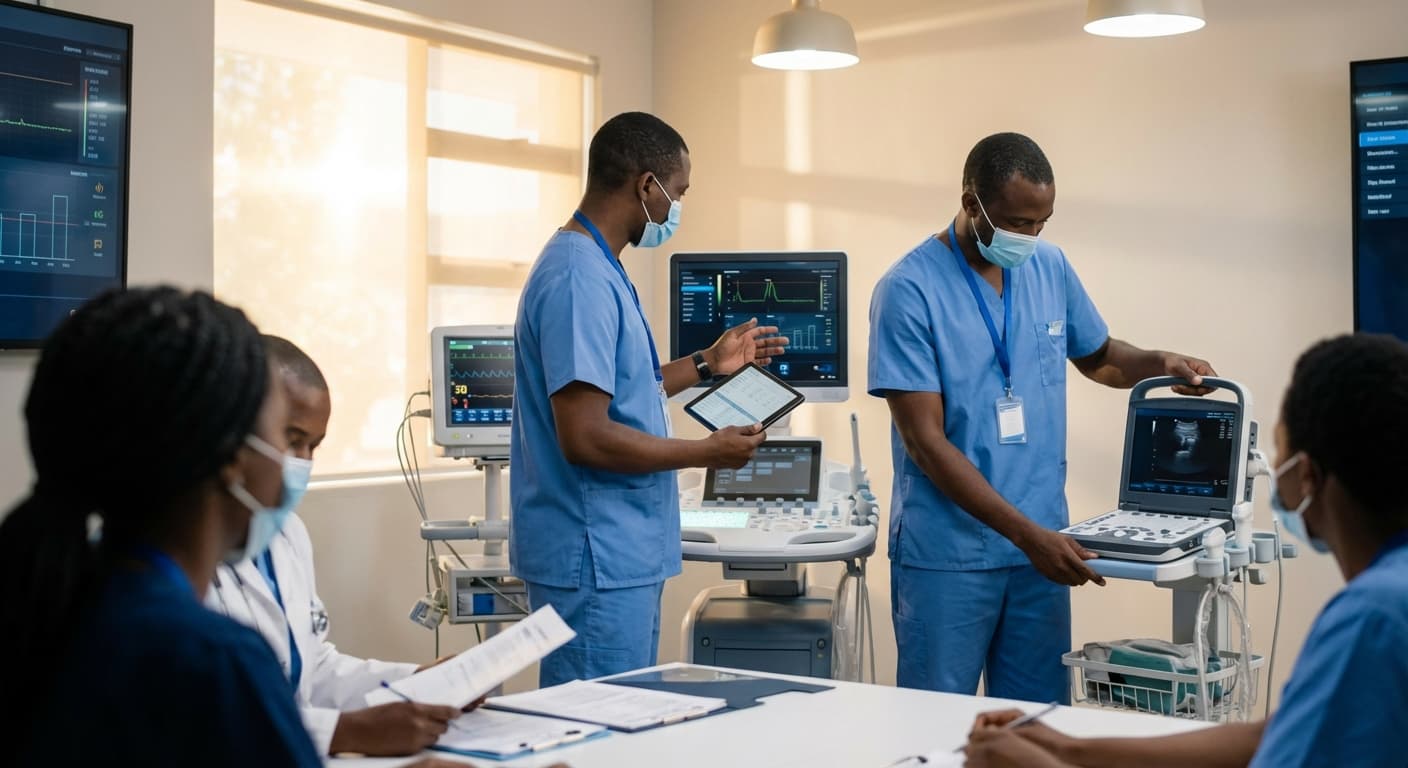
Clinical Needs Assessment for Medical Equipment in Morocco
Engineering Excellence & Technical Support
Clinical Needs Assessment for Medical Equipment High-standard technical execution following OEM protocols and local regulatory frameworks.
National Equipment Gap Analysis & Prioritization
Leveraging statistical modeling and epidemiological data, we conduct a comprehensive national assessment of existing medical equipment stock, identifying critical shortages and their geographical distribution. This data-driven approach prioritizes procurement based on disease burden, population density, and underserved regions, ensuring resources are allocated effectively to address the most pressing clinical needs across Morocco.
Clinical Workflow & Technology Integration Strategy
Our methodology goes beyond simple equipment listing. We meticulously analyze current clinical workflows within Moroccan healthcare facilities, assessing how new equipment will integrate seamlessly. This includes evaluating compatibility with existing IT infrastructure, potential for workflow optimization, and the development of strategies for user training and adoption to maximize the clinical impact and return on investment of new medical technologies.
Local Capacity Building & Maintenance Ecosystem Development
We focus on sustainable solutions by assessing and fostering local technical capacity for equipment maintenance and repair. Our needs assessment includes identifying training requirements for biomedical technicians, recommending essential spare parts inventories, and exploring partnerships with local suppliers to build a robust and self-sufficient maintenance ecosystem, ensuring long-term equipment functionality and reduced downtime in Moroccan healthcare settings.
What Is Clinical Needs Assessment For Medical Equipment In Morocco?
A Clinical Needs Assessment (CNA) for Medical Equipment in Morocco is a systematic evaluation process designed to identify, quantify, and prioritize the essential medical equipment required by healthcare facilities to effectively deliver patient care. This service involves a comprehensive analysis of existing infrastructure, current patient demographics, disease prevalence, treatment protocols, technological advancements, and regulatory compliance within the Moroccan healthcare landscape. The objective is to ensure that healthcare providers have access to appropriate, safe, and cost-effective medical devices, thereby enhancing diagnostic accuracy, therapeutic efficacy, and overall patient outcomes. This assessment is crucial for strategic procurement, resource allocation, infrastructure development, and the modernization of healthcare services in Morocco.
| Stakeholder Group | Needs and Benefits of CNA |
|---|---|
| Ministry of Health and Social Protection (Morocco) | Informed policy development, strategic planning for national healthcare infrastructure, equitable resource distribution, monitoring of healthcare quality standards, and effective budget allocation for medical equipment procurement. |
| Healthcare Facility Administrators (Hospitals, Clinics) | Justification for capital expenditure, optimized equipment acquisition, improved operational efficiency, enhanced service delivery capacity, reduction in equipment downtime, and informed strategic investment decisions. |
| Clinical Department Heads and Medical Professionals | Ensuring access to state-of-the-art diagnostic and therapeutic tools, improved diagnostic accuracy, enhanced patient treatment outcomes, increased clinician satisfaction, and support for specialized medical practices. |
| Medical Equipment Manufacturers and Suppliers | Understanding specific market demands, aligning product portfolios with identified needs, developing targeted sales strategies, and providing relevant technical support and after-sales services. |
| International Development Organizations and Funding Agencies | Evidence-based basis for project proposals and funding allocations, ensuring that investments in medical equipment are aligned with national health priorities and demonstrably address critical needs. |
| Patients and the General Public | Improved access to quality healthcare services, more accurate diagnoses, effective treatments, reduced patient morbidity and mortality, and greater trust in the healthcare system. |
Key Components of a Clinical Needs Assessment for Medical Equipment in Morocco
- Facility Profiling: Detailed analysis of the healthcare facility's type (e.g., tertiary hospital, primary care clinic, specialized center), size, geographical location, and current operational capacity.
- Demographic and Epidemiological Analysis: Evaluation of patient population characteristics, including age, gender, socioeconomic status, and prevalent disease patterns within the service area.
- Clinical Service Line Evaluation: Mapping of existing and planned clinical services (e.g., cardiology, oncology, pediatrics, emergency medicine) and the medical equipment integral to their operation.
- Current Equipment Inventory and Condition Assessment: Cataloging of all existing medical equipment, including its age, functional status, maintenance history, and utilization rates. Identification of obsolete or underperforming assets.
- Gap Analysis: Identification of deficiencies in current equipment provision based on established clinical standards, international best practices, and the identified patient needs.
- Technological Forecasting and Integration: Assessment of emerging medical technologies relevant to the Moroccan context and evaluation of their potential for integration into existing workflows and infrastructure.
- Regulatory and Compliance Review: Verification of adherence to national and international standards, safety regulations, and quality management systems pertinent to medical devices in Morocco.
- Training and Human Resource Requirements: Evaluation of the existing workforce's competency and identification of training needs associated with new or upgraded medical equipment.
- Budgetary and Financial Considerations: Development of cost estimates for acquisition, installation, training, maintenance, and consumables for recommended equipment, aligning with available financial resources.
- Prioritization Framework: Establishment of criteria (e.g., clinical impact, patient safety, cost-effectiveness, regulatory mandate) for prioritizing equipment acquisition or upgrades.
Who Needs Clinical Needs Assessment For Medical Equipment In Morocco?
A clinical needs assessment for medical equipment in Morocco is crucial for ensuring the optimal allocation of resources, enhancing patient care, and driving efficient healthcare operations. This process helps identify specific equipment gaps, prioritize procurements, and align technology investments with the evolving healthcare demands of the Moroccan population.
| Customer Segment | Key Departments Involved | Primary Needs Identified | Examples of Equipment |
|---|---|---|---|
| Public Hospitals (Ministry of Health) | Emergency Department, Intensive Care Units (ICUs), Surgery, Radiology, Cardiology, Pediatrics, Internal Medicine, Pharmacy | Upgrading outdated equipment, expanding capacity for high-demand specialties, ensuring availability of essential life-support systems, improving diagnostic imaging capabilities | Ventilators, Defibrillators, MRI machines, CT scanners, Anesthesia machines, Patient monitors, Ultrasound devices |
| University Hospitals | All clinical departments, Research and Development, Training and Education units | Acquiring state-of-the-art technology for specialized treatments and research, supporting medical education and training programs, ensuring advanced diagnostic and therapeutic tools | Robotic surgery systems, Advanced genomic sequencers, High-resolution microscopes, PET-CT scanners, Laser therapy equipment |
| Private Hospitals and Clinics | Surgery, Gynecology, Urology, Dermatology, Ophthalmology, Cardiology, Radiology | Meeting patient expectations for advanced care, competitive service offerings, specialized procedures, improving patient comfort and outcomes | Endoscopy systems, Laser surgical equipment, Advanced diagnostic imaging (e.g., 3D ultrasound), Electrosurgical units, Pain management devices |
| Diagnostic Laboratories | Hematology, Biochemistry, Microbiology, Immunology, Pathology | Automating testing processes, improving turnaround times, enhancing accuracy and reliability, expanding diagnostic test menus | Automated analyzers (hematology, chemistry), PCR machines, DNA sequencers, Electron microscopes, Immunoassay analyzers |
| Specialized Medical Centers | Cardiology, Oncology, Nephrology (Dialysis), Neurology, Pulmonology | Acquiring highly specialized equipment for specific disease management, advanced treatment modalities, patient monitoring and support | Angiography suites, Linear accelerators, Hemodialysis machines, EEG machines, Spirometers, Cardiac Catheterization Labs |
| Primary Healthcare Centers | General Medicine, Pediatrics, Minor Surgery, Basic Diagnostics | Equipping for essential primary care services, early detection and screening, basic emergency response, improving accessibility to healthcare | ECG machines, Basic ultrasound devices, Digital X-ray units, Blood pressure monitors, Glucometers, Stethoscopes |
| Emergency Medical Services (EMS) | Ambulance services, Emergency response teams | Equipping mobile units for critical care and stabilization, ensuring interoperability with hospital systems, improving patient transport safety | Portable ventilators, Defibrillators, ECG monitors, Oxygen delivery systems, Advanced trauma kits |
| Rehabilitation Centers | Physical Therapy, Occupational Therapy, Speech Therapy | Providing equipment for patient recovery and functional improvement, assistive devices, therapeutic exercise equipment | Treadmills, Resistance training machines, Hydrotherapy equipment, Electrotherapy devices, Assistive mobility devices |
Target Customers and Departments for Clinical Needs Assessment in Morocco
- Public Hospitals (Ministry of Health)
- University Hospitals
- Private Hospitals and Clinics
- Diagnostic Laboratories
- Specialized Medical Centers (e.g., cardiology, oncology, dialysis)
- Primary Healthcare Centers
- Emergency Medical Services (EMS)
- Rehabilitation Centers
Clinical Needs Assessment For Medical Equipment Process In Morocco
This document outlines the comprehensive workflow for conducting a clinical needs assessment for medical equipment in Morocco. The process is designed to ensure that procured equipment aligns with the specific healthcare demands and infrastructure capabilities of various healthcare facilities. It spans from the initial inquiry to the final execution and validation of the equipment's utility, emphasizing a structured and collaborative approach.
| Phase | Key Activities | Responsible Parties | Deliverables |
|---|---|---|---|
| Inquiry & Scoping | Receive/Identify need, define scope (facility, area, equipment type) | Requesting Department, Ministry of Health, Project Initiator | Scope Document |
| Stakeholder Engagement | Identify and engage clinicians, administrators, technicians, engineers | Project Manager, Needs Assessment Team | Stakeholder Register, Communication Plan |
| Information Gathering | Clinical practice review, equipment audit, workflow analysis, infrastructure assessment, budget review | Needs Assessment Team, Clinical Staff, Biomedical Engineers, IT Department | Needs Analysis Data, Gap Identification Report |
| Requirement Specification | Develop detailed technical and functional specifications | Needs Assessment Team, Subject Matter Experts, Biomedical Engineers | Equipment Specification Document |
| Gap Analysis & Prioritization | Compare needs vs. existing, prioritize gaps | Needs Assessment Team, Clinical Leads | Prioritized Gap List |
| Solution Identification | Research potential equipment solutions, preliminary supplier evaluation | Needs Assessment Team, Procurement Department | Potential Equipment List |
| Site Visits/Demos | Observe equipment in similar settings, attend demonstrations | Needs Assessment Team, Key End-Users | Evaluation Notes, Demonstration Feedback |
| Needs Assessment Report | Compile findings, analysis, and recommendations | Needs Assessment Team Lead | Final Needs Assessment Report |
| Procurement | Tender process, supplier selection | Procurement Department, Technical Evaluation Committee | Procurement Contract |
| Installation & Training | Equipment installation, commissioning, user training | Supplier, Biomedical Engineering Department, End-Users | Installation Report, Training Certificates |
| Post-Implementation Review | Evaluate equipment performance and impact | Needs Assessment Team, Clinical Management, Biomedical Engineering | Post-Implementation Review Report |
Key Stages of the Clinical Needs Assessment Workflow
- 1. Initial Inquiry & Scoping: The process begins with a formal request or identification of a need for new or upgraded medical equipment. This stage involves defining the scope of the assessment, including the specific healthcare facility or region, the therapeutic areas concerned, and the general type of equipment being considered.
- 2. Stakeholder Identification & Engagement: Identifying all relevant stakeholders, including healthcare professionals (doctors, nurses, technicians), hospital administrators, biomedical engineers, procurement officers, and potentially Ministry of Health representatives. Early and continuous engagement is crucial for gathering accurate information and fostering buy-in.
- 3. Information Gathering (Needs Analysis): This is the core of the assessment. It involves a multi-faceted approach to understand the current clinical needs:
- a. Clinical Practice Review: Analyzing existing treatment protocols, patient demographics, disease prevalence, and projected future health trends to determine the types and volume of procedures performed.
- b. Equipment Inventory & Audit: Assessing the current medical equipment in place, its condition, utilization rates, and maintenance history. Identifying gaps and obsolescence.
- c. Workflow Analysis: Understanding the patient pathway and how existing or proposed equipment integrates into clinical workflows to optimize efficiency and patient care.
- d. Technical & Infrastructure Assessment: Evaluating the existing infrastructure (power supply, space, environmental controls, IT connectivity) to ensure it can support the proposed equipment.
- e. Budgetary Considerations: Understanding the financial constraints and available budget for equipment procurement and ongoing operational costs (maintenance, consumables).
- 4. Requirement Specification Development: Based on the gathered information, detailed technical and functional specifications for the required medical equipment are developed. This includes performance criteria, safety features, user interface requirements, and integration capabilities.
- 5. Gap Analysis & Prioritization: Comparing the identified clinical needs with the existing equipment and infrastructure to pinpoint specific gaps. Prioritizing these gaps based on clinical impact, urgency, and cost-effectiveness.
- 6. Solution Identification & Preliminary Evaluation: Researching available medical equipment solutions that meet the defined specifications. This may involve initial consultations with potential suppliers and reviewing product literature.
- 7. Site Visits & Demonstrations (if applicable): For critical or complex equipment, organizing site visits to facilities with similar equipment or requesting product demonstrations to assess real-world performance and user experience.
- 8. Final Needs Assessment Report: Compiling all findings, analyses, and recommendations into a comprehensive report. This report serves as the basis for procurement decisions and includes detailed justifications for the proposed equipment.
- 9. Procurement & Acquisition: Once the needs assessment is approved, the procurement process is initiated based on the defined specifications.
- 10. Installation, Commissioning & Training: Ensuring the equipment is installed correctly, commissioned to meet performance standards, and that healthcare staff receive adequate training on its operation and maintenance.
- 11. Post-Implementation Review & Validation: After a period of use, evaluating the effectiveness of the procured equipment in meeting the identified clinical needs and assessing its impact on patient care and operational efficiency.
Clinical Needs Assessment For Medical Equipment Cost In Morocco
This document outlines a clinical needs assessment for medical equipment costs in Morocco. The assessment aims to provide insights into the pricing factors and typical cost ranges for essential medical equipment within the Moroccan healthcare market, denominated in Moroccan Dirhams (MAD). Understanding these costs is crucial for healthcare providers, policymakers, and procurement agencies to make informed decisions regarding equipment acquisition, budgeting, and resource allocation. The analysis considers various factors that influence the final price of medical equipment, from basic diagnostic tools to more sophisticated imaging and surgical apparatus.
Pricing Factors in Morocco:
Several key factors dictate the cost of medical equipment in Morocco:
- Type and Complexity of Equipment: Simpler devices like stethoscopes or blood pressure monitors are significantly less expensive than advanced MRI scanners or surgical robots.
- Brand and Manufacturer: Reputable international brands often command higher prices due to perceived quality, reliability, and after-sales service. Local or regional manufacturers might offer more competitive pricing.
- New vs. Refurbished/Used: New equipment is generally the most expensive. Refurbished or used equipment can offer substantial cost savings, though it may come with shorter warranties or require more frequent maintenance.
- Technology and Features: The inclusion of the latest technological advancements, specialized features, and higher resolution or diagnostic capabilities will increase the price.
- Supplier and Distributor Margins: The profit margins of importers, distributors, and local suppliers contribute to the final retail price.
- Import Duties and Taxes: Morocco levies import duties and Value Added Tax (VAT) on medical equipment, which significantly impacts the landed cost.
- After-Sales Service and Maintenance Contracts: The cost of installation, training, preventive maintenance, and repair contracts is often bundled or offered as an optional extra, adding to the overall expenditure.
- Warranty Period: Longer warranty periods can increase the initial cost but offer greater peace of mind and predictable expenses.
- Volume Discounts: For large-scale procurements by government hospitals or major private healthcare networks, volume discounts can be negotiated.
- Currency Exchange Rates: Fluctuations in the exchange rate between the MAD and major international currencies (USD, EUR) can affect the cost of imported equipment.
- Regulatory Compliance: Equipment meeting specific Moroccan or international standards may have associated certification costs passed on to the consumer.
Cost Ranges in Moroccan Dirhams (MAD):
The following table provides estimated cost ranges for various categories of medical equipment commonly used in Morocco. These are indicative prices and can vary widely based on the factors mentioned above. It's essential to obtain specific quotes from suppliers for accurate budgeting.
| Equipment Category | Typical Use | Estimated Cost Range (MAD) |
|---|---|---|
| X-ray Machine (Fixed) | Radiography | 150,000 - 800,000 |
| Ultrasound Machine (Basic) | Diagnostic Imaging | 80,000 - 300,000 |
| CT Scanner | Advanced Imaging | 1,500,000 - 10,000,000+ |
| MRI Scanner | Advanced Imaging | 4,000,000 - 20,000,000+ |
| Operating Table | Surgery | 50,000 - 500,000 |
| Anesthesia Machine | Anesthesiology | 100,000 - 700,000 |
| Surgical Diathermy Unit | Electrosurgery | 20,000 - 150,000 |
| Centrifuge (Laboratory) | Sample Processing | 10,000 - 100,000 |
| Microscope (Clinical) | Pathology/Hematology | 15,000 - 150,000 |
| Automated Hematology Analyzer | Blood Analysis | 80,000 - 500,000 |
| Patient Monitor (Basic) | Vital Signs Monitoring | 15,000 - 80,000 |
| ECG Machine | Cardiac Monitoring | 10,000 - 70,000 |
| Infusion Pump | Drug Delivery | 8,000 - 50,000 |
| Stethoscope | Auscultation | 200 - 2,000 |
| Blood Pressure Monitor (Sphygmomanometer) | Blood Pressure Measurement | 500 - 5,000 |
| Sterilizer (Autoclave) | Sterilization | 20,000 - 200,000 |
Key Medical Equipment Categories and Estimated Cost Ranges (MAD)
- Diagnostic Imaging Equipment
- Surgical Equipment
- Laboratory Equipment
- Patient Monitoring Systems
- General Medical Supplies and Instruments
Affordable Clinical Needs Assessment For Medical Equipment Options
This document outlines affordable strategies for conducting a clinical needs assessment for medical equipment, focusing on maximizing value and minimizing costs. A comprehensive needs assessment is crucial to ensure that procured equipment aligns with clinical requirements, patient care standards, and budgetary constraints. We will explore the concept of 'value bundles' and practical cost-saving tactics applicable throughout the assessment and procurement lifecycle.
| Value Bundle Concept | Description | Cost-Saving Strategies |
|---|---|---|
| Integrated Solution Bundles | Procuring a suite of interconnected equipment and software as a single package. This often includes hardware, software licenses, installation, training, and initial support. | Negotiate Package Discounts: Bundle pricing can often result in significant savings compared to purchasing individual components. Streamlined Implementation: Integrated systems can simplify installation and reduce compatibility issues. Single Point of Contact: Simplifies support and maintenance relationships. |
| Service and Maintenance Contracts (Bundled) | Combining equipment purchase with extended warranty, preventative maintenance plans, and on-demand repair services into a bundled offering. | Predictable Expenses: Shifts from reactive, potentially high ad-hoc repair costs to predictable, budgeted service fees. Extended Lifespan: Proactive maintenance can extend equipment life and reduce premature replacement needs. Reduced Downtime: Comprehensive service minimizes operational disruptions. |
| Training and Education Packages | Acquiring equipment alongside comprehensive training programs for clinical staff and technical personnel. | Improved Utilization: Well-trained staff can optimize equipment use, maximizing ROI. Reduced Errors: Proper training minimizes user-related errors and potential damage. Faster Adoption: Efficient training accelerates the integration of new technology. |
| Consumables and Accessories Bundles | Negotiating the purchase of essential consumables and accessories along with the primary medical equipment. | Volume Discounts: Purchasing consumables in larger quantities alongside equipment often unlocks better pricing. Ensured Availability: Guarantees the immediate availability of necessary supplies, preventing delays. |
| Financing and Leasing Options (Bundled) | Exploring bundled financing or leasing agreements that include acquisition, maintenance, and even upgrade options. | Lower Upfront Capital: Preserves cash flow by spreading costs over time. Technological Refresh: Leasing can facilitate easier upgrades to newer technology as it becomes available. Predictable Payment Structures: Simplifies financial planning. |
Key Components of an Affordable Clinical Needs Assessment:
- Define Clear Objectives: Articulate what the assessment aims to achieve, such as identifying specific equipment gaps, evaluating existing technology, or planning for future service expansion. Precise objectives prevent scope creep and unnecessary expenses.
- Involve Key Stakeholders: Engage clinicians, biomedical engineers, IT departments, finance teams, and procurement officers early. Their diverse perspectives ensure a holistic understanding of needs and potential challenges, leading to more informed decisions and avoiding costly rework.
- Prioritize Needs: Categorize identified needs based on urgency, impact on patient care, and return on investment (ROI). Focusing on high-priority items first ensures that critical needs are met within budget.
- Leverage Existing Data and Research: Utilize internal data on equipment utilization, maintenance costs, and patient outcomes. Supplement this with market research on available technologies, competitor analysis, and industry best practices to avoid redundant exploration.
- Develop Objective Evaluation Criteria: Establish clear, measurable criteria for assessing equipment options. This could include performance metrics, ease of use, training requirements, integration capabilities, and total cost of ownership (TCO).
- Consider Total Cost of Ownership (TCO): Look beyond the initial purchase price. TCO includes acquisition, installation, training, maintenance, consumables, software updates, and eventual decommissioning costs. A lower upfront cost may lead to higher long-term expenses if not carefully considered.
- Explore Standardized Solutions: Where appropriate, opt for standardized equipment or systems that offer better interoperability and potentially lower maintenance costs due to wider availability of parts and expertise.
- Document Thoroughly: Maintain detailed records of the assessment process, stakeholder input, evaluation findings, and decision-making rationale. This documentation is vital for justification, audits, and future planning.
Verified Providers In Morocco
Finding trusted healthcare providers is crucial for anyone seeking medical attention, especially when abroad. In Morocco, the landscape of healthcare can seem vast, but identifying verified providers ensures you receive quality care and peace of mind. Franance Health has established itself as a leader in this regard, offering a network of credentialed professionals and facilities that meet rigorous international standards. Their commitment to excellence, coupled with a deep understanding of both local and international patient needs, makes them the premier choice for healthcare services in Morocco.
| Category | Franance Health Advantage |
|---|---|
| Provider Verification | Franance Health employs a stringent credentialing process, ensuring all listed providers are licensed, certified, and have a proven track record of excellent patient care. |
| Quality of Care | Access to a network of internationally recognized hospitals and clinics equipped with modern technology and adhering to global best practices. |
| Patient Experience | Streamlined appointment booking, clear communication channels, and dedicated patient support services to ensure a smooth and stress-free experience. |
| Specialized Services | A broad range of specialists available, covering all major medical disciplines, with a focus on providing access to niche treatments and procedures. |
| Cost-Effectiveness | While maintaining high standards, Franance Health strives to offer competitive pricing and transparent billing, making quality healthcare accessible. |
Why Franance Health is the Best Choice:
- Rigorous Vetting Process: Franance Health meticulously vets all its partner providers, ensuring they possess the necessary qualifications, experience, and adherence to ethical practices.
- International Standards: Their network comprises facilities and practitioners who meet or exceed international healthcare benchmarks, guaranteeing high-quality treatment.
- Multilingual Support: Recognizing the diverse needs of international patients, Franance Health offers comprehensive multilingual support, facilitating clear communication throughout your healthcare journey.
- Comprehensive Network: From general practitioners to specialized surgeons and advanced diagnostic centers, Franance Health provides access to a wide spectrum of medical services.
- Patient-Centric Approach: Their focus is always on the patient's well-being, offering personalized care plans and seamless appointment management.
- Transparency and Trust: Franance Health champions transparency, providing clear information about providers, procedures, and costs, fostering a foundation of trust.
Scope Of Work For Clinical Needs Assessment For Medical Equipment
This document outlines the Scope of Work (SOW) for a comprehensive Clinical Needs Assessment (CNA) for medical equipment. The primary objective is to identify, prioritize, and specify the medical equipment required to meet the current and future clinical needs of [Healthcare Facility Name] and its various departments. This assessment will inform procurement decisions, ensure optimal utilization of resources, and enhance patient care outcomes. The SOW details the technical deliverables and standard specifications required throughout the assessment process.
| Technical Deliverable | Description | Standard Specifications/Format |
|---|---|---|
| Project Plan | Detailed breakdown of activities, timelines, resources, and milestones for the CNA. | MS Project or equivalent, PDF |
| Current Equipment Inventory Report | Comprehensive list of all existing medical equipment, including make, model, serial number, purchase date, maintenance history, and current condition. | Excel or CSV, PDF |
| Clinical Workflow Diagrams | Visual representations of key clinical processes, highlighting equipment touchpoints and dependencies. | Visio or equivalent, PDF |
| Needs Assessment Questionnaire/Interview Guide | Standardized tools used to gather feedback from clinical staff on equipment requirements, preferences, and pain points. | Microsoft Word or PDF |
| Prioritized Equipment Needs List | Ranked list of identified equipment needs, with justification for each priority level (e.g., high, medium, low). | Excel or PDF |
| Detailed Technical Specifications for Recommended Equipment | For each prioritized equipment item, this includes: functional requirements, performance criteria (e.g., accuracy, speed, capacity), safety standards compliance (e.g., IEC, FDA), physical dimensions, power requirements, connectivity/interoperability (e.g., HL7, DICOM), required accessories, and warranty terms. | Microsoft Word or PDF. Adherence to relevant ISO, IEC, FDA, CE marking, or other recognized national/international standards as applicable to the specific equipment type. |
| Market Research Summary | Overview of available equipment models and vendors that meet the defined technical specifications. | Microsoft Word or PDF |
| Budgetary Estimate Report | Detailed cost breakdown for recommended equipment, including purchase price, installation, training, service contracts, and consumables. | Excel or PDF |
| Risk Assessment Matrix | Identification of potential risks, their likelihood and impact, and proposed mitigation strategies related to equipment acquisition and implementation. | Excel or PDF |
| Final Clinical Needs Assessment Report | Comprehensive report summarizing all findings, including executive summary, methodology, detailed analysis of needs, prioritized recommendations, technical specifications, budgetary implications, and implementation roadmap. | Microsoft Word and PDF |
Key Activities
- Project Initiation and Planning: Establish project team, define scope, develop work plan, and identify stakeholders.
- Current State Analysis: Review existing medical equipment inventory, assess performance, identify gaps and redundancies, and analyze utilization data.
- Clinical Workflow Analysis: Map current clinical workflows in key departments to understand equipment needs at each stage of patient care.
- Needs Identification and Prioritization: Solicit input from clinical staff, conduct interviews and surveys, and prioritize equipment based on clinical impact, patient safety, and strategic goals.
- Technical Requirements Definition: Document detailed technical specifications for identified equipment, including performance characteristics, safety features, and interoperability requirements.
- Market Research and Technology Review: Investigate available medical equipment technologies and products that meet identified needs.
- Budgetary Planning and Cost Estimation: Develop cost estimates for recommended equipment, including acquisition, installation, training, and maintenance.
- Risk Assessment and Mitigation: Identify potential risks associated with equipment acquisition and utilization and propose mitigation strategies.
- Reporting and Recommendations: Consolidate findings into a comprehensive report with prioritized recommendations for equipment procurement.
Service Level Agreement For Clinical Needs Assessment For Medical Equipment
This Service Level Agreement (SLA) outlines the agreed-upon service levels for the Clinical Needs Assessment (CNA) of medical equipment. It defines response times for requests and uptime guarantees for any supporting systems or platforms used in the assessment process. This SLA aims to ensure timely and effective identification of clinical needs to facilitate appropriate medical equipment procurement and deployment.
| Service Component | Service Level Objective (SLO) | Measurement Metric | Reporting Frequency |
|---|---|---|---|
| Acknowledgement of Service Request | Within 4 business hours | Time from request submission to initial acknowledgement | Monthly |
| Initial Assessment/Plan Delivery | Within 1 business day (for standard requests) | Time from acknowledgement to provision of initial assessment or plan outline | Monthly |
| Final CNA Report Delivery | Within 5 business days (for standard requests of up to 5 equipment items) | Time from acknowledgement to delivery of the complete CNA report | Monthly |
| Complex CNA Report Delivery | Within 10 business days (for requests involving more than 5 equipment items or requiring extensive research) | Time from acknowledgement to delivery of the complete CNA report | Monthly |
| Supporting System/Platform Uptime (if applicable) | 99.5% | Percentage of scheduled operational time the system/platform is available | Monthly |
Key Definitions
- Clinical Needs Assessment (CNA): The process of identifying, documenting, and prioritizing the medical equipment requirements of a clinical department or service, based on patient care needs, existing infrastructure, and technological advancements.
- Service Request: A formal submission from an authorized clinical representative requesting a CNA for specific medical equipment or a category of equipment.
- Response Time: The maximum allowable time from the initiation of a Service Request to the acknowledgement of receipt and the provision of an initial assessment or plan.
- Service Completion Time: The maximum allowable time from the acknowledgement of a Service Request to the delivery of the final CNA report.
- Uptime Guarantee: The percentage of time that critical supporting systems or platforms (if applicable and identified) are available and operational.
- Downtime: Any period during which a supporting system or platform is unavailable or non-operational.
Frequently Asked Questions

Ready when you are
Let's scope your Clinical Needs Assessment for Medical Equipment in Morocco project in Morocco.

Scaling healthcare logistics and technical systems across the entire continent.