
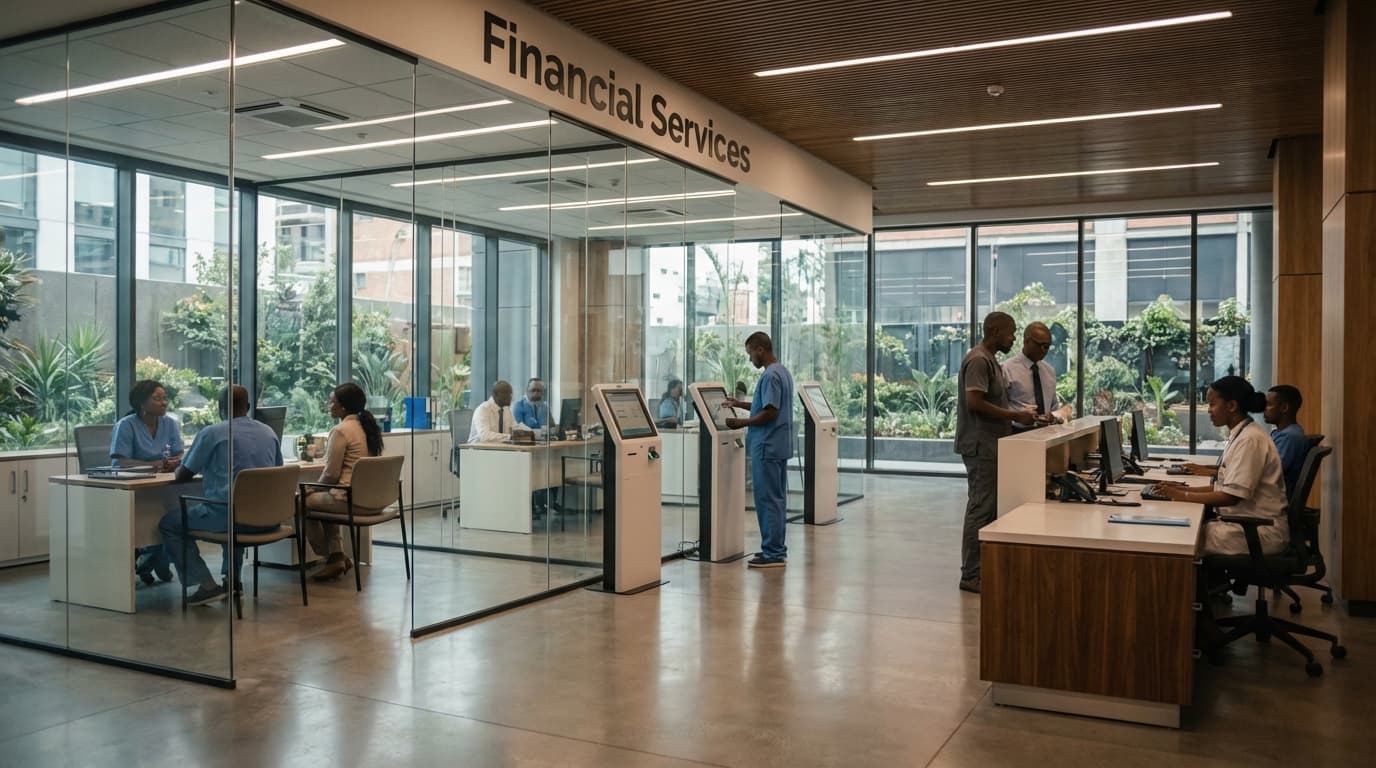
Medical Equipment Financing in Morocco
Engineering Excellence & Technical Support
Leasing and financing solutions for medical equipment High-standard technical execution following OEM protocols and local regulatory frameworks.
Accelerated Equipment Acquisition
Unlock rapid access to cutting-edge medical technology with our streamlined financing solutions. We understand the urgency of modern healthcare, enabling Moroccan medical facilities to acquire essential diagnostic and therapeutic equipment swiftly, enhancing patient care and operational efficiency.
Flexible Financing Structures for Growth
Tailored financing plans designed to accommodate the unique needs of Moroccan healthcare providers. Whether it's specialized surgical instruments, advanced imaging systems, or general medical equipment, we offer flexible repayment terms and competitive rates to support your facility's expansion and modernization goals.
Expert Partnership & Local Market Insight
Leverage our deep understanding of the Moroccan healthcare landscape. We provide expert guidance and financial solutions specifically crafted for the local market, ensuring your investments in medical equipment are not only technologically sound but also financially sustainable and compliant with Moroccan regulations.
What Is Medical Equipment Financing In Morocco?
Medical Equipment Financing in Morocco refers to the provision of capital by financial institutions to healthcare providers for the acquisition of medical devices, machinery, and technology. This service is designed to alleviate the significant upfront capital expenditure associated with procuring essential medical infrastructure, thereby enabling healthcare organizations to expand their services, upgrade existing technology, and maintain operational efficiency without depleting working capital.
| Who Needs Medical Equipment Financing in Morocco? | Typical Use Cases for Financed Medical Equipment | |||||
|---|---|---|---|---|---|---|
| Hospitals (Public and Private): For acquiring advanced diagnostic imaging systems, surgical robots, patient monitoring equipment, and specialized treatment units. | Diagnostic Laboratories and Imaging Centers: To finance the procurement of MRI machines, CT scanners, ultrasound devices, and automated laboratory analyzers. | Clinics and Medical Practices (Specialized and General): For purchasing essential diagnostic tools, therapeutic devices, and office-based medical equipment. | Rehabilitation Centers: To acquire physiotherapy equipment, specialized exercise machines, and assistive technologies. | Dental Practices: For financing dental chairs, X-ray units, sterilization equipment, and dental lasers. | Pharmaceutical and Biotechnology Companies: For research and development laboratory equipment, manufacturing machinery, and quality control instruments. | Government Health Initiatives: To facilitate large-scale procurement of medical equipment for public health programs and infrastructure development. |
| Diagnostic Imaging: MRI, CT scanners, X-ray machines, ultrasound devices. | Surgical Equipment: Operating room suites, laparoscopic instruments, robotic surgery systems. | Patient Care and Monitoring: ICU equipment, ventilators, vital signs monitors, infusion pumps. | Laboratory and Analytical Instruments: Hematology analyzers, biochemistry analyzers, PCR machines, microscopes. | Therapeutic Devices: Dialysis machines, physiotherapy equipment, radiation therapy units. | Information Technology (Healthcare IT): Electronic Health Record (EHR) systems, Picture Archiving and Communication Systems (PACS). | Specialized Medical Equipment: Endoscopes, lasers, audiometers, ophthalmology equipment. |
Key Components of Medical Equipment Financing in Morocco:
- Asset-Based Lending: Financing is typically secured by the medical equipment itself, providing collateral for the lender.
- Leasing Options: Offering operating leases and finance leases, allowing for flexible usage and potential ownership transfer at the end of the term.
- Term Loans: Providing lump-sum financing with repayment over a fixed period, bearing interest.
- Customized Financial Structures: Tailoring repayment schedules and terms to align with the projected revenue streams generated by the financed equipment.
- Inclusion of Ancillary Costs: Financing may extend to include installation, training, maintenance contracts, and software upgrades associated with the equipment.
- Regulatory Compliance: Ensuring the financing process adheres to Moroccan financial regulations and healthcare sector standards.
Who Needs Medical Equipment Financing In Morocco?
Medical equipment financing in Morocco is crucial for a variety of healthcare providers looking to acquire or upgrade essential medical technology. This financing helps overcome the significant upfront costs associated with purchasing, leasing, or upgrading a wide range of medical devices, from diagnostic imaging systems to surgical instruments and patient care equipment. By providing accessible funding solutions, it enables healthcare institutions to enhance their diagnostic capabilities, improve patient treatment outcomes, and expand their service offerings, ultimately contributing to the overall advancement of healthcare in Morocco.
| Department | Equipment Needs | Financing Justification |
|---|---|---|
| Radiology/Imaging | MRI machines, CT scanners, X-ray machines, ultrasound devices, mammography units | Crucial for diagnosis, requires significant capital investment, upgrades for better resolution and reduced radiation. |
| Surgery | Surgical robots, laparoscopic equipment, anesthesia machines, operating tables, specialized surgical instruments | Enables minimally invasive procedures, improves surgical precision, necessitates advanced technology for complex operations. |
| Intensive Care Unit (ICU) | Ventilators, patient monitors, defibrillators, infusion pumps, dialysis machines | Life-saving equipment, high volume usage, requires continuous upgrades for reliability and advanced monitoring capabilities. |
| Cardiology | ECG machines, echocardiogram devices, stress test equipment, cardiac catheterization labs | Essential for diagnosing and treating heart conditions, often involves expensive specialized labs. |
| Laboratory Services | Automated analyzers (hematology, biochemistry), microscopes, centrifuges, PCR machines | High throughput demand, requires precision and accuracy, technological advancements improve speed and diagnostic capabilities. |
| Emergency Medicine | Ambulances with equipment, portable X-ray units, trauma care equipment, portable vital signs monitors | Critical for pre-hospital care and immediate response, requires robust and mobile equipment. |
| Oncology | Linear accelerators, radiation therapy machines, chemotherapy infusion pumps | Highly specialized and expensive equipment for cancer treatment, continuous updates for advanced treatment modalities. |
Target Customers and Departments for Medical Equipment Financing in Morocco
- {"customer":"Public Hospitals","description":"Government-funded hospitals at national, regional, and local levels often face budget constraints but are essential for providing healthcare to the general population. Financing allows them to acquire up-to-date equipment necessary for a broad spectrum of medical services."}
- {"customer":"Private Hospitals and Clinics","description":"These facilities, driven by service quality and patient satisfaction, often seek advanced medical technology to differentiate themselves and attract a wider patient base. Financing enables them to invest in state-of-the-art equipment for specialized treatments and diagnostics."}
- {"customer":"Diagnostic Laboratories and Imaging Centers","description":"Specialized centers focused on diagnostics (e.g., radiology, pathology, cardiology) require sophisticated equipment for accurate and timely testing. Financing is vital for them to stay competitive and offer the latest diagnostic modalities."}
- {"customer":"Specialized Medical Practices (e.g., Dental, Ophthalmology, Dermatology)","description":"Individual or group practices focusing on specific medical fields need specialized tools and equipment. Financing allows these professionals to invest in advanced technology relevant to their practice, improving patient care and efficiency."}
- {"customer":"Rehabilitation and Physiotherapy Centers","description":"Facilities dedicated to physical therapy and rehabilitation require specialized equipment for patient recovery. Financing helps them acquire modern devices that enhance therapeutic effectiveness."}
- {"customer":"Medical Research Institutions","description":"Universities and research centers involved in medical studies often need high-end equipment for scientific advancement and innovation. Financing can support the acquisition of cutting-edge research tools."}
- {"customer":"Start-up Healthcare Ventures","description":"New healthcare businesses or clinics entering the Moroccan market require initial capital for essential medical equipment to begin operations."}
Medical Equipment Financing Process In Morocco
The medical equipment financing process in Morocco typically involves a series of steps designed to assess the viability of a healthcare provider's request, underwrite the loan, and ultimately disburse funds for the purchase of medical equipment. This workflow ensures that lenders mitigate risk while enabling healthcare facilities to acquire essential technology and expand their services. The process is generally initiated by a formal inquiry and culminates in the successful execution of a financing agreement and equipment acquisition.
| Stage | Description | Key Participants | Typical Timeline (Indicative) |
|---|---|---|---|
| Inquiry and Initial Consultation | The healthcare provider expresses interest in financing medical equipment. This often involves an initial meeting to discuss needs, budget, and financing options. Lenders explain their products and eligibility criteria. | Healthcare Provider (Client), Financing Institution (Bank, Leasing Company, Specialized Financier) | 1-3 Business Days |
| Documentation and Information Gathering | The provider submits a comprehensive package of documents including financial statements, business plans, equipment quotations, ownership details, and any relevant licenses or accreditations. The financier may request additional information. | Healthcare Provider (Client), Financing Institution (Underwriting/Credit Team) | 5-15 Business Days |
| Credit Assessment and Risk Evaluation | The financing institution analyzes the submitted documents to assess the provider's financial health, creditworthiness, operational capacity, and the market demand for the proposed equipment. Risk factors are identified and evaluated. | Financing Institution (Credit Analysts, Risk Managers) | 7-20 Business Days |
| Proposal and Term Sheet Generation | Based on the credit assessment, if the proposal is deemed viable, the financier prepares a formal financing proposal or term sheet outlining the loan amount, interest rate, repayment schedule, collateral requirements, and any specific conditions. | Financing Institution (Relationship Manager, Credit Committee) | 3-7 Business Days |
| Legal Review and Agreement Finalization | Both parties review the term sheet. Upon agreement, legal teams draft the definitive financing agreement (loan agreement, lease contract, etc.). This stage involves legal due diligence and negotiation of final terms. | Healthcare Provider (Legal Counsel), Financing Institution (Legal Department), Equipment Vendor (Potentially) | 10-30 Business Days |
| Disbursement and Equipment Procurement | Once the agreement is signed and all conditions precedent are met, the funds are disbursed. This can be directly to the equipment vendor or to the healthcare provider, depending on the agreement. The provider then procures and installs the equipment. | Financing Institution, Healthcare Provider (Client), Equipment Vendor | 2-10 Business Days (after agreement signing) |
| Post-Disbursement Monitoring and Relationship Management | The financing institution monitors the loan performance through regular repayment tracking and may conduct periodic reviews of the financed equipment's performance and the provider's financial status. Ongoing relationship management ensures client satisfaction and future opportunities. | Financing Institution (Account Manager, Collections Department) | Ongoing |
Key Stages in the Medical Equipment Financing Process in Morocco
- Inquiry and Initial Consultation
- Documentation and Information Gathering
- Credit Assessment and Risk Evaluation
- Proposal and Term Sheet Generation
- Legal Review and Agreement Finalization
- Disbursement and Equipment Procurement
- Post-Disbursement Monitoring and Relationship Management
Medical Equipment Financing Cost In Morocco
Medical equipment financing in Morocco involves a variety of pricing structures and considerations. The cost is influenced by several key factors, including the type and complexity of the equipment, its brand and origin, the financing tenor (loan duration), the borrower's creditworthiness, prevailing interest rates set by the Central Bank of Morocco (Bank Al-Maghrib), and the specific financial institution or leasing company involved. For new, high-end diagnostic imaging machines, costs can be significantly higher than for basic patient monitoring devices. Imported equipment often carries additional import duties and taxes, impacting the financed amount and subsequent interest. Loan terms can range from 1 to 7 years, with shorter terms generally having lower overall interest but higher monthly payments. Established healthcare providers with strong financial records will typically secure more favorable rates than startups or smaller clinics. Interest rates in Morocco have seen fluctuations based on monetary policy and economic conditions. Typical interest rate ranges for medical equipment financing in Morocco can vary, but often fall between 7% and 12% per annum, though this can be lower for highly creditworthy clients or during promotional periods and potentially higher for riskier propositions. Other associated costs may include administrative fees, insurance premiums for the equipment, and potentially appraisal fees.
| Financing Type | Typical Interest Rate Range (p.a.) | Financing Tenor (Years) | Indicative Monthly Payment Range (for a hypothetical MAD 500,000 loan at 10% for 5 years) |
|---|---|---|---|
| Bank Loan | 7% - 11% | 1 - 7 | Approx. MAD 10,000 - 11,000 |
| Leasing (Operating/Financial) | 8% - 12% | 1 - 7 | Approx. MAD 10,100 - 11,200 (lease payments may be structured differently) |
| Vendor Financing | Negotiable (can be competitive, sometimes lower than banks) | 1 - 5 | Varies significantly based on vendor offers |
Key Pricing Factors for Medical Equipment Financing in Morocco
- Equipment Type and Complexity
- Brand and Origin (Import Duties/Taxes)
- Financing Tenor (Loan Duration)
- Borrower's Creditworthiness
- Prevailing Interest Rates (Bank Al-Maghrib's Policy)
- Financial Institution/Leasing Company Policies
- Administrative Fees
- Insurance Premiums
- Appraisal Fees
Affordable Medical Equipment Financing Options
Securing affordable medical equipment is crucial for healthcare providers, impacting patient care and operational efficiency. Fortunately, various financing options and cost-saving strategies can make this achievable. Understanding these options allows providers to invest in necessary technology without overburdening their budgets. Value bundles often combine equipment purchases with essential services like installation, training, and maintenance, offering a more comprehensive and potentially cost-effective solution. Cost-saving strategies range from negotiating better terms to exploring refurbished equipment and understanding the total cost of ownership.
| Cost-Saving Strategy | Description | Potential Benefit |
|---|---|---|
| Negotiate Vendor Contracts | Thoroughly review and negotiate pricing, payment terms, and included services with equipment suppliers. Leverage competitive bidding. | Reduced purchase price, favorable payment schedules, inclusion of value-added services. |
| Explore Value Bundles | Inquire about packages that combine equipment with installation, training, maintenance, and software updates. Assess the total value proposition. | Streamlined procurement, predictable costs, access to integrated support, potential discounts compared to individual purchases. |
| Consider Refurbished Equipment | Investigate certified refurbished medical equipment from reputable dealers. These units are typically inspected, repaired, and warrantied. | Significant cost savings (often 30-60% less than new), extended equipment lifespan, environmentally friendly. |
| Analyze Total Cost of Ownership (TCO) | Evaluate not just the initial purchase price but also ongoing costs like maintenance, service contracts, energy consumption, and potential upgrade expenses. | Informed decision-making, avoidance of hidden costs, long-term financial planning. |
| Standardize Equipment Models | Where possible, standardize on a few key equipment models to simplify training, maintenance, and parts management. | Reduced training costs, streamlined inventory, economies of scale for service contracts. |
| Evaluate Lease vs. Buy Decisions Carefully | Compare the long-term financial implications of leasing versus purchasing, considering depreciation, interest rates, and future technology advancements. | Optimal capital allocation, potential tax advantages, flexibility for technology updates. |
| Bulk Purchasing & Group Purchasing Organizations (GPOs) | Join or form a GPO to leverage collective buying power for significant discounts on equipment and supplies. | Substantial price reductions, access to negotiated contracts with preferred vendors. |
Affordable Medical Equipment Financing Options
- Operating Leases: Treat equipment costs as an operating expense, offering lower upfront costs and flexibility for upgrades. Payments are typically tax-deductible.
- Finance Leases: Similar to a loan, where the provider eventually owns the equipment. Offers potential tax benefits for ownership.
- Equipment Loans: Traditional loans from banks or specialized lenders, requiring collateral and a credit assessment. Interest rates vary.
- Medical Equipment Installment Plans: Direct financing offered by manufacturers or distributors, often with fixed monthly payments over a set term.
- Sale-Leaseback Agreements: Selling existing equipment to a finance company and then leasing it back. This frees up capital for new investments.
- Crowdfunding & Grants: For non-profits or specific research projects, these can provide upfront capital for equipment acquisition.
- Partnerships & Consortia: Collaborating with other healthcare providers to collectively purchase equipment can lead to bulk discounts.
- Refurbished Medical Equipment: Purchasing certified pre-owned equipment can significantly reduce acquisition costs while still offering reliability and warranties.
Verified Providers In Morocco
In the evolving landscape of healthcare, ensuring access to reliable and accredited medical services is paramount. For individuals seeking healthcare solutions in Morocco, particularly those focusing on specific medical needs, understanding the significance of 'Verified Providers' is crucial. This document outlines the credibility of Franance Health credentials and explains why they represent the best choice for patients in Morocco. Franance Health adheres to stringent international standards and rigorous verification processes, setting a benchmark for quality and trustworthiness in the Moroccan healthcare sector. Their commitment to excellence ensures that patients receive care from highly qualified and ethically sound medical professionals and facilities. By choosing Franance Health, patients are investing in their well-being with the assurance of superior medical attention and transparent practices.
| Credential Aspect | Franance Health Verification Standard | Benefit for Patients |
|---|---|---|
| Medical Licenses & Certifications | Mandatory verification of current and valid professional licenses and specialized certifications through official Moroccan and international bodies. | Ensures providers are legally qualified and possess the necessary expertise for their practice, reducing risks of unqualified practitioners. |
| Professional Experience | Assessment of a minimum number of years in practice and a demonstrated history of successful patient outcomes. | Provides confidence in the provider's practical skills and ability to manage complex medical cases effectively. |
| Facility Accreditation | Verification of hospital and clinic accreditation by national (e.g., Ministry of Health) and relevant international standards organizations (e.g., ISO, Joint Commission International). | Guarantees that healthcare facilities meet stringent standards for infrastructure, equipment, hygiene, and operational safety. |
| Ethical Conduct & Patient Feedback | Review of disciplinary records and a system for monitoring positive patient experiences and feedback. | Promotes providers who uphold high ethical standards and are dedicated to patient satisfaction and well-being. |
| Continuing Medical Education (CME) | Confirmation of active participation in ongoing professional development and training. | Ensures providers stay updated with the latest medical advancements, technologies, and treatment protocols. |
Why Franance Health is the Best Choice for Verified Providers in Morocco
- Rigorous Accreditation and Verification: Franance Health partners exclusively with healthcare providers who have undergone extensive vetting. This includes verification of medical licenses, professional certifications, and adherence to international quality and safety standards. This meticulous process guarantees that every provider listed is legitimate and operates at the highest level of practice.
- Commitment to Patient Safety and Quality: Patient well-being is at the core of Franance Health's mission. Their verification process prioritizes providers with a proven track record in delivering safe, effective, and patient-centered care. This focus minimizes risks and maximizes positive health outcomes for all individuals seeking treatment.
- Access to Specialized Expertise: Morocco boasts a growing number of highly skilled medical professionals. Franance Health's network ensures access to a diverse range of specialists across various medical fields. Their verification process identifies and highlights those with specific expertise, allowing patients to find the most suitable care for their unique needs.
- Transparency and Trust: Franance Health believes in empowering patients with information. Their transparent verification methodology and clear presentation of provider credentials build trust. Patients can be confident that the information provided is accurate and reliable, enabling informed decision-making.
- International Standards Alignment: Franance Health aligns its verification criteria with globally recognized healthcare benchmarks. This ensures that Moroccan healthcare providers meet and often exceed international expectations, making them attractive for both local and international patients seeking high-quality medical services.
- Streamlined Patient Experience: By curating a network of verified providers, Franance Health simplifies the process of finding and accessing quality healthcare. Patients can bypass the uncertainty of independent searches and directly connect with trusted professionals, saving time and reducing stress.
Scope Of Work For Medical Equipment Financing
This Scope of Work (SOW) outlines the technical deliverables and standard specifications required for medical equipment financing. It defines the criteria for evaluating the suitability of medical equipment for financing, ensuring compliance with industry standards, regulatory requirements, and functional performance expectations. This document serves as a guide for financial institutions, equipment vendors, and healthcare providers involved in the medical equipment financing process.
| Category | Description | Standard Specifications / Deliverables |
|---|---|---|
| Equipment Identification and Description | Clear and unambiguous identification of the medical equipment. | Manufacturer, Model Number, Serial Number, Asset Tag (if applicable), detailed description of functionality and intended use. |
| Technical Specifications and Performance Standards | Detailed technical parameters and performance benchmarks the equipment must meet. | Adherence to published manufacturer specifications. For financed equipment, it should meet or exceed current industry standards for its class. Evidence of calibration and testing to confirm performance. Specific performance metrics relevant to the equipment's function (e.g., image resolution for MRI, flow rate for ventilators). |
| Regulatory Compliance and Certifications | Verification of compliance with relevant health and safety regulations. | FDA clearance/approval (in the US) or equivalent regulatory body approval (e.g., CE marking in Europe) for medical devices. Compliance with local healthcare facility regulations and safety standards. Proof of valid certifications. |
| Condition and Age of Equipment | Assessment of the physical and operational condition of the equipment. | For new equipment: unused, in original packaging, with all accessories. For used equipment: detailed inspection report, documented service history, with minimal wear and tear, and a defined remaining useful life (e.g., minimum percentage of expected lifespan remaining, typically 70-80% for financed assets). |
| Maintenance and Serviceability | Confirmation of the equipment's ability to be maintained and repaired. | Availability of OEM or certified third-party service providers. Access to spare parts. Documented preventive maintenance schedules and records. Service contracts (if applicable) should be transferable or renewable. |
| Installation and Commissioning Requirements | Confirmation of proper installation and operational readiness. | Requirement for installation by manufacturer-certified technicians. Successful commissioning report confirming full operational functionality and integration into the healthcare environment. Site readiness assessment report. |
| Warranty and Support | Details of any applicable warranties and manufacturer support. | Manufacturer's warranty information (duration, coverage). Availability of technical support (hours of operation, response times). Any extended warranties or service agreements should be clearly defined and transferable. |
| Documentation and Training | Availability of all necessary operational and technical documentation. | User manuals, service manuals, maintenance logs, installation guides. Confirmation that adequate training has been provided to end-users and maintenance staff. |
| Obsolescence and Upgrade Path | Consideration of the equipment's technological lifespan and future upgradeability. | Assessment of the equipment's projected obsolescence timeline. Information on available software updates, hardware upgrade paths, and end-of-life support policies from the manufacturer. |
Key Technical Deliverables and Standard Specifications
- Equipment Identification and Description
- Technical Specifications and Performance Standards
- Regulatory Compliance and Certifications
- Condition and Age of Equipment
- Maintenance and Serviceability
- Installation and Commissioning Requirements
- Warranty and Support
- Documentation and Training
- Obsolescence and Upgrade Path
Service Level Agreement For Medical Equipment Financing
This Service Level Agreement (SLA) outlines the response times and uptime guarantees for medical equipment financing services provided by [Your Company Name] to [Client Name]. This SLA is an integral part of the Master Service Agreement dated [Date].
| Service Component | Uptime Guarantee | Response Time (Critical Equipment) | Response Time (Standard Equipment) | Resolution Time Target (Critical Equipment) | Resolution Time Target (Standard Equipment) |
|---|---|---|---|---|---|
| Equipment Availability | 99.5% Uptime | 2 Business Hours | 4 Business Hours | 8 Business Hours | 24 Business Hours |
| Technical Support & Troubleshooting | N/A | 1 Business Hour (Initial Contact) | 2 Business Hours (Initial Contact) | Not Applicable (Focus on equipment restoration) | Not Applicable (Focus on equipment restoration) |
| Scheduled Maintenance Coordination | N/A | 2 Business Days Advance Notice | 5 Business Days Advance Notice | N/A | N/A |
Definitions
- Uptime: The percentage of time the financed medical equipment is available for use, as defined by the equipment manufacturer's specifications and operational parameters.
- Downtime: Any period during which the financed medical equipment is unavailable for use due to a defect, malfunction, or scheduled maintenance that impacts its primary operational function.
- Critical Equipment: Medical equipment deemed essential for patient care, life support, or emergency procedures. Identification of Critical Equipment is mutually agreed upon and documented in Appendix A.
- Standard Equipment: Medical equipment that is not classified as Critical Equipment.
- Response Time: The maximum time allowed from the initiation of a service request until the first corrective action is taken by [Your Company Name] or its designated service partner.
- Resolution Time: The maximum time allowed from the initiation of a service request until the financed medical equipment is restored to full operational status.
Frequently Asked Questions

Ready when you are
Let's scope your Medical Equipment Financing in Morocco project in Morocco.

Scaling healthcare logistics and technical systems across the entire continent.