
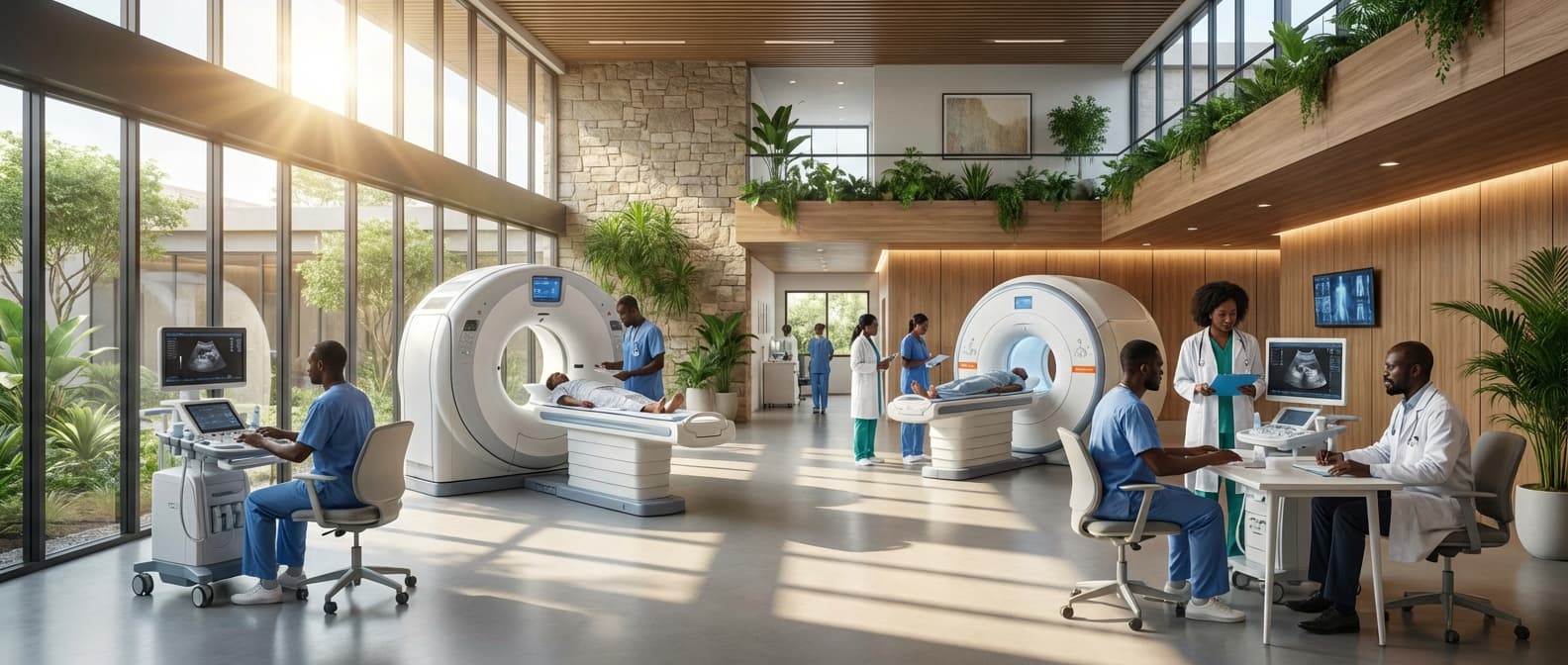
Diagnostic Imaging in Morocco
Engineering Excellence & Technical Support
High-resolution imaging systems including CT scanners, MRI, X-ray, and ultrasound technology for accurate clinical diagnosis. High-standard technical execution following OEM protocols and local regulatory frameworks.
Advancements in AI-Powered Diagnostic Imaging
Moroccan healthcare institutions are increasingly integrating AI algorithms into their PACS (Picture Archiving and Communication Systems) and RIS (Radiology Information Systems). This enables automated detection of anomalies in X-rays, CT scans, and MRIs, leading to faster and more accurate diagnoses, especially for common conditions like tuberculosis and certain cancers. AI also assists in optimizing scan parameters and reducing radiation exposure.
Expansion of Tele-Radiology Services
The growing penetration of high-speed internet and mobile technology in Morocco is fueling the expansion of tele-radiology services. Remote interpretation of medical images by specialists, particularly in underserved rural areas, is bridging the accessibility gap. This allows for timely consultations and diagnoses, improving patient outcomes and reducing the burden on urban medical centers.
Adoption of Advanced Imaging Modalities for Cardiovascular Health
Moroccan hospitals are investing in state-of-the-art cardiovascular imaging equipment, including advanced CT angiography (CTA) and cardiac MRI. These technologies provide detailed anatomical and functional insights into the heart and blood vessels, enabling earlier and more precise diagnosis and management of cardiovascular diseases, a significant health concern in the country.
What Is Diagnostic Imaging In Morocco?
Diagnostic imaging in Morocco refers to a suite of medical technologies used to create visual representations of the interior of the human body for clinical analysis and medical intervention. These modalities utilize various forms of energy, including X-rays, sound waves, magnetic fields, and radioactive isotopes, to generate images that aid in the detection, diagnosis, and monitoring of diseases and injuries. The service involves the operation of specialized equipment by trained radiographers and the interpretation of resultant images by qualified radiologists. Access to these services is crucial for a comprehensive healthcare assessment, enabling healthcare providers to gain insights into anatomical structures, physiological processes, and pathological changes that may not be evident through physical examination or laboratory tests alone. The integration of advanced diagnostic imaging techniques is a cornerstone of modern medical practice in Morocco, contributing significantly to improved patient outcomes and treatment efficacy.
| Who Needs Diagnostic Imaging? | Typical Use Cases | Examples of Conditions Diagnosed |
|---|---|---|
| Patients with suspected fractures or bone abnormalities. | Assessing bone integrity, joint alignment, and identifying dislocations. | Fractures, arthritis, osteoporosis, bone tumors. |
| Individuals experiencing chest pain or respiratory distress. | Visualizing lung fields, heart, and thoracic structures. | Pneumonia, tuberculosis, lung nodules, pleural effusion, cardiac abnormalities. |
| Patients with abdominal pain or suspected organ pathology. | Evaluating abdominal organs such as the liver, kidneys, spleen, pancreas, and gallbladder. | Gallstones, kidney stones, appendicitis, pancreatitis, liver disease, abdominal masses. |
| Women undergoing routine breast cancer screening or with palpable breast lumps. | Detecting microcalcifications, masses, and other signs of breast cancer. | Breast cancer (in situ and invasive), benign breast masses. |
| Patients undergoing neurological assessments or suspected of having neurological conditions. | Imaging the brain and spinal cord to detect abnormalities. | Stroke, brain tumors, multiple sclerosis, spinal cord injuries, herniated discs. |
| Pregnant women for prenatal care. | Monitoring fetal development, amniotic fluid levels, and placental position. | Fetal abnormalities, placental previa, intrauterine growth restriction. |
| Patients requiring pre-operative assessment or post-operative follow-up. | Planning surgical interventions and monitoring recovery. | Pre-surgical staging of cancers, post-surgical complications. |
| Individuals undergoing cancer screening, diagnosis, or treatment monitoring. | Detecting the presence, extent, and response to treatment of various cancers. | Various types of cancers (e.g., lung, breast, prostate, colorectal), metastasis. |
Key Modalities in Moroccan Diagnostic Imaging
- X-ray Radiography (including Fluoroscopy): Utilizes ionizing radiation to produce images of bones, organs, and soft tissues. Fluoroscopy allows for real-time imaging during procedures.
- Computed Tomography (CT) Scan: Employs a series of X-ray images taken from different angles to create cross-sectional views of the body, providing detailed anatomical information.
- Magnetic Resonance Imaging (MRI): Uses strong magnetic fields and radio waves to generate detailed images of organs, soft tissues, bone, and virtually all other internal body structures.
- Ultrasound (Sonography): Employs high-frequency sound waves to create images of internal organs and structures, particularly useful for evaluating soft tissues, blood flow, and during pregnancy.
- Nuclear Medicine Imaging (e.g., PET-CT, SPECT-CT): Involves the administration of small amounts of radioactive tracers to visualize physiological processes and detect diseases at a molecular level.
- Mammography: A specialized type of X-ray used for breast cancer screening and diagnosis.
Who Needs Diagnostic Imaging In Morocco?
Diagnostic imaging plays a crucial role in modern healthcare, providing essential insights for diagnosis, treatment planning, and monitoring of various conditions. In Morocco, like in many developing nations, understanding who needs these services and where they are most impactful is key to optimizing healthcare resource allocation and improving patient outcomes. This analysis identifies the primary beneficiaries and the key departments within Moroccan healthcare facilities that rely heavily on diagnostic imaging.
| Department | Key Diagnostic Imaging Modalities Used | Primary Patient Needs Served |
|---|---|---|
| Radiology Department | X-ray, CT Scan, MRI, Mammography, Fluoroscopy | Fracture detection, lung conditions (pneumonia, TB), abdominal issues, neurological assessments, breast cancer screening, gastrointestinal studies. |
| Cardiology Department | Echocardiography (ultrasound), Cardiac CT, Cardiac MRI | Assessment of heart structure and function, coronary artery disease, congenital heart defects, heart valve issues. |
| Neurology Department | CT Scan, MRI (especially with contrast), EEG (electrophysiology, not strictly imaging but often linked) | Stroke diagnosis and monitoring, brain tumors, epilepsy, multiple sclerosis, spinal cord injuries. |
| Oncology Department | CT Scan, MRI, PET Scan (increasingly available), Mammography, Ultrasound | Cancer staging, tumor localization, treatment response assessment, detection of metastases. |
| Orthopedics Department | X-ray, CT Scan, MRI, Ultrasound | Diagnosis of fractures, dislocations, ligament tears, joint problems, sports injuries, arthritis assessment. |
| Gastroenterology Department | CT Scan, MRI, Ultrasound, Barium Studies (Fluoroscopy) | Diagnosis of gastrointestinal blockages, tumors, inflammatory bowel disease, liver and pancreatic conditions. |
| Urology Department | Ultrasound, CT Scan, MRI | Kidney stones, urinary tract infections, bladder and prostate abnormalities, kidney tumors. |
| Emergency Department (ED) | X-ray, CT Scan, Ultrasound | Rapid diagnosis of trauma, acute abdominal pain, suspected stroke, and other life-threatening conditions requiring immediate attention. |
| Maternity/Obstetrics & Gynecology Department | Ultrasound (Obstetric and Gynecological) | Fetal well-being monitoring, detection of fetal abnormalities, diagnosis of gynecological conditions (cysts, fibroids). |
| Pediatrics Department | X-ray, Ultrasound, CT Scan, MRI (often with sedation) | Congenital anomalies, childhood cancers, injuries, developmental disorders, infections. |
Target Customer Segments for Diagnostic Imaging in Morocco
- Patients with Acute and Chronic Illnesses: Individuals suffering from a wide range of conditions requiring diagnosis or monitoring. This includes infectious diseases, cardiovascular problems, respiratory ailments, neurological disorders, and gastrointestinal issues.
- Trauma and Emergency Patients: Individuals who have sustained injuries due to accidents, falls, or violence. Diagnostic imaging is vital for identifying fractures, internal bleeding, and other life-threatening injuries.
- Cancer Patients: Those diagnosed with or suspected of having cancer. Imaging is critical for detection, staging, treatment planning (surgery, radiation therapy), and assessing treatment response.
- Patients Undergoing Surgical Procedures: Pre-operative imaging is often necessary to plan surgical interventions and assess anatomical structures. Post-operative imaging helps monitor recovery and detect complications.
- Patients Requiring Follow-up and Monitoring: Individuals undergoing treatment for chronic conditions (e.g., diabetes-related complications, kidney disease) or post-operative patients who need regular scans to track their progress and adjust treatment.
- Pediatric Patients: Children with various congenital conditions, developmental issues, injuries, or illnesses require specialized diagnostic imaging techniques.
- Geriatric Patients: The elderly population often presents with complex health issues requiring imaging for diagnosis and management of conditions like osteoarthritis, osteoporosis, and neurological degeneration.
- Referral Patients: Individuals referred by primary care physicians or other specialists for specific diagnostic imaging investigations.
Diagnostic Imaging Process In Morocco
The diagnostic imaging process in Morocco, like in many countries, follows a structured workflow to ensure accurate and timely diagnosis for patients. This process begins with a physician's referral and culminates in the delivery of imaging results to the referring physician. The specific steps and their order can vary slightly depending on the type of imaging modality, the healthcare facility, and the urgency of the case.
| Stage | Description | Key Participants | Key Outputs/Outcomes |
|---|---|---|---|
| Patient Inquiry and Referral | A patient presents with symptoms or a medical condition requiring a diagnostic imaging examination. The treating physician determines the necessity of an imaging study and provides a referral (prescription) specifying the type of scan needed (e.g., X-ray, CT, MRI, Ultrasound). | Patient, Referring Physician | Referral/Prescription for imaging examination. |
| Appointment Scheduling | The patient, or their representative, contacts the imaging center or hospital department to schedule an appointment. This may involve providing the referral, insurance information, and availability. The scheduler confirms the appointment details, including date, time, and any specific preparation instructions. | Patient, Administrative Staff (Receptionist, Scheduler) | Scheduled appointment date and time. |
| Patient Preparation | Depending on the imaging modality, patients may need specific preparation. This can include fasting, avoiding certain medications, drinking contrast agents, or removing metallic objects. Patients are usually informed of these requirements during scheduling. | Patient, Imaging Center Staff (Nurse, Technologist) | Patient compliance with preparation instructions. |
| Image Acquisition (The Scan) | The patient arrives at the imaging facility. A radiologic technologist positions the patient and operates the imaging equipment (e.g., X-ray machine, CT scanner, MRI scanner, ultrasound probe) to acquire the necessary images. Contrast agents may be administered intravenously or orally if required. | Patient, Radiologic Technologist, Radiologist (in some cases) | Raw imaging data. |
| Image Interpretation | A qualified radiologist, a physician specializing in interpreting medical images, reviews the acquired images. They analyze the findings, identify any abnormalities, and correlate them with the patient's clinical history and the referring physician's query. | Radiologist | Radiological findings, identification of pathologies. |
| Report Generation | The radiologist dictates or writes a comprehensive diagnostic report detailing the findings, impressions (diagnosis or differential diagnoses), and recommendations. This report is then transcribed and finalized. | Radiologist, Medical Transcriptionist (if applicable) | Finalized diagnostic imaging report. |
| Result Delivery and Follow-up | The finalized report is sent to the referring physician. The referring physician then communicates the results to the patient, discusses the implications, and determines the next steps in the patient's management, which may include further tests or treatment. | Referring Physician, Patient, Imaging Center Staff (for report transmission) | Informed patient, treatment plan initiation. |
Diagnostic Imaging Workflow in Morocco
- Patient Inquiry and Referral
- Appointment Scheduling
- Patient Preparation
- Image Acquisition (The Scan)
- Image Interpretation
- Report Generation
- Result Delivery and Follow-up
Diagnostic Imaging Cost In Morocco
Diagnostic imaging costs in Morocco can vary significantly based on several factors, including the type of imaging modality, the complexity of the examination, the geographical location of the facility (major cities versus smaller towns), and the reputation and specific pricing structure of the healthcare provider (public vs. private hospitals and clinics). The Moroccan Dirham (MAD) is the local currency used for these transactions. Public healthcare facilities generally offer lower prices than private ones, though wait times might be longer in the public sector. Advanced imaging techniques like MRI and CT scans are inherently more expensive than X-rays or ultrasounds due to the sophisticated technology and expertise required. The extent of contrast agent usage can also influence the final cost. For a general idea, a standard X-ray might cost between 100 and 300 MAD, while an ultrasound could range from 200 to 500 MAD. More specialized examinations like a CT scan could fall between 800 and 2500 MAD, and an MRI might range from 1500 to 4000 MAD or even higher for complex procedures. It's always advisable for patients to inquire directly with the imaging center or hospital for precise cost estimations.
| Imaging Type | Estimated Price Range (MAD) |
|---|---|
| X-ray (Standard) | 100 - 300 |
| Ultrasound (Abdomen, Pelvis, etc.) | 200 - 500 |
| CT Scan (Head, Chest, Abdomen) | 800 - 2500 |
| MRI (Brain, Spine, Joints) | 1500 - 4000 |
| Mammography | 300 - 600 |
| Fluoroscopy | 250 - 700 |
Key Factors Influencing Diagnostic Imaging Costs in Morocco
- Imaging Modality (X-ray, Ultrasound, CT, MRI)
- Complexity and Scope of the Examination
- Geographical Location (Major Cities vs. Rural Areas)
- Type of Facility (Public vs. Private)
- Use of Contrast Agents
- Technological Advancements and Equipment Used
- Specialist Expertise and Interpretation Fees
Affordable Diagnostic Imaging Options
Accessing affordable diagnostic imaging is crucial for effective healthcare. Fortunately, several avenues exist to reduce costs without compromising quality. Value bundles and strategic planning can significantly lower out-of-pocket expenses and improve healthcare affordability. This section explores these options and provides actionable cost-saving strategies.
| Cost-Saving Strategy | Description | How it Helps Affordability |
|---|---|---|
| Shop Around and Compare Prices | Obtain quotes from multiple imaging centers (hospitals, independent imaging facilities, urgent care centers) for the same procedure. | Prices can vary significantly between providers for identical tests. Even a few hundred dollars saved per scan adds up. |
| Understand Your Insurance Coverage | Before scheduling, verify that the imaging center is in-network with your insurance and understand your deductible, copay, and coinsurance responsibilities. | Using in-network providers and knowing your out-of-pocket maximum prevents surprise bills and ensures you're not paying more than necessary. |
| Inquire About Cash Prices | If you are uninsured or have a high deductible, ask about discounted cash prices. Many facilities offer lower rates for self-pay patients. | Cash prices can sometimes be lower than what insurance companies negotiate, making self-pay a more affordable option. |
| Ask About Generic or Alternative Imaging Options | Discuss with your doctor if a less expensive imaging modality (e.g., ultrasound instead of MRI for certain conditions) could provide sufficient diagnostic information. | Choosing a more cost-effective imaging technique when clinically appropriate can lead to substantial savings. |
| Utilize Imaging Centers of Excellence | Some centers specialize in high-volume imaging, leading to economies of scale and potentially lower prices. Look for accredited facilities. | Specialized centers may offer more competitive pricing due to efficiency and volume. |
| Explore Advanced Beneficiary Notices (ABNs) | If your insurance denies coverage for a test, and your doctor believes it's medically necessary, an ABN allows you to proceed with the test at your own risk, often with a negotiated cash price. | This can be a way to get a necessary test done at a potentially reduced rate when insurance coverage is uncertain. |
| Consider Imaging Cooperatives or Discount Cards | Some organizations or employers offer discount cards or programs that provide reduced rates on imaging services. | These programs leverage collective buying power to offer members savings on diagnostic tests. |
| Discuss Package Deals with Your Provider | If you anticipate needing multiple imaging studies or other related services, inquire if your provider offers package discounts. | Bundling multiple services from one provider can sometimes result in a lower overall cost. |
Understanding Value Bundles
- {"title":"What are Value Bundles?","description":"Value bundles are packages of healthcare services that are offered at a set price. Instead of paying for each individual service, patients or payers receive a comprehensive package for a single fee. This can include diagnostic imaging tests as part of a larger treatment plan or procedure."}
- {"title":"Benefits of Value Bundles","description":"Bundles can offer predictable costs, reduce administrative complexity, and encourage integrated care. Providers are incentivized to coordinate services efficiently, potentially leading to better outcomes and lower overall costs."}
- {"title":"Examples in Imaging","description":"While less common as standalone imaging packages, value bundles are often seen in areas like orthopedic surgeries where pre-operative imaging, the surgery itself, and post-operative care might be bundled. Some integrated health systems may also offer bundled imaging services for specific conditions."}
Verified Providers In Morocco
In the realm of healthcare, particularly for those seeking specialized treatments or undergoing medical tourism, the assurance of quality and legitimacy is paramount. In Morocco, as in many other countries, navigating the healthcare landscape and identifying truly reliable providers can be a daunting task. This is where organizations like Franance Health play a crucial role, offering a vetted and transparent approach to connecting patients with the best healthcare options. Their rigorous credentialing process ensures that the providers they endorse meet the highest standards of medical expertise, ethical practice, and patient care. By choosing Franance Health-verified providers, individuals gain confidence in receiving safe, effective, and high-quality medical services in Morocco.
| Category | Franance Health Verification Criteria | Benefits for Patients |
|---|---|---|
| Medical Professionals | Valid licenses, board certifications, continuous professional development, proven track record, adherence to ethical guidelines. | Access to highly skilled and experienced doctors and specialists, assurance of competence and ethical treatment. |
| Healthcare Facilities | Accreditation by recognized national and international bodies (e.g., ISO, JCI), state-of-the-art equipment, robust safety protocols, well-maintained infrastructure. | Safe and comfortable treatment environment, access to advanced medical technology, reduced risk of hospital-acquired infections. |
| Treatment Protocols | Adherence to evidence-based medicine, standardized treatment pathways, documented patient outcome data, transparency in treatment options and costs. | Receiving effective and up-to-date medical treatments, clear understanding of procedures and expected results, fair and transparent pricing. |
| Patient Experience | Clear communication channels, patient feedback mechanisms, accessibility for international patients, multilingual support staff. | Positive and supportive healthcare journey, feeling heard and understood, seamless experience for those seeking care abroad. |
Why Franance Health Verification Matters for Moroccan Healthcare Providers
- Ensures adherence to international quality standards.
- Verifies the qualifications and experience of medical professionals.
- Confirms the accreditation and operational integrity of facilities.
- Promotes ethical medical practices and patient-centric care.
- Provides transparency and builds trust for patients.
- Facilitates access to specialized and advanced medical treatments.
- Reduces the risk of encountering substandard or fraudulent services.
Scope Of Work For Diagnostic Imaging
This Scope of Work (SOW) outlines the requirements for providing diagnostic imaging services, including the technical deliverables and standard specifications for each modality. The objective is to ensure high-quality, accurate, and timely diagnostic imaging to support patient care and clinical decision-making.
| Modality | Key Technical Deliverables | Standard Specifications (Examples) | |||
|---|---|---|---|---|---|
| X-Ray (Radiography) | Digital Radiographic Images (DICOM format) | Minimum Resolution: 300 DPI (for printed images, if applicable) | Image Quality: Artifact-free, optimal contrast and density | Exposure Indicators: Within acceptable range | Patient Identification: Clearly visible and accurate |
| Computed Tomography (CT) | Axial, Coronal, and Sagittal Reconstructions (DICOM format) | Slice Thickness: Variable, defined by clinical protocol (e.g., < 5mm for routine scans) | Image Resolution: High-spatial resolution kernels | Reconstruction Algorithms: Advanced iterative reconstruction preferred | Image Quality: Low noise, appropriate window/level settings |
| Magnetic Resonance Imaging (MRI) | Multi-planar and Multi-sequence Images (DICOM format) | Signal-to-Noise Ratio (SNR): Optimized for each sequence | Spatial Resolution: Dependent on field strength and coil technology | Image Artifacts: Minimized (e.g., motion, susceptibility) | Contrast and Tissues Characterization: Clearly depicted |
| Ultrasound (US) | B-mode, Doppler, and Color Doppler Images/Loops (DICOM or other appropriate format) | Image Resolution: Sufficient to visualize anatomical detail | Doppler Sensitivity: Adequate for detecting blood flow | Image Quality: Speckle reduction, artifact suppression | Measurements: Accurate and reproducible |
| Nuclear Medicine (NM) / PET | Functional and Anatomical Images (DICOM format) | Image Resolution: Appropriate for the radiotracer and clinical question | Reconstruction Methods: Iterative reconstruction preferred | Quantification: Standardized uptake values (SUV) calculated where applicable | Image Quality: Minimal scatter and attenuation artifacts |
| Mammography | Digital Mammographic Images (DICOM format) | Image Quality: High contrast, minimal noise, optimal breast tissue visualization | Reconstruction: Tomosynthesis (if applicable) with appropriate slice thickness | Compression: Adequate and consistent | Artifacts: Absence of imaging artifacts |
Scope of Work Sections
- Introduction and Objectives
- Services Required
- Technical Deliverables
- Standard Specifications
- Reporting Requirements
- Quality Assurance and Control
- Equipment Maintenance and Calibration
- Data Management and Security
- Personnel Qualifications
- Compliance and Regulatory Requirements
- Pricing and Billing
Service Level Agreement For Diagnostic Imaging
This Service Level Agreement (SLA) outlines the performance standards and guarantees for the diagnostic imaging services provided. It defines the expected response times for various service requests and the uptime commitment for critical imaging systems. This SLA is designed to ensure the efficient and reliable delivery of diagnostic imaging services to support patient care.
| Service Category | Response Time Target | Uptime Guarantee | Notes/Escalation |
|---|---|---|---|
| Routine Imaging Procedures (e.g., X-ray, Ultrasound) | Initial response within 15 minutes for scheduling/access issues. Full system availability during operational hours. | 99.5% during scheduled operational hours. | System outage exceeding 30 minutes will trigger priority resolution and potential root cause analysis. |
| Urgent/STAT Imaging Procedures (e.g., CT, MRI, Nuclear Medicine) | Immediate response (within 5 minutes) for system access/technical issues. Patient study initiation prioritized. | 99.9% during operational hours. | System outage exceeding 15 minutes will trigger critical incident response and immediate escalation. |
| PACS (Picture Archiving and Communication System) | Image retrieval within 30 seconds under normal load. System accessible for study loading and viewing. | 99.9% 24/7. | Downtime exceeding 10 minutes will require immediate investigation and communication. |
| Workstation and Viewer Availability | Workstations and viewers operational and logged in within 5 minutes of user login. | 99.8% during operational hours. | Individual workstation issues should be resolved within 1 hour. Widespread issues require immediate attention. |
| Reporting System Integration | Seamless integration for report dictation and retrieval. Report availability within 1 hour of interpretation completion (for routine studies). | 99.7% during operational hours. | Any interruption in dictation or report availability exceeding 30 minutes requires immediate investigation. |
| Scheduled Maintenance | Notification provided at least 48 hours in advance for any scheduled maintenance impacting availability. | N/A (during scheduled maintenance windows). | Maintenance windows will be scheduled during off-peak hours whenever possible. |
Key Performance Indicators (KPIs)
- Availability: The percentage of time the diagnostic imaging systems are operational and accessible for use.
- Response Time: The maximum time allowed from the initiation of a service request to the commencement of action or resolution.
- Image Delivery Time: The time taken from the completion of an imaging procedure to the availability of the diagnostic images for interpretation.
Frequently Asked Questions

Ready when you are
Let's scope your Diagnostic Imaging in Morocco project in Morocco.

Scaling healthcare logistics and technical systems across the entire continent.