
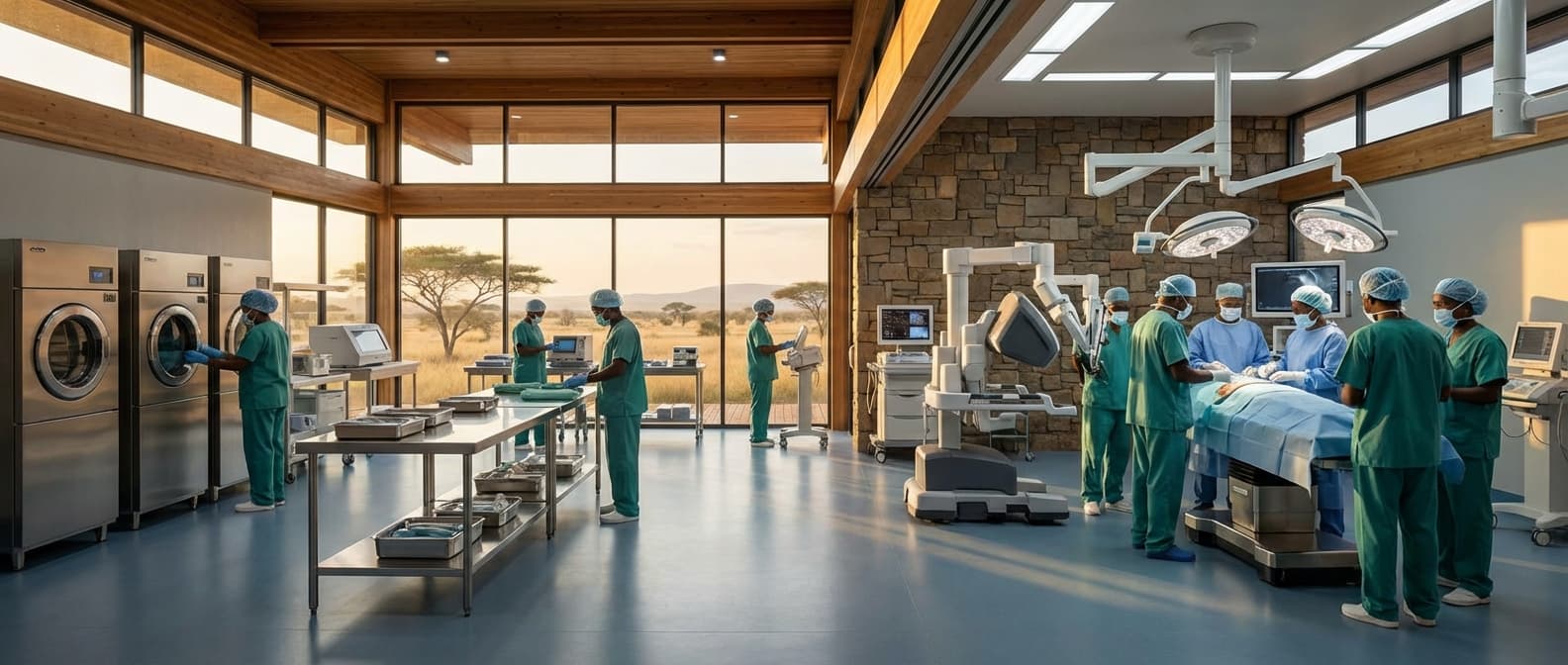
Operating Theatre Turnkey Build in Morocco
Engineering Excellence & Technical Support
Complete OR design, equipment integration and commissioning High-standard technical execution following OEM protocols and local regulatory frameworks.
End-to-End Project Management & Construction
Comprehensive turnkey solution for operating theatre construction in Morocco, encompassing design, procurement, civil works, MEP installation, medical gas systems, and sterile environments, ensuring a seamless and compliant facility from concept to completion.
Specialized Medical Facility Design & Engineering
Expert design and engineering services tailored to Moroccan healthcare standards, focusing on optimal workflow, infection control, patient safety, and advanced technology integration for state-of-the-art operating theatres.
Robust MEP & Medical Gas System Integration
Installation and commissioning of high-quality Mechanical, Electrical, and Plumbing (MEP) systems, alongside critical medical gas networks, ensuring reliable and safe operation of essential surgical equipment and environments in the Moroccan operating theatre.
What Is Operating Theatre Turnkey Build In Morocco?
An Operating Theatre Turnkey Build in Morocco refers to a comprehensive service offering that encompasses the design, construction, equipping, and commissioning of a fully functional operating theatre (OT) facility. This service is characterized by its 'turnkey' nature, meaning the client receives a ready-to-use facility upon completion, with all aspects managed by a single provider. The process involves a multidisciplinary approach, integrating architectural, engineering, medical equipment, and specialized finishing requirements. The objective is to deliver a compliant, safe, and efficient surgical environment that meets international standards and specific client needs within the Moroccan healthcare sector.
| Stakeholder Group | Need for Turnkey OT Build | Typical Use Cases |
|---|---|---|
| Public Hospitals (Moroccan Ministry of Health) | Expansion of surgical capacity, upgrading aging infrastructure to meet modern standards, establishing specialized surgical centers, ensuring compliance with national health regulations. | Construction of new general surgery OTs, modernization of existing cardiovascular or neurosurgery OTs, development of pediatric surgical suites. |
| Private Healthcare Providers (Clinics and Hospitals) | Rapid deployment of advanced surgical facilities to attract patients, differentiating services with state-of-the-art technology, meeting international accreditation requirements (e.g., JCI), optimizing operational efficiency. | Establishing a flagship surgical center, building specialized OTs for orthopedics or ophthalmology, creating a multi-disciplinary surgical hub. |
| International Aid Organizations and NGOs | Establishing or upgrading surgical capabilities in underserved regions, providing emergency response facilities, implementing standardized healthcare infrastructure. | Setting up field hospitals with surgical units, constructing OTs in remote areas for specific medical missions, equipping temporary surgical facilities. |
| Research and Educational Institutions | Creating advanced surgical simulation and training environments, facilitating research in surgical techniques and technologies, providing hands-on learning opportunities for medical students and residents. | Developing a teaching OT with integrated recording and simulation capabilities, establishing a research-focused surgical laboratory. |
Key Components of an Operating Theatre Turnkey Build
- Design and Planning: Includes architectural layouts, HVAC system design (critical for air quality and pressure differentials), lighting schemes (surgical, ambient, emergency), medical gas systems (oxygen, medical air, vacuum, nitrous oxide), electrical systems (including backup power), and infection control considerations.
- Construction and Civil Works: Encompasses structural modifications, installation of specialized wall and floor finishes (seamless, anti-microbial, durable), door systems (hermetic, lead-lined if required), and ceiling installations.
- Medical Equipment Integration: Procurement, installation, and calibration of essential OT equipment such as surgical lights, operating tables, anesthesia machines, patient monitors, electro-surgical units, imaging modalities (e.g., C-arms), and sterilization equipment.
- Specialized Systems: Installation and integration of nurse call systems, audio-visual communication systems, IT infrastructure for electronic health records, and security systems.
- Commissioning and Validation: Thorough testing of all installed systems and equipment to ensure functionality, safety, and compliance with regulatory standards. This includes air balancing, pressure testing, electrical safety checks, and functional validation of medical devices.
- Training and Handover: Providing training to medical and technical staff on the operation and maintenance of the new OT facility and its equipment, followed by official handover of the completed project.
Who Needs Operating Theatre Turnkey Build In Morocco?
Operating theatre turnkey builds in Morocco are crucial for healthcare facilities seeking to modernize, expand, or establish state-of-the-art surgical capabilities. These comprehensive solutions encompass the entire process, from design and construction to equipment installation and commissioning, ensuring a fully functional operating suite ready for immediate use. The demand for such specialized projects is driven by the Moroccan government's commitment to improving healthcare infrastructure, the growth of private healthcare providers catering to both domestic and international patients, and the need for advanced medical technologies that necessitate compliant and high-spec surgical environments.
| Department | Specific Needs in Operating Theatre Turnkey Build | Examples of Procedures Requiring Advanced Facilities |
|---|---|---|
| General Surgery | Flexible room design to accommodate various surgical setups, advanced imaging integration, sterile air handling systems. | Laparoscopic procedures, open abdominal surgeries, hernia repairs. |
| Cardiology/Cardiovascular Surgery | Hybrid operating rooms integrating imaging (angiography, CT) with surgical capabilities, specialized anesthesia support, radiation shielding. | Coronary artery bypass grafting (CABG), valve replacement, angioplasty, stent placement. |
| Orthopedics | Image intensifiers, specialized lighting, laminar flow for infection control, instrument decontamination areas. | Joint replacement (hip, knee), spinal surgery, arthroscopy. |
| Neurosurgery | Advanced imaging (microscopes, intraoperative MRI/CT), specialized instrumentation, neuro-navigation systems, tremor-free tables. | Brain tumor resection, spinal decompression, aneurysm clipping. |
| Ophthalmology | High-precision lighting, integrated microscopes, specialized phacoemulsification units, dedicated instrument sterilization. | Cataract surgery, retinal detachment repair, corneal transplantation. |
| Obstetrics and Gynecology | Dedicated cesarean section rooms, advanced fetal monitoring, specialized gynecological surgical equipment. | Cesarean sections, hysterectomies, gynecological laparoscopy. |
| Urology | Integrated imaging (C-arm), laser and lithotripsy equipment integration, specialized cystoscopy and ureteroscopy suites. | Prostatectomy, kidney stone removal, bladder tumor resection. |
Target Customers for Operating Theatre Turnkey Build in Morocco:
- Public Hospitals (Government-funded): Seeking to upgrade existing facilities or build new wings with modern surgical capabilities to meet national healthcare demands and improve patient outcomes.
- Private Hospitals and Clinics: Aiming to offer specialized surgical procedures, attract medical tourism, and maintain a competitive edge by providing world-class surgical environments.
- University Hospitals and Medical Research Centers: Requiring advanced operating theatres for training medical professionals, conducting research, and performing complex surgeries.
- Specialized Surgical Centers: Facilities focused on specific surgical disciplines (e.g., cardiology, orthopedics, neurosurgery) that need dedicated, highly equipped operating theatres.
- International Healthcare Groups: Expanding their presence in Morocco and establishing hospitals that adhere to international standards for surgical care.
Operating Theatre Turnkey Build Process In Morocco
Establishing a fully equipped and operational operating theatre (OT) in Morocco involves a comprehensive turnkey build process. This process ensures that all aspects, from initial design and construction to the final installation of medical equipment, are managed by a single, responsible entity. This approach streamlines the project, minimizes delays, and guarantees compliance with local regulations and international standards. The workflow typically begins with a detailed inquiry from the client and progresses through distinct phases of planning, execution, and handover.
| Stage | Description | Key Activities | Typical Timeline (Indicative) |
|---|---|---|---|
| The client expresses interest, outlining their requirements and vision for the operating theatre. This stage involves understanding the scope, budget, and desired functionalities. | Receive client brief, understand project needs, discuss preliminary budget and timeline, initial site visit (if possible), preliminary proposal generation. | 1-2 Weeks |
| A thorough evaluation of the proposed site's suitability, including structural integrity, space availability, access, and existing infrastructure, to determine the project's viability. | Detailed site survey, structural analysis, assessment of utility connections (power, water, drainage), identification of potential challenges, regulatory review. | 2-4 Weeks |
| Development of detailed architectural, engineering, and medical equipment layouts, ensuring compliance with international (e.g., HTM, ASHRAE) and Moroccan healthcare standards. | Conceptual design, schematic design, detailed design (architectural, structural, MEP), equipment selection and integration, 3D modeling, cost estimation refinement. | 4-8 Weeks |
| Securing all necessary permits and approvals from Moroccan authorities, including local municipal bodies, Ministry of Health, and environmental agencies. | Submission of design documents, liaison with regulatory bodies, addressing queries and modifications, obtaining construction permits. | 4-12 Weeks (highly variable) |
| The physical construction of the operating theatre shell, including walls, floors, ceilings, and structural modifications. | Site preparation, excavation (if needed), foundation laying, structural framing, wall construction, flooring installation, ceiling installation. | 8-20 Weeks |
| Installation of essential building services, including ventilation, power supply, lighting, water supply, and drainage systems. | Electrical wiring, lighting fixture installation, HVAC ductwork, plumbing pipes, water heater installation, sewage system connection. | 6-12 Weeks (overlaps with construction) |
| Installation of the crucial medical gas pipeline system (oxygen, medical air, vacuum, nitrous oxide, etc.) according to strict safety and quality standards. | Pipeline installation, connection to central supply, alarm systems, outlet installation, pressure testing. | 2-4 Weeks |
| Installation of specialized HVAC systems and cleanroom technology to maintain sterile environments and control air quality and pressure differentials. | AHU installation and connection, HEPA filter installation, ductwork for clean air delivery, pressure monitoring systems. | 3-6 Weeks |
| Applying specialized finishes (e.g., anti-bacterial coatings, conductive flooring) and installing the core surgical equipment (lights, tables, anesthesia machines, etc.). | Wall and floor finishing, installation of surgical lights, operating tables, booms, anesthesia machines, imaging equipment, sterile barriers. | 4-8 Weeks |
| Rigorous testing of all systems and equipment to ensure they function correctly and meet performance specifications and regulatory requirements. | System testing (MEP, medical gases, HVAC), equipment calibration, performance validation, infection control checks, HVAC validation, functional testing. | 3-6 Weeks |
| Comprehensive training for the hospital's clinical and technical staff on the operation and maintenance of the new operating theatre and its equipment. | User manuals, on-site training sessions, practical demonstrations, final walk-through with client, official handover of keys and documentation. | 1-2 Weeks |
| Ongoing support to address any initial issues and provide planned maintenance services to ensure long-term operational efficiency and safety. | Warranty management, scheduled maintenance, spare parts provision, emergency support. | Ongoing |
Key Stages of the Operating Theatre Turnkey Build Process in Morocco
- Inquiry & Initial Consultation
- Feasibility Study & Site Assessment
- Design & Planning
- Permitting & Approvals
- Construction & Civil Works
- MEP (Mechanical, Electrical, Plumbing) Installation
- Medical Gas System Installation
- Cleanroom & Air Handling Unit (AHU) Installation
- Specialized OT Finishes & Equipment Installation
- Testing, Commissioning & Validation
- Training & Handover
- Post-Handover Support & Maintenance
Operating Theatre Turnkey Build Cost In Morocco
The cost of a turnkey operating theatre build in Morocco is a multifaceted consideration, influenced by a range of factors that ultimately determine the final price in Moroccan Dirhams (MAD). These factors can be broadly categorized into the complexity of the build, the quality of materials and equipment specified, the size and layout of the theatre, and the chosen contractor's pricing structure. A 'turnkey' solution implies that the contractor handles all aspects of the project from initial design and construction to the installation of specialized medical equipment and final commissioning, providing a ready-to-use facility. Understanding these components is crucial for accurate budgeting and project planning.
| Category | Estimated Cost Range (MAD) | Notes |
|---|---|---|
| Basic Turnkey Operating Theatre (General Surgery, Smaller Scale) | 800,000 - 1,500,000 | Includes essential equipment, standard finishes, and basic HVAC. |
| Mid-Range Turnkey Operating Theatre (General Surgery/Specialty, Moderate Scale) | 1,500,000 - 3,000,000 | Higher quality equipment, advanced HVAC, integrated lighting, more robust materials. |
| High-End Turnkey Operating Theatre (Specialized Surgery - e.g., Cardiac, Neuro, Advanced Imaging) | 3,000,000 - 8,000,000+ | State-of-the-art equipment, complex integrated systems, premium materials, extensive ancillary spaces, potentially including robotic surgery infrastructure. |
| Ancillary Spaces (per unit/area, e.g., Scrub Room, Sterilization) | 200,000 - 700,000 | Varies significantly based on equipment and complexity. |
| Medical Equipment (as a percentage of total cost) | 40% - 70% | This is the most variable component. |
| Construction & Finishes (as a percentage of total cost) | 20% - 30% | Includes building shell, interior finishes, HVAC, electrical, plumbing. |
| Design, Project Management & Contingency (as a percentage of total cost) | 10% - 20% | Essential for ensuring project success and managing unforeseen issues. |
Key Pricing Factors for Operating Theatre Turnkey Builds in Morocco
- 1. Scope of Work & Complexity: This includes the level of specialization required (e.g., general surgery vs. specialized cardiac or neurosurgery), the number of operating theatres, and the ancillary spaces needed (e.g., scrub rooms, recovery areas, sterilization units, staff lounges).
- 2. Size and Layout: The square footage of the operating theatre and its supporting areas directly impacts material and labor costs. Custom layouts or those requiring extensive structural modifications will be more expensive.
- 3. Medical Equipment & Technology: This is often the most significant cost driver. It includes surgical lights, anesthesia machines, operating tables, imaging equipment (e.g., C-arms, X-ray), patient monitors, electrosurgical units, and sterilization equipment. The brand, features, and level of technological sophistication heavily influence pricing.
- 4. Construction Materials: The choice of materials for walls, flooring, ceilings, and finishes affects both initial cost and long-term durability. Healthcare-grade, easily sterilizable, and durable materials are essential but can be more expensive.
- 5. HVAC and Air Filtration Systems: Maintaining sterile environments requires sophisticated, multi-layered HVAC systems with HEPA filtration. The complexity and capacity of these systems are a major cost component.
- 6. Electrical and Plumbing Infrastructure: Specialized electrical outlets, backup power systems (generators), medical gas pipelines (oxygen, vacuum, medical air), and water supply/drainage systems are critical and add to the cost.
- 7. Lighting: High-quality, adjustable surgical lighting systems are a significant investment, with advanced LED or integrated systems commanding higher prices.
- 8. Design and Consultancy Fees: Architectural and engineering design services, including specialized healthcare design expertise, will be factored into the overall cost.
- 9. Contractor's Overhead and Profit: The chosen contractor's operational costs, management fees, and profit margins will be included in the turnkey price.
- 10. Location and Site Conditions: Accessibility of the site, existing infrastructure, and any specific site preparation requirements can influence costs.
- 11. Regulatory Compliance and Approvals: Meeting stringent Moroccan health and building regulations may require specific materials, testing, and documentation, adding to the overall expense.
Affordable Operating Theatre Turnkey Build Options
Navigating the complexities of building an operating theatre can be a daunting financial undertaking. However, by understanding value bundles and implementing cost-saving strategies, healthcare facilities can achieve affordable and efficient turnkey solutions. This guide explores practical approaches to minimize expenses without compromising on quality, safety, or functionality. We'll delve into how bundled services can streamline the process and offer significant financial benefits, alongside actionable tips for budget-conscious construction and fit-out.
| Strategy/Bundle | Description | Potential Savings Area | Considerations |
|---|---|---|---|
| Design & Build Bundle | Single contractor responsible for architectural design, engineering, and construction, often including initial equipment planning. | Reduced design and coordination fees, streamlined project management, potential for early cost optimization. | Requires thorough vetting of the contractor's experience and track record in healthcare facilities. |
| Equipment & Installation Bundle | Procurement and installation of core surgical equipment (lights, tables, imaging) as a package deal. | Volume discounts on equipment, reduced installation coordination, potentially bundled warranties. | Ensure equipment compatibility and adherence to specific theatre requirements and regulations. |
| Integrated Project Delivery (IPD) | Collaborative approach involving all key stakeholders (owner, architect, contractor, key subcontractors) from the outset. | Minimized change orders, improved communication, shared risk and reward, leading to overall cost efficiency. | Requires a high level of trust and commitment to collaboration among all parties. |
| Modular Theatre Units | Pre-fabricated, self-contained operating theatre modules constructed off-site and installed quickly. | Reduced on-site construction time and labor, consistent quality control, minimal disruption to existing hospital operations. | Requires careful planning for site access and integration with existing infrastructure. |
| Energy-Efficient Systems | Installation of LED lighting, high-efficiency HVAC systems, and smart building controls. | Lower utility bills over the theatre's lifespan, reduced environmental impact. | Higher upfront investment, but with significant long-term operational savings. |
| Refurbished Medical Equipment | Purchasing high-quality, pre-owned surgical equipment that has been professionally serviced and certified. | Significant reduction in initial equipment capital expenditure compared to new. | Thorough due diligence required to ensure reliability, warranty coverage, and compliance with current standards. |
| Phased Equipment Rollout | Prioritizing essential equipment for initial operation and planning for future upgrades or additional equipment purchases. | Spreads capital expenditure over time, allowing for initial operational functionality. | Requires meticulous planning to ensure future integration and compatibility. |
| Bulk Purchasing of Consumables & Fixtures | Negotiating discounted prices for bulk orders of non-specialized items like flooring, wall panels, and some plumbing fixtures. | Reduced material costs for common items. | Requires accurate forecasting of needs and sufficient storage space. |
Key Components of Affordable Operating Theatre Turnkey Builds
- Understanding Turnkey Solutions: A comprehensive approach where a single contractor manages all aspects of the theatre build, from design and construction to equipment installation and commissioning. This simplifies project management and often leads to cost efficiencies through integrated planning.
- Value Bundles: Pre-packaged offerings that combine multiple services or products at a discounted rate compared to sourcing them individually. These can include design and build packages, equipment and installation bundles, or even financing and maintenance agreements.
- Cost-Saving Strategies: Proactive measures to reduce expenditure throughout the project lifecycle. These range from smart material selection and optimized design to strategic procurement and phased implementation.
- Phased Development: For facilities with budget constraints, breaking down the build into manageable phases can allow for initial functionality with a plan for future upgrades, spreading the financial burden over time.
- Modular Construction: Utilizing pre-fabricated modules for certain theatre components can accelerate construction timelines, reduce on-site labor costs, and ensure consistent quality.
- Technology Integration: Investing in energy-efficient systems and smart technology can lead to long-term operational cost savings in areas like energy consumption and maintenance.
- Strategic Equipment Sourcing: Exploring options for refurbished or gently used high-quality medical equipment, alongside negotiating bulk purchase discounts for new items.
- Supplier Relationships: Cultivating strong relationships with trusted suppliers can lead to better pricing, favorable payment terms, and priority service.
Verified Providers In Morocco
Navigating the healthcare landscape in Morocco can be challenging. When seeking reliable and high-quality medical services, it's crucial to identify verified providers. Franance Health distinguishes itself by offering a curated network of healthcare professionals and institutions that have undergone rigorous credentialing processes. This commitment to verification ensures that patients receive care from experienced and qualified practitioners, minimizing risks and maximizing positive health outcomes. Franance Health credentials signify adherence to international standards of medical practice, ethical conduct, and patient safety. Their rigorous selection process involves evaluating qualifications, certifications, professional history, and patient feedback, making them a trusted partner in your healthcare journey in Morocco.
| Credentialing Aspect | Franance Health Standard | Patient Benefit |
|---|---|---|
| Medical Qualifications & Certifications | Thoroughly vetted and validated degrees, specializations, and ongoing training. | Ensures treatment by highly trained and competent medical professionals. |
| Professional Experience & Track Record | Verification of years in practice, surgical outcomes (where applicable), and patient reviews. | Access to experienced practitioners with a proven history of successful patient care. |
| Ethical Conduct & Professionalism | Assessment of adherence to medical ethics and professional conduct guidelines. | Guarantees respectful and trustworthy patient-doctor relationships. |
| Facility Accreditation & Hygiene | Verification of clinic and hospital accreditations and commitment to hygiene standards. | Provides a safe and sterile environment for medical procedures and treatments. |
| Patient Feedback & Satisfaction | Incorporation of anonymized patient feedback to gauge satisfaction and identify areas for improvement. | Ensures providers are not only skilled but also deliver a positive patient experience. |
Why Franance Health Credentials Matter:
- Rigorous Verification Process: Ensures all listed providers meet high standards of medical expertise and ethics.
- Access to Qualified Professionals: Connects you with experienced doctors, specialists, and reputable clinics.
- Enhanced Patient Safety: Prioritizes your well-being through adherence to safety protocols.
- International Standards: Providers meet or exceed globally recognized healthcare benchmarks.
- Trust and Reliability: Offers peace of mind knowing you're receiving care from vetted professionals.
- Streamlined Healthcare Experience: Simplifies finding and accessing quality medical services in Morocco.
Scope Of Work For Operating Theatre Turnkey Build
This Scope of Work (SOW) outlines the comprehensive requirements for the turnkey build of an Operating Theatre (OT) suite. It covers all aspects from initial design and engineering to final commissioning and handover. The project aims to deliver a state-of-the-art, fully functional OT that meets the highest international standards for patient safety, infection control, and operational efficiency. The technical deliverables encompass all design documentation, construction phases, equipment installation, and validation processes. Standard specifications will adhere to relevant national and international building codes, healthcare facility guidelines, and specific client requirements.
| Category | Standard Specification/Requirement | Description/Key Considerations |
|---|---|---|
| Architecture & Layout | Room Sizes & Workflow | Compliance with international standards (e.g., JCI, ISO), optimized workflow for staff and patient movement, dedicated pre-op, intra-op, and post-op areas. |
| Construction Materials | Antimicrobial, Seamless, and Durable Surfaces | Non-porous, easily cleanable wall, floor, and ceiling finishes (e.g., epoxy resin flooring, solid surface panels) with minimal joints. |
| HVAC System | Class 100 (ISO 5) Air Quality / Laminar Airflow | Positive pressure within OT, multiple air changes per hour (minimum 20), HEPA filtration at supply, temperature and humidity control (e.g., 21-24°C, 45-55% RH). |
| Medical Gases | Nitrous Oxide, Oxygen, Vacuum, Medical Air Outlets | Color-coded, standardized outlets, pipeline integrity testing, alarm systems for pressure deviations. |
| Electrical Systems | Isolated Power Systems, UPS, Emergency Power | Redundant power sources, surge protection, dedicated circuits for critical equipment, grounding. |
| Lighting | Shadowless Surgical Lights, General Illumination | Adjustable intensity and color temperature, sufficient lux levels, emergency lighting with backup. |
| Infection Control | Aseptic Design Principles | Smooth transitions, minimal ledges, integrated waste disposal systems, negative pressure for isolation rooms (if applicable). |
| Acoustics | Noise Reduction | Soundproofing materials and design to minimize external noise intrusion and internal noise levels. |
| Safety | Fire Safety, Radiation Protection (if applicable) | Compliance with fire codes, appropriate fire-rated materials, lead shielding as per medical imaging requirements. |
| Sterilization & Waste Management | Dedicated Spaces & Systems | Sufficient space for sterile supply management, integrated dirty utility rooms, appropriate waste segregation and disposal systems. |
| IT & Communication | Integrated AV, Data, and Communication Systems | Sufficient power and data outlets, infrastructure for video conferencing, PACS integration, nurse call systems. |
Key Technical Deliverables
- Detailed Architectural Design Drawings
- Structural Engineering Design and Calculations
- MEP (Mechanical, Electrical, Plumbing) Engineering Design
- HVAC System Design with Laminar Airflow and HEPA Filtration
- Medical Gas Pipeline System Design and Installation
- Electrical Systems Design including UPS and Emergency Power
- Lighting Design (General, Task, and Emergency)
- Plumbing and Drainage System Design
- Acoustic Design and Soundproofing Solutions
- Fire Detection and Suppression System Design
- Integrated IT and Communication Infrastructure Design
- Room Finishes and Material Specifications
- Medical Equipment Integration and Interface Design
- BIM (Building Information Modeling) Model (if specified)
- As-Built Drawings and Documentation
- Commissioning and Validation Reports
- User Manuals and Training Materials
- Warranties and Guarantees for all Systems and Equipment
Service Level Agreement For Operating Theatre Turnkey Build
This Service Level Agreement (SLA) outlines the guaranteed response times and uptime for the Operating Theatre Turnkey Build project, ensuring timely project delivery and operational readiness.
| Service Element | Uptime Guarantee | Response Time (Critical Issue) | Response Time (Major Issue) | Response Time (Minor Issue) | Resolution Time (Critical Issue - Best Effort) |
|---|---|---|---|---|---|
| Operating Theatre Facility (Post-Handover) | 99.5% | 1 hour | 4 business hours | 8 business hours | 24 business hours |
| Key Integrated Systems (e.g., HVAC, Medical Gases, Sterilization, Imaging) | 99.8% | 30 minutes | 2 business hours | 6 business hours | 12 business hours |
| Project Management & Communication Platform | N/A (Focus on response time) | 1 business hour | 4 business hours | 8 business hours | 24 business hours |
Key Performance Indicators (KPIs)
- Response Time: Refers to the maximum time allowed for the project management team to acknowledge and begin addressing reported issues or requests.
- Uptime Guarantee: Refers to the percentage of time the completed operating theatre facility is expected to be fully functional and available for scheduled procedures, post-handover.
- Critical Issue: Defined as any problem that prevents or severely hinders the ability to conduct surgical procedures, leading to immediate cancellation or postponement.
- Major Issue: Defined as any problem that significantly disrupts operational workflow, causes delays in procedures, or impacts patient care quality, but does not necessitate immediate cancellation.
- Minor Issue: Defined as any problem that causes minimal disruption, such as cosmetic defects or non-critical equipment malfunctions, that does not impact patient safety or procedure scheduling.
Frequently Asked Questions

Ready when you are
Let's scope your Operating Theatre Turnkey Build in Morocco project in Morocco.

Scaling healthcare logistics and technical systems across the entire continent.