
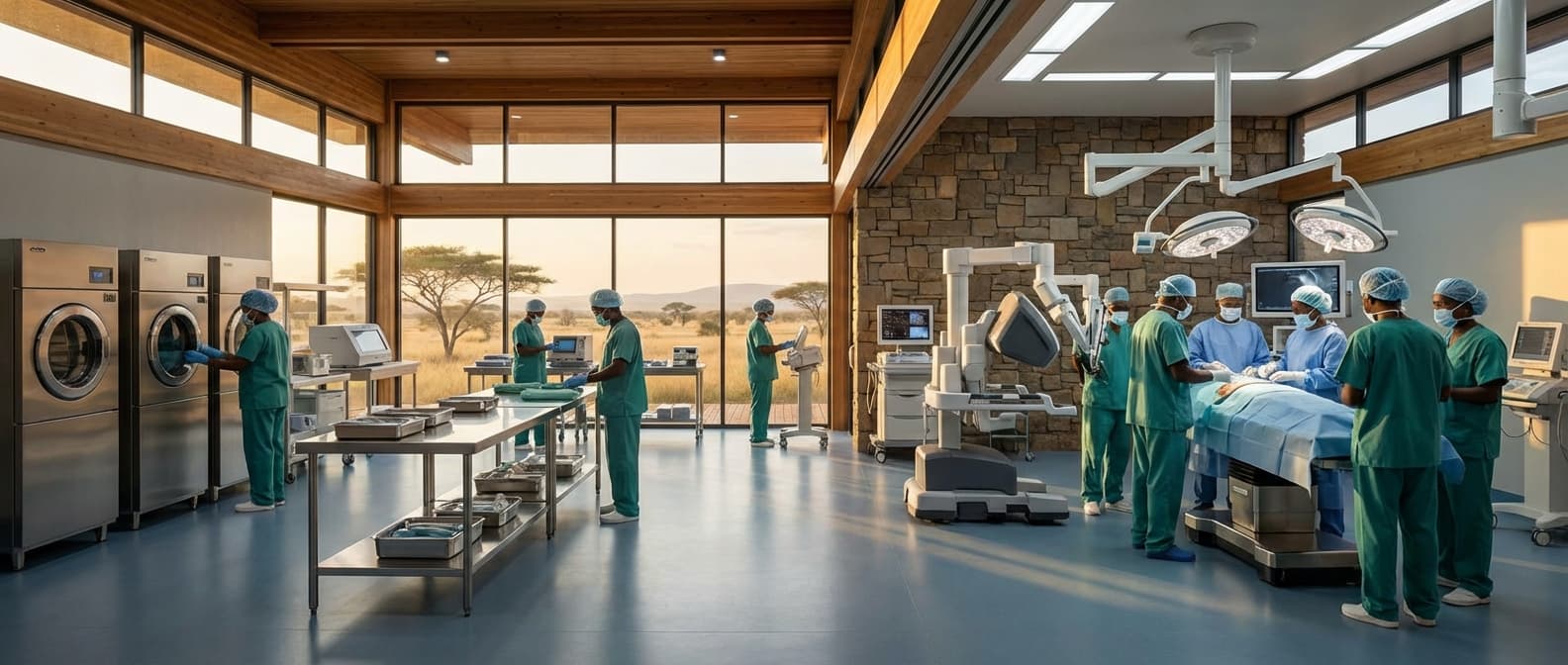
Medical Gas System Design & Installation in Morocco
Engineering Excellence & Technical Support
Medical gas pipeline systems: O2, N2O, air, vacuum High-standard technical execution following OEM protocols and local regulatory frameworks.
Advanced Medical Gas Piping Systems
Expert design and installation of state-of-the-art medical gas piping networks adhering to Moroccan and international standards (e.g., NFPA 99, EN 737). Specializing in the safe and reliable distribution of medical air, oxygen, vacuum, nitrous oxide, and waste anesthetic gas disposal systems for hospitals, clinics, and research facilities across Morocco. Our solutions optimize patient safety and operational efficiency through meticulous material selection, pressure management, and leak detection.
Integrated Central Gas Supply Solutions
Comprehensive engineering and implementation of centralized medical gas supply systems tailored for the unique healthcare landscape of Morocco. This includes the seamless integration of bulk medical gas storage (liquid oxygen/air), manifold systems, pressure regulators, and alarm systems. We ensure compliance with all local safety regulations and provide robust, redundant supply chains to guarantee uninterrupted patient care in critical environments.
Code Compliance & Commissioning Expertise
Dedicated to ensuring full compliance with Moroccan Ministry of Health regulations and relevant international codes for all medical gas systems. Our services encompass thorough system design reviews, precise installation, rigorous pressure testing, purging, flushing, and final commissioning with comprehensive documentation. We provide certified validation and handover, guaranteeing the integrity and performance of your medical gas infrastructure for safe and effective healthcare delivery.
What Is Medical Gas System Design & Installation In Morocco?
Medical Gas System Design & Installation in Morocco refers to the comprehensive engineering and construction process of specialized pipeline systems for delivering medical gases to healthcare facilities. This involves the strategic planning, precise execution, and rigorous testing of infrastructure designed to safely and reliably supply vital gases such as medical oxygen, medical air, nitrous oxide, vacuum, and waste anesthetic gas disposal (WAGD) throughout a hospital or clinic. The service encompasses the selection and integration of central supply sources (e.g., cryogenic tanks, medical air compressors, vacuum pumps), the routing of distribution piping, the installation of pressure regulators, alarms, control panels, and the final connection points (outlets) at patient care areas, operating rooms, and laboratories. Compliance with international standards (e.g., NFPA 99, ISO 7396) and Moroccan national building codes and healthcare regulations is paramount.
| Who Needs Medical Gas System Design & Installation? | Typical Use Cases | ||||||||
|---|---|---|---|---|---|---|---|---|---|
| Hospitals (General, Specialty, University) | Surgical suites (anesthesia, ventilation) | Intensive Care Units (ICUs) and Coronary Care Units (CCUs) (respiratory support, oxygen therapy) | Emergency Rooms (resuscitation, immediate oxygen administration) | Patient Wards (general oxygen therapy, nebulization) | Neonatal Intensive Care Units (NICUs) (precise oxygen delivery, assisted ventilation) | Laboratories (instrument air, specific gas mixtures) | Dental Clinics (nitrous oxide sedation) | Ambulatory Surgery Centers | Long-term Care Facilities with acute care capabilities |
| Specialty Clinics (e.g., pulmonary, cardiac) | Operating Theaters (sterilization, diagnostic imaging) | Rehabilitation Centers (oxygen therapy for exercise) | Veterinary Hospitals | Research Institutions utilizing medical gases | Emergency Response Vehicles (mobile medical gas supply) | Temporary Healthcare Facilities (e.g., during pandemics or disaster relief) |
Key Components of a Medical Gas System
- Central Gas Supply (e.g., Oxygen Generators, Air Compressors, Vacuum Pumps)
- Distribution Piping Networks (e.g., copper tubing)
- Pressure Regulators and Control Valves
- Alarm Systems (e.g., pressure, flow, purity monitoring)
- Shut-off Valves for emergency isolation
- Terminal Units (Outlets) for gas connection
- Manifold Systems for cylinder backup
- Piping Identification and Labeling
- Gas Purification and Filtration
Who Needs Medical Gas System Design & Installation In Morocco?
Designing and installing a medical gas system in Morocco is crucial for ensuring patient safety, providing effective medical treatments, and meeting stringent regulatory standards. These systems are complex and require specialized expertise to guarantee reliability and compliance.
| Customer Type | Key Departments/Areas Requiring Medical Gas Systems | |||||||||
|---|---|---|---|---|---|---|---|---|---|---|
| Hospitals (Public & Private) | Operating Rooms (OR) | Intensive Care Units (ICU) | Emergency Departments (ED) | Post-Anesthesia Care Units (PACU) | Patient Wards (General & Specialized) | Neonatal Intensive Care Units (NICU) | Endoscopy Suites | Diagnostic Imaging (e.g., MRI - for certain gases) | Labor & Delivery Rooms | Pharmacy (for bulk storage & distribution) |
| Clinics & Medical Centers | Minor Procedure Rooms | Recovery Areas | Outpatient Treatment Rooms | |||||||
| Surgical Centers | Operating Rooms | Recovery Rooms | ||||||||
| Emergency Medical Services (EMS) | Ambulances (vehicle-based systems) | Ambulance Bases (storage & refilling stations) | ||||||||
| Research & Development Facilities | Laboratories (requiring specific gas mixtures for experiments) | |||||||||
| Veterinary Clinics | Anesthesia & Surgical Suites | Recovery Kennels/Cages |
Target Customers & Departments in Morocco for Medical Gas System Design & Installation
- Hospitals (Public & Private)
- Clinics & Medical Centers
- Surgical Centers
- Emergency Medical Services (EMS)
- Research & Development Facilities
- Veterinary Clinics
Medical Gas System Design & Installation Process In Morocco
This document outlines the typical workflow for medical gas system design and installation in Morocco, from the initial client inquiry to the final execution and handover. The process is characterized by adherence to Moroccan building codes, healthcare regulations, and international standards for medical gas systems. It involves several distinct phases, each with specific deliverables and stakeholder involvement.
| Phase | Key Activities | Deliverables | Typical Stakeholders Involved | Moroccan Regulatory Considerations |
|---|---|---|---|---|
| Inquiry & Initial Consultation | Client expresses interest, provides project brief. Initial discussion of scope, budget, and timeline. | Project brief, initial meeting minutes, preliminary budget estimate. | Client (Hospital/Clinic Administration, Facilities Manager), Designer/Consultant. | Understanding of client's immediate needs and project constraints. |
| Needs Assessment & Site Survey | Detailed assessment of medical gas requirements (types, quantities, locations). Site visit to evaluate existing infrastructure, structural constraints, and access. | Detailed technical requirements document, site survey report, preliminary equipment list. | Client (Medical Staff, Engineering Department), Designer/Consultant, Site Survey Team. | Compliance with Moroccan Ministry of Health (MoH) guidelines for healthcare facilities. |
| Conceptual Design & Proposal | Development of a preliminary design concept, including system layout, major equipment selection, and cost estimation. Preparation of a formal proposal. | Conceptual design drawings, preliminary equipment specifications, detailed cost proposal, project execution plan. | Designer/Consultant, Client (for review and approval), Potential Installer. | Alignment with international standards (e.g., NFPA 99, HTM) as adopted or referenced by Moroccan regulations. |
| Detailed Design & Engineering | Production of detailed engineering drawings, specifications, and calculations. Final selection of all equipment and materials. Plumbing, electrical, and structural integration. | Complete set of construction drawings (layout, schematics, P&IDs), detailed specifications, Bill of Quantities (BOQ), risk assessment. | Designer/Consultant, Structural Engineer, Electrical Engineer, Client (for technical review). | Adherence to Moroccan building codes (e.g., 'Codes Algériens de Construction'), electrical codes, and safety standards. |
| Permitting & Approvals | Submission of design documents to relevant local authorities and MoH for approval. Obtaining all necessary construction and operational permits. | Approved design drawings, building permits, environmental permits (if applicable). | Designer/Consultant, Installer, Local Municipalities, Ministry of Health. | Ensuring compliance with specific MoH requirements for medical facilities, fire safety regulations, and environmental impact assessments. |
| Procurement & Fabrication | Ordering of all specified equipment and materials. Fabrication of specialized components or skids (if required). | Procurement orders, material submittals, fabricated components. | Installer, Suppliers, Manufacturers. | Use of certified and approved materials and equipment by Moroccan authorities or recognized international bodies. |
| Installation & Commissioning | On-site installation of piping, valves, regulators, alarms, and terminal units. Initial system checks and functional testing of individual components. | Installed medical gas system, installation progress reports, preliminary test results. | Installer (Certified Technicians), Site Supervisor, Client (Facilities Management). | Strict adherence to installation protocols to ensure system integrity and safety. Site supervision by qualified personnel. |
| Testing, Validation & Handover | Comprehensive testing of the entire system, including pressure tests, leak tests, purity analysis, and flow rate verification. Medical gas validation by a qualified third party. Training of facility staff. Formal handover. | Final test reports, validation certificates, as-built drawings, operation and maintenance manuals, training records, handover certificate. | Installer, Validation Engineer (Third Party), Client (Medical and Facilities Staff), Designer/Consultant. | Validation must be conducted according to MoH standards and international best practices. Ensuring all local safety and operational requirements are met. |
| Post-Installation Support & Maintenance | Ongoing maintenance services, routine inspections, and emergency repair support as per the warranty and service agreements. | Maintenance schedules, service reports, warranty documentation. | Installer (Service Department), Client (Facilities Management). | Regular maintenance is crucial for sustained compliance with health and safety regulations. |
Key Phases in Medical Gas System Design & Installation
- Inquiry & Initial Consultation
- Needs Assessment & Site Survey
- Conceptual Design & Proposal
- Detailed Design & Engineering
- Permitting & Approvals
- Procurement & Fabrication
- Installation & Commissioning
- Testing, Validation & Handover
- Post-Installation Support & Maintenance
Medical Gas System Design & Installation Cost In Morocco
Designing and installing a medical gas system in Morocco involves a variety of factors that influence the overall cost. These systems are critical for patient care and require specialized equipment, materials, and skilled labor, adhering to strict national and international standards. The pricing can fluctuate based on the complexity of the system, the size of the healthcare facility, the specific medical gases required, and the chosen suppliers and installers. Understanding these pricing factors is crucial for accurate budgeting and project planning in Moroccan Dirhams (MAD).
| System Component/Service | Estimated Cost Range (MAD) | Notes |
|---|---|---|
| Basic Design & Engineering (Small Clinic) | 15,000 - 40,000 MAD | Covers essential gases, limited outlets. |
| Comprehensive Design & Engineering (Medium Hospital) | 50,000 - 150,000+ MAD | Includes multiple gases, redundancy, advanced alarms. |
| Piping Installation (per meter) | 150 - 500 MAD | Varies by gas type, diameter, and accessibility. |
| Oxygen Outlet Installation | 1,000 - 3,000 MAD | Includes wall plate, valve, and connection. |
| Medical Air Compressor (small to medium) | 30,000 - 150,000+ MAD | Depends on capacity, redundancy, and filtration. |
| Oxygen Bulk Storage Tank (small to medium) | 50,000 - 250,000+ MAD | Depends on capacity and installation complexity. |
| Cylinder Manifold System (automatic changeover) | 20,000 - 100,000+ MAD | For backup gas supply. |
| Alarm Panel (per unit) | 5,000 - 25,000 MAD | Basic to advanced monitoring capabilities. |
| Testing and Commissioning | 10,000 - 50,000+ MAD | Covers pressure, flow, purity, and leak testing. |
| Total Installation Cost (Small Clinic/Dental Office) | 150,000 - 400,000 MAD | Excludes bulk storage for certain gases. |
| Total Installation Cost (Medium Hospital Department) | 500,000 - 2,000,000+ MAD | Significant variation based on scope and services. |
Key Pricing Factors for Medical Gas System Design & Installation in Morocco:
- Facility Size and Scope: The total number of outlets, the length of piping, and the overall square footage of the healthcare facility (hospital, clinic, dental office, etc.) are primary drivers of cost. Larger facilities with more specialized departments will naturally incur higher expenses.
- Number and Type of Medical Gases: The specific gases required (e.g., oxygen, medical air, vacuum, nitrous oxide, nitrogen) and the quantity of each will impact material and installation costs. Some gases require more complex storage and distribution systems.
- System Complexity and Redundancy: The design's complexity, including the need for backup systems (e.g., manifold for oxygen cylinders, compressors for medical air), alarm systems, and monitoring equipment, directly affects the price. Redundancy for critical gases is often mandated and adds to the cost.
- Piping Material and Diameter: The choice of piping material (typically copper for medical gases) and its diameter, determined by flow rate requirements and distance, influences material expenses. High-purity copper is essential for medical gas systems.
- Medical Gas Source Equipment: The cost of the primary source of medical gases (e.g., bulk cryogenic storage tanks, medical air compressors, vacuum pumps, cylinder manifold systems) is a significant component of the overall investment.
- Outlet and Alarm Panel Costs: The number of patient bedside outlets, surgical suite outlets, and specialized gas outlets, along with the integrated alarm panels that monitor pressure and purity, contribute to the price.
- Installation Labor and Expertise: Skilled technicians and certified installers with experience in medical gas systems are essential. Labor rates in Morocco, as well as the duration of the installation, will affect the total cost.
- Design and Engineering Fees: Professional design and engineering services are required to create compliant and efficient system layouts. These fees are dependent on the project's complexity and the engineering firm's reputation.
- Project Management: Effective project management is vital for ensuring timely and within-budget completion. Costs associated with project management can vary.
- Testing and Commissioning: Rigorous testing and commissioning processes are mandatory to ensure the system's safety, performance, and compliance with standards. These services add to the final bill.
- Location and Accessibility: The geographical location of the healthcare facility within Morocco can influence transportation costs for materials and labor, as well as local labor rates.
- Supplier and Manufacturer Choice: Prices can vary significantly between different medical gas equipment suppliers and manufacturers, both local and international. Obtaining multiple quotes is recommended.
- Regulatory Compliance and Standards: Adherence to Moroccan regulations and international standards (e.g., NFPA 99, ISO 7396) may necessitate specific materials, testing procedures, and documentation, which can impact costs.
- After-Sales Support and Maintenance Contracts: While not strictly installation costs, ongoing maintenance and support contracts are often factored into the initial decision-making process and can influence the overall lifecycle cost.
Affordable Medical Gas System Design & Installation Options
Designing and installing an affordable medical gas system requires careful planning and strategic choices. This involves understanding various system configurations, exploring value bundles offered by suppliers, and implementing cost-saving strategies throughout the project lifecycle. The goal is to achieve a safe, reliable, and compliant medical gas system without incurring unnecessary expenses, especially for smaller clinics, specialized facilities, or budget-conscious healthcare providers.
| System Type | Typical Applications | Cost Implications (General) | Affordability Focus |
|---|---|---|---|
| Centralized Medical Gas System | Hospitals, large clinics, surgical centers | Higher initial investment, complex infrastructure, lower per-point cost long-term | Focus on bulk purchasing, modular expansion, long-term maintenance contracts. |
| Decentralized/Point-of-Use Systems | Small clinics, dental offices, specialized treatment rooms, temporary facilities | Lower initial investment, simpler infrastructure, higher per-point cost long-term | Emphasis on streamlined design, off-the-shelf components, efficient installation labor. |
Key Considerations for Affordable Medical Gas System Design & Installation
- Understanding System Types: Centralized vs. Decentralized
- Value Bundles: What They Entail and How to Leverage Them
- Cost-Saving Strategies in Design Phase
- Cost-Saving Strategies in Installation Phase
- Maintenance and Long-Term Cost Reduction
Verified Providers In Morocco
In Morocco's burgeoning healthcare landscape, identifying reliable and trustworthy healthcare providers is paramount. Franance Health stands out as a beacon of excellence, offering a network of verified providers that ensure quality, safety, and accessibility for all patients. Their stringent credentialing process and commitment to patient well-being make them the undisputed best choice for your healthcare needs in Morocco.
| Provider Type | Franance Health Verification Criteria | Benefits for Patients |
|---|---|---|
| Doctors (General & Specialists) | Medical Degree & Licensing, Board Certification (where applicable), Years of Experience, Peer Reviews, Disciplinary Record Check, Patient Satisfaction Scores. | Access to highly qualified and experienced medical professionals, assurance of specialized expertise, reliable diagnoses and treatments. |
| Hospitals & Clinics | Accreditation Status (e.g., ISO, national standards), Infrastructure & Equipment Assessment, Hygiene & Safety Protocols, Staff Qualifications, Patient Feedback. | Safe and well-equipped facilities, adherence to international quality and safety standards, efficient and effective patient care. |
| Diagnostic Laboratories | Licensing & Regulatory Compliance, Quality Control Measures, Staff Expertise, Equipment Calibration & Maintenance, Turnaround Time for Results. | Accurate and timely diagnostic results, reliable interpretation of tests, use of advanced technology. |
| Pharmacies | Pharmacy License, Dispensing Standards, Pharmacist Qualifications, Inventory Management, Drug Quality Assurance. | Access to authentic medications, safe and professional dispensing services, expert advice from pharmacists. |
Why Franance Health is the Best Choice:
- Rigorous Vetting Process: Franance Health employs a comprehensive credentialing procedure for all its affiliated providers, going beyond basic licensing to assess experience, specialization, patient feedback, and adherence to ethical standards.
- Commitment to Quality: We partner exclusively with healthcare professionals and institutions that demonstrate a consistent track record of delivering high-quality medical care and maintaining excellent patient outcomes.
- Patient-Centric Approach: Franance Health prioritizes your well-being. Our verified providers are chosen for their compassionate care, clear communication, and dedication to personalized treatment plans.
- Accessibility and Convenience: Through our extensive network, Franance Health connects you with a wide range of specialists and facilities across Morocco, making it easier to find the care you need, when and where you need it.
- Peace of Mind: Choosing a Franance Health verified provider means entrusting your health to professionals who have met the highest standards of competence and integrity, giving you invaluable peace of mind.
Scope Of Work For Medical Gas System Design & Installation
This Scope of Work (SOW) outlines the requirements for the design and installation of a medical gas system. It covers all aspects from initial design and engineering to final testing, commissioning, and handover. The project aims to ensure a safe, reliable, and compliant medical gas supply for the facility, adhering to all relevant industry standards and regulations.
| Deliverable/Specification | Description | Reference Standard/Requirement |
|---|---|---|
| Medical Gas System Design Drawings | Detailed drawings including piping layouts, equipment locations, shut-off valve locations, pressure readings, alarm systems, and system schematics. | NFPA 99, ASSE 6000 Series Standards, Local Building Codes |
| Equipment Submittals | Specifications and data sheets for all medical gas equipment including: central gas sources (tanks, compressors, vacuum pumps), pressure regulators, alarms, shut-off valves, outlets, inlets, and piping. | Manufacturer's Specifications, NFPA 99, UL Listing |
| Piping Material Specifications | Detailed requirements for medical gas piping, including material type (e.g., copper tubing), dimensions, wall thickness, and joining methods (e.g., brazing). | ASTM B88 Type K Copper Tubing, NFPA 99, ASSE 6010 |
| Installation Quality Control Plan | Procedures for ensuring proper installation practices, including brazing techniques, pipe cleaning, and assembly. | ASSE 6010, ASSE 6040 |
| Pressure Testing and Purging Report | Documentation of pressure tests performed on the completed piping system to detect leaks, followed by thorough purging to remove contaminants. | NFPA 99, ASSE 6030 |
| Alarm System Testing and Calibration Report | Verification of the functionality and accuracy of all pressure and/or vacuum alarms. | NFPA 99, ASSE 6020 |
| Gas Purity Testing Report | Analysis of the delivered medical gases to ensure they meet purity standards. | USP Medical Gases, NFPA 99 |
| Final System Commissioning Report | Comprehensive report detailing the successful testing and validation of the entire medical gas system. | NFPA 99, ASSE 6000 Series Standards |
| As-Built Drawings | Updated drawings reflecting the final installed system, including any modifications made during construction. | NFPA 99 |
| Operation and Maintenance Manuals | Detailed manuals for all installed equipment, including operating procedures, maintenance schedules, and troubleshooting guides. | Manufacturer's Recommendations |
| Training Program Outline and Materials | Content and schedule for training facility staff on the operation and maintenance of the medical gas system. | Facility Requirements, Manufacturer's Guidelines |
| Certified Weld/Brazing Procedures | Documentation of certified procedures for all brazing operations performed on medical gas piping. | ASSE 6010, AWS D10.10/D10.11 |
| System Verification and Validation Documentation | Evidence of compliance with all design and performance requirements as per project specifications and relevant standards. | NFPA 99, ASSE 6000 Series Standards |
Key Project Phases and Activities
- Phase 1: Design and Engineering
- Phase 2: Procurement and Fabrication
- Phase 3: Installation and Construction
- Phase 4: Testing, Commissioning, and Validation
- Phase 5: Training and Handover
Service Level Agreement For Medical Gas System Design & Installation
This Service Level Agreement (SLA) outlines the response times and uptime guarantees for Medical Gas System Design and Installation services provided by [Your Company Name] to [Client Name]. This SLA is an appendix to the Master Services Agreement dated [Date of MSA].
| Service Component | Response Time Guarantee (Critical) | Response Time Guarantee (Non-Critical) | Uptime Guarantee | Notes |
|---|---|---|---|---|
| Design Phase - Initial Consultation & Site Survey | Within 2 business days | Within 5 business days | N/A | Includes review of requirements and preliminary site assessment. |
| Design Phase - Design Review & Submission | Within 7 business days of receiving all necessary client information | Within 14 business days of receiving all necessary client information | N/A | Assumes client provides timely feedback and approvals. |
| Installation - Site Preparation & Rough-in | As per agreed project schedule | As per agreed project schedule | N/A | Dependent on site readiness and external factors. |
| Installation - Piping & Outlet Installation | As per agreed project schedule | As per agreed project schedule | N/A | Subject to site access and material availability. |
| System Testing, Certification & Commissioning (Post-Installation) | Within 3 business days of project completion notification | Within 5 business days of project completion notification | N/A | Ensures system meets all regulatory and performance standards. |
| Emergency Support (Post-Installation - critical system failure) | Within 4 hours | N/A | 99.9% uptime for critical medical gas systems during operational hours (defined as Monday-Friday, 8 AM - 5 PM, excluding public holidays) | Critical system failures include loss of essential medical gas supply or major alarm malfunctions impacting patient care. Uptime guarantee applies to installed systems. Excludes planned maintenance or client-induced issues. |
| Routine Support (Post-Installation - non-critical issues) | Within 1 business day | Within 3 business days | 99.5% uptime for non-critical system components | Non-critical issues include minor alarm notifications or non-essential component malfunctions. |
Scope of Services
- Design of medical gas systems including but not limited to oxygen, medical air, nitrous oxide, vacuum, and waste anesthetic gas disposal (WAGD) systems.
- Installation of medical gas piping, outlets, alarms, control panels, and related components.
- System testing, certification, and commissioning.
- Project management and documentation.
Frequently Asked Questions

Ready when you are
Let's scope your Medical Gas System Design & Installation in Morocco project in Morocco.

Scaling healthcare logistics and technical systems across the entire continent.