
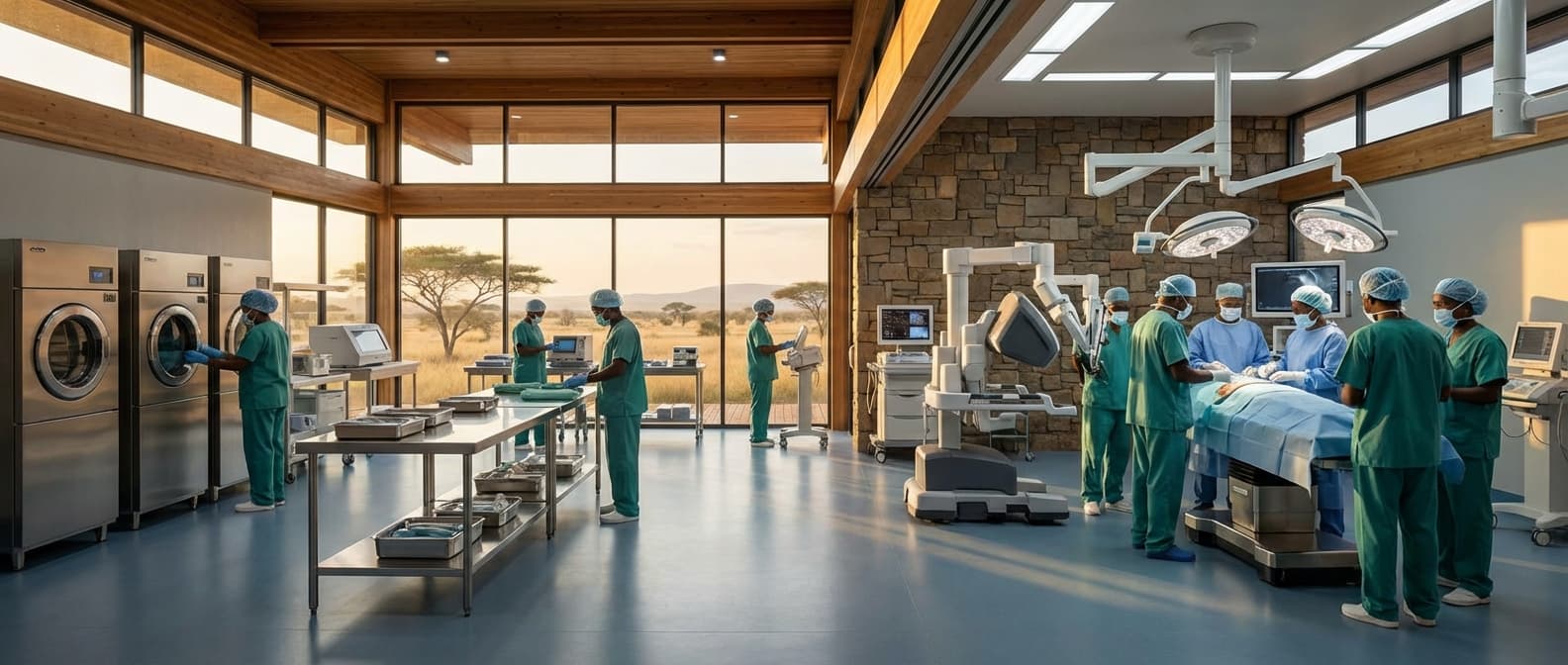
Endoscopy Reprocessing Validation in Morocco
Engineering Excellence & Technical Support
AER validation, SOP development and compliance High-standard technical execution following OEM protocols and local regulatory frameworks.
Ensuring Sterility: Advanced Microbiological Testing Protocols
Implementing rigorous multi-stage microbiological testing of reprocessed endoscopes, utilizing advanced culture and rapid detection methods to confirm the absence of pathogenic microorganisms and ensure patient safety according to international standards, tailored to Moroccan healthcare facility needs.
Comprehensive Workflow Validation: From Contaminated to Sterile
Developing and executing a detailed validation protocol for the entire endoscopy reprocessing workflow, encompassing pre-cleaning, manual cleaning, automated washing, disinfection, and high-level disinfection, with documented evidence of efficacy at each critical step to meet Moroccan regulatory requirements.
Bore Contamination Detection: Advanced Luminal and Surface Analysis
Utilizing sensitive detection methods for residual organic matter and biofilm within endoscope lumens and on surfaces, including ATP bioluminescence and surrogate organism testing, to provide objective evidence of effective cleaning and disinfection against challenging contaminants.
What Is Endoscopy Reprocessing Validation In Morocco?
Endoscopy reprocessing validation in Morocco refers to the rigorous, documented process of verifying that flexible endoscopes and their associated accessories are reprocessed according to established protocols and regulatory requirements, ensuring patient safety and preventing the transmission of healthcare-associated infections (HAIs). This validation is crucial for healthcare facilities that utilize flexible endoscopes for diagnostic and therapeutic procedures. It involves a multi-faceted approach encompassing the validation of the cleaning, disinfection, and sterilization processes, as well as the efficacy of the automated reprocessing equipment (if used) and the competency of the personnel performing these tasks. The objective is to provide objective evidence that the reprocessing cycle consistently renders the endoscope safe for subsequent patient use, meeting international standards and local Moroccan health authority guidelines.
| Stakeholder Group | Rationale for Requiring Validation | Typical Use Cases / Procedures Requiring Validated Reprocessing |
|---|---|---|
| Healthcare Facilities (Hospitals, Clinics, Endoscopy Centers) | Mandatory for patient safety, infection prevention and control (IPC) compliance, risk mitigation (legal and reputational), and accreditation requirements. Demonstrates due diligence in providing safe patient care. | All procedures utilizing flexible endoscopes, including:
|
| Regulatory Health Authorities (Moroccan Ministry of Health) | To ensure compliance with national healthcare standards, protect public health, and prevent outbreaks of HAIs. Enforcement of IPC guidelines. | Oversight and potential auditing of healthcare facilities' reprocessing practices to ensure adherence to validated protocols. |
| Endoscope Manufacturers and AER Manufacturers | To provide validated reprocessing instructions (IFUs) and ensure their equipment functions as intended and validated by users. | Development and submission of IFUs and validation data for their devices to healthcare providers and regulatory bodies. |
| Accreditation Bodies (e.g., Joint Commission International equivalents in Morocco) | To assess the quality and safety of healthcare services provided by facilities. | Verification of compliant and validated endoscopy reprocessing practices as part of facility-wide accreditation surveys. |
Key Components of Endoscopy Reprocessing Validation:
- Documentation Review: Assessing policies, procedures, manufacturer's instructions for use (IFUs) for both endoscopes and reprocessing equipment, and competency records.
- Process Mapping and Flowcharting: Visualizing the entire reprocessing workflow to identify critical control points.
- Cleaning Efficacy Validation: Verifying that the pre-cleaning, manual cleaning, and automated cleaning steps effectively remove gross soil, organic debris, and microbial contaminants.
- High-Level Disinfection (HLD) / Sterilization Efficacy Validation: Confirming that the chosen HLD or sterilization method achieves the required level of microbial inactivation (e.g., log reduction targets for specific microorganisms). This often involves biological indicators (BIs) and chemical indicators (CIs).
- Automated Endoscope Reprocessor (AER) Validation: If AERs are used, validating their performance against manufacturer specifications and relevant standards (e.g., ISO 15883 series). This includes verifying wash cycles, disinfection cycles, temperature and flow rates, and chemical concentrations.
- Water Quality Testing: Ensuring that the water used in the reprocessing steps meets specified standards for microbial load and chemical composition (e.g., endotoxin levels).
- Personnel Competency Assessment: Evaluating the knowledge and practical skills of reprocessing technicians through training records, written examinations, and direct observation.
- Environmental Monitoring: Assessing the microbial status of the reprocessing area.
- Equipment Maintenance and Calibration: Verifying that all reprocessing equipment is regularly maintained and calibrated.
- Ongoing Monitoring and Auditing: Establishing systems for continuous monitoring of critical parameters and periodic internal audits to ensure sustained compliance.
Who Needs Endoscopy Reprocessing Validation In Morocco?
Endoscopy reprocessing validation is a critical safety and compliance requirement for any facility performing endoscopic procedures. In Morocco, this validation is essential for a wide range of healthcare providers to ensure patient safety by preventing the transmission of infections through improperly reprocessed endoscopes. The target customers are primarily healthcare institutions and the key departments within them that directly or indirectly engage in the use and reprocessing of flexible endoscopes.
| Department | Role in Endoscopy Reprocessing Validation | Specific Needs/Concerns |
|---|---|---|
| Gastroenterology Department | Primary users of endoscopes; responsible for initial cleaning and leak testing. | Ensuring scopes are ready for immediate and safe reuse; maintaining diagnostic accuracy. |
| Endoscopy Suite / Procedure Rooms | Site of endoscope use and initial decontamination. | Immediate access to properly cleaned and disinfected scopes; efficient workflow. |
| Central Sterile Supply Department (CSSD) / Sterilization Unit | Responsible for the thorough cleaning, disinfection, and sterilization (if applicable) of endoscopes according to strict protocols. | Ensuring compliance with national and international reprocessing standards; maintaining traceability of reprocessed scopes. |
| Infection Prevention and Control (IPC) Department | Oversees and audits reprocessing procedures to prevent healthcare-associated infections (HAIs). | Verification of effective reprocessing to eliminate pathogens; risk assessment and mitigation. |
| Quality Assurance / Quality Management Department | Ensures adherence to established quality standards and regulatory requirements. | Documentation of reprocessing validation; continuous improvement of processes. |
| Medical Device Maintenance / Biomedical Engineering Department | Responsible for the maintenance and repair of endoscopic equipment, including reprocessing machines. | Ensuring the proper functioning of automated reprocessors; validation of equipment performance. |
| Administration / Hospital Management | Responsible for overall hospital operations, budget allocation, and compliance. | Ensuring patient safety and regulatory compliance; managing operational costs and risks. |
| Regulatory Bodies / Ministry of Health Officials | Enforce healthcare standards and regulations related to patient safety and infection control. | Verification of compliance with national guidelines for medical device reprocessing. |
Target Customers and Departments in Morocco Requiring Endoscopy Reprocessing Validation
- Hospitals (Public and Private)
- Specialized Endoscopy Clinics
- University Teaching Hospitals
- Surgical Centers
- Diagnostic Centers
Endoscopy Reprocessing Validation Process In Morocco
This document outlines the typical workflow for validating the endoscopy reprocessing process in Morocco, from the initial inquiry by a healthcare facility to the final execution and reporting. The process is designed to ensure that reusable endoscopes are cleaned and disinfected according to established national guidelines and international best practices, thereby minimizing the risk of patient-to-patient transmission of infections.
| Phase | Key Activities | Responsible Parties | Documentation/Deliverables |
|---|---|---|---|
| Phase 1: Inquiry and Initial Assessment | Healthcare facility expresses interest in validating their endoscopy reprocessing. Initial consultation to understand the facility's current reprocessing procedures, equipment, and existing quality control measures. Assessment of the scope of validation required (e.g., specific endoscope models, reprocessing steps). | Healthcare Facility (Infection Control Department, Endoscopy Unit), Regulatory/Validation Body Representative | Meeting minutes, Initial site assessment report |
| Phase 2: Protocol Development and Planning | Joint development of a detailed validation protocol based on national guidelines (e.g., Ministry of Health recommendations, ANRMAP standards) and international standards (e.g., ISO, APIC). Protocol includes objectives, scope, methodology (microbiological testing, process monitoring), validation criteria, timeline, and required resources. Planning for personnel training and logistical arrangements. | Healthcare Facility (Infection Control Department, Endoscopy Unit), Regulatory/Validation Body Expert(s) | Approved Validation Protocol, Risk assessment report, Training plan |
| Phase 3: Pre-Validation Preparation | Facility ensures all reprocessing equipment is calibrated and functioning correctly. Staff undergo refresher training on updated reprocessing protocols. All necessary consumables (cleaning agents, disinfectants, testing kits) are procured and verified for expiry dates. Initial internal audits of the reprocessing process. | Healthcare Facility (Endoscopy Unit Staff, Biomedical Engineering) | Calibration certificates, Training records, Stock inventory of consumables, Internal audit reports |
| Phase 4: Validation Execution (On-Site) | On-site implementation of the validation protocol. This typically involves:
| Healthcare Facility (Endoscopy Unit Staff, Infection Control), Regulatory/Validation Body Technician(s) | Observation checklists, Sample collection logs, Biological indicator records, Process parameter logs |
| Phase 5: Data Analysis and Reporting | Laboratory analysis of collected samples (microbiological testing). Review and analysis of all collected process data against the pre-defined validation criteria. Compilation of a comprehensive validation report detailing the methodology, results, and conclusions. | Regulatory/Validation Body Laboratory, Regulatory/Validation Body Expert(s) | Laboratory test results, Data analysis summary, Draft Validation Report |
| Phase 6: Corrective Actions and Re-validation (If Necessary) | If validation criteria are not met, identification of root causes for failure. Development and implementation of corrective action plans. Re-execution of validation steps or the entire validation process as required. | Healthcare Facility (Infection Control, Endoscopy Unit Management), Regulatory/Validation Body Expert(s) | Corrective Action Plan (CAPA), Re-validation protocol (if needed), Updated validation reports |
| Phase 7: Final Approval and Documentation | Review and approval of the final validation report by relevant stakeholders. Issuance of a validation certificate or statement of compliance. Integration of the validated reprocessing process into the facility's routine quality management system. Establishment of a schedule for periodic re-validation. | Healthcare Facility Management, Regulatory/Validation Body Authority | Final Approved Validation Report, Validation Certificate, Updated Quality Management System documentation |
Endoscopy Reprocessing Validation Process Workflow in Morocco
- Phase 1: Inquiry and Initial Assessment
- Phase 2: Protocol Development and Planning
- Phase 3: Pre-Validation Preparation
- Phase 4: Validation Execution (On-Site)
- Phase 5: Data Analysis and Reporting
- Phase 6: Corrective Actions and Re-validation (If Necessary)
- Phase 7: Final Approval and Documentation
Endoscopy Reprocessing Validation Cost In Morocco
The cost of endoscopy reprocessing validation in Morocco is influenced by several key factors, leading to a range of pricing in the local currency, Moroccan Dirham (MAD). These factors include the complexity and type of endoscope being validated (e.g., gastroscopes, colonoscopes, bronchoscopes), the specific validation protocols and standards adhered to (e.g., ISO, national guidelines), the service provider's expertise and reputation, the geographic location within Morocco, and the volume of endoscopes processed. Additionally, the inclusion of additional services like competency assessments for staff, process audits, or the supply of specific reprocessing consumables can impact the overall cost. The validation process typically involves verifying the effectiveness of cleaning and high-level disinfection (HLD) or sterilization procedures to prevent the transmission of infections. Pricing can also vary based on whether it's a one-time validation, a recurring validation cycle, or part of a broader infection control consultancy package. Hospitals and clinics often seek accredited laboratories or specialized service providers for these crucial validation services, and their fee structures can differ significantly.
| Service Component | Estimated Cost Range (MAD) | Notes |
|---|---|---|
| Basic Cleaning & HLD/Sterilization Effectiveness Validation (per endoscope type) | 1,500 - 4,000 MAD | Covers microbial testing, documentation, and initial report. May vary based on the number of samples tested. |
| Full Validation Package (including process review, staff competency observation, and written protocol development) | 5,000 - 15,000+ MAD | More comprehensive service for establishing or optimizing a complete reprocessing program. |
| Microbiological Testing (per sample, e.g., rinse water, surface swabs) | 200 - 500 MAD | Component cost if not part of a package; used to assess residual microbial load. |
| Chemical Indicator Testing (e.g., for HLD efficacy) | 100 - 300 MAD | Cost for individual chemical indicators if used as part of validation. |
| On-site Process Audit and Consultation | 3,000 - 8,000 MAD per day | Fee for expert assessment of current reprocessing practices and recommendations. |
| Training and Competency Assessment for Staff | 1,000 - 3,000 MAD per session/module | Covers specialized training on cleaning, disinfection, and equipment handling. |
| Certification or Accreditation Fee (if applicable, by provider) | 2,000 - 7,000 MAD | Fee for a certificate of validation or an accredited laboratory report. |
Key Factors Influencing Endoscopy Reprocessing Validation Cost in Morocco
- Type and complexity of endoscopes
- Validation protocols and standards (e.g., ISO, national guidelines)
- Service provider's expertise, reputation, and accreditation status
- Geographic location within Morocco
- Volume of endoscopes for validation
- Inclusion of additional services (competency assessment, process audits, consumables)
- Frequency of validation (one-time vs. recurring)
- Market competition among service providers
Affordable Endoscopy Reprocessing Validation Options
Ensuring the proper reprocessing of endoscopic instruments is paramount for patient safety, but the validation processes can be costly and complex. This document explores affordable validation options, focusing on value bundles and cost-saving strategies for healthcare facilities. Effective validation confirms that cleaning and high-level disinfection (HLD) or sterilization processes effectively remove or kill microorganisms, preventing the transmission of infections. When considering validation, it's crucial to understand that while regulatory bodies mandate these processes, the specific validation methods can be tailored to optimize cost-effectiveness without compromising safety standards.
| Validation Component | Standard Approach Cost (Estimate) | Affordable/Value Bundle Approach Cost (Estimate) | Cost-Saving Explanation |
|---|---|---|---|
| Initial Validation (IQ/OQ/PQ) | $5,000 - $15,000+ | $3,000 - $8,000+ | Bundled services, manufacturer discounts, streamlined protocols. |
| Periodic Revalidation (e.g., annually) | $2,000 - $6,000+ | $1,000 - $3,000+ | Reduced scope based on previous validation, bundled testing, internal technician support for simpler tasks. |
| Biological Indicator (BI) Testing | $50 - $200 per test | $30 - $100 per test | Bulk purchasing, reusable incubation equipment, strategic testing frequency based on risk. |
| Chemical Indicator (CI) Testing | $10 - $50 per test | $5 - $20 per test | Bulk purchasing, selecting appropriate CI types for specific processes. |
| Staff Training for Validation | $1,000 - $5,000 (external consultant) | $500 - $2,000 (in-house, online resources) | Leveraging manufacturer training, developing internal training modules, online educational platforms. |
| Documentation & Record Keeping | Significant staff time/potential for outsourced services | Streamlined digital record-keeping systems, template utilization | Investing in efficient software, standardizing documentation templates. |
Key Cost-Saving Strategies for Endoscopy Reprocessing Validation
- Leverage Value Bundles: Collaborate with reprocessing equipment and chemical manufacturers to explore bundled service and validation packages. These often include initial validation, periodic revalidation, and maintenance at a reduced overall cost compared to purchasing services separately.
- In-House Validation Capabilities: Invest in training internal staff for certain validation tasks, such as basic monitoring of sterilization cycles or performing chemical indicator tests. This can reduce reliance on external consultants for routine checks.
- Risk-Based Validation Approach: Prioritize validation efforts based on the risk associated with different endoscopes and procedures. More complex or higher-risk procedures may require more rigorous validation than lower-risk ones.
- Utilize Manufacturer Recommendations: Thoroughly review and implement the reprocessing and validation recommendations provided by endoscope and reprocessing equipment manufacturers. This ensures adherence to design specifications and often aligns with cost-effective validation protocols.
- Optimize Chemical Usage: Implement strategies to minimize chemical waste and ensure proper dilution and expiration date management for HLD solutions. This directly impacts consumable costs associated with validation and routine reprocessing.
- Consolidate Testing: Whenever possible, group multiple validation tests together to minimize scheduling disruptions and associated labor costs.
- Invest in Durable Monitoring Devices: While initial investment may be higher, using robust and reusable monitoring devices (e.g., certain biological indicators) can lead to long-term cost savings compared to single-use alternatives.
- Explore Automated Validation Systems: For larger facilities, investing in automated validation systems can streamline processes, reduce manual labor, and ensure consistent data collection, leading to improved efficiency and potential cost reductions.
Verified Providers In Morocco
When seeking reliable healthcare services in Morocco, particularly for specialized treatments or expatriate needs, identifying verified providers is paramount. Franance Health has established itself as a trusted name, synonymous with quality and patient-centric care. Their rigorous credentialing process ensures that all affiliated healthcare professionals and facilities meet the highest international standards of medical expertise, ethical practice, and patient safety. This dedication to verification is what sets Franance Health apart, offering a peace of mind that is invaluable when making critical health decisions.
| Credentialing Aspect | Franance Health Standard | Benefit to Patients |
|---|---|---|
| Medical Licensure & Board Certification | Verifies current, valid licensure and relevant board certifications. | Ensures practitioners possess the foundational knowledge and specialized expertise. |
| Professional Experience | Reviews past performance, case histories, and peer recommendations. | Confirms practical skills and a proven track record in their field. |
| Facility Accreditation | Confirms adherence to international quality and safety standards (e.g., ISO, JCI). | Guarantees a safe, well-equipped, and high-standard medical environment. |
| Ethical Compliance | Includes background checks and review of disciplinary actions. | Assures patients of integrity and trustworthy medical care. |
| Continuous Professional Development | Encourages and verifies ongoing training and skill enhancement. | Ensures providers are up-to-date with the latest medical advancements and techniques. |
Why Franance Health Credentials Represent the Best Choice:
- Rigorous vetting of medical professionals' qualifications and experience.
- Adherence to international standards of medical practice and patient care.
- Commitment to ethical conduct and transparency in healthcare delivery.
- Emphasis on patient safety and quality assurance protocols.
- Streamlined access to a network of trusted and competent healthcare providers.
- Support for diverse patient needs, including expatriates and those seeking specialized treatments.
Scope Of Work For Endoscopy Reprocessing Validation
This Scope of Work (SOW) outlines the requirements for the validation of the reprocessing procedures for flexible endoscopes. The objective is to ensure that all critical steps in the manual and automated cleaning and high-level disinfection (HLD) or sterilization processes are validated to effectively remove and kill microorganisms, thereby preventing patient-to-patient transmission of infections. The validation will encompass both the technical performance of the reprocessing equipment and the efficacy of the cleaning and disinfection/sterilization agents and processes. The successful completion of this validation will demonstrate compliance with relevant regulatory standards and guidelines.
| Deliverable | Description | Standard Specification/Reference |
|---|---|---|
| Validation Protocol (IQ/OQ/PQ) | Detailed plan outlining the Installation Qualification (IQ), Operational Qualification (OQ), and Performance Qualification (PQ) for endoscope reprocessing equipment and processes. Includes acceptance criteria and test methods. | AAMI ST98, ISO 15883 series, Facility-specific SOPs, Manufacturer's Instructions for Use (IFUs) |
| Equipment Qualification Reports (IQ/OQ/PQ) | Documentation verifying that equipment is installed correctly, operates according to specifications, and performs consistently under defined conditions. | Manufacturer's specifications, validation protocol acceptance criteria |
| Process Validation Data | Raw data and results from cleaning efficacy tests, microbiological challenge studies, chemical indicator monitoring, and biological indicator testing for all reprocessing steps. | AAMI ST98, CDC Guidelines for Disinfection and Sterilization of Medical Devices, Facility-specific SOPs |
| Cleaning Validation Report | Comprehensive report detailing the effectiveness of the manual and automated cleaning processes in removing protein, blood, and other organic soil from endoscope lumens and surfaces. | AAMI ST98, ISO 17664, Facility-specific SOPs |
| Disinfection/Sterilization Validation Report | Comprehensive report detailing the effectiveness of the HLD or sterilization process in eliminating or inactivating microorganisms to a predetermined acceptable risk level. | AAMI ST98, ISO 11135 (for sterilization), Facility-specific SOPs |
| Chemical Indicator Monitoring Records | Records of the use and results of process challenge devices (PCDs) with chemical indicators (e.g., internal and external indicators) to monitor the effectiveness of the HLD or sterilization process. | ANSI/AAMI/ISO 17665-1, ANSI/AAMI ST60, Manufacturer's IFUs |
| Biological Indicator (BI) Testing Results | Results from the use of biological indicators to demonstrate the effectiveness of the HLD or sterilization process in achieving a specific microbial kill. | ANSI/AAMI/ISO 17665-1, ANSI/AAMI ST60, Manufacturer's IFUs |
| Endoscope Reprocessing SOPs | Updated and approved Standard Operating Procedures for all aspects of endoscope reprocessing, reflecting validated processes. | Facility-specific quality management system requirements |
| Final Validation Summary Report | A consolidated report summarizing all validation activities, results, and conclusions, providing an overall assessment of the validated reprocessing system. | Regulatory requirements, Facility-specific quality standards |
Key Stages and Activities
- Development and approval of validation protocols.
- Procurement and verification of necessary equipment and materials (e.g., cleaning agents, disinfectants, biological indicators, chemical indicators).
- Execution of validation protocols for manual cleaning processes.
- Execution of validation protocols for automated endoscope reprocessors (AERs).
- Execution of validation protocols for high-level disinfection (HLD) or sterilization processes.
- Microbiological and chemical testing to assess the effectiveness of reprocessing.
- Data analysis and interpretation.
- Preparation and submission of validation reports.
- Remediation and revalidation if validation fails.
Service Level Agreement For Endoscopy Reprocessing Validation
This Service Level Agreement (SLA) outlines the performance standards for Endoscopy Reprocessing Validation services, focusing on response times for critical issues and uptime guarantees for validation systems. It aims to ensure the continuous and compliant operation of endoscopy reprocessing, directly impacting patient safety and healthcare facility accreditation.
| Service Component | Response Time (Critical Issue) | Resolution Time Target (Critical Issue) | Uptime Guarantee | Definition of Critical Issue |
|---|---|---|---|---|
| Automated Endoscope Reprocessor (AER) Validation/Revalidation | 2 business hours | 8 business hours | 99.5% system availability during scheduled operational hours | Complete failure of AER to complete a validated cycle, potential breach of sterility assurance, or critical system error preventing any reprocessing. |
| Manual Cleaning Process Validation/Revalidation | 4 business hours | 12 business hours | N/A (Service is advisory/diagnostic; not a continuously operating system) | Inability to perform critical validation steps due to equipment malfunction or significant procedural deviation identified during validation. |
| Validation System Monitoring & Reporting | 4 business hours | 8 business hours | 99.8% system availability | Failure to collect validation data, inability to access reports, or significant data integrity concerns. |
| General Technical Support (non-critical) | 8 business hours | 24 business hours | N/A | Non-critical errors, minor performance degradation, or requests for information/clarification not directly impacting immediate reprocessing capability. |
Scope of Service
- Validation and revalidation of automated endoscope reprocessors (AERs).
- Validation and revalidation of manual cleaning processes for endoscopes.
- Performance monitoring and reporting of reprocessing equipment.
- Troubleshooting and resolution of validation-related technical issues.
- Documentation and record-keeping for all validation activities.
Frequently Asked Questions

Ready when you are
Let's scope your Endoscopy Reprocessing Validation in Morocco project in Morocco.

Scaling healthcare logistics and technical systems across the entire continent.