
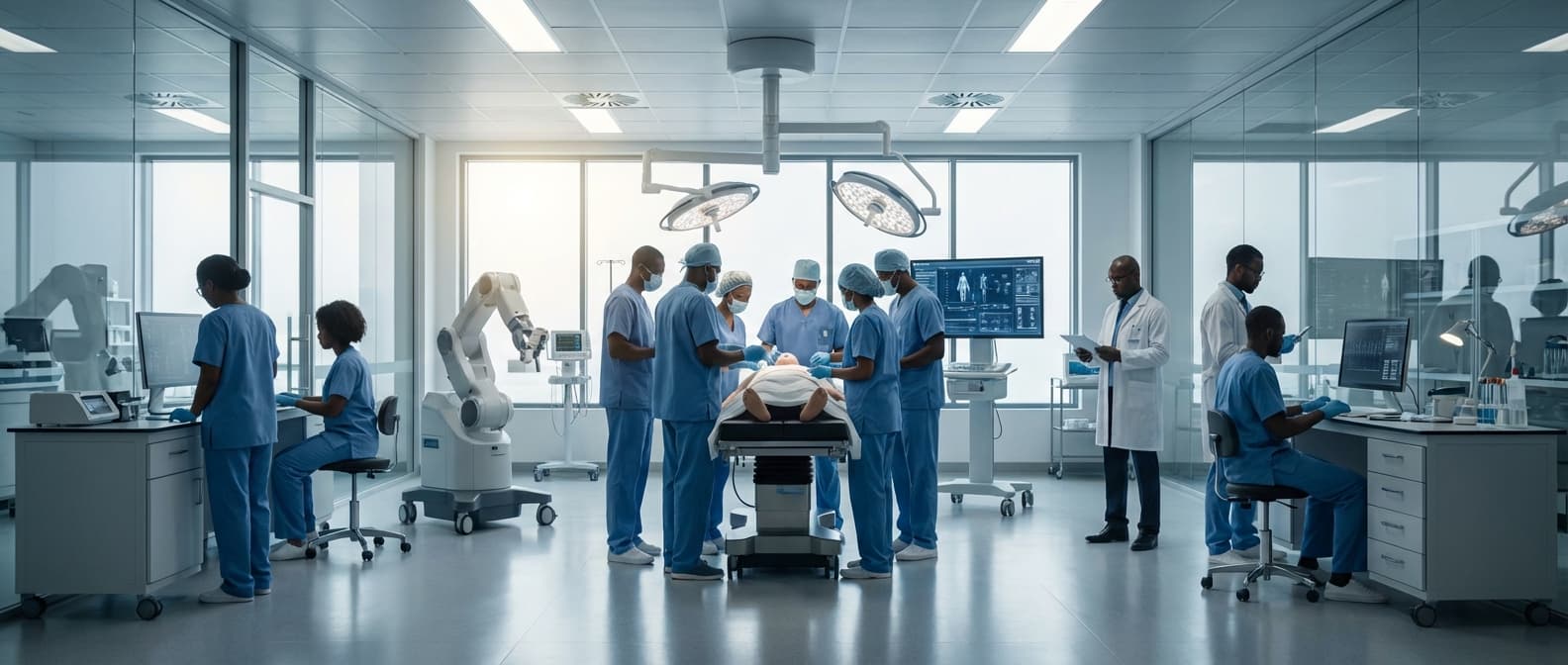
Managed Equipment Service (MES) in Morocco
Engineering Excellence & Technical Support
Long‑term equipment provision with uptime SLAs and lifecycle management. High-standard technical execution following OEM protocols and local regulatory frameworks.
Optimized Healthcare Infrastructure Management
Leveraging our MES expertise in Morocco, we provide comprehensive lifecycle management for critical medical equipment, ensuring operational readiness, reduced downtime, and cost efficiencies for hospitals and clinics across the nation.
Ensured Regulatory Compliance and Patient Safety
Our Managed Equipment Services in Morocco guarantee adherence to stringent local and international regulations. Through proactive maintenance, calibration, and quality assurance, we safeguard patient safety and maintain the highest standards of medical device performance.
Accelerated Technology Adoption and Innovation
We empower Moroccan healthcare providers to embrace cutting-edge medical technologies. Our MES solutions facilitate seamless integration, training, and support, enabling access to advanced diagnostic and therapeutic equipment, ultimately enhancing patient care and clinical outcomes.
What Is Managed Equipment Service (Mes) In Morocco?
Managed Equipment Service (MES) in Morocco refers to a comprehensive, outsourced model for the procurement, installation, maintenance, and lifecycle management of specialized equipment. This service is contracted by organizations requiring high-performance or mission-critical equipment but lacking the in-house expertise, resources, or desire to manage its complete operational lifecycle. MES providers assume responsibility for the equipment's availability, performance, and cost-efficiency throughout its tenure, allowing the client organization to focus on its core competencies. This service is particularly relevant in sectors with rapid technological advancements or stringent operational demands.
| Who Needs MES in Morocco? | Typical Use Cases in Morocco |
|---|---|
| Healthcare Facilities (Hospitals, Clinics, Diagnostic Centers): Requiring sophisticated medical imaging, laboratory, or surgical equipment where uptime and reliability are paramount for patient care and revenue generation. | Medical Imaging Equipment: MRI, CT scanners, X-ray machines, Ultrasound devices where rapid technological evolution and high maintenance costs necessitate a managed service approach. |
| Industrial Manufacturing Plants: Needing specialized production machinery, automation systems, or testing equipment where operational efficiency and minimizing downtime are critical for output and profitability. | Industrial Automation and Robotics: Complex assembly lines, robotic arms, and automated inspection systems that require specialized maintenance and calibration. |
| Research and Development (R&D) Laboratories: Utilizing high-precision scientific instruments or analytical equipment where maintaining optimal performance and access to the latest technology are essential for research outcomes. | Scientific Instruments: Mass spectrometers, electron microscopes, advanced centrifuges, and chromatography systems used in pharmaceuticals, materials science, and academic research. |
| Telecommunications and IT Infrastructure Providers: Deploying and maintaining network hardware, data center equipment, or communication systems where performance, scalability, and security are key. | Network Infrastructure: Routers, switches, servers, and specialized communication hardware in large enterprises or data centers. |
| Oil and Gas Sector: Operating specialized exploration, extraction, or processing equipment that demands robust maintenance and operational continuity in remote or challenging environments. | Geophysical Survey Equipment: Seismic sensors, data acquisition systems, and specialized drilling equipment requiring rigorous maintenance. |
| Large-Scale Printing and Document Management: Organizations with high-volume printing needs, requiring advanced printers, copiers, and associated software solutions. | High-Volume Production Printers: Industrial-grade printing machines for commercial printing houses or large corporate document centers. |
Key Components of Managed Equipment Service (MES) in Morocco:
- Equipment Procurement and Selection: Sourcing of appropriate, often advanced, equipment tailored to client needs, potentially including negotiation of acquisition terms.
- Installation and Configuration: Professional deployment, integration, and setup of the procured equipment within the client's existing infrastructure.
- Maintenance and Repair: Proactive and reactive maintenance, including routine servicing, predictive diagnostics, emergency repairs, and spare parts management.
- Performance Monitoring and Optimization: Continuous tracking of equipment performance against defined Service Level Agreements (SLAs), with adjustments for optimal output and efficiency.
- Lifecycle Management: Strategic planning for equipment upgrades, replacements, and eventual decommissioning or disposal, ensuring cost-effectiveness and technological relevance.
- Consumables and Supplies Management: Ordering, stocking, and management of necessary consumables or supplies directly related to equipment operation.
- Reporting and Analytics: Provision of detailed reports on equipment utilization, uptime, maintenance history, and cost analysis to the client.
- Technical Support and Training: Access to expert technical support and, where applicable, training for client personnel on equipment operation.
Who Needs Managed Equipment Service (Mes) In Morocco?
Managed Equipment Service (MES) in Morocco offers a comprehensive solution for organizations that rely heavily on sophisticated medical equipment but wish to optimize its management, maintenance, and lifecycle. MES providers take on the responsibility of procuring, installing, maintaining, and eventually upgrading or replacing equipment, allowing healthcare facilities to focus on patient care. This model is particularly beneficial for institutions facing challenges in capital expenditure, technical expertise, and operational efficiency concerning their medical technology. The core value proposition of MES lies in its ability to deliver predictable costs, enhanced equipment uptime, access to the latest technology, and reduced administrative burden.
| Target Customer Group | Relevant Departments |
|---|---|
Who Needs Managed Equipment Service (MES) in Morocco?
- Hospitals seeking to modernize their infrastructure without significant upfront capital investment.
- Clinics and healthcare centers aiming to improve diagnostic and treatment capabilities.
- Government health agencies looking for cost-effective ways to equip public healthcare facilities.
- Private healthcare providers aiming for a competitive edge through advanced technology.
- Research institutions requiring specialized and up-to-date medical equipment.
- Organizations with a high volume of equipment requiring regular maintenance and calibration.
- Facilities experiencing challenges with internal technical support or equipment obsolescence.
Managed Equipment Service (Mes) Process In Morocco
The Managed Equipment Service (MES) process in Morocco, like in many other regions, follows a structured workflow designed to ensure efficient procurement, installation, and maintenance of medical equipment for healthcare facilities. This process typically begins with an inquiry from a healthcare provider and concludes with the full operationalization and ongoing management of the equipment. The primary goal of MES is to provide a comprehensive solution, freeing up healthcare institutions from the complexities of capital expenditure, procurement, and maintenance, allowing them to focus on patient care. The workflow can be broadly categorized into several key stages.
| Stage | Description | Key Activities | Responsible Parties | Typical Timelines (Indicative) |
|---|---|---|---|---|
| The healthcare facility identifies a need for specific medical equipment or a comprehensive service for a range of equipment. The MES provider engages to understand these requirements thoroughly. | Initial contact, site visit, understanding clinical needs, equipment specifications, volume projections, budget constraints. | Healthcare Facility (Client), MES Provider (Potential Vendor) | 1-4 weeks |
| Based on the assessed needs, the MES provider develops a tailored proposal outlining the scope of services, equipment list, pricing, financing models, and service level agreements (SLAs). | Technical and financial proposal preparation, risk assessment, value proposition articulation, negotiation of terms and pricing. | MES Provider, Healthcare Facility (Client) | 2-8 weeks |
| Once the proposal is accepted, a formal contract is signed, legally binding both parties. The MES provider then initiates the procurement of the agreed-upon equipment. | Contract finalization and signing, legal review, purchase order generation, supplier selection, order placement. | MES Provider, Healthcare Facility (Client), Legal Teams, Equipment Suppliers | 4-12 weeks (Procurement can be lengthy depending on equipment) |
| The procured equipment is delivered, installed, and rigorously tested to ensure it meets all specifications and is ready for clinical use. | Site preparation, equipment delivery, installation by certified technicians, calibration, testing (IQ/OQ/PQ - Installation, Operational, Performance Qualification), regulatory compliance checks. | MES Provider (Technicians, Project Managers), Healthcare Facility (Estates/IT teams) | 2-8 weeks (per equipment batch) |
| Healthcare facility staff are trained on the proper operation and basic maintenance of the new equipment. A formal handover signifies the transfer of operational responsibility. | Development of training modules, delivery of hands-on training for clinical and technical staff, provision of user manuals, formal handover documentation. | MES Provider (Trainers), Healthcare Facility (Clinical Staff, Biomedical Engineers) | 1-3 weeks |
| This is the core of the MES. The provider is responsible for scheduled preventive maintenance, unscheduled repairs, and the provision of spare parts to ensure continuous equipment uptime. | Preventive maintenance scheduling and execution, response to breakdown calls, diagnostic and repair services, supply of spare parts, remote monitoring. | MES Provider (Field Service Engineers, Support Teams), Healthcare Facility (Biomedical Engineers for coordination) | Ongoing (for the contract duration) |
| Regular monitoring of equipment performance and service delivery against agreed-upon SLAs. Reports are provided to the healthcare facility. | Data collection on equipment uptime, response times, maintenance activities, key performance indicators (KPIs) tracking, regular performance review meetings. | MES Provider, Healthcare Facility (Client) | Continuous (with periodic reports) |
| At the end of the contract term or equipment lifecycle, the MES provider manages the decommissioning, removal, and responsible disposal or upgrading of the equipment. | Equipment assessment for upgrade or replacement, decommissioning procedures, safe removal, disposal or refurbishment, negotiation for new MES contracts. | MES Provider, Healthcare Facility (Client), Waste Management Services | Variable (depending on contract and equipment) |
Managed Equipment Service (MES) Workflow in Morocco
- Inquiry & Needs Assessment
- Proposal Development & Negotiation
- Contracting & Procurement
- Installation & Commissioning
- Training & Handover
- Ongoing Service & Maintenance
- Performance Monitoring & Reporting
- End-of-Life Management
Managed Equipment Service (Mes) Cost In Morocco
Managed Equipment Service (MES) in Morocco offers a strategic approach for healthcare providers to acquire and manage medical equipment. This model typically involves outsourcing the acquisition, maintenance, and eventual replacement of medical devices to a third-party MES provider. The pricing of MES in Morocco is influenced by a complex interplay of factors, leading to a wide range of potential costs. Understanding these drivers is crucial for healthcare institutions to effectively budget and negotiate MES contracts.
Key Pricing Factors for MES in Morocco:
- Equipment Type and Volume: The core determinant of MES cost is the type and quantity of medical equipment included in the service. High-value, specialized imaging equipment (e.g., MRI, CT scanners) will naturally command higher costs than basic diagnostic tools or patient monitoring systems. A larger portfolio of equipment also contributes to the overall price.
- Technology and Innovation: Newer, more advanced, and feature-rich equipment typically carries a higher price tag. The MES provider's investment in cutting-edge technology for their clients will be reflected in the service fees.
- Service Level Agreements (SLAs): The stringency and scope of the SLAs significantly impact pricing. This includes factors like response times for maintenance, uptime guarantees, preventive maintenance schedules, and the availability of loaner equipment. More comprehensive and robust SLAs will increase the MES cost.
- Contract Duration: Longer-term MES contracts often benefit from economies of scale, potentially leading to lower annual costs. Conversely, shorter contracts may incur higher periodic charges to account for the provider's investment amortization over a shorter period.
- Provider's Expertise and Reputation: Established MES providers with a proven track record, extensive technical expertise, and a strong reputation in the Moroccan market may charge a premium for their services. This premium reflects their reliability, risk mitigation, and specialized knowledge.
- Risk Sharing and Financial Models: The specific financial model employed (e.g., pay-per-use, fixed fee, revenue sharing) influences the cost. Risk-sharing models where the provider assumes more financial risk will typically command higher fees.
- Geographic Location and Accessibility: While less significant in a country like Morocco with concentrated healthcare hubs, the accessibility of the healthcare facility for the MES provider's technical teams can sometimes play a minor role, especially for remote locations.
- Consumables and Accessories: The inclusion of consumables, accessories, and disposables within the MES contract will directly add to the overall cost.
- Training and Education: The provision of training for clinical staff on new equipment and technologies is often bundled into MES, contributing to the total price.
- Ancillary Services: Additional services such as IT integration, data management, clinical workflow optimization, and equipment upgrade planning can also be part of the MES package and will affect the overall cost.
Estimated Cost Ranges in Moroccan Dirhams (MAD):
It is challenging to provide definitive price ranges without specific contract details. However, based on industry benchmarks and potential Moroccan market dynamics, here are estimated annual cost ranges per piece of major equipment. These are highly variable and serve as a general guideline:
- Basic Diagnostic Equipment (e.g., ECG, Ultrasound): MAD 15,000 - 50,000 per year.
- Patient Monitoring Systems: MAD 20,000 - 70,000 per year.
- X-ray/Fluoroscopy Machines: MAD 70,000 - 200,000 per year.
- Anesthesia Machines: MAD 50,000 - 150,000 per year.
- Laboratory Analyzers: MAD 40,000 - 250,000 per year (depending on complexity and throughput).
- MRI/CT Scanners: MAD 300,000 - 1,000,000+ per year (highly dependent on model, features, and usage).
- Surgical Equipment (e.g., Endoscopy suites, Electrosurgical units): MAD 60,000 - 300,000 per year.
Important Note: These figures represent annual service costs for individual equipment items and do not include the capital cost of acquisition, which is borne by the MES provider. The total MES contract value for a hospital would be the sum of these costs for all managed equipment, plus any fees for ancillary services, spread over the contract duration.
| Equipment Category | Estimated Annual Cost Range (MAD) |
|---|---|
| Basic Diagnostic Equipment (e.g., ECG, Ultrasound) | 15,000 - 50,000 |
| Patient Monitoring Systems | 20,000 - 70,000 |
| X-ray/Fluoroscopy Machines | 70,000 - 200,000 |
| Anesthesia Machines | 50,000 - 150,000 |
| Laboratory Analyzers (basic to advanced) | 40,000 - 250,000 |
| MRI/CT Scanners | 300,000 - 1,000,000+ |
| Surgical Equipment (e.g., Endoscopy, Electrosurgical) | 60,000 - 300,000 |
Factors Influencing MES Pricing in Morocco
- Equipment Type and Volume
- Technology and Innovation Level
- Service Level Agreement (SLA) Scope and Stringency
- Contract Duration
- MES Provider's Expertise and Reputation
- Financial Model and Risk Sharing
- Geographic Location and Accessibility (Minor Factor)
- Inclusion of Consumables and Accessories
- Provision of Training and Education
- Ancillary Services (IT, Data Management, etc.)
Affordable Managed Equipment Service (Mes) Options
Managed Equipment Service (MES) can be a significant investment for businesses. However, by understanding value bundles and implementing smart cost-saving strategies, organizations can access robust MES solutions without breaking the bank. MES providers are increasingly offering flexible packages designed to cater to various needs and budgets. The key to affordability lies in aligning the service level with actual business requirements and leveraging provider expertise for operational efficiency. This approach not only reduces upfront and ongoing costs but also enhances the overall value derived from the MES.
| Cost-Saving Strategy | Description | Potential Impact |
|---|---|---|
| Negotiate Tiered Service Levels | Select MES packages that align with your actual equipment criticality and support needs. | Reduced recurring service fees by avoiding unnecessary premium features. |
| Focus on Preventative Maintenance | Emphasize proactive maintenance within the MES contract to minimize unexpected failures. | Lower costs associated with emergency repairs and equipment downtime. |
| Leverage Remote Capabilities | Utilize provider's remote monitoring and diagnostic tools to resolve issues efficiently. | Reduced on-site technician visits, travel costs, and faster issue resolution. |
| Explore Long-Term Commitments | Sign longer MES contracts (3-5+ years) to secure preferential pricing. | Lower per-unit service costs and potential discounts on equipment or upgrades. |
| Consolidate Equipment and Services | Bundle multiple equipment types or locations under a single MES provider. | Increased purchasing power, streamlined management, and potential volume discounts. |
Key Value Bundles and Cost-Saving Strategies for Affordable MES
- Tiered Service Packages: Providers often offer different levels of service (e.g., basic monitoring, preventative maintenance, on-demand repair, full lifecycle management). Choosing a tier that matches your critical equipment and operational demands can significantly reduce costs compared to an all-inclusive premium package.
- Usage-Based or Capacity-Based Pricing: Some MES agreements are structured around the actual usage of equipment or the capacity it supports. This can be more cost-effective for businesses with fluctuating operational needs.
- Long-Term Contracts with Discounts: Committing to longer MES contract durations (e.g., 3-5 years) can often unlock substantial discounts on service fees, equipment acquisition, and labor rates.
- Bundled Hardware and Software: Integrating equipment procurement, installation, software licensing, and ongoing support into a single MES bundle can lead to economies of scale and better overall pricing.
- Preventative Maintenance Focus: Prioritizing and optimizing preventative maintenance schedules within the MES contract can drastically reduce the likelihood of costly unexpected breakdowns and emergency repairs.
- Remote Monitoring and Diagnostics: Leveraging MES providers' remote capabilities for monitoring and initial diagnostics can often resolve issues without the need for an on-site technician, saving on travel and labor costs.
- Performance-Based Incentives: Negotiating clauses where the MES provider's compensation is tied to achieving certain performance metrics (e.g., uptime, efficiency) can incentivize them to deliver optimal service at a competitive price.
- Consolidated Procurement: For organizations with multiple locations or departments, consolidating equipment needs under a single MES contract can leverage bulk purchasing power and simplify management.
- Standardization of Equipment: Where possible, standardizing on a limited range of equipment models can simplify maintenance, reduce spare parts inventory, and lead to better pricing from MES providers who specialize in those platforms.
- Clear Scope of Work and Service Level Agreements (SLAs): Precisely defining what is included in the MES and the expected performance levels prevents scope creep and ensures you are only paying for the services you truly need.
Verified Providers In Morocco
Finding verified healthcare providers in Morocco can be a challenge. Franance Health distinguishes itself by rigorously vetting its network, ensuring that all listed providers meet stringent quality and ethical standards. This commitment to verification means patients can trust the credentials and expertise of the doctors, clinics, and hospitals affiliated with Franance Health, making them the premier choice for accessible and reliable healthcare in Morocco.
| Provider Type | Franance Health Verification Criteria | Benefits for Patients |
|---|---|---|
| Doctors | Medical Degree Verification, License Confirmation, Specialization Accreditation, Peer Reviews | Access to qualified specialists, assurance of expertise, reduced risk of misdiagnosis |
| Clinics | Facility Accreditation, Equipment Standards, Hygiene Protocols, Staff Qualifications | Safe and well-equipped treatment environments, consistent quality of care |
| Hospitals | International/National Hospital Accreditation, Quality Management Systems, Patient Safety Records, Research & Development Participation | Comprehensive medical services, advanced treatment options, adherence to global best practices |
| Laboratories | Accreditation (e.g., ISO), Quality Control Measures, Equipment Calibration, Staff Expertise | Accurate and reliable diagnostic results, timely reporting |
Why Franance Health is the Best Choice for Verified Providers in Morocco
- Rigorous Vetting Process: Franance Health employs a comprehensive evaluation of all healthcare professionals and facilities.
- Credential Assurance: Patients can be confident in the qualifications and licenses of Franance Health's providers.
- Quality Standards: Affiliated providers adhere to high standards of medical practice and patient care.
- Ethical Compliance: Franance Health ensures all partners comply with ethical medical guidelines.
- Accessibility and Reliability: A trusted network offering dependable healthcare solutions.
- Focus on Patient Trust: Building confidence through transparent and verified provider information.
Scope Of Work For Managed Equipment Service (Mes)
This Scope of Work (SOW) outlines the services to be provided under a Managed Equipment Service (MES) agreement. The MES will encompass the procurement, installation, maintenance, calibration, and eventual disposal of specific medical equipment within the client's facility. The objective is to ensure the reliable and efficient operation of the equipment, minimizing downtime and optimizing resource utilization. This SOW details the technical deliverables expected from the MES provider and the standard specifications to be adhered to throughout the service period.
| Deliverable Category | Description | Key Performance Indicators (KPIs) | Standard Specifications/Requirements |
|---|---|---|---|
| Equipment Procurement and Installation | Sourcing, acquisition, delivery, and installation of specified medical equipment. | On-time delivery (OTD): 95% Installation success rate: 98% Compliance with manufacturer specifications: 100% | Equipment must meet agreed-upon technical specifications and quality standards (e.g., ISO, FDA, CE). Installation to be performed by certified technicians adhering to manufacturer guidelines and site safety protocols. Pre-installation site assessment and readiness checks required. |
| Equipment Maintenance and Repair | Preventive maintenance (PM) and corrective maintenance (CM) to ensure optimal equipment functionality. | PM completion rate: 100% Mean Time Between Failures (MTBF) targets: [Specify per equipment type] Mean Time To Repair (MTTR): [Specify per equipment type] | All PMs to be conducted according to manufacturer's recommended schedules and checklists. Response time for CM: [e.g., 4 hours for critical equipment, 24 hours for non-critical]. Use of genuine or equivalent spare parts with documented traceability. Service reports detailing work performed, parts used, and outcomes. |
| Equipment Calibration and Performance Verification | Regular calibration and performance checks to ensure accuracy and safety. | Calibration schedule adherence: 100% Calibration accuracy within specified tolerances: 99% | Calibration to be performed by accredited or certified technicians using traceable standards. Calibration certificates provided for each instance. Performance verification against manufacturer's benchmarks. Documentation of all calibration and verification activities. |
| Inventory Management and Asset Tracking | Maintaining an accurate inventory of all managed equipment and tracking their status. | Inventory accuracy: 99% Real-time asset status updates | Implementation of a robust asset management system (e.g., RFID, barcode scanning). Regular inventory audits. Provision of an online portal for real-time access to equipment status, location, and maintenance history. |
| Training and Competency Assessment | Providing training to end-users and assessing their competency in operating the equipment. | Training completion rate: 95% Post-training competency assessment pass rate: 90% | Training modules to be developed in conjunction with the client. Training sessions to be delivered by qualified personnel. Regular refresher training and competency assessments. Documentation of all training provided and assessments conducted. |
| Reporting and Performance Monitoring | Regular reporting on equipment performance, maintenance activities, and cost analysis. | Report submission timeliness: 100% Data accuracy and completeness: 99% | Monthly and quarterly performance reports including KPIs, equipment uptime, maintenance costs, incident summaries, and recommendations. Ad-hoc reports as requested by the client. Regular performance review meetings with the client. |
| Decommissioning and Disposal | Safe and compliant removal and disposal of equipment at the end of its service life. | Decommissioning completion within agreed timeline: 100% Compliance with environmental regulations: 100% | Disposal in accordance with local, national, and international environmental regulations. Provision of certificates of disposal. Secure data sanitization for equipment with data storage capabilities. |
Technical Deliverables
- Equipment Procurement and Installation
- Equipment Maintenance and Repair
- Equipment Calibration and Performance Verification
- Inventory Management and Asset Tracking
- Training and Competency Assessment
- Reporting and Performance Monitoring
- Decommissioning and Disposal
Service Level Agreement For Managed Equipment Service (Mes)
This Service Level Agreement (SLA) outlines the agreed-upon performance standards for the Managed Equipment Service (MES) provided by [Your Company Name] to [Client Name]. It defines response times for issue resolution and uptime guarantees for the managed equipment. This SLA is an integral part of the Master Services Agreement between both parties.
| Service Level | Description | Response Time (within business hours) | Resolution Target (within business hours) | Uptime Guarantee |
|---|---|---|---|---|
| Critical Incident (System Down) | Complete loss of functionality for a critical piece of equipment impacting core business operations. | 15 minutes (acknowledgement) | 4 hours (resolution or workaround) | 99.9% (monthly) |
| High Priority Incident (Degraded Performance) | Significant performance degradation or partial loss of functionality impacting a critical business process. | 30 minutes (acknowledgement) | 8 business hours (resolution or workaround) | 99.5% (monthly) |
| Medium Priority Incident (Non-critical issue) | Minor functionality issues or performance degradation on non-critical equipment, or issues impacting a single user. | 1 business hour (acknowledgement) | 2 business days (resolution or workaround) | N/A (performance focus) |
| Low Priority Incident (Information/Enquiry) | Requests for information, configuration changes, or minor non-urgent issues. | 4 business hours (acknowledgement) | As agreed upon with client (typically within 3 business days) | N/A (service request focus) |
| Preventative Maintenance | Scheduled maintenance activities to ensure optimal equipment performance and prevent failures. | N/A | N/A | N/A (scheduled downtime communicated in advance) |
Scope of Service
- This SLA covers all equipment designated as part of the Managed Equipment Service (MES) as detailed in Exhibit A of the Master Services Agreement.
- The MES includes proactive monitoring, preventative maintenance, incident response, and repair/replacement of covered equipment.
- This SLA excludes user-induced damage, misuse, or issues arising from third-party software or hardware not provided as part of the MES.
Frequently Asked Questions

Ready when you are
Let's scope your Managed Equipment Service (MES) in Morocco project in Morocco.

Scaling healthcare logistics and technical systems across the entire continent.