
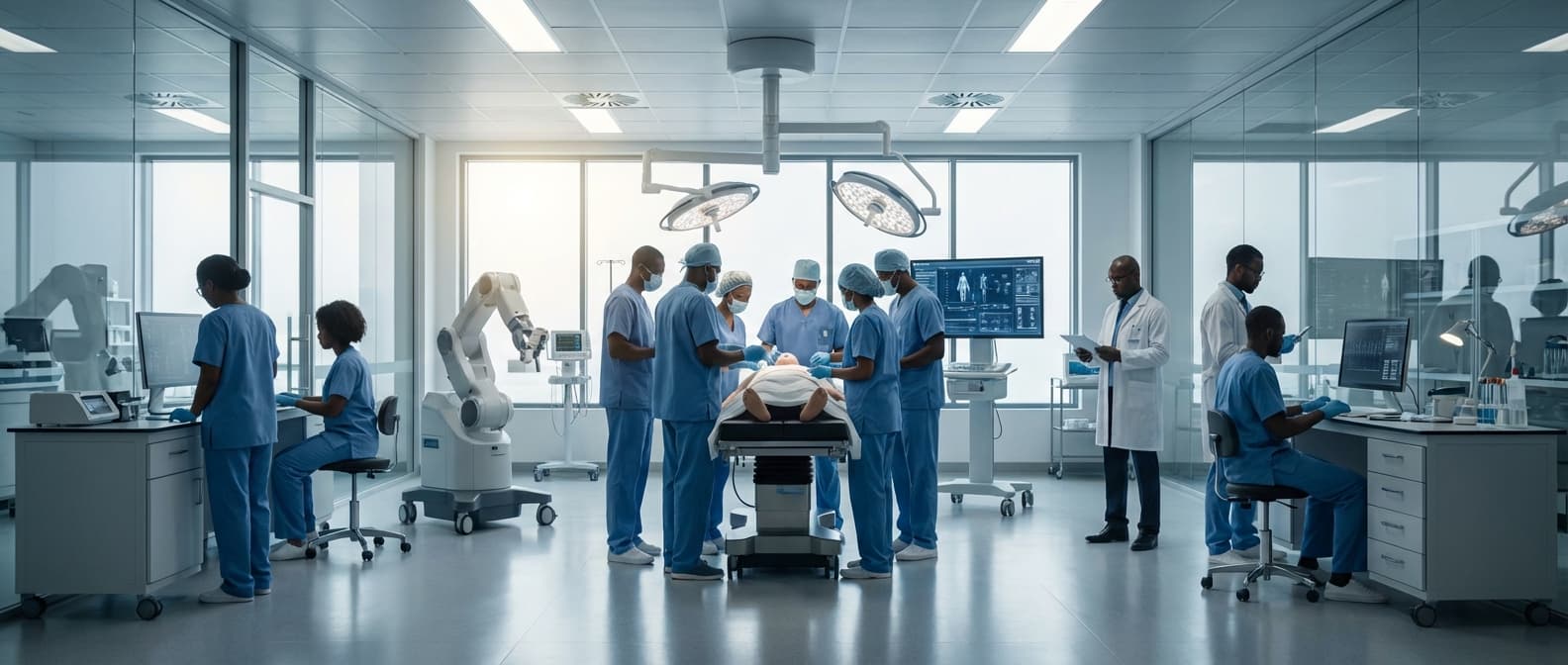
Biomedical Engineering Consulting in Morocco
Engineering Excellence & Technical Support
Equipment selection, procurement and implementation consulting High-standard technical execution following OEM protocols and local regulatory frameworks.
Advanced Medical Device Design & Prototyping
Leveraging cutting-edge CAD, simulation (FEA, CFD), and rapid prototyping technologies, we guide Moroccan healthcare innovators from concept to functional prototypes for a range of medical devices, ensuring compliance with international standards and local regulations.
Navigating Moroccan & International Regulatory Landscapes
We provide expert consultation on obtaining regulatory approvals for medical devices and pharmaceuticals within Morocco (e.g., Ministry of Health) and facilitate pathways for export to EU (CE marking) and US (FDA) markets, streamlining market entry and minimizing compliance risks.
Optimizing Healthcare Infrastructure & Technology Integration
Our expertise lies in assessing and designing cost-effective, sustainable healthcare infrastructure solutions. We specialize in the strategic selection, integration, and lifecycle management of advanced medical technologies and IT systems to enhance clinical workflows and patient outcomes in Moroccan hospitals and clinics.
What Is Biomedical Engineering Consulting In Morocco?
Biomedical Engineering Consulting in Morocco represents the application of engineering principles and design to healthcare and biological systems within the Moroccan context. This specialized service offers expert advice and solutions to a diverse range of stakeholders involved in the development, acquisition, implementation, and maintenance of medical devices, technologies, and infrastructure. It bridges the gap between engineering innovation and clinical application, ensuring that healthcare providers have access to safe, effective, and efficient biomedical solutions tailored to the specific needs and regulatory landscape of Morocco.
| Stakeholder Group | Needs Addressed | Typical Use Cases |
|---|---|---|
| Public Hospitals & Clinics (Ministry of Health) | Equipment procurement planning, asset management, maintenance optimization, infrastructure upgrades, ensuring regulatory compliance, cost-effectiveness in technology acquisition. | Developing a national strategy for medical device procurement. Establishing a centralized biomedical engineering department. Upgrading imaging departments with new MRI/CT scanners. Implementing a kingdom-wide PPM program. Evaluating and selecting new radiotherapy equipment. |
| Private Healthcare Providers (Clinics, Hospitals, Diagnostic Centers) | Strategic technology investment, optimizing equipment utilization, enhancing patient safety, specialized equipment acquisition (e.g., IVF, advanced surgical suites), compliance with private healthcare accreditation standards. | Selecting and installing advanced surgical robots. Designing and equipping a new specialized cardiology unit. Developing a maintenance contract for critical care equipment. Implementing cybersecurity measures for connected medical devices. Acquiring and validating new laboratory diagnostic platforms. |
| Medical Device Manufacturers & Distributors (Local & International) | Market entry strategy, regulatory affairs support (e.g., ANAM registration), product localization, post-market surveillance, after-sales service network development, technical training for local partners. | Navigating Moroccan import regulations for new medical devices. Conducting clinical validation studies for novel technologies. Establishing a compliant service and repair network. Training local engineers on complex medical equipment maintenance. Providing technical documentation for regulatory submissions. |
| Research & Development Institutions (Universities, Institutes) | Technology translation, intellectual property protection, prototype development, access to clinical testing sites, feasibility studies for new biomedical innovations. | Assisting in the design and fabrication of a novel prosthetic limb. Conducting usability studies for a new diagnostic sensor. Facilitating collaboration between researchers and healthcare providers for clinical trials. Evaluating the market potential of a newly developed medical device. |
| Government Regulatory Bodies (e.g., ANAM) | Technical input on policy development, evaluation of technical dossiers, standards harmonization, post-market surveillance strategy. | Providing expert opinion on the establishment of new medical device standards. Assisting in the technical review of imported medical equipment. Contributing to the development of guidelines for medical device sterilization. Analyzing safety data from medical device adverse event reporting. |
| Biotech & Pharmaceutical Companies | Bioprocess engineering consultation, scale-up of manufacturing processes, validation of bio-manufacturing equipment, cleanroom design and validation. | Advising on the design of a pilot plant for biopharmaceutical production. Validating bioreactors for cell culture. Ensuring compliance of manufacturing facilities with GMP standards. Optimizing downstream processing equipment for antibody purification. |
Key Aspects of Biomedical Engineering Consulting in Morocco
- Technical Expertise: Providing in-depth knowledge of medical device design, manufacturing, validation, and regulatory compliance (e.g., ANAM, Ministry of Health regulations).
- Needs Assessment & Specification Development: Identifying and defining the precise technical requirements for medical equipment and facilities.
- Procurement & Tender Support: Assisting in the selection and acquisition of biomedical equipment, including technical evaluation of bids and vendor management.
- Installation & Commissioning Oversight: Ensuring proper installation, calibration, and functional validation of new medical devices.
- Maintenance & Service Strategy: Developing and implementing robust planned preventive maintenance (PPM) programs and managing outsourced service contracts.
- Technology Integration: Advising on the integration of new biomedical technologies with existing hospital information systems (HIS) and Picture Archiving and Communication Systems (PACS).
- Facility Planning & Design: Contributing engineering expertise to the design and renovation of healthcare facilities, focusing on medical gas systems, cleanrooms, and specialized laboratory spaces.
- Risk Management & Safety: Conducting hazard analyses and implementing strategies to mitigate risks associated with medical device use.
- Quality Assurance & Compliance: Ensuring adherence to international standards (e.g., ISO 13485) and local Moroccan healthcare regulations.
- Training & Capacity Building: Providing technical training to clinical staff and maintenance personnel on the operation and upkeep of biomedical equipment.
- Innovation & Research Support: Assisting research institutions and startups in developing and commercializing novel biomedical technologies.
Who Needs Biomedical Engineering Consulting In Morocco?
Biomedical engineering consulting in Morocco is a burgeoning field, essential for navigating the complexities of healthcare technology adoption, regulatory compliance, and operational efficiency. This service is crucial for a diverse range of entities seeking to modernize their medical infrastructure, improve patient care outcomes, and ensure the safe and effective use of medical devices. Consultants provide specialized expertise that internal teams may lack, offering solutions for everything from equipment selection and validation to facility design and staff training. As Morocco continues to invest in its healthcare sector, the demand for skilled biomedical engineering consultants will undoubtedly grow.
| Target Customer Group | Key Departments Benefiting from Consulting Services |
|---|---|
| Public Hospitals and Healthcare Networks | Procurement Department, Biomedical Engineering Department, IT Department, Clinical Engineering, Facilities Management, Quality Assurance |
| Private Hospitals and Clinics | Administration, Medical Director's Office, Purchasing, Biomedical Department, Patient Safety Officer |
| Medical Device Manufacturers and Distributors | Research & Development, Regulatory Affairs, Quality Control, Sales & Marketing, Technical Support, Logistics |
| Research and Development Institutions | Research Directors, Principal Investigators, Laboratory Management, Technology Transfer Offices |
| Government Health Agencies | Policy Development, Procurement & Tender Committees, Regulatory Compliance Divisions, National Health Planning Units |
| Pharmaceutical Companies | Research & Development (for drug delivery devices), Quality Assurance, Manufacturing Operations |
| Insurance Providers | Claims Processing (for medical device assessments), Risk Management, Product Development (for health technology coverage) |
| Educational Institutions | Deans of Medical Faculties, Heads of Biomedical Engineering Departments, Technical Training Coordinators, Research Labs |
Target Customers for Biomedical Engineering Consulting in Morocco
- Public Hospitals and Healthcare Networks
- Private Hospitals and Clinics
- Medical Device Manufacturers and Distributors
- Research and Development Institutions
- Government Health Agencies
- Pharmaceutical Companies
- Insurance Providers
- Educational Institutions (Medical Schools, Technical Colleges)
Biomedical Engineering Consulting Process In Morocco
Biomedical Engineering Consulting in Morocco follows a structured workflow to ensure efficient and effective project delivery. This process typically begins with an initial client inquiry and progresses through detailed planning, execution, and final project closure. The specific steps and their emphasis may vary depending on the complexity and nature of the consulting engagement, but the general framework remains consistent.
| Phase | Key Activities | Typical Duration | Key Stakeholders |
|---|---|---|---|
| Initiation | Inquiry, Needs Assessment, Initial Consultation | 1-2 Weeks | Client, Consulting Firm |
| Planning & Proposal | Scope Definition, Methodology Design, Proposal Writing | 2-4 Weeks | Consulting Firm, Client (for feedback) |
| Contracting | Negotiation, Agreement Signing | 1-3 Weeks | Client, Consulting Firm |
| Execution & Analysis | Data Collection, Site Visits, Technical Analysis, Solution Design | 4-12 Weeks (depending on project scope) | Consulting Firm Project Team, Client Subject Matter Experts |
| Delivery & Review | Report Generation, Presentation, Client Feedback & Revisions | 2-4 Weeks | Consulting Firm, Client Management & Technical Teams |
| Implementation Support (Optional) | Guidance, Training, Monitoring | Variable | Consulting Firm, Client Implementation Team |
| Closure | Final Deliverable Acceptance, Project Documentation, Post-Project Review | 1-2 Weeks | Consulting Firm, Client Management |
Biomedical Engineering Consulting Workflow in Morocco
- 1. Initial Inquiry & Needs Assessment: The process starts when a potential client (e.g., hospital, research institution, medical device manufacturer) contacts the consulting firm with a specific need or problem.
- 2. Proposal Development & Scope Definition: Based on the initial assessment, the consulting firm develops a detailed proposal outlining the project's objectives, scope of work, methodology, deliverables, timeline, and cost.
- 3. Contract Negotiation & Agreement: Upon client acceptance of the proposal, negotiations take place to finalize the terms and conditions, leading to a formal contract signing.
- 4. Project Planning & Team Assembly: A dedicated project team is assembled, comprised of biomedical engineers and other relevant specialists. A detailed project plan is created, including task breakdown, resource allocation, and risk management strategies.
- 5. Data Collection & Analysis: The team gathers all necessary information, which may involve site visits, interviews, technical documentation review, and performance data analysis.
- 6. Solution Development & Recommendation: Based on the collected data and expert analysis, the consultants develop tailored solutions, strategies, or recommendations to address the client's needs.
- 7. Deliverable Presentation & Client Feedback: The developed solutions and recommendations are presented to the client for review and discussion. Feedback is incorporated to refine the deliverables.
- 8. Implementation Support (Optional): If included in the scope, the consulting firm may provide support during the implementation phase, overseeing the integration of solutions or training of personnel.
- 9. Project Closure & Evaluation: Once deliverables are finalized and accepted, and implementation support is complete, the project is formally closed. A post-project evaluation may be conducted to assess the success and impact of the consulting engagement.
- 10. Follow-up & Relationship Management: Maintaining open communication and offering further support can lead to ongoing relationships and future collaborations.
Biomedical Engineering Consulting Cost In Morocco
Biomedical engineering consulting costs in Morocco can vary significantly based on several factors. These factors influence the overall price, making it crucial for clients to understand them when seeking services. The Moroccan market, while growing, presents a unique pricing landscape influenced by local economic conditions, the expertise of the consultant, the complexity of the project, and the duration of engagement. It's important to note that while U.S. dollars or Euros are sometimes used for international comparisons, local Moroccan Dirham (MAD) is the primary currency for most transactions.
| Service Type | Estimated Price Range (MAD/hour) | Estimated Price Range (MAD/day) | Typical Project Size/Complexity | Notes |
|---|---|---|---|---|
| General Advisory & Strategic Planning | 300 - 700 | 2,000 - 5,000 | Small to medium projects, initial consultations | Focus on guidance and high-level recommendations. |
| Medical Device Regulatory Affairs (e.g., CE marking assistance) | 400 - 900 | 2,500 - 7,000 | Medium to complex projects, especially for new market entry | Highly specialized and often requires deep understanding of Moroccan and international regulations. |
| Hospital Infrastructure & Design Consulting | 350 - 800 | 2,200 - 6,000 | Medium to large-scale projects, new builds or renovations | Includes space planning, equipment selection, and workflow optimization. |
| Clinical Engineering Management & Optimization | 300 - 700 | 2,000 - 5,000 | Ongoing support, departmental assessments | Focus on asset management, maintenance strategies, and safety protocols. |
| Technical Troubleshooting & Equipment Repair Guidance | 400 - 1000+ | 2,500 - 8,000+ | Specific equipment issues, complex system diagnostics | Often billed hourly or on a per-incident basis; rates can be higher for urgent or highly technical issues. |
| Training & Capacity Building | 300 - 600 | 2,000 - 4,500 | Workshops, seminars, on-site training | Price can vary based on the number of participants and the depth of the curriculum. |
| Project Management (Biomedical Projects) | 350 - 750 | 2,200 - 5,500 | Full project lifecycle management | Requires strong organizational and leadership skills. |
Key Pricing Factors for Biomedical Engineering Consulting in Morocco
- Consultant's Experience and Expertise: Highly specialized consultants with a proven track record and extensive experience in specific areas of biomedical engineering (e.g., medical device regulatory affairs, hospital infrastructure design, clinical engineering management) will command higher fees.
- Project Scope and Complexity: Simple, short-term advisory services will be priced differently than complex, multi-phase projects requiring in-depth analysis, research, design, or implementation. The number of stakeholders involved and the technical intricacies also play a significant role.
- Duration of Engagement: Whether the consulting is a one-time consultation, a short-term project, or a long-term retainer will directly impact the total cost. Hourly rates are common for shorter engagements, while project-based or retainer fees are used for longer commitments.
- Location within Morocco: While less of a primary driver than other factors, major cities like Casablanca or Rabat might have slightly higher operational costs for consultants, which could be reflected in their pricing compared to consultants based in smaller towns.
- Type of Consulting Service: Different services have different inherent values and resource requirements. For instance, strategic planning might be priced differently than detailed technical troubleshooting or training.
- Client Type: The nature of the client (e.g., a large hospital group, a startup medical device company, a government health ministry, an academic institution) can influence pricing, as larger organizations may have more extensive budgets but also higher expectations and demands for deliverables.
- Demand and Market Conditions: Like any service, the prevailing demand for biomedical engineering expertise in Morocco and the general economic climate can influence pricing. A high demand coupled with limited supply of specialized consultants can lead to increased rates.
- Travel and Accommodation: If the consultant needs to travel extensively within Morocco or internationally for the project, these costs will be factored into the overall price.
Affordable Biomedical Engineering Consulting Options
Biomedical engineering consulting can be a crucial asset for startups, established companies, and research institutions seeking expertise in areas like product development, regulatory affairs, clinical trials, and market analysis. However, cost can be a significant barrier. Fortunately, there are several affordable biomedical engineering consulting options, including flexible service packages and strategic cost-saving approaches. Understanding these can help you access vital expertise without breaking the bank.
| Service Type | Typical Cost Structure | Best For | Potential Cost-Saving Aspects |
|---|---|---|---|
| Project-Based Consulting | Fixed Fee per Project | Defined, discrete projects (e.g., prototype design, regulatory filing) | Cost certainty, eliminates hourly overruns. |
| Retainer Services | Monthly Fee (fixed hours/services) | Ongoing needs, regular advice, monitoring | Predictable budget, prioritized access, potential bulk hour discount. |
| Phased Consulting | Fixed Fee per Phase | Large, complex projects, allows for review and adjustment | Budget control, can pause/re-evaluate, reduces risk of over-investment. |
| Specialized Service Bundles | Package Price | Targeted needs (e.g., ISO 13485 compliance, clinical trial design) | Often more cost-effective than custom solutions, streamlined process. |
| Freelance Consultants | Hourly or Project Rate | Specific expertise, smaller to medium-sized projects | Lower overheads, potentially more competitive rates than firms. |
| Equity/Performance-Based | Equity stake or success-based bonus | Early-stage startups, high-risk/high-reward projects | Reduced upfront cash expenditure, aligned incentives. |
Understanding Value Bundles and Cost-Saving Strategies
- {"items":["Project-Based Packages: Instead of hourly rates, consultants offer fixed-price packages for clearly defined projects. This provides cost certainty and aligns incentives.","Retainer Services: A monthly fee guarantees access to a consultant's expertise for a set number of hours or specific services. This is ideal for ongoing needs, such as regulatory monitoring or strategic advice.","Phased Consulting: Breaking down large projects into smaller, manageable phases with distinct deliverables allows for budget control and flexibility. You can engage consultants for critical initial phases and re-evaluate needs later.","Specialized Service Bundles: Consultants may offer packages tailored to specific needs, like a 'FDA Submission Readiness Bundle' or a 'Usability Testing Package', often at a more competitive price than à la carte services.","Equity or Performance-Based Models: In some cases, particularly for startups, consultants may be open to a portion of their compensation being tied to project success or company equity, reducing upfront cash outlay."],"title":"Value Bundles: Maximizing Your Investment"}
- {"items":["Clearly Define Scope: Vague project scopes lead to scope creep and increased costs. A detailed Statement of Work (SOW) is essential.","Leverage Internal Resources: Identify tasks that your internal team can handle, freeing up consultant time for high-value, specialized work.","Prioritize Needs: Focus on engaging consultants for the most critical areas where your internal expertise is lacking.","Consider Freelance Consultants: Individual, highly experienced freelance consultants can often offer more competitive rates than larger firms.","Look for Niche Expertise: Consultants specializing in a very specific area of biomedical engineering might be more cost-effective than generalists.","Negotiate Payment Terms: Explore options for milestone payments or extended payment schedules to ease cash flow.","Utilize Online Platforms: Platforms connecting clients with consultants can offer transparent pricing and a wider selection of providers.","Seek Referrals and Testimonials: Leverage your network for recommendations to find reliable and reasonably priced consultants.","Request Detailed Proposals: Always ask for detailed proposals outlining deliverables, timelines, and costs to compare options effectively.","Phased Engagement and Reviews: Start with a smaller, well-defined phase of work to evaluate the consultant's fit and effectiveness before committing to a larger engagement."],"title":"Cost-Saving Strategies: Smart Ways to Reduce Expenses"}
Verified Providers In Morocco
In Morocco's evolving healthcare landscape, identifying trusted and credentialed providers is paramount for ensuring quality care. Franance Health stands out as a beacon of reliability, offering a network of verified healthcare professionals and facilities. Their rigorous credentialing process ensures that all associated providers meet the highest standards of expertise, ethical practice, and patient safety. Choosing Franance Health means partnering with a system that prioritizes your well-being through meticulous vetting and a commitment to excellence.
| Credentialing Area | Franance Health Standards | Benefit to Patients |
|---|---|---|
| Medical Licenses and Certifications | Verified against official Moroccan medical boards and international accreditation bodies. | Ensures providers are legally qualified and have met recognized standards of practice. |
| Professional Experience and Education | Thorough review of academic records, training, and documented clinical experience. | Guarantees that providers possess the necessary knowledge and practical skills for effective treatment. |
| Ethical Conduct and Disciplinary History | Background checks and review of any past malpractice claims or disciplinary actions. | Protects patients from providers with a history of unethical behavior or poor patient outcomes. |
| Specialty Competency | Verification of specific training and ongoing practice in their claimed specialties. | Confirms that specialists have the up-to-date expertise required for complex medical conditions. |
| Facility Accreditation (for partnered facilities) | Assessment of hospital and clinic accreditations and adherence to safety regulations. | Ensures that the healthcare environment meets stringent safety and quality standards. |
Why Franance Health Providers Are the Best Choice:
- Rigorous Vetting Process: Franance Health employs a comprehensive screening and verification procedure for all its providers, ensuring they meet strict quality and competency standards.
- Uncompromised Patient Safety: Their credentialing protocols place a strong emphasis on patient safety, guaranteeing that you receive care from practitioners who adhere to the highest ethical and professional guidelines.
- Access to Top Medical Expertise: Franance Health connects you with a network of highly skilled and experienced medical professionals across various specialties.
- Enhanced Trust and Confidence: The 'verified' status provides a significant layer of trust, allowing you to make informed decisions about your healthcare with confidence.
- Commitment to Continuous Improvement: Franance Health actively monitors and supports its providers, fostering an environment of continuous professional development and service enhancement.
Scope Of Work For Biomedical Engineering Consulting
This Scope of Work (SOW) outlines the services to be provided by [Consulting Firm Name] (the Consultant) to [Client Name] (the Client) for biomedical engineering consulting. The project aims to address [briefly describe project objective, e.g., develop a new medical device, optimize a manufacturing process, perform a regulatory compliance assessment]. This SOW details the technical deliverables and specifies the standard methodologies and specifications that will be adhered to throughout the engagement.
| Deliverable Title | Description | Standard Specifications/Methodology | |||
|---|---|---|---|---|---|
| Project Kick-off Meeting Minutes | Summary of initial project objectives, stakeholder identification, communication protocols, and preliminary timeline. | ISO 9001:2015 (Quality Management Systems), internal best practices for meeting documentation. | |||
| Requirements Specification Document | Detailed documentation of functional, performance, safety, and usability requirements for the biomedical device/system. | IEC 60601 (Medical electrical equipment – Basic safety and essential performance), ISO 13485 (Medical devices – Quality management systems – Requirements for regulatory purposes), user-centered design principles. | |||
| Conceptual Design Report | Presentation of initial design concepts, including preliminary schematics, material selection considerations, and risk assessment summaries. | FEA (Finite Element Analysis) for mechanical components, preliminary FMEA (Failure Modes and Effects Analysis). | |||
| Detailed Design Documentation | Comprehensive documentation of the final design, including CAD models, schematics, Bill of Materials (BOM), manufacturing instructions, and software architecture (if applicable). | ASME Y14 series (Dimensioning and Tolerancing), IPC standards for PCB design (if applicable), specific industry design guidelines for the relevant medical device class. | |||
| Risk Management File | A living document detailing identified hazards, risk control measures, and their effectiveness throughout the product lifecycle. | ISO 14971 (Application of risk management to medical devices). | |||
| Verification Test Plan and Reports | Detailed plans for testing to ensure the design meets the specified requirements, along with the results and analysis of executed tests. | ASTM standards relevant to material testing, IEC 60601-1 for electrical safety testing, protocol generation based on requirements specification. | |||
| Validation Test Plan and Reports | Plans for testing to confirm the device meets user needs and intended uses in a simulated or actual use environment, with accompanying results. | Usability testing methodologies (e.g., heuristic evaluation, cognitive walkthroughs), clinical validation protocols (if applicable). | Clinical Validation Report (if applicable) | Documented evidence of the device's safety and performance in a clinical setting. | Good Clinical Practice (GCP) guidelines, specific regulatory body requirements for clinical trials. |
| Regulatory Strategy Document | Outline of the regulatory pathway, including applicable standards, submission requirements, and timelines for target markets. | FDA regulations (21 CFR Part 820), MDR (EU Medical Device Regulation), other regional regulatory guidelines. | |||
| Technical Documentation Package (for submission) | Compilation of all relevant technical documentation required for regulatory submissions. | As defined by target regulatory bodies (e.g., FDA 510(k) submission requirements, CE Technical File requirements). | |||
| Project Close-out Report | Summary of project achievements, lessons learned, final deliverables, and recommendations for future steps. | Internal project management best practices, client-specific reporting requirements. |
Project Phases and Activities
- Phase 1: Discovery and Requirements Gathering
- Phase 2: Design and Development
- Phase 3: Verification and Validation
- Phase 4: Regulatory Affairs and Submission Support
- Phase 5: Project Closure and Knowledge Transfer
Service Level Agreement For Biomedical Engineering Consulting
This Service Level Agreement (SLA) outlines the commitment of [Consulting Firm Name] (hereinafter referred to as "Consultant") to [Client Name] (hereinafter referred to as "Client") regarding biomedical engineering consulting services. It specifically defines response times for support requests and uptime guarantees for any provided systems or platforms.
| Service Type | Response Time Guarantee | Uptime Guarantee | Applicable Hours |
|---|---|---|---|
| Critical Issue Support (e.g., system failure, regulatory non-compliance risk) | 1 Hour (Acknowledgement) | 99.9% | 24x7x365 |
| High Priority Support (e.g., significant performance degradation, major feature malfunction) | 4 Business Hours (Acknowledgement) | 99.5% | Business Hours (Monday-Friday, 9 AM - 5 PM Client Time) |
| Standard Support (e.g., general inquiries, minor issue resolution) | 8 Business Hours (Acknowledgement) | 99.0% | Business Hours (Monday-Friday, 9 AM - 5 PM Client Time) |
| Proactive System Monitoring & Maintenance (if applicable) | N/A (Proactive, no direct client request) | 99.9% | 24x7x365 |
Key Service Level Objectives
- Response Time: The maximum allowable time for the Consultant to acknowledge and begin addressing a support request from the Client.
- Uptime Guarantee: The minimum percentage of time that provided systems or platforms will be available and operational.
- Definition of Downtime: Any period during which a critical system or platform is unavailable to the Client, excluding scheduled maintenance.
- Definition of Scheduled Maintenance: Pre-announced periods where systems or platforms may be unavailable for updates or repairs, typically occurring during low-usage hours.
Frequently Asked Questions

Ready when you are
Let's scope your Biomedical Engineering Consulting in Morocco project in Morocco.

Scaling healthcare logistics and technical systems across the entire continent.