
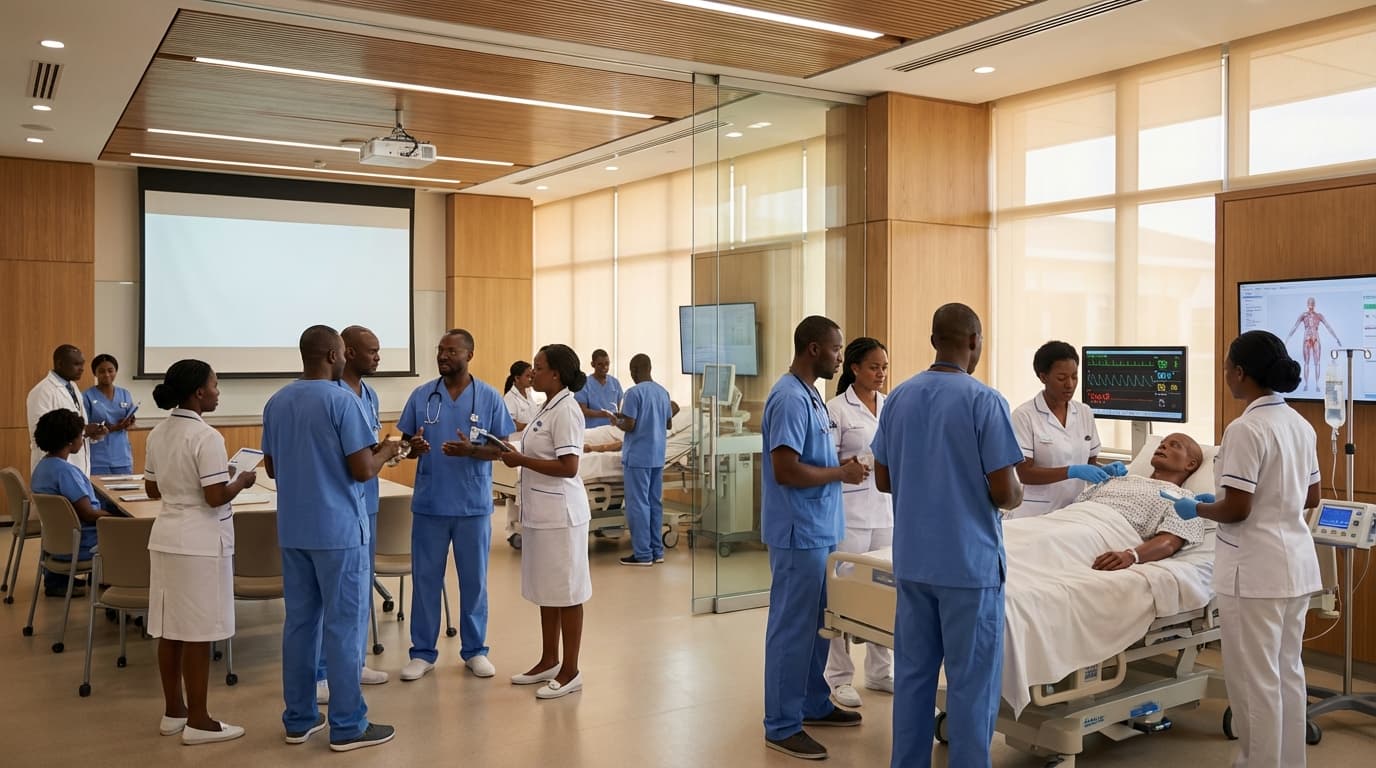
Equipment Training & Education in Mauritius
Engineering Excellence & Technical Support
Comprehensive equipment training and certification programs High-standard technical execution following OEM protocols and local regulatory frameworks.
Advanced Operator Certification Program
Empowering Mauritian professionals with specialized training modules for heavy machinery, agricultural equipment, and industrial plant operations. Our certification ensures proficiency, safety, and compliance with international standards, boosting productivity and career advancement.
Interactive Maintenance & Troubleshooting Simulators
Leveraging cutting-edge simulation technology for hands-on learning of complex equipment maintenance and repair. Trainees can practice troubleshooting scenarios in a risk-free virtual environment, reducing downtime and operational costs for businesses across Mauritius.
On-Site Emergency Response & Safety Protocols
Delivering critical on-site training for emergency response procedures and safety best practices specific to the Mauritian industrial landscape. Our programs equip personnel with the knowledge and skills to effectively handle equipment-related emergencies and ensure a secure working environment.
What Is Equipment Training & Education In Mauritius?
Equipment Training & Education in Mauritius refers to the structured process of imparting theoretical knowledge and practical skills necessary for the safe, efficient, and effective operation, maintenance, and troubleshooting of various types of industrial, commercial, and specialized equipment. This service is crucial for enhancing workforce competency, ensuring regulatory compliance, mitigating operational risks, and optimizing equipment lifecycle management within the Mauritian economic landscape. It encompasses a range of methodologies, including classroom-based instruction, hands-on practical sessions, simulations, and e-learning modules, tailored to specific equipment and industry requirements.
| Target Audience | Needs Addressed | Typical Use Cases in Mauritius |
|---|---|---|
| Industrial Operators & Technicians: (Manufacturing, Processing, Warehousing) | Safe operation, efficient production, reduced downtime, compliance with OSH standards. | Operating heavy machinery (e.g., forklifts, cranes, excavators), managing automated production lines, performing routine equipment maintenance in factories and industrial sites. |
| Construction Professionals: (Engineers, Foremen, Skilled Laborers) | Safe and proficient use of construction machinery, adherence to site safety regulations. | Operating excavators, bulldozers, concrete mixers, scaffolding systems, and specialized construction tools. |
| Healthcare Personnel: (Radiologists, Technicians) | Accurate and safe operation of medical imaging equipment, patient safety protocols. | Training on MRI scanners, CT scanners, X-ray machines, and other diagnostic and therapeutic medical devices. |
| Hospitality & Service Industry Staff: (Kitchen Staff, Maintenance Teams) | Proper use and maintenance of commercial kitchen appliances, HVAC systems, and other service equipment. | Operating industrial ovens, dishwashers, refrigeration units, and ensuring the functionality of hotel infrastructure. |
| Agriculture Sector Workers: | Efficient operation and maintenance of agricultural machinery and equipment. | Training on tractors, harvesters, irrigation systems, and other farm equipment. |
| IT & Telecommunications Professionals: | Installation, configuration, and maintenance of sophisticated IT infrastructure and network equipment. | Server management, network device configuration, and cybersecurity equipment operation. |
| Transportation & Logistics Personnel: | Operation of cargo handling equipment, fleet management systems, and specialized vehicles. | Forklift operation in ports, warehouse management systems, and vehicle maintenance training. |
Key Components of Equipment Training & Education in Mauritius:
- Operator Training: Focuses on the correct and safe operation of machinery, including startup procedures, control panel functions, load management, and emergency shutdown protocols.
- Maintenance Training: Covers preventive, predictive, and corrective maintenance techniques, including diagnostics, repair procedures, component replacement, and troubleshooting methodologies.
- Safety Training: Emphasizes hazard identification, risk assessment, lockout/tagout procedures, personal protective equipment (PPE) usage, and emergency response protocols related to specific equipment.
- Technical Certification: Involves training programs leading to recognized certifications for specialized equipment operators or technicians, often mandated by industry standards or regulatory bodies.
- On-the-Job Training (OJT): Practical training provided by experienced personnel in a real-world work environment, allowing trainees to apply learned skills under supervision.
- Refresher Courses: Periodic training designed to update existing knowledge, introduce new features or operational enhancements, and reinforce best practices.
- Customized Training Solutions: Development of bespoke training programs tailored to the unique equipment inventory and operational demands of a specific Mauritian enterprise.
Who Needs Equipment Training & Education In Mauritius?
Comprehensive equipment training and education in Mauritius are crucial for a wide array of individuals and organizations across various sectors. Ensuring proper operation, maintenance, and safety protocols for machinery and specialized equipment directly impacts productivity, reduces accidents, minimizes downtime, and enhances the overall efficiency of businesses. This training is not a one-size-fits-all solution and caters to distinct needs based on industry, job role, and the specific types of equipment used.
| Customer Type / Department | Specific Roles/Personnel | Types of Equipment/Training Needed | Benefits of Training |
|---|---|---|---|
| Manufacturing Plants | Machine Operators, Technicians, Production Supervisors, Maintenance Staff | CNC machines, assembly line equipment, packaging machinery, forklifts, industrial robots, quality control equipment | Increased production output, reduced errors, improved product quality, enhanced safety, extended equipment lifespan |
| Construction Sites | Heavy Equipment Operators (excavators, cranes, bulldozers), Site Foremen, Safety Officers, General Laborers | Earthmoving machinery, cranes, power tools, scaffolding, concrete mixers, welding equipment | Accident prevention, efficient project completion, reduced equipment damage, compliance with safety regulations |
| Hotels & Resorts | Kitchen Staff (chefs, cooks), Housekeeping Staff, Maintenance Engineers, Event Technicians | Commercial kitchen appliances (ovens, fryers), laundry equipment, cleaning machinery, AV equipment, PABX systems | Food safety compliance, efficient service delivery, reduced guest complaints, effective event management, minimized equipment malfunction |
| Hospitals & Clinics | Medical Technicians, Nurses, Doctors, Biomedical Engineers, Laboratory Staff | MRI scanners, X-ray machines, ultrasound devices, laboratory analysers, surgical equipment, patient monitoring systems | Accurate diagnoses, safe patient care, reduced medical errors, efficient operation of high-value equipment, compliance with medical standards |
| Farms & Fisheries | Tractor Operators, Farm Managers, Fishermen, Agri-business Technicians | Tractors, harvesters, irrigation systems, fishing vessels, processing machinery, refrigeration units | Improved crop yields, efficient harvesting, sustainable fishing practices, reduced spoilage, increased profitability |
| Warehouses & Logistics Companies | Forklift Operators, Warehouse Managers, Delivery Drivers, Inventory Clerks | Forklifts, pallet jacks, conveyor belts, loading dock equipment, inventory management systems | Safe and efficient material handling, reduced stock damage, optimized warehouse operations, faster order fulfillment |
| Power Plants & Utility Companies | Engineers, Technicians, Operators, Maintenance Crews | Turbines, generators, control systems, transmission equipment, safety apparatus | Reliable power supply, safe operation of critical infrastructure, preventive maintenance, emergency response readiness |
| Municipalities & Government Agencies (e.g., Waste Management, Road Maintenance) | Waste Management Operators, Road Maintenance Crews, Public Works Staff | Garbage trucks, road sweeping machines, construction equipment, public transport vehicles | Efficient public service delivery, safe operation of public infrastructure, cost-effectiveness, regulatory compliance |
| Vocational Training Centers & Technical Colleges | Instructors, Students | All types of vocational equipment relevant to their curriculum (welding, automotive, IT hardware, etc.) | Developing skilled workforce, hands-on practical experience, preparing students for industry demands |
| Small Businesses (e.g., Bakeries, Garages, Print Shops) | Owners, Staff | Commercial ovens, automotive repair tools, printing presses, specialized machinery | Improved operational efficiency, enhanced product/service quality, longer equipment life, competitive advantage |
Target Customers & Departments Requiring Equipment Training & Education in Mauritius:
- Industrial & Manufacturing Sector:
- Construction Industry:
- Hospitality & Tourism:
- Healthcare Sector:
- Agriculture & Fisheries:
- Logistics & Transportation:
- Energy & Utilities:
- Government & Public Services:
- Educational Institutions:
- Small & Medium Enterprises (SMEs):
Equipment Training & Education Process In Mauritius
This document outlines the standard workflow for equipment training and education processes in Mauritius, from the initial inquiry to the successful execution of training programs. It is designed to provide clarity and a structured approach for both training providers and client organizations.
| Stage | Description | Key Activities | Responsible Parties | Deliverables/Outcomes |
|---|---|---|---|---|
| Inquiry & Initial Consultation | The process begins when a client expresses interest in equipment training. | Client contacts training provider with training requirements. Initial discussion on equipment type, scope of training, and desired outcomes. Provider may provide preliminary information on services. | Client Organization, Training Provider | Understanding of client's general training needs, confirmation of provider's suitability. |
| Needs Assessment & Proposal Development | A thorough understanding of the client's specific training needs is established. | Detailed discussion to identify specific equipment, skill gaps, target audience, learning objectives, and current proficiency levels. Provider develops a tailored training proposal outlining methodology, content, duration, and resources. | Training Provider (primary), Client Organization (input) | Detailed Training Needs Analysis report, Comprehensive Training Proposal. |
| Quotation & Agreement | Formalizing the training agreement and associated costs. | Provider submits a formal quotation based on the approved proposal. Client reviews quotation and proposal. Negotiation of terms and conditions. Signing of a training agreement or contract. | Training Provider, Client Organization | Agreed-upon Quotation, Signed Training Agreement/Contract. |
| Curriculum Design & Customization | Developing or adapting the training material to meet specific client requirements. | If not already covered in the proposal, detailed curriculum development or customization of existing modules. Includes defining learning modules, practical exercises, case studies, and assessment methods. Client review and approval of the curriculum. | Training Provider (primary), Client Organization (review & approval) | Approved Training Curriculum, Training Materials (manuals, presentations, etc.). |
| Logistics & Scheduling | Organizing the practical arrangements for the training. | Finalizing training dates, times, and venue (client's site, training provider's facility, or online). Arranging for trainers, equipment, consumables, and any necessary travel/accommodation. Communication of schedule to all participants. | Training Provider (primary), Client Organization (coordination) | Confirmed Training Schedule, Logistics Plan, Participant List. |
| Training Delivery & Execution | The actual delivery of the training program. | Conducting training sessions as per the approved curriculum and schedule. This includes theoretical instruction, practical demonstrations, hands-on exercises, and Q&A sessions. | Training Provider (Trainers), Client Organization (Participants) | Completed Training Sessions, Engaged Participants. |
| Assessment & Evaluation | Measuring the effectiveness of the training and participant learning. | Administering assessments (written tests, practical evaluations, simulations) to gauge knowledge and skill acquisition. Gathering feedback from participants and trainers on the training content, delivery, and overall experience. Provider may conduct post-training reviews. | Training Provider (primary), Client Organization (participation & feedback) | Assessment Results, Training Evaluation Reports, Feedback Summaries. |
| Certification & Follow-up | Formalizing the completion of training and providing ongoing support. | Issuing certificates of completion or competency to successful participants. Providing post-training support, such as answering queries, offering refresher sessions, or assisting with further training needs. Archiving training records. | Training Provider (primary), Client Organization (participants) | Certificates of Completion/Competency, Post-Training Support, Training Records. |
Key Stages of the Equipment Training & Education Process
- Inquiry & Initial Consultation
- Needs Assessment & Proposal Development
- Quotation & Agreement
- Curriculum Design & Customization
- Logistics & Scheduling
- Training Delivery & Execution
- Assessment & Evaluation
- Certification & Follow-up
Equipment Training & Education Cost In Mauritius
Securing effective equipment training and education is crucial for businesses in Mauritius to ensure optimal use, safety, and longevity of their machinery. The cost of such training can vary significantly based on several factors, including the complexity of the equipment, the duration of the training, the qualifications of the trainers, the location of the training (on-site at the client's premises or at the training provider's facility), and the number of participants. A thorough understanding of these pricing factors is essential for accurate budgeting and selection of the most suitable training programs.
Key Pricing Factors:
- Equipment Complexity: Highly specialized or intricate machinery typically requires more in-depth and longer training sessions, leading to higher costs. Basic operational training for simpler equipment will generally be less expensive.
- Training Duration and Depth: The number of hours or days dedicated to training directly impacts the price. Advanced modules, troubleshooting, or maintenance training will naturally cost more than introductory sessions.
- Trainer Expertise and Certification: Experienced and certified trainers, especially those with specific industry accreditations or extensive practical experience, command higher fees.
- Training Location: On-site training at a client's location may incur additional costs for travel, accommodation (if applicable), and potentially the inconvenience of the trainer being away from their usual base. Training at the provider's facility might offer a more standardized and potentially lower cost.
- Number of Participants: Group training often offers a per-person discount compared to individual training, making it more cost-effective for companies with multiple employees needing the same training.
- Training Materials and Resources: The inclusion of manuals, practical exercises, simulations, and assessment tools can influence the overall cost.
- Customization: Tailoring training programs to specific company needs and workflows will generally be more expensive than off-the-shelf courses.
- Certification/Accreditation: Training that leads to recognized industry certifications will often have a higher price point due to the added value and rigorous assessment involved.
Cost Ranges in Mauritian Rupees (MUR):
It's important to note that these are estimated ranges and can fluctuate. Obtaining direct quotes from multiple providers is highly recommended for precise budgeting.
- Basic Operational Training (e.g., for common industrial machinery, office equipment): MUR 8,000 - MUR 25,000 per session/course (for a small group, 1-2 days).
- Intermediate Technical Training (e.g., for specific software, mid-level machinery maintenance): MUR 20,000 - MUR 50,000 per course (2-3 days).
- Advanced Specialist Training (e.g., complex industrial automation, specialized medical equipment): MUR 40,000 - MUR 150,000+ per course (can range from 3 days to several weeks, often involving international trainers).
- On-site Training Surcharges: Can add 10-30% to the base cost, depending on travel distance and duration.
- Individualized Coaching/Consultation: Can range from MUR 2,000 - MUR 7,000+ per hour.
These figures represent a general guideline. The actual cost will be determined by the specific requirements and the negotiation with training providers in Mauritius.
| Training Type/Category | Estimated Cost Range (MUR) | Typical Duration |
|---|---|---|
| Basic Operational Training | MUR 8,000 - 25,000 | 1-2 Days |
| Intermediate Technical Training | MUR 20,000 - 50,000 | 2-3 Days |
| Advanced Specialist Training | MUR 40,000 - 150,000+ | 3 Days to Several Weeks |
| On-site Training Surcharge | Additional 10-30% | N/A (added to base cost) |
| Individualized Coaching/Consultation | MUR 2,000 - 7,000+ per hour | Hourly |
Factors Influencing Equipment Training & Education Costs in Mauritius
- Equipment Complexity
- Training Duration and Depth
- Trainer Expertise and Certification
- Training Location (On-site vs. Provider Facility)
- Number of Participants
- Inclusion of Training Materials and Resources
- Customization of Training Content
- Certification or Accreditation Value
Affordable Equipment Training & Education Options
Investing in proper equipment training and education is crucial for workplace safety, efficiency, and productivity. Fortunately, various affordable options exist to equip your team with the necessary skills without breaking the bank. This guide explores value bundles and cost-saving strategies to maximize your training budget.
| Value Bundle Type | What it Includes | Cost-Saving Benefit | Ideal For |
|---|---|---|---|
| Comprehensive Certification Package | Multiple courses, practical assessments, and a recognized certification. | Discounted price compared to purchasing individual courses. | New hires, teams needing multiple skill sets, or regulatory compliance. |
| Online Learning Subscription | Access to a library of online courses, webinars, and resources for a set period. | Unlimited learning opportunities at a fixed annual or monthly cost. | Organizations with ongoing training needs or a diverse workforce. |
| Train-the-Trainer + Basic User Training | Advanced training for designated instructors, plus foundational courses for general staff. | Reduces reliance on external trainers over time, creates internal capacity. | Growing organizations or those with high employee turnover. |
| Industry-Specific Module Bundles | A collection of courses tailored to the equipment and skills required in a particular industry (e.g., construction, manufacturing). | More relevant and efficient training, often with group discounts. | Businesses within a specialized sector. |
Key Cost-Saving Strategies
- {"title":"Leverage Online & Digital Resources","description":"Online courses, webinars, video tutorials, and interactive modules offer flexibility and can be significantly cheaper than in-person workshops. Many reputable organizations provide digital training materials."}
- {"title":"Group Discounts & Package Deals","description":"Training providers often offer reduced per-person rates for larger groups. Inquire about bundled training packages that combine multiple courses or certifications at a discounted price."}
- {"title":"In-House Training & Train-the-Trainer Programs","description":"Develop internal expertise by sending key personnel for advanced training and empowering them to train others within your organization. This creates a sustainable and cost-effective training ecosystem."}
- {"title":"Government & Industry Grants","description":"Explore grants and subsidies offered by government agencies or industry associations that support workforce development and specific equipment training."}
- {"title":"Community College & Vocational School Partnerships","description":"Local community colleges and vocational schools often provide affordable certification programs and courses for specialized equipment, often with industry-aligned curricula."}
- {"title":"Free Manufacturer Resources","description":"Many equipment manufacturers offer free online resources, manuals, basic training videos, and sometimes even introductory courses for their products."}
- {"title":"Peer-to-Peer Learning & Mentorship","description":"Foster a culture of knowledge sharing where experienced employees mentor newer ones. This informal learning can be highly effective for specific equipment operation and troubleshooting."}
Verified Providers In Mauritius
In the dynamic landscape of healthcare, identifying trustworthy and high-quality providers is paramount. Franance Health stands out in Mauritius as a beacon of excellence, offering a comprehensive network of verified healthcare professionals and institutions. Our rigorous credentialing process ensures that every provider associated with Franance Health meets the highest standards of expertise, ethical practice, and patient care. This commitment to verification not only safeguards patients but also streamlines access to the best possible medical services.
| Credential Type | Verification Standard | Impact on Patient Care |
|---|---|---|
| Medical Licenses & Registrations | Verified with relevant Mauritian medical boards and regulatory bodies. | Ensures practitioners are legally authorized to practice and adhere to professional codes of conduct. |
| Educational Qualifications | Authenticity confirmed through accredited institutions and recognized qualification bodies. | Guarantees that providers have received appropriate theoretical and practical training. |
| Specialist Certifications & Fellowships | Verified with awarding bodies and professional organizations. | Confirms advanced expertise and specialized training in specific medical fields. |
| Professional Experience & References | Validated through employment history verification and professional reference checks. | Provides insight into a provider's practical experience and reputation. |
| Background Checks | Undertaken to ensure a clean professional record and ethical standing. | Promotes patient safety and trust by screening for any disciplinary actions or misconduct. |
Why Franance Health Credentials Represent the Best Choice:
- Rigorous Vetting Process: Franance Health employs a multi-stage vetting procedure that includes verification of licenses, certifications, educational backgrounds, and professional experience. This ensures that only qualified and competent individuals join our network.
- Commitment to Patient Safety: Our primary focus is on patient well-being. By meticulously verifying credentials, we minimize risks associated with unqualified practitioners and ensure that patients receive care from legitimate and skilled professionals.
- Enhanced Trust and Transparency: Franance Health's verified network provides a transparent and reliable platform for patients to find healthcare services. This builds trust and confidence in the quality of care received.
- Access to Leading Specialists: We partner with a diverse range of healthcare professionals, including specialists across various disciplines. Our verification process guarantees that these specialists possess the necessary expertise and experience to handle complex medical needs.
- Continuous Quality Assurance: Beyond initial verification, Franance Health engages in ongoing monitoring and quality assurance measures to maintain the high standards of our network. This includes collecting patient feedback and periodically reviewing provider performance.
- Streamlined Healthcare Navigation: By offering a curated list of verified providers, Franance Health simplifies the process of finding the right doctor or facility, saving patients time and reducing the stress often associated with healthcare searches.
- Adherence to International Standards: Our credentialing protocols are designed to align with international best practices, ensuring that Mauritian healthcare providers meet global benchmarks for quality and safety.
Scope Of Work For Equipment Training & Education
This Scope of Work (SOW) outlines the requirements for comprehensive training and educational services for the newly acquired [Specify Equipment Name(s)] at [Specify Location/Department]. The objective is to ensure all relevant personnel are proficient in the safe, efficient, and effective operation, maintenance, and troubleshooting of the equipment, thereby maximizing its utility and minimizing downtime.
| Deliverable | Description | Format | Standard Specification / Requirement | Timeline |
|---|---|---|---|---|
| Training Curriculum | Detailed breakdown of modules, learning objectives, duration, and assessment methods for each user group. | Digital Document (PDF/Word) | Must align with equipment manufacturer's recommended training syllabus. Include safety modules as mandatory. | Within 2 weeks of SOW approval |
| Operator Training Materials | User manuals, quick reference guides, visual aids (diagrams, charts) for daily operation. | Digital (PDF, interactive e-learning) and/or Hardcopy | Clear, concise language, appropriate for target audience. Must include step-by-step operating procedures. | Concurrent with training delivery |
| Maintenance Training Materials | Service manuals, troubleshooting guides, preventive maintenance schedules, parts lists. | Digital (PDF, searchable database) and/or Hardcopy | Technical accuracy, detailed schematics, diagnostic procedures. Should include common failure modes and solutions. | Concurrent with training delivery |
| Hands-on Training Sessions | Practical, interactive sessions conducted on the actual equipment or a designated training unit. | In-person/On-site | Sufficient equipment availability for all participants to gain practical experience. Trainer-to-trainee ratio of no more than 1:8. | As per agreed training schedule |
| Competency Assessments | Practical demonstrations, written tests, or simulations to evaluate trainee understanding and skill proficiency. | Observation checklists, written questionnaires, practical exercises. | Passing score of 85% required for certification. Must be documented for each participant. | End of each training module/course |
| Training Completion Certificates | Formal recognition of successful completion of training modules. | Digital/Hardcopy | Include trainee name, course title, date, and trainer signature. Approved by [Specify Approving Authority]. | Upon successful completion of assessments |
| Post-Training Support Plan | Outline of ongoing support mechanisms, including access to trainers, documentation updates, and refresher training. | Digital Document (PDF) | Clearly define contact points, response times, and availability of support resources for a minimum of 6 months post-training. | Within 1 week of final training session |
Training Objectives:
- Develop a detailed training curriculum tailored to different user roles (e.g., operators, maintenance technicians, supervisors).
- Deliver hands-on training sessions covering equipment operation, calibration, and routine maintenance.
- Provide troubleshooting guidance and practical exercises for common issues.
- Educate users on safety protocols, emergency procedures, and best practices specific to the equipment.
- Offer advanced training modules for specialized functions or complex diagnostics.
- Ensure all trainees can demonstrate competency through practical assessments and knowledge tests.
- Provide comprehensive documentation, including user manuals, service guides, and troubleshooting flowcharts.
Service Level Agreement For Equipment Training & Education
This Service Level Agreement (SLA) outlines the commitments for Equipment Training & Education services provided by [Your Company Name] to [Client Company Name]. It specifies the expected response times for support requests and guarantees a minimum uptime for critical training systems and platforms.
| Service Level | Description | Target Response Time | Escalation Point |
|---|---|---|---|
Key Definitions
- {"item":"Support Request:","description":"Any communication initiated by the Client to [Your Company Name] requesting assistance, clarification, or resolution related to the training services or platforms."}
- {"item":"Critical Training Systems:","description":"The essential software, hardware, or online platforms required for the delivery and access of the agreed-upon training programs. This includes the Learning Management System (LMS), simulation environments, and any proprietary training software."}
- {"item":"Uptime:","description":"The percentage of time during a defined period that the Critical Training Systems are available and fully functional for use by authorized users."}
- {"item":"Downtime:","description":"The percentage of time during a defined period that the Critical Training Systems are unavailable or not fully functional."}
- {"item":"Business Hours:","description":"The period between [Start Time] and [End Time], [Days of the Week], excluding national holidays."}
Frequently Asked Questions

Ready when you are
Let's scope your Equipment Training & Education in Mauritius project in Mauritius.

Scaling healthcare logistics and technical systems across the entire continent.