
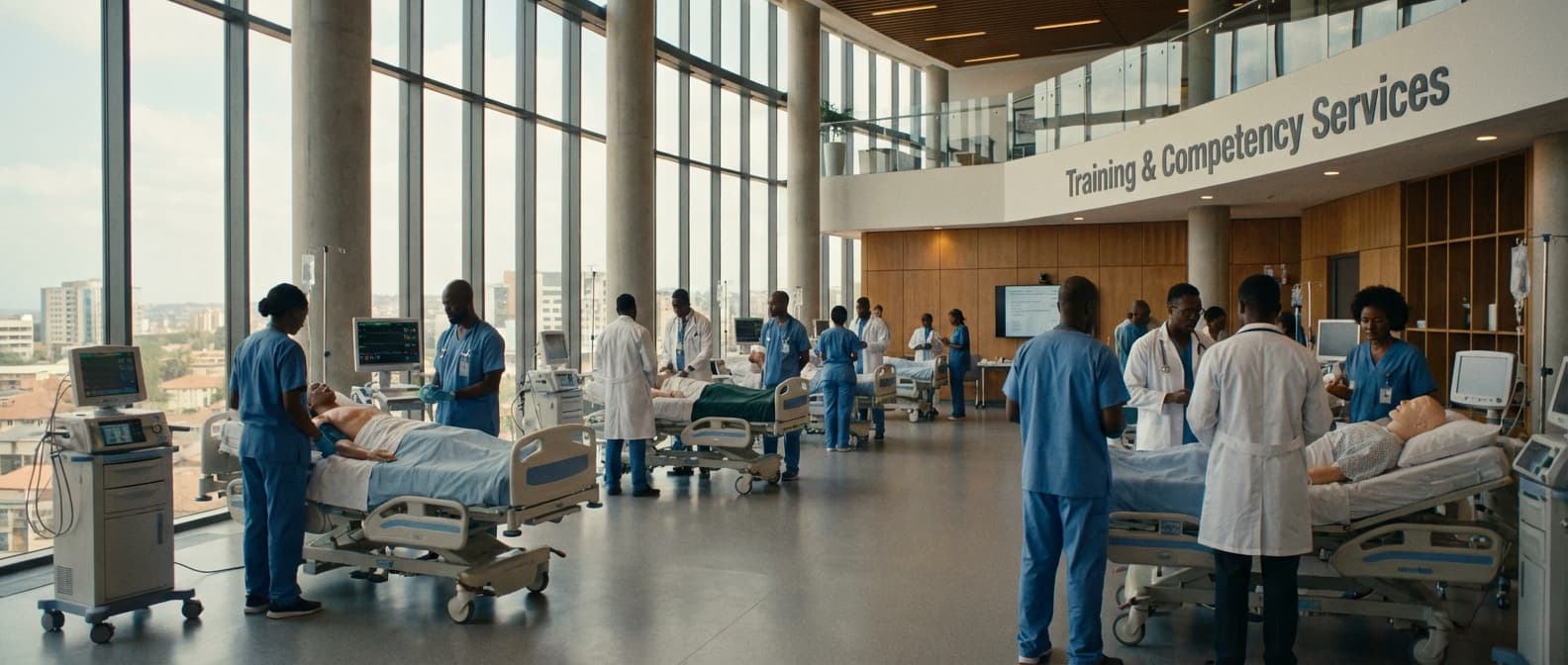
Ventilator User Training Service (Nurses) in Mauritius
Engineering Excellence & Technical Support
Ventilator User Training Service (Nurses) High-standard technical execution following OEM protocols and local regulatory frameworks.
Advanced Ventilation Modes Mastery
Gain in-depth knowledge of critical ventilator modes (e.g., Pressure Support, Volume Control, BiPAP) and learn to interpret waveforms and parameters to optimize patient ventilation and reduce weaning time. This training will cover practical application scenarios relevant to common respiratory conditions encountered in Mauritian healthcare settings.
Real-time Patient Assessment & Troubleshooting
Develop the skills to continuously monitor patient response to ventilation, identify early signs of distress or disconnection, and perform swift, accurate troubleshooting. Emphasis will be placed on recognizing artifact vs. true patient events and implementing appropriate interventions to ensure patient safety and comfort.
Safe Ventilator Management & Infection Prevention
Master the protocols for safe patient transport with ventilators, ventilator circuit management, and strict infection control measures to minimize the risk of ventilator-associated pneumonia (VAP). Understand the importance of regular equipment checks and maintenance procedures to ensure optimal performance and patient safety.
What Is Ventilator User Training Service (Nurses) In Mauritius?
Ventilator User Training Service (Nurses) in Mauritius refers to a specialized educational program designed to equip registered nurses with the knowledge and practical skills necessary to safely and effectively operate, monitor, and manage mechanical ventilators in clinical settings. This service is crucial for ensuring optimal patient outcomes and mitigating potential risks associated with mechanical ventilation.
| Target Audience | Need for Training | Typical Use Cases |
|---|---|---|
| Registered Nurses (RNs) and Licensed Practical Nurses (LPNs) working in critical care units (ICUs, CCUs), emergency departments, operating rooms, and recovery rooms. | To ensure competence in the safe and effective operation and management of mechanical ventilators, directly impacting patient safety and clinical outcomes. | Initial and ongoing competency validation for nurses new to critical care or ventilator management. Refresher training for experienced nurses to stay abreast of new technologies and evolving best practices. Training for nurses transitioning to different healthcare facilities with varying ventilator equipment. Compliance with institutional policies and professional standards for mechanical ventilation. Preparation for professional certifications or specializations in critical care nursing. |
| Nurses in specialized units such as neonatal intensive care units (NICUs) or pediatric intensive care units (PICUs) requiring specific training for pediatric and neonatal ventilators. | To address the unique physiological considerations and specialized equipment used in ventilating vulnerable patient populations. | Management of respiratory distress syndrome (RDS) in neonates. Ventilatory support for pediatric patients with conditions like asthma exacerbations or pneumonia. Post-operative ventilatory support for pediatric surgical patients. |
| Nurses involved in pre-hospital care (e.g., ambulance services) or remote healthcare facilities where advanced respiratory support may be required. | To provide essential life support and stabilize patients with respiratory compromise until definitive care can be administered. | Pre-hospital management of trauma patients with airway compromise or respiratory failure. Stabilization of patients experiencing acute respiratory exacerbations in resource-limited settings. |
Key Components of Ventilator User Training for Nurses in Mauritius
- Physiology of Respiration: Understanding normal and abnormal respiratory mechanics, gas exchange principles, and the pathophysiology of respiratory failure.
- Ventilator Modes and Settings: Comprehensive training on various ventilation modes (e.g., Volume Control, Pressure Control, Pressure Support, SIMV, AC), their indications, contraindications, and appropriate parameter selection (tidal volume, respiratory rate, PEEP, FiO2).
- Ventilator Interface Management: Skills in selecting, fitting, and managing endotracheal tubes, tracheostomy tubes, and non-invasive ventilation interfaces (nasal masks, full-face masks).
- Monitoring and Assessment: Proficiency in interpreting ventilator waveforms (pressure, flow, volume), physiological parameters (SpO2, EtCO2, ABGs), and recognizing signs of ventilator-induced lung injury (VILI) or ventilator dyssynchrony.
- Troubleshooting and Alarm Management: Identifying common ventilator malfunctions and patient-ventilator dyssynchronies, and implementing appropriate corrective actions and alarm troubleshooting protocols.
- Weaning Protocols: Understanding and implementing evidence-based weaning strategies and protocols, including spontaneous breathing trials (SBTs).
- Infection Control: Adherence to stringent infection prevention and control measures related to ventilator circuitry, humidification, and airway management.
- Documentation: Accurate and timely recording of ventilator settings, patient responses, and interventions.
- Emergency Procedures: Protocols for managing emergent situations such as accidental extubation, ventilator failure, or severe bronchospasm.
- Ethical and Legal Considerations: Understanding ethical principles and legal responsibilities related to mechanical ventilation and patient care.
Who Needs Ventilator User Training Service (Nurses) In Mauritius?
This document outlines the essential target customers and departments requiring Ventilator User Training Services for Nurses in Mauritius. Effective training ensures safe and optimal utilization of ventilators, crucial for patient care and operational efficiency in healthcare facilities.
| Department/Unit | Primary Role of Nurses | Specific Training Needs |
|---|---|---|
| Intensive Care Unit (ICU) / High Dependency Unit (HDU) | Direct management of critically ill patients requiring mechanical ventilation. | Advanced ventilator settings, modes, weaning protocols, troubleshooting, and monitoring. |
| Operating Theatre (OT) / Peri-Anesthesia Care Unit (PACU) | Ventilator management during surgical procedures and immediate post-operative recovery. | Peri-operative ventilation principles, anesthesia-related ventilator use, and rapid assessment. |
| Emergency Department (ED) | Initial assessment and stabilization of patients requiring urgent ventilation. | Rapid initiation of ventilation, basic ventilator settings, and transport considerations. |
| Neonatal Intensive Care Unit (NICU) | Ventilator support for premature and critically ill neonates. | Neonatal-specific ventilators, ventilation strategies for neonates, and specialized monitoring. |
| Respiratory Therapy Department | Collaboration with physicians and nurses in managing respiratory conditions and ventilator support. | In-depth understanding of ventilator mechanics, advanced therapies, and troubleshooting. |
| Medical/Surgical Wards (with ventilated patients) | Monitoring and basic management of patients on ventilators or in the process of weaning. | Basic ventilator operation, recognizing alarms, and escalation protocols. |
| Nurse Education/Training Departments | Developing and delivering in-house training programs, ensuring staff competency. | Train-the-trainer modules, curriculum development, and competency assessment strategies. |
Target Customers and Departments for Ventilator User Training (Nurses) in Mauritius
- Registered Nurses involved in direct patient care, especially those working with critically ill patients.
- Specialty nurses in critical care units (ICU/HDU).
- Nurses working in operating theaters (OT) and post-anesthesia care units (PACU).
- Emergency department nurses who may encounter patients requiring immediate ventilation.
- Nurses in neonatal intensive care units (NICU) requiring specific neonatal ventilator training.
- Nurses in respiratory therapy departments or those assisting with respiratory care.
- Nurse educators responsible for in-house training and competency assessments.
Ventilator User Training Service (Nurses) Process In Mauritius
This document outlines the standard workflow for the Ventilator User Training Service for Nurses in Mauritius. The process begins with an inquiry from a healthcare facility and concludes with the successful completion of the training program and certification.
| Step | Description | Key Activities | Responsible Parties | Documentation/Outcomes |
|---|---|---|---|---|
| The initial contact from a healthcare facility requesting ventilator user training for their nursing staff. | Facility contacts training provider. Discussion of training needs, number of participants, specific ventilator models, desired outcomes, and available dates. | Healthcare Facility (Nurse Manager/Training Coordinator), Training Provider (Sales/Training Coordinator) | Initial communication logs, needs assessment report. |
| Based on the needs assessment, the training provider prepares a detailed proposal and quotation. | Training provider outlines curriculum, duration, trainer qualifications, materials, and costs. Formal quotation is issued. | Training Provider (Sales/Training Department) | Training proposal, formal quotation. |
| Formal agreement between the healthcare facility and the training provider. | Review and acceptance of the proposal and quotation. Signing of a training service agreement/contract. | Healthcare Facility (Administration/Procurement), Training Provider (Management) | Signed training service agreement/contract. |
| Finalization of training dates, venue, and necessary arrangements. | Confirmation of training dates and times. Booking of training venue (if external). Arrangement of training equipment (ventilators, manikins, simulation tools). Preparation and distribution of pre-training materials (if any). | Training Provider (Training Coordinator), Healthcare Facility (Logistics/Admin) | Confirmed training schedule, logistics plan, participant list, pre-training materials. |
| The actual execution of the training program. | Theoretical sessions covering ventilator principles, modes, alarms, and patient management. Practical sessions including hands-on operation, troubleshooting, and simulation exercises. Q&A sessions. | Training Provider (Certified Trainers), Nurses (Participants) | Training session attendance records, trainer observations. |
| Measuring the learning outcomes and effectiveness of the training. | Written or online knowledge assessment (quiz/exam). Practical skills assessment (demonstration of competency). Trainer evaluation of participant performance. Participant feedback on the training. | Training Provider (Certified Trainers), Nurses (Participants) | Assessment results (scores), skills checklist completion, participant feedback forms. |
| Issuance of certificates and collection of final feedback. | Issuance of certificates of completion to participants who successfully meet the assessment criteria. Summary of training feedback for provider improvement. Final report to the healthcare facility outlining training outcomes and recommendations. | Training Provider (Training Department/Management) | Certificates of completion, training feedback summary report, final service report. |
| Ongoing assistance and reinforcement of learned skills. | Provision of post-training resources (manuals, online guides). Scheduled follow-up consultations or refresher sessions (if agreed upon). Support for troubleshooting and clarification of queries. | Training Provider (Support Team), Healthcare Facility (Nurses) | Post-training support logs, follow-up meeting minutes (if applicable). |
Ventilator User Training Service (Nurses) Process in Mauritius
- Inquiry & Needs Assessment
- Proposal Development & Quotation
- Contract Agreement
- Training Schedule & Logistics
- Training Delivery
- Assessment & Evaluation
- Certification & Feedback
- Post-Training Support
Ventilator User Training Service (Nurses) Cost In Mauritius
Training nurses on ventilator usage is a critical component of healthcare in Mauritius, ensuring patient safety and optimal respiratory support. The cost of such specialized training services can vary significantly based on several factors. These factors are crucial for healthcare institutions and individual nurses to consider when budgeting for this essential professional development.
Key Pricing Factors:
- Provider Reputation and Expertise: Well-established training providers with experienced clinical educators and a proven track record generally command higher fees. Their curriculum is often more comprehensive and up-to-date.
- Training Modality: The format of the training plays a significant role. In-person, hands-on workshops with direct instructor interaction are typically more expensive than online or blended learning courses. The former allows for immediate feedback and practical skill development.
- Duration and Depth of Training: A basic introductory course will be less costly than an in-depth program covering advanced ventilation modes, troubleshooting, and specific patient populations. Longer and more comprehensive training naturally incurs higher costs.
- Number of Participants: Group training sessions can often be more cost-effective per participant than individual training due to economies of scale for the provider. However, very large groups might necessitate additional instructors or resources, potentially increasing overall cost.
- Customization and Bespoke Training: Tailoring the training content to the specific needs of a hospital or clinic, including the types of ventilators used, can add to the cost as it requires significant curriculum development and instructor preparation.
- Training Location: If the training is conducted at the client's facility, travel and accommodation costs for the trainers might be factored in, especially if they are based in a different region of Mauritius. Conversely, if the training is at the provider's dedicated training center, these costs are usually absorbed within the stated fee.
- Inclusion of Materials and Certification: Courses that provide comprehensive training manuals, access to online resources, and official certification upon successful completion will often have a higher price point than those that do not.
- Regulatory Requirements: If specific regulatory bodies in Mauritius mandate certain training standards, providers who align their curriculum with these requirements might charge a premium for ensuring compliance.
| Training Type/Duration | Estimated Price Range (MUR) | Notes |
|---|---|---|
| Basic Online/E-learning Course (Self-paced, ~4-8 hours) | 3,000 - 6,000 MUR | Covers fundamental principles, basic modes. Ideal for initial familiarization or refresher. May not include hands-on components. |
| Blended Learning Course (Online + Short In-person Session, ~1-2 days) | 7,000 - 12,000 MUR | Combines theoretical knowledge with practical demonstrations. Good balance of flexibility and hands-on experience. |
| Intensive In-person Workshop (2-3 days) | 10,000 - 20,000 MUR | Comprehensive, hands-on training with expert instructors. Covers advanced modes, troubleshooting, and simulations. Best for developing in-depth proficiency. |
| Advanced/Specialized Training (e.g., Neonatal, ARDS, specific ventilators) | 15,000 - 30,000+ MUR | Highly specific training for particular patient groups or complex ventilator systems. Often delivered in-house or tailored. |
| Group Training (Per Nurse, for 10+ participants) | 5,000 - 15,000 MUR | Prices can be significantly reduced per individual when organized for larger groups. Dependent on the intensity and duration of the chosen program. |
| On-site Hospital Training (Customized) | Price on Application (POA) | Tailored programs for specific hospital needs, equipment, and staff. Involves consultation and bespoke curriculum development. |
Common Factors Influencing Ventilator User Training Costs for Nurses in Mauritius
- Provider Reputation and Expertise
- Training Modality (In-person, Online, Blended)
- Duration and Depth of Training
- Number of Participants
- Customization of Curriculum
- Training Location
- Inclusion of Training Materials and Certification
- Adherence to Regulatory Standards
Affordable Ventilator User Training Service (Nurses) Options
This document outlines affordable ventilator user training services specifically designed for nurses. It focuses on delivering essential knowledge and practical skills required for safe and effective ventilator operation and patient care. We explore various training options, emphasizing value bundles that combine essential components for comprehensive learning, alongside strategic cost-saving measures to make high-quality training accessible.
| Value Bundle Option | Description | Included Components | Target Audience | Estimated Cost Range (USD) |
|---|---|---|---|---|
| Basic Essentials Bundle | Foundational knowledge for new ventilator users or as a refresher. | Online modules (e.g., ventilator principles, basic modes), recorded case studies, printable quick reference guides. | New nurses, nurses new to critical care, or those needing a foundational review. | $150 - $300 per nurse |
| Intermediate Skills Bundle | Builds upon basic knowledge with enhanced practical application. | Includes Basic Essentials plus live virtual instructor-led sessions, interactive simulation exercises, and Q&A forums. | Nurses with some ventilator experience, critical care nurses seeking to deepen understanding. | $350 - $600 per nurse |
| Advanced Clinical Mastery Bundle | Comprehensive training for experienced nurses requiring advanced proficiency and troubleshooting. | Includes Intermediate Skills plus hands-on simulation lab sessions (if available), advanced mode training, complex case scenario analysis, and personalized feedback from expert instructors. | Experienced critical care nurses, charge nurses, preceptors. | $700 - $1200 per nurse |
| Customizable Team Training | Tailored training programs for entire units or departments, addressing specific equipment and patient populations. | Flexible mix of online, virtual, and on-site components based on needs assessment. Includes unit-specific protocols and case reviews. | Hospital units, critical care departments, respiratory therapy teams. | Quote-based (dependent on customization and number of participants) |
Key Features of Our Affordable Ventilator Training for Nurses
- Comprehensive curriculum covering ventilator mechanics, modes, settings, and waveform analysis.
- Hands-on practice with various ventilator models (simulated or actual, depending on the option).
- Focus on clinical application, troubleshooting, and emergency management.
- Adaptable training formats to suit diverse learning preferences and schedules.
- Certification upon successful completion, enhancing professional credentials.
- Emphasis on evidence-based practices and current guidelines.
Verified Providers In Mauritius
In the realm of healthcare in Mauritius, discerning individuals and organizations seek assurance of quality, expertise, and ethical practice. Franance Health has emerged as a beacon of trust, meticulously vetting and credentialing healthcare providers across the island. This rigorous process ensures that only the most competent and dedicated professionals are recognized, offering a superior standard of care to patients. Understanding Franance Health's credentials and the meticulous approach they take provides clear insight into why their verified providers represent the best choice for your health and well-being in Mauritius.
| Area of Verification | Franance Health Standard | Benefit to Patients |
|---|---|---|
| Licensure and Certifications | Up-to-date and valid licenses/certifications from recognized authorities. | Ensures providers are legally qualified and possess the necessary foundational expertise. |
| Educational Background | Verification of degrees, diplomas, and specialized training from accredited institutions. | Confirms a strong academic foundation and specialized knowledge. |
| Professional Experience | Thorough review of past roles, responsibilities, and duration of practice. | Indicates practical application of skills and accumulated experience. |
| Clinical Competency | Assessment of practical skills and diagnostic/treatment capabilities (where applicable). | Guarantees proficient and effective medical care. |
| Ethical Conduct | Review of professional conduct, adherence to codes of ethics, and absence of disciplinary actions. | Promotes patient trust, confidentiality, and a respectful healthcare experience. |
| Continuing Education | Verification of participation in ongoing professional development and training. | Ensures providers remain current with the latest medical advancements and best practices. |
Why Franance Health Credentials Matter:
- Rigorous Vetting Process: Franance Health employs a multi-faceted evaluation system that goes beyond basic qualifications. This includes verification of licenses, certifications, educational backgrounds, professional experience, and adherence to ethical guidelines.
- Commitment to Excellence: The credentialing process is designed to identify providers who consistently demonstrate a high level of clinical skill, patient-centered care, and a commitment to ongoing professional development.
- Patient Safety and Trust: By ensuring providers meet stringent standards, Franance Health significantly enhances patient safety and builds a foundation of trust, allowing individuals to make informed healthcare decisions with confidence.
- Access to Leading Professionals: Franance Health's verified providers represent a curated network of some of the most respected and skilled healthcare professionals in Mauritius, offering access to top-tier medical expertise.
- Ethical Practice Assurance: A key component of the credentialing process is the assessment of a provider's ethical conduct and their dedication to patient confidentiality and well-being.
Scope Of Work For Ventilator User Training Service (Nurses)
This Scope of Work (SOW) outlines the requirements for providing comprehensive ventilator user training services specifically tailored for nursing staff. The objective is to ensure nurses possess the necessary knowledge and practical skills to safely and effectively operate, monitor, and manage patients requiring mechanical ventilation. This SOW details the technical deliverables and standard specifications expected from the training provider.
| Training Module | Key Learning Objectives | Content Description | Delivery Method | Assessment Method |
|---|---|---|---|---|
| Ventilator Principles & Anatomy/Physiology | Understand basic principles of mechanical ventilation, respiratory mechanics, and relevant physiological concepts. | Introduction to positive pressure ventilation, lung compliance, resistance, oxygenation vs. ventilation, acid-base balance, and relevant anatomy. | Lecture, interactive presentation, video. | Short quiz on key concepts. |
| Ventilator Components & Controls | Identify and understand the function of all key ventilator components and controls. | Detailed breakdown of ventilator modes (e.g., Volume Control, Pressure Control, SIMV, PSV), flow sensors, pressure sensors, humidifier, exhalation valve, and alarm systems. | Demonstration, hands-on exploration with functional equipment, interactive diagrams. | Identification quiz of controls and their functions. |
| Initiating Mechanical Ventilation | Safely initiate mechanical ventilation on a patient. | Pre-ventilation checklist, patient assessment, setting initial ventilator parameters (tidal volume, respiratory rate, PEEP, FiO2), connecting the circuit, and initial troubleshooting. | Demonstration, role-playing scenarios, practical simulation. | Practical skills checklist for initiating ventilation. |
| Ventilator Monitoring & Waveform Analysis | Effectively monitor patient response to ventilation and interpret ventilator waveforms. | Monitoring vital signs, arterial blood gases (ABGs), ventilator graphics (pressure-time, flow-time, volume-time loops), and identifying common waveform abnormalities and their implications. | Lecture, detailed waveform analysis exercises, case studies. | Waveform interpretation quiz and scenario-based questions. |
| Ventilator Alarms & Troubleshooting | Recognize, respond to, and troubleshoot common ventilator alarms. | Categorization of alarms (e.g., high pressure, low volume, apnea), systematic approach to alarm resolution, common causes and solutions for frequently encountered alarms. | Interactive alarm simulation exercises, problem-solving scenarios. | Alarm response practical assessment. |
| Weaning from Mechanical Ventilation | Understand the principles and process of weaning a patient from mechanical ventilation. | Criteria for initiating weaning, weaning modes (e.g., T-piece, pressure support), patient assessment during weaning, extubation criteria and procedure. | Lecture, case studies on weaning strategies. | Scenario-based questions on weaning decisions. |
| Specialized Ventilator Applications & Considerations | Recognize and understand basic principles of specialized ventilation strategies. | Brief overview of Non-Invasive Ventilation (NIV), High-Frequency Oscillatory Ventilation (HFOV) – if applicable to institution, prone positioning considerations, and management of ARDS patients. | Lecture, expert panel Q&A (if applicable). | Short quiz on specialized concepts. |
| Infection Control & Circuit Management | Adhere to infection control protocols related to ventilator use and circuit management. | Hand hygiene, ventilator circuit changes, humidification management, tracheostomy care relevant to ventilation, and preventing ventilator-associated pneumonia (VAP). | Demonstration, practical exercises. | Skills demonstration for circuit management. |
Technical Deliverables
- Comprehensive Training Manuals (Digital and Print): Covering all aspects of ventilator operation, patient management, troubleshooting, and alarm interpretation.
- Interactive Training Modules (Online/LMS Compatible): Including case studies, quizzes, and simulations for self-paced learning.
- Practical Demonstration Equipment: Access to functional ventilators (or simulators) for hands-on practice.
- Competency Assessment Tools: Structured checklists and scenarios for evaluating practical skills.
- Training Session Summaries and Attendance Records: Documenting the training provided and participant engagement.
- Post-Training Support Plan: Outlining mechanisms for ongoing assistance and Q&A.
- Certification of Completion: Issued to participants who successfully complete the training and assessment.
- Customizable Training Content: Ability to tailor modules to specific ventilator models and institutional protocols.
- Instructor Qualifications and Resumes: Demonstrating the expertise of the training personnel.
Service Level Agreement For Ventilator User Training Service (Nurses)
This Service Level Agreement (SLA) outlines the guaranteed response times and uptime for the Ventilator User Training Service specifically for nursing staff. This SLA ensures timely access to support and reliable availability of training resources.
| Service Component | Response Time Guarantee | Uptime Guarantee |
|---|---|---|
| Technical Support (Platform Access/Login Issues) | 1 hour (Business Hours) | 99.5% (Monthly) |
| Training Content Availability (Videos, Manuals, Quizzes) | 2 hours (Business Hours) | 99.9% (Monthly) |
| Scheduling/Confirmation of Live Training Sessions | 4 business hours | N/A (Subject to Trainer Availability) |
| Urgent Technical Issue Resolution (Critical Functionality Outage) | 30 minutes (Business Hours) | N/A (Resolution targeted within 2 hours) |
Key Performance Indicators (KPIs)
- Response Times: Time taken to acknowledge and begin addressing a support request.
- Uptime Guarantees: Percentage of time the training platform and associated resources are accessible and functional.
Frequently Asked Questions

Ready when you are
Let's scope your Ventilator User Training Service (Nurses) in Mauritius project in Mauritius.

Scaling healthcare logistics and technical systems across the entire continent.