
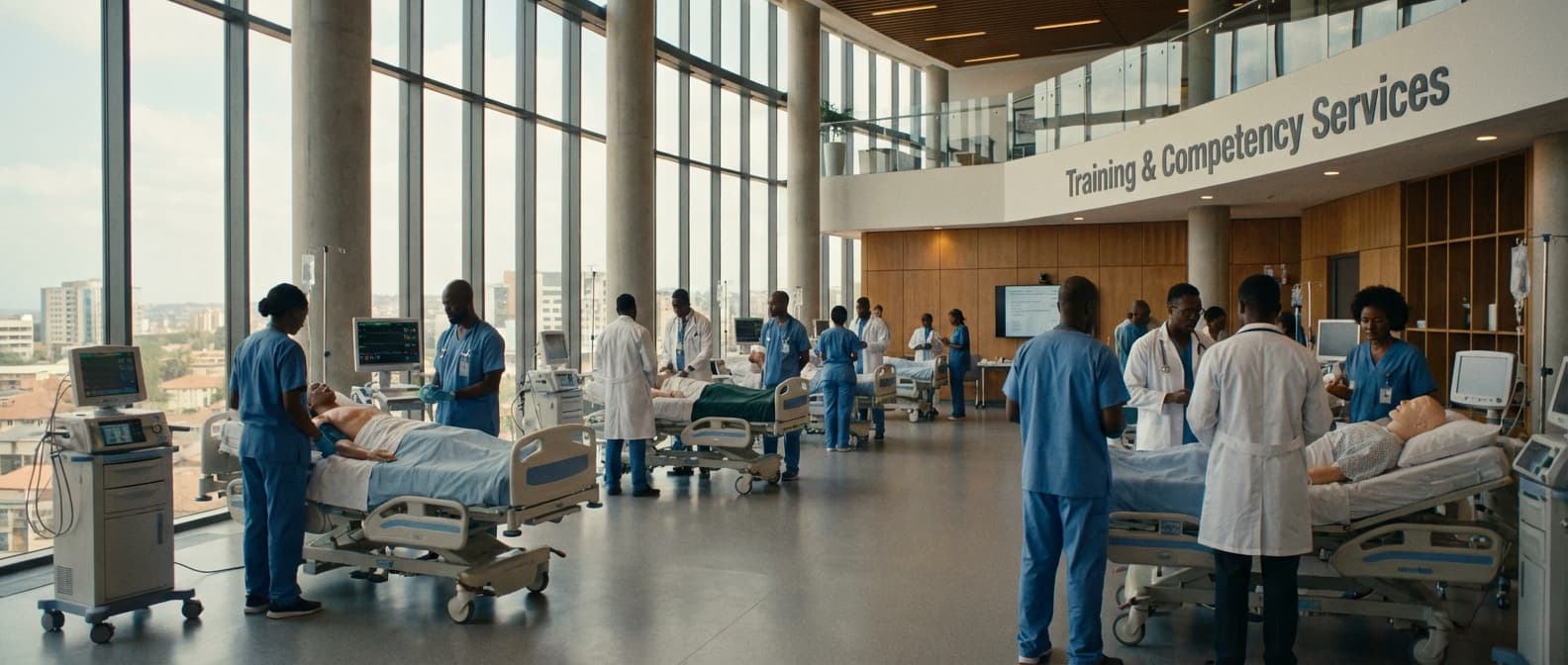
Ultrasound Application Training Service (Protocol-Based) in Mauritius
Engineering Excellence & Technical Support
Ultrasound Application Training Service (Protocol-Based) High-standard technical execution following OEM protocols and local regulatory frameworks.
Standardized Ultrasound Protocols
Master essential ultrasound imaging techniques with our protocol-based training, ensuring consistent and high-quality diagnostic performance tailored to the specific needs of healthcare professionals in Mauritius.
Advanced Diagnostic Skills
Enhance your diagnostic accuracy and confidence through hands-on practice and expert guidance, covering a comprehensive range of ultrasound applications relevant to the Mauritian healthcare landscape.
Certified Proficiency
Achieve internationally recognized proficiency in ultrasound applications, empowering you with the skills and knowledge to provide superior patient care and advance your career within Mauritius.
What Is Ultrasound Application Training Service (Protocol-based) In Mauritius?
Ultrasound Application Training Service (Protocol-Based) in Mauritius refers to a structured, curriculum-driven program designed to equip healthcare professionals with the theoretical knowledge and practical skills required to perform specific ultrasound examinations according to established medical protocols. This service is crucial for ensuring diagnostic accuracy, patient safety, and standardized imaging practices within the Mauritian healthcare landscape. The training emphasizes adherence to sonographic protocols, which are standardized step-by-step procedures for acquiring specific ultrasound images and performing relevant measurements, ensuring consistency and reproducibility across different practitioners and institutions.
| Who Needs This Service | Typical Use Cases (Application Areas) | ||||||||||
|---|---|---|---|---|---|---|---|---|---|---|---|
| Radiologists and Radiographers seeking to specialize or enhance proficiency in specific ultrasound modalities. | Obstetrics and Gynecology (e.g., routine antenatal scans, fetal anomaly scans, gynecological assessments). | Abdominal Imaging (e.g., liver, gallbladder, kidney, pancreas, spleen examinations). | Vascular Ultrasound (e.g., carotid Doppler, peripheral vascular assessments). | Echocardiography (cardiac ultrasound) for assessing heart structure and function. | Musculoskeletal Ultrasound (e.g., joint, tendon, muscle assessments). | Pediatric Ultrasound (e.g., neonatal brain, abdominal scans in children). | Emergency and Critical Care Ultrasound (FAST scans, lung ultrasound). | New graduates of medical imaging programs requiring specialized ultrasound training. | Clinicians in various specialties (e.g., cardiologists, gynecologists) who wish to incorporate point-of-care ultrasound (POCUS) into their practice. | Healthcare professionals in remote areas or smaller clinics needing to broaden their diagnostic capabilities. | Sonographers preparing for professional certification exams. |
What the Service Involves:
- Theoretical Instruction: Comprehensive didactic sessions covering ultrasound physics, instrumentation, anatomical correlations, pathological findings, and the underlying principles of each specific ultrasound protocol.
- Protocol-Based Workflow Training: Detailed instruction on the systematic approach to conducting examinations as dictated by standardized protocols, including patient positioning, transducer manipulation, image optimization, and data acquisition.
- Hands-on Practical Training: Supervised practical sessions utilizing phantoms and/or real patients, allowing trainees to apply theoretical knowledge and refine their technical skills under the guidance of experienced sonographers or radiologists.
- Image Interpretation and Reporting: Training on the interpretation of acquired ultrasound images and the generation of comprehensive, protocol-adherent reports.
- Quality Assurance and Accreditation: Emphasis on quality control measures and the importance of adhering to international standards for accreditation.
- Simulation and Scenario-Based Learning: Where available, the use of ultrasound simulators to practice complex scenarios and enhance decision-making skills.
Who Needs Ultrasound Application Training Service (Protocol-based) In Mauritius?
This document outlines the specific needs and target audience for Ultrasound Application Training Service (Protocol-Based) in Mauritius. Such specialized training is crucial for professionals who utilize ultrasound technology in their daily practice and require a standardized, evidence-based approach to ensure accuracy, efficiency, and optimal patient outcomes. The training focuses on adhering to established protocols, which are essential for consistent diagnostic quality and interdisciplinary communication within healthcare settings.
| Target Customer Segment | Specific Roles/Departments | Key Training Needs | Benefits of Protocol-Based Training |
|---|---|---|---|
| Healthcare Professionals | Radiologists, Sonographers, Radiographers, Obstetricians, Gynecologists, Cardiologists, Emergency Physicians, Critical Care Physicians, GPs | Standardized scanning techniques, image optimization, protocol adherence for specific examinations (e.g., obstetric scans, cardiac echo, abdominal ultrasound, FAST scans), troubleshooting, quality assurance, documentation standards. | Improved diagnostic accuracy, reduced variability in image acquisition, enhanced inter-departmental communication, compliance with international standards, efficient workflow, continuous professional development. |
| Healthcare Facilities | Public Hospitals (e.g., Victoria Hospital, Jeetoo Hospital), Private Hospitals (e.g., Clinique Bon Pasteur, Candos Hospital), Diagnostic Centers | Ensuring consistent quality of ultrasound services, staff competency assessment, staff upskilling, implementation of new ultrasound technologies, compliance with regulatory requirements. | Enhanced reputation, improved patient satisfaction, optimized resource utilization, reduced errors, streamlined operational efficiency, ability to offer a wider range of specialized ultrasound services. |
| Educational Institutions | Medical Schools, Nursing Schools, Allied Health Programs | Integrating evidence-based ultrasound protocols into curriculum, training future medical professionals, faculty development in ultrasound education. | Producing graduates with standardized ultrasound skills, fostering a culture of protocol-driven practice from the outset, contributing to the overall advancement of medical education in Mauritius. |
| Veterinary Professionals | Veterinarians in clinical practice and research | Application of ultrasound in animal diagnostics (e.g., abdominal, cardiac, reproductive scans for various animal species), adapting human protocols to veterinary contexts. | More accurate animal disease diagnosis, improved treatment planning, enhanced animal welfare, contribution to veterinary research. |
Target Customers and Departments in Mauritius
- Radiology Departments (Public and Private Hospitals & Clinics)
- Obstetrics and Gynecology Departments (Public and Private Hospitals & Clinics)
- Cardiology Departments (Public and Private Hospitals & Clinics)
- Emergency Departments (Public and Private Hospitals & Clinics)
- Intensive Care Units (ICUs) (Public and Private Hospitals & Clinics)
- General Practitioner (GP) Clinics with Ultrasound Capabilities
- Diagnostic Imaging Centers
- Medical Training Institutions (for both students and faculty development)
- Veterinary Clinics and Hospitals (for comparative medical applications)
- Research Institutions involved in medical imaging
Ultrasound Application Training Service (Protocol-based) Process In Mauritius
This document outlines the workflow for Ultrasound Application Training Services (Protocol-Based) offered in Mauritius. The process begins with an inquiry from a client and culminates in the successful execution of the training program.
| Stage | Key Activities | Responsible Party | Deliverables | Timeline (Indicative) |
|---|---|---|---|---|
| Client expresses interest in ultrasound application training. Discussion to understand specific training needs, target audience, required protocols, and desired outcomes. Initial scope definition. | Potential Client, Training Provider | Inquiry received, preliminary needs documented. | 1-3 business days |
| Training provider develops a detailed proposal outlining:
| Training Provider | Formal Training Proposal. | 3-5 business days after needs assessment |
| Client reviews the proposal. Negotiation of terms and conditions, if necessary. Formal acceptance of the proposal. Signing of a service agreement/contract. | Potential Client, Training Provider | Signed Service Agreement/Contract. | 2-5 business days |
| Finalization of the training curriculum based on agreed protocols and client feedback. Selection and confirmation of training dates and venue (on-site or remote). Identification and allocation of trainers. | Training Provider, Client | Finalized Training Schedule and Curriculum. | 1-3 business days after contract signing |
| Logistics arrangement (venue, equipment, materials). Distribution of pre-reading materials or introductory modules to participants. Confirmation of participant numbers and any specific requirements. Confirmation of payment as per contract. | Training Provider, Client | Training materials distributed, logistics confirmed, participants notified. | 1-2 weeks before training commencement |
| Delivery of theoretical sessions (lectures, presentations). Demonstration of ultrasound applications and protocols. Hands-on practical sessions with participants using ultrasound equipment and phantoms/simulators. Case study analysis and discussions. Q&A sessions. | Trainer(s) | Delivery of training as per schedule and curriculum. | Duration varies based on training scope (e.g., 1-5 days) |
| Collection of participant feedback through evaluation forms. Post-training assessment (if applicable) to gauge knowledge retention. Discussion of any ongoing support needs or further training requirements. Review of training effectiveness with the client. | Training Provider, Client, Participants | Completed evaluation forms, post-training assessment results (if any). | Within 1 week after training completion |
| Issuance of Certificates of Completion to participants who successfully meet training requirements.
Provision of a comprehensive training report to the client, detailing:
| Training Provider | Certificates of Completion, Training Report. | Within 2 weeks after training completion |
Ultrasound Application Training Service (Protocol-Based) Workflow in Mauritius
- Initial Inquiry and Needs Assessment
- Proposal Development and Submission
- Client Acceptance and Contract Finalization
- Training Program Customization and Scheduling
- Pre-Training Preparations
- Training Execution
- Post-Training Follow-up and Evaluation
- Certification and Reporting
Ultrasound Application Training Service (Protocol-based) Cost In Mauritius
Ultrasound application training services in Mauritius, particularly those adhering to specific protocols, can vary significantly in cost. These training programs are crucial for medical professionals to gain proficiency in using ultrasound equipment for diagnostic and therapeutic purposes, often focusing on specialized areas like obstetrics, cardiology, or general imaging. The pricing is influenced by a combination of factors, making it essential for healthcare institutions and individuals to understand these variables when budgeting for such training.
| Training Type/Scope | Estimated Cost Range (MUR) | Typical Duration |
|---|---|---|
| Basic Ultrasound Principles & Applications (e.g., Abdominal) | MUR 15,000 - 30,000 | 2-3 Days |
| Obstetric Ultrasound (Antenatal Screening) | MUR 25,000 - 45,000 | 3-5 Days |
| Cardiology Ultrasound (Echocardiography - Introductory) | MUR 30,000 - 60,000 | 4-7 Days |
| Specialized Ultrasound Applications (e.g., Vascular, Musculoskeletal) | MUR 40,000 - 75,000 | 5-7 Days |
| Advanced/Fellowship Level Training (e.g., Fetal Echo, Interventional Ultrasound) | MUR 60,000 - 150,000+ | 1 Week - Several Weeks/Months (Intensive Modules) |
| Refresher/Continuing Professional Development (CPD) Modules | MUR 10,000 - 25,000 | 1-2 Days |
Key Pricing Factors for Ultrasound Application Training (Protocol-Based) in Mauritius
- {"title":"Duration and Intensity of Training","description":"Longer and more intensive training programs, involving more hands-on practice and detailed curriculum, will naturally command higher fees than shorter, introductory courses."}
- {"title":"Level of Expertise of Trainers","description":"Training delivered by highly experienced sonographers, radiologists, or specialized medical practitioners with extensive clinical and teaching experience will be priced higher."}
- {"title":"Scope of the Ultrasound Application","description":"Training for highly specialized applications (e.g., fetal echocardiography, interventional ultrasound) typically costs more due to the advanced knowledge and skills required compared to general ultrasound training."}
- {"title":"Inclusion of Equipment Usage and Materials","description":"Whether the training fee includes the use of state-of-the-art ultrasound machines, simulators, and comprehensive training materials (manuals, reference guides) will affect the overall cost."}
- {"title":"Accreditation and Certification","description":"Training programs that lead to recognized certifications or accreditations from professional bodies often carry a premium due to the established standards and recognition they offer."}
- {"title":"Location and Venue","description":"Training conducted at a premium venue or requiring travel and accommodation for trainers can influence the final price. On-site training at a healthcare facility might have different cost structures."}
- {"title":"Customization of Training Modules","description":"Tailoring the training content to the specific needs and protocols of a particular hospital or clinic will generally incur additional costs."}
- {"title":"Provider Type (Institution vs. Individual)","description":"Training offered by established medical institutions or universities may have different pricing models compared to independent training providers or individual consultants."}
Affordable Ultrasound Application Training Service (Protocol-based) Options
Our Affordable Ultrasound Application Training Service offers protocol-based education designed to equip sonographers and medical professionals with the essential skills to perform diagnostic ultrasound examinations confidently and efficiently. We understand the importance of cost-effective professional development, which is why we've structured our offerings with value bundles and strategic cost-saving measures.
| Value Bundle Name | Included Modules/Applications | Key Benefits | Base Cost (Example) |
|---|---|---|---|
| Foundation Essentials Bundle | Abdominal Basics (Liver, Gallbladder, Kidneys) | Builds a strong understanding of core abdominal anatomy and common pathologies. Ideal for new sonographers or those transitioning to new roles. | $750 |
| Women's Health Focus Bundle | Pelvic Ultrasound (Transabdominal & Transvaginal), Early Obstetric Ultrasound (1st Trimester) | Specializes in essential gynecological and early pregnancy assessments. Crucial for OB/GYN departments and imaging centers. | $950 |
| Cardiology Starter Bundle | Echocardiography Fundamentals (Basic views, measurements) | Introduces the principles of cardiac ultrasound, focusing on standard views and essential measurements for initial cardiac assessment. Suits cardiology fellows and sonographers entering echo. | $1100 |
| Comprehensive Core Bundle | Abdominal Basics, Pelvic Ultrasound, Early Obstetric Ultrasound | A well-rounded package covering three high-demand areas, offering significant savings over individual module purchases. Excellent for general imaging departments. | $1600 |
| Customizable Skill-Up Bundle | Select any 3 standard modules (excluding advanced specialties) | Allows for tailored training based on specific departmental needs or individual learning goals. Offers flexibility and targeted skill development. | $1200 |
Key Features of Our Protocol-Based Training:
- Protocol-Driven Curriculum: Training follows established, evidence-based ultrasound protocols for various applications, ensuring standardization and accuracy.
- Hands-On Practice: Emphasis on practical scanning techniques and image optimization.
- Experienced Instructors: Learn from certified sonographers with extensive clinical and teaching experience.
- Flexible Learning Formats: Options for in-person workshops, online modules, and hybrid approaches.
- Case Study Integration: Real-world scenarios to enhance diagnostic reasoning.
- Regular Updates: Curriculum reflects current best practices and technological advancements.
Verified Providers In Mauritius
In the dynamic landscape of healthcare in Mauritius, identifying reliable and credentialed providers is paramount for individuals seeking quality medical services. Franance Health has emerged as a leading platform, distinguishing itself through a rigorous vetting process that ensures its listed healthcare professionals and institutions meet the highest standards of expertise, ethics, and patient care. This commitment to verification not only builds trust but also simplifies the decision-making process for patients. Franance Health's credentials are built on a foundation of meticulous research, background checks, and verification of professional licenses, specialist certifications, and peer reviews. Choosing a provider listed on Franance Health signifies access to a curated network of the best in Mauritian healthcare, offering peace of mind and assurance of receiving top-tier medical attention.
| Credential Type | Franance Health Verification Process | Patient Benefit |
|---|---|---|
| Medical Licenses & Registrations | Mandatory verification with relevant Mauritian medical councils and regulatory bodies. | Ensures providers are legally qualified and authorized to practice. |
| Specialist Certifications & Fellowships | Verification of advanced degrees, specialist training, and recognized fellowships. | Confirms in-depth knowledge and expertise in specific medical disciplines. |
| Hospital & Clinic Accreditations | Checks for accreditation from recognized national and international healthcare organizations. | Guarantees that facilities meet stringent standards for safety, quality, and operational efficiency. |
| Professional Memberships | Verification of active memberships in reputable professional medical associations. | Indicates commitment to ongoing professional development and adherence to best practices. |
| Peer Reviews & Testimonials | Collection and vetting of authentic patient feedback and peer endorsements. | Provides insights into patient experiences and professional reputation. |
| Background Checks | Where applicable and legally permissible, basic background checks are conducted. | Adds an extra layer of assurance regarding the provider's integrity. |
Why Franance Health Credentials Represent the Best Choice:
- Rigorous Vetting Process: Franance Health employs a multi-faceted verification system, scrutinizing educational qualifications, professional licenses, and accreditations of all listed providers.
- Emphasis on Experience and Specialization: We prioritize healthcare professionals with proven track records and specialized expertise in their respective fields, ensuring you connect with the right doctor for your specific needs.
- Commitment to Ethical Practices: Franance Health upholds a strict code of ethics, ensuring all listed providers adhere to the highest standards of patient confidentiality, integrity, and professional conduct.
- Patient-Centric Approach: Our platform is designed to empower patients by providing transparent information, enabling informed decisions about their healthcare journey.
- Curated Network of Excellence: By partnering exclusively with verified providers, Franance Health offers a curated selection of healthcare professionals and facilities renowned for their quality of care and patient satisfaction.
- Continuous Quality Assurance: We regularly review and update provider information, ensuring the information on our platform remains accurate and reflects current standards.
Scope Of Work For Ultrasound Application Training Service (Protocol-based)
This Scope of Work (SOW) outlines the requirements for a protocol-based Ultrasound Application Training Service. The service will focus on equipping trainees with the necessary knowledge and practical skills to effectively operate ultrasound equipment and perform examinations according to established protocols. The training will cover theoretical aspects, hands-on practical sessions, and assessment to ensure proficiency.
| Deliverable | Description | Standard Specification | Format |
|---|---|---|---|
| Training Curriculum Development | Detailed syllabus outlining the learning objectives, topics, duration, and assessment methods for each module. | Must align with recognized professional standards (e.g., ARDMS, industry best practices) and be tailored to the specific ultrasound discipline(s). | Document (PDF/Word) |
| Training Materials | Comprehensive set of learning resources including presentations, lecture notes, case studies, image databases, and protocol guides. | Content must be accurate, up-to-date, and presented in an engaging manner. Visual aids should be high-quality. | Digital (PDF, PPT, Video) and potentially printed copies |
| Hands-on Practical Training Sessions | Supervised practical sessions utilizing ultrasound phantoms and/or volunteer models, guided by experienced sonographers. | Minimum ratio of trainees to instructors, adequate simulation time per trainee, and exposure to a variety of relevant pathologies and anatomical variations. | In-person sessions |
| Competency Assessment Tools | Development of practical examinations, written tests, and/or image critiques to evaluate trainee proficiency. | Assessments must directly measure the attainment of learning objectives and the ability to follow protocols. Clear grading rubrics are required. | Written assessments, practical checklists, image critique forms |
| Post-Training Performance Evaluation Support | Guidance or resources to support the ongoing evaluation of trainees in a clinical setting. | Recommendations for peer review, quality assurance programs, and continuous professional development. | Guidance document/checklist |
| Trainer Qualifications | Proof of qualifications and experience for all instructors delivering the training. | Certified sonographers with a minimum of X years of clinical experience in the relevant specialty and proven training/teaching experience. | Resumes/CVs, certifications |
| Training Schedule | A detailed schedule outlining the dates, times, and locations (if applicable) for all training modules and practical sessions. | Clearly defined start and end times, breaks, and any pre-training preparation required. | Document (Excel/Calendar) |
| Feedback Mechanism and Reporting | System for collecting trainee feedback and a report summarizing training outcomes and assessment results. | Anonymous feedback forms, summary report including pass/fail rates and common areas for improvement. | Digital forms, summarized report (PDF/Word) |
Key Training Modules
- Introduction to Ultrasound Physics and Principles
- Ultrasound Equipment Operation and Controls
- Sonographic Anatomy and Physiology (Specific to Discipline)
- Standard Ultrasound Protocols (e.g., Abdominal, Pelvic, Echocardiography, Vascular)
- Image Optimization and Quality Assurance
- Artifact Recognition and Mitigation
- Basic Interpretation and Reporting
- Patient Care and Safety in Ultrasound
- Documentation and Record Keeping
- Advanced Techniques and Emerging Applications (Optional)
Service Level Agreement For Ultrasound Application Training Service (Protocol-based)
This Service Level Agreement (SLA) outlines the response times and uptime guarantees for the Ultrasound Application Training Service. This protocol-based service ensures timely access to training materials and support for users of specific ultrasound applications.
| Service Component | Definition | Target Response Time | Escalation Procedure |
|---|---|---|---|
| Critical Issue (e.g., Training platform inaccessible, core application functionality failure preventing training) | An issue that completely prevents users from accessing or utilizing the core functionalities of the training platform or specific protocol training modules. | Within 1 business hour | Immediate notification to designated support team and escalation to Senior Support Engineer within 2 business hours if not resolved. |
| Standard Issue (e.g., Minor bug, request for clarification on a specific training module, performance degradation) | An issue that affects user experience or access to specific features but does not completely halt training activities. | Within 4 business hours | Notification to support team, with resolution expected within 1 business day. Escalation to Senior Support Engineer if resolution exceeds 1 business day. |
| Training Platform Uptime | The percentage of time the Ultrasound Application Training platform is available and operational for users. | 99.5% monthly uptime | Downtime exceeding the guaranteed percentage will trigger a service credit as per the SLA's financial penalty clause (detailed in a separate section). |
| Data Backup and Recovery | The frequency of data backups and the maximum acceptable time to restore data in case of an incident. | Daily backups, with a maximum recovery time objective (RTO) of 24 hours for critical data. | Automated daily backups. In case of data loss, a full system restoration will be initiated immediately, with continuous communication provided to the client. |
Key Performance Indicators (KPIs)
- Response Time for Critical Issues
- Response Time for Standard Issues
- Training Platform Uptime Guarantee
- Data Backup and Recovery
Frequently Asked Questions

Ready when you are
Let's scope your Ultrasound Application Training Service (Protocol-Based) in Mauritius project in Mauritius.

Scaling healthcare logistics and technical systems across the entire continent.