
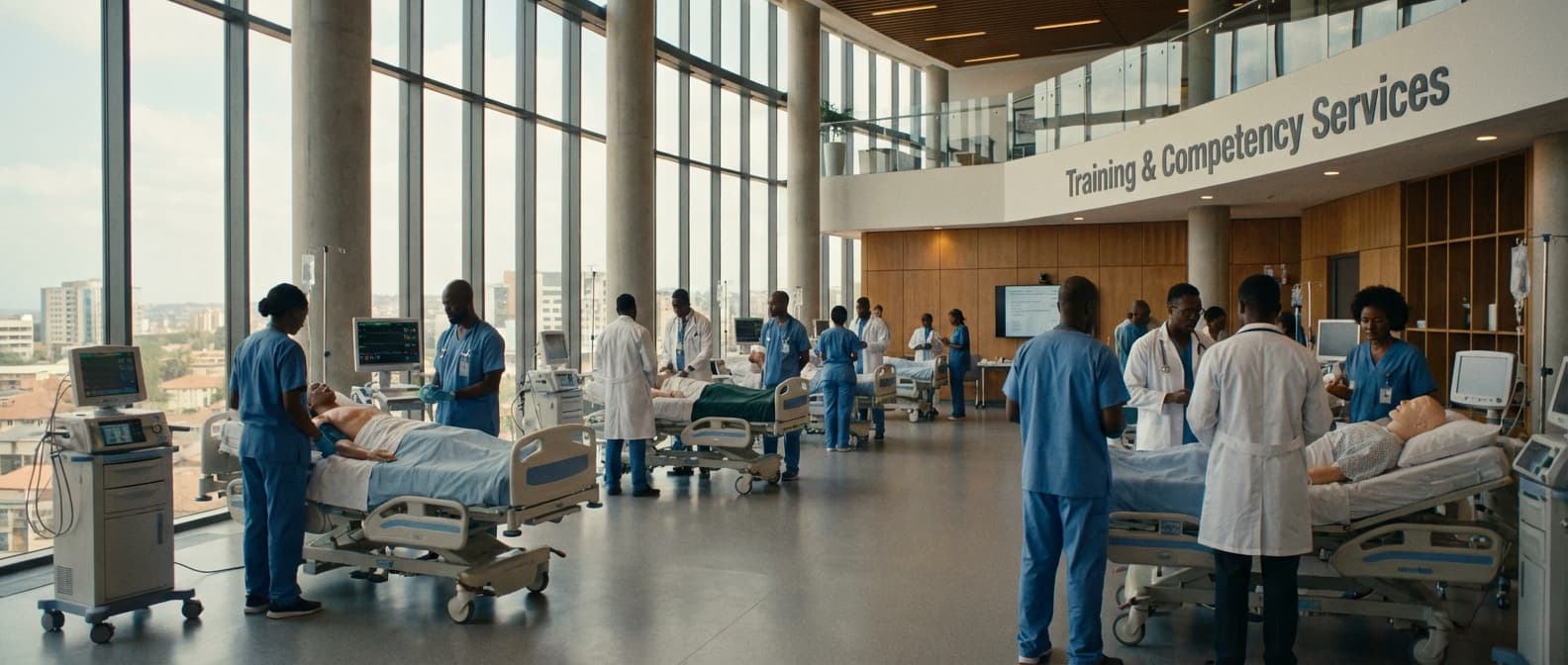
MRI Operator Training Service (Radiographers) in Mauritius
Engineering Excellence & Technical Support
MRI Operator Training Service (Radiographers) High-standard technical execution following OEM protocols and local regulatory frameworks.
Advanced Imaging Protocols Mastery
Our comprehensive training empowers Mauritian radiographers to expertly configure and execute advanced MRI protocols, including DWI, FLAIR, and contrast-enhanced sequences, ensuring superior diagnostic image quality and reduced scan times.
Patient Safety & Artifact Management
We emphasize rigorous patient screening techniques and hands-on practice in identifying and mitigating common MRI artifacts, ensuring the safety of both patients and operators while maximizing diagnostic confidence.
Neurological & Musculoskeletal Imaging Specialization
Tailored modules provide in-depth understanding of anatomical considerations and imaging nuances for specialized areas like neuroimaging (brain, spine) and musculoskeletal (joints, soft tissues), equipping radiographers for complex diagnostic challenges.
What Is Mri Operator Training Service (Radiographers) In Mauritius?
The MRI Operator Training Service (Radiographers) in Mauritius refers to specialized educational programs designed to equip radiographers with the necessary knowledge and practical skills to safely and effectively operate Magnetic Resonance Imaging (MRI) scanners. This training is crucial for ensuring high-quality diagnostic imaging, patient safety, and adherence to international standards within healthcare facilities in Mauritius. The service typically involves theoretical instruction covering MRI physics, safety protocols, image acquisition techniques, and contrast agent administration, complemented by hands-on practical sessions on actual MRI equipment. It also encompasses quality assurance procedures and troubleshooting common operational issues. The primary objective is to develop competent MRI operators who can perform a wide range of MRI examinations proficiently and independently.
| Who Needs This Service? | Typical Use Cases | |||||||||
|---|---|---|---|---|---|---|---|---|---|---|
| Registered Radiographers in Mauritius seeking to specialize in MRI. | Hospitals and diagnostic imaging centers in Mauritius acquiring new MRI equipment. | Healthcare facilities aiming to upskill their existing radiography staff to meet evolving diagnostic demands. | Radiographers returning to practice or transitioning from other imaging modalities. | Radiographers seeking professional development and certification in MRI. | Newly qualified radiographers entering the workforce in Mauritius. | The service facilitates the establishment and expansion of MRI services in public and private healthcare sectors. | Training for operators involved in research studies utilizing MRI. | Ensuring compliance with regulatory requirements for MRI operation. | Enhancing the diagnostic accuracy and patient experience during MRI examinations. | Supporting the development of specialized MRI services (e.g., neuroimaging, musculoskeletal imaging, cardiac MRI). |
Key Components of MRI Operator Training Service (Radiographers) in Mauritius:
- MRI Physics and Principles
- Patient Safety and Screening Protocols
- MRI Equipment Operation and Maintenance
- Image Acquisition Techniques and Optimization
- Contrast Agent Administration and Management
- Quality Assurance and Quality Control (QA/QC)
- Pathology Recognition (basic overview)
- Radiation Safety (though MRI is non-ionizing, general safety principles apply to patient handling and equipment)
- Legal and Ethical Considerations
- Troubleshooting and Artifact Reduction
Who Needs Mri Operator Training Service (Radiographers) In Mauritius?
This service is designed for radiographers and medical imaging professionals in Mauritius who are involved in operating Magnetic Resonance Imaging (MRI) scanners. Comprehensive training is crucial for ensuring patient safety, image quality, and efficient use of advanced MRI technology. The need for such training stems from the increasing adoption of MRI technology in healthcare facilities, the complexity of MRI procedures, and the continuous evolution of MRI techniques and protocols.
| Target Customer Type | Specific Departments Involved |
|---|---|
| Hospitals (Public & Private) | Radiology Department, Diagnostic Imaging Department, Neurology Department, Orthopedics Department, Oncology Department, Cardiology Department (for specialized cardiac MRI) |
| Diagnostic Imaging Centers/Private Clinics | Radiology Department, MRI Unit |
| Research Institutions & Universities | Imaging Research Labs, Medical Schools, Biomedical Engineering Departments |
| Medical Training Colleges/Institutes | Radiography Programs, Allied Health Science Departments |
| Government Health Departments | Public Health Services, Health Infrastructure Planning |
| New MRI Facility Setups | Operations Management, Clinical Engineering, Radiology Services |
Target Customers and Departments
- Hospitals (Public and Private): The primary users of MRI services, therefore the most significant target audience. This includes both large tertiary care hospitals and smaller community hospitals that have invested in MRI capabilities.
- Diagnostic Imaging Centers/Private Clinics: Standalone or group clinics specializing in medical imaging, offering MRI as a key diagnostic tool.
- Research Institutions and Universities: If they have or are planning to acquire MRI facilities for research or educational purposes.
- Medical Training Colleges/Institutes: To equip their radiography students with the latest MRI operational skills.
- Government Health Departments/Ministry of Health: For potential bulk training initiatives or to set training standards across public healthcare facilities.
- New MRI Facility Setups: Organizations planning to establish new MRI departments or expand existing imaging services.
Mri Operator Training Service (Radiographers) Process In Mauritius
This document outlines the typical workflow for MRI Operator Training Services provided to Radiographers in Mauritius. It covers the entire process from initial inquiry to the successful completion of training and certification.
| Phase | Description | Key Activities | Responsible Parties | Deliverables |
|---|---|---|---|---|
| Initial contact from a radiography professional or institution seeking MRI operator training. | Receive inquiry, schedule initial consultation, understand general training needs and expectations. | Radiographer/Institution, Training Provider | Initial understanding of requirements, confirmation of service offering. |
| Detailed evaluation of the specific training requirements of the radiographer or institution. | Conduct detailed needs assessment (e.g., current skill level, specific MRI modalities, desired outcomes), develop a customized training proposal outlining modules, duration, objectives, costs, and prerequisites. | Radiographer/Institution, Training Provider | Detailed Needs Assessment Report, Customized Training Proposal. |
| Formal agreement between the training provider and the radiographer/institution. | Review and agree on proposal terms, sign training contract/agreement, finalize training dates, venue (if applicable), and logistics. | Radiographer/Institution, Training Provider | Signed Training Contract, Confirmed Training Schedule. |
| Preparation by both parties to ensure readiness for the training. | Training Provider: Prepare training materials, resources, equipment (if applicable), and identify trainers. Radiographer/Institution: Ensure trainee availability, access to MRI facilities (if practical training is on-site), and completion of any pre-requisite learning. | Training Provider, Radiographer/Institution | Training Materials, Logistical Arrangements, Trainee Readiness. |
| The core phase where knowledge and skills are imparted. | Conduct theoretical sessions (MRI physics, safety, image acquisition protocols, artifact identification, patient care). Conduct practical sessions (hands-on operation of MRI scanner, protocol selection, image optimization, patient positioning, emergency procedures). This may be simulated or on-site at a facility. | Training Provider (Trainer), Radiographer/Institution (Trainee) | Theoretical Knowledge Acquired, Practical Skills Developed. |
| Measuring the trainee's comprehension and skill proficiency. | Conduct theoretical assessments (quizzes, exams). Conduct practical assessments (observation of performance, simulated scenarios, case studies). Gather feedback from trainees and trainers. | Training Provider (Assessor), Radiographer/Institution (Trainee) | Assessment Scores, Performance Evaluation Reports, Feedback Forms. |
| Formal recognition of training completion and ongoing assistance. | Issue certificates of completion upon successful assessment. Provide post-training support (e.g., access to resources, Q&A sessions, refresher course options, guidance on continuing professional development). | Training Provider, Radiographer/Institution | Certificate of Completion, Post-Training Support Resources. |
MRI Operator Training Service Workflow (Radiographers) in Mauritius
- Inquiry & Consultation
- Needs Assessment & Proposal Development
- Contracting & Scheduling
- Pre-Training Preparation
- Training Delivery (Theory & Practical)
- Assessment & Evaluation
- Certification & Post-Training Support
Mri Operator Training Service (Radiographers) Cost In Mauritius
The cost of MRI Operator Training services for radiographers in Mauritius can vary significantly based on several factors. These include the duration and intensity of the training, the provider's reputation and accreditation, the qualifications of the instructors, and whether the training is conducted on-site at a healthcare facility or at a dedicated training center. Furthermore, the level of the training (e.g., introductory, advanced, specialized protocols) will also influence the price. Additional costs might include training materials, assessments, and certifications. Prices are typically quoted in Mauritian Rupees (MUR).
| Training Type/Duration | Estimated Cost Range (MUR) | Notes |
|---|---|---|
| Basic/Introductory Course (1-3 days) | MUR 15,000 - MUR 35,000 | Covers fundamental principles of MRI operation and safety. |
| Intermediate Course (3-5 days) | MUR 30,000 - MUR 60,000 | Includes more in-depth scanning protocols and troubleshooting. |
| Advanced/Specialized Course (5+ days or modular) | MUR 50,000 - MUR 100,000+ | Focuses on specific modalities (e.g., neuro, cardiac) or advanced techniques. Costs can escalate with longer durations and specialized content. |
| On-site Corporate Training (per session/group) | Negotiable, typically starting from MUR 40,000 per day + instructor fees | Price depends on the number of participants and customization requirements. May incur travel and accommodation for instructors. |
| Certification Exam Fee (if separate) | MUR 5,000 - MUR 15,000 | Some providers may charge separately for official certification examinations. |
Key Pricing Factors for MRI Operator Training (Radiographers) in Mauritius:
- Training Duration and Intensity
- Provider Reputation and Accreditation
- Instructor Expertise and Qualifications
- Training Location (On-site vs. Training Center)
- Level of Training (Basic, Advanced, Specialized)
- Inclusion of Training Materials and Resources
- Assessment and Certification Fees
- Customization of Training Modules
Affordable Mri Operator Training Service (Radiographers) Options
This guide explores affordable MRI operator training services specifically tailored for radiographers. We'll delve into the value of different training bundles and outline effective cost-saving strategies to empower radiography professionals seeking to specialize in MRI.
| Training Bundle Type | Typical Components | Value Proposition | Potential Cost-Saving Aspect |
|---|---|---|---|
| Basic Theory & Fundamentals | Online modules, textbooks, lectures covering MRI physics, safety, and anatomy. | Establishes core knowledge essential for all MRI operations. Ideal for beginners. | Lower upfront cost, flexible learning schedule, no travel expenses. |
| Comprehensive Certification Prep | Theory modules, practice exams, case studies, and review sessions aligned with certification bodies (e.g., ARRT). | Directly prepares for professional certification, enhancing career prospects and marketability. | Bundling exam prep can be more cost-effective than separate courses and study materials. |
| Hands-on Clinical Rotations (External) | Supervised practical experience at a partner imaging center or hospital. | Provides essential real-world experience and application of theoretical knowledge. | Can be costly due to supervision fees. Seek programs with pre-arranged clinical sites to reduce logistical hurdles. |
| Hybrid (Online Theory + Local Clinical) | Combines online theoretical learning with mandatory in-person clinical practice at a pre-approved local facility. | Balances flexibility with practical experience. Reduces the need for extended travel. | Significant savings on accommodation and travel compared to fully in-person programs. Requires careful coordination. |
| Specialized Modality Training | Focuses on specific MRI applications like neuro, cardiac, musculoskeletal, or interventional MRI. | Develops expertise in niche areas, increasing value to employers. Often for experienced MRI operators. | May be a standalone course or an add-on to existing training. Cost varies widely based on specialization. |
Key Cost-Saving Strategies for MRI Operator Training
- Prioritize foundational knowledge: Focus on accredited programs that offer a strong theoretical base before practical application.
- Leverage employer sponsorship: Many healthcare facilities offer tuition reimbursement or direct sponsorship for specialized training.
- Explore online and hybrid models: These often reduce travel and accommodation expenses compared to fully in-person courses.
- Seek out smaller, specialized training providers: They may offer more competitive pricing than large, established institutions.
- Consider group discounts: If multiple radiographers from the same facility are interested, inquire about group rates.
- Factor in certification costs: Ensure the training program prepares you for relevant MRI certifications, as these are often separate expenses.
- Utilize existing resources: Leverage your institution's library, online journals, and professional association resources for supplemental learning.
- Compare 'Train the Trainer' models: For larger departments, this can be a cost-effective way to build in-house MRI expertise.
- Be aware of hidden costs: Account for exam fees, materials, and any required software or equipment access.
Verified Providers In Mauritius
In Mauritius, the landscape of healthcare services is vast, but ensuring the quality and reliability of your medical provider is paramount. When it comes to accessing top-tier healthcare, Franance Health stands out. This document outlines the credentials of Franance Health and explains why they represent the best choice for your health needs in Mauritius.
| Aspect | Franance Health Advantage | Why it Matters for You |
|---|---|---|
| Provider Vetting | Rigorous credentialing and background checks for all affiliated medical professionals and facilities. | Ensures you are treated by qualified and reputable healthcare providers, minimizing risks and maximizing treatment efficacy. |
| Quality Standards | Adherence to internationally recognized healthcare quality standards and best practices. | Guarantees a high level of medical care, safety protocols, and patient satisfaction. |
| Continuity of Care | Facilitates seamless transitions between different levels of care and specialists. | Provides an integrated healthcare experience, ensuring your medical history is understood and your treatment plan is consistent. |
| Transparency | Clear communication regarding treatment options, costs, and expected outcomes. | Empowers you to make informed decisions about your health and manage your expectations. |
| Innovation | Partnerships with forward-thinking medical institutions embracing new technologies and treatment methodologies. | Offers access to the latest advancements in medical science for improved diagnostics and treatment outcomes. |
Key Credentials and Strengths of Franance Health
- Accreditation and Certifications: Franance Health partners exclusively with facilities and professionals that hold recognized international and local accreditations, ensuring adherence to stringent quality and safety standards.
- Experienced and Specialized Medical Professionals: Their network comprises highly qualified doctors, surgeons, nurses, and allied health professionals with extensive experience and specialized expertise across a wide range of medical disciplines.
- State-of-the-Art Facilities and Technology: Franance Health collaborates with healthcare providers equipped with advanced medical technology and modern infrastructure, facilitating accurate diagnostics and effective treatments.
- Comprehensive Service Offering: From general consultations and preventative care to complex surgical procedures and emergency services, Franance Health offers a holistic approach to healthcare, covering diverse patient needs.
- Patient-Centric Approach: A core tenet of Franance Health is a commitment to exceptional patient care, emphasizing personalized treatment plans, clear communication, and compassionate support throughout the healthcare journey.
- Robust Quality Assurance and Compliance: Franance Health implements rigorous quality assurance protocols and adheres to all relevant healthcare regulations, ensuring that patients receive safe and ethical medical services.
- Global Reach and Network: While firmly established in Mauritius, Franance Health often leverages international partnerships, offering access to global best practices and, when necessary, facilitating referrals to leading medical institutions abroad.
Scope Of Work For Mri Operator Training Service (Radiographers)
This Scope of Work (SOW) outlines the requirements for providing comprehensive MRI Operator Training Services specifically tailored for radiographers. The objective is to equip radiographers with the necessary theoretical knowledge, practical skills, and safety protocols to proficiently operate MRI scanners, acquire high-quality diagnostic images, and ensure patient safety and comfort. This training will adhere to industry best practices and regulatory standards.
| Deliverable | Description | Technical Specification/Standard | Format | Frequency/Timeline |
|---|---|---|---|---|
| Training Curriculum Document | A detailed outline of all training modules, learning objectives, topics covered, and assessment methods. | Must align with current ACR (American College of Radiology), EANM (European Association of Nuclear Medicine), and relevant local regulatory body guidelines. Content should be updated annually. | PDF Document | Initial submission prior to training commencement, and updated annually. |
| Training Materials (Lectures) | Presentations covering theoretical concepts, physics, safety, and protocols. | High-resolution slides with clear diagrams, images, and minimal text per slide. Must be engaging and informative. | PowerPoint (.pptx) or PDF | Provided for each module during training. |
| Training Materials (Practical Sessions) | Hands-on guidance and demonstration of MRI scanner operation, protocol selection, and image acquisition on a functional MRI simulator or actual scanner. | Must cover all standard sequences for major anatomical regions (e.g., brain, spine, abdomen, extremities). Include scenarios for common pathologies and artifact generation. | Live demonstration, recorded video demonstrations, or interactive simulation. | During scheduled practical sessions. |
| Assessment Tools | Quizzes, case studies, practical examinations, and final written/online assessment to evaluate learning. | Assessments should cover both theoretical knowledge and practical application. Minimum passing score of 80% for each assessment. | Word Documents (.docx) for quizzes/case studies, practical evaluation forms, online assessment platform. | Throughout the training program and at the conclusion. |
| Competency Checklist | A standardized checklist to document observed radiographer proficiency in key MRI operational tasks. | Must include all critical steps for patient preparation, scan setup, image acquisition, and basic troubleshooting. Evaluator must be a certified MRI professional. | PDF or printable Word Document | Completed for each radiographer upon completion of practical sessions. |
| Certificate of Completion | Formal documentation certifying that the radiographer has successfully completed the MRI Operator Training Service. | Must include the radiographer's name, training dates, modules covered, and the issuing organization's details. May include Continuing Professional Development (CPD) points if applicable and accredited. | High-resolution PDF with secure digital signature. | Issued upon successful completion of all training and assessments. |
| Post-Training Support Documentation | Reference guides, FAQs, and contact information for follow-up questions and minor troubleshooting assistance. | Should include common protocol parameters, troubleshooting tips for frequent artifacts, and emergency contact procedures. Available for a defined period post-training (e.g., 3 months). | Digital document (PDF) and access to an online portal or designated email contact. | Provided at the conclusion of the training, accessible for the specified period. |
Key Training Modules
- Introduction to MRI Physics and Principles
- MRI Scanner Anatomy and Components
- Patient Safety and Screening Protocols
- Image Acquisition Techniques and Protocols
- Image Optimization and Quality Assurance
- Advanced MRI Imaging Techniques (e.g., fMRI, Diffusion, Spectroscopy - modular)
- Contrast Agent Administration and Management
- Artifact Recognition and Correction
- MRI Data Management and PACS Integration
- Emergency Procedures and Patient Care in the MRI Environment
- Ethical Considerations and Professional Conduct
Service Level Agreement For Mri Operator Training Service (Radiographers)
This Service Level Agreement (SLA) defines the performance standards and guarantees for the MRI Operator Training Service specifically provided to radiographers. It outlines the response times for support requests and the uptime guarantees for the training platform and its associated resources.
| Service Component | Response Time Guarantee | Resolution Time Guarantee (Target) | Uptime Guarantee | Reporting Frequency |
|---|---|---|---|---|
| Training Platform Access (General) | Within 4 business hours for non-critical inquiries. | Target: Within 24 business hours for standard issues. | 99.5% monthly uptime. | Monthly |
| Technical Support for Platform Issues | Within 2 business hours for critical incidents. | Target: Within 8 business hours for critical incidents. | N/A (Covered by platform access uptime) | Monthly |
| Content-Related Inquiries (e.g., clarification on training material) | Within 8 business hours. | Target: Within 48 business hours. | N/A (Content is static once deployed) | As needed/upon inquiry |
| Scheduled Maintenance | Advance notice of at least 48 hours will be provided for any planned downtime. | N/A | Not Applicable (Downtime is planned and communicated) | Not Applicable |
Key Definitions
- MRI Operator Training Service: The comprehensive training program and resources provided for radiographers to achieve proficiency in operating MRI scanners and associated equipment.
- Training Platform: The digital environment (e.g., learning management system, simulation software) where training modules, materials, and assessments are delivered.
- Support Request: A formal communication from a customer (e.g., radiographer, training manager) requiring assistance related to the Training Platform or the training content.
- Uptime: The percentage of time the Training Platform is available and operational for users to access and utilize its features.
- Downtime: The percentage of time the Training Platform is unavailable or not operational.
- Resolution: The successful completion of a Support Request, addressing the user's issue or query.
- Critical Incident: An event that significantly disrupts the Training Platform's functionality, preventing a large number of users from accessing or using essential training features.
Frequently Asked Questions

Ready when you are
Let's scope your MRI Operator Training Service (Radiographers) in Mauritius project in Mauritius.

Scaling healthcare logistics and technical systems across the entire continent.