
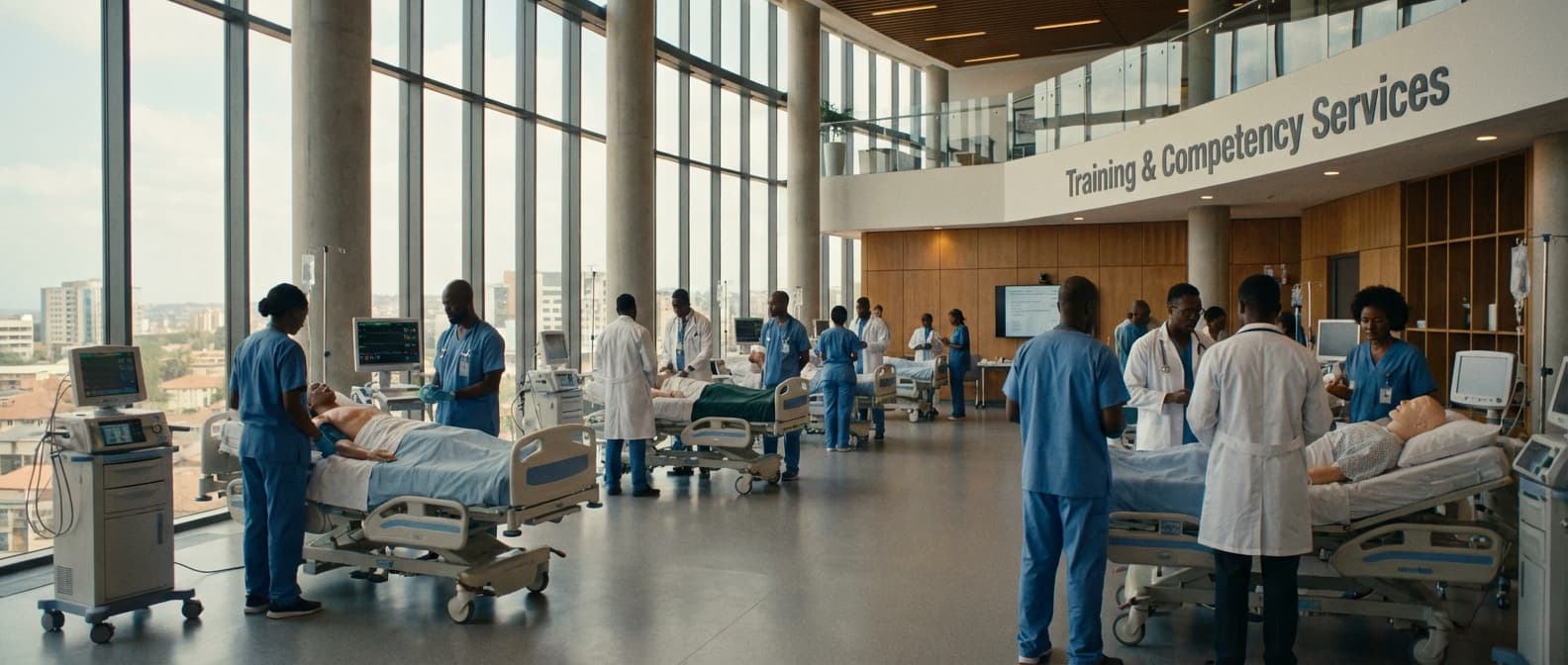
Biomedical Engineering First-Line Support Training Service in Mauritius
Engineering Excellence & Technical Support
Biomedical Engineering First-Line Support Training Service High-standard technical execution following OEM protocols and local regulatory frameworks.
Expert Biomedical Equipment Troubleshooting & Repair
Master the diagnostic and repair techniques for a wide range of critical medical devices, ensuring minimal downtime and optimal patient care across Mauritian healthcare facilities.
Navigating Healthcare Regulations & Standards
Gain comprehensive knowledge of Mauritian and international biomedical equipment regulations, safety standards, and documentation procedures essential for compliant first-line support.
Integrating Biomedical Devices into Clinical Workflows
Learn to effectively assess, install, and provide first-level support for biomedical technologies, seamlessly integrating them into existing clinical workflows to enhance efficiency and patient outcomes in Mauritius.
What Is Biomedical Engineering First-line Support Training Service In Mauritius?
Biomedical Engineering First-Line Support Training Service in Mauritius refers to specialized training programs designed to equip individuals with the foundational knowledge and practical skills necessary to provide initial technical assistance for biomedical equipment within healthcare facilities. This service bridges the gap between clinical users and advanced biomedical engineering intervention, enabling efficient troubleshooting, basic maintenance, and proper equipment operation. The objective is to enhance equipment uptime, ensure patient safety, and optimize resource allocation by empowering on-site personnel to address common issues before escalating to higher-tier support.
| Target Audience | Need for Service | Typical Use Cases |
|---|---|---|
| Clinical Staff (Nurses, Technicians, Doctors): Individuals directly interacting with biomedical equipment in patient care settings. | To reduce downtime of critical medical devices, improve patient safety by ensuring proper equipment functioning, and provide immediate resolution for minor operational issues, thereby allowing clinical staff to focus on patient care. | Resolving a faulty infusion pump alarm, troubleshooting a malfunctioning vital signs monitor display, performing basic cleaning of an ultrasound probe, restarting a network-connected patient monitoring system after a connectivity error. |
| Entry-Level Biomedical Support Personnel: Individuals in roles that involve assisting biomedical engineers or managing basic equipment maintenance. | To build a capable internal support team for initial response, reducing reliance on external vendors for routine issues, and ensuring prompt basic servicing to maintain operational readiness of medical equipment. | Performing scheduled preventive maintenance on a hospital bed, replacing a consumable part on a ventilator as per checklist, responding to a reported issue with a sterilizer cycle, documenting a minor equipment defect. |
| Healthcare Facility Management and Administration: Personnel responsible for operational efficiency and capital expenditure on medical equipment. | To optimize equipment utilization, minimize repair costs through early detection and resolution of issues, and ensure compliance with regulatory requirements related to medical device maintenance. | Developing a protocol for immediate reporting of equipment malfunctions, assessing the effectiveness of first-line support in reducing service calls, allocating resources for refresher training on new equipment. |
Service Components
- Equipment Familiarization and Operation: Training on the correct procedures for operating specific biomedical devices, including safety features and essential functions.
- Basic Troubleshooting and Diagnostics: Instruction on identifying common operational errors, interpreting error codes, and performing initial diagnostic checks.
- Preventive Maintenance Procedures: Hands-on training for routine cleaning, calibration checks, and visual inspections as per manufacturer guidelines.
- User Error Identification and Resolution: Empowering users to identify and resolve issues stemming from incorrect usage or configuration.
- Safety Protocols and Compliance: Education on relevant safety standards, infection control measures, and reporting procedures for incidents or equipment malfunctions.
- Logbook and Documentation Management: Training on maintaining accurate equipment logs, incident reports, and service records.
- Escalation Procedures: Understanding when and how to appropriately escalate complex issues to qualified biomedical engineers or external service providers.
Who Needs Biomedical Engineering First-line Support Training Service In Mauritius?
Biomedical Engineering First-Line Support Training Service in Mauritius is crucial for organizations that operate and maintain complex medical equipment. This training equips personnel with the foundational knowledge and practical skills to troubleshoot, diagnose, and resolve common issues with medical devices, thereby minimizing downtime, ensuring patient safety, and optimizing the performance of healthcare technology. The primary beneficiaries are those directly involved in the day-to-day operation and maintenance of biomedical equipment within healthcare facilities and related sectors.
| Target Customer Type | Key Departments/Roles Requiring Training | |||||
|---|---|---|---|---|---|---|
| Public Hospitals | Biomedical Engineering Department | IT Department (for networked medical devices) | Ward Nurses & Technicians (basic troubleshooting) | Radiology Department | Pathology Department | Intensive Care Units |
| Private Hospitals | Biomedical Engineering Department | IT Department | Nursing Staff | Specialty Departments (e.g., Cardiology, Oncology) | ||
| Clinics and Diagnostic Centers | Biomedical Technicians | Laboratory Technicians | Radiology Technicians | |||
| Medical Equipment Suppliers and Service Providers | Field Service Engineers | Technical Support Staff | Application Specialists | |||
| Research Institutions | Research Assistants | Laboratory Technicians | Core Facility Managers | |||
| Tertiary Educational Institutions | Lab Technicians in Biomedical/Engineering Departments | Research Students | Faculty involved in practical sessions |
Target Customers and Departments in Mauritius
- Public Hospitals
- Private Hospitals
- Clinics and Diagnostic Centers
- Medical Equipment Suppliers and Service Providers
- Research Institutions with Medical Equipment
- Tertiary Educational Institutions (for their medical/biomedical departments)
Biomedical Engineering First-line Support Training Service Process In Mauritius
This document outlines the typical workflow for a Biomedical Engineering First-Line Support Training Service in Mauritius, from the initial inquiry to the successful execution of the training. The process is designed to be efficient, ensuring that healthcare facilities receive timely and effective training for their biomedical engineering staff.
| Stage | Description | Key Activities | Output/Outcome |
|---|---|---|---|
| Initial contact from a client seeking training services. | Contacting training provider, expressing interest. | Formal inquiry submitted. |
| Understanding the client's specific training requirements. | Discussing equipment types, skill levels, desired outcomes. | Detailed needs assessment report. |
| Creating a tailored training plan and cost estimate. | Defining curriculum, methodology, duration, resources, costs. | Customized training proposal. |
| Client evaluates and approves the proposed training. | Reviewing proposal, discussions, revisions. | Approved training proposal. |
| Formalizing the training service contract. | Signing the training agreement. | Signed training agreement. |
| Setting up for the training delivery. | Scheduling, material preparation, logistics confirmation. | Ready training environment and materials. |
| Delivery of the first-line support training. | Theoretical and practical instruction, hands-on sessions. | Trained biomedical engineering personnel. |
| Evaluating trainee competence. | Practical demonstrations, quizzes, simulations. | Assessment results. |
| Issuing proof of training completion. | Awarding certificates to successful trainees. | Certificates of completion. |
| Providing ongoing assistance after the training. | Follow-up consultations, troubleshooting, knowledge base access. | Enhanced post-training support. |
| Gathering input for service improvement. | Collecting feedback from client and trainees. | Service improvement recommendations. |
Biomedical Engineering First-Line Support Training Service Process in Mauritius
- The process begins with an inquiry from a healthcare facility or a biomedical engineering department seeking to train their personnel in first-line support for medical equipment.
- Upon receiving the inquiry, the training provider will assess the facility's specific needs, including the types of equipment to be covered, the existing skill levels of the staff, and the desired training outcomes.
- A customized training proposal is then developed, detailing the curriculum, training methodology, duration, location, required resources, and associated costs.
- The proposal is presented to the client for review and approval. This stage may involve discussions and revisions to ensure alignment with the client's expectations and budget.
- Once the proposal is approved, a formal training agreement is signed, outlining the terms and conditions of the service.
- Pre-training activities commence, which may include scheduling the training sessions, preparing training materials (manuals, presentations, practical exercises), and confirming logistical arrangements.
- The training is delivered by qualified biomedical engineering instructors, employing a combination of theoretical instruction and hands-on practical sessions, tailored to the specific equipment and the trainees' needs.
- During the training, trainees are assessed through practical demonstrations, quizzes, or simulations to evaluate their understanding and proficiency in first-line support procedures.
- Upon successful completion of the training and passing the assessments, trainees are awarded certificates of completion.
- Post-training support may be offered, which can include follow-up consultations, troubleshooting assistance, or access to a knowledge base, to reinforce learning and address any immediate challenges.
- Finally, feedback is collected from the client and trainees to evaluate the effectiveness of the training program and identify areas for improvement in future service delivery.
Biomedical Engineering First-line Support Training Service Cost In Mauritius
The cost of first-line support training services for Biomedical Engineering in Mauritius is influenced by several key factors, leading to a range of potential pricing. These factors include the depth and breadth of the training curriculum, the experience and qualifications of the trainers, the duration and intensity of the program, the venue and resources utilized (e.g., in-person vs. online, specialized equipment), and the provider's reputation and overhead. Generally, specialized, hands-on training with experienced professionals will command higher prices. The local market in Mauritius is characterized by a growing demand for skilled biomedical engineers, which can also impact pricing. Training can range from introductory workshops covering basic maintenance and troubleshooting to more advanced modules on specific medical equipment categories or regulatory compliance. The pricing is typically presented on a per-participant basis, though group discounts are often available for larger organizations.
| Training Type/Duration | Estimated Cost Range (MUR) | Description |
|---|---|---|
| Basic Troubleshooting & Maintenance Workshop (1-2 Days) | 4,000 - 8,000 | Covers fundamental principles, common issues, safety protocols for general medical equipment. |
| Intermediate Equipment-Specific Training (3-5 Days) | 8,000 - 15,000 | Focuses on a particular class of equipment (e.g., imaging, patient monitoring) with more in-depth practical sessions. |
| Advanced/Specialized Technical Training (5+ Days or Modular) | 15,000 - 30,000+ | Covers complex systems, specific manufacturer models, or regulatory aspects. Often involves hands-on with actual devices. |
| Online/Blended Learning Modules (Per Module) | 2,000 - 5,000 | Flexible learning options, often for theoretical knowledge or introductory concepts. Practical components may be separate. |
| On-site Corporate Training (Custom Quote) | Negotiable (based on scope) | Tailored programs delivered at the client's facility, often for multiple employees. Pricing is highly variable. |
Key Pricing Factors for Biomedical Engineering First-Line Support Training in Mauritius
- Curriculum Scope and Depth (Basic troubleshooting vs. specialized equipment)
- Trainer Expertise and Qualifications (Certified professionals, industry experience)
- Training Duration and Intensity (Hours, days, practical vs. theoretical)
- Delivery Method (In-person workshops, online modules, blended learning)
- Venue and Resource Costs (Training facility, access to equipment, materials)
- Provider Reputation and Accreditation (Established institutions vs. newer providers)
- Group Size and Discounts (Per-participant vs. bulk pricing for organizations)
- Customization Requirements (Tailoring content to specific needs)
Affordable Biomedical Engineering First-line Support Training Service Options
This document outlines affordable first-line biomedical engineering (BME) support training service options, focusing on value bundles and cost-saving strategies for healthcare organizations. Effective first-line support is crucial for maintaining medical equipment functionality, patient safety, and operational efficiency. Investing in the right training can significantly reduce costly downtime, repair expenses, and the need for immediate external specialist intervention. We explore flexible training models designed to fit various budgetary constraints and operational needs.
| Training Strategy | Description | Value Proposition | Cost-Saving Aspect |
|---|---|---|---|
| On-Demand E-Learning Modules | Self-paced online courses covering theoretical knowledge and basic practical skills. Accessible anytime, anywhere. | High flexibility, standardized curriculum, immediate knowledge dissemination. | Reduced travel and accommodation costs, lower instructor fees, scalable to large teams without per-person session charges. |
| Blended Learning Packages | Combines online modules with targeted in-person workshops or virtual instructor-led sessions for hands-on practice and Q&A. | Balances theoretical and practical learning, personalized feedback, enhanced skill retention. | More cost-effective than fully in-person training, efficient use of instructor time, reduced travel for instructors and trainees compared to fully on-site. |
| Customized On-Site Training | Tailored training programs delivered at the client's facility, focusing on their specific equipment and workflows. | Highly relevant to organizational needs, practical application with actual equipment, builds team cohesion. | Reduces trainee downtime (no travel away from work), efficient for training multiple staff simultaneously, can be bundled with equipment maintenance contracts. |
| "Train-the-Trainer" Programs | Equipping designated internal personnel with the knowledge and skills to train their colleagues, creating a sustainable internal training resource. | Long-term cost reduction, fosters internal expertise, empowers staff development. | Significantly lowers ongoing training costs, eliminates recurring external trainer fees, promotes knowledge sharing within the organization. |
| Tiered Support Training Bundles | Offering packages that progress from basic troubleshooting and maintenance to more advanced diagnostics and repair, aligning training with technician skill levels. | Ensures appropriate skill development for different roles, prevents over-training or under-training. | Optimizes training investment by focusing resources where they are most needed, reduces unnecessary training expenses for entry-level staff. |
| Subscription-Based Access to Training Resources | Continuous access to an updated library of e-learning materials, webinars, and troubleshooting guides for a recurring fee. | Keeps skills current with evolving technology, immediate access to new training content. | Predictable budgeting, access to a vast library at a fraction of the cost of individual course purchases, proactive problem-solving reduces emergency calls. |
Key Components of Affordable BME First-Line Support Training
- Core Competency Development: Training focused on fundamental BME principles, safe equipment operation, basic troubleshooting, preventive maintenance, and infection control protocols relevant to medical devices.
- Equipment-Specific Training: Focused modules on commonly used or critical medical equipment within a facility, enabling technicians to handle routine issues for high-impact devices.
- Documentation and Reporting: Training on proper record-keeping for maintenance, repairs, and incident reporting, essential for compliance and continuous improvement.
- Safety and Regulatory Compliance: Education on relevant healthcare regulations (e.g., FDA, HIPAA), electrical safety, and best practices for handling biomedical equipment.
- Remote Support Integration: Training technicians to effectively utilize remote support tools and leverage them for initial diagnostics and guidance.
- Train-the-Trainer Programs: Empowering internal staff to become trainers, creating a sustainable and scalable in-house training capability.
Verified Providers In Mauritius
In the pursuit of reliable and high-quality healthcare, identifying Verified Providers in Mauritius is paramount. Franance Health stands out as a beacon of excellence, offering a comprehensive network of trusted medical professionals and facilities. Their rigorous credentialing process ensures that every provider within their network meets the highest standards of expertise, ethics, and patient care. This commitment to verification not only safeguards patient well-being but also fosters confidence and peace of mind for individuals seeking medical services in Mauritius. Franance Health's dedication to transparency and quality makes them the definitive choice for anyone prioritizing their health.
| Credentialing Aspect | Franance Health's Approach | Benefit to Patients |
|---|---|---|
| Professional Licenses & Certifications | Thorough verification of all current and valid medical licenses and certifications. | Ensures providers are legally qualified and meet industry standards. |
| Educational Background & Training | Scrutiny of medical school diplomas, residency completion, and specialized training. | Guarantees a strong foundation of knowledge and expertise. |
| Clinical Experience & Specialization | Assessment of years in practice and specific areas of medical expertise. | Connects patients with the most appropriate specialists for their conditions. |
| Ethical Conduct & Patient Feedback | Review of past disciplinary actions and a system for monitoring patient satisfaction. | Promotes a safe and respectful healthcare experience. |
| Continuing Medical Education (CME) | Verification of ongoing professional development and commitment to staying updated. | Ensures providers are practicing with the latest medical advancements. |
Why Franance Health Represents the Best Choice for Verified Providers in Mauritius:
- Rigorous Credentialing Process: Franance Health employs a multi-faceted vetting system to ensure all listed providers possess valid licenses, relevant qualifications, and a proven track record of exceptional patient care.
- Commitment to Quality and Ethics: Beyond technical proficiency, Franance Health evaluates providers on their adherence to ethical medical practices and their dedication to patient-centered approaches.
- Comprehensive Network: Access a wide array of specialists, general practitioners, and healthcare facilities, all pre-vetted and readily available through the Franance Health platform.
- Transparency and Trust: Franance Health's transparent verification process builds trust, allowing patients to make informed decisions about their healthcare providers.
- Enhanced Patient Safety: By choosing a Franance Health verified provider, patients are assured of receiving care from competent and trustworthy medical professionals, minimizing risks.
- Streamlined Access to Care: Navigate the Mauritian healthcare landscape with ease, knowing that Franance Health has already identified and validated the best options for your needs.
Scope Of Work For Biomedical Engineering First-line Support Training Service
This Scope of Work (SOW) outlines the requirements for a comprehensive Biomedical Engineering First-Line Support Training Service. The objective is to equip technical personnel with the necessary skills and knowledge to effectively handle initial troubleshooting, diagnosis, and resolution of common issues with biomedical equipment, thereby improving device uptime, reducing escalated calls, and ensuring patient safety. The training will cover theoretical concepts, practical hands-on exercises, and troubleshooting methodologies tailored to the specific equipment inventory of the client. The technical deliverables will include training materials, competency assessments, and a post-training report. Standard specifications for the training service ensure a high-quality and consistent learning experience.
| Deliverable | Description | Standard Specifications / Acceptance Criteria | Format | Timeline |
|---|---|---|---|---|
| Training Curriculum | Detailed outline of all modules, learning objectives, and session breakdown. | Aligned with the Key Training Modules list. Clearly defined learning outcomes for each module. Covers theoretical and practical aspects. | Digital document (PDF) | Within 5 business days of SOW approval |
| Training Materials | Comprehensive set of learning resources including presentations, manuals, and reference guides. | High-quality, accurate, and up-to-date content. Easy to understand language. Includes diagrams and illustrations where relevant. Reviewed and approved by client's Subject Matter Experts. | Digital (PPT, PDF) and potential printed copies for hands-on sessions. | Delivered 2 days prior to training commencement |
| Hands-on Training Sessions | Practical sessions where trainees work with actual or simulated biomedical equipment. | Sufficient equipment for trainees to have direct interaction. Safe training environment. Experienced instructors guiding each session. Practical scenarios mirroring real-world issues. | In-person sessions | As per agreed training schedule |
| Competency Assessment | Evaluation of trainee's understanding and practical skills post-training. | Includes written (multiple-choice, short answer) and practical (equipment troubleshooting scenarios) components. Minimum passing score of 80% for each section. Assessments directly measure achievement of learning objectives. | Digital or paper-based assessment forms | On the final day of training |
| Post-Training Report | Summary of training delivery, assessment results, and recommendations. | Includes attendance records, overall class performance, individual assessment scores, identification of areas for further development, and recommendations for future training. Client-specific insights. | Digital document (PDF) | Within 3 business days of training completion |
| Instructor Qualifications | Credentials and experience of the trainers delivering the service. | Instructors possess relevant biomedical engineering degrees or certifications. Minimum of 5 years of experience in biomedical equipment maintenance and troubleshooting. Proven training delivery experience. | CVs/Resumes of instructors | Provided with the Training Curriculum |
| Training Environment | Physical space and resources for conducting the training. | Adequate classroom space with presentation facilities. Designated area for hands-on practical exercises. Access to necessary tools, test equipment, and power outlets. Safe and compliant environment. | On-site at client's facility or designated alternative location. | Ensured by the training provider prior to commencement |
Key Training Modules
- Introduction to Biomedical Engineering and Healthcare Technology Management
- Fundamental Principles of Common Biomedical Equipment (e.g., patient monitors, infusion pumps, ventilators, defibrillators)
- Basic Electrical and Mechanical Safety Principles for Medical Devices
- Troubleshooting Methodologies: Systematic Approach to Problem Solving
- Common Equipment Malfunctions and Their Causes
- Basic Diagnostic Tools and Techniques
- Preventive Maintenance Fundamentals for First-Line Technicians
- Documentation and Reporting Procedures
- Understanding of Regulatory Compliance and Standards (e.g., FDA, ISO)
- Hands-on Practice with Representative Equipment
Service Level Agreement For Biomedical Engineering First-line Support Training Service
This Service Level Agreement (SLA) outlines the response times and uptime guarantees for the Biomedical Engineering First-Line Support Training Service. This training aims to equip support staff with the foundational knowledge and skills necessary to handle initial inquiries and common issues related to biomedical equipment. The service guarantees timely access to training materials and support for trainees. This SLA applies to all registered trainees within the designated training period.
| Service Component | Response Time Guarantee | Uptime Guarantee |
|---|---|---|
| Access to Online Training Modules | 99.5% availability | 24/7 |
| Knowledge Base Accessibility | 99.5% availability | 24/7 |
| Trainee Support Channel (Email/Chat) | Within 4 business hours for initial response | During business hours (9 AM - 5 PM, Monday - Friday, excluding public holidays) |
| Technical Support for Training Platform | Within 2 business hours for critical issues (e.g., inability to access modules), 8 business hours for non-critical issues | 24/7 for platform infrastructure |
Scope of Service
- Provision of comprehensive online training modules covering basic troubleshooting, equipment identification, safety protocols, and escalation procedures for common biomedical devices.
- Access to a knowledge base with FAQs, troubleshooting guides, and standard operating procedures.
- Availability of a dedicated support channel for trainees experiencing technical difficulties with the training platform or seeking clarification on training content.
- Regular updates to training materials to reflect changes in equipment, regulations, and best practices.
Frequently Asked Questions

Ready when you are
Let's scope your Biomedical Engineering First-Line Support Training Service in Mauritius project in Mauritius.

Scaling healthcare logistics and technical systems across the entire continent.