
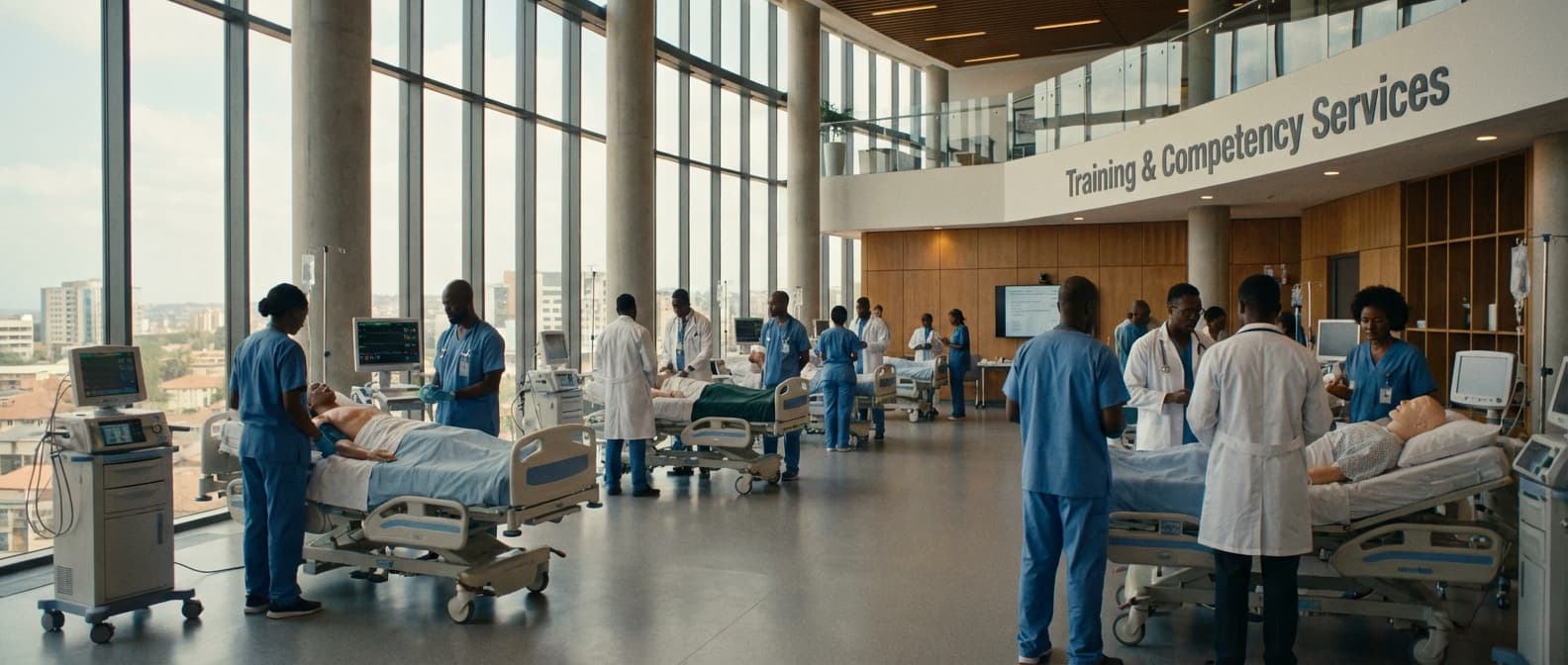
Anesthesia Workstation User Training Service in Mauritius
Engineering Excellence & Technical Support
Anesthesia Workstation User Training Service High-standard technical execution following OEM protocols and local regulatory frameworks.
Master Anesthesia Workstation Features
Gain in-depth knowledge of your anesthesia workstation's advanced features, including ventilation modes, gas delivery systems, patient monitoring integration, and alarm management. Our training ensures you can optimize performance and enhance patient safety through expert operation.
Efficient Workflow & Troubleshooting
Learn best practices for efficient workflow setup and routine maintenance of your anesthesia workstation. Develop critical troubleshooting skills to quickly identify and resolve common technical issues, minimizing downtime and ensuring uninterrupted patient care in the Mauritian healthcare environment.
Compliance & Patient Safety Assurance
Our comprehensive training program emphasizes compliance with international safety standards and local regulations. Understand how to leverage your anesthesia workstation's safety features to their full potential, guaranteeing the highest level of patient safety and confidence for practitioners in Mauritius.
What Is Anesthesia Workstation User Training Service In Mauritius?
Anesthesia Workstation User Training Service in Mauritius refers to a specialized training program designed to educate healthcare professionals on the safe, effective, and efficient operation of anesthesia workstations within the Mauritian healthcare context. This service ensures users possess the requisite knowledge and practical skills to manage patient anesthesia, monitor vital signs, and utilize the advanced functionalities of these complex medical devices. The training emphasizes adherence to local clinical protocols, safety standards, and regulatory requirements pertinent to the Mauritian health sector. It aims to optimize patient outcomes, mitigate risks associated with anesthesia delivery, and enhance the overall performance of anesthesia departments in hospitals and surgical centers across the island nation.
| Target Audience | Description of Need | Typical Use Cases |
|---|---|---|
| Anesthesiologists | Essential for understanding and operating complex anesthesia machines, ensuring optimal patient care and safety during surgical procedures. Covers advanced ventilation modes, waveform interpretation, and pharmacologic delivery systems. | Routine surgical anesthesia, complex airway management, critical care settings, emergency procedures, and intraoperative monitoring. |
| Anesthetic Nurses / Nurse Anesthetists | Crucial for assisting anesthesiologists, managing patient monitoring, and operating specific functionalities of the workstation under supervision. Focuses on basic operation, alarm response, and patient observation. | Assisting in various surgical specialties, pre-anesthetic assessment, intraoperative patient monitoring, and post-anesthesia care unit (PACU) management. |
| Biomedical Engineers / Technicians | Required for the installation, maintenance, calibration, and repair of anesthesia workstations. Ensures the equipment is functioning correctly and safely. | Equipment installation, preventive maintenance, troubleshooting equipment failures, quality assurance checks, and end-user support. |
| Healthcare Administrators / Department Heads | Informed decision-making regarding equipment procurement, training program development, and ensuring compliance with safety standards. Understanding the capabilities and limitations of the technology. | Budgeting for equipment and training, workforce planning, quality improvement initiatives, and risk management related to anesthesia services. |
| Medical Device Representatives (for training purposes) | To deliver manufacturer-specific training on their respective anesthesia workstation models to end-users in Mauritian healthcare facilities. | Product demonstrations, initial user training, advanced feature training, and in-service education for new equipment. |
Key Components of Anesthesia Workstation User Training Service
- Theoretical Knowledge Acquisition: Comprehensive understanding of anesthesia workstation principles, gas delivery systems, ventilation modes, monitoring parameters (e.g., EtCO2, SpO2, ECG, NIBP, invasive pressures), drug delivery systems, and alarm management.
- Practical Skill Development: Hands-on proficiency in setting up, calibrating, operating, and troubleshooting specific anesthesia workstation models, including performing pre-use checks and emergency procedures.
- Patient Safety Protocols: Instruction on patient safety considerations, including the prevention of breathing circuit disconnections, misadministration of gases, and correct ventilator settings for various patient populations.
- Advanced Feature Utilization: Training on utilizing advanced features such as electronic medical record integration, waveform analysis, and specific ventilation strategies.
- Emergency Scenario Management: Simulation-based training for responding to equipment malfunctions, patient deterioration, and other critical events during anesthesia.
- Maintenance and Cleaning Procedures: Guidance on routine maintenance, cleaning, and disinfection protocols to ensure equipment longevity and prevent cross-contamination.
- Regulatory Compliance: Familiarization with relevant Mauritian healthcare regulations, guidelines, and standards pertaining to anesthesia equipment and patient care.
- Continuous Professional Development: Ongoing training and updates for new software versions, hardware upgrades, and evolving anesthesia practices.
Who Needs Anesthesia Workstation User Training Service In Mauritius?
Anesthesia workstation user training services are crucial in Mauritius for ensuring the safe, efficient, and effective use of advanced anesthetic equipment. This specialized training addresses the complexities of modern anesthesia machines, ventilators, and associated monitoring systems, minimizing risks and optimizing patient outcomes. Without proper training, healthcare professionals may struggle to utilize these sophisticated devices to their full potential, leading to potential complications, prolonged procedure times, and increased operational costs.
| Target Customer | Key Departments | Specific Roles Requiring Training | ||||
|---|---|---|---|---|---|---|
| Public Hospitals (e.g., Victoria Hospital, Dr. A.G. Jeetoo Hospital) | Anesthesiology Department | Anesthesiologists, Certified Registered Nurse Anesthetists (CRNAs), Anesthesia Technicians | Operating Rooms (OR) | Post-Anesthesia Care Unit (PACU) Staff (for monitoring and early intervention) | Intensive Care Unit (ICU) Staff (for ventilator management) | Emergency Department (ED) Staff (for critical care airway management) |
| Private Hospitals (e.g., Clinique Bon Pasteur, Wellkin Hospital) | Anesthesiology Department | Anesthesiologists, Anesthesia Assistants, Operating Room Nurses | Operating Theatres | Day Surgery Units | Intensive Care Units | |
| Specialized Surgical Centers (e.g., Cardiac Centers, Orthopedic Centers) | Anesthesiology Department | Anesthesiologists specializing in specific surgical fields, Anesthesia Technicians | Operating Suites tailored to specific procedures | |||
| Medical Device Distributors/Manufacturers | Technical Support Teams | Field Service Engineers, Application Specialists | Sales Representatives (for product demonstrations and basic understanding) | Clients' Anesthesia and OR Staff (as part of product rollout and ongoing support) |
Who Needs Anesthesia Workstation User Training Service in Mauritius?
- Hospitals and Healthcare Facilities
- Surgical Centers
- Private Clinics with Surgical Capabilities
- Medical Device Distributors and Manufacturers (for their clients)
Anesthesia Workstation User Training Service Process In Mauritius
This document outlines the typical workflow for an Anesthesia Workstation User Training Service Process in Mauritius, from initial inquiry to the final execution of the training. The process is designed to ensure a smooth and efficient delivery of specialized training to healthcare professionals.
Workflow Overview: The process begins with a client's expressed interest in training and concludes with the successful completion of the training program, including post-training support. It involves several key stages of communication, planning, preparation, and delivery.
| Stage | Description | Key Activities | Responsible Parties | Deliverables/Outcomes | |||||
|---|---|---|---|---|---|---|---|---|---|
| The process begins when a potential client (e.g., hospital, clinic) expresses interest in anesthesia workstation user training. | Receive inquiry via phone, email, or website. Discuss client's specific needs, desired learning outcomes, workstation models, number of trainees, and preferred training dates. Identify any specific challenges or prior knowledge of the trainees. | Prospective Client, Training Service Provider (Sales/Business Development) | Clear understanding of client's training requirements. Initial assessment of training scope and feasibility. | |||||
| Based on the needs assessment, the training provider prepares a tailored proposal and quotation. | Develop a detailed training proposal outlining objectives, curriculum, methodology, duration, trainer profile, and location. Generate a comprehensive quotation including training fees, travel, accommodation (if applicable), and any other associated costs. Present the proposal and quotation to the client for review. | Training Service Provider (Technical/Training Department, Sales) | Formal training proposal. Detailed cost quotation. | |||||
| Upon client's acceptance of the proposal and quotation, a formal agreement is established. | Negotiate terms and conditions if necessary. Draft and sign a service agreement or contract outlining scope of work, payment terms, cancellation policy, and liability. Secure any required deposits or upfront payments. | Prospective Client, Training Service Provider (Legal/Management, Finance) | Signed service agreement/contract. Confirmation of booking. | |||||
| Detailed planning for the training execution takes place. | Coordinate mutually agreeable training dates and times. Confirm training venue (on-site or online platform setup). Arrange trainer travel and accommodation if required. Communicate logistics to the client (e.g., arrival times, venue access, IT requirements). | Training Service Provider (Operations/Logistics), Prospective Client (Point of Contact) | Finalized training schedule. Confirmed logistics for trainers and venue. |
| The training provider prepares all necessary materials and resources. | Develop or customize training modules, presentations, and hands-on exercises. Prepare training manuals, handouts, and assessment materials. Ensure all necessary equipment (e.g., demo anesthesia workstations, simulators) is available and functional. Confirm IT infrastructure for remote training. | Training Service Provider (Training Department, Technical Specialists) | Completed training materials. Prepared training equipment and resources. |
| The actual training session is conducted. | Deliver training sessions according to the agreed curriculum. Facilitate interactive learning, practical demonstrations, and hands-on practice. Address trainee questions and provide ongoing support during the session. Monitor trainee progress and engagement. | Training Service Provider (Certified Trainers), Trainees (Healthcare Professionals) | Delivered training sessions. Practical skills development. Knowledge acquisition. | |||||
| The effectiveness of the training is assessed. | Conduct post-training assessments (e.g., quizzes, practical evaluations). Gather feedback from trainees and their supervisors through surveys or feedback forms. Assess the achievement of learning objectives. | Training Service Provider (Trainers, Quality Assurance), Trainees, Client Management | Completed evaluation forms. Assessment results. Summary of feedback. | |||||
| Concluding the training process and providing ongoing support. | Issue certificates of completion to successful trainees. Provide a comprehensive training report to the client. Offer post-training support (e.g., access to online resources, follow-up consultations) as agreed upon. Process final invoices and payments. | Training Service Provider (Administration, Training Department), Prospective Client (Finance) | Certificates of attendance/completion. Final training report. Ongoing support plan. Closed service agreement. |
Anesthesia Workstation User Training Service Process in Mauritius: Workflow Steps
- Initial Inquiry and Needs Assessment
- Proposal and Quotation Generation
- Agreement and Contract Finalization
- Training Schedule and Logistics Planning
- Pre-Training Preparation (Content and Resources)
- On-site/Remote Training Delivery
- Post-Training Evaluation and Feedback
- Certification and Follow-up
Anesthesia Workstation User Training Service Cost In Mauritius
The cost of anesthesia workstation user training services in Mauritius can vary significantly based on several factors. These include the complexity and specific model of the anesthesia workstation, the duration of the training, the expertise and qualifications of the trainers, the location of the training (on-site at a hospital or a dedicated training facility), and the number of participants. Furthermore, whether the training is a standalone service or part of a larger equipment purchase agreement will influence the pricing.
| Training Type/Duration | Estimated Cost Range (MUR) | Typical Inclusions |
|---|---|---|
| Basic User Training (e.g., 4-8 hours) | 15,000 - 30,000 | Introduction to workstation, basic operations, safety features, hands-on practice with common scenarios. |
| Advanced User Training (e.g., 1-2 days) | 30,000 - 70,000 | In-depth understanding of all features, advanced ventilation modes, troubleshooting, emergency procedures, case-specific applications. |
| Train-the-Trainer Program (e.g., 2-3 days) | 60,000 - 120,000+ | Comprehensive training for hospital staff to become internal trainers, including pedagogical aspects, curriculum development, and competency assessment. |
| On-site Training (per day, exclusive of travel) | 20,000 - 50,000 | Customizable to facility needs, often includes trainer's professional fee and basic materials. |
| Remote/Online Training (per participant, per session) | 5,000 - 15,000 | Can be cost-effective for theoretical components and refreshers, subject to internet connectivity and software compatibility. |
Factors Influencing Anesthesia Workstation User Training Costs in Mauritius:
- Workstation Model & Complexity: Advanced features and newer models often require more specialized and thus costlier training.
- Training Duration: The length of the training program (e.g., half-day, full-day, multi-day) directly impacts the overall cost.
- Trainer Expertise & Qualifications: Highly experienced and certified trainers command higher fees.
- Training Location: On-site training at a healthcare facility might incur additional travel and accommodation costs for the trainers.
- Number of Participants: Group training sessions can sometimes offer a lower per-participant cost.
- Included Materials & Support: Whether training materials, manuals, and post-training support are provided.
- Training Provider Reputation: Established and reputable training companies may charge a premium.
- Customization of Training: Tailoring the training to specific hospital protocols or user needs can increase costs.
Affordable Anesthesia Workstation User Training Service Options
Investing in affordable anesthesia workstation user training is crucial for ensuring safe and efficient patient care. This service aims to equip healthcare professionals with the necessary skills and knowledge to operate anesthesia equipment effectively, minimizing risks and optimizing outcomes. We offer flexible training packages designed to meet diverse needs and budgets, emphasizing value through bundled services and strategic cost-saving approaches.
| Value Bundle | Description | Key Features | Cost-Saving Strategy | Ideal For |
|---|---|---|---|---|
| Essential User Training | Core competency training for new users or as a refresher. | Basic workstation operation, safety features, and common troubleshooting. | Group discounts, online learning modules, and standardized curriculum. | Individual practitioners, small departments, or institutions with limited budgets. |
| Advanced Workflow Optimization | Focuses on maximizing efficiency and integrating advanced features. | Advanced monitoring, ventilation modes, and data management integration. | Bundled pricing for multiple users, train-the-trainer options, and on-site customization. | Larger hospitals, teaching institutions, or departments seeking to enhance existing protocols. |
| Comprehensive Maintenance & Troubleshooting | Combines user training with basic maintenance and in-depth troubleshooting. | User-level preventative maintenance, alarm management, and common equipment failures. | Long-term service contracts, bundled training with equipment purchase, and remote support integration. | Institutions prioritizing equipment longevity and reduced downtime, often with in-house technical staff. |
| Custom On-Site & Simulation | Tailored training delivered at your facility with high-fidelity simulation. | Scenario-based training, complex case simulations, and team-based exercises. | Dedicated training sessions minimizing travel costs for instructors, group package discounts, and adaptive learning paths. | Institutions requiring specialized training for unique patient populations or complex procedures, and those seeking a highly immersive learning experience. |
Key Components of Our Training Services
- Comprehensive curriculum covering workstation setup, operation, troubleshooting, and safety protocols.
- Hands-on practical sessions utilizing actual anesthesia workstations or realistic simulators.
- Certified and experienced anesthesia and technical educators.
- Customizable training modules tailored to specific institutional requirements and equipment models.
- Post-training support and access to online resources.
- Certification upon successful completion of assessments.
Verified Providers In Mauritius
In Mauritius, ensuring you receive quality healthcare is paramount. When seeking medical services, it's crucial to identify verified providers. Franance Health stands out as a leading entity, offering a network of credentialed and trustworthy healthcare professionals. Understanding their credentials and the rigorous vetting process illuminates why they represent the best choice for your health and well-being.
| Credential Type | Verification Standard | Franance Health Assurance |
|---|---|---|
| Medical Licensing | Verification of current, valid medical license issued by the relevant Mauritian authorities (e.g., Medical Council of Mauritius). | Franance Health confirms all affiliated doctors hold active and unencumbered medical licenses. |
| Specialty Board Certification | Confirmation of successful completion of recognized postgraduate training and certification in their specific medical specialty. | Franance Health verifies specialty certifications from accredited institutions where applicable. |
| Educational Qualifications | Validation of academic degrees and diplomas from reputable medical schools and universities. | All providers' educational backgrounds are thoroughly checked. |
| Professional Experience | Assessment of practical experience and track record in clinical practice. | Franance Health reviews professional history and references for established practitioners. |
| Malpractice Insurance | Confirmation of adequate and current professional indemnity insurance coverage. | Ensures providers are financially protected, safeguarding patients. |
| Continuing Medical Education (CME) | Verification of participation in ongoing professional development to stay updated with medical advancements. | Franance Health encourages and often requires evidence of CME participation. |
Why Franance Health Credentials Matter
- Rigorous Vetting Process: Franance Health employs a stringent evaluation system for all its partner providers, ensuring adherence to the highest standards of medical practice, ethics, and patient care.
- Qualified Medical Professionals: All healthcare professionals affiliated with Franance Health are licensed, certified, and possess demonstrable experience in their respective fields.
- Specialized Expertise: Franance Health curates a diverse network, allowing access to specialists across a wide range of medical disciplines, ensuring you find the right expert for your specific needs.
- Commitment to Patient Safety: The credentialing process includes background checks and verification of malpractice insurance, prioritizing your safety and peace of mind.
- Continuous Quality Assurance: Franance Health actively monitors the performance and patient feedback of its providers, maintaining a consistently high level of service quality.
- Seamless Access to Care: By partnering with verified providers, Franance Health simplifies the process of finding and accessing quality healthcare in Mauritius.
Scope Of Work For Anesthesia Workstation User Training Service
This Scope of Work (SOW) outlines the requirements for a comprehensive Anesthesia Workstation User Training Service. The training will cover the installation, operation, maintenance, troubleshooting, and safety features of the anesthesia workstation. The primary objective is to ensure that all designated users are proficient in operating the workstation safely and effectively, thereby minimizing risks and optimizing patient care.
| Technical Deliverable | Description | Standard Specification / Acceptance Criteria | Format | Timeline |
|---|---|---|---|---|
| Training Curriculum Development | Creation of a detailed curriculum covering all aspects of the anesthesia workstation. | Curriculum must be modular, adaptable, and cover theoretical and practical components. Includes pre-assessment, core modules, and post-assessment. | Document (PDF) | Week 1-2 |
| Training Materials (User Manuals, Guides, Presentations) | Development and provision of all necessary training materials. | Materials must be clear, concise, up-to-date with the latest workstation version, and easily understandable. Includes slides, handouts, and visual aids. | Digital (PDF, PPTX) and/or Printed | Week 2-3 |
| Trainer Qualification and Certification | Ensuring trainers are highly experienced and certified to deliver anesthesia workstation training. | Trainers must possess a minimum of [X] years of experience in anesthesia, hold relevant certifications (e.g., Certified Registered Nurse Anesthetist (CRNA), Anesthesiologist, Biomedical Engineer with anesthesia equipment expertise), and have completed manufacturer-specific training. | CVs, Certification Copies | Week 3 |
| On-site/Remote Training Sessions | Delivery of interactive training sessions to designated user groups. | Sessions must include theoretical lectures, demonstrations, and hands-on practice. Minimum training duration of [Y] hours per group. Training delivered at the hospital's designated training facility or remotely via approved platforms. | Live Sessions (In-person or Virtual) | Week 4-8 (Staggered) |
| Hands-on Practice with Anesthesia Workstation | Provision of opportunities for trainees to operate the actual anesthesia workstation. | Each trainee must have supervised access to a functional anesthesia workstation for a minimum of [Z] hours. Training scenarios should simulate common and critical clinical situations. | Supervised Practical Sessions | Week 4-8 (Integrated with Training Sessions) |
| Competency Assessment (Pre and Post Training) | Evaluation of user knowledge and skills before and after the training. | Pre-assessment to gauge existing knowledge. Post-assessment (written and practical) to confirm competency. A passing score of [A]% on both assessments is required. | Online/Written Questionnaire, Practical Skills Checklist | Start of Week 4, End of Week 8 |
| Training Report and Attendance Records | Compilation and submission of a comprehensive report detailing training activities. | Report to include attendee lists, assessment results, feedback summary, and a list of trained personnel. Attendance records for all sessions. | Document (PDF) | End of Week 9 |
| Post-Training Support (Optional/As Agreed) | Provision of limited technical support or Q&A sessions following the initial training. | Availability for clarification of doubts and support for a defined period (e.g., 2 weeks) post-training. Support can be via email or scheduled calls. | Email, Phone/Video Conference | Week 10-11 |
| Training Evaluation and Feedback Mechanism | Implementation of a system to gather feedback from trainees on the training delivery and materials. | Anonymous feedback forms provided at the end of the training. Analysis of feedback to identify areas for improvement in future training. | Online/Paper-based Survey | End of Week 8 |
Key Objectives
- To equip users with the knowledge and skills to safely and effectively operate the anesthesia workstation.
- To ensure users understand the various modes of ventilation and drug delivery.
- To train users on routine maintenance and basic troubleshooting procedures.
- To familiarize users with the safety features and alarm management of the workstation.
- To provide hands-on experience with simulated scenarios.
- To facilitate a smooth integration of the anesthesia workstation into clinical workflows.
- To ensure compliance with relevant regulatory and hospital guidelines.
Service Level Agreement For Anesthesia Workstation User Training Service
This Service Level Agreement (SLA) outlines the terms and conditions for the Anesthesia Workstation User Training Service. It defines the expected response times for support requests and the guaranteed uptime for the training platform, ensuring efficient and reliable access to training resources for authorized users.
| Service Metric | Target | Measurement | Remedy (if target is missed) |
|---|---|---|---|
| Response Time for Support Requests (during Business Hours) | Acknowledge and begin investigation within 2 business hours. | Time from submission of a valid Support Request to the first substantive response from the training provider. | N/A (Focus is on timely acknowledgment and initiation of resolution). |
| Response Time for Support Requests (outside Business Hours) | Acknowledge and begin investigation within 4 business hours. | Time from submission of a valid Support Request to the first substantive response from the training provider. | N/A (Focus is on timely acknowledgment and initiation of resolution). |
| Uptime Guarantee for Training Platform | 99.5% uptime (excluding Scheduled Maintenance). | Percentage of time the Training Platform is available to Users over a calendar month. | For every full 1% below the 99.5% uptime target, a credit of 5% of the monthly training service fee will be applied to the next invoice. Credits are capped at 25% of the monthly fee. |
| Notification of Scheduled Maintenance | Minimum 48 hours advance notice. | Time between the official notification of Scheduled Maintenance and the commencement of the maintenance window. | N/A (Focus is on proactive communication). |
Key Definitions
- Training Platform: The online system, software, or portal used to deliver the Anesthesia Workstation User Training.
- User: Any individual authorized to access and utilize the Anesthesia Workstation User Training Service.
- Support Request: A request submitted by a User for technical assistance, guidance, or issue resolution related to the Training Platform or the training content.
- Downtime: Any period during which the Training Platform is unavailable to Users, excluding Scheduled Maintenance.
- Scheduled Maintenance: Planned periods of unavailability for updates, upgrades, or maintenance, communicated to Users in advance.
- Business Hours: Monday to Friday, 9:00 AM to 5:00 PM (Local Time), excluding public holidays.
Frequently Asked Questions

Ready when you are
Let's scope your Anesthesia Workstation User Training Service in Mauritius project in Mauritius.

Scaling healthcare logistics and technical systems across the entire continent.