
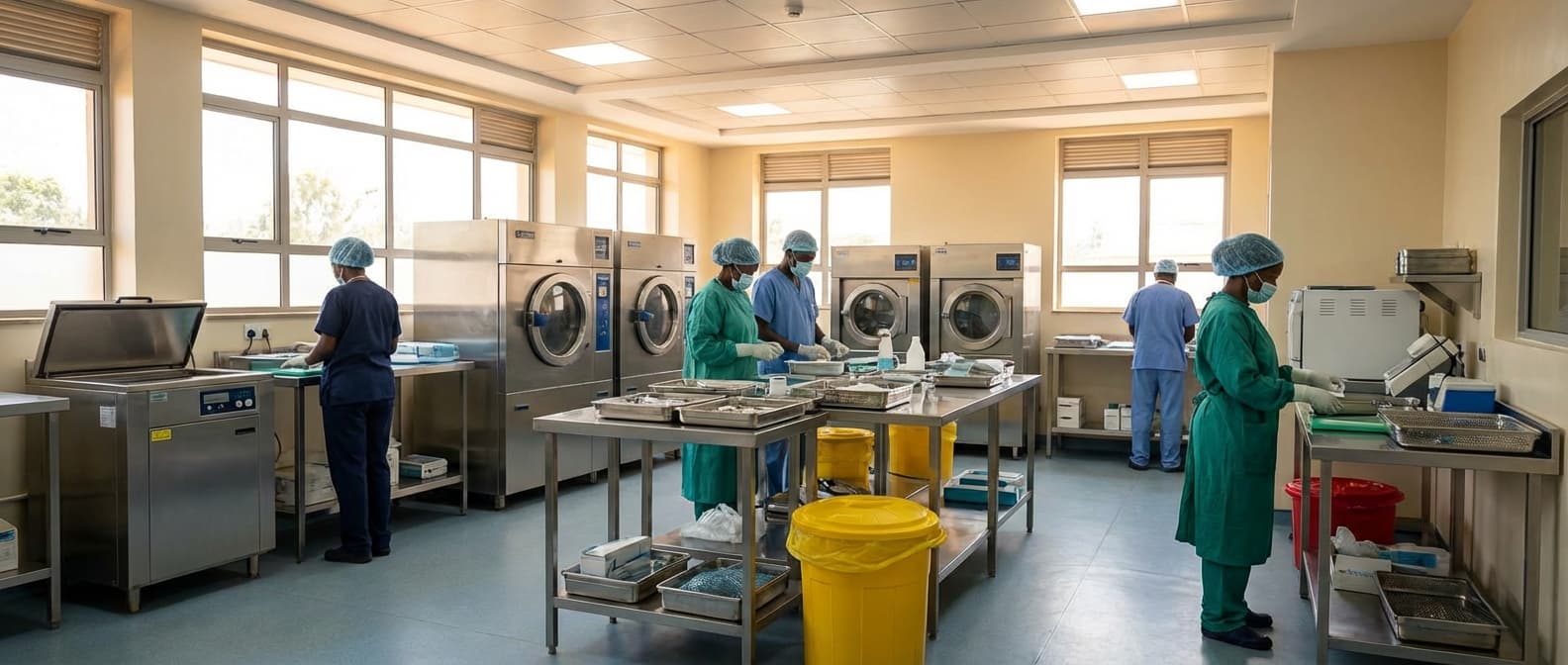
Medical Equipment Decontamination Service (Pre-Repair/Pre-Relocation) in Mauritius
Engineering Excellence & Technical Support
Medical Equipment Decontamination Service (Pre-Repair/Pre-Relocation) High-standard technical execution following OEM protocols and local regulatory frameworks.
Advanced Decontamination Protocols
Utilizing industry-leading, EPA-approved sterilization methods specifically tailored for medical equipment, ensuring thorough removal of bioburden and infectious agents before repairs or relocation, safeguarding technicians and new environments.
Bio-Indicator Validation
Employing robust bio-indicator testing and validation procedures post-decontamination to provide irrefutable proof of sterility, meeting stringent regulatory requirements and offering peace of mind for equipment integrity and patient safety.
Traceable Decontamination Chain of Custody
Implementing a comprehensive tracking system that logs every decontamination step, chemical used, and validation result for each piece of equipment. This ensures a clear and auditable chain of custody, vital for regulatory compliance and asset management in Mauritius.
What Is Medical Equipment Decontamination Service (Pre-repair/pre-relocation) In Mauritius?
Medical Equipment Decontamination Service (Pre-Repair/Pre-Relocation) refers to the specialized process of cleaning, disinfecting, and/or sterilizing medical devices prior to their entry into a repair facility or relocation to a new operational environment. This service is crucial for mitigating the risk of cross-contamination, protecting laboratory personnel and technicians, and ensuring the integrity of the equipment throughout the maintenance or transition process. It adheres to stringent protocols to eliminate or reduce bioburden, including bacteria, viruses, fungi, and prions, to levels deemed safe for handling by third-party service providers or during transport.
| Who Needs the Service? | Typical Use Cases | |||
|---|---|---|---|---|
| Healthcare Facilities: Hospitals, clinics, diagnostic laboratories, and dental practices that utilize a wide range of medical equipment. | Medical Equipment Manufacturers and Distributors: For equipment returned for servicing, refurbishment, or before shipment to new clients. | Third-Party Biomedical Engineering Service Providers: Companies specializing in the repair and maintenance of medical devices. | Logistics and Relocation Companies: Handling the transportation of medical equipment between facilities. | Research and Development Laboratories: Working with sensitive or potentially biohazardous equipment. |
| Equipment sent for routine maintenance or repair: To prevent the transmission of infectious agents to service technicians and back into the healthcare environment. | Equipment being moved between departments or to a new facility: To ensure a clean transition and minimize the risk of environmental contamination. | Rental or loaned equipment returning to the supplier: For proper sanitization before re-deployment. | Equipment used in outbreak situations or with known high bioburden: Requiring a thorough decontamination protocol. | End-of-life equipment undergoing decommissioning or disposal: To ensure safe handling and waste management. |
Service Inclusions and Scope
- Initial Assessment and Classification: Evaluating the type of medical equipment, its intended use, and potential bioburden based on its service history.
- Pre-Cleaning: Removal of gross soil and visible debris using appropriate detergents and manual cleaning techniques.
- Disinfection: Application of validated chemical disinfectants or physical methods (e.g., UV irradiation) to inactivate microorganisms to a predetermined level.
- Sterilization (where applicable): For critical or semi-critical devices, employing methods such as autoclaving, ethylene oxide (EtO) sterilization, or hydrogen peroxide plasma sterilization, depending on material compatibility and regulatory requirements.
- Rinsing and Drying: Thorough rinsing with sterile or high-purity water to remove residual cleaning/disinfecting agents, followed by meticulous drying to prevent microbial regrowth.
- Packaging and Labeling: Secure packaging of the decontaminated equipment in appropriate sterile or protective materials, with clear labeling indicating the decontamination status and date.
- Documentation: Comprehensive record-keeping of all decontamination processes, including chemicals used, exposure times, temperatures, and validation data.
- Waste Disposal: Proper handling and disposal of contaminated materials and waste generated during the decontamination process in accordance with local regulations.
Who Needs Medical Equipment Decontamination Service (Pre-repair/pre-relocation) In Mauritius?
In Mauritius, various entities and departments recognize the critical importance of ensuring medical equipment is thoroughly decontaminated before undergoing repairs or being relocated. This process safeguards both the technical personnel handling the equipment and the integrity of the subsequent repair or relocation procedures. Failing to decontaminate can lead to the spread of hazardous pathogens, cross-contamination, and inaccurate repair diagnostics. Therefore, a dedicated medical equipment decontamination service plays a vital role in maintaining a safe and efficient healthcare ecosystem.
| Customer Type | Key Departments Requiring Service | Rationale for Decontamination (Pre-Repair/Pre-Relocation) |
|---|---|---|
| Hospitals (Public & Private) | Sterile Processing Department, Biomedical Engineering, Operating Theatres, Intensive Care Units (ICUs), Emergency Departments, Radiology, Pathology | Preventing pathogen transmission to repair technicians; ensuring accurate diagnostic results by removing biological residues; maintaining sterile environments for sensitive equipment. |
| Clinics and Medical Centers | All clinical departments where equipment is used for patient care, including general practice, specialist clinics (e.g., cardiology, dermatology) | Protecting staff and repair personnel from infectious agents; ensuring equipment functions correctly without contamination interference. |
| Diagnostic Laboratories | Microbiology, Hematology, Biochemistry, Molecular Diagnostics departments | Preventing cross-contamination between samples and equipment; ensuring the accuracy and reliability of diagnostic tests. |
| Dental Practices | Dental surgery rooms, sterilization areas | Safeguarding dentists, hygienists, and technicians from blood-borne pathogens and other infectious agents present on dental instruments and equipment. |
| Veterinary Clinics | Examination rooms, surgical suites, diagnostic imaging areas | Protecting veterinary staff and repair personnel from zoonotic diseases; preventing the spread of animal-specific pathogens. |
| Rehabilitation Centers | Physiotherapy, Occupational Therapy departments | Ensuring the safety of therapists and patients when shared equipment is serviced or moved. |
| Emergency Medical Services (EMS) | Ambulance bays, equipment storage | Decontaminating portable life-saving equipment (e.g., defibrillators, ventilators) before they are serviced or transported to different bases. |
| Medical Equipment Manufacturers & Suppliers | Service and repair departments, logistics and warehousing | Handling returned equipment for repair or refurbishment; ensuring loaner equipment is safe for redistribution. |
| Research Institutions | Laboratories utilizing specialized medical devices | Maintaining the integrity of research experiments; preventing contamination of sensitive research equipment. |
| Government Health Agencies | Public health facilities, disease surveillance units | Ensuring that all medical equipment used in public health initiatives or within government-run facilities is properly managed and decontaminated. |
Target Customers and Departments for Medical Equipment Decontamination Service in Mauritius
- Hospitals (Public and Private)
- Clinics and Medical Centers
- Diagnostic Laboratories
- Dental Practices
- Veterinary Clinics
- Rehabilitation Centers
- Emergency Medical Services
- Medical Equipment Manufacturers & Suppliers (for returned/loaner equipment)
- Research Institutions with medical equipment
- Government Health Agencies
Medical Equipment Decontamination Service (Pre-repair/pre-relocation) Process In Mauritius
This document outlines the standard workflow for the Medical Equipment Decontamination Service (Pre-Repair/Pre-Relocation) in Mauritius. This service is crucial for ensuring the safety of technicians and the integrity of medical equipment by removing biological hazards before repair or relocation. The process is designed to be comprehensive, from initial client contact to the final handover and documentation.
| Stage | Description | Key Activities | Responsible Party | Output/Deliverable | Notes |
|---|---|---|---|---|---|
| The client contacts the decontamination service provider with a request for pre-repair/pre-relocation decontamination. |
| Client, Decontamination Service Provider | Understanding of client needs, preliminary service feasibility. | Prompt response is essential. |
| A detailed assessment is conducted to determine the level of decontamination required, associated risks, and to provide a cost estimate. |
| Decontamination Service Provider | Detailed Risk Assessment Report, Formal Quotation. | Quotation should be clear and itemized. |
| Once the quotation is accepted, the service is scheduled, and necessary arrangements are made. |
| Client, Decontamination Service Provider | Confirmed Service Schedule, Logistics Plan. | Flexibility in scheduling is often required. |
| The decontamination team prepares the site and the equipment for the cleaning process. |
| Decontamination Service Provider | Prepared Work Environment. | Ensure adherence to safety protocols. |
| The actual decontamination of the medical equipment is performed by trained technicians. |
| Decontamination Service Provider | Decontaminated Medical Equipment. | Use of appropriate Personal Protective Equipment (PPE) by technicians. |
| The effectiveness of the decontamination is verified, and comprehensive records are maintained. |
| Decontamination Service Provider | Decontamination Certificate, Service Report, Photographic Evidence. | Crucial for compliance and client assurance. |
| The decontaminated equipment is formally released back to the client for repair or relocation. |
| Decontamination Service Provider, Client | Signed Handover Form, Complete Documentation Package. | Ensure clarity on any limitations or recommendations. |
| The final invoice is issued, and payment is processed. |
| Decontamination Service Provider, Client | Paid Invoice. | Prompt invoicing and payment. |
Workflow Stages
- Inquiry & Initial Consultation
- Risk Assessment & Quotation
- Scheduling & Logistics
- Pre-Decontamination Preparation
- On-Site Decontamination Execution
- Post-Decontamination Verification & Documentation
- Equipment Release & Handover
- Billing & Payment
Medical Equipment Decontamination Service (Pre-repair/pre-relocation) Cost In Mauritius
The cost of medical equipment decontamination services in Mauritius, specifically for pre-repair or pre-relocation purposes, is influenced by several key factors. These factors directly impact the overall price and the time required for the service. It's important to note that these services are crucial for ensuring the safety of both technicians and the environment, as well as preventing the spread of infections. The pricing is generally quoted in Mauritian Rupees (MUR).
| Equipment Category (Examples) | Estimated Decontamination Cost Range (MUR) | Notes |
|---|---|---|
| Small, Non-complex Devices (e.g., Stethoscope, Blood Pressure Monitor, Thermometer) | MUR 500 - 1,500 | Typically manual cleaning with broad-spectrum disinfectants. |
| Medium-Sized Equipment (e.g., Patient Monitor, ECG Machine, Small Lab Equipment) | MUR 1,500 - 5,000 | May involve more detailed cleaning, specific disinfectants, and some external disassembly. |
| Large/Complex Equipment (e.g., Ultrasound Machine, Dialysis Machine, Ventilator) | MUR 5,000 - 20,000+ | Requires specialized knowledge, potential partial disassembly, specific cleaning agents, and rigorous validation. |
| Highly Specialized/High-Risk Equipment (e.g., Endoscopes, Surgical Instruments - bulk) | MUR 2,000 - 10,000+ (per batch/item) | Often requires sterilization (autoclaving) or advanced chemical disinfection, stringent protocols. |
| On-site Decontamination (General Call-out Fee) | MUR 1,000 - 3,000 (initial fee) | This is often a base fee for the technician's visit, with additional charges based on the scope of work. |
Key Pricing Factors for Medical Equipment Decontamination in Mauritius
- Type and Complexity of Medical Equipment: Larger, more complex equipment (e.g., MRI machines, CT scanners, large laboratory analysers) requiring intricate disassembly and specialized cleaning agents will naturally incur higher costs than simpler devices (e.g., stethoscopes, blood pressure monitors).
- Level of Contamination: The degree to which the equipment is contaminated (e.g., routine use vs. exposure to highly infectious agents, biohazards, or chemical spills) will determine the intensity of the decontamination process, the type of disinfectants used, and the required safety protocols.
- Decontamination Method: Different methods are employed, ranging from manual cleaning and disinfection to more advanced techniques like autoclaving (for sterilizable items), UV-C irradiation, or chemical vapor sterilization. The chosen method significantly impacts cost.
- Turnaround Time/Urgency: Rush services or a need for rapid decontamination to meet repair or relocation deadlines will often come with a premium charge.
- Location of Service: While most services will come to your facility, the travel time and logistics involved, especially for remote or difficult-to-access locations within Mauritius, can add to the cost.
- Provider's Expertise and Certification: Reputable decontamination service providers with specialized training, certifications, and adherence to international standards may command higher prices due to their proven track record and quality assurance.
- Volume of Equipment: For bulk decontamination services of multiple pieces of equipment, providers might offer discounted rates per unit.
- Disposal of Contaminated Materials: If the decontamination process generates hazardous waste that requires special disposal, this cost will be factored into the overall service fee.
Affordable Medical Equipment Decontamination Service (Pre-repair/pre-relocation) Options
Our affordable medical equipment decontamination service prepares your valuable assets for repair or relocation, ensuring a safe and compliant process. We understand the critical need for cost-effectiveness without compromising on quality or safety. This service is essential to prevent cross-contamination, protect technicians, and meet regulatory requirements before any internal work or transit occurs.
| Cost-Saving Strategy | Description | Benefit |
|---|---|---|
| Bundled Services | Combine decontamination with related services like minor cleaning, labeling, or initial inspection for a package discount. | Reduced overall service cost and streamlined logistics. |
| Pre-scheduled Service Agreements | Commit to a regular decontamination schedule (e.g., quarterly, semi-annually) for predictable needs. | Lower per-service rates and guaranteed availability. |
| Off-Peak Scheduling | Schedule decontamination during non-peak hours or days. | Potential for reduced labor rates and faster turnaround times. |
| Volume Discounts | Decontaminate multiple pieces of equipment in a single appointment or over a specified period. | Significant savings on a per-unit basis for larger quantities. |
| Client-Supplied Consumables (where applicable) | If specific, approved cleaning agents are mandated by the manufacturer or facility, and you can provide them. | Potential reduction in service fees, though requires careful coordination and approval. |
| Preventative Maintenance Integration | Incorporate decontamination as part of a broader preventative maintenance program. | Reduces the risk of major issues and associated high-cost emergency repairs, while also addressing decontamination needs. |
Value Bundles to Maximize Savings
- {"title":"Standard Decontamination Package","description":"Includes essential cleaning and disinfection of external surfaces using EPA-approved disinfectants effective against a broad spectrum of pathogens. Ideal for routine maintenance and minor repairs."}
- {"title":"Advanced Decontamination Package","description":"Builds upon the standard package with specialized cleaning for hard-to-reach areas, internal components (where accessible and safe), and advanced bioburden reduction techniques. Recommended for equipment with higher risk of contamination or before significant repairs."}
- {"title":"Relocation Decontamination Bundle","description":"A comprehensive package designed to meet the stringent requirements for equipment relocation. Includes thorough external and internal (where applicable) decontamination, plus meticulous documentation for transport compliance. Often includes specialized packaging preparation assistance."}
- {"title":"High-Volume Decontamination Plan","description":"For facilities with frequent repair or relocation needs. Offers discounted per-unit pricing for a predetermined volume of equipment over a contract period. Includes dedicated scheduling and priority service."}
Verified Providers In Mauritius
When seeking healthcare services in Mauritius, identifying 'verified providers' is paramount for ensuring quality, safety, and professional standards. Franance Health stands out as a leading platform committed to this verification process, offering a curated selection of healthcare professionals and facilities. Their rigorous credentialing methodology goes beyond superficial checks, delving into the qualifications, experience, and adherence to ethical practices of each provider. This commitment to verification means that when you choose a provider through Franance Health, you are accessing a network of trusted and competent healthcare professionals.
| Franance Health Verification Aspect | What it Entails | Benefit to Patients |
|---|---|---|
| Licensing and Accreditation | Confirmation of valid medical licenses and accreditation from relevant Mauritian health authorities. | Ensures providers are legally permitted to practice and meet industry-recognized quality benchmarks. |
| Educational Qualifications | Verification of degrees, diplomas, and specialized training from accredited institutions. | Guarantees that providers have received comprehensive and recognized medical education. |
| Professional Experience | Assessment of years of practice, areas of specialization, and employment history. | Helps patients find experienced practitioners with proven track records in specific fields. |
| Peer Reviews and References | Collection and review of feedback from other healthcare professionals and past employers. | Provides an added layer of assurance regarding a provider's competence and professional conduct. |
| Background Checks | Standard due diligence to ensure no disciplinary actions or malpractice claims exist. | Minimizes risks and promotes patient confidence in the integrity of the provider. |
Why Franance Health Credentials Represent the Best Choice:
- Rigorous Verification Process: Franance Health employs a multi-faceted verification system that scrutinizes medical licenses, academic qualifications, professional certifications, and prior work experience.
- Commitment to Patient Safety: By ensuring all listed providers meet stringent standards, Franance Health prioritizes patient safety and well-being.
- Access to Specialized Expertise: The platform aggregates a diverse range of specialists, ensuring you can find the right professional for your specific medical needs.
- Transparency and Trust: Franance Health provides clear information about each provider's credentials, fostering transparency and building trust between patients and healthcare professionals.
- Adherence to Ethical Standards: Beyond technical skills, Franance Health assesses providers for their commitment to ethical medical practices and patient care.
- Continuous Monitoring: The verification process is not a one-time event. Franance Health engages in ongoing monitoring to ensure providers maintain their high standards over time.
Scope Of Work For Medical Equipment Decontamination Service (Pre-repair/pre-relocation)
This Scope of Work (SOW) outlines the requirements for medical equipment decontamination services, performed prior to equipment repair or relocation. The objective is to ensure the safe handling, transport, and servicing of medical devices by eliminating biological and chemical contaminants, thereby protecting personnel, the environment, and the integrity of the equipment and its subsequent servicing. This SOW details the technical deliverables, standard specifications, and procedures to be followed by the service provider.
| Category | Technical Deliverables | Standard Specifications | Verification Method | ||||||
|---|---|---|---|---|---|---|---|---|---|
| Pre-Service Assessment & Planning | Site-specific risk assessment report. | Identification of equipment types, potential hazards (biological, chemical, radiological), required PPE, and approved decontamination agents. | Review of equipment manufacturer's instructions for cleaning and decontamination; consultation with facility infection control. | Development of a site-specific decontamination plan. | Plan includes equipment list, decontamination method for each, required PPE, waste handling procedures, and emergency protocols. | ||||
| On-Site Decontamination Execution | Physical decontamination of identified medical equipment. | Use of EPA-approved, hospital-grade disinfectants or sterilants suitable for the specific equipment materials and contaminants (refer to manufacturer's IFU). | Adherence to manufacturer's instructions for use (IFU) for all cleaning agents and equipment. | Application of appropriate decontamination techniques (e.g., wiping, spraying, immersion, fogging) based on equipment design and risk assessment. | Ensuring contact time and concentration of disinfectants meet efficacy standards (e.g., kill claims for relevant pathogens). | Thorough rinsing and drying of equipment surfaces as per IFU after disinfection, where applicable. | Visual inspection for visible residue removal. | Use of appropriate Personal Protective Equipment (PPE) by decontamination personnel (gloves, gowns, eye protection, respiratory protection as needed). | Environmental containment measures to prevent cross-contamination during the process (e.g., sheeting, negative pressure if required). |
| Post-Decontamination Verification & Documentation | Certificate of Decontamination for each equipment item. | Certificate includes equipment identification (serial number, model), date of service, decontamination agent used, method employed, and signature of authorized personnel. | Visual confirmation of cleanliness and absence of visible contaminants. | Confirmation of manufacturer's compatibility with decontamination agents. | Service provider's adherence to the approved decontamination plan. | Digital or hard-copy records of all decontamination activities, including logs and any incident reports. | |||
| Waste Disposal Management | Proper segregation, packaging, and disposal of all contaminated waste. | Waste classified and disposed of according to local, state, and federal regulations for biohazardous and chemical waste. | Use of approved biohazard bags and containers. | Transportation of waste by licensed hazardous waste disposal companies. | Provision of waste manifest or disposal certificates. | Documentation of the chain of custody for all hazardous waste. |
Key Stages of Decontamination Service
- Pre-Service Assessment & Planning
- On-Site Decontamination Execution
- Post-Decontamination Verification & Documentation
- Waste Disposal Management
Service Level Agreement For Medical Equipment Decontamination Service (Pre-repair/pre-relocation)
This Service Level Agreement (SLA) outlines the response times and uptime guarantees for the Medical Equipment Decontamination Service provided by [Your Company Name] for pre-repair and pre-relocation decontamination. This SLA ensures that your critical medical equipment is efficiently and safely decontaminated to facilitate timely repairs and relocations, minimizing downtime and ensuring patient safety.
| Service Type | Equipment Criticality | Service Hours | Maximum Response Time | Decontamination Duration Target | Escalation Protocol |
|---|---|---|---|---|---|
| Pre-Repair Decontamination | Critical Equipment | 24/7 (with prior notification) | 4 Business Hours | Target: Within 8 Business Hours of Technician Arrival | Immediate escalation to senior management if response time is not met. Automatic re-evaluation of decontamination process efficiency. |
| Pre-Repair Decontamination | Non-Critical Equipment | Standard Business Hours (Mon-Fri, 8 AM - 5 PM) | 8 Business Hours | Target: Within 24 Business Hours of Technician Arrival | Escalation to supervisor after 12 Business Hours if response time is not met. Client informed of any delays. |
| Pre-Relocation Decontamination | Critical Equipment | 24/7 (with advance scheduling) | 8 Business Hours (from scheduled service window start) | Target: Within 12 Business Hours of Technician Arrival | Immediate notification to client and escalation if the scheduled decontamination cannot commence within the agreed window. |
| Pre-Relocation Decontamination | Non-Critical Equipment | Standard Business Hours (Mon-Fri, 8 AM - 5 PM) (with advance scheduling) | 24 Business Hours (from scheduled service window start) | Target: Within 48 Business Hours of Technician Arrival | Notification to client if the scheduled decontamination cannot commence within the agreed window. Re-scheduling confirmation required. |
Key Definitions
- Decontamination Service: The process of cleaning, disinfecting, and/or sterilizing medical equipment to a specified level as per industry standards and manufacturer recommendations, prior to repair or relocation.
- Critical Equipment: Medical equipment designated by the client as essential for continuous patient care and operational continuity. Failure of this equipment results in immediate and significant disruption.
- Non-Critical Equipment: Medical equipment whose decontamination is necessary but does not pose an immediate and significant threat to patient care or operational continuity if slightly delayed.
- Response Time: The maximum time allowed from the initiation of a service request (e.g., phone call, email, portal submission) to the arrival of a qualified technician on-site to commence decontamination procedures.
- Uptime Guarantee: While direct uptime of the equipment cannot be guaranteed during the decontamination process itself (as it is a preparatory step), this SLA guarantees the timely execution of decontamination to enable prompt return to service post-repair/relocation. The focus is on minimizing the duration of the decontamination phase.
- Service Hours: Standard business hours during which decontamination services are typically provided. This may be extended to 24/7 for critical equipment or under specific contract terms.
- Downtime: The period during which medical equipment is unavailable for patient use. This SLA aims to reduce the decontamination portion of the overall downtime.
Frequently Asked Questions

Ready when you are
Let's scope your Medical Equipment Decontamination Service (Pre-Repair/Pre-Relocation) in Mauritius project in Mauritius.

Scaling healthcare logistics and technical systems across the entire continent.