
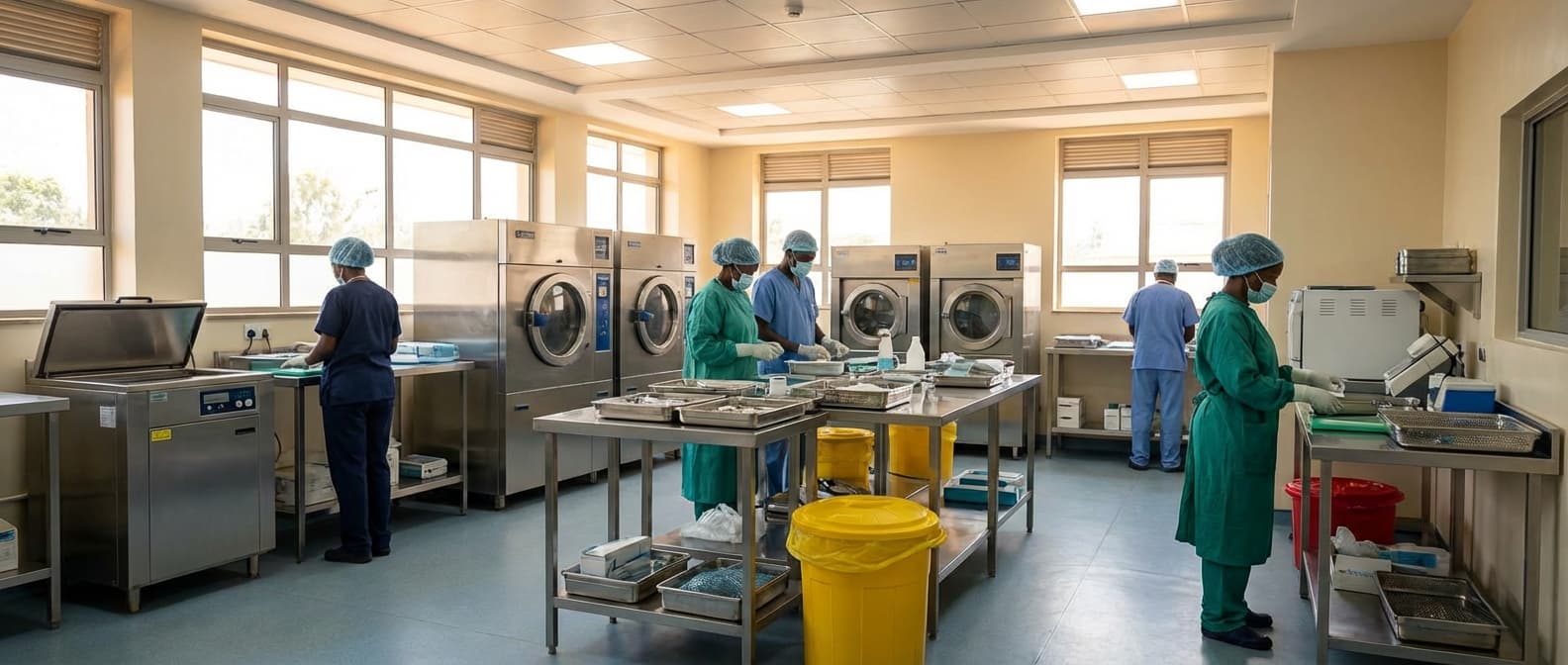
Infection-Control Readiness Support Service for Reusable Equipment in Mauritius
Engineering Excellence & Technical Support
Infection-Control Readiness Support Service for Reusable Equipment High-standard technical execution following OEM protocols and local regulatory frameworks.
Rapid Response Deployment
On-demand deployment of specialized infection control teams and advanced equipment to critical healthcare facilities across Mauritius within hours, ensuring immediate support for reusable equipment sterilization and disinfection protocols during outbreaks or emergencies.
Advanced Sterilization Validation
Utilizing state-of-the-art biological and chemical indicators, along with rapid microbiological testing, to rigorously validate the efficacy of sterilization processes for all reusable medical devices, guaranteeing patient safety and adherence to international standards.
Real-time Monitoring & Analytics
Implementing a centralized digital platform for real-time tracking of reusable equipment decontamination cycles, inventory management, and compliance reporting. This provides actionable insights to optimize workflows, identify potential breaches, and enhance overall infection control preparedness.
What Is Infection-control Readiness Support Service For Reusable Equipment In Mauritius?
Infection-Control Readiness Support Service for Reusable Equipment (ICRS-RE) in Mauritius refers to a comprehensive package of technical and advisory services designed to ensure that healthcare facilities maintain optimal standards for the safe reprocessing, sterilization, and storage of reusable medical devices. This service aims to mitigate the risk of healthcare-associated infections (HAIs) transmitted through contaminated reusable equipment. It encompasses a multi-faceted approach involving assessment, training, protocol development, and quality assurance to achieve and sustain a high level of infection prevention and control specific to reusable medical instruments.
| Who Needs ICRS-RE | Typical Use Cases | ||||||||||
|---|---|---|---|---|---|---|---|---|---|---|---|
| Hospitals (Public and Private): All departments utilizing reusable medical instruments, including operating theatres, emergency departments, intensive care units, dental clinics, and outpatient facilities. | Surgical Centers and Day Surgery Units: Requiring high throughput of sterilized instruments for elective procedures. | Diagnostic Laboratories: Handling reusable glassware, pipettes, and other instruments requiring sterilization. | Healthcare Facilities with Limited In-House Expertise: Organizations lacking dedicated infection control specialists or sterile processing technicians with advanced training. | Facilities undergoing Expansion or Renovation: Needing to ensure new or refurbished reprocessing areas meet current standards. | Institutions Introducing New Reusable Medical Technologies: Requiring guidance on appropriate reprocessing protocols for novel devices. | Healthcare Providers Seeking Accreditation or Certification: To demonstrate compliance with stringent infection control benchmarks. | Facilities Experiencing Recurrent HAIs Attributed to Equipment: To identify and rectify root causes within the reprocessing cycle. | Dental Clinics: Reprocessing of dental instruments such as scalers, explorers, and handpieces. | Specialized Medical Practices: Such as endoscopy units or ophthalmology clinics, with specific instrument reprocessing requirements. | Public Health Laboratories: For sterilization of diagnostic tools and culture media preparation equipment. | Emergency Medical Services (EMS) Providers: When using reusable airway management devices or other equipment requiring sterilization between uses. |
Key Components of ICRS-RE:
- Assessment and Gap Analysis: Evaluating existing workflows, infrastructure, personnel competency, and adherence to national/international guidelines for reprocessing reusable equipment.
- Policy and Protocol Development/Review: Assisting in the creation or refinement of Standard Operating Procedures (SOPs) for cleaning, disinfection, sterilization (e.g., autoclaving, chemical sterilization), and storage of diverse reusable medical devices.
- Equipment Validation and Maintenance Support: Guidance on the selection, installation, performance qualification (PQ), operational qualification (OQ), and ongoing validation of sterilization and disinfection equipment. Support for preventative maintenance schedules.
- Staff Training and Competency Assessment: Developing and delivering training modules for healthcare professionals involved in the reprocessing cycle, covering aspects of microbiology, infection control principles, specific device reprocessing instructions, and proper equipment operation. Assessing and documenting staff competency.
- Supply Chain Management for Reprocessing: Advising on the selection and procurement of appropriate cleaning agents, disinfectants, sterilization consumables (e.g., indicators, packaging materials), and ensuring their efficacy and proper use.
- Environmental Monitoring and Quality Control: Establishing protocols for environmental monitoring in sterile processing departments (SPDs) and implementing robust quality control measures, including the use of chemical and biological indicators to verify sterilization efficacy.
- Auditing and Continuous Improvement: Conducting regular internal audits to assess compliance, identify areas for improvement, and implement corrective and preventive actions (CAPA).
- Regulatory Compliance Assistance: Ensuring adherence to relevant Mauritian Ministry of Health and Quality of Life regulations and international standards (e.g., ISO 13485, AAMI ST standards).
Who Needs Infection-control Readiness Support Service For Reusable Equipment In Mauritius?
This service is crucial for healthcare facilities and related organizations in Mauritius that utilize reusable medical equipment. Effective infection control for these items is paramount to preventing the transmission of healthcare-associated infections (HAIs), ensuring patient safety, and maintaining the integrity of medical procedures. The support aims to enhance existing protocols, provide training, and ensure compliance with national and international standards.
| Customer Type | Key Departments/Areas of Focus | Specific Reusable Equipment Examples |
|---|---|---|
| Hospitals (Public & Private) | CSSD, Operating Theatres, ICUs, Endoscopy, Dialysis | Surgical instruments, endoscopes, dialysis tubing, respiratory equipment parts, anesthetic equipment |
| Specialty Clinics (Dental, Eye, etc.) | Treatment Rooms, Sterilization Areas | Dental instruments, surgical eye instruments, speculums, probes |
| Diagnostic Labs | Microbiology, Pathology | Glassware, inoculation loops, specimen collection tools |
| Rehabilitation Centers | Therapy Rooms | Exercise equipment (parts), massage tools, therapy aids |
| Government & Regulatory | Policy, Inspection, Quality Control | N/A (Focus on guideline enforcement and training standards) |
| Training Institutions | Curriculum Development, Practical Training | N/A (Focus on teaching correct reprocessing techniques) |
Target Customers and Departments in Mauritius:
- {"customer":"Public Hospitals","departments":["Sterilization and Disinfection Units (Central Sterile Supply Department - CSSD)","Operating Theatres","Intensive Care Units (ICU)","Emergency Departments","In-patient wards (Surgical, Medical, Pediatric, etc.)","Out-patient Clinics","Diagnostic Imaging (e.g., Ultrasound probe reprocessing)","Endoscopy Units","Dental Clinics"]}
- {"customer":"Private Hospitals and Clinics","departments":["Similar to public hospitals, focusing on departments that handle reusable equipment for patient care and procedures."]}
- {"customer":"Specialty Clinics","departments":["Dental Clinics","Ophthalmology Clinics","Dermatology Clinics","Physiotherapy and Rehabilitation Centers (with reusable equipment like exercise balls, therapy aids)","Dialysis Centers"]}
- {"notes":"For ensuring their equipment is appropriately cleaned, disinfected, and sterilized according to manufacturer guidelines.","customer":"Medical Device Manufacturers and Suppliers","departments":["Quality Assurance","Technical Support","Training Departments"]}
- {"notes":"For policy development, oversight, and ensuring adherence to national infection control guidelines.","customer":"Government Ministries and Regulatory Bodies","departments":["Ministry of Health and Quality of Life","Public Health Inspectorate","National Health Laboratory Services"]}
- {"notes":"To integrate robust infection control principles for reusable equipment into their curriculum.","customer":"Healthcare Training Institutions","departments":["Nursing Schools","Medical Schools","Allied Health Professional Training Programs"]}
- {"customer":"Non-Governmental Organizations (NGOs) and Charitable Health Organizations","departments":["Any department or program involved in direct patient care utilizing reusable medical instruments or equipment."]}
Infection-control Readiness Support Service For Reusable Equipment Process In Mauritius
This document outlines the workflow for the Infection-Control Readiness Support Service for Reusable Equipment Process in Mauritius, from initial inquiry to the successful execution of the service. This service aims to ensure that healthcare facilities in Mauritius have robust systems and practices in place for the safe reprocessing of reusable medical equipment, thereby minimizing the risk of healthcare-associated infections (HAIs).
| Stage | Key Activities | Responsible Parties | Expected Outcome |
|---|---|---|---|
| Receive inquiry, understand initial needs, provide service overview. | Healthcare Facility/MoH, Support Service Provider | Formal engagement initiated. |
| Identify equipment types, current practices, infrastructure, and gaps. | Support Service Provider, Facility Representatives | Clear understanding of facility's reprocessing context. |
| Develop and present proposal, negotiate terms, sign contract/MOU. | Support Service Provider, Healthcare Facility/MoH | Formal agreement to proceed with service. |
| Observe workflows, interview staff, review documents, assess environment. | Support Service Provider (Infection Control Experts) | Detailed understanding of current reprocessing operations. |
| Analyze data, identify deficiencies, pinpoint non-compliance and risks. | Support Service Provider | Documented list of gaps and associated risks. |
| Formulate specific solutions, create a step-by-step implementation plan. | Support Service Provider | Actionable strategies and a clear roadmap for improvement. |
| Conduct workshops, practical demonstrations, and knowledge transfer. | Support Service Provider, Facility Staff | Enhanced staff competency and adherence to best practices. |
| Provide ongoing guidance, assist with changes and problem-solving. | Support Service Provider, Facility Management/Staff | Successful integration of new practices and systems. |
| Track progress, review data, assess impact on infection rates and compliance. | Support Service Provider, Facility Management | Evidence of improved infection control and reduced risk. |
| Compile final report, present findings, transfer knowledge and responsibility. | Support Service Provider, Healthcare Facility/MoH | Official closure of service, documented improvements, and sustainability plan. |
| Address any lingering issues, confirm sustained improvements. | Support Service Provider, Facility Management | Long-term adherence to infection control standards. |
Workflow Stages
- {"stage":"1. Inquiry and Initial Contact","description":"Healthcare facilities or relevant Ministry of Health departments in Mauritius initiate contact to inquire about the Infection-Control Readiness Support Service. This can be through email, phone, or a formal request through the designated government portal."}
- {"stage":"2. Needs Assessment and Scoping","description":"A preliminary assessment is conducted to understand the specific needs of the requesting facility regarding reusable equipment reprocessing. This involves identifying the types of equipment used, current reprocessing practices, existing infrastructure, and identified gaps in infection control."}
- {"stage":"3. Service Proposal and Agreement","description":"Based on the needs assessment, a detailed service proposal is developed. This outlines the scope of work, objectives, methodologies, timelines, required resources, and expected outcomes. Upon agreement, a formal contract or Memorandum of Understanding (MOU) is signed."}
- {"stage":"4. On-site Assessment and Data Collection","description":"A dedicated team of infection control experts visits the facility to conduct a comprehensive on-site assessment. This involves observing reprocessing workflows, interviewing staff, reviewing documentation (SOPs, training records, maintenance logs), and assessing the physical environment and equipment."}
- {"stage":"5. Gap Analysis and Risk Identification","description":"The collected data is analyzed to identify specific gaps in knowledge, practice, infrastructure, or policy related to the safe reprocessing of reusable equipment. Potential risks and areas of non-compliance with national and international infection control guidelines are identified."}
- {"stage":"6. Development of Recommendations and Action Plan","description":"Tailored recommendations are developed to address the identified gaps and risks. This includes specific strategies for improving workflows, enhancing staff training, upgrading equipment or infrastructure, and revising Standard Operating Procedures (SOPs). A detailed action plan with timelines and responsibilities is created."}
- {"stage":"7. Training and Capacity Building","description":"Interactive training sessions are delivered to relevant healthcare staff (nurses, technicians, sterile processing personnel) on best practices in reusable equipment reprocessing. This covers principles of disinfection, sterilization, quality control, and infection prevention strategies."}
- {"stage":"8. Implementation Support","description":"The support team provides guidance and technical assistance during the implementation of the recommended changes and the action plan. This may involve assisting with the procurement of new equipment, revising SOPs, or setting up quality monitoring systems."}
- {"stage":"9. Monitoring and Evaluation","description":"Regular monitoring is conducted to assess the progress of implementation and the effectiveness of the interventions. This may involve follow-up visits, data review, and performance indicator tracking. The impact on infection rates and compliance is evaluated."}
- {"stage":"10. Reporting and Handover","description":"A comprehensive final report is submitted to the requesting facility and the Ministry of Health, detailing the assessment findings, implemented recommendations, training outcomes, and overall impact. The service is officially handed over, with an emphasis on sustainability."}
- {"stage":"11. Post-Service Follow-up (Optional)","description":"Depending on the agreement, a period of post-service follow-up might be arranged to ensure sustained improvement and address any emerging challenges."}
Infection-control Readiness Support Service For Reusable Equipment Cost In Mauritius
This document outlines the infection-control readiness support service for reusable equipment in Mauritius, focusing on cost factors and local currency pricing. Ensuring proper sterilization and reprocessing of reusable medical devices is critical for preventing healthcare-associated infections (HAIs). The cost of such a support service is influenced by several key factors, and this discussion aims to provide a transparent overview of potential pricing ranges in Mauritian Rupees (MUR).
| Service Component / Package | Estimated Price Range (MUR) | Notes |
|---|---|---|
| Initial Infection Control Readiness Assessment (Single Facility) | MUR 25,000 - MUR 75,000 | Includes site visit, documentation review, initial report. Varies by facility size. |
| Protocol Development & Implementation Support (Per Department/Area) | MUR 30,000 - MUR 100,000 | Covers creation and initial rollout of SOPs. Complexity of equipment and processes is a factor. |
| Staff Training & Competency Assessment (Per Session/Group) | MUR 15,000 - MUR 50,000 | Includes training materials, delivery, and assessment. Group size and duration affect price. |
| Equipment Validation & Calibration Support (Per Equipment Type) | MUR 20,000 - MUR 70,000 | Assistance with validation process, documentation. Excludes external calibration fees. |
| Monthly Retainer for Ongoing Support (Basic) | MUR 40,000 - MUR 100,000 | Includes limited on-site support, regular remote consultations, and advisory services. |
| Monthly Retainer for Ongoing Support (Comprehensive) | MUR 75,000 - MUR 200,000+ | Includes frequent on-site visits, in-depth monitoring, staff development, and regulatory updates. |
| Project-Based Consultancy (e.g., Central Sterile Supply Department Overhaul) | Custom Quotation Required | Highly dependent on the specific project scope, duration, and resources needed. |
| Annual Compliance Audit | MUR 35,000 - MUR 90,000 | Focuses on verifying adherence to established protocols and regulations. |
Key Pricing Factors for Infection-Control Readiness Support Service (Reusable Equipment, Mauritius)
- Scope of Services:
- Assessment & Auditing: Evaluating current protocols, infrastructure, and staff training related to reusable equipment reprocessing.
- Protocol Development & Implementation: Creating or refining Standard Operating Procedures (SOPs) for cleaning, disinfection, sterilization, and storage.
- Staff Training & Competency Assessment: Conducting workshops, practical demonstrations, and evaluating staff proficiency.
- Equipment Validation & Calibration Support: Assisting with the validation of sterilization equipment (e.g., autoclaves) and ensuring proper calibration.
- Supply Chain Management Consultation: Advising on the selection and management of appropriate cleaning agents, disinfectants, and sterilization consumables.
- Monitoring & Continuous Improvement: Establishing systems for ongoing performance monitoring and recommending corrective actions.
- Regulatory Compliance Assistance: Ensuring adherence to relevant Mauritian health regulations and international best practices.
- Frequency and Duration of Support:
- One-time assessment vs. ongoing consultancy: A single audit will be less expensive than a long-term partnership.
- Project-based vs. retainer agreements: Specific projects will have defined costs, while retainers offer consistent support for a set monthly fee.
- Intensive vs. periodic visits: The frequency of on-site visits will significantly impact the overall cost.
- Size and Complexity of the Healthcare Facility:
- Number of departments and specialized units: Facilities with more diverse needs (e.g., surgical suites, endoscopy units) will require more comprehensive support.
- Volume of reusable equipment processed: Higher throughput necessitates more robust systems and potentially more extensive training.
- Existing infrastructure and technology: The level of existing investment in reprocessing technology will influence the consulting needs.
- Type of Reusable Equipment:
- Complexity of instruments: Delicate or complex surgical instruments may require specialized cleaning and sterilization protocols.
- Material composition: Certain materials might have specific reprocessing requirements.
- Number of different types of equipment: A wider variety of equipment types will increase the complexity of the support needed.
- Provider's Expertise and Reputation:
- Credentials and experience of consultants: Highly specialized and experienced professionals may command higher fees.
- Track record and client testimonials: Proven success and a strong reputation can justify premium pricing.
- Accreditations and affiliations: Recognized certifications can add value and influence cost.
- Geographic Location (within Mauritius):
- Travel and accommodation costs: Services provided to facilities in more remote areas may incur higher travel expenses.
- Local market rates and competition: Pricing may be influenced by the general cost of services in different regions.
- Reporting and Documentation Requirements:
- Level of detail and frequency of reports: Comprehensive and frequent reporting will add to the service cost.
- Customization of reports: Tailored reporting formats may incur additional charges.
- Additional Services:
- **Procurement of specialized cleaning agents or consumables.
- **Assistance with equipment repair or maintenance contracts.
- **Development of digital tracking systems for equipment reprocessing.
Affordable Infection-control Readiness Support Service For Reusable Equipment Options
Our Affordable Infection-Control Readiness Support Service for Reusable Equipment Options is designed to empower healthcare facilities with comprehensive, cost-effective solutions for managing the infection control aspects of reusable medical devices. We understand the critical need for rigorous decontamination and sterilization protocols to prevent healthcare-associated infections (HAIs) while also recognizing the financial pressures faced by many organizations. Our service focuses on providing tailored support, preventative measures, and efficient processes to ensure your reusable equipment is always ready for safe patient use, minimizing risks and maximizing resource utilization.
| Value Bundle Name | Description | Included Services | Target Facility Size | Estimated Cost Savings Potential |
|---|---|---|---|---|
| Essential Readiness Bundle | Core services for fundamental infection control preparedness. | Basic risk assessment, protocol review, foundational staff training, routine audit support. | Small to medium-sized clinics, outpatient centers. | 5-10% reduction in reprocessing errors and associated supply costs. |
| Comprehensive Compliance Bundle | In-depth support for advanced infection control management and regulatory adherence. | Detailed risk assessment, advanced protocol development, competency-based training, equipment validation oversight, advanced data analytics, regulatory consultation. | Medium to large hospitals, specialized surgical centers. | 10-20% reduction in HAIs, decreased supply chain waste, optimized staff time. |
| Total Optimization Bundle | Holistic approach encompassing all aspects of reusable equipment infection control and efficiency. | Includes all Comprehensive Compliance Bundle services plus dedicated process re-engineering, predictive maintenance recommendations, and strategic resource allocation support. | Large healthcare systems, academic medical centers with high-volume reusable equipment. | 15-25% reduction in overall operational costs, significant decrease in infection rates, enhanced staff productivity. |
Key Features and Value Proposition
- Proactive Risk Assessment: Identifying potential infection control vulnerabilities in your reusable equipment workflows.
- Optimized Decontamination & Sterilization Protocols: Developing and refining best-practice procedures for specific equipment types.
- Staff Training & Competency Verification: Ensuring your personnel are skilled and knowledgeable in infection control practices.
- Equipment Maintenance & Validation Support: Facilitating regular maintenance and performance validation of reprocessing equipment.
- Data Tracking & Auditing: Providing insights into reprocessing cycles, compliance rates, and potential areas for improvement.
- Regulatory Compliance Guidance: Keeping you informed and aligned with evolving infection control standards and regulations.
- Emergency Preparedness Planning: Developing contingency plans for equipment reprocessing during unforeseen events.
- Scalable Service Models: Offering flexible options to suit your facility's size and specific needs.
Verified Providers In Mauritius
In Mauritius, navigating the healthcare landscape can be daunting. Identifying truly verified and reputable providers is paramount for ensuring quality care and peace of mind. Franance Health stands out as a beacon of trust in this regard. Their rigorous credentialing process, commitment to patient well-being, and dedication to ethical practices make them the premier choice for healthcare services in Mauritius. This document outlines why Franance Health's verified providers are your best option.
| Provider Category | Franance Health Verification Criteria | Benefits for Patients |
|---|---|---|
| Hospitals & Clinics | Accreditation from recognized bodies, advanced technology, stringent infection control, patient feedback mechanisms. | Access to state-of-the-art facilities, reduced risk of complications, higher patient satisfaction. |
| Specialist Doctors | Board certification, proven track record, continuous professional development, ethical practice reviews. | Expert diagnosis and treatment, access to specialized knowledge, personalized care plans. |
| Diagnostic Laboratories | Compliance with international quality standards (e.g., ISO), advanced equipment calibration, qualified technical staff. | Accurate and reliable test results, timely diagnosis, informed treatment decisions. |
| Medical Equipment Suppliers | Product certifications, quality assurance processes, reliable after-sales support. | Access to safe and effective medical devices, reduced risk of equipment malfunction. |
Why Franance Health Providers are the Best Choice:
- Uncompromising Quality Standards: Franance Health implements a stringent vetting process that goes beyond basic licensing. They assess not only the qualifications and experience of medical professionals but also their ethical conduct, patient satisfaction records, and adherence to international best practices.
- Commitment to Patient Safety: Patient safety is at the core of Franance Health's operations. Verified providers are committed to maintaining the highest standards of hygiene, utilizing advanced medical equipment, and following evidence-based treatment protocols.
- Comprehensive Range of Services: Franance Health partners with a diverse network of specialists and facilities, ensuring that patients have access to a wide spectrum of medical services, from general consultations to complex surgical procedures and specialized treatments.
- Transparency and Trust: The 'verified' status by Franance Health signifies a commitment to transparency. Patients can trust that these providers have undergone thorough due diligence, providing an added layer of assurance in their healthcare decisions.
- Patient-Centric Approach: Verified Franance Health providers are known for their compassionate and patient-centered care. They prioritize clear communication, involve patients in treatment decisions, and strive to create a supportive and healing environment.
Scope Of Work For Infection-control Readiness Support Service For Reusable Equipment
This Scope of Work (SOW) outlines the requirements for Infection-Control Readiness Support Services for Reusable Medical Equipment. The service aims to ensure that healthcare facilities have robust and sustainable processes in place to prevent the transmission of infections through the proper cleaning, disinfection, and sterilization of reusable medical devices. This SOW details the technical deliverables and standard specifications expected from the service provider.
| Deliverable Category | Specific Deliverable | Description | Standard Specification/Reference |
|---|---|---|---|
| Assessment & Gap Analysis | Current State Assessment Report | Comprehensive review of existing infrastructure, equipment, workflows, staffing, and policies related to reusable equipment reprocessing. | ISO 13485:2016 (Quality management systems for medical devices), CDC Guidelines for Disinfection and Sterilization in Healthcare Facilities, AAMI Standards. |
| Assessment & Gap Analysis | Gap Analysis and Risk Assessment Report | Detailed report identifying discrepancies between current practices and best practices/standards, including a risk assessment of potential infection transmission pathways. | ISO 31000:2018 (Risk management – Guidelines), AS/NZS ISO 31010:2019 (Risk management – Risk assessment techniques). |
| Policy & Procedure Development | Standard Operating Procedures (SOPs) for Reprocessing | Development of clear, detailed, and up-to-date SOPs for all stages of reusable equipment reprocessing, including receiving, cleaning, disinfection, inspection, assembly, sterilization, storage, and distribution. | Manufacturer's Instructions for Use (IFUs), Relevant national IPC guidelines (e.g., HICPAC in the US, NICE in the UK), local regulatory requirements. |
| Policy & Procedure Development | Equipment Maintenance and Validation Protocols | Procedures for preventative maintenance, calibration, and performance testing of cleaning, disinfection, and sterilization equipment. | Manufacturer's recommended maintenance schedules, Validation protocols as per AAMI ST55 (for Automated Washer-Disinfectors), AAMI ST79 (for Steam Sterilization). |
| Training & Competency | Training Materials and Modules | Development of comprehensive training materials (presentations, handouts, videos) covering all aspects of reprocessing, infection control principles, and SOPs. | Adult learning principles, evidence-based IPC education models. |
| Training & Competency | Competency Assessment Tools | Development and administration of tools (e.g., written tests, practical demonstrations, skills checklists) to assess staff competency in reprocessing tasks. | Standardized assessment methodologies, feedback mechanisms. |
| Monitoring & Auditing | Routine Monitoring Reports | Regular reports on the effectiveness of cleaning and disinfection processes (e.g., visual inspection, biological/chemical indicators). | Manufacturer's IFUs for indicators, ISO 17665 (Sterilization of health care products – Moist heat), ISO 11135 (Sterilization of health care products – Ethylene oxide). |
| Monitoring & Auditing | Compliance Audit Reports | Periodic audit reports evaluating adherence to established SOPs, guidelines, and regulatory requirements. | Internal audit standards, external regulatory inspection checklists. |
| Monitoring & Auditing | Sterilization Load Monitoring Records | Documentation of sterilization cycles, including parameters (temperature, pressure, time), Bowie-Dick tests, and biological indicator results. | ISO 17665-1 (Sterilization of health care products – Moist heat), ISO 13683 (Sterilization of health care products – Requirements for validation and routine control of a sterilization process for medical devices – Moist heat). |
| Reporting & Recommendations | Progress Reports | Regular (e.g., monthly, quarterly) reports detailing service activities, progress towards objectives, identified issues, and proposed solutions. | Clear, concise, and data-driven reporting format. |
| Reporting & Recommendations | Final Recommendation Report | A comprehensive report summarizing the project outcomes, identified areas of sustained improvement, recommendations for ongoing maintenance of readiness, and any necessary future interventions. | Evidence-based recommendations, consideration of cost-effectiveness. |
Key Objectives
- To assess current infection prevention and control (IPC) practices for reusable equipment.
- To identify gaps and areas for improvement in the reprocessing workflow.
- To develop and implement standardized protocols and procedures for cleaning, disinfection, and sterilization.
- To provide training and competency assessments for staff involved in reprocessing.
- To establish robust monitoring and auditing systems to ensure compliance and effectiveness.
- To ensure adherence to relevant national and international standards and guidelines.
Service Level Agreement For Infection-control Readiness Support Service For Reusable Equipment
This Service Level Agreement (SLA) outlines the response times and uptime guarantees for the Infection-Control Readiness Support Service for Reusable Equipment. This service ensures timely and effective support for maintaining the highest standards of infection control for all reusable medical equipment within the healthcare facility. The aim is to minimize downtime, prevent outbreaks, and ensure patient safety.
| Service Component | Response Time Target | Uptime Guarantee | Measurement Period | Escalation Procedure |
|---|---|---|---|---|
| Critical Equipment Support (e.g., sterilization equipment failure, widespread contamination alert) | Within 1 hour of reported incident | 99.9% availability (excluding scheduled maintenance) | Monthly | Immediate notification to Infection Control Manager and Biomedical Engineering Director. Dedicated on-call team dispatched. |
| High-Priority Equipment Support (e.g., single-unit sterilization failure, moderate contamination concern) | Within 4 business hours of reported incident | 99.5% availability (excluding scheduled maintenance) | Monthly | Notification to Department Manager and Biomedical Engineering Supervisor. Support technician assigned within 2 hours. |
| Routine Support & Consultation (e.g., policy review, training queries, equipment availability checks) | Within 1 business day of reported incident | 99.0% availability (excluding scheduled maintenance) | Monthly | Notification to relevant department head. Support request logged and assigned to a specialist. |
| Proactive Monitoring & Auditing (e.g., regular equipment checks, process audits) | Scheduled in advance with department stakeholders | N/A (Service is proactive) | Quarterly | Findings and recommendations presented to Infection Control Committee and relevant department heads. |
Service Objectives
- To provide rapid response to reported issues concerning reusable equipment infection control.
- To ensure consistent availability of infection control support resources.
- To facilitate the prompt resolution of equipment contamination or malfunction affecting infection control.
- To uphold patient safety by minimizing risks associated with improperly managed reusable equipment.
Frequently Asked Questions

Ready when you are
Let's scope your Infection-Control Readiness Support Service for Reusable Equipment in Mauritius project in Mauritius.

Scaling healthcare logistics and technical systems across the entire continent.