
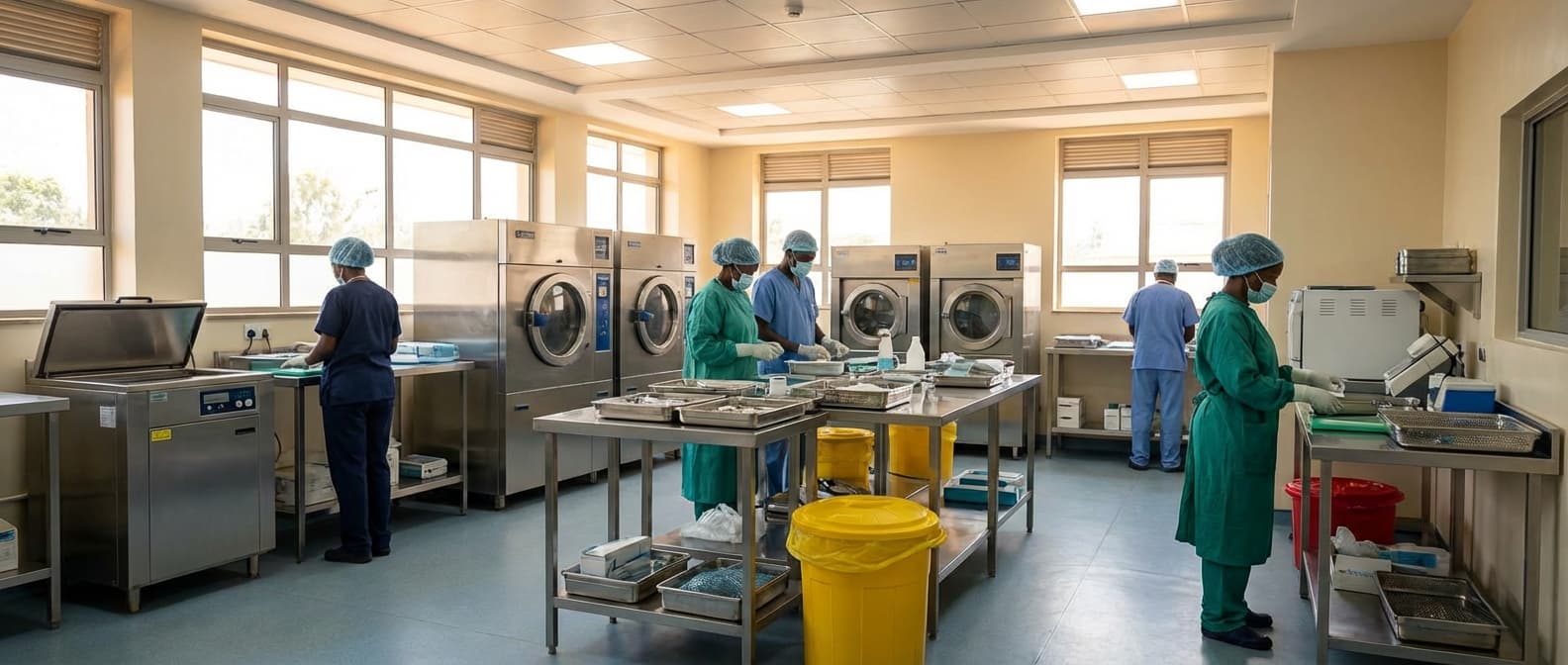
Autoclave Validation Support Service in Mauritius
Engineering Excellence & Technical Support
Autoclave Validation Support Service High-standard technical execution following OEM protocols and local regulatory frameworks.
Regulatory Compliance Assurance
Ensure your autoclaves meet stringent international and local regulatory standards (e.g., ISO 17665, HTM 2010) with our expert validation services, safeguarding patient safety and operational integrity in Mauritius's healthcare and pharmaceutical sectors.
Comprehensive Validation Protocols
We offer end-to-end validation support, including Installation Qualification (IQ), Operational Qualification (OQ), and Performance Qualification (PQ), utilizing calibrated equipment and validated methods to provide robust data and complete documentation for your autoclaves in Mauritius.
Optimized Sterilization Cycles
Leverage our advanced validation techniques to optimize autoclave cycle parameters, ensuring effective and efficient sterilization of instruments and materials, reducing reprocessing times, and minimizing operational costs for businesses across Mauritius.
What Is Autoclave Validation Support Service In Mauritius?
Autoclave Validation Support Service in Mauritius refers to a comprehensive suite of technical services provided to ensure that steam sterilization equipment (autoclaves) consistently and effectively eliminate viable microorganisms, thereby rendering medical devices, laboratory equipment, and pharmaceutical products sterile. This service is crucial for organizations in Mauritius operating under stringent regulatory frameworks and quality management systems that mandate the validation of sterilization processes. The primary objective is to provide documented evidence that the autoclave process is capable of achieving the desired Sterility Assurance Level (SAL).
| Who Needs Autoclave Validation Support Service? | Typical Use Cases |
|---|---|
| Healthcare Facilities: Hospitals, clinics, dental practices, and surgical centers requiring sterile instruments and equipment for patient care. | Sterilization of surgical instruments, glassware, linens, and other reusable medical devices. |
| Pharmaceutical and Biotechnology Companies: Manufacturers of sterile drug products, vaccines, and biopharmaceuticals. | Sterilization of raw materials, packaging components, laboratory equipment, and production consumables in GMP-regulated environments. |
| Research and Development Laboratories: Academic, industrial, and government research institutions handling sensitive materials and experiments. | Sterilization of culture media, glassware, consumables, and waste materials. |
| Contract Manufacturing Organizations (CMOs): Companies that sterilize products on behalf of other entities. | Ensuring validated sterilization processes for client products to meet quality and regulatory standards. |
| Medical Device Manufacturers: Companies producing devices intended for sterile use. | Validation of sterilization cycles for finished medical devices prior to distribution. |
Key Components of Autoclave Validation Support Service:
- Installation Qualification (IQ): Verification that the autoclave is installed correctly and according to manufacturer specifications and relevant standards.
- Operational Qualification (OQ): Testing to confirm that the autoclave operates consistently within defined parameters and across its operational range (e.g., temperature, pressure, time). This often involves multiple challenge runs using biological and/or chemical indicators at specified locations within the chamber.
- Performance Qualification (PQ): Demonstrating, with a high degree of assurance, that the autoclave can reproducibly sterilize a defined load configuration under normal operating conditions over a specified period. This involves extensive testing with the actual or representative product/load.
- Revalidation: Periodic re-testing to ensure continued compliance and performance after major maintenance, modifications, relocation, or if performance issues are suspected.
- Calibration Services: Ensuring that critical measurement devices (temperature probes, pressure gauges) are accurate and traceable.
- Documentation and Reporting: Comprehensive generation of validation protocols, reports, and certificates compliant with international standards (e.g., ISO 17665) and local regulatory requirements.
- Consultancy and Training: Expert guidance on validation strategies, regulatory compliance, and staff training on autoclave operation and maintenance.
Who Needs Autoclave Validation Support Service In Mauritius?
In Mauritius, reliable and compliant sterilization is paramount across various sectors. Autoclave validation is not just a regulatory requirement; it's a critical process to ensure the safety of patients, the integrity of research, and the quality of manufactured goods. This service is essential for any organization that utilizes autoclaves for sterilization purposes, guaranteeing their equipment operates effectively and meets stringent international standards. The need for this support service spans numerous industries and departments, all with a common goal: dependable sterilization.
| Customer Type | Key Departments/Areas of Need | Why Autoclave Validation is Crucial |
|---|---|---|
| Hospitals and Healthcare Facilities | Central Sterile Supply Department (CSSD), Operating Theatres, Infection Control, Outpatient Clinics, Laboratories | Ensuring patient safety by sterilizing surgical instruments, medical devices, and other reusable materials to prevent healthcare-associated infections (HAIs). |
| Dental Clinics | Sterilization Area, Dental Surgery | Maintaining patient safety and preventing cross-contamination by sterilizing dental instruments. |
| Veterinary Clinics | Surgical Suite, Treatment Rooms | Ensuring the safety of animals undergoing procedures and preventing the spread of zoonotic diseases through proper sterilization of surgical tools and equipment. |
| Pharmaceutical Manufacturing | Quality Control (QC), Production, Sterile Manufacturing Areas | Validating the sterilization of raw materials, packaging components, and equipment to maintain product sterility and comply with Good Manufacturing Practices (GMP). |
| Biotechnology Companies | Research & Development (R&D), Quality Assurance (QA), Manufacturing | Guaranteeing the sterility of laboratory equipment, consumables, and culture media for reproducible and reliable research outcomes, and ensuring product sterility for biotechnological products. |
| Research Laboratories (academic and private) | General Lab Operations, Microbiology, Molecular Biology, Cell Culture | Ensuring the sterility of glassware, media, and equipment essential for accurate and contaminant-free experimental results. |
| Food and Beverage Industry | Quality Assurance, Production, Packaging | Validating the sterilization of packaging materials, processing equipment, and specific products to ensure food safety and extend shelf life. |
| Cosmetic Manufacturers | Quality Control, Production | Ensuring the sterility of ingredients, packaging, and manufacturing equipment to prevent microbial contamination and maintain product safety and quality. |
| Medical Device Manufacturers | Sterilization Department, Quality Control, Production | Validating the sterilization process for finished medical devices to meet regulatory requirements and ensure patient safety. |
| Sterilization Service Providers | All Operational Areas | Demonstrating the efficacy and compliance of their sterilization services to their diverse client base, ensuring they meet all regulatory and customer-specific requirements. |
Target Customers and Departments Requiring Autoclave Validation Support Service in Mauritius:
- Hospitals and Healthcare Facilities
- Dental Clinics
- Veterinary Clinics
- Pharmaceutical Manufacturing
- Biotechnology Companies
- Research Laboratories (academic and private)
- Food and Beverage Industry
- Cosmetic Manufacturers
- Medical Device Manufacturers
- Sterilization Service Providers
Autoclave Validation Support Service Process In Mauritius
This document outlines the typical workflow for an Autoclave Validation Support Service Process in Mauritius, from initial customer inquiry to the successful execution of validation protocols. The process is designed to ensure that autoclaves operate effectively and meet regulatory requirements for sterilization, critical for industries such as healthcare, pharmaceuticals, and food processing.
| Stage | Description | Key Activities | Deliverables/Outcomes | Responsible Party |
|---|---|---|---|---|
| The process begins when a client expresses interest in autoclave validation services. | Client contacts service provider. Initial discussion of client's needs, autoclave type, size, usage, and regulatory requirements. Gathering preliminary information. | Understanding of client's scope and requirements. Initial assessment of project feasibility. | Client, Service Provider |
| Based on the initial consultation, a detailed proposal and quotation are prepared. | Development of a tailored validation plan (IQ, OQ, PQ). Specification of services, timelines, equipment to be used, and personnel. Calculation of costs. | Formal proposal outlining scope, methodology, timeline, and cost. Agreed quotation. | Service Provider |
| Upon acceptance of the quotation, detailed planning and scheduling commence. | Contract signing. Finalization of the validation protocol. Scheduling of on-site visit. Coordination with client's operational schedule. Pre-validation checks and preparation (e.g., ensuring autoclave is clean and functional). | Signed contract. Approved validation protocol. Confirmed on-site schedule. Preparation of necessary equipment and materials. | Service Provider, Client |
| The core of the validation process takes place at the client's facility. | Installation Qualification (IQ): Verifying proper installation and configuration. Operational Qualification (OQ): Testing operational parameters and controls. Performance Qualification (PQ): Demonstrating consistent effective sterilization cycles under normal operating conditions. This involves using biological and chemical indicators, temperature/pressure mapping. | Raw data from validation runs. Calibration records for validation equipment. On-site observations and notes. | Service Provider (Validation Engineers) |
| Collected data is meticulously analyzed to determine compliance with predefined criteria. | Review of all collected data (temperature, pressure, cycle times, indicator results). Comparison against protocol specifications and regulatory standards. Identification of any deviations or out-of-specification (OOS) results. | Preliminary data analysis report. Identification of any OOS results. | Service Provider |
| If OOS results are identified, corrective actions are implemented. | Troubleshooting and root cause analysis for OOS results. Implementing corrective actions (e.g., adjusting parameters, minor repairs). Re-validation or re-testing of affected parameters. | Documentation of corrective actions taken. Successful re-validation of previously failed parameters. | Service Provider, Client |
| A comprehensive report is compiled and submitted to the client. | Compilation of all validation data, analysis, OOS investigations, and remediation efforts into a final validation report. Issuance of a validation certificate. | Final Autoclave Validation Report. Autoclave Validation Certificate. | Service Provider |
| Ongoing support and recommendations are provided after the validation is complete. | Review of the report with the client. Recommendations for preventative maintenance and routine monitoring. Offering re-validation services when required (e.g., after major repairs or at scheduled intervals). | Client understanding of validation results. Agreed future maintenance and re-validation schedule. | Service Provider, Client |
Autoclave Validation Support Service Process Workflow
- Phase 1: Inquiry & Initial Consultation
- Phase 2: Proposal & Quotation
- Phase 3: Planning & Scheduling
- Phase 4: On-site Execution
- Phase 5: Data Analysis & Reporting
- Phase 6: Remediation (if necessary)
- Phase 7: Final Report & Certification
- Phase 8: Post-Validation Support
Autoclave Validation Support Service Cost In Mauritius
Autoclave validation is a critical process for ensuring the sterility of medical and laboratory equipment, particularly in healthcare settings and research institutions in Mauritius. The cost of this service can vary significantly based on several factors, making it essential for facilities to understand these drivers to budget effectively. These factors include the type and number of autoclaves to be validated, the scope of the validation (e.g., initial qualification, periodic revalidation), the specific validation protocols employed, the complexity of the equipment, and the chosen service provider's experience and overhead. Providers may offer different tiers of service, from basic functional testing to comprehensive validation packages.
| Service Component | Estimated Price Range (MUR) | Notes |
|---|---|---|
| Basic Autoclave Validation (e.g., OQ/PQ for a single standard unit) | 15,000 - 30,000 MUR | Covers essential performance checks and documentation for a typical laboratory or small clinic autoclave. May exclude complex IQ. |
| Comprehensive Autoclave Validation (IQ/OQ/PQ) | 30,000 - 70,000 MUR | Includes full installation, operational, and performance qualification. Recommended for new installations or major upgrades. Price increases with autoclave size and complexity. |
| Periodic Revalidation (Annual/Bi-annual) | 12,000 - 25,000 MUR | Focuses on maintaining performance integrity. Typically covers OQ and PQ. Cost is generally lower than initial validation. |
| Validation for Multiple Autoclaves (per unit) | 10,000 - 20,000 MUR | Discounted rate often offered when validating several autoclaves from the same facility in one service visit. |
| Validation of Large Capacity/Industrial Autoclaves | 50,000 - 150,000+ MUR | Significant increase due to larger chamber size, more complex control systems, and potentially more challenging validation parameters. |
| Additional Validation Cycles (e.g., specific material sterilization) | 3,000 - 7,000 MUR (per cycle) | Cost for validating specialized or non-standard sterilization cycles beyond the primary PQ tests. |
| Rush Service/Expedited Report | Additional 10-20% of base service cost | For urgent validation needs that require immediate scheduling and faster turnaround times. |
Key Factors Influencing Autoclave Validation Support Service Costs in Mauritius
- Number and Type of Autoclaves: Larger chambers or those with more complex control systems often incur higher validation costs.
- Scope of Validation: Initial Installation Qualification (IQ), Operational Qualification (OQ), and Performance Qualification (PQ) will all contribute to the overall cost.
- Frequency of Validation: Regular revalidation is required, and the cost per cycle can be influenced by the time elapsed since the last validation.
- Validation Protocols and Standards: Adherence to specific regulatory standards (e.g., ISO, local health guidelines) may necessitate more rigorous testing and documentation, impacting price.
- Service Provider Expertise and Reputation: Established and highly reputable validation companies may command higher fees due to their proven track record and specialized knowledge.
- Location and Accessibility: For providers in remote areas or those requiring extensive travel within Mauritius, additional travel and accommodation charges might apply.
- Calibration of Equipment Used: The cost of calibrating the specialized instruments used for validation (e.g., temperature probes, data loggers) is factored in.
- Complexity of Cycles and Load Types: Validating a wider range of sterilization cycles or specific challenging load types can increase the complexity and cost.
- Reporting and Documentation Requirements: Detailed, comprehensive reports are standard, but if specific additional documentation is requested, it could affect the price.
- Urgency of Service: Expedited validation services may come with a premium.
Affordable Autoclave Validation Support Service Options
Navigating the complexities of autoclave validation can be a significant undertaking for any healthcare facility. Ensuring your autoclaves are consistently performing at optimal levels is crucial for patient safety and regulatory compliance. This service aims to provide affordable and accessible autoclave validation support, offering flexible options to meet diverse needs and budgets. We understand that cost is a major consideration, and our value bundles and cost-saving strategies are designed to deliver comprehensive validation without breaking the bank.
| Value Bundle | Includes | Ideal For | Key Cost-Saving Benefit |
|---|---|---|---|
| Basic Validation Package | Annual performance qualification (PQ) testing, calibration check, and documentation. | Facilities with fewer autoclaves or established validation protocols. | Cost-effective for routine annual validation needs. |
| Comprehensive Validation Package | Installation qualification (IQ), operational qualification (OQ), and performance qualification (PQ) testing, calibration, and detailed report generation. | New autoclave installations, facilities undergoing upgrades, or those requiring thorough validation. | Bundled services reduce per-stage costs and streamline the validation process. |
| Preventive Maintenance & Validation Bundle | Annual validation (PQ) with scheduled preventive maintenance (PM) services. | Facilities prioritizing equipment reliability and minimizing downtime. | Combines essential services to prevent issues and reduce the need for separate, potentially more expensive, repair calls. |
| Multi-Unit Discount | Reduced per-unit validation cost when validating multiple autoclaves within the same facility. | Larger healthcare facilities with multiple sterilization units. | Significant savings through economies of scale. |
| Remote Support & Consultation | Virtual assistance for troubleshooting, guidance on internal validation processes, and documentation review. | Facilities with in-house technical staff looking for expert oversight or partial support. | Minimizes on-site visit costs while leveraging expert knowledge. |
Why Invest in Autoclave Validation?
- Ensures sterilization effectiveness, preventing healthcare-associated infections.
- Meets regulatory requirements (e.g., FDA, CDC, AAMI).
- Maximizes equipment lifespan and prevents costly breakdowns.
- Protects your facility's reputation and patient trust.
- Provides peace of mind through documented, reliable sterilization processes.
Verified Providers In Mauritius
In Mauritius, identifying trustworthy healthcare providers is paramount for ensuring quality care. Franance Health stands out as a beacon of reliability, meticulously vetting its network of medical professionals and institutions. This commitment to verification offers patients peace of mind, knowing they are receiving care from credentialed and reputable sources. Their stringent selection process not only guarantees expertise but also ethical practice, making them the premier choice for healthcare needs in Mauritius.
| Provider Type | Franance Health Verification Standards | Benefits for Patients |
|---|---|---|
| General Practitioners | Verified medical license, proof of continuous professional development, peer reviews. | Access to competent primary care physicians for routine health needs. |
| Specialists (e.g., Cardiologists, Dermatologists) | Verified specialist qualifications, board certifications, hospital affiliations, case study reviews. | Confidently consult with highly qualified experts for specific medical conditions. |
| Hospitals & Clinics | Accreditation by recognized healthcare bodies, adherence to safety protocols, quality of facilities. | Receive treatment in safe, well-equipped, and professionally managed healthcare facilities. |
| Diagnostic Centers | Certification of equipment, qualifications of technicians, adherence to quality control standards. | Reliable and accurate diagnostic results from trusted centers. |
Why Franance Health is the Best Choice for Verified Providers:
- Rigorous credentialing process for all affiliated doctors and specialists.
- Thorough background checks to ensure ethical standards and patient safety.
- Verification of medical licenses and professional certifications.
- Partnerships with accredited hospitals and clinics.
- Continuous monitoring of provider performance and patient feedback.
- Commitment to transparency and accessible healthcare information.
Scope Of Work For Autoclave Validation Support Service
This Scope of Work (SOW) outlines the services provided by [Service Provider Name] for Autoclave Validation Support to [Client Name]. The service aims to ensure that the client's autoclaves consistently operate within specified parameters to achieve effective sterilization of materials, meeting regulatory and quality standards. This SOW details the technical deliverables and standard specifications for the validation process.
| Service Component | Description | Deliverable | Standard Specifications/Parameters |
|---|---|---|---|
| Installation Qualification (IQ) | Verification that the autoclave is installed correctly and according to manufacturer's specifications, and that all utilities are connected and functional. | IQ Report | Manufacturer's installation checklist, utility connection verification (power, water, steam, drain), calibration status of critical instruments, environmental checks (temperature, humidity). |
| Operational Qualification (OQ) | Verification that the autoclave operates within its defined operating ranges and parameters for all specified cycles. | OQ Report | Performance of multiple test cycles (e.g., empty, half-load, full-load) with temperature, pressure, and time monitoring. Verification of alarm functions, cycle repeatability, and interlocks. |
| Performance Qualification (PQ) | Verification that the autoclave consistently performs its intended function under normal operating conditions with the actual load materials. | PQ Report | Execution of representative validation cycles using biological indicators (BIs) and/or chemical indicators (CIs) and thermocouples placed in challenging locations within the load. Determination of F0 values or equivalent sterilization parameters. Repeatability of successful cycles over a specified number of runs. |
| Validation Protocol Development | Creation of detailed protocols outlining the methodology, acceptance criteria, and test procedures for IQ, OQ, and PQ. | Approved Validation Protocol | Detailed procedures, test steps, sampling plans, equipment lists, personnel involved, acceptance criteria, and deviation handling procedures, aligned with relevant industry standards (e.g., ISO 17665). |
| Validation Report Generation | Compilation of all raw data, analysis, and conclusions from the validation activities into a comprehensive report. | Final Validation Report | Summary of findings, data analysis, deviation reporting, root cause analysis for deviations, conclusion on validation status, and recommendations for revalidation or corrective actions. |
| Requalification (IQ/OQ/PQ) | Periodic re-validation activities to ensure continued performance and compliance after maintenance, repairs, or significant changes. | Requalification Report | Scope and methodology will be defined based on the change or maintenance performed, following similar principles to initial validation. |
| Calibration of Validation Equipment | Ensuring all measurement devices used during validation are calibrated and traceable to national/international standards. | Calibration Certificates | Certificates for all thermocouples, data loggers, pressure sensors, etc., showing calibration dates, standards used, and accuracy. |
Key Objectives
- To provide comprehensive validation services for specified autoclaves.
- To ensure autoclaves meet pre-defined performance criteria for sterilization.
- To generate documented evidence demonstrating the autoclave's suitability for its intended use.
- To identify and document any deviations or non-conformities.
- To facilitate regulatory compliance (e.g., FDA, ISO, GMP).
Service Level Agreement For Autoclave Validation Support Service
This Service Level Agreement (SLA) outlines the response times and uptime guarantees for the Autoclave Validation Support Service provided by [Your Company Name] to [Client Company Name]. This SLA is an addendum to the Master Service Agreement dated [Date of MSA].
| Service Component | Response Time Target | Uptime Guarantee | Notes |
|---|---|---|---|
| On-site Validation Support (Emergency) | Within 8 business hours of reported critical failure. | N/A (This is a response time guarantee) | Critical failures include complete autoclave malfunction preventing essential sterilization cycles. |
| On-site Validation Support (Routine) | Within 48 business hours of scheduled appointment or confirmed need. | N/A (This is a response time guarantee) | Routine support for scheduled validations, re-validations, or minor adjustments. |
| Remote Technical Assistance | Within 4 business hours for standard inquiries, 1 business hour for urgent inquiries. | N/A (This is a response time guarantee) | Urgent inquiries are defined as issues preventing immediate use of validation data or reports. |
| Autoclave Validation System Availability (for remote tools/software) | 99.5% during standard business hours ([Specify Business Hours and Timezone]) | 99.5% | Scheduled maintenance will be communicated at least 48 hours in advance and will be performed outside of standard business hours where possible. |
| Troubleshooting & Issue Resolution | Target resolution within 24 business hours for standard issues, 8 business hours for critical issues. | N/A (This is a target resolution time, not a guarantee) | Resolution time depends on complexity and potential need for third-party involvement. |
Scope of Service
- On-site validation support for autoclave units.
- Remote technical assistance for autoclave validation queries.
- Troubleshooting and issue resolution related to validation protocols and software.
- Assistance with documentation and reporting for validation activities.
Frequently Asked Questions

Ready when you are
Let's scope your Autoclave Validation Support Service in Mauritius project in Mauritius.

Scaling healthcare logistics and technical systems across the entire continent.