
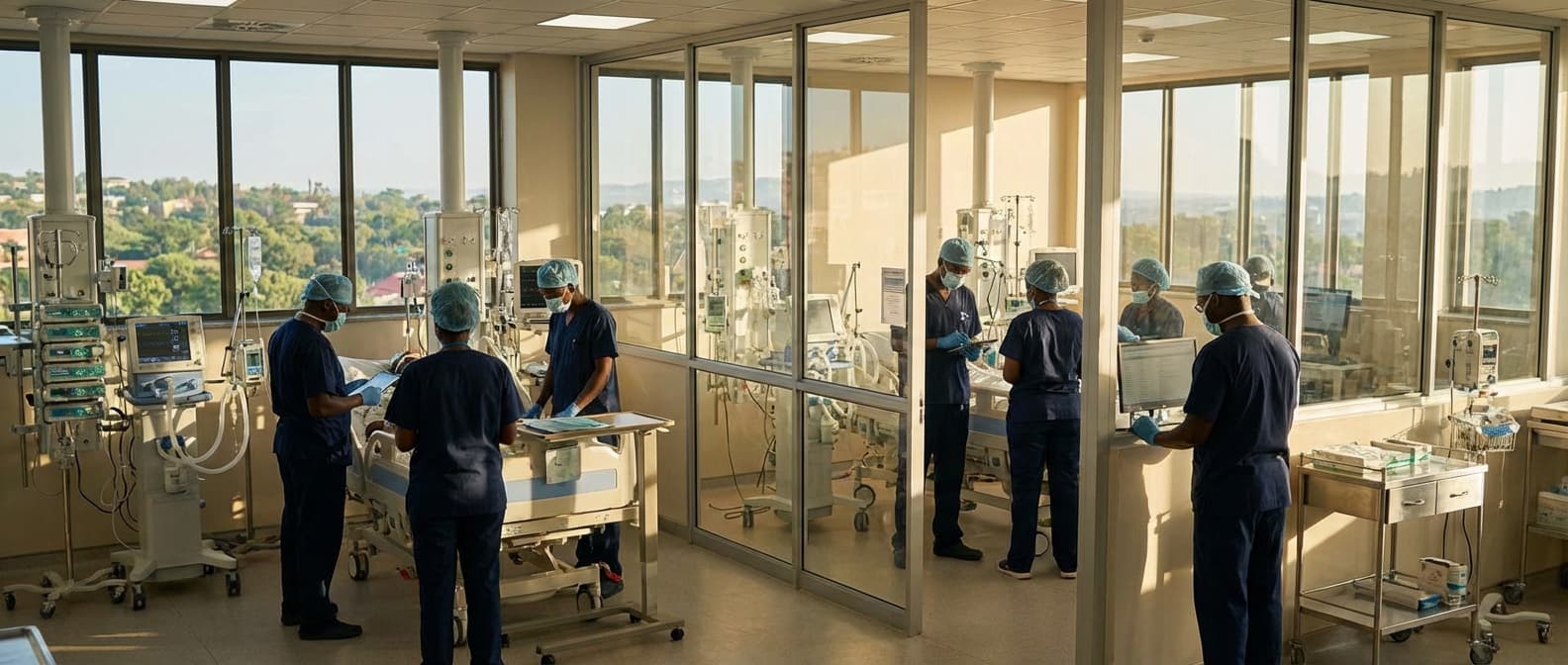
Ventilator Fleet Management & PM in Mauritius
Engineering Excellence & Technical Support
Preventive maintenance and fleet management for ICU ventilators High-standard technical execution following OEM protocols and local regulatory frameworks.
Proactive PM Scheduling & Compliance
Leveraging intelligent algorithms to optimize preventive maintenance schedules for the entire ventilator fleet across Mauritius, ensuring 99% compliance and minimizing unexpected downtime.
Real-time Fleet Telemetry & Diagnostics
Implementing a robust IoT-based system for real-time monitoring of ventilator performance and critical parameters, enabling immediate remote diagnostics and proactive intervention across all island locations.
Optimized Spare Parts & Inventory Management
Establishing a centralized, data-driven inventory system for ventilator spare parts, ensuring optimal stock levels and rapid deployment to reduce repair turnaround times nationwide.
What Is Ventilator Fleet Management & Pm In Mauritius?
Ventilator Fleet Management and Preventive Maintenance (PM) in Mauritius refers to the comprehensive lifecycle management of mechanical ventilators within healthcare facilities. This service encompasses the acquisition, deployment, operational monitoring, routine maintenance, repair, and eventual decommissioning of a dedicated fleet of ventilators. The objective is to ensure the continuous availability, optimal performance, and regulatory compliance of these critical medical devices, thereby guaranteeing patient safety and supporting clinical workflows. This is a crucial service for any healthcare institution operating in Mauritius that relies on mechanical ventilation for patient care.
| Stakeholder/User | Need for Ventilator Fleet Management & PM | Typical Use Cases |
|---|---|---|
| Hospitals (Public & Private): | Crucial for maintaining operational readiness, ensuring patient safety, managing operational costs, and complying with healthcare regulations. Especially vital for Intensive Care Units (ICUs), High Dependency Units (HDUs), and operating theatres. | Managing fluctuating demand during peak seasons or public health crises (e.g., pandemics). Ensuring uninterrupted ventilation support for critically ill patients. Optimizing resource allocation for maintenance budgets. Maintaining accreditation and quality standards. |
| Specialized Clinics (e.g., Respiratory Care Centers, Geriatric Facilities): | Ensures the availability of reliable ventilators for specific patient populations requiring long-term or specialized respiratory support. Reduces downtime and the risk of adverse events. | Providing continuous home ventilation support management. Maintaining specialized ventilators for specific respiratory conditions. Facilitating seamless transitions between hospital and home care. |
| Government Health Authorities/Ministries of Health: | Overseeing the national health infrastructure, ensuring equitable access to essential medical equipment, and managing public health emergencies. Facilitates strategic planning and resource allocation across the healthcare system. | Establishing national ventilator stockpiles and maintenance protocols. Monitoring the condition and availability of ventilators in public facilities. Responding to nationwide health emergencies with adequate equipment. |
| Biomedical Engineering Departments: | Responsible for the technical upkeep and operational integrity of medical equipment. Requires robust systems for scheduling, execution, and documentation of maintenance activities. | Implementing scheduled PM programs. Diagnosing and repairing equipment failures. Managing spare parts inventory. Ensuring calibration and performance verification. |
| Healthcare Administrators & Procurement Departments: | Focus on cost-effectiveness, asset lifecycle management, and ensuring compliance with procurement regulations. Requires data-driven insights for decision-making. | Developing long-term capital expenditure plans for ventilator replacement. Negotiating service contracts and maintenance agreements. Tracking the total cost of ownership for ventilator fleets. |
Key Components of Ventilator Fleet Management & PM
- Acquisition and Deployment: Strategic procurement based on anticipated demand, clinical requirements, and budgetary constraints. Includes installation and integration into existing healthcare infrastructure.
- Operational Monitoring and Performance Tracking: Real-time or periodic monitoring of ventilator usage, performance metrics, and alarm history. This often involves sophisticated asset tracking and data analytics platforms.
- Preventive Maintenance (PM): Scheduled, systematic inspections, cleaning, calibration, and replacement of worn components according to manufacturer specifications and established clinical guidelines. Aims to mitigate failures and prolong equipment lifespan.
- Corrective Maintenance and Repair: Prompt identification, diagnosis, and resolution of equipment malfunctions and failures by qualified biomedical technicians.
- Inventory Management: Maintaining an accurate and up-to-date inventory of all ventilators, including their location, status, service history, and consumables.
- Regulatory Compliance and Documentation: Ensuring all ventilators meet local and international safety standards and maintaining comprehensive records of all maintenance activities, certifications, and incident reports.
- Training and Competency Assurance: Providing training to clinical staff on the proper operation and basic troubleshooting of ventilators, and to biomedical technicians on advanced maintenance and repair procedures.
- End-of-Life Management: Planning for the safe and environmentally responsible decommissioning and disposal or refurbishment of ventilators at the end of their service life.
Who Needs Ventilator Fleet Management & Pm In Mauritius?
In Mauritius, ensuring the optimal functioning and longevity of ventilator fleets is crucial for maintaining a robust healthcare system. Ventilator Fleet Management and Preventive Maintenance (PM) are essential services that cater to a diverse range of public and private healthcare institutions. These services aim to maximize equipment uptime, minimize costly breakdowns, ensure patient safety, and control operational expenses. Effective management and regular maintenance prevent unexpected failures, extend the lifespan of expensive medical devices, and guarantee that these life-saving machines are ready when needed.
| Customer Type | Key Departments Involved | Specific Needs & Benefits of Fleet Management/PM |
|---|---|---|
| Public Hospitals (e.g., Victoria Hospital, Sir Seewoosagur Ramgoolam National Hospital) | Intensive Care Units (ICU), Respiratory Therapy Departments, Anesthesiology Departments, Emergency Departments | Ensuring high availability for critical patients, managing a large and diverse fleet, cost control through planned maintenance, compliance with national health standards. |
| District Hospitals | ICU (where available), Medical Wards, Emergency Departments | Extending the lifespan of equipment in resource-constrained settings, ensuring readiness for local emergencies, training local biomedical staff. |
| Private Hospitals & Clinics (e.g., Clinique du Bon Pasteur, Apollo Bramwell Hospital) | ICU, Surgical Wards, Cardiology Departments, Respiratory Clinics | Maintaining a reputation for advanced care, optimizing investment in high-tech equipment, providing seamless patient care, reducing downtime that impacts revenue. |
| Ambulance Services & EMS Providers | Emergency Response Teams, Paramedic Units | Ensuring immediate availability of functional ventilators for critical patients en route to hospital, reliability in mobile environments, safe patient transport. |
| Specialized Medical Centers (e.g., Cardiac Centers, Oncology Centers) | ICU, Post-Operative Care Units | Supporting specialized patient populations with complex respiratory needs, ensuring equipment is calibrated for specific procedures, minimizing risks of equipment failure during delicate treatments. |
| Medical Equipment Suppliers & Distributors (with service contracts) | Service Departments, Biomedical Engineering Teams | Fulfilling service level agreements (SLAs), providing value-added services to clients, proactive identification of potential issues, managing spare parts inventory. |
Target Customers & Departments in Mauritius Requiring Ventilator Fleet Management & PM:
- {"title":"Public Healthcare Sector","description":"The backbone of healthcare delivery in Mauritius, this sector operates a significant number of ventilators across various facilities."}
- {"title":"Private Healthcare Sector","description":"A growing segment that offers specialized care and also relies on modern medical equipment like ventilators."}
- {"title":"Emergency Medical Services (EMS)","description":"Critical for rapid response and patient stabilization during transit, EMS units require fully operational and well-maintained ventilators."}
- {"title":"Research & Academic Institutions","description":"Hospitals affiliated with medical training often have research departments that utilize ventilators, requiring them to be in prime condition for both clinical and research purposes."}
Ventilator Fleet Management & Pm Process In Mauritius
This document outlines the workflow for ventilator fleet management and Preventive Maintenance (PM) processes in Mauritius, from initial inquiry to final execution. The process aims to ensure the optimal functionality and longevity of the national ventilator fleet, crucial for critical care services. It encompasses several key stages, including inquiry reception, assessment, planning, scheduling, execution, and reporting, with specific considerations for the Mauritian healthcare context.
| Stage | Description | Key Activities | Responsible Parties | Mauritius Specifics |
|---|---|---|---|---|
| Inquiry & Request Initiation | The process begins with a request for ventilator service, repair, or scheduled PM. | Receiving requests (phone, email, official letter), logging inquiries, initial data collection (ventilator model, serial number, location, issue description). | Healthcare facility staff, Biomedical Engineering Department (BED) at Ministry of Health and Wellness (MOHW), designated hospital biomedical technicians. | Requests often funnel through central MOHW channels or directly to hospital BEDs. Clear communication protocols are vital, especially during emergencies or high demand periods. |
| Initial Assessment & Prioritization | Determining the urgency and nature of the request. | Reviewing the inquiry, performing preliminary troubleshooting (remote or on-site), classifying the request (e.g., urgent repair, routine PM, new installation). | BED technicians, clinical engineers, senior biomedical engineers. | Prioritization is critical, especially in resource-constrained environments. Ventilators in active critical care are prioritized over those in storage. Collaboration with clinical teams is essential for urgency assessment. |
| Resource Allocation & Planning | Securing necessary personnel, parts, and tools for the service. | Identifying required spare parts, checking inventory, ordering parts if necessary, assigning qualified technicians, confirming availability of specialized tools and testing equipment. | BED management, procurement department (MOHW/Hospital), logistics officers. | Inventory management of critical spare parts is a key challenge. Local procurement processes and potential reliance on international suppliers for specialized parts need to be factored in. Contingency plans for part delays are important. |
| Scheduling & Notification | Planning the service visit and informing relevant parties. | Coordinating with the requesting facility, scheduling the PM or repair visit, confirming the date and time, notifying the clinical staff about the planned downtime. | BED scheduling team, hospital administration, clinical ward managers. | Flexibility in scheduling is crucial to minimize disruption to patient care. 'Hot-swapping' or temporary replacement ventilators might be considered during scheduled PM if available. |
| Preventive Maintenance Execution | Performing the scheduled maintenance on the ventilator. | Following manufacturer's guidelines for PM, cleaning, calibration, functional testing, replacing worn-out parts, ensuring all safety checks are completed. | Qualified biomedical technicians, service engineers (if external support is engaged). | Adherence to standardized PM checklists is paramount. Training for technicians on a diverse range of ventilator models is an ongoing requirement. |
| Post-Maintenance Verification & Testing | Ensuring the ventilator is fully operational and safe after maintenance. | Performing comprehensive functional tests, running diagnostic checks, verifying all parameters and alarms, simulating various breathing modes, documenting test results. | Biomedical technicians, quality assurance personnel. | Rigorous testing ensures patient safety. This stage often involves collaboration with clinical staff to confirm perceived performance. |
| Documentation & Reporting | Recording all service activities and generating reports. | Updating the ventilator's maintenance log, entering service details into the fleet management system, generating service reports for the requesting facility and MOHW, closing out the work order. | Biomedical technicians, BED administrative staff, fleet management system administrator. | Accurate and timely documentation is essential for asset tracking, budget justification, and identifying recurring issues. Digitalizing records through a centralized fleet management system is a key goal. |
| Fleet Optimization & Feedback | Reviewing maintenance data to improve future operations and identifying systemic issues. | Analyzing PM data to identify trends in equipment failure, assessing equipment lifespan, providing feedback on equipment performance to procurement, identifying training needs for technicians, and recommending fleet upgrades or replacements. | BED management, MOHW fleet managers, procurement specialists. | This stage is crucial for long-term planning, ensuring the sustainability and efficiency of the ventilator fleet. Understanding local usage patterns and environmental factors that might affect ventilator performance is important. |
Workflow Stages
- Inquiry & Request Initiation
- Initial Assessment & Prioritization
- Resource Allocation & Planning
- Scheduling & Notification
- Preventive Maintenance Execution
- Post-Maintenance Verification & Testing
- Documentation & Reporting
- Fleet Optimization & Feedback
Ventilator Fleet Management & Pm Cost In Mauritius
Managing a ventilator fleet in Mauritius involves several cost considerations, primarily driven by the acquisition, maintenance, and operational aspects of these critical medical devices. The pricing of ventilator fleet management and preventive maintenance (PM) in Mauritius is influenced by a combination of global supply chain dynamics, local import duties and taxes, the complexity and age of the ventilator models, the service provider's expertise, and the required frequency and scope of maintenance. Factors such as the availability of specialized technicians, the cost of spare parts (which are often imported), and the need for calibration and validation according to international standards all contribute to the overall expense.
| Service Component | Estimated Price Range (MUR) | Notes |
|---|---|---|
| Annual Preventive Maintenance (Per Ventilator - Basic) | MUR 15,000 - MUR 30,000 | Covers routine checks, cleaning, calibration, and basic parts replacement for standard models. |
| Annual Preventive Maintenance (Per Ventilator - Advanced/Complex) | MUR 25,000 - MUR 60,000+ | Includes comprehensive servicing, software updates, and potential replacement of more complex components for high-end ventilators. |
| On-Demand Repair Call-Out (Labor Only) | MUR 2,000 - MUR 5,000 (per visit) | Excludes cost of spare parts and can vary based on urgency and time of day. |
| Spare Parts (Varies greatly) | MUR 5,000 - MUR 50,000+ (per part) | Major components like sensors, batteries, circuits, or motherboards can be significantly expensive. Import duties and shipping add to this. |
| Full Fleet Management Contract (Monthly/Annual - negotiable) | Percentage of Asset Value or Per Ventilator Fee | Comprehensive service including PM, repairs, parts management, and reporting. Highly variable and tailored to the fleet. |
| Ventilator Servicing Course/Certification (for technicians) | MUR 20,000 - MUR 100,000+ (per course/technician) | Costs for training on specific ventilator models, often requiring specialized trainers and equipment. |
Key Pricing Factors for Ventilator Fleet Management & PM in Mauritius
- Ventilator Type and Technology: High-end, complex ventilators with advanced monitoring and therapy capabilities (e.g., invasive and non-invasive ventilation, pressure support, high-flow oxygen therapy) will naturally incur higher management and PM costs than simpler, basic models.
- Fleet Size and Diversity: Larger fleets may benefit from economies of scale in PM contracts, but a diverse fleet with many different ventilator models can increase complexity and costs due to the need for specialized parts and technician training for each type.
- Age and Condition of Ventilators: Older ventilators may require more frequent repairs and replacements of parts, leading to higher ongoing PM costs. The initial condition of the fleet upon entering a management contract also plays a role.
- Preventive Maintenance Schedule and Scope: The frequency of PM (e.g., annual, semi-annual) and the comprehensiveness of the service (e.g., basic checks, full calibration, software updates, replacement of wear-and-tear parts) directly impact pricing.
- Spare Parts Availability and Cost: As most advanced medical equipment parts are imported into Mauritius, import duties, shipping costs, and currency exchange rates significantly affect the price of spare parts, a major component of PM costs.
- Service Provider Expertise and Reputation: Established and reputable biomedical engineering companies with certified technicians and robust quality control processes often command higher service fees, but can offer greater reliability and expertise.
- Contractual Agreements (Service Level Agreements - SLAs): The terms of the SLA, including response times for emergency repairs, guaranteed uptime, and inclusion of consumables, will be factored into the pricing.
- Geographic Location and Accessibility: While Mauritius is an island nation, the logistical ease of accessing specific healthcare facilities for PM and repairs might have minor implications.
- Training and Certification: Costs associated with ongoing training and certification of biomedical technicians for specific ventilator models need to be recuperated.
- Regulatory Compliance: Ensuring ventilators meet local and international medical device regulations and standards adds to the administrative and technical overhead, which is reflected in the costs.
Affordable Ventilator Fleet Management & Pm Options
Effective fleet management for medical ventilators is crucial for ensuring patient care continuity and operational efficiency. This document outlines affordable options, focusing on value bundles and cost-saving strategies to maximize the lifespan and performance of your ventilator equipment.
Understanding Value Bundles: Value bundles are pre-packaged service and support offerings designed to provide a comprehensive solution at a predictable cost. These bundles often combine essential services such as routine preventive maintenance (PM), essential repairs, software updates, and sometimes even loaner equipment. The primary benefit is cost predictability, allowing for better budget planning and potentially reducing overall expenditure compared to ad-hoc service requests. Bundles can be tailored to the size and type of your fleet, offering scalability and flexibility.
| Cost-Saving Strategy | Description | Potential Benefits |
|---|---|---|
| Bundled PM & Repair Contracts | Pre-paid service agreements covering a set number of PM visits and a defined scope of repair services (e.g., parts, labor, travel) for a specified period. Often includes discounts for bulk purchases. | Predictable budgeting, reduced administrative overhead, access to priority service, potential for lower per-unit service costs. |
| Extended Warranty Programs | Purchasing extended warranties for new or recently out-of-warranty ventilators. These can cover unexpected repairs beyond the standard manufacturer warranty. | Protection against high repair costs, improved asset lifespan predictability, peace of mind. |
| Parts Inventory Management | Strategic stocking of common replacement parts based on usage patterns and equipment models. This can be managed internally or through a service provider. | Reduced downtime waiting for parts, faster repair turnaround, potential for bulk purchasing discounts on parts. |
| Training & Skill Development for Internal Teams | Investing in training your biomedical engineers and technicians on specific ventilator models and common repair procedures. | Reduced reliance on external service, faster in-house repairs, improved overall fleet uptime, empowerment of internal staff. |
| Negotiated Fleet Discounts | Leveraging the size of your ventilator fleet to negotiate better pricing with manufacturers or service providers for both new equipment and ongoing service contracts. | Direct reduction in acquisition and maintenance costs, favorable contract terms. |
| Predictive Maintenance Software & Analytics | Utilizing software that analyzes equipment performance data to predict potential failures before they occur. This allows for scheduled interventions. | Minimizes unexpected breakdowns, reduces emergency repair costs, optimizes PM schedules, extends equipment life. |
| Standardization of Ventilator Models | Where feasible, standardizing on a limited number of ventilator models across the fleet. | Simplifies training, reduces spare parts inventory needs, streamlines PM and repair processes, often allows for better bulk purchasing and service contract rates. |
Key Components of Affordable Ventilator Fleet Management & PM Options
- Tiered PM Service Contracts: Offering different levels of PM (e.g., basic, comprehensive) to match your budget and risk tolerance. Basic tiers might cover essential checks and calibration, while comprehensive tiers include deeper inspections, parts replacement, and extended warranties.
- Manufacturer-Authorized Service Partnerships: Leveraging relationships with original equipment manufacturers (OEMs) for certified technicians and genuine parts, often at negotiated fleet rates. This ensures quality and compliance.
- Third-Party Biomedical Service Providers: Exploring independent service organizations (ISOs) that specialize in ventilator maintenance. ISOs can offer competitive pricing, especially for out-of-warranty equipment, while still providing qualified technicians and a strong understanding of various ventilator models.
- In-House Biomedical Teams with External Support: Investing in training and equipping your internal biomedical team for routine PM and minor repairs, while outsourcing complex diagnostics or specialized component replacements to external experts. This hybrid approach can be highly cost-effective.
- Remote Monitoring & Diagnostics: Implementing systems that allow for remote monitoring of ventilator performance and early detection of potential issues. This proactive approach can prevent minor problems from escalating into costly repairs and reduce the need for on-site technician visits.
- Refurbished or Certified Pre-Owned Equipment: For facilities with budget constraints, acquiring refurbished ventilators from reputable sources can be a significantly more affordable option than purchasing new. These units are typically put through rigorous testing and come with warranties.
Verified Providers In Mauritius
In the realm of healthcare, especially when dealing with specialized needs or seeking a trusted network, identifying verified providers is paramount. In Mauritius, finding reliable and credentialed healthcare professionals and facilities can significantly impact the quality and accessibility of care. This article delves into the importance of verified providers, with a particular focus on Franance Health, and explains why their credentials make them an exemplary choice for your healthcare journey.
| Criterion | Franance Health Credentials | Why it Matters |
|---|---|---|
| Accreditation and Partnerships | Franance Health collaborates with a network of accredited hospitals, clinics, and individual medical professionals across Mauritius. | This signifies that their partner facilities and practitioners meet stringent international and local healthcare standards for quality and safety. |
| Provider Vetting Process | Franance Health employs a thorough vetting process for all its associated providers, including verification of medical licenses, specializations, and professional experience. | This ensures that patients are connected with qualified and experienced healthcare professionals. |
| Range of Services | Franance Health offers access to a comprehensive spectrum of medical services, from general practitioners to specialized treatments. | This broad network allows them to cater to diverse healthcare needs, making them a versatile choice. |
| Patient-Centric Approach | The emphasis at Franance Health is on patient well-being and providing seamless healthcare experiences. | This commitment translates into personalized care, efficient appointment scheduling, and support throughout the patient's medical journey. |
| Innovation and Technology | Franance Health often partners with facilities that embrace modern medical technology and innovative treatment approaches. | This ensures that patients have access to the latest advancements in healthcare. |
Why are Verified Providers Crucial?
- Quality Assurance: Verification processes typically involve rigorous checks of qualifications, licenses, and adherence to established healthcare standards. This ensures that providers meet a certain level of competency and expertise.
- Patient Safety: Verified providers often undergo background checks and are subject to ongoing monitoring, which contributes to a safer healthcare environment for patients.
- Trust and Confidence: Knowing that a provider has been vetted provides peace of mind and builds confidence in their ability to deliver effective and ethical care.
- Access to Specialized Services: Verification can be particularly important for identifying specialists and facilities equipped to handle specific medical conditions or procedures.
- Insurance and Reimbursement: Many insurance providers and health plans will only cover services from verified or accredited healthcare institutions.
Scope Of Work For Ventilator Fleet Management & Pm
This Scope of Work (SOW) outlines the requirements for a comprehensive Ventilator Fleet Management and Preventive Maintenance (PM) program. The program aims to ensure the optimal performance, reliability, and safety of the organization's ventilator fleet. It includes detailed technical deliverables and standard specifications for all aspects of fleet management and PM.
| Deliverable | Description | Standard Specifications / Requirements |
|---|---|---|
| Comprehensive Fleet Inventory Database | Establish and maintain a detailed inventory of all ventilators, including model, serial number, acquisition date, location, service history, and maintenance status. | Cloud-based or secure on-premise database. Supports search, filtering, and reporting. Includes digital copies of all service and maintenance records. |
| Preventive Maintenance (PM) Schedule | Develop and implement a proactive PM schedule based on manufacturer recommendations, usage patterns, and regulatory requirements. | Minimum PM frequency as per manufacturer guidelines. Includes visual inspections, functional tests, cleaning, lubrication, filter replacement, and battery checks. |
| PM Checklists and Procedures | Create standardized, step-by-step checklists and procedures for all PM tasks. | Task-specific, detailed, and clear instructions. Includes required tools and consumables. Aligned with manufacturer service manuals. |
| Corrective Maintenance (CM) Response Protocol | Define procedures for responding to reported ventilator malfunctions or failures, including response times and escalation protocols. | Tiered response times based on urgency (e.g., critical failure, minor issue). Clearly defined escalation pathways and contact information. |
| Repair Documentation and Traceability | Maintain accurate records of all repairs, including parts used, labor hours, and technician responsible. | All repair records linked to specific equipment in the fleet inventory. Use of original or approved equivalent spare parts. |
| Calibration and Performance Verification Reports | Ensure all ventilators are regularly calibrated and their performance verified against manufacturer specifications. | Calibration performed by certified technicians using traceable calibration equipment. Documentation includes before and after readings, and certificates of calibration. |
| Technician Training and Competency Matrix | Establish a program for training and certifying biomedical technicians on specific ventilator models and maintenance procedures. | Regular training on new models and software updates. Documentation of training completion and competency assessments for each technician. |
| Spare Parts Inventory Management System | Implement a system for managing critical spare parts to minimize downtime. | Minimum stock levels defined for critical components. Just-in-time ordering for less critical parts. Expiry date tracking for consumables. |
| End-of-Life (EOL) Assessment and Replacement Plan | Develop a strategy for assessing ventilator EOL and planning for timely replacements. | Criteria for EOL assessment (e.g., age, cost of repair, obsolescence). Budgetary planning for fleet replacement cycles. |
| Monthly/Quarterly Fleet Performance Reports | Provide regular reports on fleet status, PM compliance, repair trends, and key performance indicators (KPIs). | Reports include metrics such as PM completion rate, mean time between failures (MTBF), mean time to repair (MTTR), and equipment availability. |
Key Components of Ventilator Fleet Management & PM
- Fleet Inventory and Asset Management
- Preventive Maintenance Program
- Corrective Maintenance and Repair
- Calibration and Performance Verification
- Training and Competency Management
- Documentation and Reporting
- Quality Assurance and Compliance
- Spare Parts Management
- End-of-Life Management
Service Level Agreement For Ventilator Fleet Management & Pm
This Service Level Agreement (SLA) outlines the terms and conditions for the Ventilator Fleet Management and Preventative Maintenance (PM) services provided by [Your Company Name] to [Client Name]. It defines the expected response times for critical incidents and the guaranteed uptime for the managed ventilator fleet.
| Service Component | SLA Target | Measurement Method |
|---|---|---|
| Response Time for Critical Incidents (during Business Hours) | 1 Hour | Time from initial notification (phone, email, portal) to confirmed acknowledgement and start of troubleshooting by [Your Company Name] technical staff. |
| Response Time for Critical Incidents (outside Business Hours) | 2 Hours | Time from initial notification (dedicated emergency line) to confirmed acknowledgement and start of troubleshooting by [Your Company Name] technical staff. |
| On-site Technician Dispatch (for Critical Incidents) | Within 4 Business Hours of Response | Time from confirmed acknowledgement to a qualified technician arriving at the client's facility. |
| Preventative Maintenance Scheduling | Within 1 Week of Agreed Schedule | PM appointments scheduled by [Your Company Name] to occur within one week of the planned date as per the agreed PM schedule. |
| Uptime Guarantee (Fleet-wide) | 98% | Calculated as (Total Scheduled Operational Hours - Total Downtime Hours) / Total Scheduled Operational Hours, measured monthly. Scheduled PM is not considered downtime. |
| Repair Time (for Critical Incidents) | Target: 24 Hours (for common parts) | Time from the initiation of repair to the ventilator being certified operational. This is a target and may be affected by parts availability. Exceptions for complex repairs or rare parts will be communicated. |
Key Definitions
- Ventilator Fleet: All ventilators owned or operated by [Client Name] that are included in this SLA and managed by [Your Company Name].
- Critical Incident: Any malfunction or operational failure of a ventilator that renders it unusable for patient care and requires immediate attention.
- Preventative Maintenance (PM): Scheduled servicing and inspections performed on ventilators to ensure optimal performance and prevent potential failures.
- Response Time: The maximum time allowed from the acknowledgement of a reported incident to the initiation of troubleshooting or repair efforts by [Your Company Name].
- Uptime Guarantee: The percentage of time the ventilator fleet is expected to be operational and available for use.
- Downtime: The period during which a ventilator is unavailable for patient care due to malfunction, maintenance, or repair.
- Business Hours: [Specify Business Hours, e.g., Monday - Friday, 8:00 AM to 5:00 PM Local Time, excluding public holidays].
Frequently Asked Questions

Ready when you are
Let's scope your Ventilator Fleet Management & PM in Mauritius project in Mauritius.

Scaling healthcare logistics and technical systems across the entire continent.