
Uptime, Downtime & Root-Cause Analysis Reporting Service in Mauritius
Engineering Excellence & Technical Support
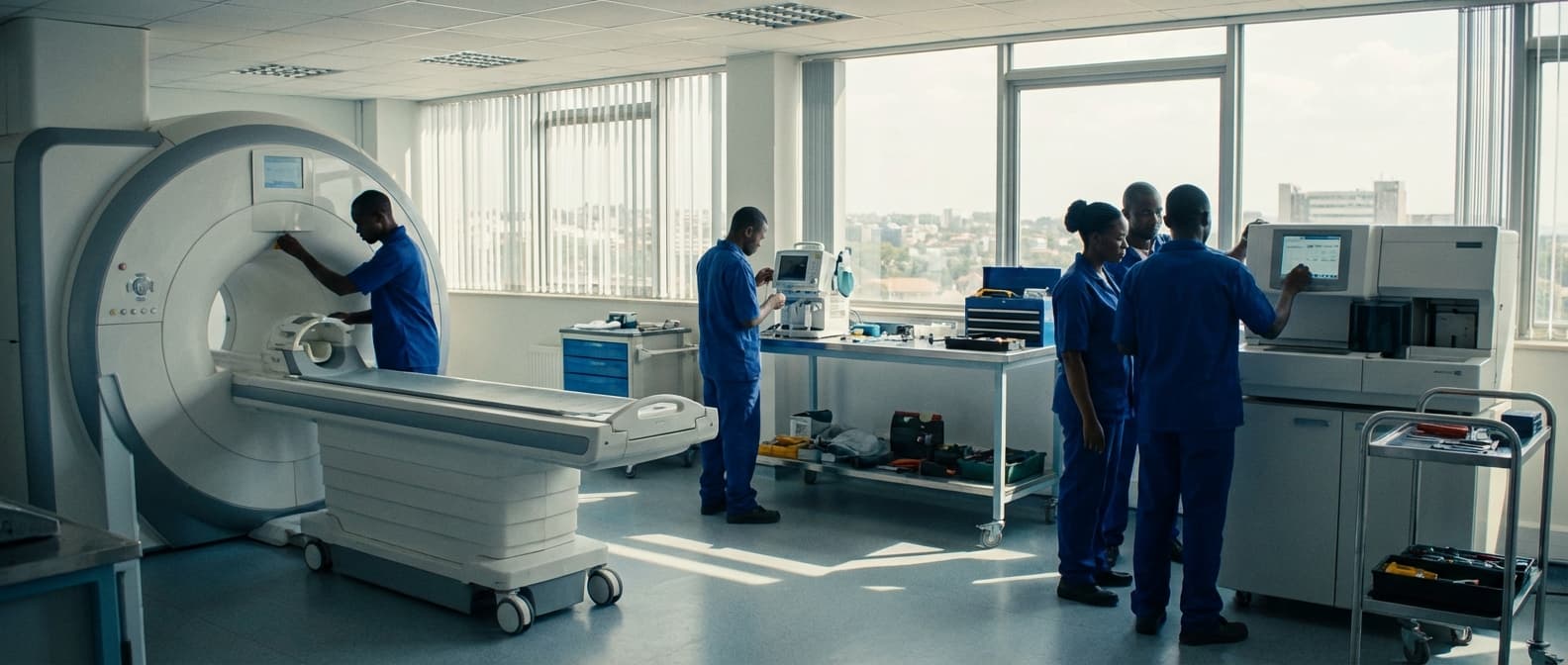
Uptime, Downtime & Root-Cause Analysis Reporting Service High-standard technical execution following OEM protocols and local regulatory frameworks.
Real-time Uptime Monitoring & Alerting
Leverage our advanced, non-intrusive monitoring probes strategically located in Mauritius, providing instant visibility into your critical services. Receive immediate alerts via SMS and email for any detected downtime, ensuring swift response and minimizing business impact.
Automated Root-Cause Analysis (RCA) Dashboards
Go beyond simple downtime notifications. Our service automatically collects and correlates system logs, network traffic, and performance metrics to generate intuitive RCA dashboards. Pinpoint the exact source of outages, accelerating resolution and preventing recurrence.
Comprehensive Downtime & Performance Reporting
Gain actionable insights into your service reliability with detailed historical downtime reports and performance trend analysis, tailored for the Mauritian IT landscape. Understand patterns, identify recurring issues, and optimize your infrastructure for maximum uptime and user satisfaction.
What Is Uptime, Downtime & Root-cause Analysis Reporting Service In Mauritius?
In Mauritius, Uptime, Downtime & Root-Cause Analysis Reporting Services are critical for businesses relying on digital infrastructure and operational continuity. This service encompasses the comprehensive monitoring of IT systems, services, and applications to detect, report, and analyze periods of unavailability (downtime). It involves granular data collection, real-time alerting, and a systematic investigation process to identify the underlying causes of service interruptions. The ultimate objective is to minimize downtime, enhance system resilience, and inform strategic decision-making to prevent recurrence.
Uptime refers to the period during which a system, service, or application is functional and accessible to users. It is typically measured as a percentage of a given timeframe (e.g., 99.9% uptime). Downtime is the inverse, representing any period where the system is unavailable or not performing its intended function. Root-Cause Analysis (RCA) is a structured problem-solving methodology used to identify the fundamental reason for an incident, rather than just addressing its symptoms. This service in Mauritius leverages advanced monitoring tools and expert analysis to provide actionable insights into system performance and availability.
| Typical Use Cases for Uptime, Downtime & RCA Reporting in Mauritius | Description |
|---|---|
| Website & E-commerce Availability Monitoring: | Ensuring that online storefronts and critical web applications remain accessible to customers, detecting and diagnosing issues that lead to lost sales. |
| Network Infrastructure Performance Tracking: | Monitoring routers, switches, firewalls, and internet connectivity to identify bottlenecks, outages, and performance degradation impacting internal and external communications. |
| Application Performance Monitoring (APM): | Observing the performance of business-critical applications, identifying slow response times, errors, or crashes, and pinpointing the underlying code or infrastructure issues. |
| Server & Data Center Uptime Verification: | Ensuring physical and virtual servers, as well as data center facilities, are operational and meeting availability targets, including power, cooling, and environmental controls. |
| Cloud Service Availability Assurance: | Monitoring uptime of services hosted on cloud platforms (e.g., AWS, Azure, GCP) and verifying that SLAs are being met, as well as investigating cloud-provider-related incidents. |
| Database Availability & Performance: | Confirming that databases are accessible, responsive, and not experiencing errors that could halt application functionality or data processing. |
| Service Level Agreement (SLA) Compliance Reporting: | Providing documented evidence of system uptime and downtime to demonstrate adherence to contractual obligations with clients or partners. |
| Incident Response & Post-Mortem Analysis: | Facilitating rapid incident response by providing real-time alerts and conducting thorough post-incident reviews to prevent future occurrences. |
| Capacity Planning & Performance Optimization: | Analyzing historical uptime and downtime data to identify trends, predict potential issues, and make informed decisions about infrastructure upgrades and resource allocation. |
Who Needs Uptime, Downtime & Root-Cause Analysis Reporting Services in Mauritius?
- Enterprises with Mission-Critical Applications: Businesses whose operations are heavily dependent on the continuous availability of software, databases, or cloud services (e.g., banking, e-commerce, telecommunications).
- Cloud Service Providers (CSPs) & Hosting Companies: Organizations that offer IT infrastructure, platforms, or software as a service to clients, where SLA adherence for uptime is paramount.
- Government Agencies & Public Services: Entities responsible for delivering essential services that require high availability and reliability (e.g., healthcare portals, citizen services platforms).
- Financial Institutions: Banks, insurance companies, and investment firms where data integrity and transaction processing uptime are non-negotiable.
- Telecommunications Operators: Companies providing voice, data, and internet services, where network availability directly impacts customer satisfaction and revenue.
- Businesses with Online Retail Presence: E-commerce platforms that experience significant revenue loss during website or payment gateway downtime.
- IT Departments & Managed Service Providers (MSPs): Internal IT teams and external service providers responsible for the health and performance of an organization's IT infrastructure.
- Companies with High Customer Support Demands: Businesses where service interruptions lead to an influx of support requests and a decline in customer satisfaction.
Who Needs Uptime, Downtime & Root-cause Analysis Reporting Service In Mauritius?
In today's fast-paced digital landscape, ensuring the continuous availability and optimal performance of IT systems is paramount for businesses of all sizes. Downtime can lead to significant financial losses, reputational damage, and decreased customer satisfaction. To combat these challenges, businesses in Mauritius are increasingly recognizing the critical need for a comprehensive Uptime, Downtime & Root-Cause Analysis Reporting Service. This service provides essential insights into system performance, proactively identifies issues, and facilitates swift resolution, ultimately safeguarding business continuity and efficiency.
| Target Customers | Key Departments & Their Needs |
|---|---|
| Financial Institutions (Banks, Insurance Companies) | IT Operations: Monitoring system availability for trading platforms, online banking, and transaction processing. Ensuring compliance with regulatory reporting. Downtime Analysis: Quantifying financial impact of service interruptions. Root-Cause Analysis: Identifying vulnerabilities in core banking systems and payment gateways. |
| E-commerce & Retail Businesses | IT Operations: Ensuring website and app uptime for sales and customer engagement. Performance Monitoring: Tracking website speed and transaction success rates. Downtime Analysis: Assessing lost revenue due to website outages. Root-Cause Analysis: Diagnosing issues with payment gateways, inventory management, and order fulfillment systems. |
| Telecommunications Companies | Network Operations Center (NOC): Monitoring network infrastructure uptime, service availability (internet, mobile, landline). Performance Monitoring: Tracking call drop rates, data speeds, and service quality. Downtime Analysis: Identifying impact on subscriber base and revenue. Root-Cause Analysis: Pinpointing network faults, equipment failures, and software glitches. |
| Healthcare Providers (Hospitals, Clinics) | IT Department: Ensuring uptime of Electronic Health Records (EHRs), patient management systems, and medical imaging equipment. Security & Compliance: Meeting strict data privacy regulations (e.g., patient data confidentiality). Downtime Analysis: Assessing impact on patient care and appointment scheduling. Root-Cause Analysis: Investigating failures in critical healthcare IT systems. |
| Government & Public Sector Agencies | IT Infrastructure Management: Maintaining availability of public service portals, citizen databases, and internal systems. Efficiency & Cost Optimization: Ensuring smooth delivery of essential services. Downtime Analysis: Measuring impact on public access to information and services. Root-Cause Analysis: Identifying systemic issues in government IT infrastructure. |
| Technology & Software Development Companies | DevOps & Engineering Teams: Monitoring uptime of SaaS platforms, cloud services, and development environments. Performance Monitoring: Tracking application performance and user experience. Downtime Analysis: Quantifying impact on customer retention and SLA adherence. Root-Cause Analysis: Diagnosing bugs, infrastructure issues, and deployment errors. |
| Logistics & Transportation Companies | Operations Management: Ensuring uptime of tracking systems, fleet management software, and communication platforms. Supply Chain Optimization: Minimizing disruptions to delivery schedules. Downtime Analysis: Assessing impact on delivery times and customer satisfaction. Root-Cause Analysis: Investigating issues with tracking devices, communication networks, and scheduling software. |
Who Needs Uptime, Downtime & Root-Cause Analysis Reporting Service in Mauritius?
- Businesses heavily reliant on digital operations and online services.
- Organizations with mission-critical IT infrastructure.
- Companies aiming to improve customer experience and satisfaction.
- Businesses seeking to optimize IT resource allocation and reduce operational costs.
- Regulated industries that require robust audit trails and performance documentation.
Uptime, Downtime & Root-cause Analysis Reporting Service Process In Mauritius
This document outlines the standard workflow for the Uptime, Downtime & Root-Cause Analysis (RCA) Reporting Service offered in Mauritius. The process is designed to be systematic and efficient, ensuring prompt resolution and comprehensive analysis of service interruptions. It begins with an initial inquiry and concludes with a detailed RCA report and follow-up actions.
| Phase | Description | Key Activities | Deliverables | Responsibility |
|---|---|---|---|---|
| The process begins when a client expresses interest in the Uptime, Downtime & RCA Reporting Service. | Initial contact (email, phone, web form), basic service overview. | Acknowledgement of inquiry. | Service Provider Sales/Inquiry Team |
| Formalizing the engagement and clearly defining the services to be provided. | Needs assessment, service proposal, contract negotiation, Service Level Agreement (SLA) finalization, defining reporting frequency and scope. | Signed Service Agreement, Scope of Work (SOW) document. | Service Provider Management, Client Stakeholders |
| Identifying and understanding the nature and impact of an uptime or downtime event. | Monitoring alerts, client notifications, initial impact assessment, preliminary troubleshooting to determine if an RCA is required. | Incident ticket creation, preliminary incident report. | Service Provider Operations/Monitoring Team, Client IT/Operations Team |
| Gathering all relevant information pertaining to the incident. | Collecting logs (system, application, network), configuration data, performance metrics, historical data, witness interviews. | Raw data sets, preliminary findings. | Service Provider Technical Analysts, Client Technical Teams |
| Determining the fundamental reason(s) for the uptime or downtime event. | Applying RCA methodologies (e.g., 5 Whys, Fishbone Diagram, Fault Tree Analysis), collaborative analysis sessions. | Identified root cause(s). | Service Provider RCA Specialists, Client Technical Experts |
| Documenting the incident, analysis, and findings in a structured report. | Compiling incident details, timeline, impact analysis, root cause(s), supporting evidence, initial recommendations. | Draft Root-Cause Analysis Report. | Service Provider RCA Team |
| Presenting the draft report to the client for validation and input. | Report presentation, discussion of findings, addressing client queries, incorporating feedback. | Revised draft report. | Service Provider RCA Team, Client Stakeholders |
| Delivering the finalized RCA report to the client. | Finalizing the report based on client feedback, official submission. | Final Root-Cause Analysis Report. | Service Provider RCA Team |
| Developing strategies to address the identified root cause(s) and prevent recurrence. | Brainstorming solutions, risk assessment of proposed actions, action plan development, assigning responsibilities and deadlines. | Action Plan document. | Service Provider RCA Team, Client Stakeholders |
| Ensuring that the implemented actions are effective in preventing future incidents. | Monitoring the effectiveness of corrective actions, verifying their implementation, post-implementation reviews, final closure of the RCA. | Verification report, closure notification. | Service Provider RCA Team, Client Stakeholders |
Uptime, Downtime & Root-Cause Analysis Reporting Service Process Workflow
- Inquiry Received
- Service Agreement & Scope Definition
- Incident Detection & Initial Assessment
- Data Collection & Analysis
- Root-Cause Identification
- Draft Report Generation
- Client Review & Feedback
- Final Report Submission
- Corrective & Preventive Actions Planning
- Follow-up & Verification
Uptime, Downtime & Root-cause Analysis Reporting Service Cost In Mauritius
Securing reliable uptime and promptly addressing downtime are critical for businesses in Mauritius. This report outlines the typical costs associated with Uptime and Downtime Monitoring & Root-Cause Analysis (RCA) services. Understanding these costs involves considering various factors that influence pricing, from the complexity of your infrastructure to the level of support required. The following discussion aims to provide a clear picture of pricing factors and ranges in Mauritian Rupees (MUR).
| Service Component | Typical Pricing Factor | Estimated Range (MUR per month, excluding setup fees) |
|---|---|---|
| Basic Uptime Monitoring (e.g., Ping, HTTP checks for a limited number of assets) | Number of monitored endpoints, monitoring frequency | MUR 500 - 5,000 |
| Advanced Uptime & Performance Monitoring (e.g., detailed application metrics, network traffic) | Number & complexity of assets, depth of metrics, monitoring frequency | MUR 3,000 - 20,000+ |
| Automated Root-Cause Analysis (RCA) Tools & Basic Alerts | Features of the RCA engine, number of alerts | Included in advanced monitoring packages, or an additional MUR 1,000 - 5,000 |
| Expert-Led Root-Cause Analysis (RCA) & Incident Response | Complexity of incidents, number of incidents, engineer availability, response time SLAs | Can be project-based (e.g., MUR 5,000 - 50,000+ per incident) or a retainer (e.g., MUR 10,000 - 100,000+ per month for dedicated support) |
| Comprehensive Reporting & Dashboards | Number of custom reports, complexity of visualizations, reporting frequency | Often bundled with monitoring, or an additional MUR 500 - 3,000 |
| Managed Monitoring & 24/7 Support | Level of management, dedicated support team, response time SLAs | Typically adds 20-50% to the base monitoring cost, or a separate retainer |
Key Pricing Factors for Uptime, Downtime & RCA Services in Mauritius
- Scope of Monitoring: The number of servers, applications, network devices, and critical endpoints to be monitored significantly impacts cost. More assets mean more resources allocated to monitoring and analysis.
- Monitoring Frequency & Granularity: The frequency at which checks are performed (e.g., every minute, every 5 minutes) and the depth of the metrics collected (e.g., basic ping vs. detailed performance counters) influence pricing. Higher granularity and frequency generally cost more.
- Complexity of Infrastructure: Monitoring distributed systems, cloud environments (AWS, Azure, GCP), on-premises servers, SaaS applications, and hybrid setups requires more sophisticated tools and expertise, leading to higher costs.
- Root-Cause Analysis (RCA) Depth & Support Level: Basic automated RCA is less expensive than in-depth, human-led investigations requiring expert engineers. The availability of 24/7 support and guaranteed response times for critical incidents will also drive up costs.
- Reporting & Alerting Requirements: The number of custom reports, dashboards, and the sophistication of alert mechanisms (e.g., SMS, email, integration with ticketing systems) play a role in pricing.
- Service Level Agreements (SLAs): Stricter SLAs for uptime guarantees and incident resolution times typically come with a premium.
- Provider Expertise & Reputation: Established providers with a proven track record, skilled engineers, and robust methodologies often command higher prices.
- Data Retention: How long monitoring data is stored for historical analysis can impact storage costs, which may be passed on to the client.
- Onboarding & Setup: Initial setup, configuration, and integration of monitoring tools can involve a one-time fee or be factored into the recurring subscription.
Affordable Uptime, Downtime & Root-cause Analysis Reporting Service Options
Finding the right balance between robust uptime monitoring, efficient downtime management, and insightful root-cause analysis doesn't have to break the bank. This service provides a suite of options designed for affordability without compromising on critical functionality. We understand that businesses of all sizes require reliable reporting to ensure operational continuity and identify areas for improvement. Our value bundles are structured to offer progressively more comprehensive features at attractive price points, while our cost-saving strategies are integrated into the service to maximize your return on investment.
| Cost-Saving Strategy | Description | Benefit |
|---|---|---|
| Tiered Pricing Models | Pay only for the features and monitoring needs you have. Scale up as your business grows. | Reduces upfront costs and prevents overspending on unnecessary features. |
| Automated Reporting | Schedule reports to be generated and delivered automatically, eliminating manual effort. | Saves valuable staff time and ensures consistent delivery of critical information. |
| Long-Term Data Retention Options | Choose retention periods that align with your compliance and analysis needs, avoiding unnecessary storage costs. | Optimizes storage expenses while ensuring access to historical data. |
| Self-Service Portal | Access dashboards, configure alerts, and generate on-demand reports through an intuitive online portal. | Empowers users and reduces the need for dedicated support, lowering operational costs. |
| Bundled Feature Discounts | Combining uptime, downtime, and RCA features into value bundles offers significant savings compared to purchasing them individually. | Maximizes value and reduces the overall cost of comprehensive monitoring and analysis. |
Key Service Components & Value Bundles
- {"title":"Uptime Monitoring","description":"Proactive checks to ensure your services are available and performing optimally. Includes real-time status updates and historical performance data."}
- {"title":"Downtime Incident Management","description":"Rapid detection and notification of outages, comprehensive incident logging, and tools to track resolution times."}
- {"title":"Root-Cause Analysis (RCA) Reporting","description":"Detailed reports that go beyond identifying the 'what' and 'when' of an incident to pinpoint the underlying 'why', enabling preventative measures."}
- {"title":"Value Bundle 1: Essential Uptime","description":"Ideal for startups and small businesses. Focuses on core uptime monitoring and basic downtime alerts. Offers foundational reporting for immediate awareness."}
- {"title":"Value Bundle 2: Proactive Uptime & Incident","description":"For growing businesses. Enhances uptime monitoring with more granular checks and introduces automated downtime incident logging. Includes basic RCA insights."}
- {"title":"Value Bundle 3: Comprehensive RCA & Performance","description":"For established organizations. Offers advanced uptime monitoring, sophisticated downtime management with SLA tracking, and in-depth, actionable RCA reports. Includes performance trend analysis."}
Verified Providers In Mauritius
In the dynamic landscape of healthcare in Mauritius, discerning reliable and trustworthy providers is paramount for individuals seeking quality medical care. Franance Health has established itself as a beacon of excellence, offering a comprehensive suite of services underpinned by verified credentials and a commitment to patient well-being. This document outlines why Franance Health stands out as the premier choice for healthcare services in Mauritius.
| Service Area | Franance Health Advantage | Why it Matters for Patients |
|---|---|---|
| Primary Care | Access to board-certified general practitioners and family physicians with a focus on preventative care. | Ensures early detection of health issues, personalized health management, and a trusted point of contact for all medical needs. |
| Specialist Consultations | Facilitates appointments with leading specialists in cardiology, oncology, neurology, dermatology, and more, often with international experience. | Provides access to expert opinions and advanced treatment options for complex medical conditions. |
| Diagnostic Services | Utilizes advanced imaging (MRI, CT scans), laboratory testing, and other diagnostic tools through accredited centers. | Delivers accurate and timely diagnoses, crucial for effective treatment planning and patient outcomes. |
| Surgical Procedures | Partners with hospitals equipped with modern surgical suites and experienced surgical teams. | Offers safe and effective surgical interventions, minimizing risks and optimizing recovery. |
| Emergency Care | Connects patients with reliable emergency departments offering prompt and expert medical attention. | Provides immediate and life-saving care during critical situations. |
| Wellness Programs | Promotes proactive health management through specialized wellness and screening programs. | Empowers individuals to take control of their health and prevent future illnesses. |
Key Credentials and Attributes of Franance Health:
- Accredited Medical Facilities: Franance Health partners with healthcare facilities that adhere to stringent international and local accreditation standards, ensuring the highest levels of safety, quality, and operational efficiency.
- Certified Healthcare Professionals: All medical practitioners and staff associated with Franance Health undergo rigorous credential verification, including professional licenses, board certifications, and ongoing professional development.
- Specialized Medical Expertise: Franance Health boasts a network of specialists across a wide array of medical disciplines, each with proven track records and advanced training.
- Patient-Centric Approach: The organization prioritizes patient comfort, clear communication, and personalized treatment plans, fostering a supportive and empowering healthcare experience.
- Advanced Technology Integration: Franance Health invests in state-of-the-art medical equipment and diagnostic tools, enabling accurate diagnoses and effective treatment outcomes.
- Commitment to Ethical Practices: Adherence to the highest ethical standards in medical practice, patient privacy, and data security is a cornerstone of Franance Health's operations.
- Seamless Healthcare Navigation: Franance Health simplifies the process of accessing care, offering guidance, appointment scheduling, and support throughout the patient's journey.
Scope Of Work For Uptime, Downtime & Root-cause Analysis Reporting Service
This Scope of Work (SOW) outlines the requirements for a Uptime, Downtime & Root-Cause Analysis (RCA) Reporting Service. The service aims to provide comprehensive and actionable insights into system availability, service disruptions, and their underlying causes to facilitate continuous improvement and minimize future occurrences. This document details the technical deliverables and standard specifications for the reporting service.
| Deliverable | Description | Technical Specifications | Standard Frequency |
|---|---|---|---|
| Uptime/Downtime Report | A consolidated report detailing the availability status of specified systems or services over a defined period. | Includes: Total uptime, total downtime, uptime percentage, downtime duration, affected services/systems. Data sources: Monitoring tools (e.g., Prometheus, Nagios, Zabbix), incident management systems (e.g., ServiceNow, Jira Service Management). Data format: CSV, JSON, or PDF. | Daily, Weekly, Monthly (configurable) |
| Downtime Incident Log | A detailed log of all recorded downtime incidents, including key information for each event. | Includes: Incident ID, timestamp of occurrence, duration, impacted systems/services, brief description of the incident, severity level. Data source: Incident management system, monitoring alerts. Data format: Structured log file (e.g., JSON, syslog). | Real-time (for critical incidents), Daily summary |
| Root-Cause Analysis (RCA) Report | A comprehensive report for each significant downtime incident, identifying the underlying cause and contributing factors. | Includes: Incident summary, timeline of events, identified root cause(s), contributing factors, impact assessment, recommended corrective actions, preventative measures, responsible parties, timeline for implementation. Methodology: 5 Whys, Fishbone Diagram, Fault Tree Analysis. Data sources: Incident logs, system logs, configuration management databases (CMDB), team interviews. Data format: PDF, Word document. | Per significant downtime incident (defined by severity and/or duration thresholds) |
| Trend Analysis Report | An analysis of historical uptime/downtime data and RCA findings to identify recurring issues and systemic weaknesses. | Includes: Analysis of common downtime causes, frequency of specific failure modes, impact of recurring issues on system availability, recommendations for architectural or process improvements. Data sources: Aggregated Uptime/Downtime Reports, RCA Reports, change logs. Data format: PDF, presentation slides. | Quarterly, Annually |
| Service Health Dashboard | A real-time, visual representation of the current health and availability status of key systems and services. | Includes: Live uptime/downtime status, key performance indicators (KPIs) related to availability, recent incidents, alerts. Technology: Grafana, Kibana, custom dashboarding tools. Data sources: Real-time monitoring data, incident management system. | Real-time (continuously updated) |
Key Service Objectives
- Accurately track and report on system uptime and downtime.
- Conduct thorough root-cause analysis for all significant downtime events.
- Provide timely and clear reports to relevant stakeholders.
- Identify trends and patterns in downtime to inform preventative measures.
- Support continuous improvement initiatives for system reliability.
Service Level Agreement For Uptime, Downtime & Root-cause Analysis Reporting Service
This Service Level Agreement (SLA) outlines the guaranteed uptime, defined downtime, and reporting procedures for the Uptime, Downtime & Root-Cause Analysis Reporting Service (hereinafter referred to as the "Service"). This SLA aims to ensure transparency and predictable performance for our clients.
| Service Component | Guaranteed Uptime | Maximum Permitted Downtime (per Service Month) | Response Time for Critical Incidents | Response Time for Major Incidents | Response Time for Minor Incidents | RCA Report Delivery Time |
|---|---|---|---|---|---|---|
| Core Service Availability | 99.9% | 43.2 minutes | Within 30 minutes (initial acknowledgement) | Within 1 hour (initial acknowledgement) | Within 4 business hours (initial acknowledgement) | Within 2 business days of incident resolution |
| Reporting Dashboard & Data Access | 99.5% | 2.6 hours | Within 1 hour (initial acknowledgement) | Within 2 hours (initial acknowledgement) | Within 8 business hours (initial acknowledgement) | Within 3 business days of incident resolution |
Key Definitions
- Uptime: The percentage of time during a Service Month that the Service is available and operational, excluding Scheduled Downtime and Permitted Downtime.
- Downtime: The percentage of time during a Service Month that the Service is unavailable and not operational, excluding Scheduled Downtime and Permitted Downtime. Downtime is a direct inverse of Uptime.
- Scheduled Downtime: Pre-announced periods of unavailability for system maintenance, upgrades, or other planned activities. Clients will be notified at least [e.g., 48] hours in advance.
- Permitted Downtime: Downtime caused by events outside of the reasonable control of the Service Provider, including but not limited to acts of God, war, terrorism, natural disasters, power outages beyond the Service Provider's premises, or failures of third-party services not directly managed by the Service Provider.
- Service Month: A calendar month during which the Service is active.
- Root-Cause Analysis (RCA): A systematic process to identify the underlying reasons for a failure or incident.
Frequently Asked Questions

Ready when you are
Let's scope your Uptime, Downtime & Root-Cause Analysis Reporting Service in Mauritius project in Mauritius.

Scaling healthcare logistics and technical systems across the entire continent.