
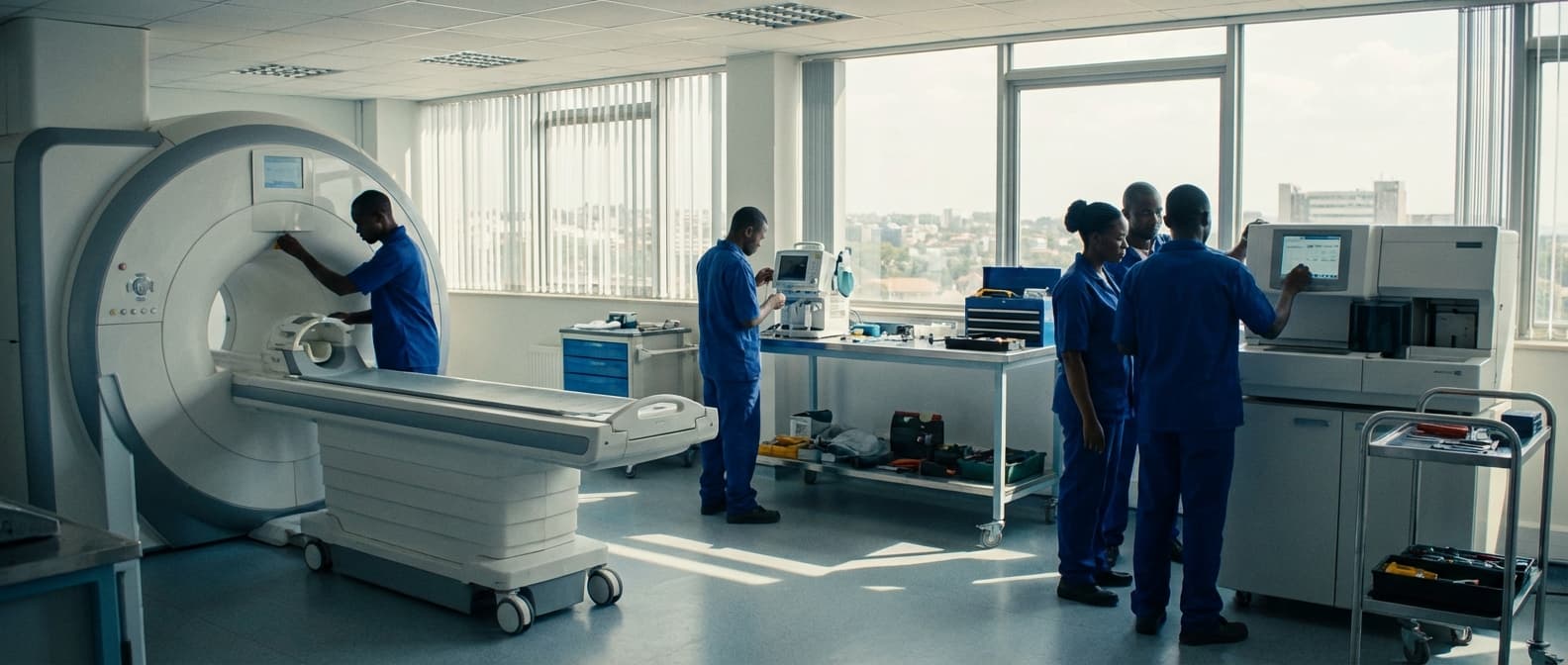
Planned Shutdown Coordination Service for Critical Equipment in Mauritius
Engineering Excellence & Technical Support
Planned Shutdown Coordination Service for Critical Equipment High-standard technical execution following OEM protocols and local regulatory frameworks.
Optimized Shutdown Scheduling
Leveraging advanced scheduling algorithms and real-time equipment diagnostics, our service minimizes downtime by precisely planning maintenance windows, reducing operational impact and maximizing asset availability across Mauritius.
Proactive Risk Mitigation
We conduct comprehensive risk assessments for all critical equipment, identifying potential failure points and developing detailed contingency plans. This proactive approach ensures a safe and efficient shutdown process, safeguarding your operations in Mauritius.
Seamless Cross-Departmental Integration
Our service facilitates seamless communication and coordination between operations, maintenance, safety, and procurement teams. We ensure all stakeholders in Mauritius are aligned, enabling swift decision-making and efficient execution of planned shutdowns.
What Is Planned Shutdown Coordination Service For Critical Equipment In Mauritius?
Planned Shutdown Coordination Service for Critical Equipment in Mauritius is a specialized operational management framework designed to meticulously orchestrate the planned deactivation and subsequent reactivation of essential industrial and utility assets. This service aims to minimize operational disruption, optimize resource allocation, and ensure adherence to safety and regulatory standards during scheduled maintenance, upgrades, or decommissioning activities of critical equipment. The core objective is to achieve seamless transitions, thereby safeguarding asset integrity, productivity, and stakeholder confidence.
| Target Audience | Rationale for Service Acquisition | Typical Use Cases |
|---|---|---|
| Power Generation Utilities: (e.g., Central Electricity Board - CEB) | Ensuring grid stability and reliability by minimizing downtime of power generation units, substations, and transmission infrastructure. Compliance with national energy security mandates. | Scheduled maintenance of turbines, generators, transformers; replacement of aging components; upgrades to control systems; fuel system maintenance; boiler inspections. |
| Water & Wastewater Management Authorities: (e.g., Central Water Authority - CWA) | Maintaining uninterrupted supply of potable water and effective wastewater treatment to prevent public health crises and environmental contamination. Optimizing operational efficiency and asset lifespan. | Maintenance of pumps, filtration systems, treatment plants, distribution networks, and reservoir infrastructure; installation of new treatment technologies; descaling and repair of pipelines. |
| Large-Scale Industrial Facilities: (e.g., Sugar Mills, Cement Plants, Petrochemical Refineries) | Minimizing revenue loss due to production halts. Preventing catastrophic equipment failures that could lead to extensive damage and extended downtime. Ensuring compliance with stringent industry safety regulations. | Overhaul of major machinery (e.g., crushers, kilns, reactors, distillation columns); replacement of critical wear parts; process optimization upgrades; compliance with environmental emission standards. |
| Telecommunications Infrastructure Providers: | Maintaining high availability of critical network components and data centers to ensure continuous communication services. Minimizing service disruptions for subscribers. | Maintenance of base stations, core network equipment, data center cooling systems, and power backup units; hardware upgrades; software patching and system reconfigurations. |
| Port Authorities & Logistics Hubs: | Ensuring efficient and uninterrupted flow of goods and services. Preventing bottlenecks and delays at critical cargo handling and storage facilities. | Maintenance of cranes, conveyor systems, loading docks, and automated storage and retrieval systems; infrastructure upgrades; safety inspections. |
Key Components of the Service
- Pre-Shutdown Planning & Analysis: Comprehensive assessment of equipment status, identification of interdependencies, risk evaluation, and development of detailed work scopes and contingency plans.
- Resource Management: Strategic allocation and scheduling of internal and external personnel, specialized tools, materials, and equipment required for the shutdown.
- Logistics & Supply Chain Optimization: Efficient procurement, delivery, and staging of all necessary components and consumables, ensuring availability without excess inventory.
- Safety & Environmental Management: Implementation of stringent safety protocols (e.g., Lockout/Tagout procedures, permit-to-work systems) and environmental compliance measures throughout the shutdown lifecycle.
- Communication & Stakeholder Engagement: Establishment of clear communication channels with all relevant parties, including operational teams, maintenance departments, regulatory bodies, and affected third parties.
- Execution Oversight: On-site supervision and coordination of all activities during the shutdown, ensuring adherence to the approved plan and immediate resolution of unforeseen issues.
- Post-Shutdown Verification & Handover: Thorough testing, validation, and documentation of completed work, followed by a formal handover of the equipment back to operational status.
- Performance Monitoring & Reporting: Continuous tracking of key performance indicators (KPIs) related to schedule adherence, budget control, safety incidents, and equipment performance.
Who Needs Planned Shutdown Coordination Service For Critical Equipment In Mauritius?
Planned shutdown coordination for critical equipment in Mauritius is essential for a wide range of industries and organizations. Proactive planning and execution of these shutdowns are crucial to minimize disruption, ensure safety, maximize asset lifespan, and avoid costly unforeseen breakdowns. This service is particularly vital for sectors where continuous operation is paramount and where equipment failures can have significant economic, safety, or environmental consequences. The objective is to meticulously manage all aspects of the shutdown, from pre-planning and resource allocation to execution, testing, and re-commissioning, ensuring minimal downtime and optimal asset performance.
| Industry/Sector | Key Critical Equipment | Relevant Departments | Impact of Unplanned Shutdowns |
|---|---|---|---|
| Power Generation & Distribution | Turbines, generators, transformers, switchgear, control systems | Operations, Maintenance, Engineering, Safety, Planning | Widespread power outages, economic disruption, grid instability, public safety risks |
| Telecommunications | Base stations, core network equipment, data centers, transmission lines | Network Operations, Engineering, IT, Field Maintenance | Service disruptions, loss of revenue, reputational damage, customer dissatisfaction |
| Water & Wastewater Treatment | Pumps, treatment plant machinery, filtration systems, distribution networks | Operations, Maintenance, Engineering, Quality Control, Environmental Health & Safety | Disruption of water supply, public health risks, environmental pollution, regulatory fines |
| Manufacturing (e.g., Sugar Mills, Food Processing, Textiles) | Production lines, heavy machinery, processing equipment, boilers, packaging systems | Production, Maintenance, Engineering, Quality Assurance, Supply Chain | Loss of production, spoilage of goods, delayed orders, damage to equipment, safety hazards |
| Transportation (e.g., Airports, Ports) | Air traffic control systems, baggage handling systems, port cranes, navigation aids | Operations, Maintenance, Engineering, Safety, Security | Flight/ship delays, cargo disruptions, economic losses, safety incidents |
| Healthcare | Medical imaging equipment (MRI, CT scanners), life support systems, critical infrastructure (generators, HVAC) | Biomedical Engineering, Facilities Management, IT, Clinical Operations | Interruption of patient care, delays in diagnosis and treatment, patient safety risks |
| Hospitality & Tourism | HVAC systems, elevators, kitchen equipment, IT infrastructure, power generation | Facilities Management, Operations, IT, Engineering | Guest dissatisfaction, loss of revenue, reputational damage, safety concerns |
| Information Technology & Data Centers | Servers, network switches, cooling systems, power supplies, UPS | IT Operations, Network Engineering, Facilities Management, Security | Data loss, service outages, financial losses, reputational damage |
Target Customers and Departments
- Industries requiring high uptime and continuous operations.
- Organizations with complex, interconnected critical infrastructure.
- Businesses operating in regulated environments with stringent safety and compliance requirements.
- Companies seeking to optimize maintenance costs and improve asset reliability.
- Sectors vulnerable to significant financial losses or reputational damage from equipment failure.
Planned Shutdown Coordination Service For Critical Equipment Process In Mauritius
This document outlines the workflow for the Planned Shutdown Coordination Service for Critical Equipment in Mauritius. This service ensures that scheduled maintenance and repairs for vital industrial and infrastructure equipment are conducted efficiently, minimizing disruption and maximizing safety. The process begins with an inquiry from a client and culminates in the successful completion of the planned shutdown, followed by a comprehensive review.
| Phase | Key Activities | Deliverables | Responsible Parties | Timeline (Indicative) |
|---|---|---|---|---|
| Client submits inquiry regarding a planned shutdown. Initial meeting to understand equipment, criticality, and desired shutdown window. Risk assessment preliminary discussion. Service offering presentation and proposal outline. | Initial meeting minutes, preliminary understanding of scope. | Client, Service Provider (Project Manager) | 1-3 Business Days |
| Detailed site survey and equipment assessment. Formal scope of work (SOW) development. Detailed shutdown schedule creation, including task breakdowns, dependencies, and critical path. Safety plan development. Risk assessment and mitigation strategies. Budget finalization. Communication plan establishment. | Formal SOW, Detailed Shutdown Schedule, Safety Plan, Risk Assessment Report, Final Budget, Communication Plan. | Service Provider (Project Manager, Engineers, Safety Officers), Client (Technical Team, Operations) | 1-2 Weeks |
| Identification and procurement of required personnel (internal/external technicians, specialists). Sourcing and delivery of necessary spare parts, tools, and equipment. Logistics planning for personnel and materials. Pre-qualification and onboarding of external contractors. | Mobilized personnel, procured materials and equipment, logistics plan. | Service Provider (Procurement, HR, Logistics) | 2-4 Weeks (concurrent with Phase 2) |
| Toolbox talks and safety briefings for all involved personnel. Final confirmation of all permits and approvals. Isolation and tagging procedures implementation. Site preparation and setup (e.g., temporary power, lighting). Verification of spare parts and tools. Final schedule review and communication. | Trained personnel, confirmed permits, isolated equipment, prepared site, finalized schedule communication. | Service Provider (Site Supervisor, Technicians, Safety Officers), Client (Operations) | 1-3 Business Days before shutdown |
| Execution of planned maintenance and repair activities according to the schedule. Continuous monitoring of progress and adherence to safety protocols. Real-time communication of any deviations or issues. On-the-spot problem-solving and decision-making. | Completed maintenance/repair tasks, progress reports, incident logs (if any). | Service Provider (Site Supervisor, Technicians, Engineers), Client (Operations, Quality Control) | As per Shutdown Schedule |
| Equipment testing and commissioning. Performance verification against baseline data. Site cleanup and restoration. Return of borrowed equipment and tools. Final handover of completed work to the client. | Tested and commissioned equipment, site restoration, handover documentation. | Service Provider (Technicians, Engineers), Client (Operations, Quality Control) | 1-3 Business Days after execution |
| Preparation of a comprehensive shutdown report detailing activities, outcomes, deviations, and lessons learned. Post-shutdown review meeting with the client to discuss the execution and identify areas for improvement in future shutdowns. Invoicing and final financial reconciliation. | Comprehensive Shutdown Report, Post-Shutdown Review Minutes, Final Invoice. | Service Provider (Project Manager, Finance), Client (Management, Technical Team) | 1-2 Weeks after completion |
Planned Shutdown Coordination Service Workflow
- Inquiry and Initial Consultation
- Scope Definition and Planning
- Resource Mobilization
- Pre-Shutdown Preparations
- Shutdown Execution
- Post-Shutdown Activities
- Reporting and Review
Planned Shutdown Coordination Service For Critical Equipment Cost In Mauritius
Coordinating planned shutdowns for critical equipment in Mauritius involves a range of services aimed at minimizing downtime and ensuring a smooth, safe, and efficient maintenance process. The cost for such a service is influenced by several key factors, varying significantly based on the complexity, duration, and specific requirements of the shutdown. These factors include the scale of the operation, the criticality and number of equipment involved, the need for specialized personnel, the engagement of third-party vendors, the extent of safety and environmental protocols, and the overall project management duration. The pricing ranges are presented in Mauritian Rupees (MUR).
| Service Component / Complexity Level | Estimated Cost Range (MUR) |
|---|---|
| Basic Coordination (Single critical equipment, short duration) | MUR 50,000 - 150,000 |
| Standard Coordination (Multiple interconnected equipment, moderate duration) | MUR 150,000 - 400,000 |
| Complex Coordination (Large-scale shutdown, multiple systems, extended duration, significant third-party involvement) | MUR 400,000 - 1,000,000+ |
| Add-on: Specialized Expertise (e.g., HAZOP study, specific OEM services) | Variable (per engagement/day rate) |
| Add-on: Extensive Safety & Environmental Management | Variable (based on scope and risk assessment) |
Key Pricing Factors for Planned Shutdown Coordination Services in Mauritius
- Scope and Complexity of the Shutdown: A simple shutdown for a single piece of equipment will be less expensive than a coordinated shutdown involving multiple interconnected systems or an entire plant.
- Duration of the Shutdown: Longer shutdown periods generally incur higher coordination costs due to extended project management, site presence, and resource allocation.
- Criticality of Equipment: Highly critical or sensitive equipment requiring specialized handling, advanced diagnostic tools, or stringent regulatory compliance will increase costs.
- Number of Equipment Involved: The more equipment included in the shutdown, the more complex the scheduling, resource allocation, and communication become.
- Need for Specialized Personnel: If the shutdown requires highly skilled technicians, engineers, or specific certifications (e.g., hazardous area expertise, specific OEM certifications), this will add to the cost.
- Third-Party Vendor Management: Coordinating multiple external contractors, suppliers, and specialized service providers significantly impacts the complexity and cost of the service.
- Safety and Environmental Protocols: Implementing and ensuring adherence to rigorous safety (e.g., LOTO procedures, confined space entry) and environmental regulations can increase the planning and execution costs.
- Project Management and Supervision: The level of project management required, including detailed planning, risk assessment, progress reporting, and on-site supervision, is a direct cost driver.
- Logistics and Site Access: Arrangements for access, transportation of personnel and equipment, and site-specific logistical challenges can influence pricing.
- Emergency Response Planning: Developing and maintaining robust emergency response plans for potential incidents during the shutdown.
Affordable Planned Shutdown Coordination Service For Critical Equipment Options
Our Affordable Planned Shutdown Coordination Service is designed to minimize downtime and maximize efficiency for your critical equipment maintenance. We offer flexible value bundles and implement strategic cost-saving measures to ensure you receive high-quality service without breaking the budget. Our expert team handles all aspects of planned shutdowns, from initial planning and scheduling to execution and post-shutdown analysis, allowing your internal teams to focus on core operations.
| Cost-Saving Strategy | Description | Benefit |
|---|---|---|
| Off-Peak Scheduling | Leveraging our network to identify and schedule shutdowns during periods of lower operational demand. | Reduced labor costs, minimized production loss, and potential for better vendor availability. |
| Standardized Workflow Templates | Utilizing pre-defined, adaptable templates for common shutdown tasks and procedures. | Faster planning cycles, reduced errors, and consistent execution quality. |
| Optimized Resource Allocation | Precise forecasting and deployment of personnel, equipment, and materials to avoid overstaffing or shortages. | Lower labor and equipment rental expenses, minimized waste. |
| Vendor Negotiation & Consolidation | Leveraging our volume and relationships to negotiate favorable rates with specialized service providers and consolidating multiple vendor needs. | Significant cost reductions on external services and supplies. |
| Predictive Analytics Integration | Incorporating data from your existing systems to forecast potential issues and plan maintenance proactively, thus reducing emergency shutdowns. | Fewer unexpected, costly emergency repairs and extended equipment lifespan. |
| Remote Monitoring & Support Options | Offering remote oversight and expert guidance where feasible, reducing the need for extensive on-site personnel for certain tasks. | Lower travel and accommodation expenses for our coordination team. |
Value Bundles:
- {"title":"Essential Bundle","description":"Includes core planning, scheduling, on-site coordination for a single shutdown event, and basic reporting. Ideal for organizations with established internal maintenance processes but seeking external expertise for a specific shutdown."}
- {"title":"Comprehensive Bundle","description":"Builds on the Essential Bundle with advanced risk assessment, detailed resource allocation, vendor management, real-time progress tracking, and a comprehensive post-shutdown performance review. Suitable for organizations requiring more extensive support and strategic oversight."}
- {"title":"Proactive Maintenance Bundle","description":"The most inclusive option, incorporating all features of the Comprehensive Bundle plus proactive maintenance planning, predictive maintenance integration, spare parts inventory optimization, and long-term shutdown strategy development. Designed for organizations seeking to transform their shutdown processes for maximum operational uptime and cost efficiency."}
Verified Providers In Mauritius
In the pursuit of reliable and high-quality healthcare in Mauritius, identifying 'Verified Providers' is paramount. Franance Health stands out as a leading entity, offering a robust network of credentialed healthcare professionals and institutions. This verification process isn't just a formality; it's a rigorous assessment designed to ensure patient safety, ethical practices, and clinical excellence. Franance Health's commitment to thorough vetting means that when you choose a provider through their platform, you are choosing a partner dedicated to your well-being, backed by a stringent evaluation of their qualifications, experience, and adherence to industry standards. Their credentials represent a seal of trust, providing unparalleled peace of mind.
| Credential Type | Verification Process | Significance for Patients |
|---|---|---|
| Medical Licenses & Registrations | Cross-referencing with official Mauritian medical councils and licensing bodies. | Confirms legal authorization to practice and adherence to regulatory standards. |
| Specialist Certifications | Validation of specialized training and qualifications from recognized institutions. | Ensures expertise in specific medical fields, leading to more accurate diagnoses and treatments. |
| Educational Background | Verification of degrees and diplomas from accredited medical schools. | Underpins a strong foundation of medical knowledge and training. |
| Professional Experience | Review of past employment history and practice duration. | Indicates practical skill development and exposure to various patient cases. |
| Reputation & Ethical Conduct | Background checks and review of any disciplinary records or formal complaints. | Assures a commitment to patient safety, privacy, and ethical treatment. |
Why Franance Health Credentials Mean the Best Choice:
- Rigorous Qualification Checks: Franance Health meticulously verifies all medical licenses, certifications, and educational backgrounds of their providers.
- Experience Verification: We assess the practical experience and areas of specialization of each healthcare professional to match you with the most suitable expert.
- Adherence to Ethical Standards: Providers on the Franance Health network are committed to upholding the highest ethical principles and patient-centric care.
- Continuous Professional Development: We encourage and track ongoing training and development among our network, ensuring access to the latest medical advancements.
- Patient Feedback Integration: While not solely a credential, Franance Health incorporates patient satisfaction and feedback into its ongoing provider assessments, fostering accountability and continuous improvement.
- Regulatory Compliance: All listed providers comply with Mauritian healthcare regulations and legal requirements.
- Specialized Network Access: Franance Health offers access to a diverse range of specialists, ensuring you can find the precise care you need.
- Commitment to Quality: The 'Verified Provider' status signifies a dedication to delivering safe, effective, and compassionate healthcare.
Scope Of Work For Planned Shutdown Coordination Service For Critical Equipment
This Scope of Work (SOW) outlines the services to be provided for the coordination of planned shutdown activities for critical equipment. The primary objective is to ensure safe, efficient, and timely execution of shutdowns, minimizing disruption to operations and adhering to all relevant technical standards and specifications.
| Phase | Key Activities | Deliverables | Standard Specifications / Requirements |
|---|---|---|---|
| Planning & Preparation | Shutdown scope definition and impact assessment. Development of detailed work breakdown structure (WBS). Resource planning and allocation (personnel, tools, materials). Obtaining necessary permits and approvals. Risk assessment and mitigation planning. Development of detailed shutdown schedule (Gantt chart). Pre-shutdown toolbox talks and safety briefings. Pre-shutdown equipment inspection and status verification. | Approved Shutdown Plan. Detailed WBS. Resource Allocation Matrix. Permit Register. Risk Register. Approved Shutdown Schedule. Pre-Shutdown Report. | Company shutdown procedures. Industry best practices for shutdown planning (e.g., PMI, ISO 55000). Relevant safety regulations (e.g., OSHA, local HSEQ). Equipment-specific maintenance manuals and procedures. Lockout/Tagout (LOTO) procedures. Permit-to-Work (PTW) system requirements. |
| Execution | On-site coordination of all shutdown activities. Daily progress monitoring and reporting. Management of interfaces between different work teams. Troubleshooting and problem-solving. Ensuring adherence to safety procedures. Quality control and inspection of completed work. Management of consumables and spare parts. | Daily Progress Reports. Incident/Near-Miss Reports. Quality Inspection Reports. Updated Shutdown Schedule. Daily Coordination Meetings Minutes. | On-site safety supervision. Approved work procedures. Quality assurance protocols. Emergency response plans. Communication protocols (radio, phone, etc.). |
| Post-Shutdown | Verification of all completed works. Post-maintenance testing and commissioning. Equipment handover and operational acceptance. Documentation review and sign-off. Post-shutdown review meeting and lessons learned compilation. Final shutdown report generation. Close-out of all permits and work orders. | Post-Maintenance Test Reports. Commissioning Reports. Equipment Handover Certificates. Signed-off Work Orders. Lessons Learned Document. Final Shutdown Report. | Equipment manufacturer specifications. Commissioning procedures. Operational acceptance criteria. Company documentation standards. Performance testing protocols. |
Standard Specifications and Reference Documents
- Company's Standard Operating Procedures (SOPs) for Shutdowns
- Relevant National and International Safety Standards (e.g., OSHA, ISO 45001)
- Equipment Manufacturer's Operation and Maintenance Manuals
- Company's Permit-to-Work (PTW) System Requirements
- Lockout/Tagout (LOTO) Procedures
- Company's Quality Assurance/Quality Control (QA/QC) Standards
- Emergency Response Procedures
- Environmental Regulations
Service Level Agreement For Planned Shutdown Coordination Service For Critical Equipment
This Service Level Agreement (SLA) outlines the service commitments and performance metrics for the Planned Shutdown Coordination Service (PSCS) provided to facilitate organized and efficient planned shutdowns of critical equipment. This SLA defines response times for critical incidents and uptime guarantees for the PSCS platform itself.
| Service Component | Metric | Target | Measurement Method | Escalation Point |
|---|---|---|---|---|
| Planned Shutdown Coordination Service (PSCS) Platform Availability | Uptime Guarantee | 99.9% | Monitoring of PSCS platform accessibility and functionality. | IT Operations Manager |
| Critical Incident Response (e.g., PSCS platform failure, major scheduling conflict impacting safety) | Response Time | 15 minutes | Time from incident detection/reporting to initial acknowledgment and assignment of a support resource. | Senior IT Support Lead |
| Standard Support Request (e.g., user query, minor configuration change) | Response Time | 2 business hours | Time from ticket creation to initial acknowledgment and assignment of a support resource. | IT Support Supervisor |
| Shutdown Schedule Update/Revision | Turnaround Time | 4 business hours | Time from submission of a valid revision request to its incorporation into the official schedule. | Operations Planning Lead |
| Emergency Shutdown Notification | Notification Time | 5 minutes | Time from confirmation of an emergency shutdown requirement to dissemination of notification to all registered stakeholders. | Emergency Response Coordinator |
Scope of Service
- Coordination and scheduling of planned equipment shutdowns.
- Communication facilitation between all relevant stakeholders (operations, maintenance, engineering, vendors).
- Risk assessment and mitigation planning for shutdowns.
- Post-shutdown review and analysis.
- Management of the PSCS platform, including availability and performance.
Frequently Asked Questions

Ready when you are
Let's scope your Planned Shutdown Coordination Service for Critical Equipment in Mauritius project in Mauritius.

Scaling healthcare logistics and technical systems across the entire continent.