
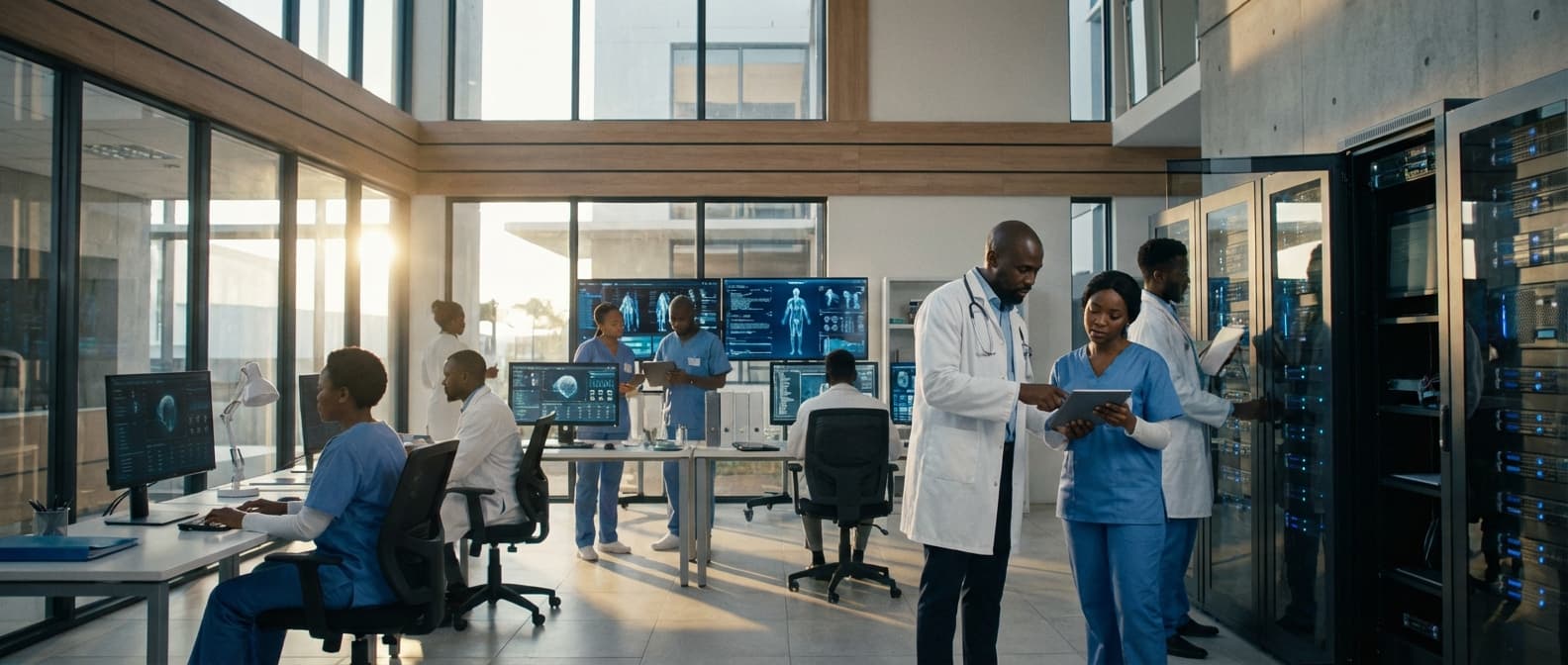
Tele-Radiology in Mauritius
Engineering Excellence & Technical Support
24/7 access to certified radiologists providing rapid, accurate remote interpretation of diagnostic imaging studies. High-standard technical execution following OEM protocols and local regulatory frameworks.
Bridging Geographic Divides
Leveraging advanced telecommunication infrastructure, tele-radiology connects remote healthcare facilities in Mauritius with specialist radiologists, ensuring timely and accurate diagnostic interpretations regardless of location.
AI-Powered Diagnostic Augmentation
Integration of Artificial Intelligence (AI) algorithms to assist radiologists in identifying subtle anomalies and prioritizing urgent cases, enhancing diagnostic precision and efficiency within the Mauritian healthcare system.
Secure Cloud-Based Image Sharing
Utilizing secure, encrypted cloud platforms for the seamless and rapid transmission of medical imaging data across Mauritius, adhering to stringent data privacy regulations and ensuring patient confidentiality.
What Is Tele-radiology In Mauritius?
Tele-radiology in Mauritius refers to the practice of transmitting radiological images (such as X-rays, CT scans, MRIs) from one location to another for the purpose of interpretation and reporting by a radiologist. This service leverages telecommunications technology, primarily the internet, to facilitate remote consultation and diagnostic services. It addresses geographical barriers, improves access to specialist expertise, and enhances the efficiency of radiological workflow within the Mauritian healthcare system. The core involves digital image capture, secure transmission, and remote analysis, enabling timely and accurate diagnoses regardless of physical proximity.
| Target User Group | Specific Needs Addressed by Tele-Radiology | Typical Use Cases in Mauritius |
|---|---|---|
| Rural and Remote Healthcare Facilities: Hospitals, clinics, and health centers located away from major urban centers with limited or no on-site radiological expertise. | Access to specialist radiologist interpretation, reducing patient travel time and costs. Improved diagnostic turnaround times, enabling prompt treatment initiation. Capacity building for local medical staff through remote consultations and training. | Remote interpretation of plain X-rays (e.g., chest, orthopedic), ultrasound scans (e.g., obstetric, abdominal). Emergency radiology consultations for critical cases (e.g., trauma, stroke) during off-hours or when local specialists are unavailable. Screening programs (e.g., tuberculosis). |
| Overburdened Urban Hospitals and Diagnostic Centers: Facilities facing high patient volumes and a shortage of local radiologists. | Triage of urgent cases and backlog reduction. Provision of subspecialty interpretations (e.g., neuro-radiology, musculoskeletal radiology) not available in-house. Flexible staffing solutions for after-hours and weekend coverage. | Second opinion interpretations for complex cases. Out-of-hours reporting for emergency departments. Routine reporting of imaging studies to expedite patient care pathways. Support for specialized imaging modalities (e.g., MRI, CT angiography). |
| Private Medical Practitioners and Specialists: Individual doctors and private clinics seeking convenient and efficient access to radiological interpretations. | Streamlined diagnostic process without the need for in-house radiology departments. Faster turnaround times for patient referrals and management decisions. Enhanced patient convenience and satisfaction. | On-demand interpretation of diagnostic imaging for outpatient referrals. Pre-operative imaging assessment. Follow-up imaging interpretations for chronic conditions. |
| Public Health Initiatives and Screening Programs: Government-led health programs targeting specific populations or diseases. | Scalable and cost-effective interpretation of large volumes of screening images. Standardization of diagnostic quality across various participating centers. Facilitation of national epidemiological surveillance. | Tuberculosis screening programs. Diabetic retinopathy screening (though not strictly radiology, the principle of remote image assessment applies). Mass screening for other preventable diseases requiring radiological assessment. |
Key Components and Requirements of Tele-Radiology in Mauritius:
- Digital Image Acquisition: Radiographic equipment capable of generating digital images (DICOM format) is essential. This includes computed radiography (CR), direct radiography (DR), CT scanners, MRI scanners, and ultrasound machines with digital output capabilities.
- Picture Archiving and Communication System (PACS): A robust PACS is fundamental for storing, retrieving, and managing large volumes of digital radiological images. It ensures data integrity, accessibility, and efficient workflow management.
- Radiology Information System (RIS): Integration with an RIS facilitates patient information management, scheduling, reporting, and billing, streamlining the overall diagnostic process.
- Secure Network Infrastructure: A reliable and secure network connection (broadband internet, VPN) is critical for the timely and encrypted transmission of sensitive patient data between the referring facility and the remote reading center.
- Image Compression and Transmission Protocols: Efficient compression algorithms and standardized transmission protocols (e.g., DICOM over TCP/IP) are employed to minimize bandwidth requirements and ensure rapid image transfer.
- Remote Workstation: Radiologists require high-resolution diagnostic workstations equipped with specialized software for image viewing, manipulation, and reporting. These workstations must meet stringent display performance standards for accurate interpretation.
- Regulatory Compliance and Data Security: Adherence to Mauritian healthcare regulations, data privacy laws (e.g., Data Protection Act), and international cybersecurity best practices is paramount to protect patient confidentiality and ensure the integrity of the transmitted data.
Who Needs Tele-radiology In Mauritius?
Tele-radiology, the practice of interpreting medical images remotely, offers significant advantages in healthcare systems, particularly in regions with specialized physician shortages or geographical challenges. In Mauritius, the demand for tele-radiology is driven by several factors, including the need to enhance access to expert radiological interpretations, improve turnaround times for diagnoses, and support continuous medical education. This service can be instrumental in bridging the gap between existing resources and the growing demand for advanced diagnostic imaging services across the island nation.
| Customer Type | Description | Key Needs Addressed by Tele-Radiology | Relevant Departments |
|---|---|---|---|
| Public Hospitals (e.g., Victoria Hospital, Dr. A.G. Jeetoo Hospital) | Government-funded healthcare institutions serving the majority of the population. | Overcoming radiologist shortages, providing subspecialty expertise, reducing workload on existing staff, improving diagnostic consistency, enabling 24/7 coverage for critical cases. | Radiology, Emergency Medicine, Neurology, Cardiology, Oncology, Orthopedics, Pediatrics, General Surgery |
| Private Hospitals & Diagnostic Centers (e.g., Clinique Daruty, Apollo Bramwell Hospital) | Private healthcare providers offering a range of medical services, often with advanced equipment. | Access to subspecialty radiologists for complex cases, faster turnaround times to maintain competitiveness, support during peak periods or staff leave, enhanced quality assurance. | Radiology, Cardiology, Neurology, Oncology, Orthopedics, Gastroenterology |
| Outpatient Clinics & Specialist Practices | Smaller facilities focusing on specific medical specialties that require imaging for diagnosis. | Access to timely radiological interpretations without the need for in-house radiologists, support for image-guided procedures, cost-effectiveness compared to hiring a full-time radiologist. | Orthopedics, Neurology, Rheumatology, Sports Medicine, Physiotherapy Clinics |
| Remote and Rural Healthcare Facilities | Clinics and hospitals located in less accessible areas of Mauritius. | Ensuring access to quality diagnostic imaging for patients who would otherwise have to travel long distances, reducing healthcare disparities. | General Medicine, Emergency Medicine, Primary Care |
| Emergency Departments | Critical care units requiring immediate interpretation of urgent imaging studies. | 24/7 availability of expert radiological interpretation, rapid diagnosis for stroke, trauma, and other acute conditions, leading to quicker treatment decisions. | Emergency Medicine, Radiology |
| Oncology Departments | Departments focused on cancer diagnosis, staging, and treatment monitoring. | Expert interpretation of CT, MRI, and PET scans for tumor characterization and response assessment, access to oncological imaging subspecialists. | Oncology, Radiology |
| Neurology Departments | Departments dealing with disorders of the nervous system. | Interpretation of MRI and CT scans for conditions like stroke, tumors, multiple sclerosis, and epilepsy; access to neuroradiology expertise. | Neurology, Radiology |
| Cardiology Departments | Departments focused on heart and blood vessel diseases. | Interpretation of cardiac CT and MRI for diagnosis of coronary artery disease, structural heart disease, and other cardiac conditions; access to cardiac radiology subspecialists. | Cardiology, Radiology |
| Orthopedic Departments | Departments dealing with musculoskeletal system disorders. | Interpretation of X-rays, CT, and MRI for fractures, joint injuries, degenerative diseases, and sports injuries; access to musculoskeletal radiology expertise. | Orthopedics, Radiology |
| Pediatric Departments | Departments focused on the medical care of infants, children, and adolescents. | Interpretation of imaging studies in children, requiring specialized knowledge of pediatric imaging; access to pediatric radiology subspecialists. | Pediatrics, Radiology |
Target Customers and Departments for Tele-Radiology in Mauritius
- Public Hospitals and Clinics
- Private Hospitals and Diagnostic Centers
- Outpatient Clinics and Specialist Practices
- Remote and Rural Healthcare Facilities
- Emergency Departments
- Oncology Departments
- Neurology Departments
- Cardiology Departments
- Orthopedic Departments
- Pediatric Departments
Tele-radiology Process In Mauritius
Tele-radiology in Mauritius involves a streamlined process to facilitate remote interpretation of medical imaging. This service aims to improve access to specialized radiological expertise, especially in remote areas or when local radiologists are unavailable. The workflow encompasses several key stages, from the initial inquiry to the final report delivery.
| Stage | Description | Key Stakeholders | Technology Used |
|---|---|---|---|
| Inquiry & Request Generation | Referring physician identifies the need for a radiological interpretation and creates a request. | Referring Physician, Healthcare Facility Staff | Electronic Request Forms, Hospital Information System (HIS) |
| Image Acquisition & Transmission | Imaging study performed locally, and DICOM images are securely sent to the tele-radiology system. | Radiology Technologist, Healthcare Facility IT | MRI, CT, X-ray machines, DICOM viewers, Secure VPN, Encryption protocols |
| Teleradiology Platform/PACS Integration | Images are stored, organized, and made accessible on a central platform. | Tele-radiology Platform Administrator, IT Staff | PACS, Cloud Storage, Secure Servers |
| Radiologist Assignment & Review | A qualified remote radiologist is assigned the case and reviews the images and clinical data. | Teleradiologist, Case Manager | Teleradiology Workstation, PACS Viewer |
| Interpretation & Report Generation | Radiologist provides a diagnostic interpretation and creates a detailed report. | Teleradiologist | Dictation Software, Structured Reporting Templates, Medical Terminology Databases |
| Quality Assurance & Validation | Reports are reviewed for accuracy and completeness (optional but recommended). | Senior Teleradiologist, Quality Assurance Officer | Review Protocols, Feedback Mechanisms |
| Report Transmission & Communication | The final report is securely sent back to the referring physician. | Teleradiologist, Referring Physician, Healthcare Facility Staff | Secure Email, Teleradiology Platform, EMR Integration |
| Billing & Administration | Invoicing and payment processing for the tele-radiology services. | Billing Department, Healthcare Facility Administration | Billing Software, Accounting Systems |
Tele-Radiology Workflow in Mauritius
- Inquiry & Request Generation: A referring physician or healthcare facility initiates the process by identifying the need for a radiological interpretation. This usually involves a formal request, often electronically transmitted, specifying patient demographics, clinical history, the type of imaging study, and the specific diagnostic questions.
- Image Acquisition & Transmission: The imaging study (e.g., X-ray, CT scan, MRI) is performed at the local healthcare facility. The raw DICOM (Digital Imaging and Communications in Medicine) images are then securely transmitted to a central tele-radiology platform or directly to the remote radiologist's workstation. Secure VPNs and encrypted protocols are paramount to ensure data privacy and integrity.
- Teleradiology Platform/PACS Integration: The transmitted images are ingested into a Picture Archiving and Communication System (PACS) or a dedicated tele-radiology platform. This system acts as a central repository, allowing authorized radiologists to access, view, and manage the imaging studies.
- Radiologist Assignment & Review: A qualified radiologist, often part of a network of specialists, is assigned the case. They access the images and the associated clinical information through the tele-radiology platform. The radiologist meticulously reviews the images, looking for any abnormalities or significant findings.
- Interpretation & Report Generation: Based on their expertise and the imaging findings, the radiologist formulates a diagnostic report. This report includes a detailed description of the findings, the radiologist's conclusions, and any recommended follow-up actions. Dictation software or structured reporting templates are commonly used for efficiency and consistency.
- Quality Assurance & Validation: In many tele-radiology setups, a quality assurance step is implemented. This might involve a senior radiologist reviewing a sample of reports or the referring physician providing feedback. This ensures the accuracy and completeness of the interpretations.
- Report Transmission & Communication: The finalized report is securely transmitted back to the referring physician or healthcare facility. This is typically done electronically through the tele-radiology platform or a secure email system. The referring physician then integrates this report into the patient's overall medical record and discusses the findings with the patient.
- Billing & Administration: Associated administrative tasks, including billing for the tele-radiology services, are managed. This involves tracking services rendered, generating invoices, and processing payments between the tele-radiology provider and the healthcare facility or patient.
Tele-radiology Cost In Mauritius
Tele-radiology services in Mauritius are gaining traction as a means to improve access to specialized diagnostic imaging, particularly in remote or underserved areas. The cost of these services is influenced by several factors, making it challenging to provide a single definitive price. These factors include the complexity of the imaging study, the urgency of the report, the specific radiology subspecialty required (e.g., neuroradiology, musculoskeletal radiology), the reputation and infrastructure of the tele-radiology provider, and the technology used for image transmission and reporting. While official public healthcare data on specific tele-radiology costs is not readily available, insights from private healthcare providers and professional bodies suggest a range for common procedures. It's important to note that these are estimates and actual costs can vary significantly based on individual circumstances and negotiated rates.
| Imaging Modality/Procedure (Estimated) | Estimated Cost Range (MUR) |
|---|---|
| Standard X-ray Interpretation | 1,500 - 3,000 |
| CT Scan Interpretation (Non-contrast) | 3,000 - 6,000 |
| CT Scan Interpretation (Contrast) | 4,000 - 8,000 |
| MRI Scan Interpretation (Non-contrast) | 5,000 - 10,000 |
| MRI Scan Interpretation (Contrast) | 6,000 - 12,000 |
| Ultrasound Interpretation (Abdomen/Pelvis) | 2,500 - 5,000 |
| Mammography Interpretation | 2,000 - 4,000 |
| Specialized Subspecialty Consultation (e.g., Neuro, MSK) | 6,000 - 15,000+ |
Key Pricing Factors for Tele-Radiology in Mauritius
- Complexity of the Imaging Study: Simple X-rays might be less expensive than advanced MRI or CT scans.
- Urgency of Reporting: Expedited reports (e.g., within a few hours) typically incur higher fees.
- Radiology Subspecialty: Reports from highly specialized radiologists (e.g., pediatric radiology) may command premium pricing.
- Provider Reputation and Infrastructure: Established tele-radiology providers with advanced technology and a robust network of specialists might have different pricing structures.
- Technology and Data Security: The cost of secure data transmission, storage, and advanced viewing software can be factored into service fees.
- Volume and Contractual Agreements: Larger healthcare facilities or those with long-term contracts might benefit from discounted rates.
Affordable Tele-radiology Options
Tele-radiology offers significant cost savings and improved efficiency in medical imaging interpretation. This technology allows radiologists to interpret medical images remotely, expanding access to expert diagnoses, particularly in underserved areas. Affordable tele-radiology options are becoming increasingly prevalent, driven by technological advancements and evolving healthcare models. Key to understanding these options are 'value bundles' and strategic cost-saving measures that healthcare providers can implement.
| Concept | Explanation | Cost-Saving Aspect |
|---|---|---|
| Value Bundles | Pre-packaged services offered by tele-radiology providers, often combining image interpretation with specific functionalities like preliminary reads, subspecialty consultations, or reporting software. These bundles are designed to offer a predictable and often discounted price for a defined set of services. | Predictable pricing reduces unexpected costs. Bulk purchasing of services within a bundle can lead to lower per-study rates compared to à la carte pricing. Streamlined service delivery can also reduce administrative overhead. |
| Tiered Service Models | Tele-radiology providers may offer different levels of service, from routine interpretations to STAT reads and complex subspecialty reads. Clients can choose the tier that best suits their needs and budget. | Allows for cost optimization by only paying for the required level of expertise and turnaround time. Less urgent cases can be handled at a lower cost. |
| Subscription-Based Models | Instead of per-study fees, some providers offer monthly or annual subscriptions for a certain volume of studies or unlimited access to interpretation services. This is akin to software-as-a-service (SaaS). | Provides budget certainty and can be more cost-effective for high-volume imaging centers or hospitals. Predictable cash flow for both provider and client. |
| Volume-Based Discounts | As the number of studies interpreted increases, the per-study cost decreases. This incentivizes larger healthcare systems to adopt tele-radiology solutions. | Directly reduces the cost per image interpretation as usage grows, making it more economical for larger practices. |
| Technology Integration & Optimization | Leveraging existing PACS (Picture Archiving and Communication System) and EMR (Electronic Medical Record) systems to reduce the need for new hardware or extensive IT infrastructure. Efficient data transfer protocols and compression techniques can also lower bandwidth costs. | Minimizes upfront capital expenditure on new IT systems. Reduces ongoing IT maintenance and support costs. Efficient data handling can save on communication infrastructure expenses. |
| Outsourcing Non-Core Functions | For smaller clinics or hospitals, outsourcing all radiology interpretation to a tele-radiology service can be more cost-effective than employing in-house radiologists, especially for after-hours coverage. | Eliminates costs associated with hiring, salaries, benefits, and managing in-house radiology staff. Reduces the need for physical office space and equipment for radiologists. |
| On-Demand & STAT Read Pricing | Clear pricing structures for urgent (STAT) reads versus routine reads. Clients can choose to use on-demand services for emergencies, avoiding the cost of continuous 24/7 staffing for all potential needs. | Ensures that clients only pay a premium for urgent services when truly needed, rather than subsidizing constant readiness for all situations. |
| Partnerships and Collaborations | Forming strategic partnerships with tele-radiology providers to negotiate favorable rates, share resources, or co-develop specific service models tailored to the partner's needs. | Leveraging collective bargaining power for better pricing. Potential for shared innovation and development of cost-effective solutions. |
Key Components of Affordable Tele-Radiology
- {"title":"What is Tele-radiology?","description":"The practice of remote interpretation of medical images (X-rays, CT scans, MRIs, ultrasounds) by a radiologist who is not physically present at the location where the image was acquired."}
- {"title":"Benefits of Tele-radiology","description":"Expanded access to subspecialty expertise, faster turnaround times for reports, reduced overhead for imaging facilities, improved patient outcomes, and 24/7 coverage."}
- {"title":"Driving Forces for Affordability","description":"Advancements in digital imaging technology, secure cloud-based platforms, increased competition among tele-radiology providers, and the growing demand for remote healthcare solutions."}
Verified Providers In Mauritius
When seeking healthcare services in Mauritius, identifying 'Verified Providers' is crucial for ensuring quality, safety, and adherence to international standards. Franance Health stands out as a premier organization in this regard, rigorously vetting and credentialing healthcare facilities and practitioners. Their comprehensive verification process goes beyond basic licensing, delving into operational efficiency, patient care protocols, staff qualifications, and ethical practices. This meticulous approach guarantees that Franance Health's accredited providers meet the highest benchmarks of excellence, offering patients peace of mind and access to superior medical expertise. Choosing a Franance Health verified provider means opting for reliability, cutting-edge treatments, and a commitment to patient well-being that is unparalleled in the Mauritian healthcare landscape.
| Criterion | Franance Health Verification Ensures | Benefit for Patients |
|---|---|---|
| Medical Expertise | Qualified and experienced practitioners | Accurate diagnoses and effective treatments |
| Facility Standards | Modern equipment and well-maintained infrastructure | Access to advanced medical technology and a safe environment |
| Patient Care Protocols | Adherence to best practices in patient management and communication | Personalized attention, clear information, and a positive healthcare experience |
| Safety and Hygiene | Strict infection control measures and a commitment to patient safety | Reduced risk of complications and a secure healthcare setting |
| Ethical Conduct | Upholding principles of integrity, transparency, and patient confidentiality | Trustworthy and respectful medical interactions |
Why Franance Health Credentials Mean the Best Choice:
- Rigorous Vetting Process: Franance Health employs a multi-faceted evaluation system to assess providers.
- Commitment to Quality: Verification signifies adherence to the highest standards of medical care and operational efficiency.
- Patient Safety First: Credentials ensure that providers prioritize patient well-being and implement robust safety protocols.
- Expert Staff & Facilities: Franance Health verifies the qualifications of medical professionals and the quality of facilities.
- Ethical Practices Guaranteed: Providers are assessed for their commitment to ethical conduct and patient rights.
- International Standards Alignment: Verification often aligns providers with globally recognized healthcare benchmarks.
- Enhanced Patient Confidence: A Franance Health verified provider offers a stamp of trust and reliability.
Scope Of Work For Tele-radiology
This Scope of Work (SOW) outlines the requirements for a Tele-Radiology service, encompassing technical deliverables and standard specifications. The aim is to establish a robust and reliable tele-radiology solution that facilitates remote interpretation of medical imaging studies, improves turnaround times, and enhances access to expert radiological services.
| Category | Deliverable/Specification | Description | Standard/Requirement |
|---|---|---|---|
| Technical Infrastructure | Tele-Radiology Platform | Web-based or client-server platform for image viewing, report generation, and communication. | Secure, HIPAA/GDPR compliant, high availability (99.9% uptime), scalable, user-friendly interface. |
| Technical Infrastructure | PACS Integration | Ability to receive, store, and retrieve images from the client's PACS. | DICOM compliant, HL7 integration for patient demographics and study data. |
| Technical Infrastructure | EHR/HIS Integration | Ability to send radiology reports back to the client's EHR/HIS. | HL7 integration for report delivery, potentially FHIR for future enhancements. |
| Technical Infrastructure | Network Connectivity | Secure and reliable internet connectivity for image transmission and platform access. | Minimum bandwidth as per client's site assessment, VPN or dedicated secure connection for data transfer. |
| Technical Infrastructure | Workstation Requirements | High-resolution medical displays for radiologists, secure workstations. | Minimum resolution of 2MP/3MP for diagnostic reading, FDA/CE approved monitors, secure operating systems. |
| Reporting & Workflow | Report Generation System | Template-based or free-text report generation with structured reporting capabilities. | Support for various report templates, voice recognition integration (optional), e-signature functionality. |
| Reporting & Workflow | Turnaround Time (TAT) Management | System for tracking study status and ensuring adherence to TAT SLAs. | Configurable TAT thresholds per study type, automated notifications for pending studies. |
| Reporting & Workflow | Communication Tools | Secure messaging or communication features between radiologists and referring physicians. | Real-time chat, secure email integration, critical finding notification system. |
| Data Security & Privacy | Data Encryption | Encryption of data in transit and at rest. | TLS 1.2+ for data in transit, AES-256 for data at rest. |
| Data Security & Privacy | Access Control | Role-based access control to limit user permissions. | Multi-factor authentication, granular access permissions based on user roles. |
| Data Security & Privacy | Audit Trails | Comprehensive logging of all system activities. | Detailed audit logs for user access, image viewing, report generation, and system changes. |
| Data Security & Privacy | Data Backup & Disaster Recovery | Regular backups of all data and a disaster recovery plan. | Off-site data backups, defined RTO/RPO (Recovery Time Objective/Recovery Point Objective). |
| Service & Support | Radiologist Panel | Access to a pool of qualified and credentialed radiologists. | Board-certified radiologists, subspecialty coverage, background checks. |
| Service & Support | Technical Support | 24/7 technical support for platform issues and integration problems. | Help desk, ticketing system, on-call support for critical issues. |
| Service & Support | Service Level Agreement (SLA) | Defined metrics for report turnaround times, system uptime, and support response. | Specific TAT targets for routine, urgent, and stat studies; defined uptime guarantees. |
| Service & Support | Reporting Quality Assurance | Process for reviewing and ensuring the quality and accuracy of radiology reports. | Peer review system, regular quality audits, feedback mechanisms. |
| Compliance | Regulatory Compliance | Adherence to all relevant healthcare regulations. | HIPAA, GDPR, PIPEDA, and any other applicable local/national regulations. |
Key Objectives of the Tele-Radiology Service
- Provide efficient and accurate remote interpretation of various radiological imaging modalities (e.g., X-ray, CT, MRI, Ultrasound).
- Ensure timely delivery of radiology reports to referring physicians.
- Enhance diagnostic capabilities by leveraging subspecialist expertise.
- Improve operational efficiency and reduce turnaround times for diagnostic imaging.
- Maintain the highest standards of patient data security and privacy.
- Integrate seamlessly with existing hospital information systems (HIS) and Picture Archiving and Communication Systems (PACS).
Service Level Agreement For Tele-radiology
This Service Level Agreement (SLA) outlines the performance standards and guarantees for tele-radiology services provided by [Provider Name] to [Client Name]. This SLA defines critical metrics for response times for image interpretation and uptime of the tele-radiology platform, ensuring timely and reliable access to diagnostic services.
| Service Metric | Uptime Guarantee | Response Time Guarantee (by Criticality) | Measurement Period | Exclusions |
|---|---|---|---|---|
| Tele-Radiology Platform Availability | 99.9% Uptime | Monthly | Scheduled maintenance windows, Force Majeure events, client-side network issues. | |
| STAT/Urgent Read Turnaround Time | Within 60 minutes of study availability | Monthly | Complex cases requiring extended review, communication delays from referring physician, client PACS issues. | |
| Routine Read Turnaround Time | Within 24 hours of study availability | Monthly | Complex cases requiring extended review, communication delays from referring physician, client PACS issues. | |
| After-Hours/Weekend Read Turnaround Time (if applicable) | Within 4 hours for STAT, within 36 hours for Routine | Monthly | Complex cases requiring extended review, communication delays from referring physician, client PACS issues. |
Key Performance Indicators (KPIs)
- Image Interpretation Turnaround Time (TAT): The time elapsed from when a study is successfully received and categorized as ready for interpretation by the tele-radiology system until the final report is transmitted back to the client.
- Platform Uptime: The percentage of time the tele-radiology platform, including image viewing software, PACS integration, and reporting tools, is fully operational and accessible to the client.
- Criticality Levels: Interpretation requests will be prioritized based on clinical urgency, with defined TATs for each level.
Frequently Asked Questions

Ready when you are
Let's scope your Tele-Radiology in Mauritius project in Mauritius.

Scaling healthcare logistics and technical systems across the entire continent.