
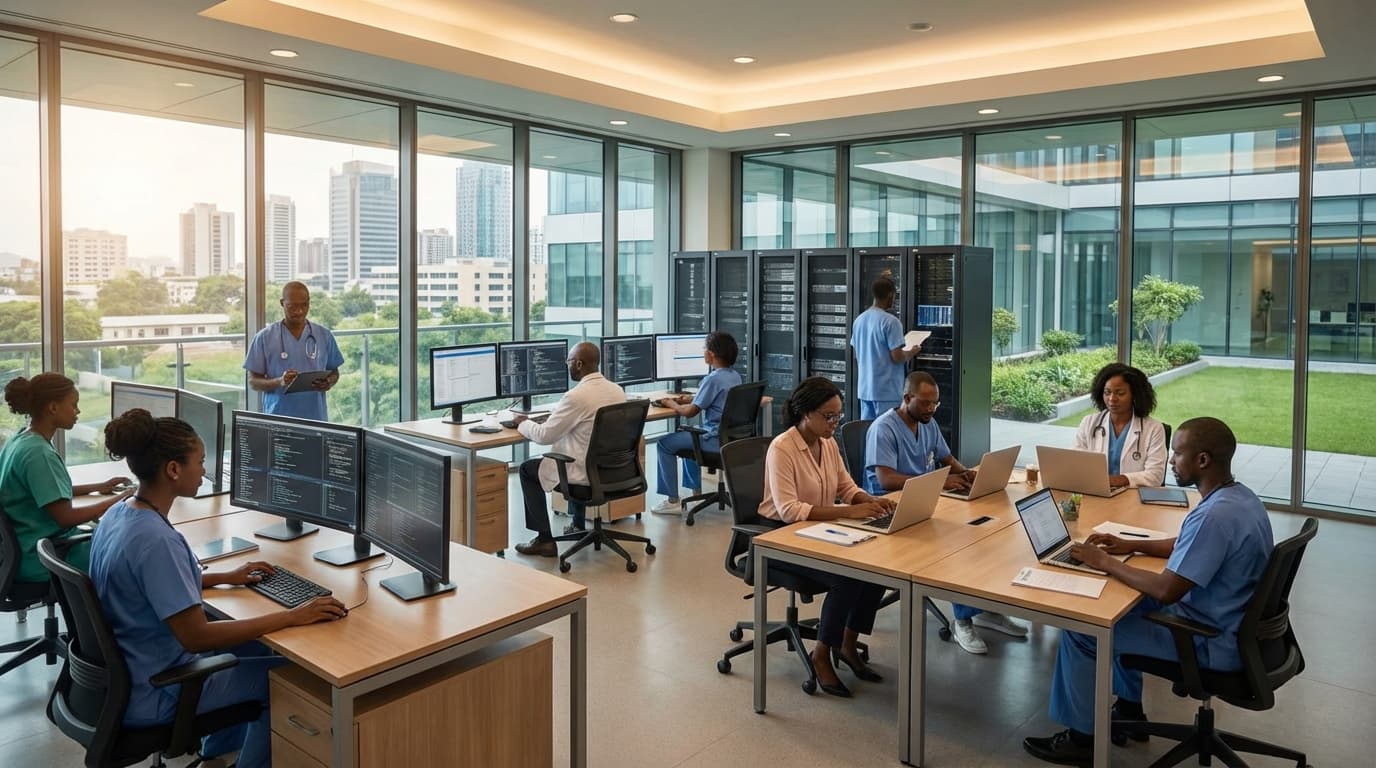
Hospital IT Integration Services in Mauritius
Engineering Excellence & Technical Support
EHR, PACS, RIS and equipment integration High-standard technical execution following OEM protocols and local regulatory frameworks.
FHIR-Enabled Interoperability
Leveraging Fast Healthcare Interoperability Resources (FHIR) to create seamless data exchange between disparate hospital systems, enabling real-time patient information access and improved care coordination across Mauritius.
Secure Cloud Infrastructure
Designing and implementing robust, HIPAA-compliant cloud solutions for healthcare data storage and processing, ensuring data privacy, security, and scalability for Mauritian hospitals with advanced threat detection and access control.
Telemedicine Platform Integration
Integrating advanced telemedicine platforms into existing hospital IT infrastructures, facilitating remote patient consultations, diagnostics, and specialist access, thereby expanding healthcare reach and accessibility throughout Mauritius.
What Is Hospital It Integration Services In Mauritius?
Hospital IT Integration Services in Mauritius refer to the strategic and technical processes involved in connecting disparate information technology systems and applications within healthcare facilities on the island. This service aims to create a unified, interoperable, and efficient IT ecosystem that facilitates seamless data flow, enhances clinical workflows, and improves administrative operations. The core objective is to break down data silos, enabling different software solutions to communicate and share information effectively, thereby supporting better patient care, operational efficiency, and data-driven decision-making. This encompasses the integration of Electronic Health Records (EHRs), Picture Archiving and Communication Systems (PACS), Laboratory Information Systems (LIS), Pharmacy Management Systems (PMS), billing and revenue cycle management (RCM) solutions, and potentially external systems like public health registries or insurance provider portals.
| Who Needs Hospital IT Integration Services? | Typical Use Cases | |||||||
|---|---|---|---|---|---|---|---|---|
| Public and Private Hospitals: All healthcare institutions, regardless of size or ownership structure, that utilize multiple IT systems and aim to optimize their operations and patient care. | EHR Interoperability: Connecting the EHR system with LIS and PACS to allow clinicians to access lab results and medical images directly within the patient's electronic record. | Patient Data Aggregation: Consolidating patient information from various departmental systems (e.g., admissions, nursing, billing) into a single, comprehensive view. | Referral Management: Streamlining the process of patient referrals between departments or to external specialists by enabling seamless data exchange. | Revenue Cycle Management (RCM) Optimization: Integrating billing and patient accounting systems with clinical systems to ensure accurate coding, efficient claim submission, and faster reimbursement. | Data Analytics and Reporting: Facilitating the aggregation of data from various sources for clinical research, operational performance monitoring, and regulatory reporting. | Telemedicine and Remote Patient Monitoring: Integrating platforms for remote consultations and data collection from wearable devices into the central EHR. | Emergency Department Workflow Improvement: Connecting triage systems, patient tracking, and clinical documentation for faster patient throughput and better care coordination during emergencies. | Pharmacy and Inventory Management: Linking the pharmacy system with the EHR for accurate medication reconciliation and real-time inventory tracking. |
| Clinics and Specialized Healthcare Centers: Facilities with specialized IT needs, such as diagnostic centers or rehabilitation clinics, requiring integration with referral hospitals or external labs. | Government Health Agencies: Ministries of Health or public health organizations seeking to integrate data from various healthcare providers for population health management and epidemiological surveillance. | Healthcare IT Vendors and Service Providers: Companies offering EHR, PACS, or other healthcare-specific software solutions that need to integrate their products with existing hospital infrastructure in Mauritius. |
Key Components of Hospital IT Integration Services in Mauritius
- System Interoperability Architecture Design: Developing a robust framework for communication between diverse IT systems, often adhering to international standards like HL7 (Health Level Seven) and FHIR (Fast Healthcare Interoperability Resources).
- Data Mapping and Transformation: Defining how data from different sources is interpreted and converted into a common format for exchange and analysis.
- API Development and Management: Creating and managing Application Programming Interfaces (APIs) to enable secure and standardized data exchange between systems.
- Middleware Implementation: Deploying integration engines or middleware platforms to facilitate message routing, transformation, and orchestration between applications.
- Data Migration and Synchronization: Planning and executing the transfer and ongoing synchronization of patient and operational data across integrated systems.
- Security and Access Control: Implementing robust security protocols and access management policies to protect sensitive patient data during and after integration.
- Testing and Validation: Rigorous testing of integrated systems to ensure data accuracy, reliability, and adherence to performance requirements.
- Ongoing Support and Maintenance: Providing continuous monitoring, troubleshooting, and updates for the integrated IT infrastructure.
Who Needs Hospital It Integration Services In Mauritius?
Hospital IT integration services in Mauritius are crucial for any healthcare facility aiming to enhance efficiency, improve patient care, and streamline operations. These services bridge the gap between disparate IT systems, ensuring seamless data flow and communication across the entire organization. This leads to better decision-making, reduced errors, and a more positive experience for both patients and staff. The adoption of integrated systems is becoming increasingly vital in Mauritius as the healthcare sector strives to modernize and align with global best practices in digital health.
| Target Customer/Facility | Key Departments Benefiting from Integration | Primary Needs/Benefits |
|---|---|---|
| Public Hospitals (e.g., Victoria Hospital, Jawaharlal Nehru Hospital) | Admissions & Registration, Emergency Department, Inpatient Wards, Outpatient Clinics, Pharmacy, Laboratory, Radiology, Billing & Finance, Administration | Improved patient flow, reduced wait times, accurate patient records, enhanced diagnostic turnaround, streamlined billing, better resource allocation, centralized data for public health reporting. |
| Private Hospitals (e.g., Apollo Bramwell Hospital, Fortis D'Emil Curé Hospital) | All Public Hospital Departments + Specialized Units (e.g., ICU, Cardiology, Oncology), Patient Relations, IT Department, Management | Enhanced patient experience, competitive advantage through advanced technology, improved operational efficiency, better financial management, seamless communication with referring physicians and insurance providers, robust data security. |
| Large Clinics & Diagnostic Centers (e.g., Central Pathology Laboratory, private imaging centers) | Reception & Scheduling, Phlebotomy/Sample Collection, Laboratory Analysis, Radiology Imaging, Reporting Department, Billing, IT | Faster report generation and delivery, accurate sample tracking, reduced manual data entry, streamlined appointment scheduling, efficient communication between technicians and physicians, improved diagnostic accuracy. |
| Specialized Healthcare Facilities (e.g., Rehabilitation Centers, Dental Clinics) | Patient Scheduling, Therapy Rooms, Treatment Bays, Medical Records, Billing, IT | Personalized treatment plans with access to comprehensive patient history, efficient scheduling of appointments and therapy sessions, improved communication among therapists and specialists, accurate billing for specialized services. |
| Government Health Agencies | Health Information Management, Public Health Surveillance, Health Policy & Planning, IT & Data Management | Centralized data for disease surveillance and trend analysis, evidence-based policy making, effective resource allocation across the public health system, improved public health reporting and response capabilities. |
Target Customers and Departments for Hospital IT Integration Services in Mauritius:
- Hospitals (Public and Private)
- Clinics and Diagnostic Centers
- Specialized Healthcare Facilities (e.g., Rehabilitation Centers, Dental Clinics)
- Government Health Agencies overseeing healthcare infrastructure
- Healthcare Technology Providers seeking to expand their offerings in Mauritius
Hospital It Integration Services Process In Mauritius
Hospital IT Integration Services in Mauritius involve a structured workflow to ensure seamless implementation of technology solutions within healthcare facilities. This process is crucial for enhancing operational efficiency, improving patient care, and ensuring data security and interoperability. The workflow typically begins with an initial inquiry from a hospital and culminates in the successful integration and ongoing support of IT systems. Each stage requires careful planning, execution, and stakeholder collaboration.
| Stage | Description | Key Activities | Key Stakeholders | Deliverables |
|---|---|---|---|---|
| Inquiry and Initial Consultation | The process begins when a hospital expresses interest in IT integration services. | Initial contact, understanding of basic needs, preliminary discussion of objectives. | Hospital Management, IT Department, Service Provider Sales Team. | Expression of Interest, Preliminary Meeting Minutes. |
| Needs Assessment and Requirements Gathering | A detailed analysis of the hospital's current IT infrastructure and future requirements. | Site visits, interviews with staff, analysis of existing systems, defining functional and non-functional requirements. | Hospital Clinical Staff, Administrative Staff, IT Department, Service Provider Consultants. | Detailed Requirements Document, Gap Analysis Report. |
| Solution Design and Proposal | Developing a tailored IT integration strategy and proposing specific solutions. | Designing the architecture, selecting appropriate technologies, creating a detailed project plan, estimating costs. | Service Provider Technical Team, Project Managers, Hospital IT Department, Procurement Team. | Solution Design Document, Project Proposal, Cost Estimate, Project Timeline. |
| Procurement and Vendor Selection | The hospital evaluates proposals and selects the service provider and necessary technology vendors. | Tender process, vendor evaluation, contract negotiation, purchase of hardware and software. | Hospital Procurement Department, Legal Team, Finance Department, Service Provider. | Signed Contracts, Purchase Orders. |
| System Configuration and Customization | Setting up and tailoring the chosen IT systems to meet the hospital's specific workflows. | Installing and configuring software/hardware, customizing modules, developing custom interfaces. | Service Provider Implementation Team, Hospital IT Staff, Subject Matter Experts. | Configured Systems, Customized Modules, Integration Specifications. |
| Data Migration and Integration | Transferring existing data to new systems and ensuring interoperability between different systems. | Data cleansing, data mapping, developing integration interfaces (e.g., HL7), performing test migrations. | Service Provider Integration Specialists, Hospital IT Department, Data Stewards. | Migrated Data, Functional Integration Interfaces. |
| Testing and Quality Assurance | Thoroughly testing the integrated systems to ensure functionality, reliability, and security. | Unit testing, integration testing, user acceptance testing (UAT), performance testing, security audits. | Service Provider QA Team, Hospital End-Users, IT Department. | Test Plans, Test Reports, UAT Sign-off. |
| Training and User Adoption | Educating hospital staff on how to effectively use the new IT systems. | Developing training materials, conducting training sessions, providing hands-on practice, addressing user queries. | Service Provider Trainers, Hospital Department Heads, End-Users. | Training Materials, Trained Staff, User Manuals. |
| Deployment and Go-Live | Implementing the integrated systems into the live hospital environment. | Final system deployment, cutover planning, go-live support, initial troubleshooting. | Service Provider Deployment Team, Hospital IT Department, Key Users. | Live Integrated Systems. |
| Post-Implementation Support and Maintenance | Providing ongoing technical assistance and maintaining the performance of the integrated systems. | Helpdesk support, bug fixing, system monitoring, software updates, hardware maintenance. | Service Provider Support Team, Hospital IT Department. | Support Tickets Resolution, System Performance Reports. |
| Ongoing Optimization and Upgrades | Continuously improving the IT systems and implementing upgrades to enhance functionality and address evolving needs. | Performance monitoring, user feedback collection, planning for future enhancements, system upgrades. | Service Provider Account Managers, Hospital Management, IT Department. | Optimization Plans, Upgrade Roadmaps, Performance Improvement Reports. |
Workflow Stages of Hospital IT Integration Services in Mauritius
- Inquiry and Initial Consultation
- Needs Assessment and Requirements Gathering
- Solution Design and Proposal
- Procurement and Vendor Selection
- System Configuration and Customization
- Data Migration and Integration
- Testing and Quality Assurance
- Training and User Adoption
- Deployment and Go-Live
- Post-Implementation Support and Maintenance
- Ongoing Optimization and Upgrades
Hospital It Integration Services Cost In Mauritius
Hospital IT integration services in Mauritius encompass a range of solutions designed to streamline operations, improve patient care, and enhance data management within healthcare facilities. These services can include the integration of Electronic Health Records (EHR) systems, Picture Archiving and Communication Systems (PACS), Laboratory Information Systems (LIS), billing and revenue cycle management (RCM) software, and even IoT devices for patient monitoring. The cost of these services is influenced by several key factors, leading to a broad pricing range within the Mauritian market.
| Service Type | Estimated Price Range (MUR) | Typical Scope/Complexity |
|---|---|---|
| Basic System Integration (e.g., LIS to EHR) | MUR 100,000 - MUR 300,000 | Integration of two well-defined systems with standard APIs. Moderate data migration. Basic user training. |
| Intermediate Integration (e.g., EHR + PACS + Billing) | MUR 300,000 - MUR 800,000 | Integration of 3-4 core systems. Customization of data flows. Significant data migration. Comprehensive training and initial support. |
| Advanced Hospital-Wide Integration (e.g., full digital hospital transformation) | MUR 800,000 - MUR 2,500,000+ | Integration of numerous systems (EHR, PACS, LIS, RCM, IoT, etc.). Complex middleware development. Large-scale, high-risk data migration. Extensive customization. Change management and ongoing support contracts. |
| Consulting & Planning for Integration | MUR 50,000 - MUR 200,000 | Needs assessment, vendor selection guidance, system architecture design, project roadmapping. |
| Data Migration Services (Standalone) | MUR 30,000 - MUR 300,000 | Dependent on data volume, complexity, and source/target systems. Includes data cleansing and validation. |
Key Pricing Factors for Hospital IT Integration Services in Mauritius
- {"title":"Scope and Complexity of Integration","description":"The number and type of systems to be integrated are primary drivers of cost. Integrating a single departmental system will be significantly less expensive than a comprehensive hospital-wide integration of multiple critical systems like EHR, PACS, and LIS."}
- {"title":"System Compatibility and Customization Needs","description":"If existing systems are not designed for seamless integration (e.g., lack of APIs or use of legacy technologies), significant customization and middleware development may be required, increasing project duration and cost."}
- {"title":"Data Migration Volume and Complexity","description":"Transferring large volumes of sensitive patient data from old systems to new integrated platforms can be a complex and time-consuming process. The format and cleanliness of existing data will also impact the effort and cost involved in migration."}
- {"title":"Vendor Expertise and Reputation","description":"Established IT integration firms with a proven track record in the healthcare sector in Mauritius and a team of experienced professionals will typically command higher rates. Smaller or newer companies might offer more competitive pricing but may carry a higher risk."}
- {"title":"Project Timeline and Urgency","description":"Aggressive project timelines or urgent integration needs often require additional resources and overtime, leading to increased costs. Phased implementations can sometimes offer cost savings and better manageability."}
- {"title":"Ongoing Support and Maintenance","description":"The cost of integration often includes an initial phase, but long-term support, maintenance, and potential future upgrades are usually separate contracts and should be factored into the total cost of ownership."}
- {"title":"Hardware and Infrastructure Requirements","description":"While not strictly integration services, the need for new hardware, server upgrades, or network enhancements to support integrated systems can add to the overall project budget."}
- {"title":"Regulatory Compliance","description":"Ensuring compliance with local healthcare regulations (e.g., data privacy laws) might necessitate specific configurations or security measures, adding to the integration effort and cost."}
Affordable Hospital It Integration Services Options
Hospital IT integration is crucial for seamless data flow, improved patient care, and operational efficiency. However, the cost can be a significant barrier. Fortunately, several affordable options and strategic approaches can help healthcare organizations achieve their integration goals without breaking the bank. This section explores value bundles and cost-saving strategies.
| Strategy | Description | Cost-Saving Mechanism | Potential Benefits Beyond Cost |
|---|---|---|---|
| Value Bundles | Pre-packaged sets of integration services and software offered by vendors at a discounted price compared to purchasing individually. | Bulk discounts, streamlined procurement, reduced negotiation time. | Faster deployment, guaranteed compatibility between bundled components, vendor accountability. |
| Consolidated Vendor Approach | Working with a single vendor for multiple integration needs, potentially including data warehousing, analytics, and application integration. | Volume discounts, simplified contract management, reduced overhead for vendor coordination. | Consistent architecture, streamlined support, deeper understanding of the organization's ecosystem by the vendor. |
| Modular Service Offerings | Vendors offering integration services in smaller, customizable modules that can be purchased as needed. | Pay-as-you-go flexibility, avoids overspending on unnecessary features, allows for gradual scaling. | Agility to adapt to changing needs, targeted solutions for specific challenges. |
| Outcome-Based Pricing | Pricing models where a portion of the vendor's fee is tied to the achievement of specific integration outcomes (e.g., improved data accuracy, reduced manual data entry). | Shared risk and reward, incentivizes vendor to deliver tangible results. | Focus on business value, clear performance metrics, increased ROI. |
| Leveraging Existing Infrastructure | Maximizing the use of current hardware, software, and network capabilities to support integration efforts. | Reduced capital expenditure on new hardware and software licenses. | Familiarity of IT staff with existing systems, potentially faster deployment. |
| Strategic Partnerships and Alliances | Collaborating with other healthcare organizations or technology providers to share integration costs or resources. | Shared development costs, access to pooled resources and expertise. | Broader network reach, standardized integration approaches across participating entities. |
| Automation and Scripting | Developing automated workflows and scripts to handle repetitive integration tasks. | Reduced manual labor costs, increased efficiency and accuracy. | Frees up IT staff for more strategic initiatives, faster data processing. |
Affordable Hospital IT Integration Services Options
- {"title":"Cloud-Based Integration Platforms (iPaaS)","description":"Utilizing cloud-based Integration Platform as a Service (iPaaS) solutions offers a scalable and often more cost-effective alternative to on-premise systems. These platforms provide pre-built connectors and tools that reduce development time and ongoing maintenance costs. Subscription models allow for predictable budgeting."}
- {"title":"Managed Integration Services","description":"Outsourcing integration management to specialized vendors can reduce the need for in-house IT expertise and infrastructure. These providers offer expertise in various integration technologies and can manage the entire integration lifecycle, from design to ongoing support, often at a lower cost than building and maintaining an internal team."}
- {"title":"Open-Source Integration Tools","description":"Leveraging open-source integration solutions can significantly reduce software licensing fees. While requiring more in-house technical skill for implementation and maintenance, the absence of licensing costs makes it an attractive option for budget-conscious organizations. This often involves using frameworks and middleware."}
- {"title":"Phased Integration Approach","description":"Instead of attempting a complete system overhaul, adopting a phased approach allows organizations to prioritize critical integrations and implement them incrementally. This spreads costs over time, reduces initial investment, and allows for learning and optimization as each phase is completed."}
- {"title":"Partnerships with EHR Vendors","description":"Many Electronic Health Record (EHR) vendors offer integration services or modules as part of their offerings. While potentially more expensive upfront, these integrations are often tightly coupled with the EHR, leading to smoother implementation and potentially lower long-term maintenance. Negotiating these services during the EHR procurement process can yield better value."}
- {"title":"Interoperability Standards Adoption","description":"Focusing on implementing widely adopted interoperability standards (like HL7 FHIR) can reduce custom development efforts. When systems adhere to common standards, integration becomes more straightforward and less resource-intensive, paving the way for easier future integrations."}
Verified Providers In Mauritius
In the landscape of healthcare services in Mauritius, the credibility and expertise of providers are paramount for ensuring quality patient care. Franance Health stands out as a beacon of trust, distinguished by its rigorous credentialing process and commitment to excellence. This commitment translates into a network of verified healthcare professionals who not only meet but often exceed industry standards. Choosing a verified provider like those affiliated with Franance Health offers significant advantages, including assurance of qualifications, adherence to ethical practices, and a focus on patient well-being. Their dedication to maintaining high standards ensures that individuals seeking medical assistance can do so with confidence, knowing they are in capable and trustworthy hands. The meticulous verification process undertaken by Franance Health underscores their dedication to building a healthcare ecosystem that prioritizes safety, efficacy, and patient satisfaction. This commitment to quality assurance makes Franance Health a leading name in healthcare credentials in Mauritius.
| Provider Category | Franance Health Verification Criteria | Benefits for Patients |
|---|---|---|
| Doctors (Specialists & General Practitioners) | Valid medical degree, GMC/MCI registration (if applicable), specialist board certification, clean disciplinary record, continuing professional development (CPD) evidence. | Accurate diagnosis, effective treatment plans, access to specialized medical expertise, assurance of ethical conduct. |
| Nurses (Registered & Enrolled) | Valid nursing registration, relevant educational qualifications, proof of experience, adherence to nursing ethics and standards of practice, CPD evidence. | Skilled and compassionate care, proper administration of medications and treatments, patient support and education, safety and hygiene protocols. |
| Therapists (Physio, Occupational, etc.) | Accredited degree or diploma in their specific therapy field, professional body registration, evidence of practical experience, CPD evidence. | Effective rehabilitation programs, pain management, improved mobility and function, personalized therapy plans. |
| Pharmacists | Registered pharmacist with the Pharmacy Board of Mauritius, sound knowledge of pharmaceuticals and dispensing practices, adherence to prescription regulations. | Safe dispensing of medications, expert advice on drug interactions and usage, assurance of medication quality. |
| Diagnostic Technicians (Radiology, Lab) | Relevant technical qualifications, certification in their specific area, experience in operating medical equipment, adherence to safety protocols. | Accurate and reliable diagnostic results, safe operation of imaging and laboratory equipment, timely reporting of findings. |
Why Franance Health Credentials Matter:
- Ensured Qualification: Verification confirms that healthcare professionals hold valid degrees, licenses, and specialized training.
- Adherence to Standards: Certified providers commit to ethical guidelines and best practices in patient care.
- Enhanced Patient Safety: Rigorous checks minimize risks and ensure a high level of medical competence.
- Trust and Reliability: Verified providers offer peace of mind, knowing you are receiving care from reputable experts.
- Access to Excellence: Franance Health connects you with a network of top-tier healthcare professionals in Mauritius.
Scope Of Work For Hospital It Integration Services
This Scope of Work (SOW) outlines the services required for the integration of new IT systems and existing infrastructure within the hospital. The primary objective is to ensure seamless interoperability, data flow, and enhanced operational efficiency across all departments. This includes the implementation of a new Electronic Health Record (EHR) system, integration with existing Picture Archiving and Communication System (PACS), Laboratory Information System (LIS), and Pharmacy Management System (PMS). The project will also involve network infrastructure upgrades, security hardening, and user training.
| Deliverable Category | Specific Deliverable | Standard Specification / Description | Acceptance Criteria |
|---|---|---|---|
| System Integration | EHR-PACS Integration | Bi-directional data flow for patient demographics, orders, and reports. Image viewing and retrieval from within EHR. Compliance with HL7 and DICOM standards. | Successful transmission and display of patient images from PACS within EHR for 99.9% of test cases. Verification of data consistency between systems. |
| System Integration | EHR-LIS Integration | Automated ordering of lab tests from EHR. Receipt of lab results back into EHR in a structured format (e.g., HL7 v2.x ORU messages). | Automated test order transmission from EHR to LIS. Successful reception and interpretation of lab results in EHR for 99.9% of test cases. |
| System Integration | EHR-PMS Integration | Real-time or near real-time transmission of medication orders from EHR to PMS. Accurate reconciliation of dispensed medications in PMS with patient records in EHR. | Successful transmission of medication orders for 99.9% of test cases. Verified accuracy of medication dispensing records in PMS reflected in EHR. |
| Network Infrastructure | Network Assessment and Upgrade | Comprehensive assessment of current network capacity, latency, and security. Implementation of necessary upgrades to support increased data traffic and new systems (e.g., increased bandwidth, QoS implementation). | Network performance reports demonstrating adherence to specified bandwidth, latency, and packet loss requirements. Successful connectivity testing for all integrated systems. |
| Security | Data Security and Access Control | Implementation of role-based access controls (RBAC) for all integrated systems. Encryption of data in transit and at rest. Compliance with HIPAA and relevant data privacy regulations. | Audited access logs demonstrating adherence to RBAC. Successful penetration testing with no critical vulnerabilities identified. Verified encryption protocols. |
| Data Management | Data Migration (if applicable) | Secure and accurate migration of historical patient data from legacy systems to the new EHR. Data validation and cleansing processes. | Data integrity reports confirming successful migration with <0.1% error rate. Verification of data accessibility and usability in the new EHR. |
| Testing and Validation | Integration Testing | End-to-end testing of all integrated workflows, including patient registration, order entry, result retrieval, and reporting. Development of test scripts and scenarios. | Completion of all defined integration test cases with a success rate of 99.9%. Sign-off from relevant stakeholders on test results. |
| Testing and Validation | User Acceptance Testing (UAT) | Involvement of end-users in testing system functionalities and workflows. Collection and resolution of user feedback. | Formal sign-off on UAT by departmental leads, confirming systems meet functional and usability requirements. |
| Training | End-User Training Materials | Development of comprehensive user manuals, quick reference guides, and training presentations tailored to different user roles. | Availability of user-friendly training materials for all relevant hospital staff. |
| Training | Training Delivery | Conducting hands-on training sessions for all end-users on the integrated systems. Post-training support. | Completion of training for 95% of identified end-users. Post-training assessment scores indicating proficiency. |
| Documentation | Technical Documentation | Detailed documentation of system architecture, integration configurations, API specifications, and network diagrams. | Completion and approval of all technical documentation by the IT department. |
| Documentation | User Documentation | Finalized user manuals and operational guides for the integrated systems. | Availability of comprehensive and accessible user documentation for all staff. |
| Project Management | Project Status Reports | Regular (e.g., weekly) reports detailing progress, risks, issues, and planned activities. | Timely submission of comprehensive and accurate project status reports. |
| Project Management | Post-Implementation Review | Assessment of the project's success against defined objectives, lessons learned, and recommendations for future improvements. | Completion and presentation of a post-implementation review report. |
Key Integration Components and Objectives
- Integration of the new EHR system with existing PACS for image retrieval and storage.
- Seamless data exchange between EHR, LIS, and PMS to facilitate comprehensive patient care.
- Establishment of secure and reliable network connectivity for all integrated systems.
- Implementation of robust data backup and disaster recovery protocols.
- Development and execution of comprehensive testing strategies to ensure system functionality and data integrity.
- Provision of end-user training on the integrated systems.
- Documentation of all integration processes, configurations, and user guides.
Service Level Agreement For Hospital It Integration Services
This Service Level Agreement (SLA) outlines the terms and conditions governing the provision of Hospital IT Integration Services by [Provider Name] to [Hospital Name]. It defines the expected performance standards, including response times for critical incidents and guaranteed uptime for integrated systems, ensuring continuity and efficiency in healthcare operations.
| Service/System | Priority Level | Response Time Target | Resolution Time Target (Business Hours) | Resolution Time Target (24/7) | Uptime Guarantee |
|---|---|---|---|---|---|
| EHR System | Critical | 15 minutes | 2 hours | 4 hours | 99.9% |
| PACS/RIS | Critical | 15 minutes | 2 hours | 4 hours | 99.9% |
| Pharmacy Integration | High | 30 minutes | 4 hours | 8 hours | 99.5% |
| Lab Information System (LIS) | High | 30 minutes | 4 hours | 8 hours | 99.5% |
| Patient Portal Integration | Medium | 1 hour | 8 hours | 16 hours | 99.0% |
| Billing System Integration | Medium | 1 hour | 8 hours | 16 hours | 99.0% |
| Departmental Application Integration | Low | 4 hours | 24 hours | 48 hours | 98.0% |
Key Performance Indicators (KPIs) and Guarantees
- Incident Prioritization: Services are categorized into Critical, High, Medium, and Low priority based on their impact on patient care and hospital operations.
- Response Time: The maximum time allowed for the IT support team to acknowledge and begin addressing a reported incident.
- Resolution Time: The maximum time allowed to resolve an incident, depending on its priority.
- Uptime Guarantee: The percentage of time that critical integrated systems are expected to be operational and accessible.
- Exclusions: Specific events or circumstances that are not covered by this SLA, such as planned maintenance or force majeure events.
Frequently Asked Questions

Ready when you are
Let's scope your Hospital IT Integration Services in Mauritius project in Mauritius.

Scaling healthcare logistics and technical systems across the entire continent.