
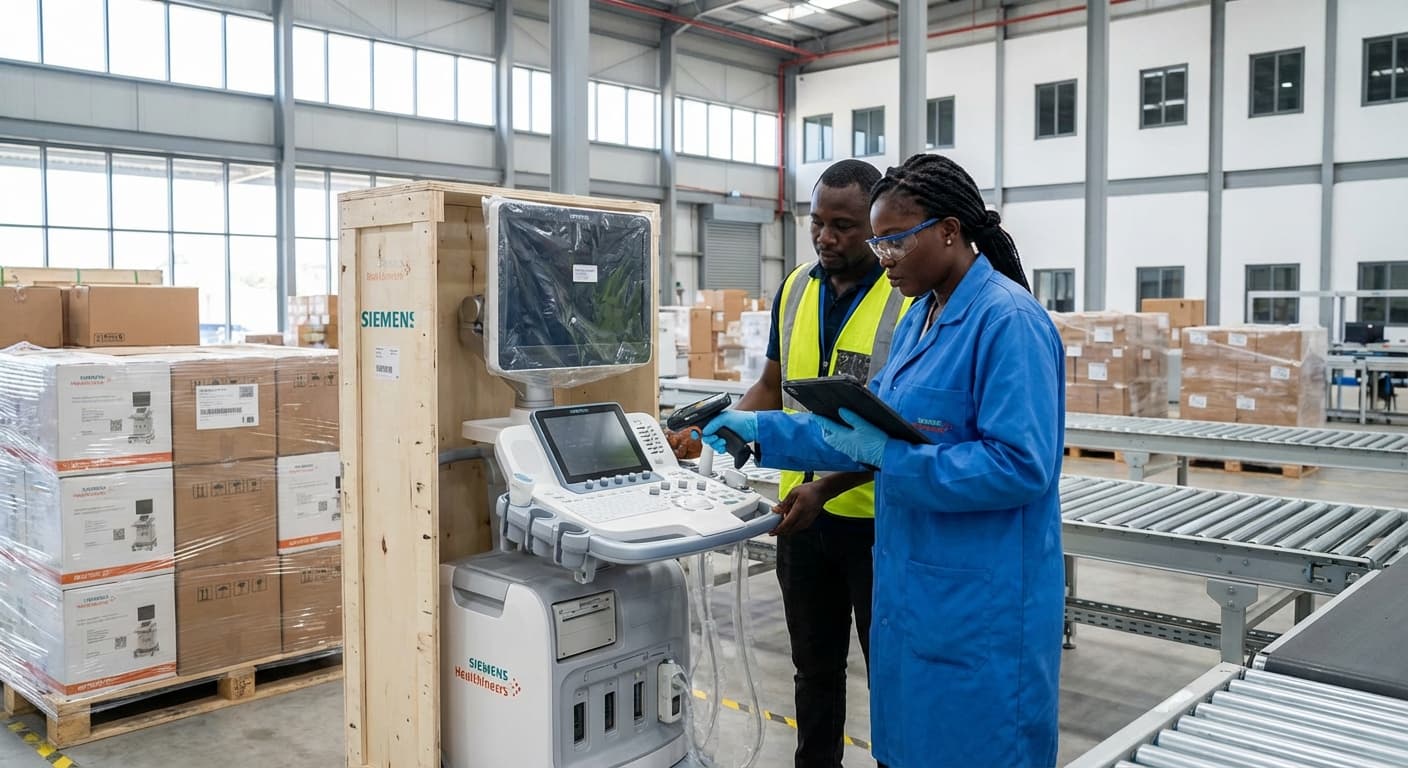
Warehouse Receiving Inspection Service (Medical Equipment) in Mauritius
Engineering Excellence & Technical Support
Warehouse Receiving Inspection Service (Medical Equipment) High-standard technical execution following OEM protocols and local regulatory frameworks.
ISO 13485 Compliant Quality Assurance
Our rigorous receiving inspection adheres strictly to ISO 13485 standards, ensuring all medical equipment meets stringent quality, safety, and regulatory requirements specific to the Mauritian healthcare landscape. We implement robust document control, traceability, and risk management protocols throughout the inspection process.
Advanced Equipment Calibration & Verification
Leveraging state-of-the-art calibrated testing equipment and certified technicians, we meticulously verify the functionality, performance, and accuracy of all incoming medical devices. This includes electrical safety testing, functional checks, and performance validation against manufacturer specifications and local regulatory guidelines.
Comprehensive Documentation & Defect Reporting
We provide detailed, auditable inspection reports that include photographic evidence, test results, and clear documentation of any non-conformities. Our rapid defect reporting system empowers proactive decision-making, minimizing supply chain disruptions and safeguarding patient care in Mauritius.
What Is Warehouse Receiving Inspection Service (Medical Equipment) In Mauritius?
Warehouse Receiving Inspection Service (Medical Equipment) in Mauritius refers to a systematic process undertaken by qualified entities to verify the conformity and integrity of medical equipment upon its arrival at a warehouse facility. This service is critical for ensuring that procured medical devices meet predefined specifications, regulatory requirements, and quality standards before they are stored, distributed, or deployed within the healthcare ecosystem of Mauritius. The inspection encompasses a comprehensive evaluation of physical attributes, functional performance, documentation, and packaging integrity to mitigate risks associated with substandard, damaged, or incorrect medical equipment entering the supply chain.
| Who Needs This Service? | Typical Use Cases | ||||
|---|---|---|---|---|---|
| Medical Equipment Importers and Distributors: Businesses responsible for bringing medical devices into Mauritius. | Hospitals and Healthcare Facilities: Both public and private institutions receiving bulk orders of medical equipment for patient care. | Government Procurement Agencies: Entities responsible for acquiring medical equipment for national health programs and emergency stockpiles. | Third-Party Logistics (3PL) Providers: Warehousing and logistics companies handling medical equipment on behalf of other entities. | Manufacturers (Local and International): As part of their quality assurance and supply chain management processes when shipping to Mauritius. | |
| Receipt of New Medical Device Shipments: The primary scenario, ensuring incoming inventory is fit for purpose. | Return Merchandise Authorization (RMA) Processing: Inspecting returned equipment to determine its condition and eligibility for repair or restocking. | Quality Audits of Incoming Goods: Regular checks to maintain supplier quality and compliance. | Stocktaking and Inventory Management: Verifying the condition and accuracy of existing warehouse stock. | Pre-Deployment Inspections: Ensuring equipment is ready for immediate use after storage. | Compliance with Tender Specifications: Verifying that delivered equipment precisely matches the technical and quality requirements outlined in procurement tenders. |
Key Components of Warehouse Receiving Inspection Service:
- Documentation Review: Verification of all accompanying paperwork, including purchase orders (POs), packing lists, invoices, certificates of origin, certificates of conformity, sterilization certificates (if applicable), and user manuals, against received items.
- Visual Inspection: Assessment of the external condition of the equipment and its packaging for any signs of damage, tampering, or defects. This includes checking for dents, scratches, cracks, leaks, and compromised seals.
- Quantity Verification: Cross-referencing the received quantities against the packing list and purchase order to ensure accurate delivery.
- Identification and Labeling Verification: Confirmation that the equipment is correctly identified with the appropriate model numbers, serial numbers, and branding, and that all labeling conforms to regulatory requirements (e.g., CE marking, ISO standards).
- Functional Testing (Basic): Where feasible and appropriate, performing basic functional checks to ascertain if the equipment powers on and operates as expected, without requiring in-depth diagnostic procedures at this stage.
- Configuration and Accessory Verification: Ensuring all specified accessories, components, and configurations are present and accounted for as per the order.
- Environmental Condition Assessment: Evaluating the conditions under which the equipment was received, particularly concerning temperature, humidity, and potential exposure to contaminants, which could impact product integrity.
- Compliance Checks: Preliminary verification against relevant Mauritian regulatory standards and guidelines for medical devices as defined by the Ministry of Health and Quality of Life and other pertinent authorities.
Who Needs Warehouse Receiving Inspection Service (Medical Equipment) In Mauritius?
Warehouse Receiving Inspection Service for Medical Equipment in Mauritius is crucial for ensuring the quality, safety, and compliance of medical devices entering the country. This service acts as a vital gatekeeper, protecting patients, healthcare providers, and the integrity of the medical supply chain. It verifies that received equipment meets specified standards, is free from damage, and is accurately documented before it enters storage or is distributed to healthcare facilities.
| Customer Type | Key Needs | Impact of Inspection Service |
|---|---|---|
| Hospitals & Healthcare Facilities | Ensuring patient safety, device efficacy, compliance with standards. | Prevents use of faulty or non-compliant equipment, reduces patient risk, maintains operational efficiency. |
| Importers & Distributors | Meeting regulatory requirements, maintaining supplier reputation, ensuring product integrity. | Facilitates smooth customs clearance, builds trust with clients, avoids costly recalls or rejections. |
| Government Ministries | Accountability for public funds, ensuring quality of public healthcare, national health security. | Guarantees value for money, upholds public trust, strengthens the national healthcare infrastructure. |
| Manufacturers' Representatives | Validating import compliance, ensuring brand integrity in the local market. | Confirms adherence to local regulations, protects brand reputation, ensures client satisfaction. |
| 3PL Providers | Accurate inventory management, risk mitigation for stored goods, client confidence. | Ensures correct stock levels, minimizes damage claims, enhances service reliability. |
Target Customers and Departments for Medical Equipment Warehouse Receiving Inspection Service in Mauritius
- {"title":"Hospitals and Healthcare Facilities","departments":["Procurement Department","Biomedical Engineering Department","Materials Management/Stores","Quality Assurance Department","Clinical Departments (e.g., Surgery, Cardiology, Radiology)"],"description":"Both public and private hospitals, clinics, and specialized medical centers are primary beneficiaries. They rely on the inspection service to ensure that the medical equipment they procure for patient care is of the highest quality and operational integrity."}
- {"title":"Medical Equipment Importers and Distributors","departments":["Operations/Logistics Department","Quality Control/Assurance Department","Sales and Distribution Department","Regulatory Affairs Department"],"description":"Companies that import and distribute medical equipment across Mauritius need this service to maintain their reputation and ensure they are supplying compliant and safe products to their clients. This is essential for regulatory adherence."}
- {"title":"Government Ministries and Agencies","departments":["Ministry of Health and Wellness (Procurement, Public Health, Medical Services)","Pharmacy Board of Mauritius (for regulatory compliance checks)","Government Supply Department"],"description":"The Ministry of Health and Wellness and other government bodies responsible for healthcare infrastructure and public health rely on these services to ensure that publicly funded medical equipment meets all necessary standards and is procured responsibly."}
- {"title":"Medical Equipment Manufacturers (Local and International Representatives)","departments":["Local Representative/Agent Office","Technical Support Department"],"description":"While manufacturers have their own quality control, local representatives or agents for international manufacturers may utilize this service to ensure that equipment arriving in Mauritius meets local import regulations and is handled appropriately upon receipt."}
- {"title":"Third-Party Logistics (3PL) Providers Specializing in Healthcare","departments":["Warehouse Management","Quality Assurance","Operations"],"description":"Warehousing and logistics companies that manage medical equipment for other businesses will benefit from an independent inspection service to validate the condition and compliance of goods before adding them to their inventory."}
- {"title":"Research Institutions and Universities","departments":["Procurement Office","Research and Development Department","Laboratory Management"],"description":"Institutions involved in medical research or training that acquire specialized medical equipment will require assurance of its quality and functionality for their critical work."}
Warehouse Receiving Inspection Service (Medical Equipment) Process In Mauritius
This document outlines the Warehouse Receiving Inspection Service (Medical Equipment) process in Mauritius, detailing the workflow from initial inquiry to the successful execution of the inspection. This service ensures that medical equipment arriving at warehouses in Mauritius meets all specified quality, safety, and regulatory standards before being accepted into inventory.
| Stage | Key Activities | Responsible Party | Deliverable |
|---|---|---|---|
| Client expresses interest, provides initial details. | Client | Initial Inquiry |
| Service provider assesses requirements, prepares proposal. | Service Provider | Proposal and Quotation |
| Formal agreement signed, inspection dates set. | Client & Service Provider | Signed Agreement, Confirmed Schedule |
| Review documentation, prepare checklists and equipment. | Service Provider | Prepared Inspection Plan and Tools |
| Visual checks, documentation verification, functionality tests. | Service Provider | On-site Inspection Findings |
| Compile detailed inspection report with evidence. | Service Provider | Detailed Inspection Report |
| Identify, document, and potentially verify corrective actions. | Service Provider & Client | Non-Conformity Report, Corrective Action Plan (if needed) |
| Issue certificate upon satisfactory inspection. | Service Provider | Certificate of Inspection |
| Close service order, maintain records. | Service Provider | Final Service Documentation, Records |
Warehouse Receiving Inspection Service (Medical Equipment) Workflow in Mauritius
- {"title":"1. Inquiry & Service Request","description":"The process begins when a client (importer, distributor, or manufacturer) expresses interest in the Warehouse Receiving Inspection Service for medical equipment. This typically involves a formal inquiry via email, phone, or through a dedicated online portal. The client will provide preliminary details such as the type of medical equipment, expected arrival date, quantity, origin, and specific inspection requirements (e.g., compliance with Mauritian regulations, manufacturer's specifications, or client-defined quality checks)."}
- {"title":"2. Proposal & Quotation","description":"Upon receiving the inquiry, the service provider will gather more detailed information (if needed) and then prepare a comprehensive proposal. This proposal will outline the scope of work, methodologies, estimated timelines, deliverables, and a detailed quotation for the inspection service. It will also specify the applicable Mauritian regulatory frameworks (e.g., those enforced by the Ministry of Health and Quality of Life) and any international standards relevant to the medical equipment."}
- {"title":"3. Agreement & Scheduling","description":"Once the client accepts the proposal and quotation, a formal service agreement is signed. This agreement will detail terms and conditions, responsibilities of both parties, and payment schedules. Following the agreement, the inspection date and time are collaboratively scheduled, taking into account the anticipated arrival of the medical equipment at the designated warehouse in Mauritius."}
- {"title":"4. Pre-Inspection Preparation","description":"Before the physical inspection, the inspection team will review all relevant documentation provided by the client, including import permits, certificates of origin, manufacturer's specifications, quality control reports, and any prior inspection records. They will also prepare the necessary checklists and equipment for the inspection, ensuring they are calibrated and ready for use."}
- {"title":"5. On-Site Inspection Execution","description":"Upon arrival of the medical equipment at the warehouse, the inspection team conducts a thorough on-site examination. This includes:\n- Visual Inspection: Checking for any physical damage, defects, or discrepancies in packaging and the equipment itself.\n- Documentation Verification: Confirming that all required documents are present and accurate, including serial numbers, model numbers, expiry dates (if applicable), and conformity certificates.\n- Functionality Testing: Performing basic operational checks and tests to ensure the equipment functions as intended, where feasible and safe.\n- Labeling and Marking Check: Verifying that all labels, warning signs, and identification marks are compliant with regulatory requirements.\n- Storage Condition Assessment: Evaluating the warehouse storage conditions to ensure they are suitable for the type of medical equipment."}
- {"title":"6. Reporting & Documentation","description":"Following the on-site inspection, the inspection team compiles a detailed inspection report. This report will include findings, observations, any non-conformities identified, and recommendations. Photographic evidence of the equipment and any identified issues will be included. The report will be reviewed internally for accuracy and completeness before being submitted to the client."}
- {"title":"7. Non-Conformity Management (if applicable)","description":"If any non-conformities are identified, the service provider will clearly outline them in the report. The client will be informed of the issues and may be required to take corrective actions. The inspection service may also be involved in verifying the implementation of these corrective actions, depending on the agreement."}
- {"title":"8. Certificate of Inspection Issuance","description":"Upon successful completion of the inspection and resolution of any minor non-conformities (or if no non-conformities were found), the service provider will issue a Certificate of Inspection. This certificate serves as official confirmation that the medical equipment has undergone the required receiving inspection and meets the specified standards."}
- {"title":"9. Finalization & Record Keeping","description":"The process concludes with the finalization of the service, including the submission of all required documentation and the closure of the service order. The service provider will maintain detailed records of the inspection for a specified period, as per regulatory or contractual requirements."}
Warehouse Receiving Inspection Service (Medical Equipment) Cost In Mauritius
The cost of warehouse receiving inspection services for medical equipment in Mauritius can vary significantly based on several factors. These services are crucial to ensure that medical equipment is received in good condition, meets specifications, and complies with regulatory standards before being stored or distributed. Understanding these pricing dynamics is essential for healthcare providers, distributors, and manufacturers operating in Mauritius.
Key Pricing Factors:
- Type and Complexity of Medical Equipment: High-value, complex, or sensitive medical equipment (e.g., MRI machines, surgical robots, specialized diagnostic tools) will naturally command higher inspection fees due to the specialized knowledge, tools, and time required. Simpler equipment like basic consumables or non-technical devices will be less expensive.
- Volume of Equipment: The sheer quantity of equipment to be inspected is a major driver of cost. Providers may offer tiered pricing, with lower per-unit costs for larger volumes. Bulk discounts are common.
- Scope of Inspection: The depth and breadth of the inspection significantly influence the price. This can range from a basic visual check for damage to comprehensive functional testing, calibration verification, documentation review (compliance certificates, manuals), and even sample testing. A more detailed inspection will cost more.
- Urgency of Service: Expedited inspection services, requiring immediate attention or out-of-hours work, will typically incur premium charges.
- Provider's Expertise and Reputation: Established inspection companies with a proven track record, specialized certifications, and highly skilled technicians may charge more than newer or less experienced providers. Their expertise in medical equipment and regulatory compliance is a valuable asset.
- Location and Accessibility: The physical location of the warehouse and the ease of access for the inspection team can impact costs. Remote or difficult-to-reach locations might incur additional travel charges.
- Reporting Requirements: The level of detail and formality required in the inspection report can affect pricing. Comprehensive, detailed reports with photographic evidence and specific compliance declarations will be more expensive than a simple checklist.
- Regulatory Compliance: Inspections requiring verification against specific Mauritian health regulations or international standards (e.g., ISO 13485) may involve more rigorous procedures and therefore higher costs.
Price Ranges in Mauritian Rupees (MUR):
Due to the variable nature of these services, providing exact figures is challenging. However, based on general industry practices and local market understanding, the following ranges can be anticipated:
- Basic Inspection (per unit/shipment): For smaller, less complex items or a general visual check, expect costs to start from approximately MUR 1,500 to MUR 5,000.
- Standard Inspection (per unit/shipment): For moderately complex equipment requiring checks on functionality and documentation, costs could range from MUR 4,000 to MUR 15,000.
- Comprehensive/Specialized Inspection (per unit/shipment): For high-value, complex, or highly regulated medical equipment, inspections involving detailed functional testing, calibration, and in-depth regulatory checks could range from MUR 10,000 to MUR 50,000 or more, depending on the specific equipment and scope.
- Project-Based/Contractual Rates: For ongoing services or large-scale projects, providers will often offer custom quotes or contractual rates that are negotiated based on projected volumes, frequency, and specific service agreements. These can offer better per-unit value for consistent business.
It is highly recommended to obtain multiple quotes from reputable inspection service providers in Mauritius, clearly outlining the scope of work and the specific types of medical equipment involved, to get an accurate cost estimate for your needs.
| Service Level/Type | Estimated Cost Range (MUR) |
|---|---|
| Basic Inspection (per unit/shipment) | MUR 1,500 - MUR 5,000 |
| Standard Inspection (per unit/shipment) | MUR 4,000 - MUR 15,000 |
| Comprehensive/Specialized Inspection (per unit/shipment) | MUR 10,000 - MUR 50,000+ |
| Project-Based/Contractual Rates | Custom Quotations Based on Volume & Scope |
Factors Influencing Warehouse Receiving Inspection Costs for Medical Equipment in Mauritius
- Type and complexity of medical equipment
- Volume of equipment to be inspected
- Scope and depth of the inspection (e.g., visual, functional testing, calibration)
- Urgency of the inspection service
- Experience, reputation, and certifications of the inspection provider
- Geographical location and accessibility of the warehouse
- Specific reporting requirements and documentation needs
- Adherence to Mauritian and international regulatory standards
Affordable Warehouse Receiving Inspection Service (Medical Equipment) Options
Finding affordable warehouse receiving inspection services for medical equipment is crucial to ensure product integrity, compliance, and prevent costly errors. This service involves a thorough examination of incoming medical devices upon arrival at your warehouse. Key inspection points typically include visual damage assessment, verification of quantity and model numbers against purchase orders, checking for proper sealing and tamper-evidence, and confirming required documentation is present. Affordable options often stem from efficient processes, streamlined reporting, and bundled service packages tailored to your specific needs.
| Cost-Saving Strategy | Description | Impact on Affordability |
|---|---|---|
| Leverage Technology & Automation | Utilize mobile inspection apps with digital checklists, barcode scanning, and automated reporting. This reduces manual data entry and errors, speeding up the inspection process. | Decreases labor costs and improves efficiency, leading to lower per-inspection rates. |
| Proactive Quality Control Planning | Work with your supplier to ensure proper packaging and labeling practices at the point of origin. This minimizes the chance of damage or discrepancies during transit, reducing the need for extensive post-receipt inspection. | Reduces the volume of inspections requiring in-depth troubleshooting or rejection, lowering overall inspection costs. |
| Volume-Based Pricing & Long-Term Contracts | Negotiate discounted rates for higher inspection volumes or commit to longer-term service agreements. This provides cost predictability and incentives for the service provider. | Secures lower per-unit inspection costs through commitment and volume. |
| Remote Inspection & Pre-Shipment Verification (where applicable) | For certain types of equipment, consider if pre-shipment inspections at the manufacturer's site can supplement or reduce the need for full warehouse receiving inspections. | Can significantly reduce the cost and complexity of warehouse-based inspections by catching issues earlier. |
| Standardized Inspection Protocols | Implementing clear, standardized inspection checklists and procedures ensures consistency and efficiency, regardless of the inspector or the equipment type. This reduces training time and variability. | Streamlines the inspection process, making it faster and more cost-effective. |
| Data Analytics & Root Cause Analysis | Utilize inspection data to identify recurring issues or trends from specific suppliers. This allows for targeted corrective actions and can reduce the frequency of inspections for reliable suppliers. | Minimizes future inspection needs by addressing root causes of problems, leading to long-term savings. |
Value Bundles for Affordable Medical Equipment Receiving Inspection
- {"title":"Basic Receiving Audit Bundle","description":"This cost-effective bundle focuses on essential checks: visual damage inspection, quantity verification, and matching against the Bill of Lading (BOL). Ideal for high-volume, lower-risk items or as a foundational service. Reduces the likelihood of obvious receiving errors."}
- {"title":"Standard Compliance Bundle","description":"Builds upon the Basic bundle by adding verification of manufacturer lot numbers, serial numbers, and expiration dates (where applicable). Includes a check for required documentation like Certificates of Conformance (CoC). Essential for traceability and regulatory compliance."}
- {"title":"Advanced Quality Assurance Bundle","description":"This comprehensive bundle includes all features of the Standard bundle, plus more detailed checks such as packaging integrity, seal verification, and potentially basic functional checks for powered devices (if agreed upon). Offers a higher level of assurance against product defects and tampering."}
- {"title":"Customizable & Scalable Packages","description":"Many providers offer the ability to tailor bundles based on the specific types of medical equipment you receive, your risk tolerance, and your existing internal processes. This allows for precise cost allocation and ensures you're only paying for the services you truly need. Scalability means the service can grow or shrink with your business volume."}
Verified Providers In Mauritius
In the dynamic landscape of healthcare in Mauritius, identifying truly Verified Providers is paramount for ensuring quality and trustworthiness. Franance Health stands out as a premier organization that meticulously vets healthcare professionals and facilities. Their rigorous credentialing process goes beyond superficial checks, delving deep into the qualifications, experience, and ethical standing of each provider. This commitment to thorough verification is what sets Franance Health apart and makes their network the best choice for individuals seeking reliable and high-quality medical care.
| Provider Type | Franance Health Verification Criteria | Benefits for Patients |
|---|---|---|
| Doctors (Specialists & General Practitioners) | Valid Medical License, Board Certification (where applicable), Verified Educational Degrees, Clean Disciplinary Record, Peer Review (if applicable) | Access to highly qualified and ethical medical professionals, accurate diagnoses, and effective treatment plans. |
| Hospitals & Clinics | Accreditation Status (e.g., Joint Commission International - JCI, if applicable), Compliance with National Healthcare Regulations, Quality Assurance Protocols, Patient Safety Measures, Skilled Medical Staff | Safe and well-equipped facilities with a commitment to patient care and positive health outcomes. |
| Laboratories & Diagnostic Centers | Accreditation by recognized bodies, Up-to-date equipment and technology, Qualified Technicians and Pathologists, Adherence to quality control standards | Accurate and reliable diagnostic results essential for proper medical assessment and treatment. |
| Pharmaceutical Services (Pharmacies) | Valid Pharmacy License, Dispensing Accuracy Protocols, Proper Storage of Medications, Qualified Pharmacists, Authentic Drug Sourcing | Access to safe, genuine, and appropriately dispensed medications. |
Why Franance Health Credentials Matter:
- Uncompromising Verification Standards: Franance Health employs a multi-faceted approach to credentialing, including thorough background checks, verification of educational qualifications and licenses, and assessment of professional experience.
- Focus on Expertise and Specialization: They ensure that providers within their network possess the necessary expertise and specializations to address a wide range of medical needs.
- Commitment to Patient Safety and Ethical Practice: Franance Health prioritizes patient well-being by ensuring all credentialed providers adhere to the highest ethical standards and best practices in healthcare.
- Access to a Trusted Network: Choosing a Franance Health verified provider means gaining access to a curated list of professionals and facilities that have met stringent quality benchmarks.
- Peace of Mind for Patients: The assurance of receiving care from a rigorously vetted provider offers invaluable peace of mind in a critical aspect of life.
Scope Of Work For Warehouse Receiving Inspection Service (Medical Equipment)
This Scope of Work (SOW) defines the requirements for warehouse receiving inspection services for medical equipment. The objective is to ensure that all incoming medical equipment meets the specified technical requirements, quality standards, and regulatory compliance before being accepted into the warehouse inventory. This service is critical for maintaining product integrity, patient safety, and operational efficiency.
| Task | Description | Deliverable | Standard Specification / Acceptance Criteria |
|---|---|---|---|
| Receiving Verification | Compare physical count and item descriptions of incoming shipments against POs and ASNs. | Receiving Discrepancy Report (if applicable) | Accuracy of count and item identification within ±0% for critical items, ±0.5% for non-critical items. All discrepancies must be documented. |
| Physical Condition Inspection | Visually inspect all exterior surfaces for dents, scratches, cracks, corrosion, or other physical damage. Check packaging for integrity. | Physical Damage Report (if applicable) | No visible damage that could compromise functionality or aesthetics. Packaging intact and protective seals unbroken. |
| Technical Functionality Testing (Basic) | Perform essential functional checks as defined in the manufacturer's manual or client-provided test procedures (e.g., power on, basic operational checks, indicator lights). | Basic Functionality Test Report | Equipment powers on and performs basic functions without error codes or warning lights. All test results must be documented as Pass/Fail. |
| Documentation Verification | Verify the presence and accuracy of all required documentation: manufacturer's manual, warranty, certificates of analysis/conformance, lot/serial number tracking, expiration dates (if applicable). | Documentation Review Checklist | All specified documents present and accurate. Serial numbers, lot numbers, and expiration dates (if applicable) match markings on the equipment and accompanying documentation. Compliance with stated shelf-life requirements. |
| Labeling and Marking Verification | Inspect all labels and markings for clarity, accuracy, and compliance with regulatory requirements (e.g., CE mark, FDA registration number, UDI). | Labeling Compliance Report | All required labels are present, legible, and accurate. Compliance with relevant regulatory marking standards. |
| Regulatory Compliance Check | Confirm that the equipment and its documentation meet the specified regulatory requirements for the intended market (e.g., FDA clearance, CE marking). | Regulatory Compliance Statement | Evidence of required regulatory approvals and certifications must be readily available and verifiable. |
| Non-Conformance Reporting | Document any deviations from specifications, damages, or functional failures. | Non-Conformance Report (NCR) | Detailed description of the non-conformance, including photographic evidence where possible. Classification of the non-conformance (e.g., Major, Minor). |
| Reporting | Provide a consolidated report summarizing all inspection activities, findings, and recommendations. | Daily/Weekly Inspection Summary Report | Reports submitted within 24 hours of inspection completion. Clear and concise presentation of data, including pass/fail rates and NCRs. |
Key Objectives
- Verify the quantity and identity of received medical equipment against purchase orders (POs) and advance shipping notices (ASNs).
- Conduct comprehensive technical inspections to ensure equipment functions as per specifications and manufacturer guidelines.
- Assess the physical condition of the equipment for any damage, defects, or signs of tampering.
- Confirm the presence and accuracy of all required documentation, including serial numbers, lot numbers, expiration dates, and certificates.
- Ensure compliance with relevant regulatory standards (e.g., FDA, CE, ISO) and client-specific quality requirements.
- Identify and document any discrepancies, damages, or non-conformances.
- Provide timely and accurate inspection reports to facilitate decision-making regarding acceptance, rejection, or corrective actions.
Service Level Agreement For Warehouse Receiving Inspection Service (Medical Equipment)
This Service Level Agreement (SLA) outlines the guaranteed response times and uptime for the Warehouse Receiving Inspection Service for Medical Equipment provided by [Your Company Name] (hereinafter referred to as "Provider") to [Client Company Name] (hereinafter referred to as "Client"). This SLA is an integral part of the Master Services Agreement between the Provider and Client.
| Service Component | Response Time Guarantee | Uptime Guarantee | Notes/Exclusions |
|---|---|---|---|
| Initial Inspection Request Acknowledgment | Within 1 hour of receipt during Business Hours. | N/A | Applicable to requests submitted via designated channels (e.g., email, portal). |
| Initiation of On-Site Inspection (post-request) | Within 4 business hours for standard shipments. Within 2 business hours for urgent/critical shipments (as defined by Client). | N/A | Assumes equipment is accessible and ready for inspection. 'Urgent/Critical' shipments require prior notification and agreement on definition. |
| Completion of Standard Receiving Inspection | Within 24 business hours from initiation for standard shipments. | N/A | Dependent on shipment size and complexity. Excludes time for any required quarantine or further testing. |
| Completion of Urgent/Critical Receiving Inspection | Within 8 business hours from initiation for urgent/critical shipments. | N/A | Dependent on shipment size and complexity. Excludes time for any required quarantine or further testing. |
| Reporting of Inspection Results (Initial Report) | Within 4 business hours of inspection completion. | N/A | Initial report includes findings, discrepancies, and initial disposition recommendation. |
| Overall Service Availability (Excluding Scheduled Maintenance) | N/A | 99.5% Uptime during defined Business Hours. | Downtime due to Force Majeure events (e.g., natural disasters, civil unrest) is excluded. |
| Notification of Scheduled Maintenance | At least 48 hours in advance. | N/A | Maintenance windows will be scheduled to minimize disruption to Client operations. |
Key Definitions
- Service: The comprehensive process of receiving, inspecting, documenting, and dispositioning medical equipment shipments at the Client's designated warehouse facilities.
- Inspection Request: A formal notification from the Client to the Provider requesting a receiving inspection of a specific shipment.
- Downtime: Any period during which the Receiving Inspection Service is unavailable and unable to process inspection requests.
- Scheduled Maintenance: Pre-planned periods of unavailability for system upgrades, repairs, or other necessary maintenance, communicated in advance to the Client.
- Business Hours: [Specify your standard business hours, e.g., Monday - Friday, 9:00 AM - 5:00 PM, excluding public holidays].
Frequently Asked Questions

Ready when you are
Let's scope your Warehouse Receiving Inspection Service (Medical Equipment) in Mauritius project in Mauritius.

Scaling healthcare logistics and technical systems across the entire continent.