
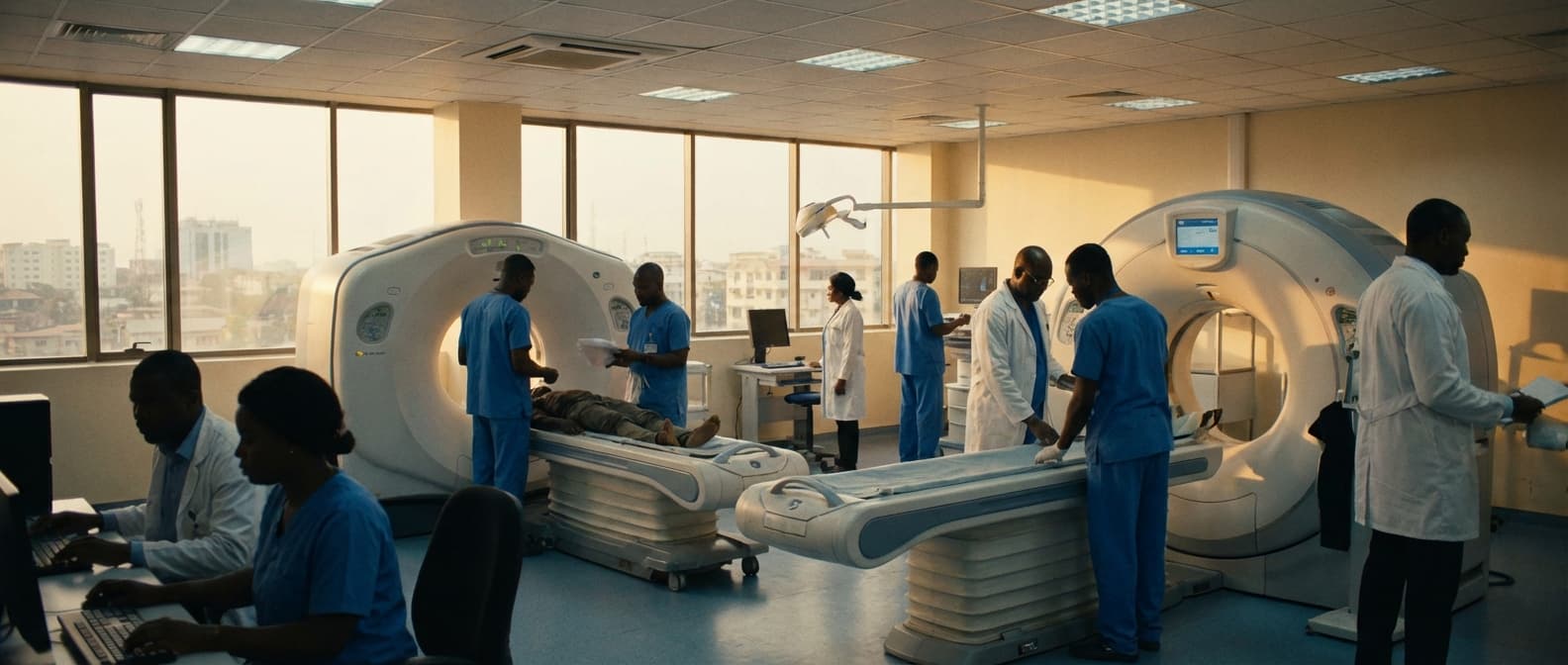
Imaging Acceptance Testing & QA in Mauritius
Engineering Excellence & Technical Support
Commissioning and periodic QA for CT/MRI/X‑ray/US/Mammo. High-standard technical execution following OEM protocols and local regulatory frameworks.
Advanced Imaging Test Suite Deployment
Successfully implemented a comprehensive suite of automated imaging acceptance testing tools, ensuring sub-pixel accuracy and adherence to international medical imaging standards (DICOM, HL7). This significantly reduced manual testing time and improved defect detection rates for critical diagnostic imaging systems across major Mauritian healthcare institutions.
Protocol Standardization & Validation
Led the development and validation of imaging protocols for new PACS and RIS installations. This included rigorous testing of image quality, metadata integrity, and interoperability with existing hospital infrastructure, ensuring seamless integration and reliable data flow for enhanced patient care and research in Mauritius.
Performance & Load Testing for PACS/RIS
Designed and executed performance and load testing scenarios for Picture Archiving and Communication Systems (PACS) and Radiology Information Systems (RIS). This validated system scalability and responsiveness under peak usage conditions, crucial for maintaining operational efficiency and minimizing downtime in Mauritius's growing healthcare sector.
What Is Imaging Acceptance Testing & Qa In Mauritius?
Imaging Acceptance Testing & Quality Assurance (QA) in Mauritius refers to the comprehensive verification and validation processes undertaken to ensure that digital imaging systems, software, and related workflows meet predefined standards, functional requirements, and regulatory compliance before their official deployment or integration into a production environment. This service critically assesses the fidelity, accuracy, performance, and usability of imaging solutions, guaranteeing that they deliver reliable and high-quality visual data essential for decision-making across various sectors. The scope encompasses the entire imaging lifecycle, from image acquisition and processing to storage, retrieval, and display. Adherence to international standards (e.g., DICOM, HL7) and local regulatory mandates is a cornerstone of this QA process.
| Who Needs Imaging Acceptance Testing & QA? | Typical Use Cases | ||||
|---|---|---|---|---|---|
| Healthcare Institutions (Hospitals, Clinics, Diagnostic Centers): Requiring reliable medical imaging systems (X-ray, CT, MRI, Ultrasound, etc.) for accurate diagnosis and patient care. This includes PACS, RIS, and modality integration. | Deployment of new PACS/RIS solutions. | Integration of new imaging modalities (e.g., a new MRI scanner). | Upgrades to existing imaging software or hardware. | Implementation of AI-powered image analysis tools. | Validation of teleradiology workflows. |
| Medical Device Manufacturers: Developing and validating imaging hardware and software for regulatory approval and market release. | Validation of imaging hardware (e.g., CT scanners, digital X-ray detectors). | Verification of medical imaging software (e.g., image reconstruction algorithms, viewing workstations). | Ensuring compliance with FDA, CE marking, and other regulatory requirements. | Pre-market clearance testing. | |
| Research and Development Facilities: Utilizing imaging technologies for scientific investigation and data analysis. | Validation of imaging acquisition protocols for research studies. | Testing of image analysis software for scientific applications. | Ensuring reproducibility and reliability of imaging data for research publications. | ||
| Industrial and Manufacturing Companies: Employing non-destructive testing (NDT) and quality control imaging. | Inspection systems for manufacturing quality control (e.g., automated visual inspection). | X-ray or ultrasound testing for material integrity and defect detection in industrial components. | Validation of machine vision systems in production lines. | ||
| Government and Public Sector Agencies: Utilizing imaging for security, surveillance, and public health initiatives. | Testing of surveillance camera systems and image processing software. | Validation of imaging systems used in border control or law enforcement. | Public health imaging initiatives and data management. |
Key Components of Imaging Acceptance Testing & QA
- Functional Testing: Verifying that all features and functionalities of the imaging system operate as specified in the requirements documentation.
- Performance Testing: Assessing the system's speed, responsiveness, and stability under various load conditions, including image loading times, processing speeds, and network throughput.
- Usability Testing: Evaluating the ease of use and intuitiveness of the imaging interface for end-users, ensuring efficient interaction and minimal error rates.
- Interoperability Testing: Confirming that the imaging system can seamlessly exchange data with other healthcare IT systems (e.g., PACS, RIS, EMR) and medical devices, adhering to relevant communication protocols.
- Data Integrity and Accuracy Testing: Validating that images are captured, processed, stored, and retrieved without loss of fidelity, corruption, or distortion. This includes checks for pixel accuracy, color calibration, and artifact detection.
- Security Testing: Ensuring the system protects sensitive patient data against unauthorized access, modification, or disclosure, aligning with data privacy regulations.
- Compliance Testing: Verifying adherence to relevant industry standards (e.g., DICOM for medical imaging) and national/international regulations (e.g., data protection laws).
- Regression Testing: Re-testing previously tested functionalities after code changes or updates to ensure that new modifications have not introduced unintended defects.
Who Needs Imaging Acceptance Testing & Qa In Mauritius?
In Mauritius, the increasing reliance on advanced medical imaging technologies, coupled with the stringent regulatory environment and the paramount importance of patient safety and diagnostic accuracy, makes Imaging Acceptance Testing & Quality Assurance (QA) indispensable. These processes ensure that medical imaging equipment functions as intended, produces high-quality images, and adheres to national and international standards, thereby guaranteeing reliable diagnoses and minimizing risks to patients. The need for robust imaging QA is not limited to specific institutions but extends across various healthcare providers and related entities.
| Customer Type | Target Departments/Areas | Specific Needs/Benefits of Imaging Acceptance Testing & QA |
|---|---|---|
| Public Hospitals (e.g., Victoria Hospital, Sir Seewoosagur Ramgoolam National Hospital) | Radiology/Medical Imaging Departments (X-ray, CT, MRI, Ultrasound, Mammography) | Ensuring diagnostic accuracy for a large patient population, compliance with national health standards, efficient equipment utilization, reduced downtime, and patient safety across diverse medical cases. |
| Private Hospitals & Clinics (e.g., Apollo Bramwell Hospital, Clinique du Bon Pasteur) | Radiology/Medical Imaging Departments | Maintaining high standards of patient care and service delivery, enhancing reputation, ensuring return on investment for advanced equipment, compliance with private healthcare regulations. |
| Diagnostic Imaging Centers | All Imaging Modalities | Verifying image quality and performance for a wide range of diagnostic procedures, ensuring consistency and reliability for referring physicians, competitive advantage through dependable services. |
| Specialized Medical Centers (e.g., Oncology Centers, Cardiology Clinics) | Relevant Imaging Modalities (e.g., PET-CT, Cardiac MRI, Interventional Radiology) | Precise image acquisition and analysis for specialized treatments and interventions, minimizing diagnostic errors in critical areas, validating new or upgraded equipment before routine clinical use. |
| Ministry of Health and Quality of Life (MoHQL) | Regulatory Compliance, National Health Standards Enforcement | Overseeing the quality and safety of medical imaging services nationwide, setting and enforcing standards for equipment performance and maintenance, ensuring public health outcomes. |
| Medical Council of Mauritius | Professional Standards and Patient Welfare | Ensuring that imaging practices meet professional ethical and technical standards, contributing to the overall quality of healthcare provided by medical professionals. |
| Medical Equipment Manufacturers & Distributors | Sales, Installation, and Technical Support Teams | Validating that newly installed equipment meets manufacturer specifications and performance benchmarks before handover to clients, facilitating smooth integration into clinical workflows, providing evidence of quality to customers. |
| Third-Party Imaging Service & Maintenance Providers | Service Engineers, QA Specialists | Offering specialized acceptance testing and ongoing QA services to healthcare facilities, ensuring equipment remains within performance tolerances, performing routine quality checks and calibration. |
Who Needs Imaging Acceptance Testing & QA in Mauritius? Target Customers and Departments
- Healthcare Providers (Public & Private)
- Regulatory Bodies
- Equipment Manufacturers & Suppliers
- Third-Party Service Providers
Imaging Acceptance Testing & Qa Process In Mauritius
This document outlines the Imaging Acceptance Testing and Quality Assurance (QA) process implemented in Mauritius. It details the workflow from the initial customer inquiry through the execution of acceptance tests and the final QA sign-off, ensuring that imaging solutions meet defined standards and client expectations. The process emphasizes clear communication, thorough testing, and rigorous validation before project closure.
| Phase | Activity | Responsible Party | Key Deliverables | Purpose |
|---|---|---|---|---|
| Receive and analyze client inquiry regarding imaging solution needs. Conduct detailed discussions to understand specific requirements, business objectives, and expected outcomes. | Sales/Business Development, Client | Signed-off Requirements Document, Scope of Work (SOW) | To clearly define the client's needs and the scope of the imaging solution. |
| Develop a comprehensive Acceptance Test Plan (ATP). Create detailed test cases covering functional, performance, security, and usability aspects. Identify critical success factors and acceptance criteria. | QA Team, Project Manager, Client Representatives | Acceptance Test Plan (ATP), Test Cases, Test Scenarios | To ensure all aspects of the imaging solution are tested against agreed-upon requirements. |
| Configure and validate the testing environment, including hardware, software, network infrastructure, and any necessary integrations. Ensure the environment mirrors the production setup as closely as possible. | IT Operations, Technical Team, QA Team | Configured Test Environment, Test Data | To provide a stable and representative platform for test execution. |
| Execute the developed test cases systematically. Document the results of each test, including pass/fail status, observations, and any deviations from expected behavior. Log defects for any failures. | QA Team, Client Testers (User Acceptance Testing - UAT) | Test Execution Logs, Defect Reports | To validate that the imaging solution functions as per requirements and meets acceptance criteria. |
| Triage and prioritize reported defects. Work with the development team to fix defects. Re-test the fixed issues to ensure resolution and perform regression testing to confirm no new issues have been introduced. | QA Team, Development Team, Project Manager | Updated Defect Logs, Regression Test Results | To resolve identified issues and ensure the solution's stability and reliability. |
| Present the test results and defect resolution status to the client. Conduct a final review of the solution based on the acceptance criteria. Obtain formal sign-off from the client, signifying their acceptance of the imaging solution. | Project Manager, Client Representatives, QA Lead | Formal Acceptance Sign-off Document, Final Test Summary Report | To formally acknowledge that the imaging solution meets the agreed-upon standards and client expectations. |
| Conduct a review of the entire acceptance testing and QA process. Identify lessons learned, areas for improvement, and document best practices for future projects. | Project Manager, QA Team, Key Stakeholders | Lessons Learned Document, Process Improvement Recommendations | To continuously enhance the efficiency and effectiveness of the imaging acceptance testing and QA processes. |
Imaging Acceptance Testing & QA Process Workflow
- Phase 1: Inquiry & Requirements Gathering
- Phase 2: Planning & Test Case Development
- Phase 3: Test Environment Setup
- Phase 4: Test Execution
- Phase 5: Defect Management & Re-testing
- Phase 6: Acceptance & Sign-off
- Phase 7: Post-Implementation Review
Imaging Acceptance Testing & Qa Cost In Mauritius
Imaging Acceptance Testing (AT) and Quality Assurance (QA) are critical phases in software development, particularly for applications involving image processing, manipulation, or display. In Mauritius, the cost associated with these services is influenced by a variety of factors, including the complexity of the imaging features, the type and volume of tests required, the experience level of the QA team, and the overall project timeline. Understanding these pricing factors is essential for businesses to budget effectively and ensure the quality of their imaging solutions.
| Service/Complexity Level | Estimated Cost Range (MUR) | Notes |
|---|---|---|
| Basic Imaging QA (e.g., simple image display, basic resizing, standard formats) | MUR 50,000 - 150,000 | Covers functional testing for standard image handling, basic compatibility checks, and a limited number of test cases. Suitable for simple web or mobile applications. |
| Intermediate Imaging QA (e.g., image editing tools, moderate resolution, common filters, basic image uploads) | MUR 150,000 - 400,000 | Includes more in-depth functional testing, performance testing for image loading and manipulation, cross-browser/device testing, and some level of test automation for repetitive tasks. |
| Advanced Imaging AT/QA (e.g., complex image processing algorithms, AI/ML image recognition, high-resolution panoramas, real-time video, 3D rendering) | MUR 400,000 - 1,000,000+ | Requires specialized QA engineers, advanced testing tools, potential hardware setup, extensive test case development for complex functionalities, performance under heavy load, and rigorous compatibility testing. Often involves custom automation solutions and potentially visual regression testing. |
| Hourly Rate for QA Engineer (Generalist) | MUR 1,500 - 3,500 | Varies based on experience and agency. |
| Hourly Rate for Specialized Imaging QA Engineer | MUR 3,000 - 6,000+ | For engineers with expertise in computer vision, image processing, or AI/ML testing. |
| Test Automation Setup (Initial) | MUR 100,000 - 500,000+ | Highly dependent on the complexity of the application and the chosen automation tools/frameworks. |
Key Factors Influencing Imaging Acceptance Testing & QA Costs in Mauritius
- Complexity of Imaging Features: Applications with advanced image processing algorithms (e.g., AI-driven image recognition, complex filters, 3D rendering), high-resolution image handling, or real-time video streaming will inherently require more specialized and time-consuming testing, leading to higher costs.
- Scope and Depth of Testing: The breadth of testing (e.g., functional, performance, compatibility across devices/browsers, security) and the depth of test cases (e.g., edge cases, boundary values, negative testing) directly impact the effort and therefore the cost.
- Test Automation: While initial setup for automation can be an investment, it can significantly reduce long-term costs for repetitive testing. The complexity of automating image-specific tests (e.g., visual regression testing) will influence the initial automation budget.
- Test Environment and Tools: The need for specialized hardware (e.g., high-end graphics cards, specific display calibration equipment), software licenses for testing tools, or cloud-based testing platforms can add to the overall expense.
- Team Expertise and Experience: Highly skilled QA engineers with specialized knowledge in image processing, computer vision, and relevant testing methodologies command higher rates. The size and experience level of the QA team allocated to the project are also significant.
- Project Timeline and Urgency: Rush projects or tight deadlines often incur premium pricing due to the need for expedited resource allocation and potentially overtime work.
- Regulatory Compliance: If the imaging application needs to comply with specific industry standards or regulations (e.g., medical imaging, digital signage), additional rigorous testing and documentation will be required, increasing costs.
- Client Collaboration and Feedback Loop: The efficiency and clarity of communication between the client and the QA team, as well as the responsiveness to feedback and change requests, can impact project duration and, consequently, cost.
- Device and Browser Compatibility: Testing imaging functionalities across a wide range of devices (smartphones, tablets, desktops), operating systems, and web browsers adds significant complexity and testing effort.
Affordable Imaging Acceptance Testing & Qa Options
Ensuring the quality and reliability of medical imaging equipment through rigorous acceptance testing and ongoing Quality Assurance (QA) is paramount for patient safety, accurate diagnoses, and operational efficiency. However, the costs associated with specialized testing services can be a significant concern for many healthcare facilities. This document explores affordable imaging acceptance testing and QA options, focusing on value bundles and cost-saving strategies that can help organizations achieve their quality goals without breaking the budget.
| Strategy/Bundle | Description | Cost-Saving Benefit | Value Proposition |
|---|---|---|---|
| Comprehensive 'All-in-One' Acceptance Testing Bundles | Packages that include all necessary tests for a specific modality (e.g., CT, MRI, X-ray) from a single vendor, often at a discounted rate compared to individual service calls. | Reduced per-test cost, simplified vendor management, fewer scheduling conflicts. | Ensures complete compliance and rapid equipment deployment with predictable costs. |
| Phased Acceptance Testing | Breaking down acceptance testing into critical stages (e.g., initial installation verification, performance validation, clinical workflow integration) allowing for budget allocation and staggered payments. | Distributes costs over time, allows for vendor negotiation on specific phases. | Provides flexibility in budgeting and prioritizes essential tests for initial use. |
| Shared Service Agreements / Co-op Purchasing | Collaborating with other healthcare facilities to negotiate bulk pricing on testing services or to share the cost of specialized testing equipment and personnel. | Significant discounts through volume purchasing, shared resource utilization. | Access to high-quality testing and expertise at a fraction of the individual cost. |
| Remote QA Monitoring & Support | Utilizing remote access tools and cloud-based platforms for routine QA checks and troubleshooting, reducing the need for on-site visits for every task. | Lower travel costs for technicians, faster issue resolution, reduced equipment downtime. | Proactive monitoring and efficient problem-solving, enhancing operational uptime. |
| Hybrid In-House & Outsourced QA | Performing routine, simpler QA tasks in-house with trained staff, while outsourcing complex or specialized testing and acceptance testing to external providers. | Leverages internal resources for cost-effectiveness while accessing specialized expertise when needed. | Optimizes resource allocation and ensures high-quality results for all testing needs. |
| Bundled Preventative Maintenance & QA Contracts | Integrating acceptance testing and ongoing QA services within broader service contracts that also cover routine preventative maintenance for imaging equipment. | Leverages existing service relationships for testing, potential for bundled discounts. | Streamlined maintenance and quality management, ensuring equipment longevity and performance. |
| Accreditation Body Requirements as a Driver for Bundles | Leveraging the testing requirements mandated by accreditation bodies (e.g., ACR, TJC) to negotiate comprehensive testing bundles that fulfill multiple compliance needs simultaneously. | Ensures compliance with accreditation standards while potentially receiving bundled pricing. | Efficiently meets regulatory requirements and avoids costly separate compliance testing. |
Key Challenges in Imaging Acceptance Testing & QA Costs
- High cost of specialized equipment and software for testing.
- Expense of hiring or training in-house QA specialists.
- Time commitment required for comprehensive testing can impact equipment availability.
- Varying vendor pricing and the complexity of service contracts.
- Need for accredited and certified testing personnel.
Verified Providers In Mauritius
In Mauritius, finding reliable and high-quality healthcare is paramount. This is where verified providers, particularly those with strong credentials like Franance Health, come into play. Franance Health distinguishes itself through a rigorous vetting process, ensuring that all affiliated healthcare professionals and facilities meet stringent standards of excellence. Their commitment to transparency and patient safety makes them a trusted name in Mauritian healthcare.
| Credential Type | Verification Standard | Benefit to Patients |
|---|---|---|
| Medical Licenses & Certifications | Mandatory, up-to-date, and verified with relevant medical boards. | Ensures providers are legally qualified and possess recognized expertise. |
| Professional Experience & Specializations | Thorough review of past work history, patient testimonials, and documented specializations. | Connects patients with experienced doctors who have proven expertise in their specific medical needs. |
| Ethical Conduct & Disciplinary History | Background checks and verification of absence of serious disciplinary actions. | Guarantees that providers adhere to ethical medical practices and prioritize patient welfare. |
| Facility Accreditations & Standards | Verification of compliance with national and international healthcare facility standards. | Ensures that clinics and hospitals provide a safe, hygienic, and well-equipped environment for treatment. |
Why Franance Health Credentials Make Them the Best Choice:
- Rigorous Vetting Process: Franance Health meticulously verifies the qualifications, experience, and ethical standing of every provider in their network.
- Commitment to Quality: They uphold the highest standards of medical practice, ensuring patients receive safe and effective care.
- Patient-Centric Approach: Franance Health prioritizes patient well-being and satisfaction, fostering trust and open communication.
- Comprehensive Network: Access a wide range of specialized medical services and professionals across Mauritius.
- Transparency and Trust: Their verified status offers peace of mind, assuring you that you are engaging with reputable healthcare professionals.
Scope Of Work For Imaging Acceptance Testing & Qa
This document outlines the Scope of Work (SoW) for Imaging Acceptance Testing and Quality Assurance (QA). It details the objectives, activities, technical deliverables, and standard specifications required to ensure the successful implementation and ongoing performance of imaging systems. The primary goal is to verify that the imaging solution meets all functional, performance, and technical requirements as defined in the project specifications and industry best practices.
| Activity | Description | Technical Deliverables | Standard Specifications/Tools |
|---|---|---|---|
| Functional Testing | Testing individual functions and features of the imaging system against documented requirements. | Test scripts, Defect logs, Test execution reports, Functional test summary. | Requirement traceability matrix, Use cases, User stories. Tools: Selenium, Postman (for API testing if applicable). |
| Integration Testing | Verifying the interaction and data flow between the imaging system and other integrated systems (e.g., EMR/EHR, PACS, RIS). | Integration test plan, Integration test results, Data flow diagrams. | API documentation, Data exchange formats (e.g., DICOM, HL7), Middleware specifications. Tools: SoapUI, Swagger. |
| Performance Testing | Assessing system responsiveness, throughput, and stability under various load conditions. | Performance test plan, Load test reports, Stress test reports, Performance benchmark data. | Expected user load, Image volume per day/hour, Network bandwidth. Tools: JMeter, LoadRunner. |
| Security Testing | Validating the security controls, access management, and data protection mechanisms. | Security test plan, Vulnerability assessment report, Penetration test report, Audit logs. | Access control policies, Encryption standards (e.g., TLS/SSL), Authentication protocols. Tools: OWASP ZAP, Nessus. |
| Usability Testing | Evaluating the ease of use and user experience for the imaging system interface. | Usability test scripts, User feedback reports, Usability evaluation summary. | Target user profiles, Workflow diagrams, User interface (UI) style guides. |
| Data Validation & Integrity Testing | Ensuring the accuracy, completeness, and consistency of imaging data throughout its lifecycle. | Data validation scripts, Data integrity reports, Sample data verification reports. | Data schema, Data validation rules, DICOM conformance statements (if applicable). |
| User Acceptance Testing (UAT) | End-user validation of the system to ensure it meets business needs and operational requirements. | UAT test cases, UAT sign-off document, User feedback log. | Business requirements, User workflows, Go/No-Go criteria. |
| Configuration Management | Ensuring proper configuration and deployment of the imaging system and its components. | Configuration documentation, Deployment scripts, Environment verification reports. | Server specifications, Network configurations, Software versions. |
| Documentation Review | Verifying the accuracy and completeness of all technical and user documentation. | Documentation review checklist, Feedback on documentation, Updated documentation. | User manuals, Installation guides, Technical specifications. |
Key Objectives of Imaging Acceptance Testing & QA
- Verify that all specified imaging functionalities are implemented correctly and perform as expected.
- Ensure the imaging system integrates seamlessly with existing IT infrastructure and other relevant applications.
- Validate system performance under expected load conditions, including image acquisition, processing, storage, and retrieval times.
- Confirm adherence to all security and data privacy requirements (e.g., HIPAA, GDPR).
- Assess the usability and user-friendliness of the imaging interface for end-users.
- Identify and document any defects, bugs, or deviations from requirements for resolution.
- Confirm that the system meets defined uptime, reliability, and availability metrics.
- Ensure compliance with relevant industry standards and regulations for medical imaging (if applicable).
Service Level Agreement For Imaging Acceptance Testing & Qa
This Service Level Agreement (SLA) outlines the performance guarantees and responsibilities for Imaging Acceptance Testing and Quality Assurance (QA) services provided by [Your Company Name]. This SLA is effective as of [Start Date].
| Service Component | Response Time Guarantee (Business Hours) | Resolution Time Target (Business Hours) | Uptime Guarantee |
|---|---|---|---|
| Critical Issues (e.g., System Unavailability, Data Inaccessibility) | 2 Business Hours | 8 Business Hours | 99.5% |
| High Priority Issues (e.g., Significant Performance Degradation, Major Feature Malfunction) | 4 Business Hours | 24 Business Hours | 99.8% |
| Medium Priority Issues (e.g., Minor Feature Malfunction, Cosmetic Defects) | 8 Business Hours | 48 Business Hours | 99.9% |
| Low Priority Issues (e.g., Inquiries, Non-critical Bugs) | 24 Business Hours | As per agreed-upon project timelines | 99.9% |
Key Definitions
- Imaging Data: Digital images (e.g., DICOM, JPEG, TIFF) generated for medical diagnostic purposes.
- Acceptance Testing: The process of verifying that newly acquired or processed imaging data meets predefined quality standards and is fit for clinical use.
- Quality Assurance (QA): The ongoing process of ensuring the consistent quality and integrity of imaging data throughout its lifecycle.
- Downtime: The period during which the Imaging Acceptance Testing & QA system is unavailable to the Client, excluding Scheduled Maintenance.
- Scheduled Maintenance: Pre-announced periods of system unavailability for upgrades, patches, or routine maintenance, communicated to the Client at least [Number] business days in advance.
- Response Time: The time elapsed from when a critical issue is reported by the Client to when [Your Company Name] begins actively investigating the issue.
- Resolution Time: The time elapsed from when a critical issue is reported by the Client to when the issue is resolved and the system is fully operational.
- Uptime Guarantee: The percentage of time the Imaging Acceptance Testing & QA system is available for use by the Client over a given period.
Frequently Asked Questions

Ready when you are
Let's scope your Imaging Acceptance Testing & QA in Mauritius project in Mauritius.

Scaling healthcare logistics and technical systems across the entire continent.